214 Results for "

galactose

" in MedChemExpress (MCE) Product Catalog:
Products (214)

214 Results for "galactose" in MCE Product Catalog:

30
30 Publications Verification
Cat. No.: HY-N0210
CAS No.: 59-23-4
Synonyms: D-(+)-galactose
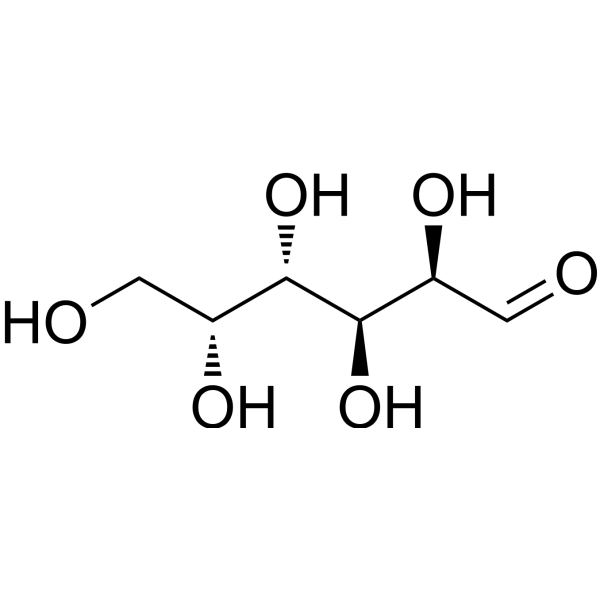
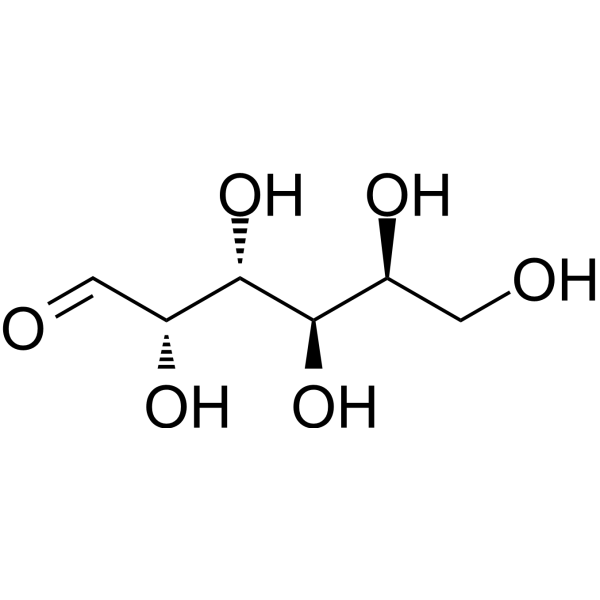
D-Galactose is a natural aldohexose and C-4 epimer of glucose.
loading...
    loading...
5
5 Cited Publications
Cat. No.: HY-114364
CAS No.: 137868-52-1
Purity:  99.42%
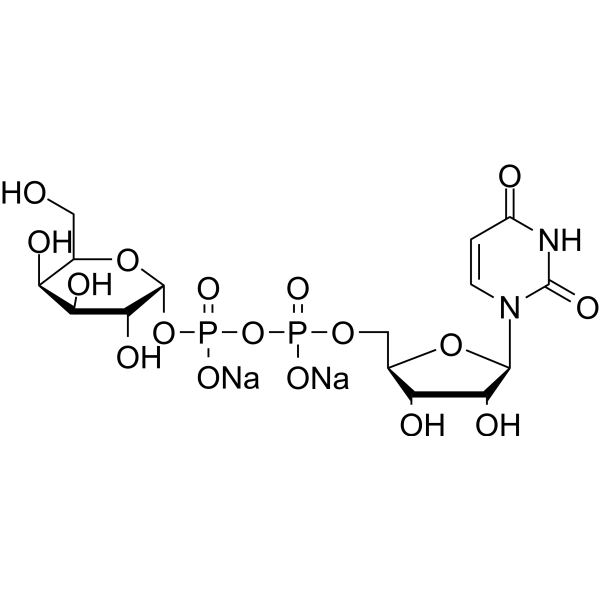
UDP-Galactose disodium is a monosaccharide and a key glycosyl donor molecule in cells that participates in nucleotide sugar metabolism. UDP-Galactose disodium is the natural agonist of the P2Y14 receptor coupled to Gi proteins in the immune system (IC50 = 0.67 μM, hP2Y14). UDP-Galactose disodium can be used to study cell signal transduction and substance metabolism .
loading...
    loading...
4
4 Cited Publications
Cat. No.: HY-B2123
CAS No.: 63-42-3
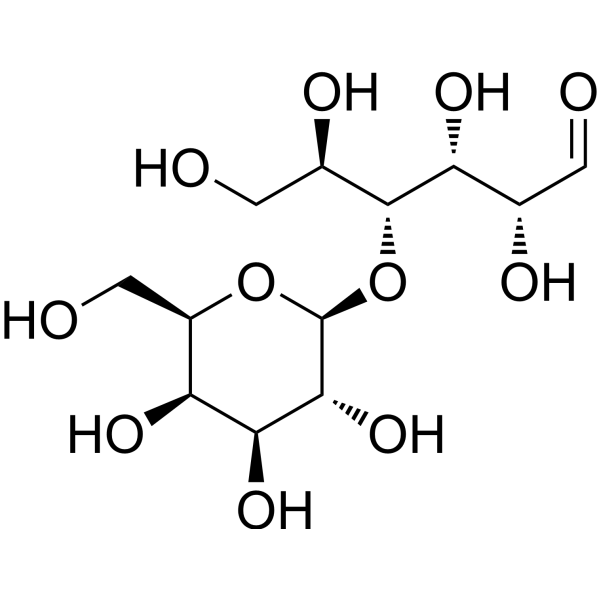
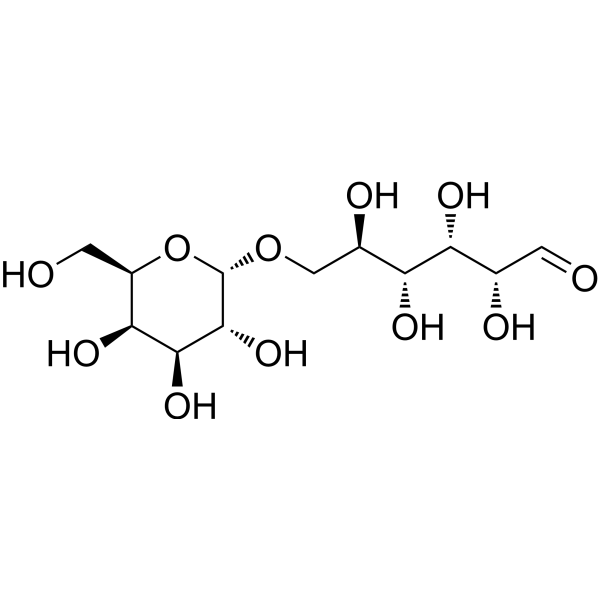
Lactose is a β-galactoside consisting of galactose and glucose residues, the main carbohydrate in mammalian breast milk. Lactose, a macronutrient and an inducer of host innate immune responses, possesses immune modulatory functions .
loading...
    loading...
4
4 Cited Publications
Cat. No.: HY-P70309
Purity:  ≥ 95%, as determined by reducing SDS-PAGE.
Synonyms: rHuGalectin-3; Galectin-3; Gal-3; 35 kDa Lectin; Carbohydrate-Binding Protein 35; CBP 35; galactose-Specific Lectin 3; Galactoside-Binding Protein; GALBP; IgE-Binding Protein; L-31; Laminin-Binding Protein; Lectin L-29; Mac-2 Antigen; LGALS3; MAC2
Species:  
Source:  
loading...
    loading...
2
2 Cited Publications
Cat. No.: HY-P2910
CAS No.: 9028-79-9
Synonyms: GOase
Target:  

Endogenous Metabolite

Research Areas:  

Others

Galactose Oxidase, Dactylium dendroides (GOase) from fungus is often used in biochemical studies. Galactose oxidase is a type II copper metalloenzyme, and it containing a single polypeptide. Galactose oxidase catalyzes two-electron oxidation of primary alcohols to their corresponding aldehydes, coupling with the reduction of dioxygen to hydrogen peroxide .
loading...
    loading...
1
1 Cited Publications
Cat. No.: HY-131892
CAS No.: 1949-89-9
Purity:  99.90%
Target:  

Endogenous Metabolite

Research Areas:  

Metabolic Disease Cancer

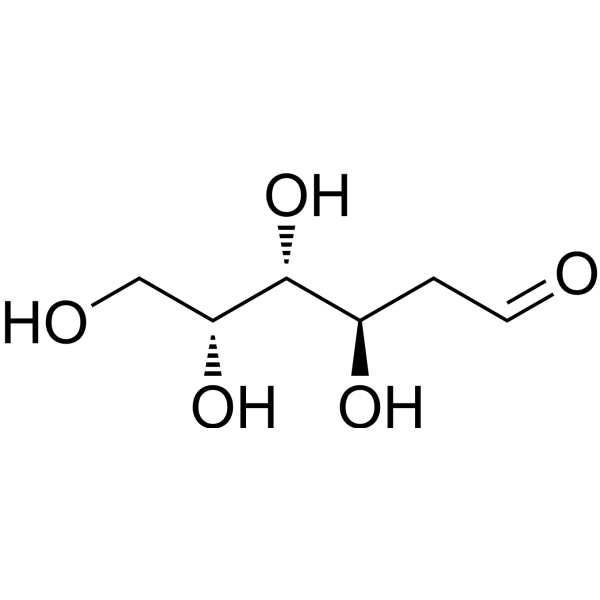
2-Deoxy-D-galactose is a glucose analog. 2-Deoxy-D-galactose inhibits glycolysis to inhibits tumor growth. 2-Deoxy-D-galactose is a substance interfering with the fucosylation of glycomacromolecules and impairing memory consolidation in various learning tasks. 2-Deoxy-d-galactose hinders glycoprotein fucosylation in vivo .
loading...
    loading...
1
1 Cited Publications
Cat. No.: HY-N0210R
CAS No.: 59-23-4
Synonyms: D-(+)-galactose (Standard)
D-Galactose (Standard) is the analytical standard of D-Galactose. This product is intended for research and analytical applications. D-Galactose is a natural aldohexose and C-4 epimer of glucose.
loading...
    loading...
1
1 Cited Publications
Cat. No.: HY-D1633A
CAS No.: 206443-06-3
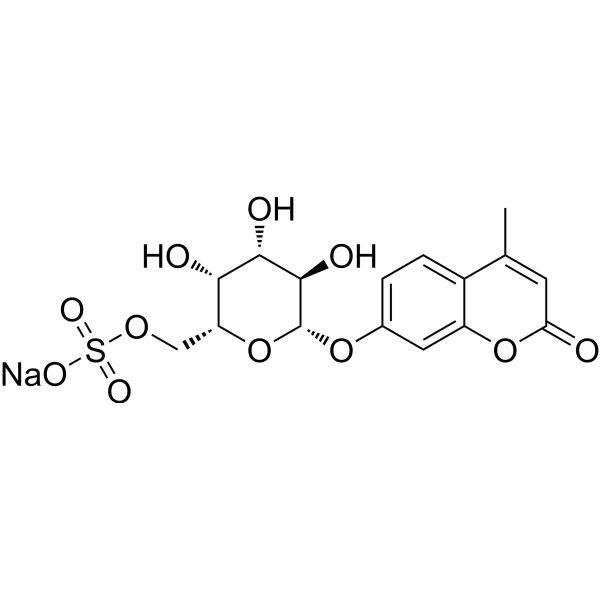
4-Methylumbelliferyl-β-D-galactopyranoside 6-sulfate sodium is a fluorescent dye. 4-Methylumbelliferyl-β-D-galactopyranoside 6-sulfate sodium undergoes desulphation by galactose-6-sulphate sulphatase to form 4-methylumbelliferyl-β-D-galactopyranoside, which is cleaved by β-galactosidase to release fluorescent 4-methylumbelliferone. 4-Methylumbelliferyl-β-D-galactopyranoside 6-sulfate sodium interacts with N-acetylgalactosamine-6-sulfate sulfatase (GALNS) via hydrogen bonds, electrostatic interactions, and steric interactions. 4-Methylumbelliferyl-β-D-galactopyranoside 6-sulfate sodium serves as a substrate in assays measuring galactose-6-sulphate sulphatase and GALNS activity. 4-Methylumbelliferyl-β-D-galactopyranoside 6-sulfate sodium can be used for the research of Morquio disease type A (mucopolysaccharidosis IV A) .
loading...
    loading...
1
1 Cited Publications
Cat. No.: HY-P70365
Purity:  ≥ 85%, as determined by reducing SDS-PAGE.
Synonyms: rHuGalactokinase/GALK1, His; Galactokinase; galactose Kinase; GALK1; GALK
Species:  
Source:  
loading...
    loading...
1
1 Cited Publications
Cat. No.: HY-B1172
CAS No.: 4618-18-2
Synonyms: 4-O-β-D-Galactopyranosyl-D-fructose
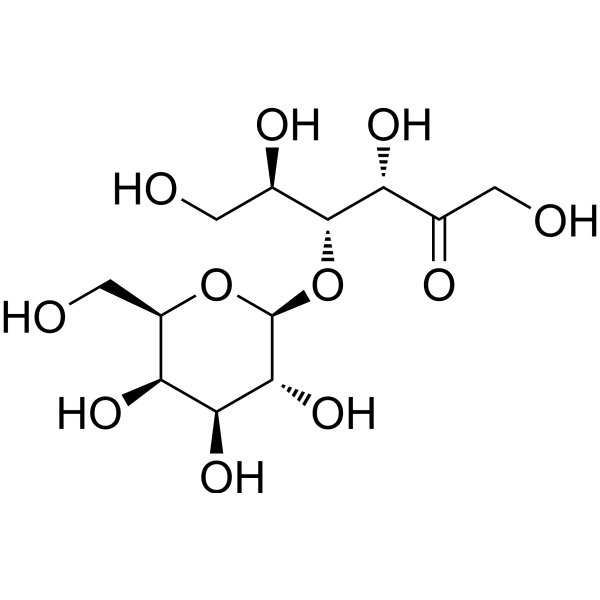
Lactulose is an orally active galactose-fructose disaccharide. Lactulose suppresses upregulation of TNF-α and IL-6. Lactulose decreases the degree of DNA damage. Lactulose exhibits many of the properties of other oligosaccharides, including increasing the numbers of Bifidobacteria in feces. Lactulose restores the structure and composition of the intestinal microbiota, mitigates inflammation, and suppresses inflammatory tumorigenesis in mice with colitis-associated cancer. Lactulose can be used in the research of constipation .
loading...
    loading...
1
1 Cited Publications
Cat. No.: HY-N9448
CAS No.: 14116-68-8
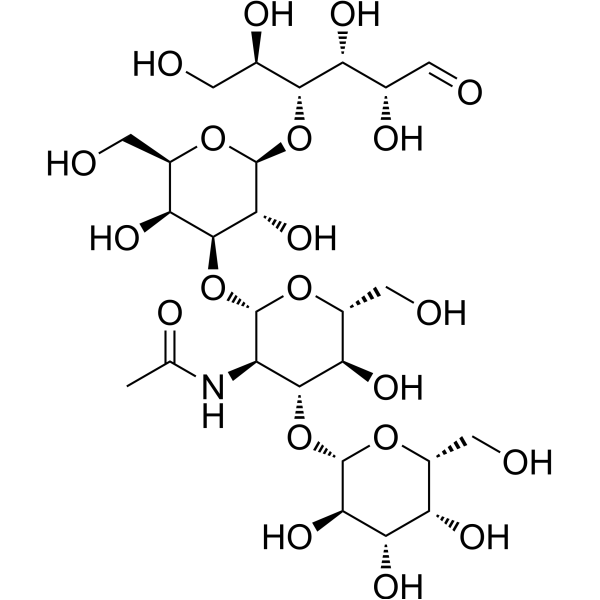
Lacto-N-tetraose is the significant core structure of human milk oligosaccharides (HMOs) naturally existing in human milk. Lacto-N-tetraose is consist of galactose, N-acetylglucosamine, and glucose moieties. Lacto-N-tetraose has prebiotic effect, immune regulatory effect, anti-inflammatory effects, intestinal cell responses regulatory effect, antibacterial activity and antiviral activity. Lacto-N-tetraose has been widely added to infant formula .
loading...
    loading...
1
1 Cited Publications
Cat. No.: HY-D1601
CAS No.: 98907-26-7
N-Aminofluorescein is a fluorescein hydrazide with spiro form, a highly selective and sensitive fluorescence probe for Cu 2+. N-Aminofluorescein has no selective fluorescence response to other common metal ions, can be used for direct detection of Cu 2+ in biological systems with λex/em=495/516 nm . N-Aminofluorescein can be used to measure the concentration of copper ions in cells .
loading...
    loading...
1
1 Cited Publications
Cat. No.: HY-P3443
Synonyms: PNA
Peanut agglutinin (PNA) is a carbohydrate-recognition protein that binds competitively and irreversibly to cell-surface β-D-Gal (1-3)-GalNAc, and this binding can be inhibited by D-galactose and asialofetuin. Peanut agglutinin recognizes exposed glycoepitopes and reflects the glycosylation status of cells. Peanut agglutinin can label glycoconjugates at neuromuscular junctions to safely visualize synaptic structures. Peanut agglutinin can be used to synthesize dyes to distinguish between normal and tumor tissues. Peanut agglutinin provides support for research on leukemia, Burkitt's tumors, and cutaneous squamous lesions .
loading...
    loading...
Cat. No.: HY-118135
CAS No.: 38597-12-5
Purity:  99.76%
Synonyms: 4MU-α-Gal
Target:  

Fluorescent Dye

Research Areas:  

Others

4-Methylumbelliferyl-α-D-galactopyranoside (4MU-α-Gal), a substrate for α-galactosidase A (GLA), is a blue pro-fluorogenic substrate. 4-Methylumbelliferyl-α-D-galactopyranoside forms two products, galactose and fluorescent 4MU, upon cleavage by GLA .
loading...
    loading...
Cat. No.: HY-N6614
CAS No.: 15572-79-9
L-Galactose is a key intermediate in the de novo synthesis of vitamin C (L-ascorbic acid) in plants. It is converted into L-ascorbic acid by participating in the VTC2 cycle and enzymatic steps, exerting antioxidant activities, maintaining cell structure, and participating in the carbon flow distribution of photosynthesis. L-Galactose can be used to study the analysis of the synthesis pathway of vitamin C in plant physiology .
loading...
    loading...
Cat. No.: HY-E70055
CAS No.: 9075-81-4
Target:  

Sialyltransferase

Research Areas:  

Others

alpha-2,6-Sialyltransferase (Pd26ST) (EC 2.4.99.1) is capable of sialylating both terminal and internal galactose and N-acetylgalactosamine, which producing terminal α2,6-sialosides .
loading...
    loading...
Cat. No.: HY-N7059
CAS No.: 96-82-2
Lactobionic acid is a bionic acid that can be naturally found in the Caspian Sea yogurt and chemically constituted of a gluconic acid bonded to a galactose. Lactobionic acid has antioxidant, antimicrobial, chelating, stabilizer, acidulant, and moisturizing properties. Lactobionic acid can be obtained by electrolytic methods, microbial fermentation or biocatalytic approaches. Lactobionic acid can be used in foodstuffs, to produce new functional products and against food-borne pathogens. Lactobionic acid inhibits DNA repair and protein synthesis, induction of oxidative stress and inhibition of metabolic pathways against MRSA .
loading...
    loading...
Cat. No.: HY-P3185
CAS No.: 9028-54-0
Research Areas:  

Metabolic Disease

Beta-galactose dehydrogenase is a selective catalyst for β-galactose. Under pH 8.6 conditions, beta-galactose dehydrogenase catalyzes the oxidation of β-galactose, produced by the hydrolysis of lactose by β-galactosidase, with nicotinamide adenine dinucleotide (NAD) to produce reduced nicotinamide adenine dinucleotide (NADH). Beta-galactose dehydrogenase specifically mediates this oxidation reaction for the quantitative detection of the substrate, used in the analysis of lactose concentration in samples such as breast milk .
loading...
    loading...
Cat. No.: HY-P2869C
CAS No.: 9031-11-2
Target:  

Endogenous Metabolite

Research Areas:  

Metabolic Disease

β1-3,4 Galactosidase is a highly specific exoglycosidase that catalyzes the hydrolysis of terminal β1-3 and β1-4 linked galactose residues from oligosaccharides .
loading...
    loading...
Cat. No.: HY-Y0418
CAS No.: 608-66-2
Synonyms: Dulcitol; Melampyrit; NSC 1944
Dulcite (Dulcitol; Melampyrit; NSC 1944) is a sugar alcohol. Dulcite is produced by the reduction of galactose by aldose reductase in non-insulin-dependent cells .
loading...
    loading...

