





1. Search Result
Search Result
Results for "

gastric cancers

" in MedChemExpress (MCE) Product Catalog:

481

Inhibitors & Agonists

1

Screening Libraries

10

Fluorescent Dyes

10

Biochemical Assay Reagents

20

Peptides

2

MCE Kits

58

Inhibitory Antibodies

83

Natural
Products

30

Isotope-Labeled Compounds

1

Click Chemistry

3

Oligonucleotides

1

GMP Molecules

Cat. No. Product Name Target Research Areas Chemical Structure
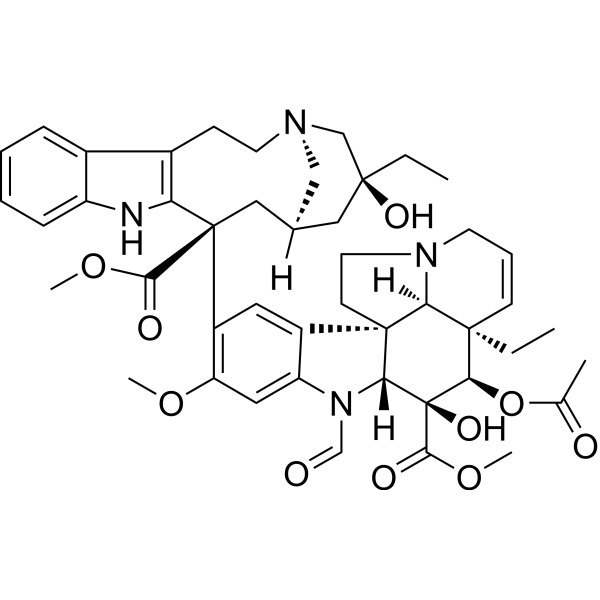
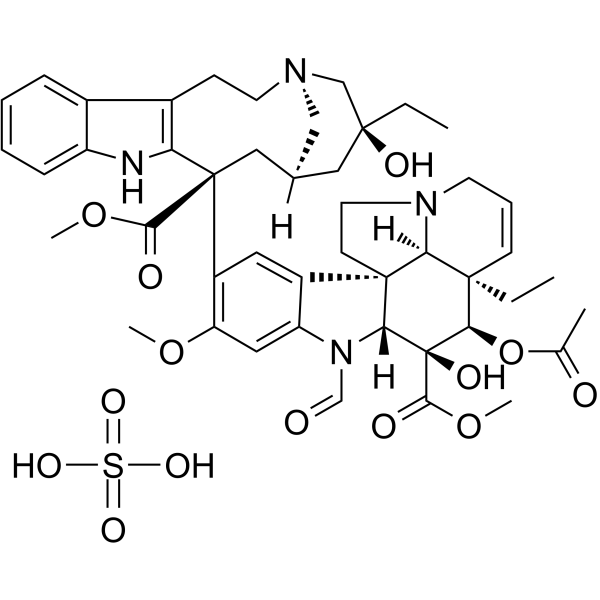
  • HY-N0488A
    Vincristine
    Maximum Cited Publications
    74 Publications Verification

    Leurocristine; NSC-67574; 22-Oxovincaleukoblastine

    Apoptosis Microtubule/Tubulin Mitosis Infection Cancer
    Vincristine (Leurocristine; NSC-67574; 22-Oxovincaleukoblastine) is a microtubule inhibitor that disrupts microtubule polymerization by binding to β-tubulin (with a Ki of 85 nM in bovine), arrests the cell cycle and induces apoptosis. Vincristine inhibits cell replication, tumor blood flow and the proliferation of various cancer cells, while triggering effects such as oxidative stress, inflammation, calcium overload, epithelial-mesenchymal transition and peripheral neuropathic pain. Vincristine upregulates the expression of various transporters and nuclear receptors, and enriches gastric cancer stem-like cells. Vincristine is used in research related to various tumors including acute lymphoblastic leukemia, lymphoma, melanoma, gastric cancer, solid tumors and sarcomas .
    Vincristine
  • HY-B0360
    Rebamipide
    5+ Cited Publications

    OPC12759; Proamipide

    COX Inflammation/Immunology Cancer
    Rebamipide (OPC12759) is an orally active gastroprotective agent that enhances the production of endogenous PGs (especially intragastric PGE2) by inducing COX-2 expression, thereby protecting the gastric mucosa from injury. Rebamipide exerts anti-proliferative activity against gastric cancer cells. Rebamipide can be used in studies of mucosal protection, gastroduodenal ulcer, gastritis and gastric cancer .
    Rebamipide
  • HY-P990148
    Anti-Mouse VEGF-A Antibody (2G11-2A05)
    1 Publications Verification

    VEGFR Cancer
    Anti-Mouse VEGF-A Antibody (2G11-2A05) is a rat-derived IgG2a κ type antibody inhibitor, tragrting to mouse VEGF-A with high affinity. Anti-Mouse VEGF-A Antibody (2G11-2A05) shows good anti-tumor effect in gastric cancer xenograft models .
    Anti-Mouse VEGF-A Antibody (2G11-2A05)
  • HY-110204
    Heclin
    3 Publications Verification

    E1/E2/E3 Enzyme Akt MyD88 Others
    Heclin is a HECT E3 ubiquitin ligases inhibitor. Heclin inhibits Smurf2, Nedd4, WWP1 (IC50 values are 6.8, 6.3, 6.9 μM) and can be used for the research of gastric cancer .
    Heclin
  • HY-13728

    ZD 9331; BGC9331

    Thymidylate Synthase Cancer
    Plevitrexed (ZD 9331; BGC 9331) is an orally active and potent thymidylate synthase (TS) inhibitor with a Ki of 0.44 nM. Plevitrexed is taken up via the α-folate receptor as well as the reduced folate carrier. Plevitrexed is used for gastric cancer in clinical . Plevitrexed is a click chemistry reagent, it contains an Alkyne group and can undergo copper-catalyzed azide-alkyne cycloaddition (CuAAc) with molecules containing Azide groups.
    Plevitrexed
  • HY-147340

    Tirumotecan

    Drug-Linker Conjugates for ADC Cancer
    TL033 is a drug-Linker conjugates for ADC. TL033 contains a linker and bioactive small molecule toxins. TL033 can conjugate with Sacituzumab antibody (anti Trop-2) for synthesizing BT001021. BT001021 has anti-cancer activities against various cancers, such as breast cancer, non-small cell lung cancer (NSCLC), gastric cancer .
    TL033
  • HY-108713

    SHR1020

    VEGFR PDGFR Apoptosis Cancer
    Famitinib (SHR1020), an orally active multi-targeted kinase inhibitor, inhibits the activity of c-kit, VEGFR-2 and PDGFRβ with IC50 values of 2.3 nM, 4.7 nM and 6.6 nM, respectively . Famitinib exerts powerful antitumor activity in human gastric cancer cells and xenografts. Famitinib triggers apoptosis .
    Famitinib
  • HY-156617A

    SHR169265

    ADC Payload Topoisomerase Cancer
    (αR)-Cyclopropaneacetamide-Exatecan (SHR169265) is a DNA Topoisomerase I inhibitor with enhanced membrane permeability (with an IC50 of 1.34 μM against the human DNA Topoisomerase I). (αR)-Cyclopropaneacetamide-Exatecan exerts cytotoxic effects by inhibiting the enzymatic activity of Topoisomerase I, and this anticancer effect is independent of the expression level of HER2. (αR)-Cyclopropaneacetamide-Exatecan is an ADC Cytotoxin derived from Exatecan (HY-13631), which can be used in research related to advanced cancers such as breast cancer, gastric cancer, colorectal cancer and non-small cell lung cancer .
    (αR)-Cyclopropaneacetamide-Exatecan
  • HY-176444

    Molecular Glues CDK Cancer
    CDK2 degrader 6 is an orally active and potent CDK2 molecular glue degrader with a DC50 of 46.5 nM. CDK2 degrader 6 binds to cereblon and CDK2 to induce ubiquitination and subsequent proteasomal degradation of CDK2. CDK2 degrader 6 modulates cell cycle in breast cancer cells. CDK2 degrader 6 reduces proliferation of breast cancer cells. CDK2 degrader 6 exhibits in vivo antitumor activity in gastric cancer mouse models. CDK2 degrader 6 can be used for the research of breast cancer, gastric cancer .
    CDK2 degrader 6
  • HY-162426

    TLK Cancer
    UNC-CA2-103 is a TLK2 inhibitor with a human IC50 of 18 nM, and it exhibits high selectivity over TLK1 and the vast majority of other kinases. UNC-CA2-103 can be used in research related to breast cancer, glioblastoma and gastric cancer .
    UNC-CA2-103
  • HY-164285

    IMP1320

    ADC Payload N-myristoyltransferase Cancer
    MYX1715 is an inhibitor of N-Myristoyltransferase (NMT) with a KD value of 0.09 nM. MYX1715 inhibits the proliferation of LU0884 and LU2511 with IC50 values of 44 nM and 9 nM. MYX1715 exhibits antitumor efficacy against neuroblastoma and gastric cancer in mouse models. MYX1715 can be used as ADC toxin .
    MYX1715
  • HY-138832

    APG-1252-M1

    Bcl-2 Family Apoptosis Caspase PARP Cancer
    BM-1244 (APG-1252-M1) is a Bcl-xL/Bcl-2 inhibitor with Kis of 134 nM and 450 nM. BM-1244 has anti-tumor effects by inducing apoptosis and suppressing tumor growth. BM-1244 can induce cytochrome C and Smac release from mitochondria with caspase-3 and PARP cleavage. BM-1244 exhibits synergy with chemotherapy in vivo. BM-1244 can be studied in research for colorectal cancer, acute myeloid leukemia and gastric cancer .
    BM-1244
  • HY-B0327
    Irsogladine
    3 Publications Verification

    Dicloguamine

    Phosphodiesterase (PDE) NF-κB AP-1 TRP Channel Interleukin Related Inflammation/Immunology Cancer
    Irsogladine (Dicloguamine) is an orally active gastric mucosal protective agent. Irsogladine inhibits breast cancer recurrence and lung metastasis in nude mice . Irsogladine inhibits the transcriptional activities of NF-κB and AP-1, suppresses the activities of PDE and PDE4 to elevate intracellular cAMP levels, and activates TRPV1 and KATP channels. Irsogladine enhances iNOS expression, NO production, and the activation of cAMP-responsive elements. Irsogladine inhibits the development and progression of intestinal polyps in Apc-mutant mice. Irsogladine alleviates oxidative stress, increases gastric mucosal blood flow, and stimulates the production of endogenous prostaglandins. Irsogladine promotes insulin secretion in MIN6 cells. Irsogladine inhibits tumor angiogenesis, cancer cell proliferation, and the production of proinflammatory cytokines. Irsogladine exerts protective effects on astrocytes in ethanol/hydrochloric acid-induced gastric ulcers in mice. Irsogladine prevents colitis in IL-10 gene-deficient mice by reducing the production of IL-12 and IL-23. Irsogladine upregulates gap junction intercellular communication in pancreatic cancer cells via the PKA pathway. Irsogladine is applicable to research related to breast cancer, intestinal polyposis, gastric ulcer, spontaneous colitis, glioma, liver cancer, and pancreatic cancer [5][6] .
    Irsogladine
  • HY-N0805
    Alisol B 23-acetate
    3 Publications Verification

    23-Acetylalismol B; 23-O-Acetylalisol B; Alisol B monoacetate

    Apoptosis Reactive Oxygen Species (ROS) CDK MMP PARP FXR Syk Cardiovascular Disease Metabolic Disease Inflammation/Immunology Cancer
    Alisol B 23-acetate is an orally active prototerpane-type triterpenoid. Alisol B 23-acetate can be isolated from Alisma orientalis. Alisol B 23-acetate induces Apoptosis, promotes ROS generation, downregulates CDK4/6, MMP-2/9, upregulates cleaved PARP, activates FXR and inhibits Syk. Alisol B 23-acetate has anti-inflammatory and hepatoprotective activities. Alisol B 23-acetate protects the kidney from ischemia-reperfusion injury. Alisol B 23-acetate has anticancer activity against ovarian cancer, colon cancer, lung cancer, and gastric cancer. Alisol B 23-acetate can be used in the study of atherosclerosis and allergic asthma .
    Alisol B 23-acetate
  • HY-N2587

    Integrin Apoptosis Cancer
    Irigenin is a is a lead compound, and mediates its anti-metastatic effect by specifically and selectively blocking α9β1 and α4β1 integrins binding sites on C-C loop of Extra Domain A (EDA). Irigenin shows anti-cancer properties. It sensitizes TRAIL-induced apoptosis via enhancing pro-apoptotic molecules in gastric cancer cells .
    Irigenin
  • HY-141600

    BAY 1187982

    Antibody-Drug Conjugates (ADCs) FGFR Microtubule/Tubulin Apoptosis Cancer
    Aprutumab ixadotin (BAY 1187982) is the first antibody-drug conjugate (ADC) to target FGFR2 and the first to use Auristatin-based payload. Aprutumab ixadotin contains a fully human anti-FGFR2 monoclonal antibody (Aprutumab) (HY-P99007) conjugated by lysine side chains to a non-cleavable linker and via this an innovative Auristatin W derivative. Aprutumab ixadotin can be used for the study of advanced solid tumors, such as FGFR2-positive gastric cancer and triple-negative breast cancer .
    Aprutumab ixadotin
  • HY-P991584

    FGFR Cancer
    HuGAL-FR21 is a humanized antiFGFR2IIIb IgG1 monoclonal antibody. HuGAL-FR21 can block the binding of FGF2, FGF7, and FGF10 to FGFR2IIIb and inhibit FGF-induced phosphorylation of FGFR2IIIb. HuGAL-FR21 can downregulate the expression of FGFR2 in SNU-16 cells. HuGAL-FR21 shows the significant anti-tumor activity in athymic nude mice bearing gastric cancer xenograft models. HuGAL-FR21 can be used for research on cancer such as gastric cancer .
    HuGAL-FR21
  • HY-P1727
    Super-TDU
    5+ Cited Publications

    YAP Cancer
    Super-TDU is a specific YAP antagonist targeting YAP-TEADs interaction. Super-TDU suppresses tumor growth in gastric cancer mouse model .
    Super-TDU
  • HY-156418

    DNA/RNA Synthesis Ferroptosis Apoptosis Reactive Oxygen Species (ROS) Cancer
    KY386 is a DHX33 helicase inhibitor with an IC50 of 0.019 μM. KY386 inhibits the cell viability of various cancer cells. KY386 induces ferroptosis in cancer cells, and induces apoptosis in some cancer cell lines. KY386 increases the intracellular levels of ROS, LPO and Fe 2+, and decreases the level of GSH in cancer cells . KY386 inhibits the growth of gastric cancer and colon cancer xenografts in nude mice. KY386 is applicable to the related research on liver cancer, lung cancer, pancreatic cancer, colorectal cancer, gastric cancer, breast cancer, leukemia, renal cancer, prostate cancer, esophageal cancer, cervical cancer, brain cancer (glioblastoma) and melanoma .
    KY386
  • HY-153937

    E1/E2/E3 Enzyme Cancer
    Skp2 inhibitor 2 is a Skp2-Cks1 protein-protein interaction inhibitor with a human IC50 of 0.57 μM. Skp2 inhibitor 2 binds to Skp2 at the interaction interface to block Skp2-Cks1 complex formation. Skp2 inhibitor 2 can be used for the research of gastric cancer, non-small cell lung cancer, breast cancer, prostate cancer .
    Skp2 inhibitor 2
  • HY-P99007

    BAY 1179470

    FGFR Cancer
    Aprutumab (BAY 1179470) is a fully human fibroblast growth factor receptor 2 (FGFR2)-specific monoclonal antibody . Aprutumab induces FGFR2 endocytosis and degradation in cancer cells expressing FGFR2. Aprutumab serves as the targeted monoclonal antibody component of the antibody-drug conjugate BAY 1187982 (HY-141600) and mediates the endocytosis of the antibody-drug conjugate into FGFR2-positive cells. Aprutumab can be used for the research of FGFR2-positive solid tumors, including studies on gastric cancer and triple-negative breast cancer .
    Aprutumab
  • HY-125911

    NF-κB Aurora Kinase Ribosomal S6 Kinase (RSK) Apoptosis Caspase Bcl-2 Family PARP Cryptochrome Cardiovascular Disease Inflammation/Immunology Cancer
    Gossypin is an orally active flavone isolated from Hibiscus vitifolius. Gossypin has antioxidant, antiinflammatory, anticancer, anticataract, antidiabetic, and hepatoprotective activities. Gossypin inhibits NF-κB and NF-κB-regulated gene expression. Gossypin inhibits AURKA and RSK2. Gossypin inhibits invasion and induces apoptosis. Gossypin can be used for gastric cancer study .
    Gossypin
  • HY-N4148

    DNA/RNA Synthesis Apoptosis Bacterial Infection Inflammation/Immunology Cancer
    Purpureaside C, phenolic glycoside, is a minichromosome maintenance complex component 6 (MCM6) inhibitor. Purpureaside C binds to the ATP-pocket of MCM6, suppresses MCM6 protein expression in gastric cancer cells. Purpureaside C suppresses gastric cancer cell growth and induces apoptosis. Purpureaside C exerts antibacterial activity and proinflammatory activity. Purpureaside C can be used for the researches of gastric cancer, bacterial infection and inflammation .
    Purpureaside C
  • HY-170935

    SRPK PARP Caspase Apoptosis Autophagy Cancer
    SRSF1-IN-1 is a SRSF1 inhibitor. SRSF1-IN-1 inhibits SRSF1 expression, thereby modulating the splicing of Bcl-x pre-mRNA. SRSF1-IN-1 inhibits the proliferation of various cancer cells. SRSF1-IN-1 induces apoptosis in gastric cancer cells, reduces Bcl-xl expression, and upregulates cleaved PARP and caspase 3. SRSF1-IN-1 induces autophagy and promotes cell death. SRSF1-IN-1 exhibits anti-tumor activity in a mouse gastric cancer xenograft model. SRSF1-IN-1 can be used for the research of various cancers including liver cancer, gastric cancer, breast cancer, colon cancer, glioma, and melanoma .
    SRSF1-IN-1
  • HY-P99523

    AMG 199

    CD3 Cancer
    Vepsitamab (AMG 199) is a bispecific T-cell engager (HLE BiTE) that binds to MUC17 and CD3. Vepsitamab directs CD3-positive cells to target MUC17-positive cells. Vepsitamab induces cell activation and proliferation. Vepsitamab is applicable to research related to gastric cancer and gastroesophageal junction (g/gej) cancer .
    Vepsitamab
  • HY-125035
    LCH-7749944
    5 Publications Verification

    GNF-PF-2356

    PAK Apoptosis Cancer
    LCH-7749944 (GNF-PF-2356) is a potent PAK4 inhibitor with an IC50 of 14.93 μM. LCH-7749944 effectively suppresses the proliferation of human gastric cancer cells through downregulation of PAK4/c-Src/EGFR/cyclin D1 pathway and induces apoptosis .
    LCH-7749944
  • HY-116437
    Selatinib
    1 Publications Verification

    EGFR Cancer
    Selatinib is an orally active EGFR and HER2 tyrosine kinase inhibitor with IC50 values of 13.0 nM and 8.5 nM, respectively. Selatinib undergoes oxidative metabolism in vivo to produce Lapatinib (HY-50898). Selatinib inhibits the growth of breast, gastric and ovarian tumors. Selatinib can be used in research related to gastric cancer, breast cancer and ovarian cancer .
    Selatinib
  • HY-151480

    STAT Apoptosis Cancer
    HP590 is an orally active, novel and potent STAT3 inhibitor (STAT3 luciferase activity: IC50=27.8 nM; ATP inhibition: IC50=24.7 nM). HP590 shows anti-proliferative activity to gastric cancer cells and induces apoptosis .
    HP590
  • HY-E70290

    GALNT1

    Endogenous Metabolite β-catenin Wnt Cancer
    N-Acetylgalactosaminyltransferase 1 (GALNT1) is a glycosyltransferase that initiates mucin-type O-glycosylation by transferring α-GalNAc from UDP-GalNAc to serine (Ser) or threonine (Thr) residues in proteins. Overexpression of N-Acetylgalactosaminyltransferase 1 in gastric cancer can promote abnormal O-glycosylation of CD44, thereby activating the Wnt/β-catenin signaling pathway and regulating the malignant behavior of gastric cancer cells. Additionally, N-Acetylgalactosaminyltransferase 1 plays a crucial role in cancer growth and metastasis by modifying the O-glycosylation of various glycoproteins, such as mucin (MUC1), osteopontin (OPN), matrix metalloproteinase-14 (MMP14), and integrin α3 .
    N-Acetylgalactosaminyltransferase 1
  • HY-175883

    FLAP Cancer
    FEN1-IN-8 (compund 15) is a selective FEN1 inhibitor, with IC50 values of < 100 nM for FEN1 and 100 nM to 1 μM for EXO1, respectively. FEN1-IN-8 can be used for study of colorectal cancer and gastric cancer .
    FEN1-IN-8
  • HY-119748

    Apoptosis Infection Cancer
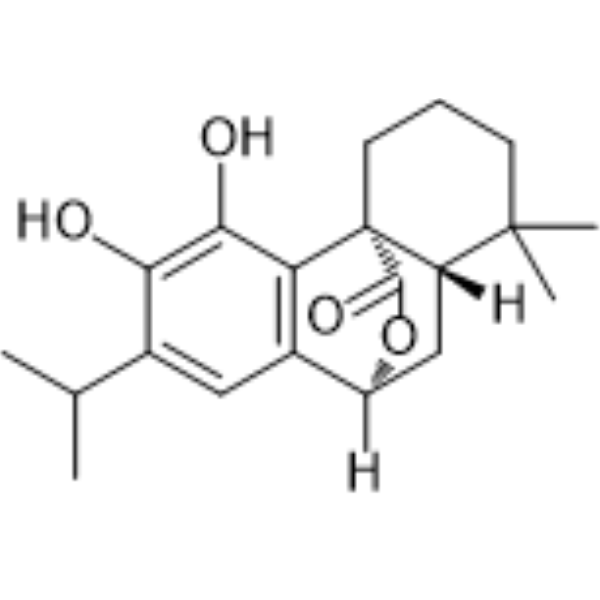
    Sageone, a diterpene that can be isolated from Rosmarinus officinalis, is a antiviral and anticancer agent. Sageone induces apoptosis in SNU-1 human gastric cancer cells .
    Sageone
  • HY-P991681

    ASP-2138

    Claudin CD3 Cancer
    Emaretamig is a humanized IgG1κ monoclonal antibody inhibitor targeting CLDN18 and CD3E. Abdakibart can be used for cancers like gastric and pancreatic cancer research .
    Emaretamig
  • HY-162445

    Ras PERK Cancer
    KRASG12D-IN-3 is an orally active KRAS G12D inhibitor. KRASG12D-IN-3 inhibits the growth of gastric cancer and pancreatic cancer cells. KRASG12D-IN-3 inhibits the activity of p-ERK in gastric cancer cells. KRASG12D-IN-3 can be used for the research of gastric cancer and pancreatic cancer .
    KRASG12D-IN-3
  • HY-108713A

    SHR1020 malate

    VEGFR PDGFR Apoptosis Cancer
    Famitinib (SHR1020) malate, an orally active multi-targeted kinase inhibitor, inhibits the activity of c-kit, VEGFR-2 and PDGFRβ with IC50 values of 2.3 nM, 4.7 nM and 6.6 nM, respectively. Famitinib malate induces cell apoptosis. Famitinib malate exerts powerful antitumor activity in human gastric cancer cells and xenografts, it can be used for the research of cancer .
    Famitinib malate
  • HY-162930

    PROTACs METTL3 Cancer
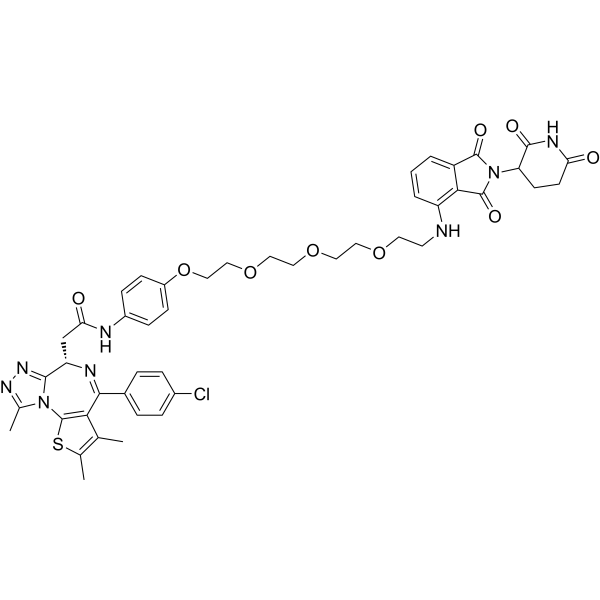
    PROTAC METTL3 degrader 1 is a VHL-based PROTAC METTL3 degrader (DC50: 220 nM in MOLM-13 cells). PROTAC METTL3 degrader 1 inhibits METTL3/14 complex with an IC50 value of 341 nM. PROTAC METTL3 degrader 1 can be used for the research of acute myeloid leukemia and gastric cancer .
    PROTAC METTL3 degrader 1
  • HY-P11035

    Ephrin Receptor Neurological Disease Cancer
    APY-d3 is a EphA4-LBD antagonistic peptide with a Kd of 138  nM. APY-d3 is constrained into a bioactive β-hairpin conformation via a head-to-tail disulfide bond. APY-d3 can be used for cancers like gastric and pancreatic cancers and neurodegenerative diseases like amyotrophic lateral sclerosis and Alzheimer’s disease research .
    APY-d3
  • HY-171747

    Antibody-Drug Conjugates (ADCs) EGFR Topoisomerase Apoptosis Cancer
    AMT-562 is an antibody-drug conjugate (ADC) consisting of a novel anti-HER3 antibody Ab562 (HY-P991505) conjugated to the linker MC-VA-PAB and the topoisomerase I inhibitor Exatecan (HY-13631). The ADC toxic molecule and linker portion are MC-VA-PAB-Exatecan (HY-147270). AMT-562 can induce apoptosis and has antitumor activity against pancreatic, esophageal, and gastric cancers .
    AMT-562
  • HY-127072

    Antibiotic Bacterial Infection Inflammation/Immunology Cancer
    Amicoumacin A is an orally active antibiotic. Amicoumacin A targets bacterial ribosomes and inhibits bacterial translation by stabilizing the interaction between mRNA and ribosomes. Amicoumacin A induces cancer cell death by targeting eukaryotic ribosomes. Amicoumacin A exhibits anti-inflammatory and anti-ulcer activities, inhibits carrageenan-induced paw edema, and prevents stress-induced gastric ulcers. Amicoumacin A inhibits the growth of Gram-positive bacteria, Salmonella spp., Shigella spp., Helicobacter pylori, and methicillin-resistant Staphylococcus aureus. Amicoumacin A can be used in the research of lung cancer, breast cancer, bacterial infections, inflammatory edema and gastric ulcers [2] .
    Amicoumacin A
  • HY-N12726

    p38 MAPK MMP Infection Inflammation/Immunology Cancer
    Halociline, a derivative of alkaloids, that can be isolated from the marine fungus Penicillium griseofulvum. Halociline targets MAPK1, MMP-9, and PIK3CA in gastric cancer cells, potentially mediated by diverse pathways including cancer, lipid metabolism, atherosclerosis, and EGFR tyrosine kinase inhibitor resistance. Halociline possesses antimicrobial, antioxidant and biofilm inhibitory activities .
    Halociline
  • HY-178489

    Nectin-4 Cancer
    BGC1614 is a Nectin-4-targeting bicyclic toxin conjugate (BTC) belonging to the category of peptide-drug conjugates (PDCs). BGC1614 exhibits strong targeted binding ability to Nectin-4, with an KD of 3.859 × 10 -7 M. BGC1614 exhibits superior antitumor efficacy in nude mice bearing PC-3 and N87 tumor xenografts. BGC1614 can be used for research related to Nectin-4-overexpressing tumors (such as prostate cancer, gastric cancer) .
    BGC1614
  • HY-160068

    EGFR Cancer
    2-2(t) aptamer sodium is a 42-nucleotide trimeric complex of aptamer (2-2) targeting ErbB-2. 2-2(t) aptamer sodium inhibits the growth of gastric cancer cells in vitro and in vivo .
    2-2(t) aptamer sodium
  • HY-B0360R

    COX Reference Standards Inflammation/Immunology Cancer
    Rebamipide (Standard) is the analytical standard of Rebamipide. This product is intended for research and analytical applications. Rebamipide (OPC12759) is an orally active gastroprotective agent that enhances the production of endogenous PGs (especially intragastric PGE2) by inducing COX-2 expression, thereby protecting the gastric mucosa from injury. Rebamipide exerts anti-proliferative activity against gastric cancer cells. Rebamipide can be used in studies of mucosal protection, gastroduodenal ulcer, gastritis and gastric cancer .
    Rebamipide (Standard)
  • HY-155115
    LSD1-IN-27
    1 Publications Verification

    Histone Demethylase PD-1/PD-L1 Cancer
    LSD1-IN-27 is an orally active LSD1 inhibitor (IC50: 13 nM). LSD1-IN-27 inhibits the stemness and migration of gastric cancer cells. LSD1-IN-27 also reduces the expression of PD-L1 in BGC-823 and MFC cells. LSD1-IN-27 can enhance T cell immune response in gastric cancer .
    LSD1-IN-27
  • HY-176237

    NAMPT Apoptosis Cancer
    Nampt-IN-16 (Compound 9a) is an orally active NAMPT inhibitor with an IC50 of 0.15 μM. Nampt-IN-16 can reduce intracellular NAD + and ATP levels. Nampt-IN-16 can inhibit the proliferation, migration, and invasion, induce cell cycle arrest and apoptosis, and alter cellular metabolism of gastric cancer cells. Nampt-IN-16 can be used in the research of tumors such as gastric cancer .
    Nampt-IN-16
  • HY-169741

    Discoidin Domain Receptor Cancer
    DDR1-IN-10 (compound 7q) is a DDR1 inhibitor. DDR1-IN-10 can be used in the study of pancreatic cancer, non-small cell lung cancer, and gastric carcinoma .
    DDR1-IN-10
  • HY-P1728

    YAP Cancer
    Super-TDU (1-31) is a peptide fragment of Super-TDU. Super-TDU (1-31) is an inhibitor of YAP-TEAD complex. Super-TDU shows potent anti-tumor activity and suppresses tumor growth in gastric cancer mouse model .
    Super-TDU (1-31)
  • HY-P1728A
    Super-TDU (1-31) TFA
    2 Publications Verification

    YAP Cancer
    Super-TDU (1-31) TFA is a peptide fragment of Super-TDU. Super-TDU (1-31) TFA is an inhibitor of YAP-TEAD complex. Super-TDU TFA shows potent anti-tumor activity and suppresses tumor growth in gastric cancer mouse model .
    Super-TDU (1-31) TFA
  • HY-151905

    c-Met/HGFR Cancer
    D6808 is a highly selective and potent c‑Met inhibitor with an IC50 value of 2.9 nM. D6808 induces cell apoptosis and cell cycle arrest. D6808 can be used for the research of NSCLC and gastric cancers .
    D6808
  • HY-168895

    AP-1 ERK Apoptosis Cancer
    c-Fos-IN-1 (Compound P16) is a c-Jun inhibitor, and decreases mRNA levels and protein levels of c-Fos. c-Fos-IN-1 also inhibits the phosphorylation activity of ERK and the transcriptional activity of AP-1. c-Fos-IN-1 shows anticancer activity by inhibiting ERK/c-Fos/Jun pathway. c-Fos-IN-1 inhibits the proliferation and migration of gastric cancer cells (IC50: 2.31 μM for MGC-803 cell). c-Fos-IN-1 arrests cell cycle at G2/M phase and induces cancer cell apoptosis. c-Fos-IN-1 inhibits gastric cancer tumor growth .
    c-Fos-IN-1
  • HY-108713R

    SHR1020 (Standard)

    Reference Standards VEGFR PDGFR Apoptosis Cancer
    Famitinib (Standard) is the analytical standard of Famitinib. This product is intended for research and analytical applications. Famitinib (SHR1020), an orally active multi-targeted kinase inhibitor, inhibits the activity of c-kit, VEGFR-2 and PDGFRβ with IC50 values of 2.3 nM, 4.7 nM and 6.6 nM, respectively . Famitinib exerts powerful antitumor activity in human gastric cancer cells and xenografts. Famitinib triggers apoptosis .
    Famitinib (Standard)

Inquiry Online

Your information is safe with us. * Required Fields.

Salutation


Country or Region *

Applicant Name *


Organization Name *

Department *


Email Address *


Product Name *

Cat. No.


Requested quantity *

Phone Number *


Remarks

Inquiry Online

Inquiry Information

Product Name:
Cat. No.:
Quantity:
MCE Japan Authorized Agent:

