30 Results for "

hyperpigmentation

" in MedChemExpress (MCE) Product Catalog:
Products (30)

30 Results for "hyperpigmentation" in MCE Product Catalog:

1
1 Cited Publications
Cat. No.: HY-N6829
CAS No.: 1245-15-4
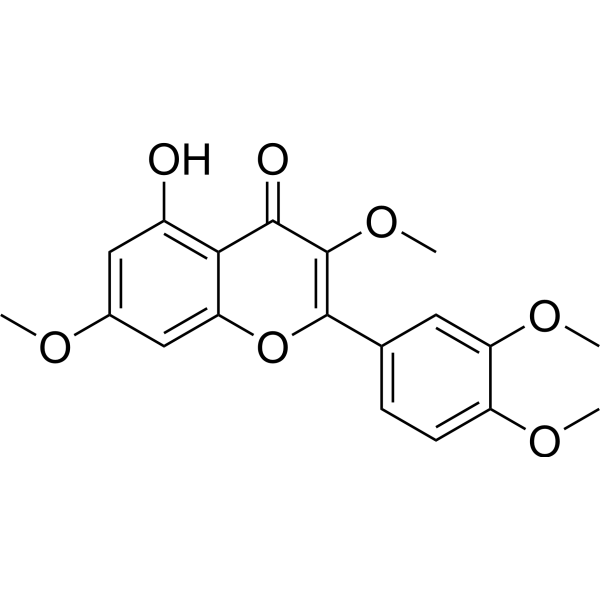
Synonyms: Quercetin-​3,​3',​4',​7-​tetramethylether
Retusin (Quercetin-3,3',4',7-tetramethylether) is a tyrosinase inhibitor, with IC50 values of 50.9 μM and 51.8 μM against mushroom and intracellular tyrosinase, respectively. Retusin also acts as a free radical scavenger, melanogenesis inhibitor, anti-apoptosis agent, neuroprotective agent, antiemetic, antifungal agent, and antiviral agent. Retusin scavenges ABTS• + and DPPH• free radicals. Retusin can be used in studies related to hyperpigmentation, vomiting, Aspergillus niger infection, and COVID-19 infection .
loading...
    loading...
Cat. No.: HY-N3002
CAS No.: 84380-01-8
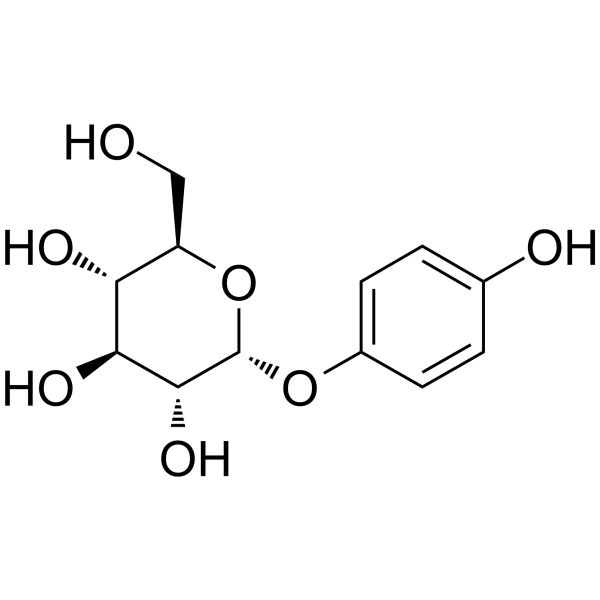
Synonyms: 4-Hydroxyphenyl α-D-glucopyranoside
α-Arbutin (4-Hydroxyphenyl α-D-glucopyranoside) is a tyrosinase inhibitor, which is used as an effective skin whiteners. α-Arbutin is promising for research of various diseases such as hyperpigmentation disorders, types of cancers, central nervous system disorders, osteoporosis, diabetes .
loading...
    loading...
Cat. No.: HY-W251181
CAS No.: 1428450-95-6
Target:  

Tyrosinase

Research Areas:  

Metabolic Disease

Isobutylamido thiazolyl resorcinol is a selective hTyr inhibitor with an IC50 of 1.1  μM. Isobutylamido thiazolyl resorcinol shows an IC50 of 108  μM against mushroom Tyrosinase. Isobutylamido thiazolyl resorcinol effectively prevents pigmentation caused by UVB irradiation. Isobutylamido thiazolyl resorcinol significantly improves the visibility of acne-induced hyperpigmentation .
loading...
    loading...
Cat. No.: HY-N1750
CAS No.: 5631-68-5
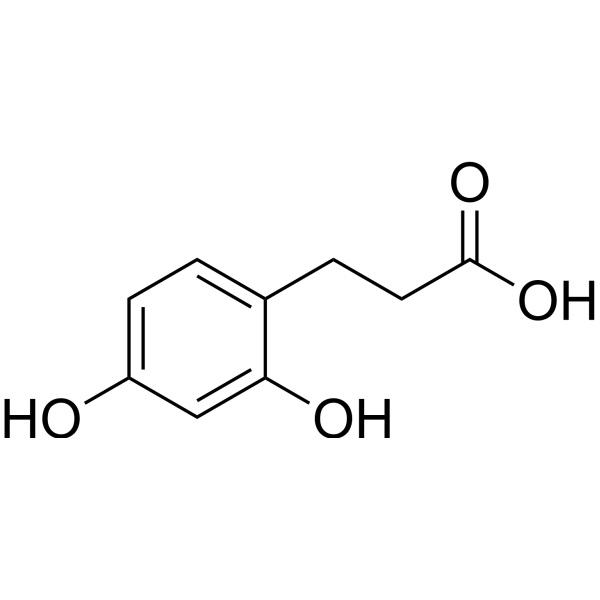
3-(2,4-Dihydroxyphenyl) propanoic acid (DPPacid) is a competitive Tyrosinase inhibitor. It exhibits an IC50 value of 3.02 μM against mushroom tyrosinase with L-tyrosine as the substrate, an IC50 value of 62 μM with DL-DOPA as the substrate, and a Ki value of 11.5 μM. 3-(2,4-Dihydroxyphenyl) propanoic acid shows no DPPH radical scavenging activity. It can be used in studies related to ultraviolet B (UVB)-induced hyperpigmentation .
loading...
    loading...
Cat. No.: HY-125809
CAS No.: 85-27-8
Purity:  99.31%
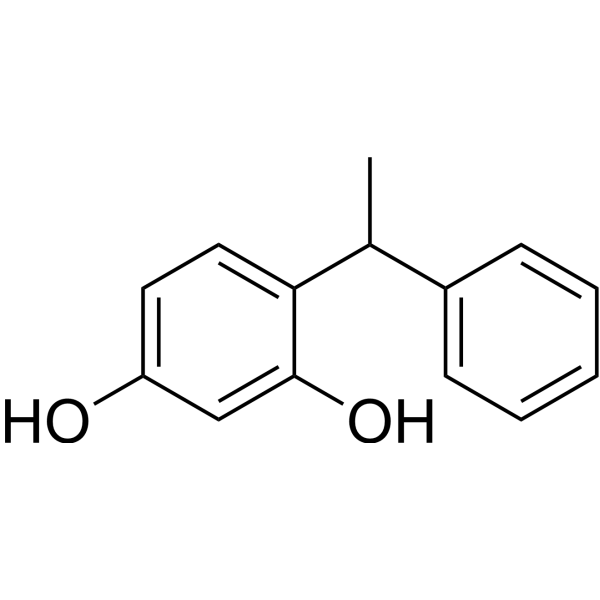
4-(1-Phenylethyl)resorcinol is a skin lightening agent used in cosmetics. It works by inhibiting the production of melanin, the pigment that gives skin its color. This helps reduce the appearance of dark spots, hyperpigmentation and uneven skin tone. 4-(1-Phenylethyl)resorcinol is considered safe for cosmetic use and is approved for use in several countries.
loading...
    loading...
Cat. No.: HY-N3266
CAS No.: 99353-00-1
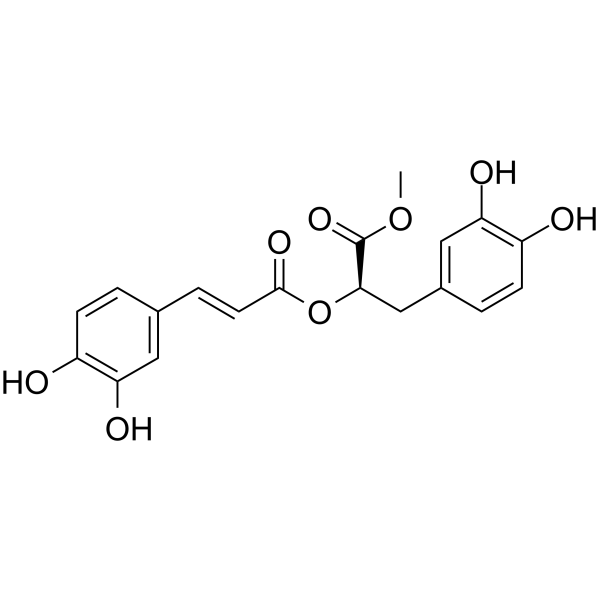
Methyl rosmarinate is an orally active hydroxycinnamic acid. Methyl rosmarinate exhibits an IC50 of 24.70 μM and a Ki of 15.29 μM against PTP1B, an IC50 of 41.46 μg/mL against BChE, a Ki of 0.61 mM against mushroom tyrosinase, and an IC50 of 2.50 μM against SARS-CoV-2 3CLpro. Methyl rosmarinate downregulates the phosphorylation levels of ERK, JNK, p38, Smad2 and Smad3. Methyl rosmarinate activates erythrocyte BPGM and promotes the production of 2,3-BPG. Methyl rosmarinate induces apoptosis of fibroblasts. Methyl rosmarinate prolongs the survival time of hypoxic mice. Methyl rosmarinate improves insulin sensitivity. Methyl rosmarinate binds to SARS-CoV-2 3CLpro and inhibits viral replication. Methyl rosmarinate induces glioblastoma cell death. Methyl rosmarinate activates the TGR5/AMPK axis and reduces the levels of ROS and MDA. Methyl rosmarinate shows inhibitory activity against MMP-1. Methyl rosmarinate can be used in research related to pulmonary fibrosis, hypoxia-induced injury, type 2 diabetes, Alzheimer's disease, hyperpigmentation disorders, COVID-19, glioblastoma and myocardial ischemia-reperfusion injury .
loading...
    loading...
Cat. No.: HY-N3200
CAS No.: 53734-74-0
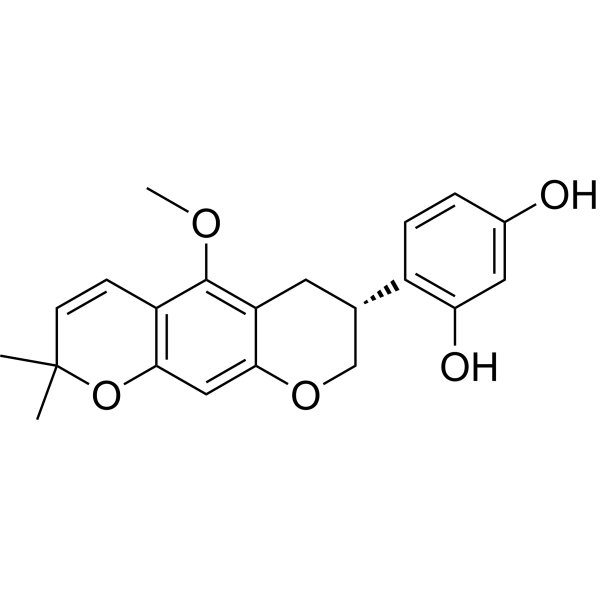
Neorauflavane is a tyrosinase inhibitor with mushroom tyrosinase IC50 values of 30 nM and 500 nM, and Ki values of 19 nM and 130 nM. Neorauflavane inhibits monophenolase and diphenolase activities, binds to tyrosinase’s active site via its B-ring resorcinol motif and A-ring methoxy group. Neorauflavane reduces melanin synthesis in melanoma cells. Neorauflavane can be used for the research of skin hyperpigmentation .
loading...
    loading...
Cat. No.: HY-P3452
CAS No.: 1036207-61-0
Target:  

Tyrosinase

Research Areas:  

Inflammation/Immunology

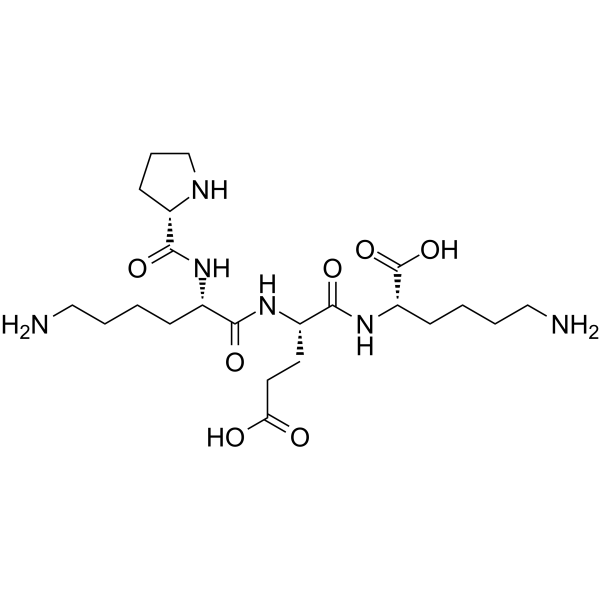
Tetrapeptide-30 is a skin-brightening peptide consisting of four amino acids. Tetrapeptide-30 can act as a tyrosinase inhibitor, lightening hyperpigmentation and evening out skin tone by reducing the amount of tyrosinase and inhibiting melanocyte activation .
loading...
    loading...
Cat. No.: HY-W015782
CAS No.: 2896-60-8
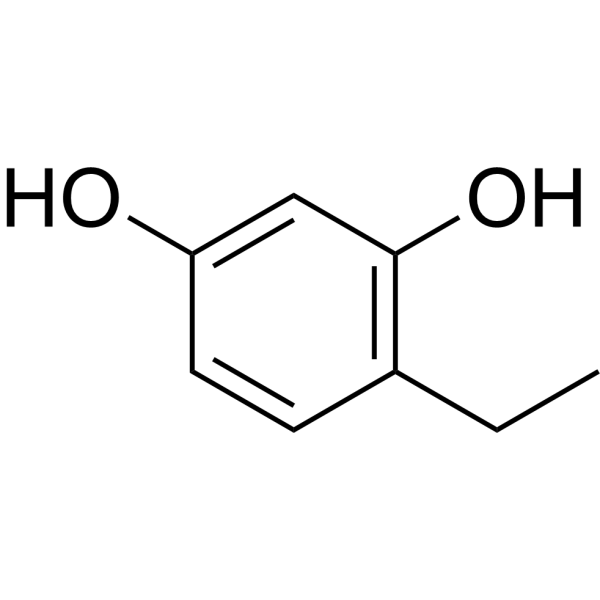
4-Ethylresorcinol is a derivative of resorcinol and can serve as a substrate for tyrosinase. 4-Ethylresorcinol has anti-hyperpigmentation and antioxidant effects and can inhibit melanin synthesis. 4-Ethylresorcinol has potential whitening value .
loading...
    loading...
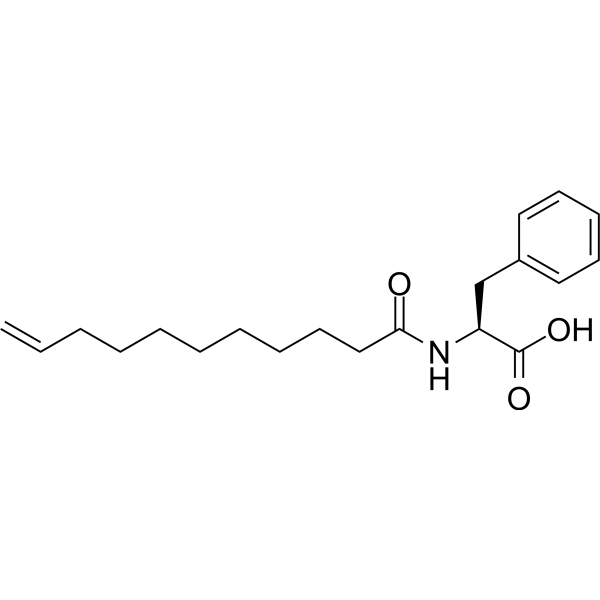
Cat. No.: HY-135014
CAS No.: 175357-18-3
Research Areas:  

Others

Undecylenoyl phenylalanine is an antagonist for α-melanocyte-stimulating hormone (MSH) and β-adrenergic receptor (β-ADR) to reduce the melanogenesis in melanocytes, reduces hyperpigmentation and thus ameliorates melasma lesions and solar lentigines .
loading...
    loading...
Cat. No.: HY-161612
CAS No.: 149092-45-5
Mycosporine 2 glycine is an anti-inflammatory agent and TYRP1 inhibitor. Mycosporine 2 glycine inhibits the expression of inflammatory genes and reduces nitric oxide production. Mycosporine 2 glycine binds tightly to the active pocket of TYRP1 and inhibits the activity of melanogenesis-related enzymes. Mycosporine 2 glycine can be used in the research of hyperpigmentation and inflammation-related diseases .
loading...
    loading...
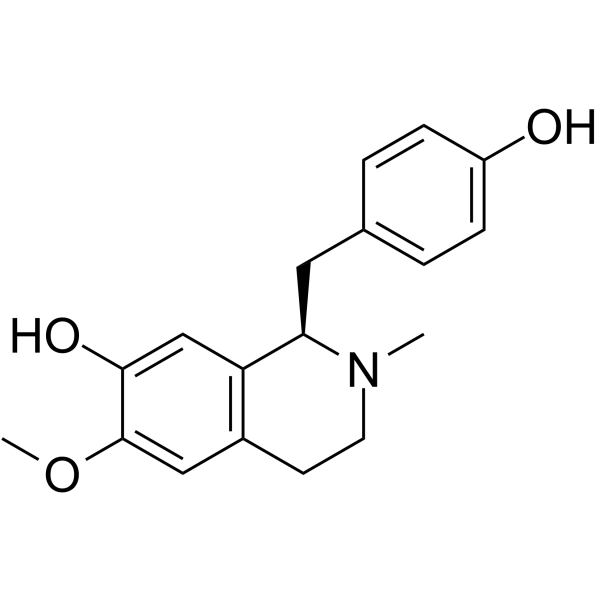
Cat. No.: HY-N7717
CAS No.: 5096-70-8
Synonyms: (–)-(1R)-N-methylcoclaurine
(-)-N-methylcoclaurine ((-)-(1R)-N-methylcoclaurine) is a benzylisoquinoline alkaloid and melanogenesis inhibitor with an IC50 of 6.5 μM that can be found in the flower buds of Nelumbo nucifera. (-)-N-methylcoclaurine inhibits theophylline-stimulated melanogenesis in melanoma cells. (-)-N-methylcoclaurine can be used for the research of skin hyperpigmentation disorders .
loading...
    loading...
Cat. No.: HY-148400
CAS No.: 913541-96-5
Synonyms: TXC hydrochloride
Research Areas:  

Metabolic Disease

Cetyl tranexamate (TXC) hydrochloride is an ester derivative of Tranexamic acid (HY-B0149). Cetyl tranexamate hydrochloride is an inhibitor of fibrinogen activation and can reduce the production of fibrinogen in keratinocytes induced by ultraviolet rays or damage, indirectly inhibiting the melanin production pathway. Cetyl tranexamate hydrochloride also targets melanin (dark spots) and hemoglobin (red spots), reducing vascular dilation and pigmentation by inhibiting inflammatory mediators (such as prostaglandins, platelet activating factors). Cetyl tranexamate hydrochloride can be used as a cosmetic ingredient and is suitable for epidermal pigment disorders such as photoaging, post-inflammatory hyperpigmentation (PIH), and melasma .
loading...
    loading...
Cat. No.: HY-149207
CAS No.: 240797-64-2
Purity:  98.12%
Target:  

Tyrosinase

Research Areas:  

Metabolic Disease

Tyrosinase-IN-11 is a potent tyrosinase inhibitor with IC50s of 50 nM and 64 nM for L-tyrosinase and L-dopa, respectively. Tyrosinase-IN-11 has significant antioxidant activity and low cytotoxicity. Tyrosinase-IN-11 has the potential for skin hyperpigmentation research .
loading...
    loading...
Cat. No.: HY-139430
CAS No.: 2138-43-4
Purity:  98.03%
Synonyms: 4-IPC
Target:  

Tyrosinase

Research Areas:  

Inflammation/Immunology

4-Isopropylcatechol is a potent and irreversible cutaneous depigmenting agent. 4-Isopropylcatechol significantly inhibits protein biosynthesis in mouse melanoma cells containing high levels of tyrosinase. 4-Isopropylcatechol can be use to study hyperpigmentation of skins .
loading...
    loading...
Cat. No.: HY-W012092
CAS No.: 6178-44-5
Ethyl 3,4,5-trimethoxybenzoate is a melanogenesis inhibitor. Ethyl 3,4,5-trimethoxybenzoate does not directly target tyrosinase activity, but inhibits melanin synthesis in a dose-dependent manner by downregulating α-MSH (HY-P0252)-induced tyrosinase protein expression and scavenging ROS. Ethyl 3,4,5-trimethoxybenzoate scavenges DPPH free radicals. Ethyl 3,4,5-trimethoxybenzoate can be used in the research of hyperpigmentation .
loading...
    loading...
Cat. No.: HY-149471
CAS No.: 1625821-37-5
Purity:  99.06%
Target:  

Tyrosinase

Research Areas:  

Cancer

hTYR/AbTYR-IN-1 (Compound 7) is a hTYR/AbTYR dual inhibitor, with IC50s of 5.4 μM and 3.52 μM for hTYR and AbTYR respectively .
loading...
    loading...
Cat. No.: HY-155189
CAS No.: 1128053-62-2
Target:  

Melanocortin Receptor

Research Areas:  

Others

IIIM-8 is a melanogenesis inhibitor. IIIM-8 inhibits pigment production both in vitro and in vivo without incurring any cytotoxicity in Human Adult Epidermal Melanocytes (HAEM). IIIM-8 can be used for hyperpigmentation disorders research .
loading...
    loading...
Cat. No.: HY-175349
Target:  

Tyrosinase

Research Areas:  

Metabolic Disease

Tyrosinase-IN-43 (Compound 12j) is a competitive Tyrosinase inhibitor with an IC50 of 10.49 ?μM for tyrosinase. Tyrosinase-IN-43 has significant antioxidant activity. Tyrosinase-IN-43 can be used for hyperpigmentation-related complications such as melasma, freckles, age spots and post-inflammatory hyperpigmentation research .
loading...
    loading...
Cat. No.: HY-157010
CAS No.: 1365531-21-0
Target:  

Tyrosinase PKA

Research Areas:  

Others

AP736 is a potent tyrosinase inhibitor (IC50 = 0.9 μM) with anti-melanogenesis activity in normal human melanocytes (IC50 = 0.11 μM). AP736 suppresses the expression of tyrosinase and TRP-1/2 by inhibiting the cAMP-PKA-CREB signalling axis, leading to reduced microphthalmia-associated transcription factor (MITF) transcripts and proteins. AP736 can be used for melanogenesis and hyperpigmentation research .
loading...
    loading...

