

1. Search Result
Search Result
Results for "

infectious

" in MedChemExpress (MCE) Product Catalog:

274

Inhibitors & Agonists

10

Screening Libraries

6

Biochemical Assay Reagents

21

Peptides

4

Inhibitory Antibodies

40

Natural
Products

1

Recombinant Proteins

15

Isotope-Labeled Compounds

1

Click Chemistry

3

Oligonucleotides

Cat. No. Product Name Target Research Areas Chemical Structure
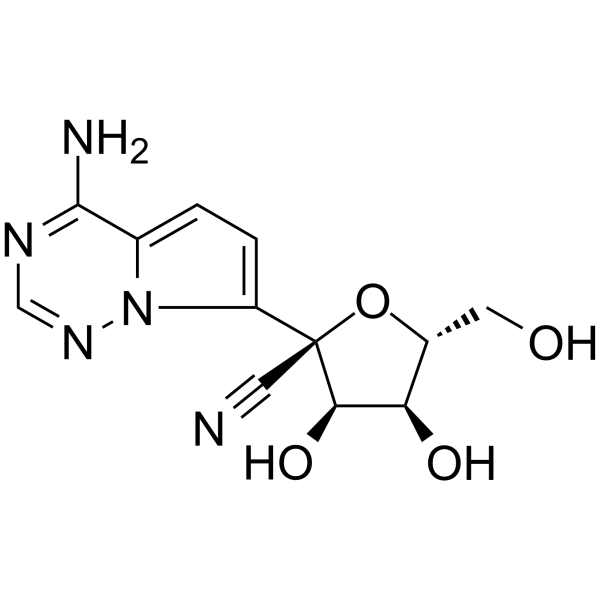
  • HY-103586
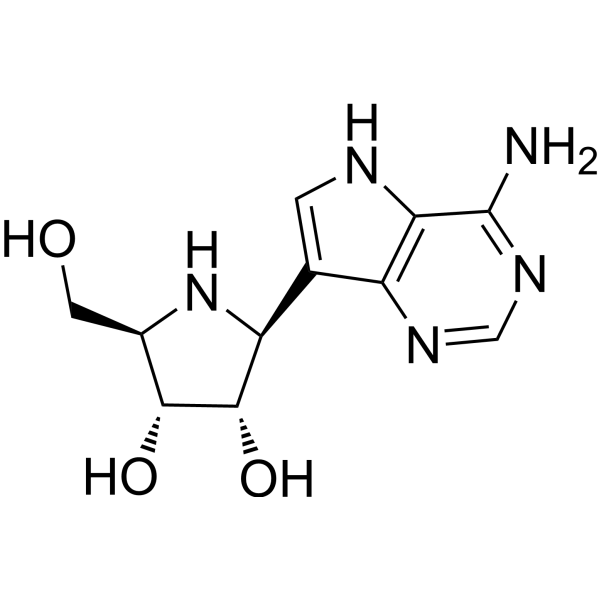
    GS-441524
    25+ Cited Publications

    DNA/RNA Synthesis SARS-CoV Infection
    GS-441524 is a potent, orally active and CNS-penetrant viral RNA-dependent RNA polymerase inhibitor. GS-441524 competes with natural nucleosides to block viral RNA transcription as an alternative substrate and RNA chain terminator. GS-441524 inhibits the replication of feline infectious peritonitis virus, African swine fever virus, and severe acute respiratory syndrome coronavirus 2. GS-441524 reduces viral RNA levels in cats. GS-441524 can be used in research related to feline infectious peritonitis, African swine fever, and coronavirus disease 2019 (COVID-19) .
    GS-441524
  • HY-B2060A
    Tiamulin fumarate
    1 Publications Verification

    Thiamutilin fumarate

    Bacterial Antibiotic Infection
    Tiamulin (Thiamutilin) fumarate is a diterpenic antibiotic that is widely used in pigs and poultry for the control of infectious diseases. Tiamulin fumarate is effectively used in the study of airsacculitis, which is primarily caused by Mycoplasma spp .
    Tiamulin fumarate
  • HY-B1278B

    (±)-Vitamin E acetate

    Environmental Pollutants Biochemical Assay Reagents Infection
    (±)-α-Tocopherol acetate ((±)-Vitamin E acetate), is a orally active synthetic form of vitamin E. (±)-α-Tocopherol acetate is the ester of acetic acid and α-tocopherol. (±)-α-Tocopherol acetate can be used for the research of the susceptibility of farmed fish to infectious diseases .
    (±)-α-Tocopherol acetate
  • HY-B0005A
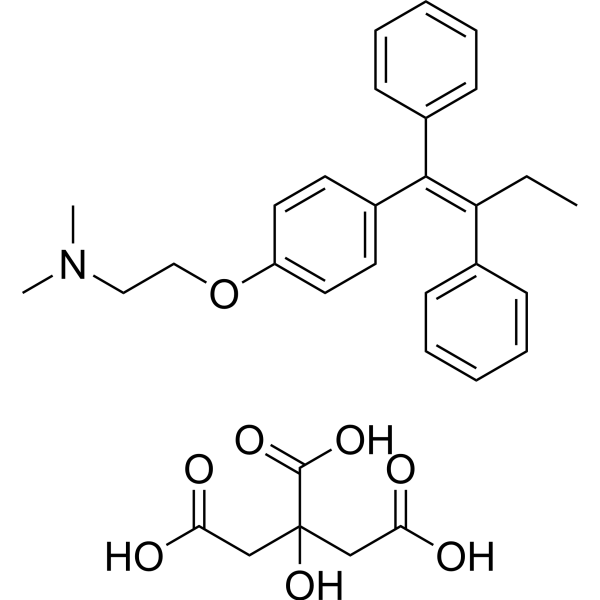
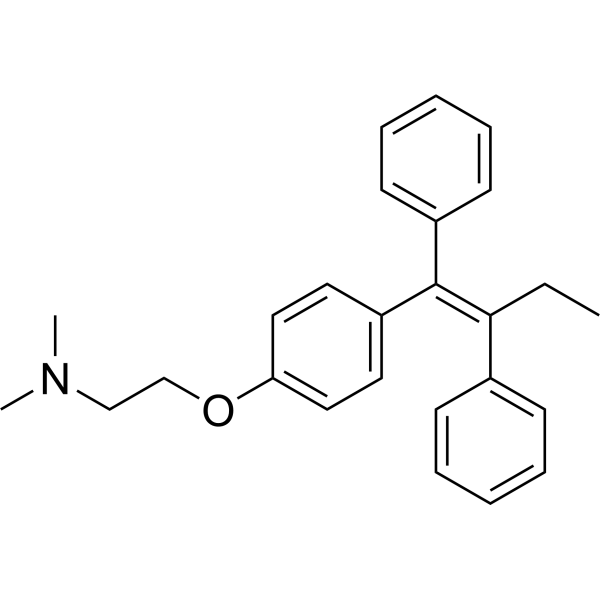
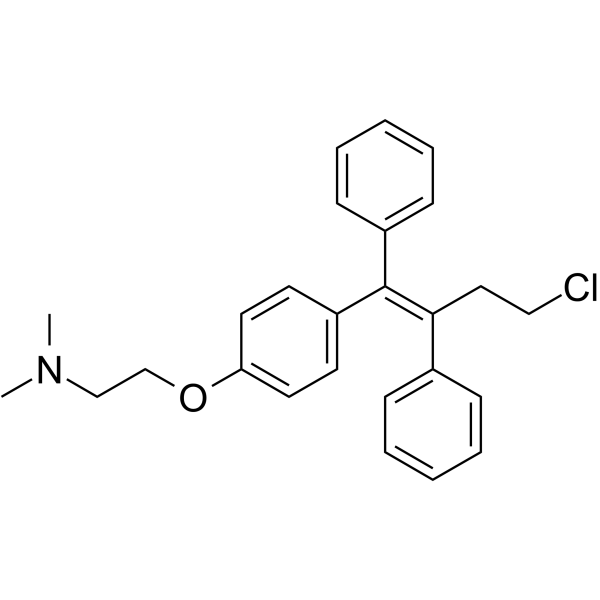
    Toremifene
    5+ Cited Publications

    Z-Toremifene; NK 622 free base; FC-1157a free base

    Estrogen Receptor/ERR Infection Cancer
    Toremifene (Z-Toremifene) is a second-generation selective estrogen-receptor modulator (SERM) in development for the prevention of osteoporosis. Toremifene also potent inhibits infectious EBOV Zaire and Marburg (MARV) with IC50 of 0.07 µM and 2.6 µM, respectively .
    Toremifene
  • HY-B2060
    Tiamulin
    1 Publications Verification

    Thiamutilin

    Bacterial Antibiotic Infection
    Tiamulin (Thiamutilin) is a diterpenic antibiotic that is widely used in pigs and poultry for the control of infectious diseases. Tiamulin is effectively used in the study of airsacculitis, which is primarily caused by Mycoplasma spp .
    Tiamulin
  • HY-141692

    Interleukin Related Inflammation/Immunology Cancer
    IL-17 modulator 4 is a proagent of IL-17 modulator 1 (HY-141535). IL-17 modulator 1 is an orally active, highly efficacious IL-17 modulator. IL-17 modulator 4 is promising for the research of IL-17A mediated diseases, including inflammation, autoimmune diseases, infectious diseases, cancer, and precancerous syndrome .
    IL-17 modulator 4
  • HY-N2387

    Bacterial Apoptosis Autophagy Infection Cancer
    Pinosylvin is a?pre-infectious stilbenoid toxin?isolated from the heartwood of Pinus species, has anti-bacterial activities . Pinosylvin is a resveratrol analogue, can induce cell apoptosis and autophapy in leukemia cells .
    Pinosylvin
  • HY-77995

    o-Anisaldehyde

    Bacterial Fungal Infection
    2-Methoxybenzaldehyde (o-Anisaldehyde) is a bacterial/fungal inhibitor with a BA50 value of 0.19 for Salmonella. 2-Methoxybenzaldehyde can be used for the study of bacterial and fungal infectious diseases .
    2-Methoxybenzaldehyde
  • HY-B0357
    Diclazuril
    2 Publications Verification

    R-64433

    Parasite Antibiotic Infection
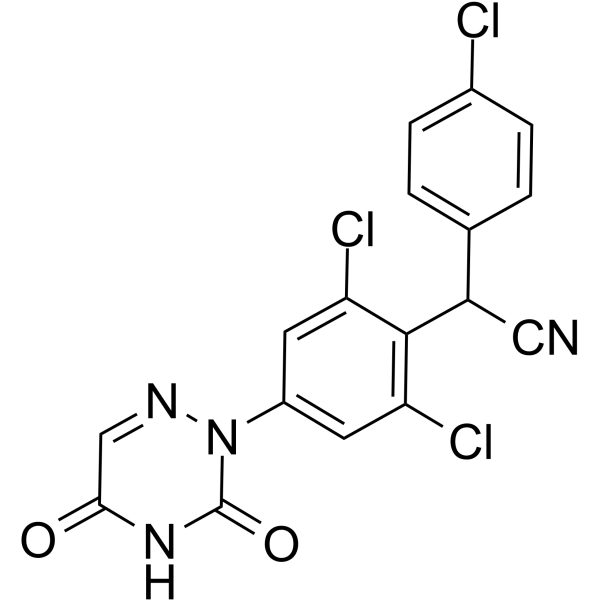
    Diclazuril (R-64433), a benzeneacetonitrile derivative, is a potent and orally active anticoccidial agent. Diclazuril can be used for the research of certain infectious and parasitic diseases, including coccidiosis, acute toxoplasmosis, equine protozoal pyoencephalitis (EPM) et.al .
    Diclazuril
  • HY-134940
    Quabodepistat
    3 Publications Verification

    OPC-167832

    Bacterial Infection Inflammation/Immunology
    Quabodepistat (OPC-167832) is a potent and orally active dprE1 inhibitor with an IC50 of 0.258 μM. Quabodepistat has antituberculosis activity and can be used for the research of tuberculosis caused by Mycobacterium tuberculosis .
    Quabodepistat
  • HY-N9388
    Andrograpanin
    1 Publications Verification

    p38 MAPK Infection Inflammation/Immunology
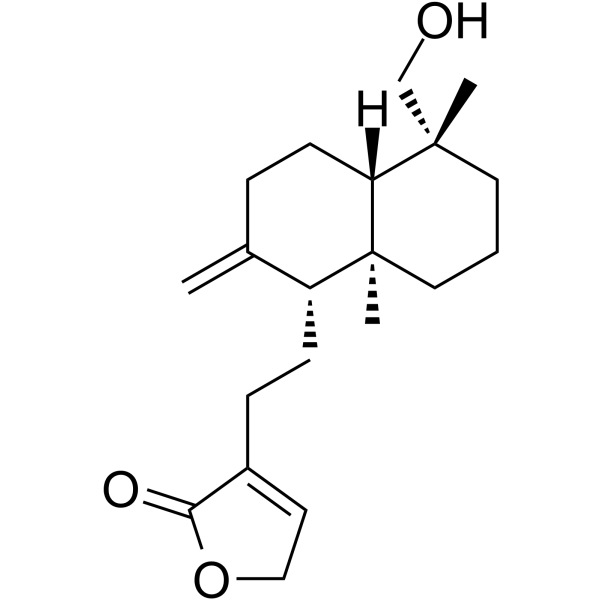
    Andrograpanin, a bioactive compound from Andrographis paniculata, exhibits anti-inflammatory and anti-infectious properties .
    Andrograpanin
  • HY-122071

    Antibiotic Bacterial Infection
    Bicyclomycin is an antibiotic. Bicyclomycin exhibits selective antibacterial activity against Gram-negative bacteria such as Escherichia coli and Klebsiella spp., with no cross-resistance. Bicyclomycin is applicable to the research of infectious diseases .
    Bicyclomycin
  • HY-101092A

    Toll-like Receptor (TLR) Infection Cancer
    QS-21 is a mixture of QS-21-Xyl (HY-101092B) and QS-21-Api (HY-101092), with a ratio of 35:65. QS-21 is an innate immune system-targeted adjuvant. QS-21 is promising for research of oncology vaccines (e.g., melanoma) and infectious disease vaccines (e.g., HIV, malaria) .
    QS-21
  • HY-16784
    Samatasvir
    1 Publications Verification

    IDX719; IDX18719

    HCV HCV Protease Infection
    Samatasvir (IDX71) is a potent, orally active NS5A inhibitor of HCV replication. Samatasvir is effective and selective against infectious HCV and replicons, with EC50s falling within a tight range of 2 to 24 pM in genotype 1 through 5 replicons .
    Samatasvir
  • HY-103586A
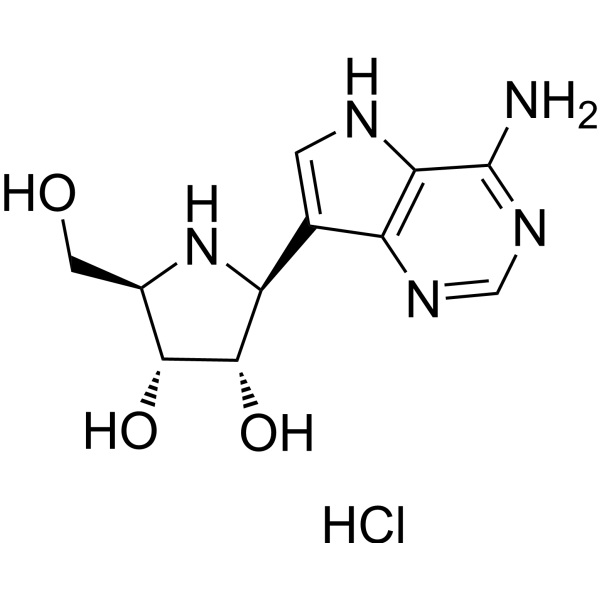
    GS-441524 hydrochloride
    25+ Cited Publications

    DNA/RNA Synthesis SARS-CoV Infection
    GS-441524 hydrochloride is a potent, orally active and CNS-penetrant viral RNA-dependent RNA polymerase inhibitor. GS-441524 hydrochloride competes with natural nucleosides to block viral RNA transcription as an alternative substrate and RNA chain terminator. GS-441524 hydrochloride inhibits the replication of feline infectious peritonitis virus, African swine fever virus, and severe acute respiratory syndrome coronavirus 2. GS-441524 hydrochloride reduces viral RNA levels in cats. GS-441524 hydrochloride can be used in research related to feline infectious peritonitis, African swine fever, and coronavirus disease 2019 (COVID-19) .
    GS-441524 hydrochloride
  • HY-B1278BR

    (±)-Vitamin E acetate (Standard)

    Biochemical Assay Reagents Reference Standards Infection
    (±)-α-Tocopherol acetate (Standard) is the analytical standard of (±)-α-Tocopherol acetate. This product is intended for research and analytical applications. (±)-α-Tocopherol acetate ((±)-Vitamin E acetate), is a orally active synthetic form of vitamin E. (±)-α-Tocopherol acetate is the ester of acetic acid and α-tocopherol. (±)-α-Tocopherol acetate can be used for the research of the susceptibility of farmed fish to infectious diseases .
    (±)-α-Tocopherol acetate (Standard)
  • HY-103048A

    PD-1/PD-L1 Cancer
    PD-1/PD-L1-IN 3 TFA, a macrocyclic peptide, is a potent and selective inhibitor of the PD-1/PD-L1 and CD80/PD-L1 interactions extracted from patent WO2014151634A1, compound No.1. PD-1/PD-L1-IN 3 TFA interferes with PD-L1 binding to PD-1 and CD80 by binding to PD-L1, with IC50s of 5.60 nM and 7.04 nM, respectively. PD-1/PD-L1-IN 3 TFA can be used for the research of various diseases, including cancer and infectious diseases .
    PD-1/PD-L1-IN 3 TFA
  • HY-P0305

    Prion protein (106-126)

    Prion Protein Infection
    PrP (106-126) is a peptide corresponding to the prion protein (PrP) amyloidogenic region, and its biochemical properties resemble the infectious form of prion protein.
    PrP (106-126)
  • HY-128787

    Dihydroorotate Dehydrogenase DNA/RNA Synthesis Influenza Virus Infection
    hDHODH-IN-4 is a potent human dihydroorotate dehydrogenase (DHODH) inhibitor, with a pIC50 of 7.8 for human recombinant DHODH. hDHODH-IN-4 inhibits measles virus replication, with a pMIC50 of 8.8 .
    hDHODH-IN-4
  • HY-136081A

    Insecticide Infection
    Hexamidine diisethionate is an antimicrobial agent targeting Acanthamoeba protozoa. Hexamidine diisethionate is promising for research of ocular infectious diseases such as Acanthamoeba keratitis .
    Hexamidine diisethionate
  • HY-19558

    HCV HCV Protease Infection
    IDX184 is a potent and orally bioavailable inhibitor of HCV replication. IDX184 potently inhibits HCV polymerase (IC50=0.31 μM, Ki=52.3 nM) .
    IDX184
  • HY-152849

    HL5101

    c-Met/HGFR Cancer
    Boditrectinib is a potent tyrosine kinase inhibitor. Boditrectinib serves as an antineoplastic agent. Boditrectinib is useful in the research of cancer, inflammation, neurodegenerative diseases and certain infectious diseases .
    Boditrectinib
  • HY-143744

    GP681; Cap-dependent endonuclease-IN-3

    Endonuclease Influenza Virus Infection
    Suraxavir marboxil (GP681; Cap-dependent endonuclease-IN-3) is a PA subunit cap-dependent endonuclease inhibitor with antiviral activity. Suraxavir marboxil inhibits PA subunit cap-dependent endonuclease activity and inhibits influenza A and/or influenza B viral replication. Suraxavir marboxil can be used alone or in combination with other anti-influenzal agents for the prevention of influenza A and/or influenza B viral infectious diseases. Suraxavir marboxil can be used for the research of influenza A and/or influenza B viral infectious diseases .
    Suraxavir marboxil
  • HY-153518

    Bacterial Infection
    LpxC-IN-11 (Compound 1) is an LpxC inhibitor. LpxC-IN-11 can be used in the research of bacterial infectious diseases .
    LpxC-IN-11
  • HY-145240

    Eukaryotic Initiation Factor (eIF) Infection Cancer
    eIF4E-IN-1 is a potent inhibitor of eIF4E. eIF4E-IN-1 inhibits immunosuppression components such as immune checkpoint proteins PD-1, PD-L1, LAG3, TIM3, and/or IDO, in order to inhibit or release immune suppression in certain diseases, such as cancer and infectious disease (extracted from patent WO2021003194A1, compound Y) .
    eIF4E-IN-1
  • HY-P4040

    HCV Protease Infection Neurological Disease Metabolic Disease Inflammation/Immunology Cancer
    Ac-D-DGla-LI-Cha-C is a potent HCV protease inhibitor peptide. Ac-D-DGla-LI-Cha-C can be used for the research of cancer, autoimmune diseases, fibrotic diseases, inflammatory diseases, neurodegenerative diseases, infectious diseases, lung diseases, heart and vascular diseases and metabolic diseases .
    Ac-D-DGla-LI-Cha-C
  • HY-103048

    PD-1/PD-L1 Cancer
    PD-1/PD-L1-IN 3, a macrocyclic peptide, is a potent and selective inhibitor of the PD-1/PD-L1 and CD80/PD-L1 interactions extracted from patent WO2014151634A1, compound No.1. PD-1/PD-L1-IN 3 interferes with PD-L1 binding to PD-1 and CD80 by binding to PD-L1, with IC50s of 5.60 nM and 7.04 nM, respectively. PD-1/PD-L1-IN 3 can be used for the research of various diseases, including cancer and infectious diseases .
    PD-1/PD-L1-IN 3
  • HY-105084A

    Sodium Channel Calcium Channel Cardiovascular Disease Infection Neurological Disease Cancer
    Lubeluzole dihydrochloride is the dihydrochloride salt of Lubeluzole (HY-105084). Lubeluzole dihydrochloride is the S-isomer of benzothiazole derivative. Lubeluzole dihydrochloride can inhibit glutamate release, glutamate-activated NO synthesis and block voltage-gated Sodium Channel and Calcium Channel. Lubeluzole dihydrochloride exhibits anti-ischemic and neuroprotective effects. Lubeluzole dihydrochloride also shows anti-bacterial and anti-diarrheal potential. Lubeluzole dihydrochloride can inhibit cardiac sodium channel and prolong cardiac action potential. Lubeluzole dihydrochloride can inhibit cancer cells proliferation and invasion and shows chemosensitizing effect. Lubeluzole dihydrochloride can be used for the researches of cancer, infection, neurological and cardiovascular disease such as stroke, infectious diarrhea and ovarian .
    Lubeluzole dihydrochloride
  • HY-152849A

    HL5101 oxalate

    c-Met/HGFR Cancer
    Boditrectinib oxalate is a potent tyrosine kinase inhibitor. Boditrectinib oxalate serves as an antineoplastic agent. Boditrectinib oxalate is useful in the research of cancer, inflammation, neurodegenerative diseases and certain infectious diseases .
    Boditrectinib oxalate
  • HY-N16407

    NSC 159632

    Drug Derivative Bacterial Infection
    Austdiol (NSC 159632) is an azaphilone derivative with antimicrobial activity. Austdiol is promising for research of infectious diseases .
    Austdiol
  • HY-16332

    PI3K Infection Cancer
    ML-220 is a PI3K modulator that can be used for the study of neoplasms and infectious diseases .
    ML-220
  • HY-P11126

    Bacterial Infection
    Mel4 is an antimicrobial peptide, exhibiting broad-spectrum antimicrobial activity. Mel4 can neutralize bacterial lipopolysaccharide in a dose-dependent manner. Mel4 can be used in the research and prevention of related bacterial infectious diseases (such as ocular infections) .
    Mel4
  • HY-P11134

    LeuA

    Bacterial Infection
    Leucocin A (LeuA), a 37-amino acid peptide, is a class II bacteriocin without Lanthionine (HY-135113). Leucocin A has potent anti-bacterial activity against gram-positive bacteria, such as Leuconostoc paramesenteroides and Lactobacillus sake with MICs of 69 and 39 nM, respectively. Leucocin A can be used for infectious diseases research .
    Leucocin A
  • HY-P11100

    Bacterial Infection
    PepW is a potent antimicrobial peptide targeting the capsule of multidrug-resistant Klebsiella pneumoniae (MIC=2-8 μM). PepW achieves bactericidal activity via capsule polysaccharide aggregation and structural disruption. PepW is promising for research of infectious diseases caused by Gram-negative bacteria (e.g., pneumonia, sepsis) .
    PepW
  • HY-B0226A

    (E)-Nitrofural

    Bacterial Parasite Infection
    (E)-Nitrofurazone ((E)-Nitrofural) is a topical broad-spectrum antibacterial agent effective against both Gram-negative and Gram-positive bacteria. (E)-Nitrofurazone also possesses antiprotozoal and antiparasitic activities. (E)-Nitrofurazone is commonly used in the research of superficial wounds, burns, skin infections, pyoderma, infectious skin diseases, trypanosomiasis, and acute bacillary dysentery .
    (E)-Nitrofurazone
  • HY-105084

    Sodium Channel Calcium Channel Infection Cardiovascular Disease Neurological Disease Cancer
    Lubeluzole is the S-isomer of benzothiazole derivative. Lubeluzole can inhibit glutamate release, glutamate-activated NO synthesis and block voltage-gated Sodium Channel and Calcium Channel. Lubeluzole exhibits anti-ischemic and neuroprotective effects. Lubeluzole also shows anti-bacterial and anti-diarrheal potential. Lubeluzole can inhibit cardiac sodium channel and prolong cardiac action potential. Lubeluzole can inhibit cancer cells proliferation and invasion and shows chemosensitizing effect. Lubeluzole can be used for the researches of cancer, infection, neurological and cardiovascular disease such as stroke, infectious diarrhea and ovarian .
    Lubeluzole
  • HY-115846

    Bacterial Infection
    ML370 is an antibacterial agent. ML370 exerts antibacterial activity by inhibiting the activity of Vibrio cholerae LuxO kinase. ML370 can be used in the research of infectious diseases such as cholera .
    ML370
  • HY-B1690A

    Antibiotic Bacterial Histamine Receptor Infection
    Methdilazine hydrochloride is an orally active antibiotic (histamine antagonist). Methdilazine hydrochloride can inhibit various mycobacterium with MIC values at 5-15 μg/mL in vitro and in vivo, which can be used for the research of infectious diseases .
    Methdilazine hydrochloride
  • HY-B1690

    Antibiotic Bacterial Histamine Receptor Infection
    Methdilazine is an orally active antibiotic (histamine antagonist). Methdilazine can inhibit various mycobacterium with MIC values at 5-15 μg/mL in vitro and in vivo, which can be used for the research of infectious diseases .
    Methdilazine
  • HY-127183

    HSP Infection
    ML229 is an HSP90 inhibitor. ML229 can be used in the research of infectious diseases such as candidiasis .
    ML229
  • HY-127179

    HSP Infection
    ML189 is an HSP90 inhibitor. ML189 can be used in the research of infectious diseases such as candidiasis .
    ML189
  • HY-175304

    Parasite Infection
    DMU371 is a Trypanosoma cruzi lysyl-tRNA synthetase 1 (KRS1) inhibitor (IC50=185 nM). DMU371 is promising for research of infectious diseases .
    DMU371
  • HY-176247

    Bacterial Infection
    DHFS-IN-1 (Compound 3) is a dihydrofolate synthetase (DHFS) inhibitor with an IC50 value of 2.6 μM. DHFS-IN-1 can be used in research on infectious diseases related to bacterial folate synthesis .
    DHFS-IN-1
  • HY-12866B

    (R)-LOXO-101; (R)-ARRY-470

    Trk Receptor Infection Inflammation/Immunology Cancer
    (R)-Larotrectinib is a potent TRK inhibitor with an IC50 value of 28.5 nM for TrkA. (R)-Larotrectinib can be used for researching cancer, inflammatory and certain infectious diseases
    (R)-Larotrectinib
  • HY-147021A

    ADC Linker Infection Inflammation/Immunology Cancer
    MC-D-Val-Cit-PAB-PNP is a agent-linker-ligand conjugates. MC-D-Val-Cit-PAB-PNP can be used for researching cancer, autoimmune diseases and infectious diseases .
    MC-D-Val-Cit-PAB-PNP
  • HY-P11095

    Bacterial Fungal Infection
    Pelteobagrin is a broad-spectrum antimicrobial peptide targeting Gram-positive bacteria, Gram-negative bacteria, and fungi (MIC=2-16 μg/mL). Pelteobagrin exerts bactericidal activity via non-competitive disruption of cell wall and cytoplasmic membrane integrity. Pelteobagrin is promising for research of infectious diseases .
    Pelteobagrin
  • HY-W286362

    Palmitic acid anilide

    Bacterial Infection
    Palmitanilide (Palmitic acid anilide) is an antibacterial agent against Gram-positive bacteria. Palmitanilide can electrostatically bind to relevant components in the cell walls of Gram-positive bacteria (such as Bacillus cereus), alter the cell membrane structure, and affect the normal functions of the cells. Palmitanilide is promising for research of infectious diseases caused by Gram-positive bacteria .
    Palmitanilide
  • HY-149349

    Bacterial Infection Cancer
    MtUng-IN-1 (Compound 18a) is a Uracil DNA glycosylase of Mycobacterium (MtUng) inhibitor (IC50: 300 μM). MtUng-IN-1 can be used for research of cancers and infectious diseases .
    MtUng-IN-1
  • HY-Z7592

    (E)-THR-221

    Antibiotic Bacterial Penicillin-binding protein (PBP) Infection
    (E)-Cefodizime ((E)-THR-221) is an antibiotic. (E)-Cefodizime can selectively bind to penicillin-binding proteins (PBPs) and inhibit the synthesis of the bacterial cell wall, thereby exerting antibacterial activity. (E)-Cefodizime is promising for research of various bacterial infectious diseases, such as for preoperative infection prophylaxis .
    (E)-Cefodizime
  • HY-173574

    RIP kinase Infection Neurological Disease Inflammation/Immunology
    RIPK1-IN-31 (Compound 36) is a selective allosteric modulator of RIPK1 (receptor-interacting protein kinase 1) with an IC50 value of 16 nM. RIPK1-IN-31 is promising for research of infectious, autoimmune, and neurodegenerative diseases .
    RIPK1-IN-31

Inquiry Online

Your information is safe with us. * Required Fields.

Salutation


Country or Region *

Applicant Name *


Organization Name *

Department *


Email Address *


Product Name *

Cat. No.


Requested quantity *

Phone Number *


Remarks

Inquiry Online

Inquiry Information

Product Name:
Cat. No.:
Quantity:
MCE Japan Authorized Agent:

