

2962 Results for "

interactions

" in MedChemExpress (MCE) Product Catalog:
Products (2962)

2962 Results for "interactions" in MCE Product Catalog:

306
306 Publications Verification
Cat. No.: HY-B0146
CAS No.: 129497-78-5
Synonyms: CL 318952
Research Areas:  

Cancer

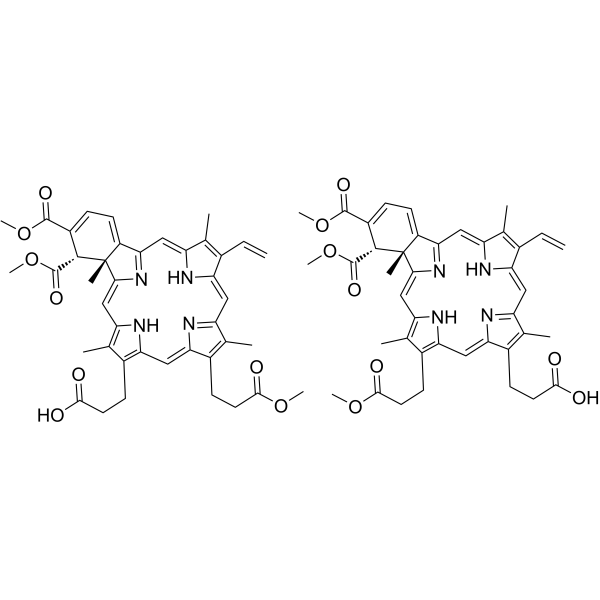
Verteporfin (CL 318952) is a photosensitizer for photodynamic therapy to eliminate the abnormal blood vessels in the eye associated with conditions such as age-related macular degeneration. Verteporfin is a YAP inhibitor which disrupts YAP-TEAD interactions. Verteporfin induces cell apoptosis . Verteporfinis an autophagy inhibitor that blocks autophagy at an early stage by inhibiting autophagosome formation .
loading...
    loading...
266
266 Cited Publications
Cat. No.: HY-13948
CAS No.: 4474-91-3
Purity:  99.98%
Synonyms: Angiotensin II; Ang II; DRVYIHPF
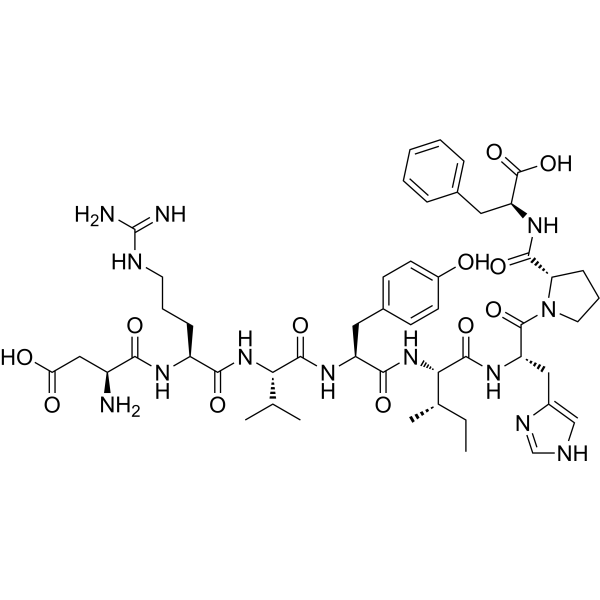
Angiotensin II (Angiotensin II) is a vasoconstrictor and a major bioactive peptide of the renin/angiotensin system. Angiotensin II human plays a central role in regulating human blood pressure, which is mainly mediated by interactions between Angiotensin II and the G-protein-coupled receptors (GPCRs) Angiotensin II type 1 receptor (AT1R) and Angiotensin II type 2 receptor (AT2R). Angiotensin II human stimulates sympathetic nervous stimulation, increases aldosterone biosynthesis and renal actions. Angiotensin II human induces growth of vascular smooth muscle cells, increases collagen type I and III synthesis in fibroblasts, leading to thickening of the vascular wall and myocardium, and fibrosis. Angiotensin II human also induces apoptosis. Angiotensin II induces capillary formation from endothelial cells via the LOX-1 dependent redox-sensitive pathway .
loading...
    loading...
266
266 Cited Publications
Cat. No.: HY-13948A
CAS No.: 68521-88-0
Purity:  99.62%
Synonyms: Angiotensin II acetate; Ang II acetate; DRVYIHPF acetate
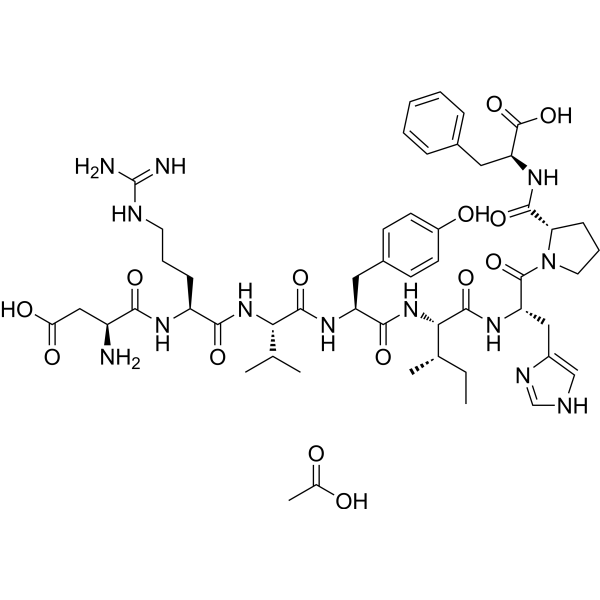
Angiotensin II human (Angiotensin II) acetate is a vasoconstrictor and a major bioactive peptide of the renin/angiotensin system. Angiotensin II human acetate plays a central role in regulating human blood pressure, which is mainly mediated by interactions between Angiotensin II and the G-protein-coupled receptors (GPCRs) Angiotensin II type 1 receptor (AT1R) and Angiotensin II type 2 receptor (AT2R). Angiotensin II human acetate stimulates sympathetic nervous stimulation, increases aldosterone biosynthesis and renal actions. Angiotensin II human acetate induces growth of vascular smooth muscle cells, increases collagen type I and III synthesis in fibroblasts, leading to thickening of the vascular wall and myocardium, and fibrosis. Angiotensin II human acetate also induces apoptosis. Angiotensin II human acetate induces capillary formation from endothelial cells via the LOX-1 dependent redox-sensitive pathway .
loading...
    loading...
266
266 Cited Publications
Cat. No.: HY-13948B
CAS No.: 2761969-44-0
Purity:  98.84%
Synonyms: Angiotensin II TFA; Ang II TFA; DRVYIHPF TFA
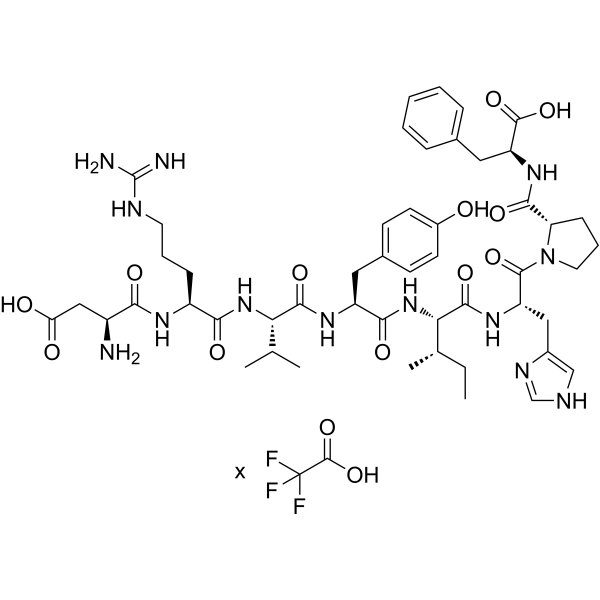
Angiotensin II human (Angiotensin II) TFA is a vasoconstrictor and a major bioactive peptide of the renin/angiotensin system. Angiotensin II human TFA plays a central role in regulating human blood pressure, which is mainly mediated by interactions between Angiotensin II and the G-protein-coupled receptors (GPCRs) Angiotensin II type 1 receptor (AT1R) and Angiotensin II type 2 receptor (AT2R). Angiotensin II human TFA stimulates sympathetic nervous stimulation, increases aldosterone biosynthesis and renal actions. Angiotensin II human TFA induces growth of vascular smooth muscle cells, increases collagen type I and III synthesis in fibroblasts, leading to thickening of the vascular wall and myocardium, and fibrosis. Angiotensin II human TFA also induces apoptosis. Angiotensin II human TFA induces capillary formation from endothelial cells via the LOX-1 dependent redox-sensitive pathway .
loading...
    loading...
232
232 Cited Publications
Cat. No.: HY-K0208

MCE Streptavidin Magnetic Beads provide a fast and convenient method for numerous applications, including purification of proteins and nucleic acids, protein interaction studies, immunoprecipitation, immunoassays, pull-down and cell isolation. The 1 mL is defined as the base specification. All larger sizes correspond to incremental volumes of this base.

loading...
    loading...
202
202 Cited Publications
Cat. No.: HY-N0565
CAS No.: 564-25-0
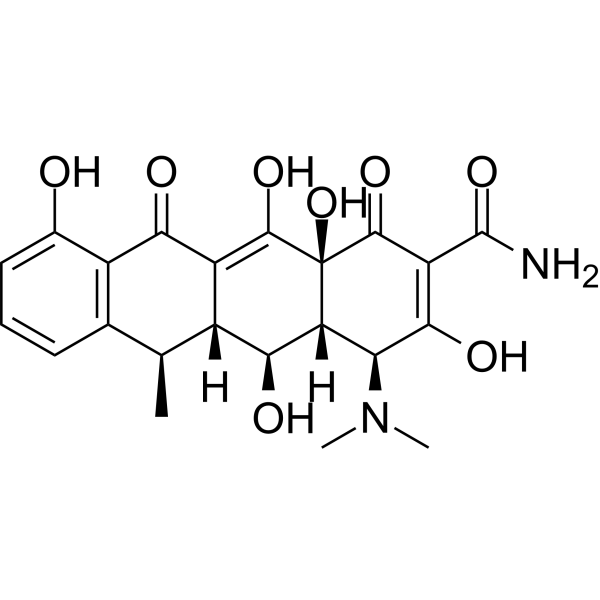
Doxycycline is an orally active, broad-spectrum tetracycline antibiotic that also functions as an MMP inhibitor, exhibiting antibacterial, antiviral, antiparasitic, and antitumor activities. Doxycycline can bind to the classical binding site (CBS) within the mRNA decoding center of the bacterial 70S ribosome's 30S small subunit.Doxycycline blocks bacterial protein synthesis and inhibits the degradation of the extracellular matrix through its interaction with zinc and calcium ions. Doxycycline also inhibits mitochondrial biogenesis, translation, and the expression of respiratory chain proteins. Doxycycline induces apoptosis, inhibits autophagy and EMT, downregulates stem cell markers, and activates the PI3K-AKT pathway, thereby effectively inhibiting the viability and proliferation of cancer cells such as breast cancer cells. Doxycycline can disrupt transthyretin (TTR) amyloid fibrils. Doxycycline also promotes the survival and self-renewal of embryonic stem cells and neural stem cells, and reduces the frequency of medium changes in culture. Doxycycline can be used in research related to cancers—such as breast, prostate, and bladder cancer—as well as neurological disorders .
loading...
    loading...
202
202 Cited Publications
Cat. No.: HY-N0565A
CAS No.: 10592-13-9
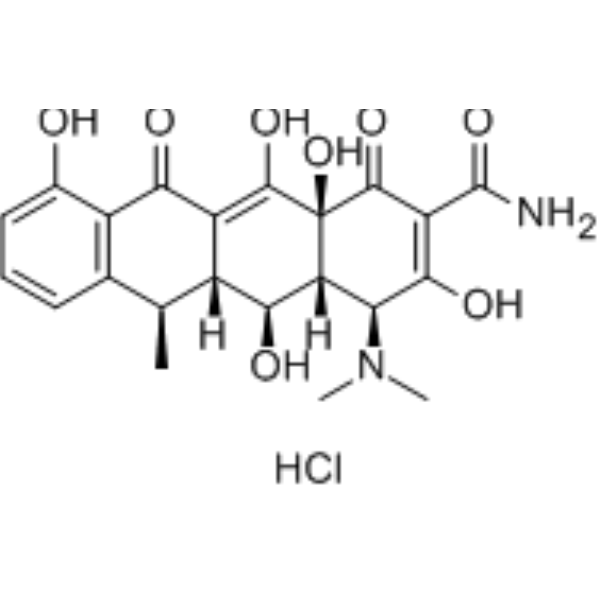
Doxycycline hydrochloride is an orally active, broad-spectrum tetracycline antibiotic that also functions as an MMP inhibitor, exhibiting antibacterial, antiviral, antiparasitic, and antitumor activities. Doxycycline hydrochloride can bind to the classical binding site (CBS) within the mRNA decoding center of the 30S small subunit of the bacterial 70S ribosome.Doxycycline hydrochloride blocks bacterial protein synthesis and inhibits the degradation of the extracellular matrix through its interaction with zinc and calcium ions. Doxycycline hydrochloride also inhibits mitochondrial biogenesis, translation, and the expression of respiratory chain proteins. Doxycycline hydrochloride induces apoptosis, inhibits autophagy and EMT, downregulates stem cell markers, and activates the PI3K-AKT pathway, thereby effectively inhibiting the viability and proliferation of cancer cells such as breast cancer cells. Doxycycline hydrochloride can disrupt transthyretin (TTR) amyloid fibrils. Doxycycline hydrochloride also promotes the survival and self-renewal of embryonic stem cells and neural stem cells, and reduces the frequency of medium changes in culture. Doxycycline hydrochloride can be used in research related to cancers—such as breast, prostate, and bladder cancer—as well as neurological disorders .
loading...
    loading...
202
202 Cited Publications
Cat. No.: HY-W008923
CAS No.: 17086-28-1
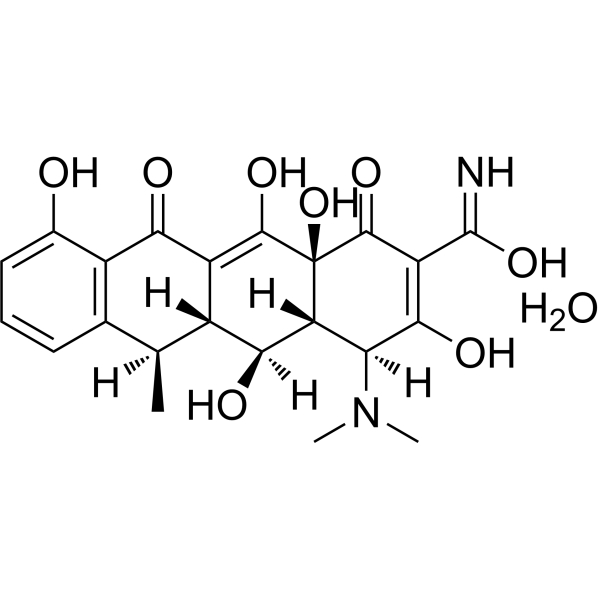
Doxycycline monohydrate (Doxycycline (hydrochloride hemiethanolate hemihydrate); WC2031) is an orally active, broad-spectrum tetracycline antibiotic that also functions as an MMP inhibitor, exhibiting antibacterial, antiviral, antiparasitic, and antitumor activities. Doxycycline monohydrate can bind to the classical binding site (CBS) within the mRNA decoding center of the 30S small subunit of the bacterial 70S ribosome.Doxycycline monohydrate blocks bacterial protein synthesis and inhibits the degradation of the extracellular matrix through its interaction with zinc and calcium ions. Doxycycline monohydrate also inhibits mitochondrial biogenesis, translation, and the expression of respiratory chain proteins. Doxycycline monohydrate induces apoptosis, inhibits autophagy and EMT, downregulates stem cell markers, and activates the PI3K-AKT pathway, thereby effectively inhibiting the viability and proliferation of cancer cells such as breast cancer cells. Doxycycline monohydrate can disrupt transthyretin (TTR) amyloid fibrils. Doxycycline monohydrate also promotes the survival and self-renewal of embryonic stem cells and neural stem cells, and reduces the frequency of medium changes in culture. Doxycycline monohydrate can be used in research related to cancers—such as breast, prostate, and bladder cancer—as well as neurological disorders .
loading...
    loading...
202
202 Cited Publications
Cat. No.: HY-N0565B
CAS No.: 24390-14-5
Synonyms: Doxycycline hydrochloride hemiethanolate hemihydrate; WC2031
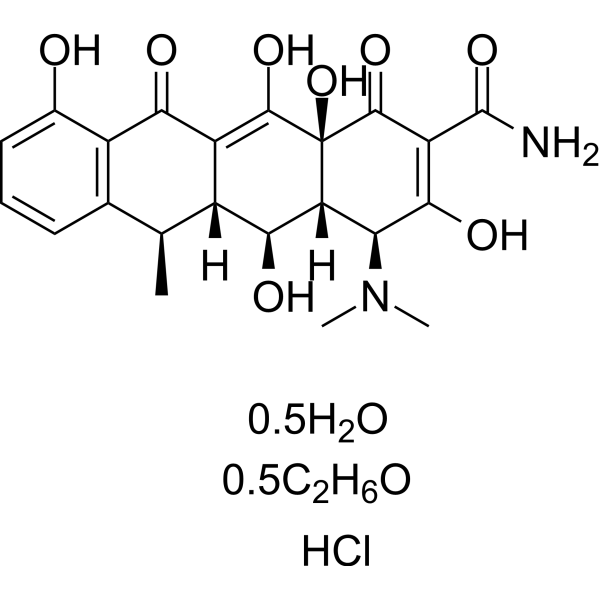
Doxycycline hyclate (Doxycycline (hydrochloride hemiethanolate hemihydrate); WC2031) is an orally active, broad-spectrum tetracycline antibiotic that also functions as an MMP inhibitor, exhibiting antibacterial, antiviral, antiparasitic, and antitumor activities. Doxycycline hyclate can bind to the classical binding site (CBS) within the mRNA decoding center of the 30S small subunit of the bacterial 70S ribosome.Doxycycline hyclate blocks bacterial protein synthesis and inhibits the degradation of the extracellular matrix through its interaction with zinc and calcium ions. Doxycycline hyclate also inhibits mitochondrial biogenesis, translation, and the expression of respiratory chain proteins. Doxycycline hyclate induces apoptosis, inhibits autophagy and EMT, downregulates stem cell markers, and activates the PI3K-AKT pathway, thereby effectively inhibiting the viability and proliferation of cancer cells such as breast cancer cells. Doxycycline hyclate can disrupt transthyretin (TTR) amyloid fibrils. Doxycycline hyclate also promotes the survival and self-renewal of embryonic stem cells and neural stem cells, and reduces the frequency of medium changes in culture. Doxycycline hyclate can be used in research related to cancers—such as breast, prostate, and bladder cancer—as well as neurological disorders .
loading...
    loading...
111
111 Cited Publications
Cat. No.: HY-N6682
CAS No.: 22144-77-0
Synonyms: Zygosporin A; NSC 209835
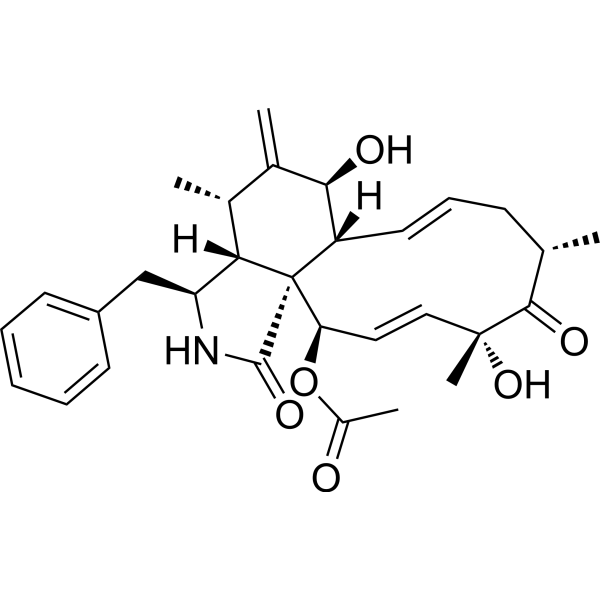
Cytochalasin D (Zygosporin A) is a potent actin polymerization inhibitor, could be derived from fungus. Cytochalasin D has cell-permeable activity. Cytochalasin D inhibits the G-actin–cofilin interaction by binding to G-actin. Cytochalasin D also inhibits the binding of cofilin to F-actin and decreases the rate of both actin polymerization and depolymerization in living cells. Cytochalasin D can reduce exosome release, in turn reducing the amount of survivin present in the tumour environment. Cytochalasin D induces phosphorylation and cytoplasmic retention of Yap .
loading...
    loading...
81
81 Cited Publications
Cat. No.: HY-10029
CAS No.: 675576-98-4
Purity:  99.00%
Synonyms: Rebemadlin
Research Areas:  

Cancer

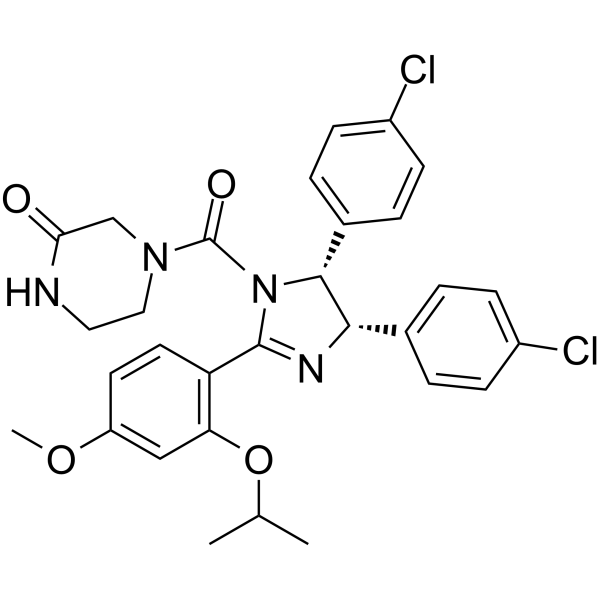
Nutlin-3a (Rebemadlin), an active enantiomer of Nutlin-3, is a potent murine double minute (MDM2) inhibitor (IC50=90 nM). Nutlin-3a inhibits MDM2-p53 interactions and stabilizes the p53 protein, and induces cell autophagy and apoptosis. Nutlin-3a has the potential for the study of TP53 wild-type ovarian carcinomas .
loading...
    loading...
69
69 Cited Publications
Cat. No.: HY-14428
CAS No.: 780757-88-2
Purity:  99.86%
Target:  

β-catenin Apoptosis

Research Areas:  

Cancer

ICG-001 is an inhibitor of β-catenin/TCF mediated transcription. ICG-001 works by specifically binding to cyclic AMP response element-binding protein with an IC50 of 3 μM. ICG-001 selectively blocks the β-catenin/CBP interaction without interfering with the β-catenin/p300 interaction.
loading...
    loading...
69
69 Cited Publications
Cat. No.: HY-101085
CAS No.: 909089-13-0
Purity:  99.68%
Target:  

Wnt β-catenin

Research Areas:  

Cancer

SKL2001 is an agonist of the Wnt/β-catenin pathway, with anti-cancer activity. SKL2001 stabilizes intracellular β-catenin via disruption of the Axin/β-catenin interaction .
loading...
    loading...
64
64 Cited Publications
Cat. No.: HY-17567A
CAS No.: 9041-08-1
Synonyms: Sodium heparin; Sodium heparinate
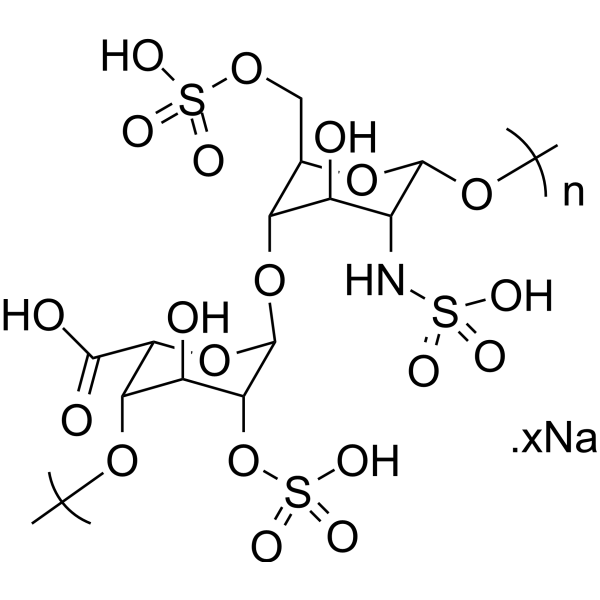
Heparin sodium salt (Sodium heparin) is an anticoagulant which binds reversibly to antithrombin III (ATIII) and greatly accelerates the rate at which ATIII inactivates coagulation enzymes thrombin factor IIa and factor Xa. Heparin sodium salt significantly inhibits exosome-cell interactions.
loading...
    loading...
64
64 Cited Publications
Cat. No.: HY-P9906
CAS No.: 216974-75-3
Synonyms: Anti-Human VEGF, Humanized Antibody
Bevacizumab (Anti-Human VEGF, Humanized Antibody) is a humanized monoclonal antibody against VEGF-A and an angiogenesis inhibitor. Bevacizumab blocks the interaction between VEGF-A and VEGF receptors. Bevacizumab possesses immunomodulatory properties. Bevacizumab can be used in research on metastatic colorectal cancer, metastatic breast cancer, and non-small cell lung cancer .
loading...
    loading...
64
64 Cited Publications
Cat. No.: HY-P9906A
CAS No.: 216974-75-3
Bevacizumab (Anti-VEGFA) is a humanized monoclonal antibody against VEGF-A and an angiogenesis inhibitor. Bevacizumab (Anti-VEGFA) blocks the interaction between VEGF-A and VEGF receptors. Bevacizumab (Anti-VEGFA) possesses immunomodulatory properties. Bevacizumab (Anti-VEGFA) can be used in research on metastatic colorectal cancer, metastatic breast cancer, and non-small cell lung cancer .
loading...
    loading...
55
55 Cited Publications
Cat. No.: HY-13992
CAS No.: 195514-80-8
Purity:  99.85%
Synonyms: B/B Homodimerizer
Target:  

FKBP

Research Areas:  

Metabolic Disease

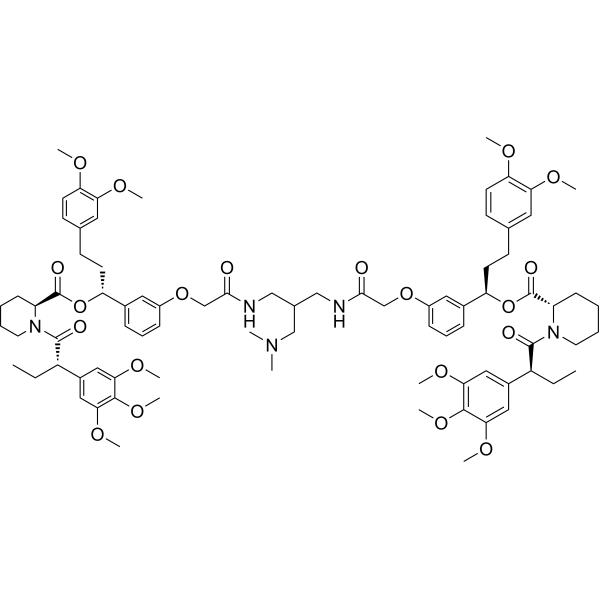
AP20187 (B/B Homodimerizer) is a cell-permeable ligand used to dimerize FK506-binding protein (FKBP) fusion proteins and initiate biological signaling cascades and gene expression or disrupt protein-protein interactions.
loading...
    loading...
48
48 Cited Publications
Cat. No.: HY-A0070A
CAS No.: 6893-02-3
Synonyms: Triiodothyronine; 3,3',5-Triiodo-L-thyronine; T3
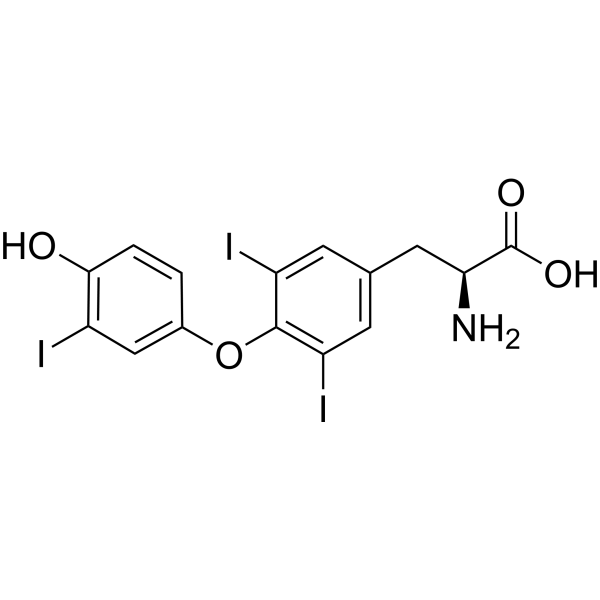
Liothyronine is an active form of thyroid hormone. Liothyronine binds to thyroid hormone receptors TRα and TRβ with Kis of 2.33 and 2.29 nM for hTRα and hTRβ, respectively. Liothyronine also binds to PVR and blocks the interaction of TIGIT/PVR .
loading...
    loading...
44
44 Cited Publications
Cat. No.: HY-101879
CAS No.: 65-61-2
Purity:  99.65%
Target:  

Fluorescent Dye

Research Areas:  

Others

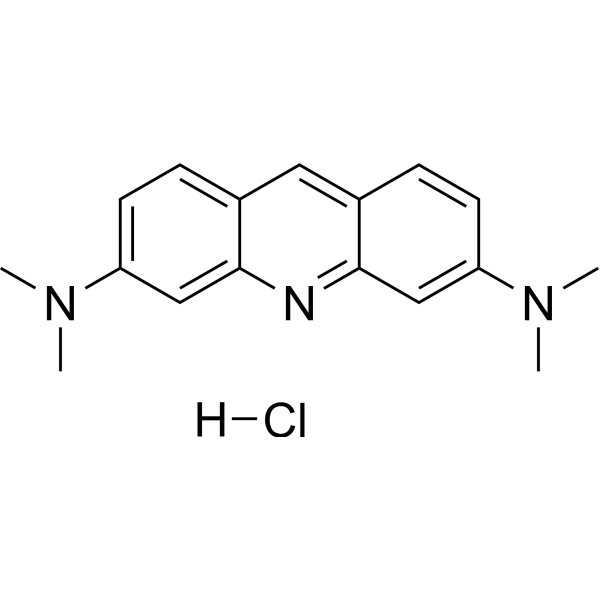
Acridine Orange hydrochloride is a cell-permeable fluorescent nucleic acid dye and lysosomal probe with a pKa of 9.65. Acridine Orange hydrochloride enters cells via passive diffusion, is protonated and accumulates in acidic lysosomes, and forms aggregates at high concentrations, producing orange-red fluorescence; when the lysosomal proton gradient or membrane integrity is impaired, Acridine Orange hydrochloride is released into the cytoplasm, green fluorescence increases and red fluorescence decreases, so it can be used to monitor lysosomal acidification status and changes in membrane permeability. Acridine Orange hydrochloride binds to nucleic acids through intercalation or electrostatic interactions, exhibiting mainly green fluorescence when bound to double-stranded DNA and mainly red fluorescence when bound to RNA or single-stranded DNA, and can be used for nucleic acid staining and differential DNA/RNA detection. The Ex/Em of Acridine Orange hydrochloride monomer is approximately 492/525 nm; when bound to double-stranded DNA it is approximately 488/520-524 nm, and when bound to RNA or single-stranded DNA it is approximately 457/630-650 nm .
loading...
    loading...
44
44 Cited Publications
Cat. No.: HY-D0942
CAS No.: 10127-02-3
Synonyms: Euchrysine 3RX
Target:  

Fluorescent Dye

Research Areas:  

Others

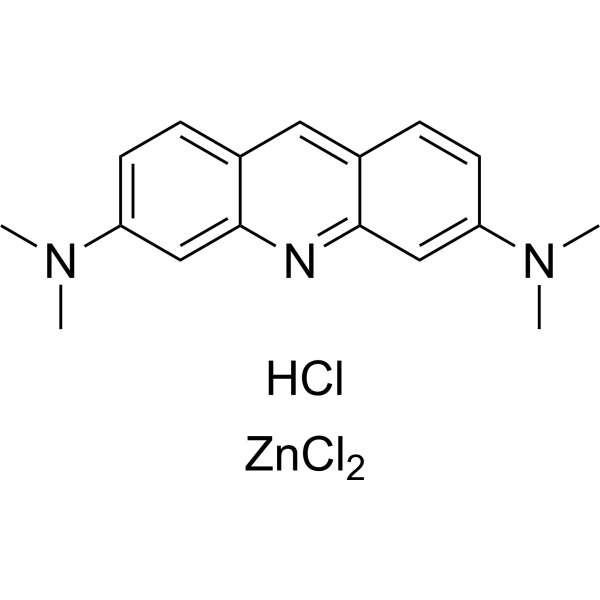
Acridine Orange zinc chloride salt is a cell-permeable fluorescent nucleic acid dye and lysosomal probe with a pKa of 9.65. Acridine Orange zinc chloride salt enters cells via passive diffusion, is protonated and accumulates in acidic lysosomes, and forms aggregates at high concentrations, producing orange-red fluorescence; when the lysosomal proton gradient or membrane integrity is impaired, Acridine Orange zinc chloride salt is released into the cytoplasm, green fluorescence increases and red fluorescence decreases, so it can be used to monitor lysosomal acidification status and changes in membrane permeability. Acridine Orange zinc chloride salt binds to nucleic acids through intercalation or electrostatic interactions, exhibiting mainly green fluorescence when bound to double-stranded DNA and mainly red fluorescence when bound to RNA or single-stranded DNA, and can be used for nucleic acid staining and differential DNA/RNA detection. The Ex/Em of Acridine Orange zinc chloride salt monomer is approximately 492/525 nm; when bound to double-stranded DNA it is approximately 488/520-524 nm, and when bound to RNA or single-stranded DNA it is approximately 457/630-650 nm .
loading...
    loading...

