
1. Search Result
Search Result
Results for "

lactic acid bacteria

" in MedChemExpress (MCE) Product Catalog:

13

Inhibitors & Agonists

1

Biochemical Assay Reagents

1

Peptides

8

Natural
Products

1

Isotope-Labeled Compounds

Cat. No. Product Name Target Research Areas Chemical Structure
  • HY-N7075
    Inulin
    4 Publications Verification

    Endogenous Metabolite Infection Neurological Disease Metabolic Disease Cancer
    Inulin is an orally active prebiotic targeting the intestinal microbiota, selectively promoting the proliferation and activity of beneficial bacteria such as bifidobacteria and lactic acid bacteria, and playing a role in regulating the intestinal microecology. The functions of Inulin include: Fermentation by probiotics in the colon to produce short-chain fatty acids (such as butyrate and propionate), lowering the intestinal pH and inhibiting the overgrowth of harmful bacteria; Enhancing the intestinal barrier function and reducing endotoxin translocation; Directly scavenging free radicals (such as superoxide free radicals, hydroxyl free radicals) and activating antioxidant enzymes (SOD, CAT) to reduce oxidative stress. Inulin can also be used in the study of intestinal diseases (constipation, IBD), metabolic syndrome (diabetes, obesity) and liver damage by regulating glucose and lipid metabolism (such as reducing triglycerides, improving insulin sensitivity) and immune response (enhancing NK cell activity, inhibiting inflammatory factors)[1][2][3][4].
    Inulin
  • HY-111095B

    (R)-2-Hydroxypropionic acid sodium

    Endogenous Metabolite Drug Isomer Neurological Disease Metabolic Disease
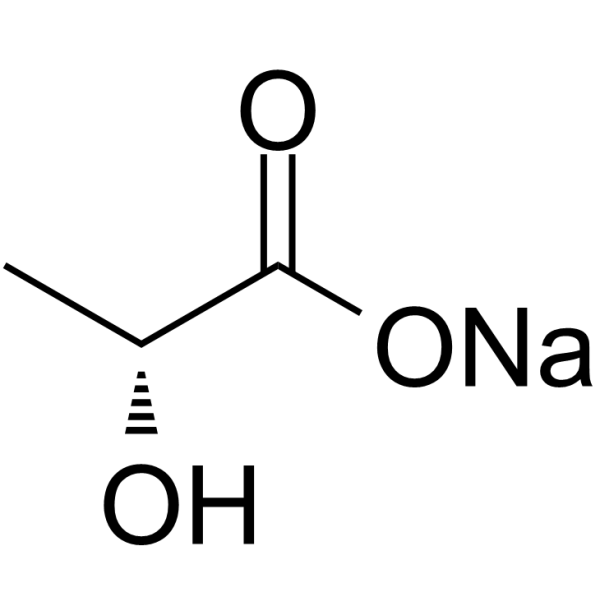
    D-(-)-Lactic acid ((R)-2-Hydroxypropionic acid) sodium is an orally active, toxic optical isomer of Lactic acid (HY-B2227), mainly derived from overproduction by intestinal bacteria or exogenous intake. D-(-)-Lactic acid sodium can induce intoxication, characterized by severe metabolic acidosis accompanied by neurological symptoms .
    D-(-)-Lactic acid sodium
  • HY-W005288
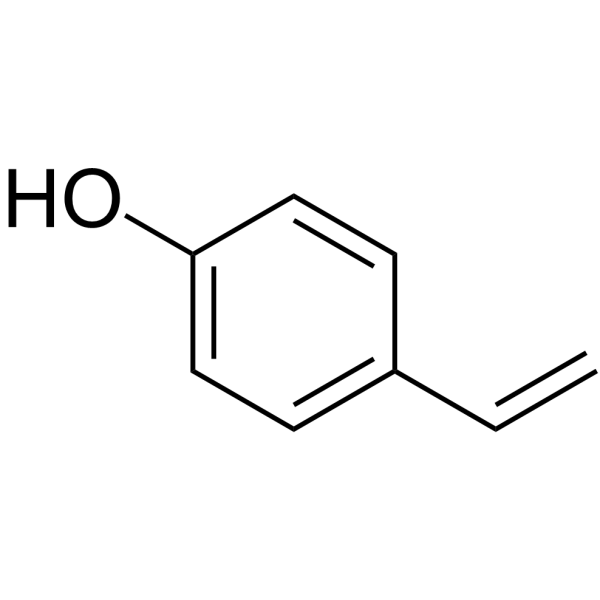
    4-Vinylphenol (10% in Propylene glycol)
    1 Publications Verification

    4-Hydroxystyrene

    Apoptosis Endogenous Metabolite Cancer
    4-Vinylphenol is found in the medicinal herb Hedyotis diffusa Willd, wild rice and is also the metabolite of p-coumaric and ferulic acid by lactic acid bacteria in wine. 4-Vinylphenol induces apoptosis and inhibits blood vessels formation and suppresses invasive breast tumor growth in vivo .
    4-Vinylphenol (10% in Propylene glycol)
  • HY-112624O

    Dextran 100; Dextran D100; Dextran T100(MW 90000-110000)

    Biochemical Assay Reagents Others
    Dextran T100 (MW 100,000) (Dextran 100; Dextran D100) is a dehydrated glucose polymer with an average molecular weight of 100,000. Dextran T100 (MW 100,000) has an α-(1→6)-linked D-glucose backbone and α-(1→4)-, α-(1→3)- or α-(1→2)-linked D-glucose side chains, and it is synthesized by lactic acid bacteria or their enzymes. Dextran T100 (MW 100,000) possesses favorable biodegradability and biocompatibility, and it can be used in the fields of food, pharmaceuticals, cosmetics and research .
    Dextran T100 (MW 100,000)
  • HY-P11146

    Sakacin P inducer peptide

    Bacterial Infection
    SppIP (Sakacin P inducer peptide) is a peptide consisting of 19 amino acids . SppIP is an essential inducer for sakacin P production . SppIP can induce the expression of PRRSV GP5 and SARS-CoV-2 spike protein in recombinant Lactobacillus plantarum. SppIP can activate the transcription of the sakacin P promoter to drive the expression of downstream heterologous capsid proteins, increasing the proportion of PCV2d capsid proteins displayed on the cell surface of Lactobacillus plantarum. SppIP can be used in studies related to sakacin P induction .
    SppIP
  • HY-113133

    Glycosidase Infection Metabolic Disease Inflammation/Immunology
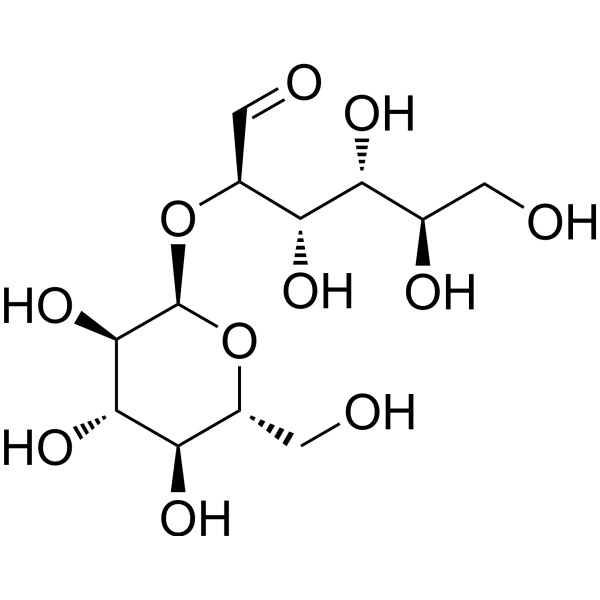
    Kojibiose, an orally active prebiotic disaccharide, can specifically inhibit the activity of α-glucosidase I. kojibiose is a proliferation factor for Bifidobacterium, lactic acid bacteria, and eubacteria. kojibiose is a low-calorie sweetener capable of increasing the absorption of iron. Kojibiose exhibits antitoxic activity. Kojibiose reduces hepatic expression of inflammatory markers in vivo .
    Kojibiose
  • HY-N8139

    Bacterial Fungal Metabolic Disease
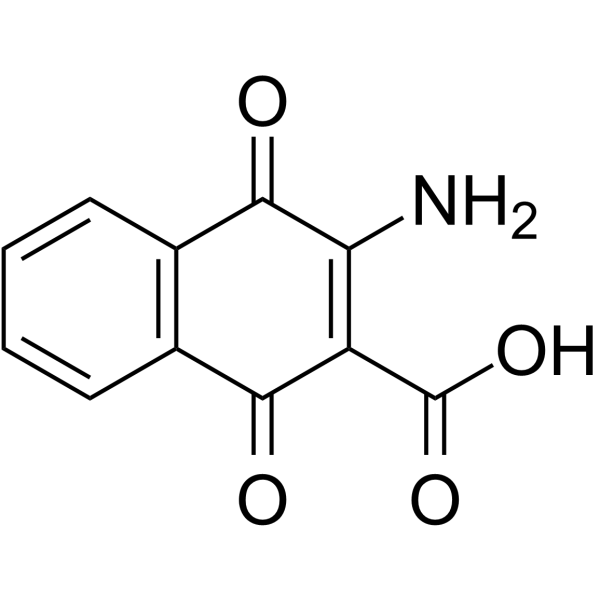
    2-Amino-3-carboxy-1,4-naphthoquinone is the electron transfer mediator. 2-Amino-3-carboxy-1,4-naphthoquinone changes glucose metabolism of the homofermentative lactic acid bacteria .
    2-Amino-3-carboxy-1,4-naphthoquinone
  • HY-165772

    Drug Derivative Metabolic Disease
    10-Hydroxy-12(Z)-octadecenoic acid is a hydroxy-unsaturated fatty acid that can be found in microorganisms such as lactic acid bacteria.
    10-Hydroxy-12(Z)-octadecenoic acid
  • HY-W005288S

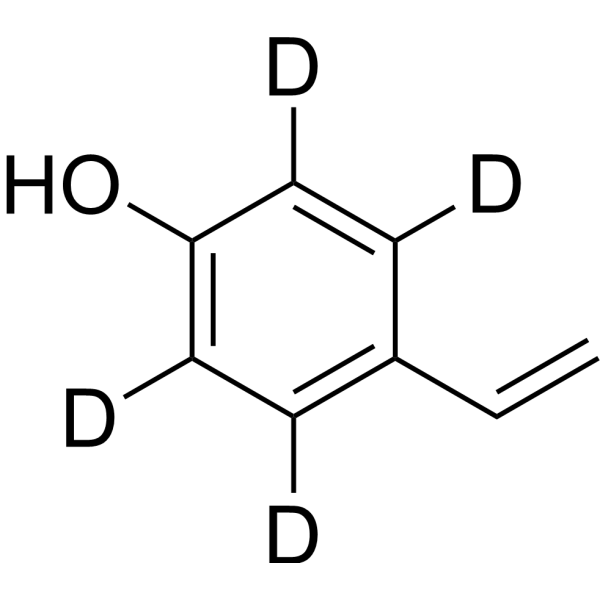
    4-Hydroxystyrene-d4

    Apoptosis Endogenous Metabolite Isotope-Labeled Compounds Cancer
    4-Vinylphenol-d4 is deuterated labeled 4-Vinylphenol (HY-W005288). 4-Vinylphenol is found in the medicinal herb Hedyotis diffusa Willd, wild rice and is also the metabolite of p-coumaric and ferulic acid by lactic acid bacteria in wine. 4-Vinylphenol induces apoptosis and inhibits blood vessels formation and suppresses invasive breast tumor growth in vivo .
    4-Vinylphenol-d4
  • HY-N9439

    Endogenous Metabolite Others
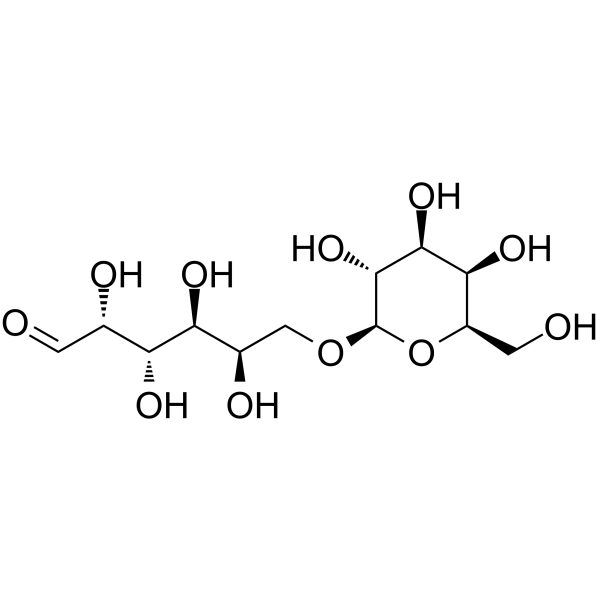
    6-O-β-D-Galactopyranosyl-D-galactose, a disaccharide, is a part of the polysaccharide main chain with β-(1→6)-glycoside bonds with a side chain bonded to the main one by the β-(1→3) bond. 6-O-β-D-Galactopyranosyl-D-galactose can be isolated from enzyme-hydrolyzed peach gum .
    6-O-β-D-Galactopyranosyl-D-galactose
  • HY-113133R

    Reference Standards Glycosidase Infection Metabolic Disease Inflammation/Immunology
    Kojibiose (Standard) is the analytical standard of Kojibiose. This product is intended for research and analytical applications. Kojibiose, an orally active prebiotic disaccharide, can specifically inhibit the activity of α-glucosidase I. kojibiose is a proliferation factor for Bifidobacterium, lactic acid bacteria, and eubacteria. kojibiose is a low-calorie sweetener capable of increasing the absorption of iron. Kojibiose exhibits antitoxic activity. Kojibiose reduces hepatic expression of inflammatory markers in vivo[1][2].
    Kojibiose (Standard)
  • HY-111095BR

    (R)-2-Hydroxypropionic acid sodium (Standard)

    Reference Standards Endogenous Metabolite Drug Isomer Neurological Disease Metabolic Disease
    D-(-)-Lactic acid ((R)-2-Hydroxypropionic acid) sodium (Standard) is the analytical standard of Malvidin-3-glucoside sodium. This product is intended for research and analytical applications. D-(-)-Lactic acid sodium is an orally active, toxic optical isomer of Lactic acid (HY-B2227), mainly derived from overproduction by intestinal bacteria or exogenous intake. D-(-)-Lactic acid sodium can induce intoxication, characterized by severe metabolic acidosis accompanied by neurological symptoms .
    D-(-)-Lactic acid sodium (Standard)
  • HY-117247

    DNA/RNA Synthesis Infection
    5,6,7,8-Tetrahydro-8-deazahomofolic acid is a potential thymidylate synthase (TS) inhibitor with inhibitory activity against other folate-related enzymes. 5,6,7,8-Tetrahydro-8-deazahomofolic acid showed mild growth inhibition against enterococci, lactic acid bacteria, and L1210 cells in culture. 5,6,7,8-Tetrahydro-8-deazahomofolic acid also showed weak inhibition against thymidylate synthase, dihydrofolate reductase, glycyl-ribonucleoside aminotransferase, and aminoimidazole-carboxyacyl-ribonucleoside aminotransferase. 5,6,7,8-Tetrahydro-8-deazahomofolic acid showed low substrate activity for thymidylate synthase .
    5,6,7,8-Tetrahydro-8-deazahomofolic acid

Inquiry Online

Your information is safe with us. * Required Fields.

Salutation


Country or Region *

Applicant Name *


Organization Name *

Department *


Email Address *


Product Name *

Cat. No.


Requested quantity *

Phone Number *


Remarks

Inquiry Online

Inquiry Information

Product Name:
Cat. No.:
Quantity:
MCE Japan Authorized Agent:

