37 Results for "

marine sponge

" in MedChemExpress (MCE) Product Catalog:
Products (37)

37 Results for "marine sponge" in MCE Product Catalog:

10
10 Publications Verification
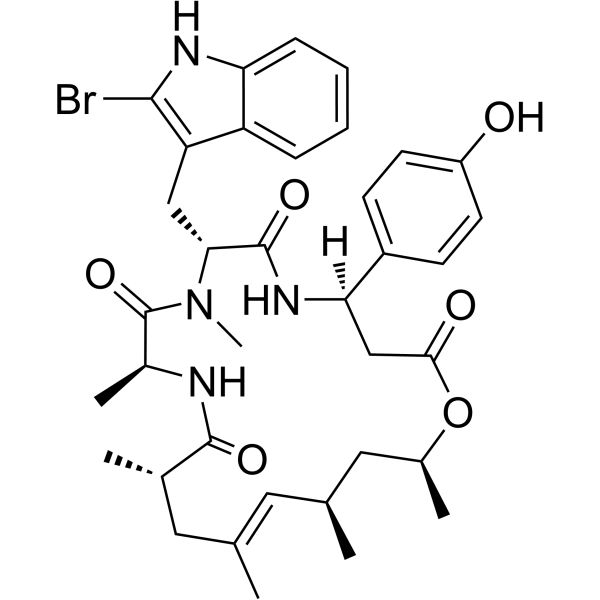
Cat. No.: HY-P0027
CAS No.: 102396-24-7
Jasplakinolide is a potent actin polymerization inducer and stabilizes pre-existing actin filaments. Jasplakinolide binds to F-actin competitively with phalloidin with a Kd of 15 nM. Jasplakinolide, a naturally occurring cyclic peptide from the marine sponge, has both fungicidal and anti-cancer activity .
loading...
    loading...
2
2 Cited Publications
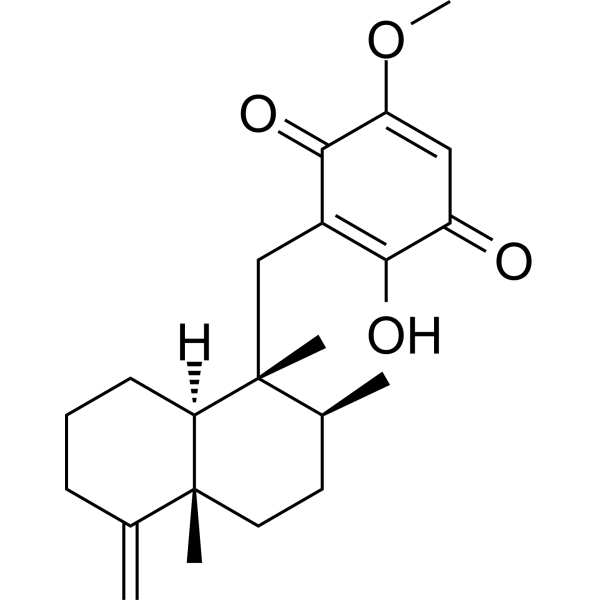
Cat. No.: HY-119500
CAS No.: 71678-03-0
Purity:  ≥98.0%
Ilimaquinone, a marine sponge metabolite, displays anticancer activity via GADD153-mediated pathway. Ilimaquinone can induce vesiculation of the Golgi apparatus . Ilimaquinone exerts anti-HIV, anti-microbial, anti-inflammatory, and effects .
loading...
    loading...
1
1 Cited Publications
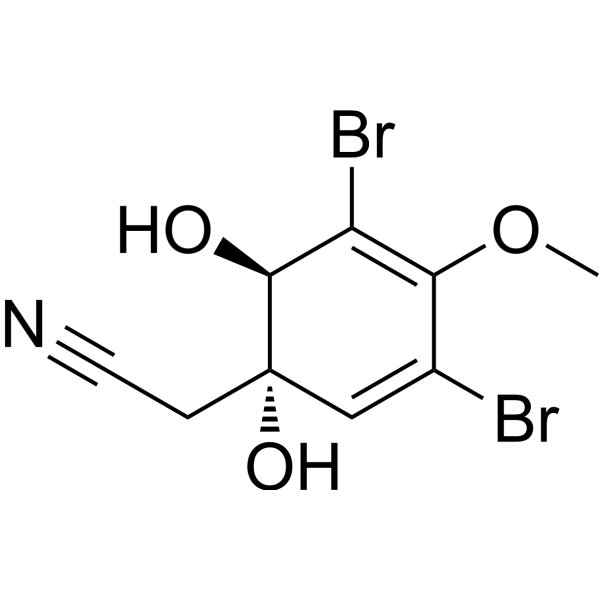
Cat. No.: HY-19827
CAS No.: 28656-91-9
Synonyms: (+)-Aeroplysinin-1
Aeroplysinin 1 ((+)-Aeroplysinin-1), a secondary metabolite isolated from marine sponges, shows potent antibiotic effects on Gram-positive bacteria and exerts antiviral activity against HIV-1 (IC50=14.6 μM). Aeroplysinin 1 has anti-inflammatory, anti-angiogenic and anti-tumor activities. Aeroplysinin 1 induces apoptosis in endothelial cells .
loading...
    loading...
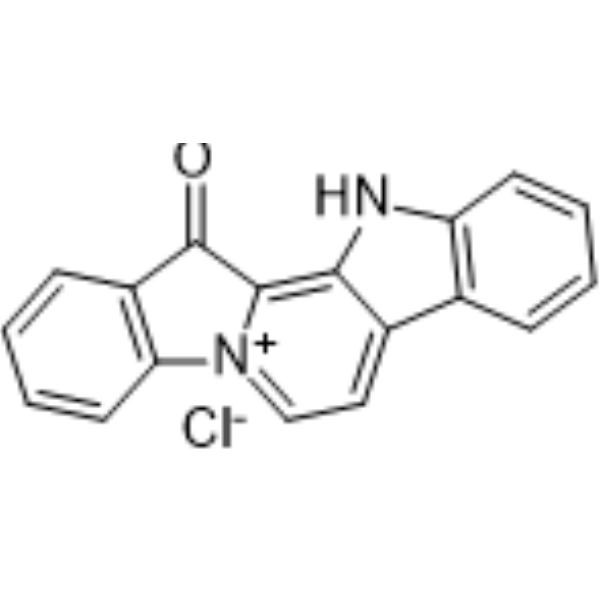
Cat. No.: HY-112328
CAS No.: 114719-57-2
Fascaplysin is an antimicrobial and cytotoxic red pigment, that can come from the marine sponge (Fascaplysinopsis sp.). Fascaplysin has been synthesized in seven steps from indole (65% yield). Fascaplysin can induces apoptosis and autophagy in human leukemia HL-60 cells. Fascaplysin shows anti-tumor activity .
loading...
    loading...
Cat. No.: HY-W004261
CAS No.: 646-30-0
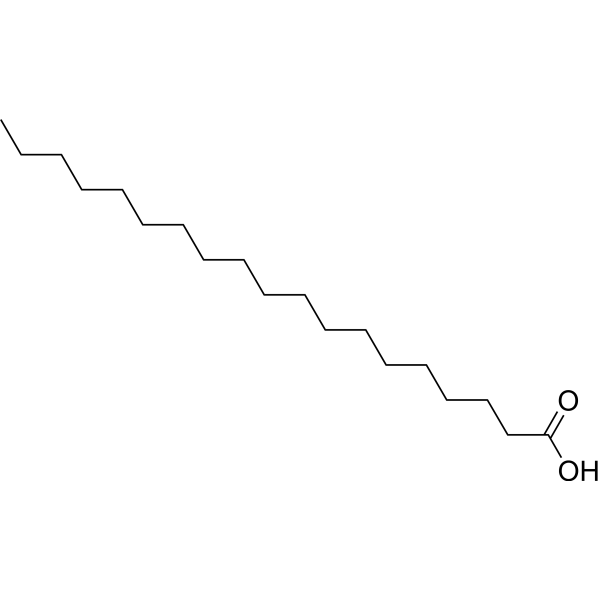
Nonadecanoic acid is a 19-carbon long saturated fatty acid. Nonadecanoic acid is the major constituent of the substance secreted by Rhinotermes marginalis. Nonadecanoic acid can be isolated from several sources, including fungus, plant, and marine sponge. Nonadecanoic acid exhibits inhibitory effects on fibrinolysis and plasmin activity. Nonadecanoic acid produced from Streptomyces is an anti-tumor agent and inhibits IL-12 production .
loading...
    loading...
Cat. No.: HY-W006646
CAS No.: 934-07-6
Methyl 5-bromo-1H-pyrrole-2-carboxylate (Compound 7) is a pyrrole that can be isolated from marine sponges Lissodendotyx sp.
loading...
    loading...
Cat. No.: HY-N15451
CAS No.: 112515-42-1
Deoxytopsentin (compound 5) is a marine bisindole alkaloid and also a MRSA pyruvate kinase inhibitor. Deoxytopsentin exists in sponges. Deoxytopsentin exhibits antibacterial activity against methicillin-resistant Staphylococcus aureus strains in vitro .
loading...
    loading...
Cat. No.: HY-N15748
CAS No.: 287974-44-1
Synonyms: (-)-Pelorol
Pelorol ((-)-Pelorol) is a sesquiterpene found in the tropical marine sponge Dactylospongia elegans. Pelorol has weak antitrypanosomal activity with an IC50 of 17.4 μg/mL and antiplasmodial activity against Plasmodium falciparum clones K1 and NF54 with IC50 values of 786 ng/mL and 1911 ng/mL, respectively. Pelorol is promising for research of parasitic diseases, such as trypanosomiasis and malaria .
loading...
    loading...
Cat. No.: HY-N12524
CAS No.: 5654-84-2
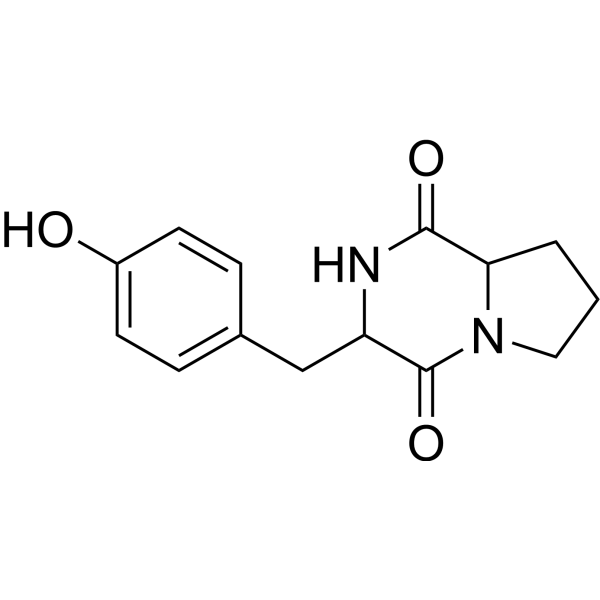
Cyclo(prolyltyrosyl) is a natural compound that can be found in various microorganisms and marine sponges. Cyclo(prolyltyrosyl) has antibacterial, phytotoxic and cytotoxic properties .
loading...
    loading...
Cat. No.: HY-120985
CAS No.: 123000-02-2
Target:  

Calcium Channel

Research Areas:  

Neurological Disease

Xestospongins and araguspongins are marine natural products first isolated from Pacific basin sponges, and noted to have vasodilatory properties.1 Inositol phosphates (IP) are important signal transduction messengers acting via IP3 receptors to promote the mobilization of Ca2+ from intracellular stores.2 Araguspongin B antagonizes the calcium-releasing action of inositol 1,4,5-trisphosphate at the receptor level in cerebral microsomes, with an IC50 of 0.6 μM. It is nearly as potent as xestospongin C as an antagonist of the IP3 receptor.
loading...
    loading...
Cat. No.: HY-N15283
CAS No.: 1141448-57-8
Baculiferins A is a DOPA-derived pyrrole alkaloid. Baculiferins A can be isolated from the Chinese marine sponge Iotrochota baculifera. Baculiferins A have anti-HIV activity .
loading...
    loading...
Cat. No.: HY-116436
CAS No.: 135383-64-1
Target:  

Sodium Channel

Research Areas:  

Neurological Disease

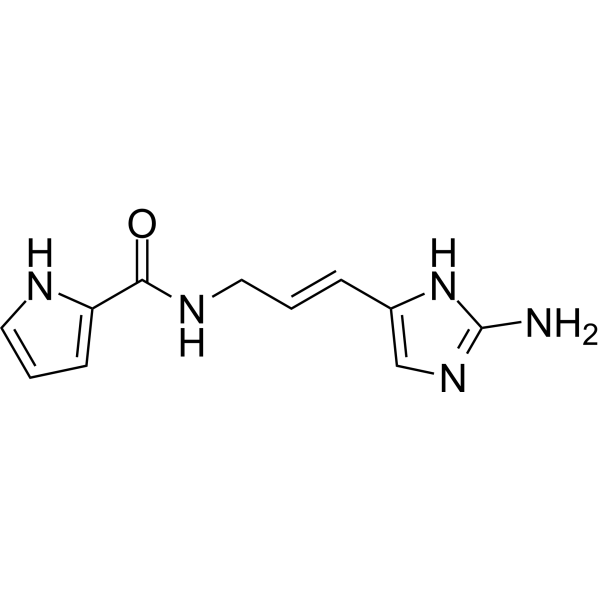
Clathrodin is a marine alkaloid that can be isolated from sponges of the genus, Agelas. Clathrodin is a modulator of voltage-gated sodium (NaV) channels. Clathrodin is a sodium channel neurotoxin influencing sodium channel ionic conductance .
loading...
    loading...
Cat. No.: HY-N6997
CAS No.: 634151-15-8
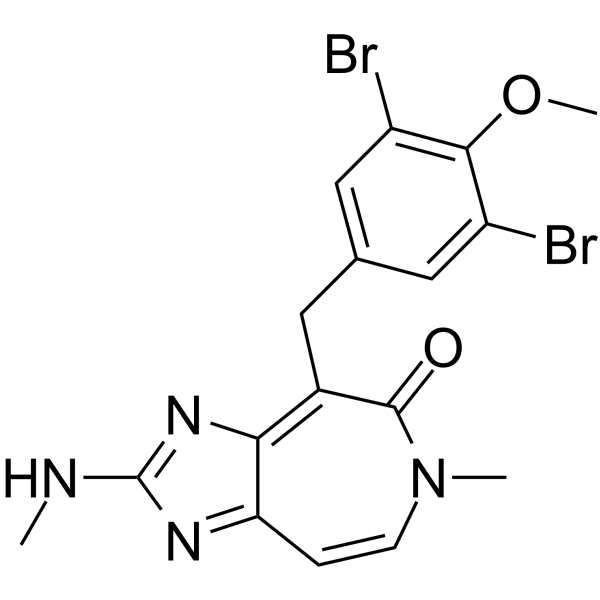
Ceratamine A is an antimitotic heterocyclic alkaloid isolated from the marine sponge Pseudoceratina sp., acts as a microtubule-stabilizing agent. Ceratamine A exhibits cytotoxicity against human cancer cell lines .
loading...
    loading...
Cat. No.: HY-N12605
hTRPA1-IN-1 (19), a norsesterterpenoid that can be isolated from the Marine Sponge Diacarnus spinipoculum, is an inhibitor of transient receptor potential Ankyrin 1 (TRPA1), with an IC50 of 2 μM .
loading...
    loading...
Cat. No.: HY-N7234
CAS No.: 114066-51-2
Target:  

Others

Research Areas:  

Others

Sarasinoside C1 is a 30-norlanostane saponin isolated from the sea sponge Melophlus sarasinorum collected from Kimbe Bay, Papua New Guinea. Sarasinoside C1 has potential roles in marine ecology and pharmacological applications .
loading...
    loading...
Cat. No.: HY-W065835
CAS No.: 96562-96-8
2-Bromoaldisine is a pyrrole alkaloid that can be isolated from the Red Sea: marine sponge Stylissa carter. 2-Bromoaldisine inhibits HIV-1 vector infection. 2-Bromoaldisine inhibits Raf/MEK/MAPK pathway .
loading...
    loading...
Cat. No.: HY-N15359
CAS No.: 919288-75-8
Target:  

Bacterial

Germicidin C is a microbial metabolite with antibacterial activity, which is found in the marine sponge-derived fungus Aspergillus niger. Germicidin C can inhibit the growth of various pathogenic bacteria such as Staphylococcus aureus, Escherichia coli, and Bacillus subtilis with MIC values ranging from 32 to 64 µg/mL .
loading...
    loading...
Cat. No.: HY-121014
CAS No.: 86047-14-5
Amphimedine is a polycyclic alkaloid isolated from the marine sponge Amphimedon sp. and belongs to the pyridoindole alkaloid class. Amphimedine has cytotoxic activity and has been studied as an anticancer metabolite along with neoamphimedine. Studies have shown that deoxyamphimedine damages DNA by generating reactive oxygen species, a mechanism different from that of amphimedine.
loading...
    loading...
Cat. No.: HY-125660
CAS No.: 151124-32-2
Research Areas:  

Infection

Leucettamol A is an inhibitor of Ubc13 (ubiquitin E2 enzyme)-Uev1A interaction, with an IC50 of 50 μg/mL. Leucettamol A can potentially activate the expression of cancer suppressor p53 and is a precursor of anticancer agents. Leucettamol A can be isolated from a marine sponge, Leucetta aff. Microrhaphis .
loading...
    loading...
Cat. No.: HY-119387
CAS No.: 1318025-75-0
Chevalone B was isolated from the ethyl acetate extract of the marine sponge-associated fungus Aspergillus similanensis. The structure of Chevalone B was confirmed by 1D and 2D NMR spectroscopy. Chevalone B showed antimicrobial activity against Gram-positive and Gram-negative bacteria, Candida albicans, and multidrug-resistant strains from the environment. Studies on Chevalone B have shown its potential value in antimicrobial applications.
loading...
    loading...

