11 Results for "

minor fatty acid

" in MedChemExpress (MCE) Product Catalog:
Products (11)

11 Results for "minor fatty acid" in MCE Product Catalog:

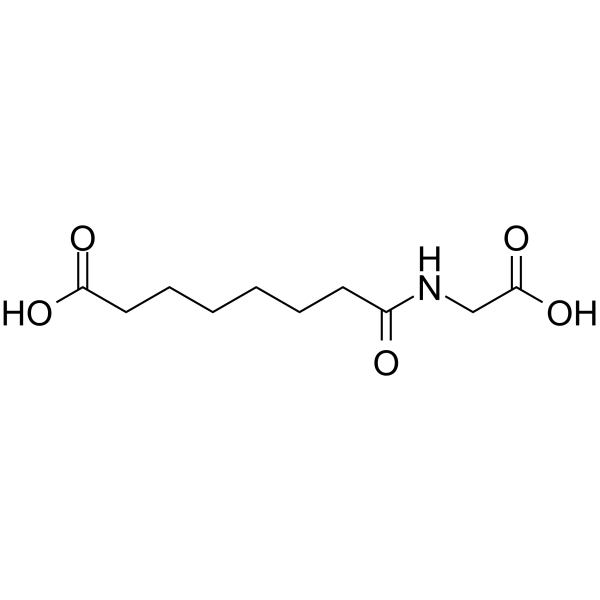
Cat. No.: HY-113367
CAS No.: 60317-54-6
Purity:  99.72%
Suberylglycine is an acyl glycine, which is a normally minor metabolite of fatty acid.
loading...
    loading...
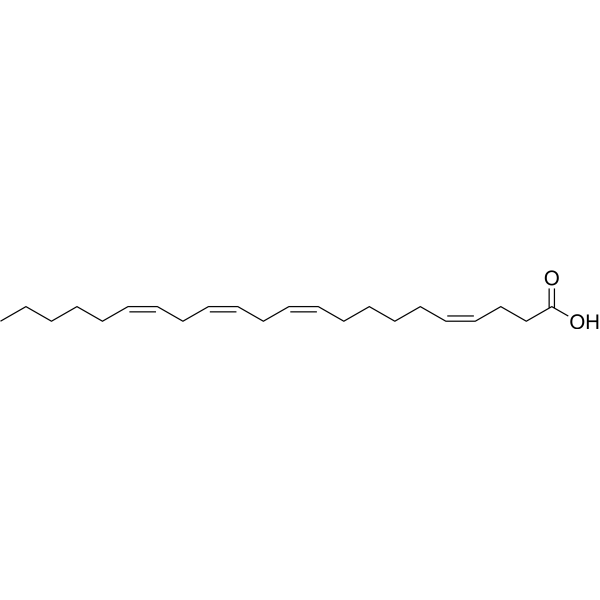
Cat. No.: HY-145548
CAS No.: 122068-08-0
Target:  

Endogenous Metabolite

Research Areas:  

Others

cis-4,10,13,16-Docosatetraenoic acid is a long chain polyunsaturated fatty acid derived from the lipids of rat testis .
loading...
    loading...
Cat. No.: HY-N16390
CAS No.: 17278-80-7
16-Hydroxy-9-hexadecenoic acid is a minor hydroxy fatty acid component. 16-Hydroxy-9-hexadecenoic acid can form ester bonds with terpenoid acids to form monoester or polyester structures in cordyceps .
loading...
    loading...
Cat. No.: HY-W753927
CAS No.: 2420-42-0
Synonyms: C18:2(9E,12Z); C18:2 n-6
Target:  

Endogenous Metabolite

Research Areas:  

Metabolic Disease

9(E),12(Z)-Octadecadienoic acid is an ω-6 polyunsaturated fatty acid and an isomer of linoleic acid (HY-N0729) that contains a trans double bond at the C9 position. It has been found as a minor component of bovine milk fat and in partially hydrogenated vegetable oils. 9(E),12(Z)-Octadecadienoic acid levels increase in rabbit meat following supplementation with heated sunflower oil, α-tocopheryl acetate, and zinc.
loading...
    loading...
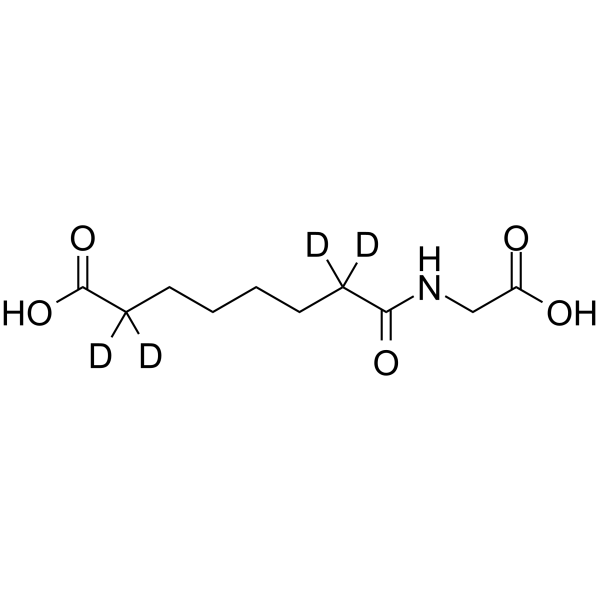
Cat. No.: HY-113367S
CAS No.: 2469259-73-0
Purity:  ≥99.0%
Suberylglycine-d4 is the deuterium labeled Suberylglycine. Suberylglycine is an acyl glycine, which is a normally minor metabolite of fatty acid .
loading...
    loading...
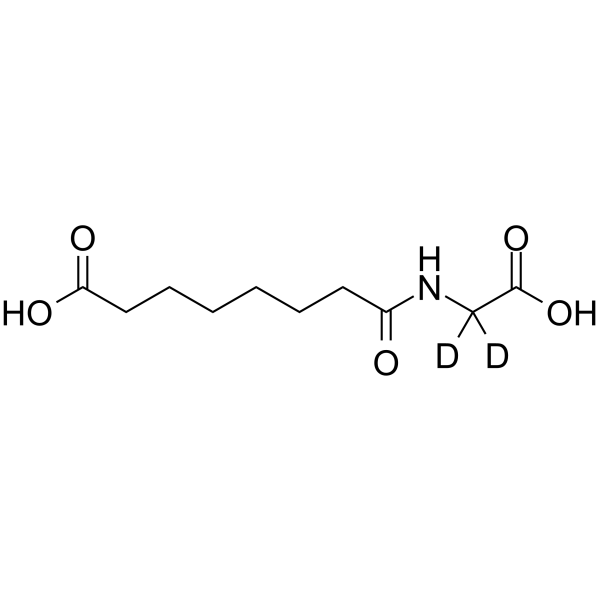
Cat. No.: HY-113367S1
CAS No.: 1219799-02-6
Suberylglycine-d2 is the deuterium labeled Suberylglycine. Suberylglycine is an acyl glycine, which is a normally minor metabolite of fatty acid .
loading...
    loading...
Cat. No.: HY-113367R
CAS No.: 60317-54-6
Suberylglycine (Standard) is the analytical standard of Suberylglycine. This product is intended for research and analytical applications. Suberylglycine is an acyl glycine, which is a normally minor metabolite of fatty acid.
loading...
    loading...
Cat. No.: HY-W769171
Suberylglycine- 13C2, 15N is the 13C- and 15N-labeled Suberylglycine (HY-113367). Suberylglycine is an acyl glycine, which is a normally minor metabolite of fatty acid.
loading...
    loading...
Cat. No.: HY-W008582
CAS No.: 75190-82-8
Synonyms: Methyl cis-10-heptadecenoate; C17:1 methyl ester; Methyl Heptadecenoate
Target:  

Endogenous Metabolite

Research Areas:  

Metabolic Disease

(Z)-Methyl heptadec-10-enoate (Methyl cis-10-heptadecenoate; C17:1 methyl ester) is the ester form of cis-10-heptadecenoic acid. It is a minor fatty acid methyl ester (FAME) component of biodiesel.
loading...
    loading...
Cat. No.: HY-W769723
3-Hydroxyhippuric acid- 13C2, 15N is the 13C- and 15N-labeled 3-Hydroxyhippuric acid (HY-113085). 3-Hydroxyhippuric acid is an acyl glycine. Acyl glycines are normally minor metabolites of fatty acids.
loading...
    loading...
Cat. No.: HY-114773
CAS No.: 216596-71-3
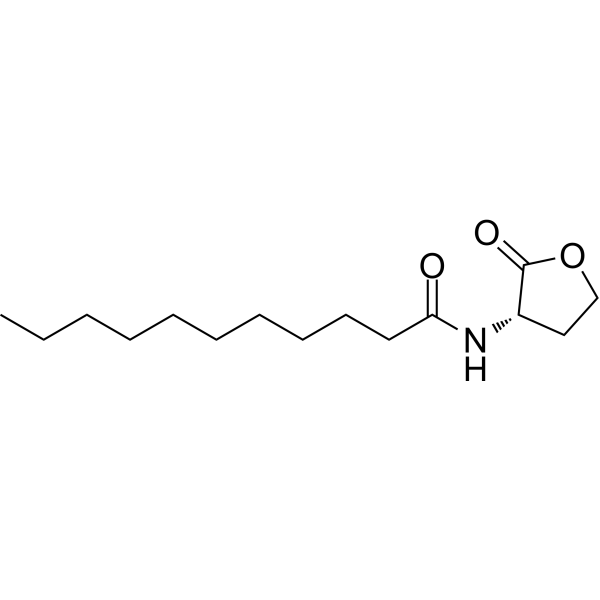
Quorum sensing is a regulatory system used by bacteria to control gene expression in response to increased cell density. This regulatory process manifests itself in a variety of phenotypes, including biofilm formation and virulence factor production. Coordinated gene expression is achieved through the production, release and detection of small diffusible signaling molecules called autoinducers. N-acylated homoserine lactones (AHLs) comprise a class of such autoinducers, each of which generally consists of a fatty acid coupled to a homoserine lactone (HSL). Modulation of bacterial quorum-sensing signaling systems to suppress pathogenesis represents a new approach to antimicrobial research for infectious diseases. AHLs differ in acyl length (C4-C18), C3 substitution (hydrogen, hydroxyl, or oxo group), and the presence or absence of one or more carbon-carbon double bonds in the fatty acid chain. These differences confer signaling specificity through the affinity of the LuxR family of transcriptional regulators. C11-HSL has a rare odd-numbered acyl carbon chain and may be a minor quorum-sensing signaling molecule in Pseudomonas aeruginosa strains.
loading...
    loading...
  • 1

