




1. Search Result
Search Result
Results for "

nanoparticles

" in MedChemExpress (MCE) Product Catalog:

871

Inhibitors & Agonists

1

Bibliotecas de Screening

65

Fluorescent Dye

374

Biochemical Assay Reagents

50

Peptides

2

Inhibitory Antibodies

56

Natural
Products

25

Isotope-Labeled Compounds

26

Click Chemistry

341

Oligonucleotides

6

GMP Molecules

Cat. No. Nombre del producto Target Áreas de investigación Chemical Structure
  • HY-134541
    SM-102
    Maximum Cited Publications
    45 Publications Verification

    Liposome Infection
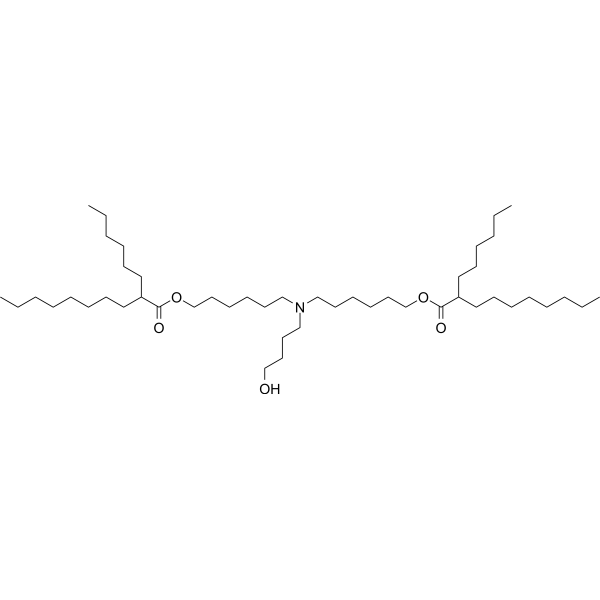
    SM-102 is an amino cationic lipid useful in the formation of lipid nanoparticles (LNPs). SM-102 has higher transfection efficiency. SM-102 plays an important role in the effectiveness of lipid nanoparticles (LNPs) in delivering mRNA therapeutics and vaccines .
    SM-102
  • HY-W040193
    DSPC
    15+ Cited Publications

    1,2-Distearoyl-sn-glycero-3-PC; 1,2-Distearoyl-sn-glycero-3-phosphorylcholine

    Liposome Others
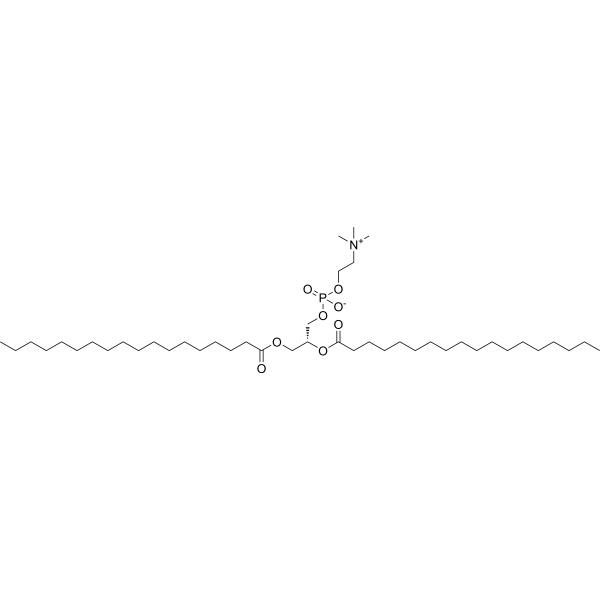
    DSPC (1,2-Distearoyl-sn-glycero-3-phosphorylcholine) is a cylindrical-shaped lipid. DSPC is used to synthesize liposomes, and is the lipid component in the lipid nanoparticle (LNP) system .
    DSPC
  • HY-138170
    ALC-0315
    35+ Cited Publications

    Liposome SARS-CoV Infection
    ALC-0315 is an ionisable aminolipid that is responsible for mRNA compaction and aids mRNA cellular delivery and its cytoplasmic release through suspected endosomal destabilization. ALC-0315 can be used to form lipid nanoparticle (LNP) delivery vehicles. Lipid-Nanoparticles have been used in the research of mRNA COVID-19 vaccine .
    ALC-0315
  • HY-112764
    mPEG2000-DMG
    20+ Cited Publications

    Liposome Metabolic Disease
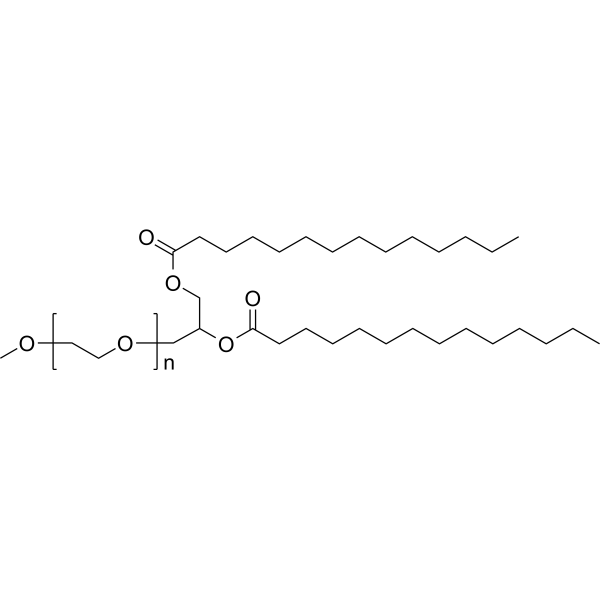
    DMG-PEG 2000 is used for the preparation of liposome for siRNA delivery with improved transfection efficiency in vitro. DMG-PEG 2000 is also used for the lipid nanoparticle for an oral plasmid DNA delivery approach in vivo through a facile surface modification to improve the mucus permeability and delivery efficiency of the nanoparticles .
    mPEG2000-DMG
  • HY-W094581
    Gold(III) chloride trihydrate
    1 Publications Verification

    Chloroauric acid trihydrate

    Biochemical Assay Reagents Others
    Gold (III) chloride trihydrate is a reducing agent. Gold (III) chromium trihydrate can be used for chemical synthesis of gold nanoparticles (NP) and spirochromene derivatives .
    Gold(III) chloride trihydrate
  • HY-125924
    DSPE-PEG-Amine, MW 2000 ammonium
    1 Publications Verification

    DSPE-PEG-NH2, MW 2000 ammonium; DSPE-PEG(2000) Amine ammonium

    Liposome Others
    DSPE-PEG-Amine, MW 2000 (ammonium), an amine derivative of phospholipid poly ethylene glycol, is used in the synthesis of solid lipid and thermosensitive liposomal nanoparticles for the delivery of anticancer agents .
    DSPE-PEG-Amine, MW 2000 ammonium
  • HY-148033

    N,N,N-Trimethylchitosan

    Drug Derivative Others
    Trimethyl chitosan (N,N,N-Trimethylchitosan) is a multifunctional polymer and a derivative of Chitosan (HY-B2144A). Trimethyl chitosan targets the absorption enhancing proteins of tight junctions of intestinal and mucosal epithelial cells, induces tight junction protein rearrangement, and increases intercellular permeability. Trimethyl chitosan can stimulate the activity of promoting transmembrane transport of hydrophilic drugs (such as peptides and proteins) and can be used for drug delivery and synthesis of nanoparticles .
    Trimethyl chitosan
  • HY-W440835

    DSPE-PEG2000(2000)-DBCO

    Liposome Others
    DSPE-PEG2000-DBCO is a phospholipid-PEG polymer that can be used to form micelles as lipid nanoparticles for drug delivery . DSPE-PEG2000-DBCO is a click chemistry reagent, it contains a DBCO group that can undergo strain-promoted alkyne-azide cycloaddition (SPAAC) with molecules containing Azide groups.
    DSPE-PEG2000-DBCO
  • HY-150241

    Exosomes Biochemical Assay Reagents Liposome Others
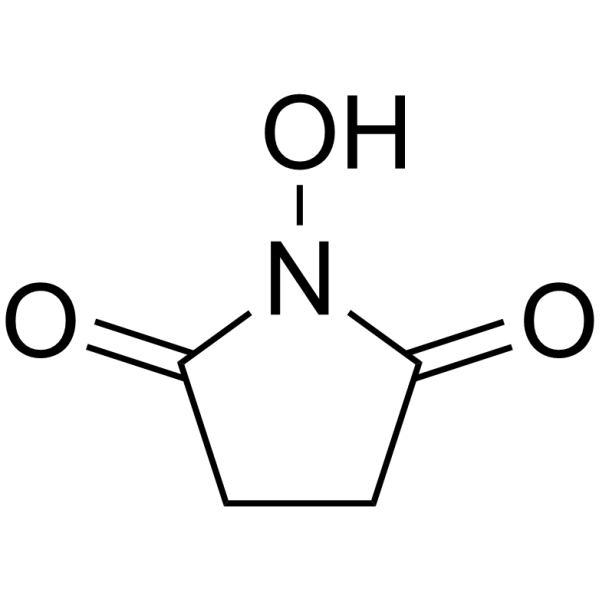
    DOPE-NHS is a linker. DOPE-NHS can be used for peptides to be conjugated to exosomes and possibly other membrane-based nanoparticles. DOPE-NHS can be used for drug delivery .
    DOPE-NHS
  • HY-151507
    306Oi10
    1 Publications Verification

    Liposome Others
    306Oi10 is a branched ionizable lipid that can be used to construct lipid nanoparticles (LNPs) for delivering messenger RNA. The surface ionization of lipid nanoparticles is related to the effectiveness of mRNA delivery. The tail of 306Oi10 has a one-carbon branch, which provides it with stronger surface ionization compared to lipids with linear tails, thereby enhancing its mRNA delivery efficacy. 306Oi10 can be used in research related to mRNA delivery .
    306Oi10
  • HY-112760
    18:0 mPEG2000 PE sodium
    1 Publications Verification

    DSPE-mPEG2000 sodium; 1,2-Distearoyl-sn-glycero-3-phosphoethanolamine-N-[methoxy(polyethylene glycol)-2000] sodium

    Liposome Others
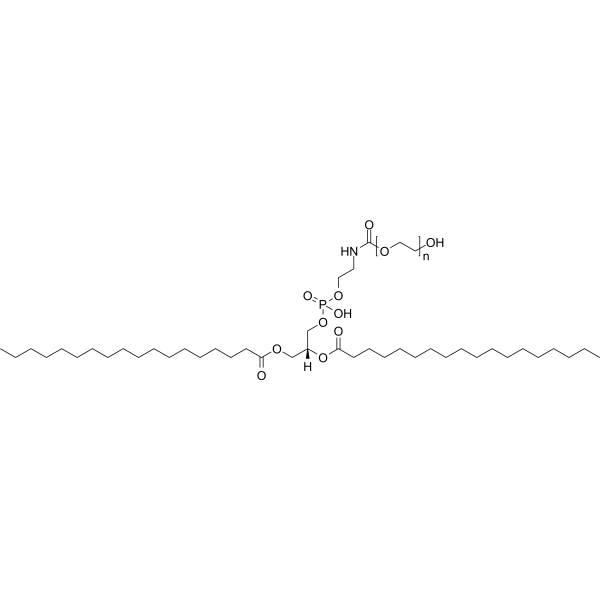
    18:0 mPEG2000 PE (DSPE-mPEG2000) sodium is a conjugate of phospholipid and polyethylene glycol, and it can serve as an important PEG lipid component in lipid nanoparticles (LNPs). 18:0 mPEG2000 PE sodium can be used in the research of gene transfection, drug carriers and drug delivery .
    18:0 mPEG2000 PE sodium
  • HY-167036

    Biochemical Assay Reagents Others
    DMG-PEG2000-Mal is a pegylated lipid with a molecular weight of 2000. DMG-PEG-Mal serves as a component of lipid nanoparticles for mRNA delivery .
    DMG-PEG2000-Mal
  • HY-W105426

    [3-(Methacryloyloxy)propyl]trimethoxysilane

    Biochemical Assay Reagents Others
    3-(Trimethoxysilyl)propyl methacrylate is a reactive monomer and silane coupling agent with C=C and O-C=O functional groups, acting as a surface modifier and anti-agglomeration agent. 3-(Trimethoxysilyl)propyl methacrylate can be used to prepare nanoparticles .
    3-(Trimethoxysilyl)propyl methacrylate
  • HY-W011696

    cis-1-Amino-9-octadecene, 80-90%

    Environmental Pollutants Biochemical Assay Reagents Cancer
    Oleylamine, 80-90% (cis-1-Amino-9-octadecene, 80-90%) is a multifunctional reagent used for metal ion coordination and nanoparticle surface modification, and acts as a solvent, surfactant and reducing agent in the synthesis of metal oxide nanoparticles. Oleylamine, 80-90% regulates nanoparticle morphology, magnetization intensity and water proton relaxation rate via thiol-ene "click" reaction, and enhances the colloidal stability of nanoparticles in organic reagents. Oleylamine, 80-90% is mainly used in research and applications in fields such as nanomaterial synthesis, biomedical imaging (MRI contrast agents, fluorescent probes), cancer cell targeting and drug delivery .
    Oleylamine, 80-90%
  • HY-46759

    Liposome Infection
    Genevant CL1 is an ionizable lipid (pKa = 6.3) suitable for the preparation of lipid nanoparticles (LNPs) for delivering nucleic acid payloads and intramuscular vaccines. Genevant CL1 is a component of lipid nanoparticle delivery systems for mRNA vaccines .
    Genevant CL1
  • HY-N2362

    DL-2-Aminopropionic acid

    Endogenous Metabolite Metabolic Disease
    DL-alanine, an orally active amino acid, is the racemic compound of L- and D-alanine. DL-alanine is employed both as a reducing and a capping agent, used with silver nitrate aqueous solutions for the production of nanoparticles. DL-alanine can be used for the research of transition metals chelation, such as Cu(II), Zn(II), Cd(11). DL-alanine, a sweetener, is classed together with glycine and sodium saccharin. DL-alanine plays a key role in the glucose-alanine cycle between tissues and liver .
    DL-Alanine
  • HY-148648

    Liposome Others
    Lipid 29 is an ionizable amino lipid. Lipid 29 can be used to form lipid nanoparticles .
    Lipid 29
  • HY-Y0850O

    PVA (Mw 31000-50000, 87-89% hydrolyzed); Poly(Ethenol) (Mw 31000-50000, 87-89% hydrolyzed)

    Environmental Pollutants Biochemical Assay Reagents Cancer
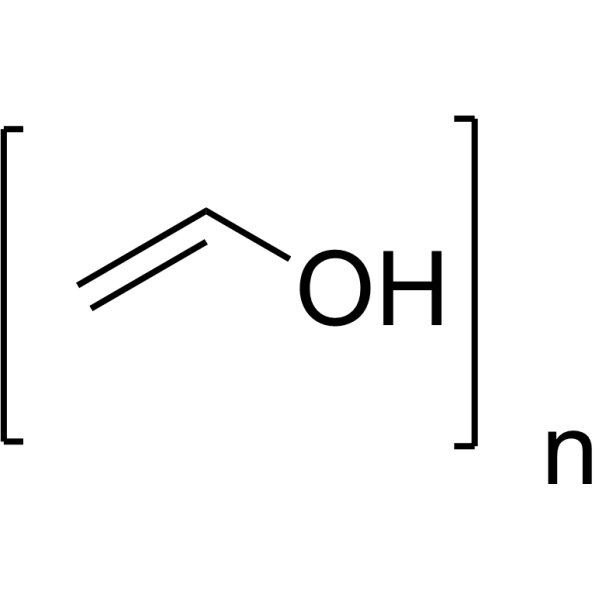
    Polyvinyl alcohol (PVA; Poly (Ethenol)) (Mw 31000-50000, 87-89% hydrolyzed) is a polymer with emulsifying and stabilizing properties, with a degree of hydrolysis of 87-89%. Polyvinyl alcohol (Mw 31000-50000, 87-89% hydrolyzed) mainly acts as a stabilizer in the preparation of nanomedicines; it not only maintains the structural integrity of PEGylated PLGA nanoparticles during double emulsion synthesis, but also facilitates the preparation of chitosan/matrine-PLGA nanoparticle aqueous solutions and lipid-polymer nanoparticles. Polyvinyl alcohol (Mw 31000-50000, 87-89% hydrolyzed) can be widely used in research related to fields such as breast cancer .
    Polyvinyl alcohol (Mw 31000-50000, 87-89% hydrolyzed)
  • HY-145794

    Liposome Cancer
    ZA3-Ep10 is a zwitterionic lipid used in lipid nanoparticles formulation for in vivo RNA delivery.
    ZA3-Ep10
  • HY-168399

    Liposome Cancer
    PEG(2000)-C-DMG is a PEGylated derivative of 1,2-Dimyristoyl-sn-glycerol (HY-128468). PEG(2000)-C-DMG can be used in combination with other lipids in the formation of lipid nanoparticles (LNPs) for the delivery of siRNA .
    PEG(2000)-C-DMG
  • HY-148049

    Liposome Others
    TT3 is an ionizable lipid-like material and a lipid nanoparticle (LLNs)-based mRNA delivery vector. TT3 exhibits liver and spleen specificity and excellent delivery efficiency .
    TT3
  • HY-P10646

    Biochemical Assay Reagents Neurological Disease
    Muscle homing peptide M12 can preferentially bind to surface protein of muscle cells. Muscle homing peptide M12 mediates enhanced cellular uptake of nanoparticles (NPs) in myoblasts in vitro. Muscle homing peptide M12 is covalently conjugated to PLGA-PEG NPs via the N-terminal α-amino groups of peptides using the N-hydroxysuccinimide ester reaction .
    Muscle homing peptide M12
  • HY-136304

    PROTAC Linkers Cardiovascular Disease Metabolic Disease Cancer
    NHS-PEG1-SS-PEG1-NHS is a reversible linker for biomacromolecule link with active small molecule. NHS-PEG1-SS-PEG1-NHS can be used in proteins liposomes or nanoparticles .
    NHS-PEG1-SS-PEG1-NHS
  • HY-N16040

    Liposome Others
    DMG-pSar25 is a double lipid-tailed polysarcosine lipid with 25 sarcosine moieties, serving as a PEG lipid substitute in lipid nanoparticle formulations for mRNA delivery. DMG-pSar25 supports mRNA delivery in lipid nanoparticle formulations .
    DMG-pSar25
  • HY-N6613

    Galacturonic acid polymer

    Others Infection Inflammation/Immunology
    Polygalacturonic acid (Galacturonic acid polymer) is transparent colloid, is a major component of the cell wall. Polygalacturonic acid can be used to prepare silver nanoparticles (AgNPs), as an antioxidant and anti-inflammatory that protect cells from destructive effect of elevated ROS and accelerate wound healing. Polygalacturonic acid nanoparticles also displays anti-bacterial activity .
    Polygalacturonic acid
  • HY-145793
    FTT5
    2 Publications Verification

    Liposome Cardiovascular Disease
    FTT5 is an ionizable lipid that can be used to prepare lipid nanoparticles for efficient delivery of long-chain mRNA in vivo .
    FTT5
  • HY-159726

    Liposome Others
    C10-200 is an ionizable cationic lipid that can be used to generate lipid nanoparticles (LNPs). C10-200 is used in the study of mRNA delivery .
    C10-200
  • HY-155902

    Maleimide-PEG5000-Hydroxy

    Biochemical Assay Reagents Others
    Mal-PEG5000-OH can be used as a macroinitiator to obtain amphiphilic diblock copolymers by ring-opening polymerization of LA. Nanoparticles prepared using amphiphilic block copolymers can form active drug delivery systems. Nanoparticles encapsulate Triptolide (HY-32735), which can avoid the disadvantage of Triptolide’s poor water solubility and reduce its toxicity.
    Mal-PEG5000-OH
  • HY-W243303O

    Environmental Pollutants Biochemical Assay Reagents Cancer
    Poly(acrylic acid) (Mv 1250000) (viscous liquid) is a polyacrylic acid with a molecular weight of 1250000 (an anionic polymer), which can be used as a corrosion inhibitor and surface stabilizer. Poly(acrylic acid) can be used to construct an anionic nanogel to encapsulate positively charged enzymes and to modify MoS₂ nanoparticles to build a transdermal drug delivery system .
    Poly(acrylic acid) (MW 1250000) (viscous liquid)
  • HY-139306

    Liposome Inflammation/Immunology
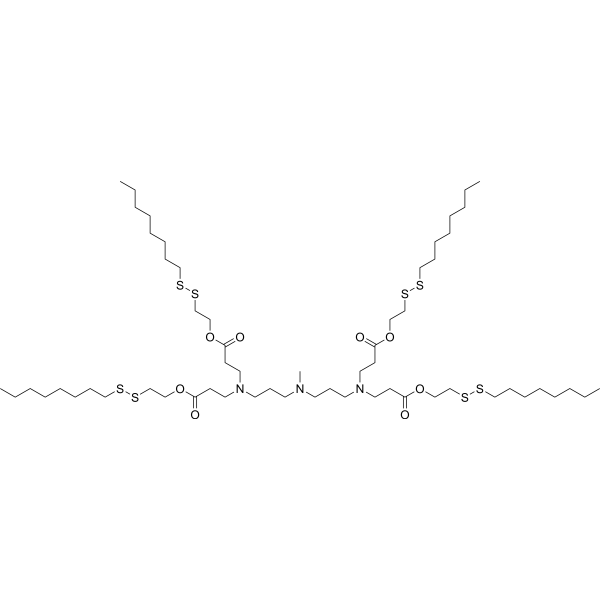
    BAMEAO16B is a lipid nanoparticle. BAMEAO16B integrated with disulfide bonds, can efficiently deliver Cas9 mRNA and sgRNA into cells while releasing RNA in response to the reductive intracellular environment for genome editing. BAMEAO16B can be used for the research of gene editing .
    BAMEA-O16B
  • HY-159717

    Liposome Others
    Lipid 331 is an ionizable lipid that can be used for the generation of lipid nanoparticles (LNPs). Lipid 331 is a carrier for both siRNA and mRNA .
    Lipid 331
  • HY-160439

    Liposome Others
    Ionizable lipid-2 (Compound 1) is an ionizable lipid that can be used for the preparation of lipid nanoparticles and vaccine research .
    Ionizable lipid-2
  • HY-P5021

    c(RGDfE)

    Integrin Cancer
    Cyclo(Arg-Gly-Asp-(D-Phe)-Glu) c(RGDfE) is a cyclic RGD peptide targeting integrin αvβ3. Cyclo(Arg-Gly-Asp-(D-Phe)-Glu) is commonly used for modifying drug loaded nanoparticles. Cyclo(Arg-Gly-Asp-(D-Phe)-Glu) is often used in cancer research, such as pancreatic cancer .
    Cyclo(Arg-Gly-Asp-(D-Phe)-Glu)
  • HY-160552

    Liposome Others
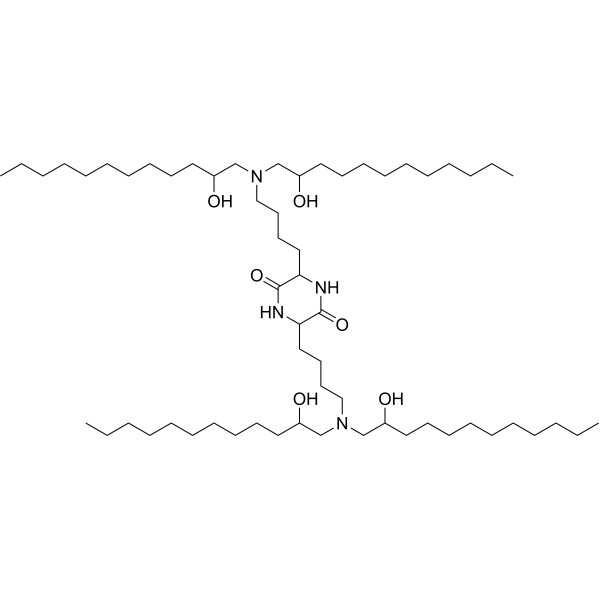
    244cis, a piperazine-containing ionizable cationic lipid, has been used to generate lipid nanoparticles (LNPs). LNPs containing 244cis and coated with mRNA reporter gene were specifically accumulated in mouse lungs compared with LNPs containing SM-102. Induces a decrease in serum chemokine (C-C motif) ligand 2 (CCL2) levels .
    244cis
  • HY-168943

    Biochemical Assay Reagents Others
    PLGA nanoparticles, 100 nm is a nanoparticle made from the polymer PLGA that can be used for drug delivery .
    PLGA nanoparticles, 100nm
  • HY-159716

    Liposome Others
    Lipid 50 (compound 50) is an ionizable lipid that can be used for the generation of lipid nanoparticles (LNPs). Lipid 50 is a carrier for both siRNA and mRNA .
    Lipid 50
  • HY-157252

    Liposome Cancer
    CL4F8-6 is an ionizable cationic lipid with a pKa of 6.14. CL4F8-6 can be used in lipid nanoparticles (LNPs)-based mRNA therapeutics .
    CL4F8-6
  • HY-159854

    Liposome Cancer
    C14-O2 is an ionizable cationic lipid that can be used to synthesize lipid nanoparticles (LNP) for delivering mRNA and other payloads .
    C14-O2
  • HY-P5533

    Biochemical Assay Reagents Cancer
    CRT, an iron peptide mimic, can bind to apo-transferrin (apo-Tf). CRT can be used to modify nanoparticles, and enhances drug delivery efficiency .
    CRT
  • HY-155902A

    Maleimide-PEG2000-Hydroxy

    Biochemical Assay Reagents Others
    Mal-PEG2000-OH can be used as a macroinitiator to obtain amphiphilic diblock copolymers by ring-opening polymerization of LA. Nanoparticles prepared using amphiphilic block copolymers can form active drug delivery systems. Nanoparticles encapsulate Triptolide (HY-32735), which can avoid the disadvantage of Triptolide’s poor water solubility and reduce its toxicity.
    Mal-PEG2000-OH
  • HY-164071

    CM-Dextran

    Drug Derivative Others
    Carboxymethyl Dextran (CM-Dextran) is a dextran derivative and a biocompatible coating for superparamagnetic iron oxide nanoparticles. When coated on the surface of superparamagnetic nanoparticles, Carboxymethyl Dextran forms stable particles across all pH values and NaCl concentrations. Carboxymethyl Dextran can be used to prepare materials for magnetic resonance molecular imaging .
    Carboxymethyl Dextran
  • HY-D2004

    Fluorescent Dye Inflammation/Immunology
    ATTO 488 streptavidin is a fluorescent reagent that specifically targets and binds to biotin (biotin), formed by the conjugation of ATTO 488 with streptavidin (HY-P3152). ATTO 488 streptavidin enables visualization of the activity of streptavidin immobilized on the surface of polymeric nanoparticles, or acts as a fluorescent probe to detect the selective binding and internalization process of anti-HB-EGF/NA with cells expressing HB-EGF (with no such effect on cells that do not express this receptor). ATTO 488 streptavidin effectively verifies the function of streptavidin conjugated to the surface of nanoparticles and is suitable for research related to atherosclerotic cardiovascular diseases .
    ATTO 488 streptavidin
  • HY-172174

    Fluorescent Dye Others
    Red Fluorescent PLGA nanoparticles, 100nm is a nanoparticle made from the polymer PLGA and labeled with a red fluorescent dye. Red Fluorescent PLGA nanoparticles, 100nm can be used for drug delivery and for tracing .
    Red Fluorescent PLGA nanoparticles, 100nm
  • HY-177531

    Liposome Others
    S-Ac7-DOg is a cationic ionizable lipid. S-Ac7-DOg can be used in the research on the construction of lipid nanoparticles and drug delivery .
    S-Ac7-DOg
  • HY-P10679

    MMP Cancer
    GPLGLAGGWGERDGS is a peptide with MMP enzyme responsiveness and tumor targeting function, which can be used to monitor enzyme-guided nanoparticle assembly in tumors .
    GPLGLAGGWGERDGS
  • HY-148363

    Liposome Inflammation/Immunology
    Heptadecan-9-yl 8-((6-(decyloxy)-6-oxohexyl)(2-hydroxyethyl)amino)octanoate can be used in lipid nanoparticles (LNP) delivery systems for mRNA vaccine delivery .
    Heptadecan-9-yl 8-((6-(decyloxy)-6-oxohexyl)(2-hydroxyethyl)amino)octanoate
  • HY-159858

    Liposome Cancer
    Lipid 16 is an ionizable lipid that can be used to synthesize lipid nanoparticles (LNP) for delivering mRNA and other payloads. Lipid 16 as a potent cell type-specific ionizable lipid for the CD11bhi macrophage population without an additional targeting moiety .
    Lipid 16
  • HY-W243303D

    Environmental Pollutants Biochemical Assay Reagents Others
    Poly(acrylic acid) (MW 1250000) is a polyacrylic acid with a molecular weight of 1250000 (an anionic polymer), which can be used as a corrosion inhibitor and surface stabilizer. Poly(acrylic acid) can be used to construct an anionic nanogel to encapsulate positively charged enzymes and to modify MoS2 nanoparticles to build a transdermal drug delivery system .
    Poly(acrylic acid) (MW 1250000)
  • HY-153187

    Liposome Others
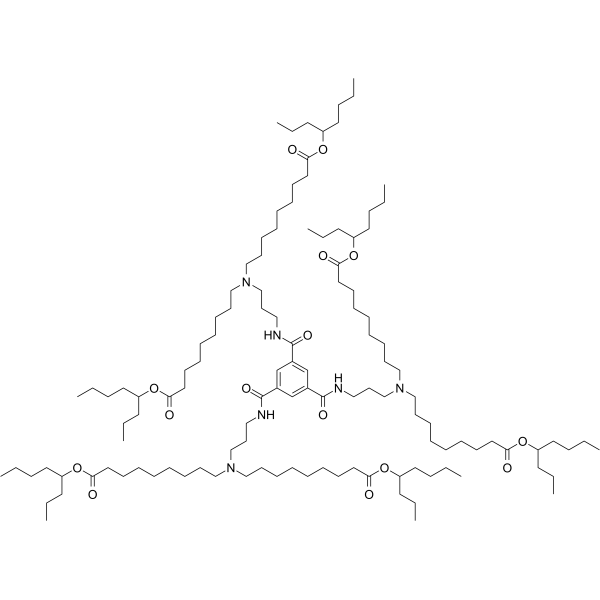
    LNP Lipid-4 (Compound 8-8) is a lipid compound. LNP Lipid-4 is involved in the synthesis of lipid nanoparticles compositions. LNP Lipid-4 has potential applications in the transportation of biologically active substances .
    LNP Lipid-4
  • HY-159865

    Liposome Others
    CL15F6 is an ionizable lipid that can be used to synthesize lipid nanoparticles (LNP) for delivering mRNA and other payloads .
    CL15F6

Consulta en línea

Your information is safe with us. * Required Fields.

Saludo


Country or Region *

Nombre del solicitante *


Nombre de la Organizaciòn *

Department *


Direcciòn del E-mail *


Nombre del producto *

Cat. No.


Requested quantity *

Número de teléfono *


Observaciones

Consulta en línea

Inquiry Information

Nombre del producto:
Cat. No.:
Cantidad:
MCE Japan Authorized Agent:

