






1. Search Result
Search Result
Results for "

numbers

" in MedChemExpress (MCE) Product Catalog:

21

Inhibitors & Agonists

1

Screening Libraries

1

Biochemical Assay Reagents

2

Peptides

4

Inhibitory Antibodies

1

Natural
Products

Cat. No. Product Name Target Research Areas Chemical Structure
  • HY-P99720
    Luspatercept
    5 Publications Verification

    ACE-536; luspatercept–aamt

    TGF-beta/Smad Metabolic Disease Cancer
    Luspatercept (ACE-536) is a recombinant modified ActRIIB fusion protein that binds with transforming growth factor β superfamily ligands. Luspatercept increases the erythrocyte numbers and promotes maturation of erythroid precursors. Luspatercept binds with GDF11 and inhibits Smad2/3 signaling. Luspatercept can be used for the research of anemia .
    Luspatercept
  • HY-B1172
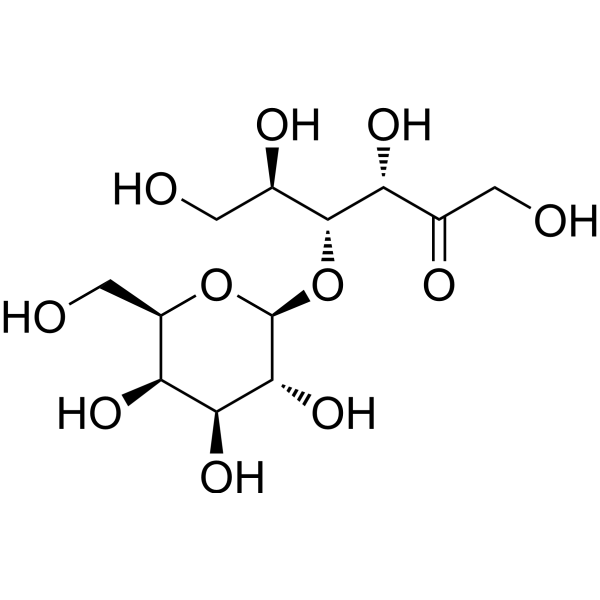
    Lactulose
    1 Publications Verification

    4-O-β-D-Galactopyranosyl-D-fructose

    Bacterial Interleukin Related DNA/RNA Synthesis Infection Inflammation/Immunology Endocrinology Cancer
    Lactulose is an orally active galactose-fructose disaccharide. Lactulose suppresses upregulation of TNF-α and IL-6. Lactulose decreases the degree of DNA damage. Lactulose exhibits many of the properties of other oligosaccharides, including increasing the numbers of Bifidobacteria in feces. Lactulose restores the structure and composition of the intestinal microbiota, mitigates inflammation, and suppresses inflammatory tumorigenesis in mice with colitis-associated cancer. Lactulose can be used in the research of constipation .
    Lactulose
  • HY-W008947
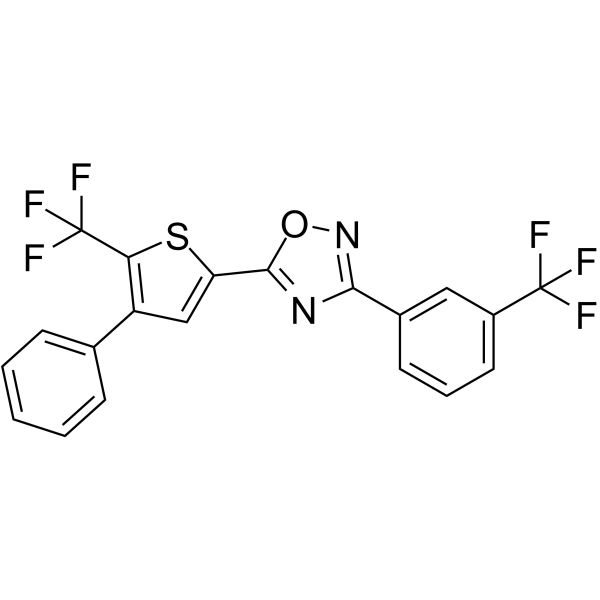
    SEW​2871
    Maximum Cited Publications
    9 Publications Verification

    LPL Receptor ERK Akt Neurological Disease Metabolic Disease Inflammation/Immunology
    SEW2871 is an orally active, potent, highly selective S1P1 (sphingosine-1-phosphate type 1 receptor) agonist, with an EC50 of 13.8 nM. SEW2871 activates ERK, Akt, and Rac signaling pathways and induces S1P1 internalization and recycling. SEW2871 reduces lymphocyte numbers in blood. SEW2871 can be used for the research of diabetes, Alzheimer’s disease, liver fibrosis, and inflammatory responses .
    SEW​2871
  • HY-P1082
    Gap 26
    5+ Cited Publications

    Connexin Gap Junction Protein Cardiovascular Disease
    Gap 26 is a connexin mimetic peptide, composed of residue numbers 63-75 of the first extracellular loop of connexin 43 (gap junction blocker), containing the SHVR amino acid motif .
    Gap 26
  • HY-P99440

    CSL-324

    c-Fms JAK STAT Inflammation/Immunology
    Anumigilimab (CSL-324) is an human IgG4 mAb against human granulocyte colony-stimulating factor (G-CSF) receptor. Anumigilimab can be used for increasing numbers of neutrophils at sites of inflammation .
    Anumigilimab
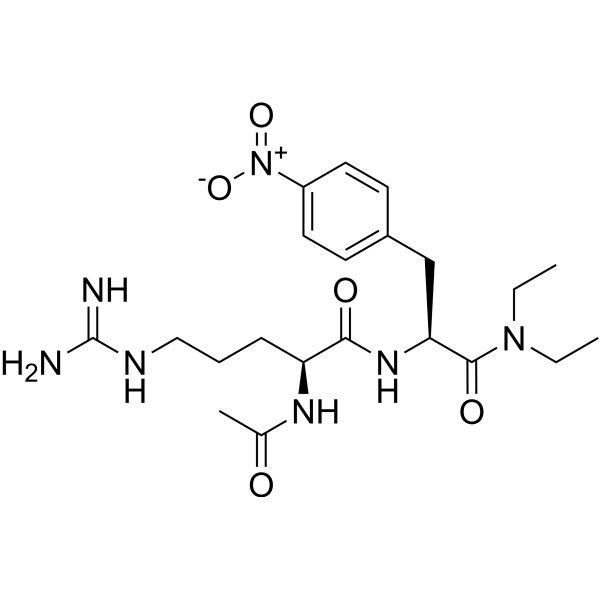
  • HY-133146

    Phosphatase Apoptosis Inflammation/Immunology
    DJ001 is a highly specific, selective and non-competitive protein tyrosine phosphatase-σ (PTPσ) inhibitor with an IC50 of 1.43 μM. DJ001 displays no inhibitory activity against other phosphatases, with only modest inhibitory activity against Protein Phosphatase 5. DJ001 promotes promote hematopoietic stem cell regeneration .
    DJ001
  • HY-150252A
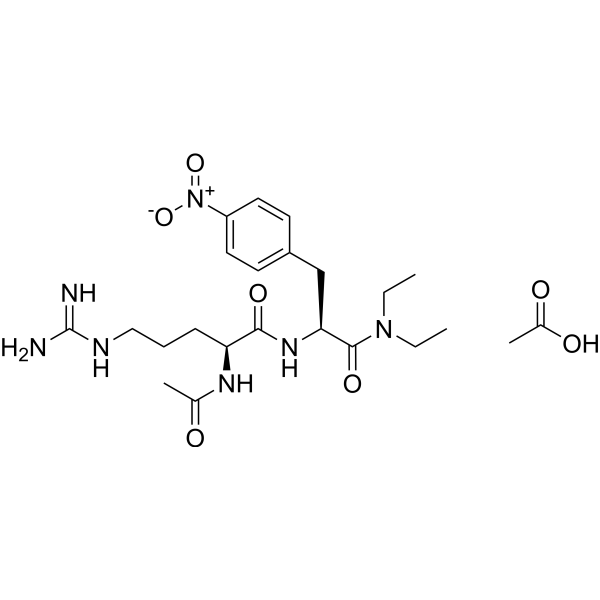
    ATIC-IN-1 acetate
    1 Publications Verification

    Endogenous Metabolite Cancer
    ATIC-IN-1 (compound 14) acetate is an inhibitor targeting to Aminoimidazole carboxamide ribonucleotide transformylase/inosine monophosphate cyclohydrolase (ATIC) dimerization with a Ki value of 685 nM, whcich catalyzes de novo purine biosynthesis. ATIC dimerization is crucial for its aminoimidazole carboxamide ribonucleotide (AICAR) transformylase activity. ATIC-IN-1 acetate exhibits anti-tumor activity via reduction in cell numbers and cell division rates .
    ATIC-IN-1 acetate
  • HY-B1197

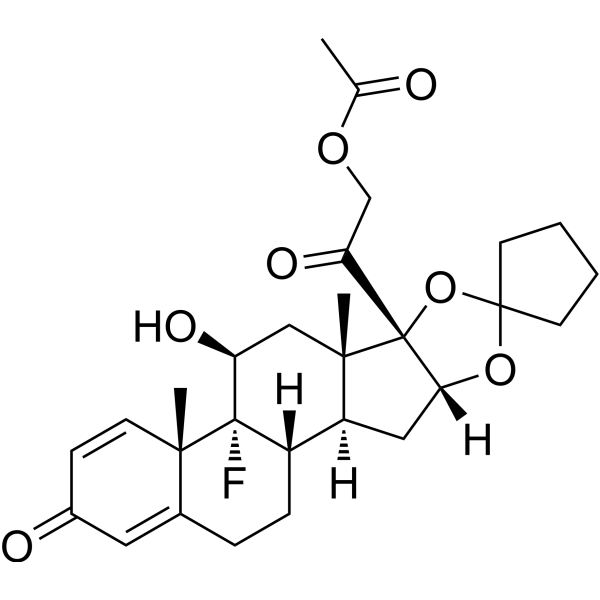
    CL-34699

    Glucocorticoid Receptor NO Synthase Interleukin Related TNF Receptor Inflammation/Immunology Endocrinology
    Amcinonide is an inhibitor of NO release (IC50 = 3.38 nM). Amcinonide inhibits NNC-induced expression of the proinflammatory genes iNOS, TNF-α, and IL-1β in glial cells. Amcinonide reduces the numbers of T6+/Ia+ cells with a concomitant increase in T6+/Ia- cells. Amcinonide induces a selective reduction in expression of Ia antigens. Amcinonide can also be studied in research for eczematous dermatitis .
    Amcinonide
  • HY-158226

    ElaMA

    Biochemical Assay Reagents Others
    Elastin Methacrylated (ElaMA) elastin recruits and modulates innate immune cells and accelerates angiogenesis at the wound site, thereby improving wound regeneration. Elastin Methacrylated attracts large numbers of neutrophils and primarily M2 macrophages to the wound and induces their penetration into the hydrogel. Elastin Methacrylated has excellent immunomodulatory effects, leading to superior angiogenesis, collagen deposition and dermal regeneration . Elastin Methacrylated needs to self-assemble into fibrous hydrogel under the action of photoinitiator LAP (HY-44076), and target bioactive adhesion sites, play an inherent supporting role for tissue cells and biodegradable activity.
    Application: cell culture, biological 3D printing, tissue engineering, etc.
    Elastin Methacrylated
  • HY-P99193

    MEDI-528

    Interleukin Related Inflammation/Immunology
    Enokizumab (MEDI-528) is a monoclonal antibody targeting to interleukin (IL)-9. IL-9 regulates the development of airway inflammation, mucus production, airway hyperresponsiveness, and airway fibrosis largely by increasing mast cell numbers and activity in the airways .
    Enokizumab
  • HY-148114

    Autophagy Neurological Disease Cancer
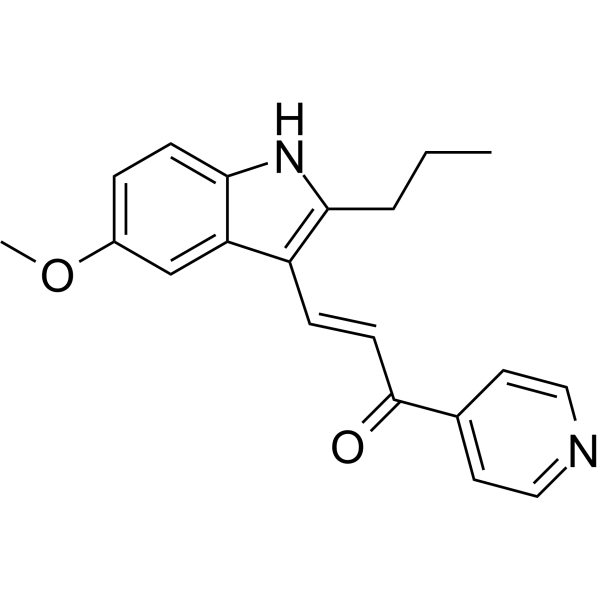
    MOPIPP is a novel indolebased chalcone, and vacuolin-1, is a non-lethal vacuoleinducing 2-propyl analog of MOMIPP (HY-119624). MOPIPP induces cellular vacuolization and increases autophagosomes numbers. MOPIPP can be used for the study of glioblastoma cells .
    MOPIPP
  • HY-P1082A
    Gap 26 TFA
    5+ Cited Publications

    Connexin Gap Junction Protein Cardiovascular Disease
    Gap 26 TFA is a connexin mimetic peptide, composed of residue numbers 63-75 of the first extracellular loop of connexin 43 (gap junction blocker), containing the SHVR amino acid motif .
    Gap 26 TFA
  • HY-150252

    Others Cancer
    ATIC-IN-1(compound 14) is an inhibitor targeting to Aminoimidazole carboxamide ribonucleotide transformylase/inosine monophosphate cyclohydrolase (ATIC) dimerization with a Ki value of 685 nM. ATIC dimerization is crucial for its aminoimidazole carboxamide ribonucleotide (AICAR) transformylase activity. ATIC-IN-1 exhibits anti-tumor activity via reduction in cell numbers and cell division rates .
    ATIC-IN-1
  • HY-178358

    Drug Derivative Others
    JAX-44 is a potent root architecture modulator. JAX-44 maintains primary root length while substantially increasing lateral root numbers, thereby optimizing the plant’s overall root system. JAX-44 is the metabolic precursor of JAX-77 (HY-178359) and can be converted to Indole-3-butyric acid (IBA) (HY-N0186). JAX-44 can be used for auxin biology and root development research .
    JAX-44
  • HY-P99913

    c-Fms Inflammation/Immunology Cancer
    Eflapegrastim is a composite protein consisting of a genetically modified granulocyte-colony stimulating factor (GCSF) molecule linked via a chemical bond to an IgG4 Fc fragment (LAPS-carrier). Eflapegrastim targets to G-CSF receptor (c-Fms). Eflapegrastim stimulates proliferation and differentiation of neutrophil progenitor cells and maintains stable numbers of mature and functional neutrophils. Eflapegrastim also shortens the duration of neutropenia .
    Eflapegrastim
  • HY-W008947R

    Reference Standards LPL Receptor ERK Akt Neurological Disease Metabolic Disease Inflammation/Immunology
    SEW2871 is an orally active, potent, highly selective S1P1 (sphingosine-1-phosphate type 1 receptor) agonist, with an EC50 of 13.8 nM. SEW2871 activates ERK, Akt, and Rac signaling pathways and induces S1P1 internalization and recycling. SEW2871 reduces lymphocyte numbers in blood. SEW2871 can be used for the research of diabetes, Alzheimer’s disease, liver fibrosis, and inflammatory responses .
    SEW​2871 (Standard)
  • HY-110216

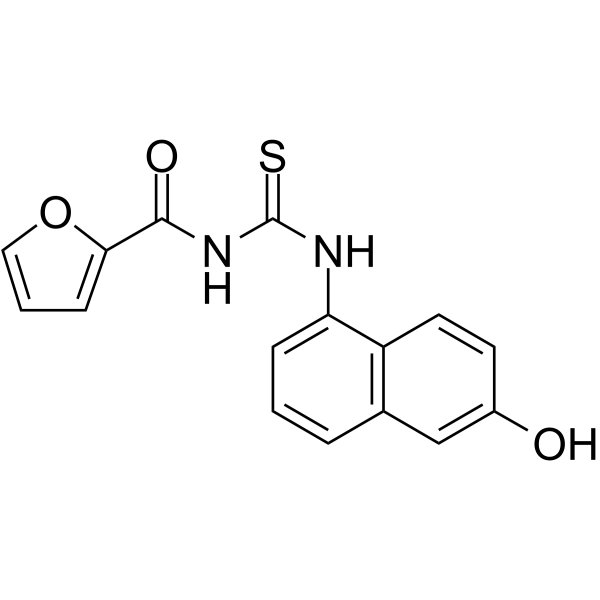
    CRAC Channel Inflammation/Immunology
    5J-4 is a potent CRAC inhibitor. 5J-4 decreases the numbers of infiltrated mononuclear cell into the CNS, and significantly decreases the population of infiltrated CD4+ population. 5J-4 reduces the symptoms and delayed the onset of EAE (experimental autoimmune encephalomyelitis) in mouse model of inflammation .
    5J-4
  • HY-B1197R

    CL-34699 (Standard)

    Reference Standards Glucocorticoid Receptor NO Synthase TNF Receptor Interleukin Related Inflammation/Immunology Endocrinology
    Amcinonide (Standard) is the analytical standard of Amcinonide. This product is intended for research and analytical applications. Amcinonide is an inhibitor of NO release (IC50 = 3.38 nM). Amcinonide inhibits NNC-induced expression of the proinflammatory genes iNOS, TNF-α, and IL-1β in glial cells. Amcinonide reduces the numbers of T6+/Ia+ cells with a concomitant increase in T6+/Ia- cells. Amcinonide induces a selective reduction in expression of Ia antigens. Amcinonide can also be studied in research for eczematous dermatitis .
    Amcinonide (Standard)
  • HY-119234

    CXCR Inflammation/Immunology
    CX4338 is a CXCL8-mediated chemokine inhibitor with the activity of inhibiting CXCR2-mediated cell migration. CX4338 selectively inhibits CXCR2-mediated β-arrestin-2 recruitment and receptor internalization while enhancing CXCR2-mediated MAPK activation. CX4338 also inhibited CXCL8-induced chemotaxis, showing efficacy in CXCR2-overexpressing cells and human neutrophils. In vivo, CX4338 significantly reduced LPS-induced neutrophil numbers in mouse bronchoalveolar lavage fluid. The mechanism of action of CX4338 is to selectively inhibit CXCR2-mediated β-arrestin-2 activation, which is sufficient to inhibit CXCL8-mediated chemotaxis .
    CX4338
  • HY-178359

    Drug Derivative Others
    JAX-77 is a potent root architecture modulator. JAX-77 maintains primary root length while substantially increasing lateral root numbers, thereby optimizing the plant’s overall root system. JAX-77 is the key intermediate metabolite formed from the hydrolysis of JAX-44 (HY-178358) and can be converted to Indole-3-butyric acid (IBA) (HY-N0186). JAX-77 can be used for auxin biology and root development research .
    JAX-77
  • HY-14371

    Drug Derivative LPL Receptor Inflammation/Immunology
    LX2932 is an orally active LX2931 (HY-14370) analogue and S1P/S1PR signaling axis modulator. LX2932 yields a dose-dependent decrease in circulating lymphocyte numbers. LX2932 improves collagen-induced arthritis .
    LX2932

Inquiry Online

Your information is safe with us. * Required Fields.

Salutation


Country or Region *

Applicant Name *


Organization Name *

Department *


Email Address *


Product Name *

Cat. No.


Requested quantity *

Phone Number *


Remarks

Inquiry Online

Inquiry Information

Product Name:
Cat. No.:
Quantity:
MCE Japan Authorized Agent:

