
1. Search Result
Search Result
Results for "

permeable

" in MedChemExpress (MCE) Product Catalog:

1719

Inhibitors & Agonists

251

Screening Libraries

120

Fluorescent Dye

62

Biochemical Assay Reagents

179

Peptides

3

MCE Kits

8

Inhibitory Antibodies

144

Natural
Products

71

Isotope-Labeled Compounds

14

Click Chemistry

16

Oligonucleotides

3

GMP Molecules

Cat. No. Product Name Target Research Area
  • HY-17362
    Vancomycin hydrochloride
    90+ Cited Publications

    Bacterial Autophagy Antibiotic Infection Cancer
    Vancomycin hydrochloride is an antibiotic for the treatment of bacterial infections. It acts by inhibiting the second stage of cell wall synthesis of susceptible bacteria. Vancomycin also alters the permeability of the cell membrane and selectively inhibits ribonucleic acid synthesis.
  • HY-101297
    Z-IETD-FMK
    65+ Cited Publications

    Z-IE(OMe)TD(OMe)-FMK

    Caspase Cancer
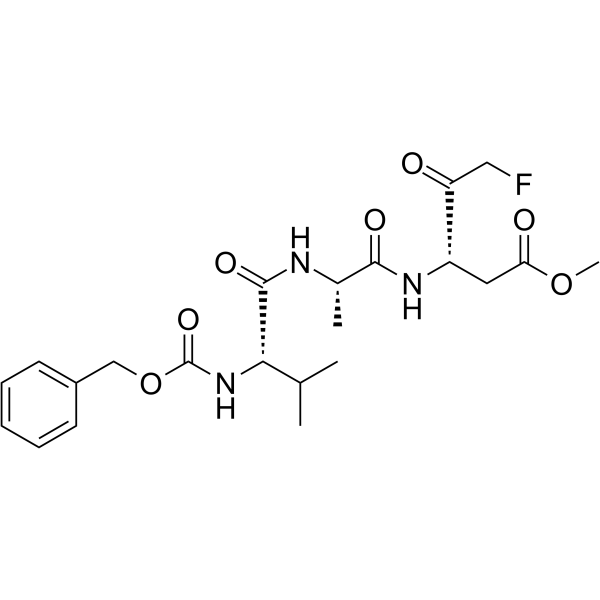
    Z-IETD-FMK (Z-IE(OMe)TD(OMe)-FMK) is a selective and cell permeable caspase-8 inhibitor . Z-IETD-FMK is also a granzyme B inhibitor .
  • HY-P1002
    Suc-Leu-Leu-Val-Tyr-AMC
    15+ Cited Publications

    Suc-LLVY-AMC

    Fluorescent Dye Proteasome Others
    Suc-Leu-Leu-Val-Tyr-AMC is a membrane-permeable calpain-specific fluorogenic substrate (Ex/Em = 390/480 nm) .
  • HY-P0163
    Gramicidin
    5+ Cited Publications

    Bacterial Antibiotic Infection
    Gramicidin is an antimicrobial peptide assembling as channels in membranes and increasing their permeability towards cations.
  • HY-P0206
    Bradykinin
    15+ Cited Publications

    Bradykinin Receptor Endogenous Metabolite Ser/Thr Protease Cardiovascular Disease Endocrinology
    Bradykinin is an effective endothelium-dependent vasodilator that can lower blood pressure. Bradykinin can induce contraction of bronchial and intestinal non-vascular smooth muscle, increase vascular permeability, and participate in the mechanism of pain .
  • HY-P0025
    NIM811
    10+ Cited Publications

    (Melle-4)cyclosporin; SDZ NIM811

    Cyclophilin Mitochondrial Metabolism HCV Infection Inflammation/Immunology
    NIM811 ((Melle-4)cyclosporin; SDZ NIM811) is an orally bioavailable mitochondrial permeability transition and cyclophilin dual inhibitor, which exhibits potent in vitro activity against hepatitis C virus (HCV) .
  • HY-134124

    Reactive Oxygen Species (ROS) Metabolic Disease
    Glutathione ethyl ester is a cell-permeable GSH donor and provides an efficient supply of GSH to the oocyte. Glutathione ethyl ester shows positive effect on the in vitro production of embryos by enhancement of the antioxidative defense .
  • HY-P0033
    Argireline
    2 Publications Verification

    Acetyl hexapeptide-3; Acetyl hexapeptide-8

    Calcium Channel Neurological Disease
    Argireline (Acetyl hexapeptide-3) is a non-toxic, skin-permeable, antiwrinkle peptide. Argireline significantly inhibits Ca 2+ dependent neurotransmitter release (acetylcholine) at the neuromuscular junction. Argireline has antiwrinkle and anti-aging activity .
  • HY-P0151
    SN50
    40+ Cited Publications

    NF-κB Inflammation/Immunology
    SN50 is a cell permeable inhibitor of NF-κB translocation.
  • HY-P0069
    D-JNKI-1
    10+ Cited Publications

    AM-111; XG-102

    JNK Others
    D-JNKI-1 (AM-111) is a highly potent and cell-permeable peptide inhibitor of JNK.
  • HY-P1009
    Z-YVAD-FMK
    20+ Cited Publications

    Caspase Cancer
    Z-YVAD-FMK is a cell-permeable caspase-1 and -4 inhibitor with anti-inflammatory and anti-tumor activities .
  • HY-P2529
    Penetratin
    1 Publications Verification

    Peptides Others
    Penetratin is a cell-penetrating peptides derived from a nonviral protein. Penetratin can powerfully enhance drug absorption. Penetratin can be used for drug delivery research in the treatment of various diseases .
  • HY-P4157

    MDM-2/p53 Apoptosis Metabolic Disease
    FOXO4-DRI is a cell-permeable peptide antagonist that blocks the interaction of FOXO4 and p53. FOXO4-DRI is a senolytic peptide that induces apoptosis of senescent cells .
  • HY-P1649
    SPR741
    3 Publications Verification

    NAB741

    Bacterial Antibiotic Infection
    SPR741 (NAB741) is a cationic peptide derived from polymyxin B and is a potentiator molecule. SPR741 increases the permeability of the outer membrane of Gram-negative bacteria and is used to treat severe Gram-negative bacteria infections. SPR741 inhibits multidrug-resistant Gram-negative bacteria. The spectrum of activity of the antibiotic can be widened when used in combination with SPR741 .
  • HY-105155

    RMP 7

    Bradykinin Receptor Cancer
    Lobradimil (RMP 7), a synthetic bradykinin analog, is a potent and selective bradykinin B2 receptor agonist (Ki: 0.54 nM). Lobradimil increases the permeability of the BBB. Lobradimil can be used in the research of brain tumors .
  • HY-P5985
    mSIRK
    2 Publications Verification

    ERK Others
    mSIRK (G-Protein βγ Binding Peptide) is an cell-permeable activator of ERK1/2, with EC50 of 2.5-5 μM. mSIRK disrupts the interaction between α and βγ subunits and promotes α subunit dissociation without stimulating nucleotide exchange .
  • HY-P1430
    11R-VIVIT
    5+ Cited Publications

    Cell permeable NFAT inhibitor

    Nuclear Factor of activated T Cells (NFAT) Metabolic Disease
    11R-VIVIT is a cell-permeable nuclear factor of activated T cells (NFAT) inhibitor. 11R-VIVIT can be used for the research of podocyte and diabetic nephropathy .
  • HY-P1649B
    SPR741 acetate
    3 Publications Verification

    NAB741 acetate

    Bacterial Antibiotic Infection
    SPR741 acetate (NAB741 acetate) is a cationic peptide derived from polymyxin B and is a potentiator molecule. SPR741 acetate increases the permeability of the outer membrane of Gram-negative bacteria and is used to treat severe Gram-negative bacteria infections. SPR741 acetate inhibits multidrug-resistant Gram-negative bacteria. The spectrum of activity of the antibiotic can be widened when used in combination with SPR741 acetate .
  • HY-18234

    Ser/Thr Protease Virus Protease Cathepsin Infection Inflammation/Immunology
    Leupeptin is a broad-spectrum, membrane-permeable protease inhibitor. Leupeptin potently inhibits serine, cysteine and threonine proteases. Leupeptin inhibits M pro (the main protease of SARS-CoV-2) and also has anti-inflammatory activity .
  • HY-P0206A
    Bradykinin acetate
    15+ Cited Publications

    Bradykinin Receptor Endogenous Metabolite Ser/Thr Protease Cardiovascular Disease Endocrinology
    Bradykinin acetate is an effective endothelium-dependent vasodilator that can lower blood pressure. Bradykinin acetate can induce contraction of bronchial and intestinal non-vascular smooth muscle, increase vascular permeability, and participate in the mechanism of pain .
  • HY-P10108

    Hxk2VBD peptide, cell-permeable

    Hexokinase Neurological Disease
    Hexokinase II VDAC binding domain peptide (Hxk2VBD peptide) is a cell-permeable hexokinase II VDAC binding domain. Hexokinase II VDAC binding domain peptide inhibits mitochondrial localization of hexokinase 2 (HXK2). Hexokinase II VDAC binding domain peptide inhibits neurotrophic factor-directed axon outgrowth .
  • HY-P10114

    PpYLKTK-mts; STAT3 PI

    STAT Cancer
    STAT3-IN-24, cell-permeable (PpYLKTK-mts) is a STAT3 peptide inhibitor. STAT3-IN-24, cell-permeable inhibits recruitment of STAT3 to Jak2 and phosphorylation of Y705, thus preventing the dimerization and the nuclear translocation of STAT3 .
  • HY-P1430A
    11R-VIVIT TFA
    5+ Cited Publications

    Cell permeable NFAT inhibitor TFA

    Nuclear Factor of activated T Cells (NFAT) Metabolic Disease
    11R-VIVIT TFA is a cell-permeable nuclear factor of activated T cells (NFAT) inhibitor. 11R-VIVIT TFA can be used for the research of podocyte and diabetic nephropathy .
  • HY-12537

    Histamine Receptor 5-HT Receptor Inflammation/Immunology Endocrinology
    Peptide 401, a potent mast cell degranulating factor from bee venom, suppresses the increased vascular permeability due to intradermal injection of various smooth muscle spasmogens (histamine, and 5-HT).
  • HY-P1110
    AF12198
    4 Publications Verification

    Interleukin Related Inflammation/Immunology
    AF12198 is a potent, selective and specific peptide antagonist for human type I interleukin-1 receptor (IL1-R1) (IC50=8 nM) but not the human type II receptor (IC50=6.7 µM) or the murine type I receptor (IC50>200 µM). AF12198 inhibits IL-1-induced IL-8 production (IC50=25 nM) and IL-1-induced intercellular adhesion molecule-1 (ICAM-1) expression (IC50=9 nM) in vitro. AF12198 has anti-inflammatory activities and blocks responses to IL-1 in vivo .
  • HY-P0142A

    PKG Cardiovascular Disease
    DT-3 acetate is a membrane-permeable protein kinase G Iα (PKG Iα) inhibitory peptide and shows pharmacological blockade of the cGMP-PKG signalling .
  • HY-P1784A

    Secretin Receptor Endocrinology
    ecretin, canine TFA is an endocrine hormone that stimulates the secretion of bicarbonate-rich pancreatic fluids. Secretin, canine TFA can regulates gastric chief cell function and paracellular permeability in canine gastric monolayers by a Src kinase-dependent pathway .
  • HY-P4098

    Peptides Infection Neurological Disease Cancer
    SynB1 is a cell-penetrating peptide with blood-brain barrier permeability, derived from the antimicrobial peptide Protegrin 1. SynB1 enhances the cellular uptake efficiency and cytoplasmic localization level of conjugated constructs. SynB1 can be used in studies related to rabies and glioblastoma .
  • HY-P4083

    Fluorescent Dye Others
    (Arg)9,TAMRA-labeled is a TAMRA-labeled cell permeable peptide. (Arg)9 is a cell-permeable peptide used for drug delivery .
  • HY-P1286

    PKC Neurological Disease
    PKC β pseudosubstrate is a selective cell-permeable inhibitor of PKC .
  • HY-P4130

    Peptides Cancer
    MPS-Gαi2 is a peptide (membrane-permeable sequence). MPS-Gαi2 can be used for the research of cell adhesion .
  • HY-P1190

    JNK Apoptosis Inflammation/Immunology
    c-JUN peptide is a cell-permeable c-JUN-JNK interaction inhibitor. c-JUN peptide inhibits serum-induced c-Jun phosphorylation. c-JUN peptide induces apoptosis .
  • HY-P11315

    Biochemical Assay Reagents Cardiovascular Disease Neurological Disease
    MG1 peptide is an M1 microglia-targeting peptide with blood-brain barrier permeability. MG1 peptide can be used in studies related to ischemic stroke and cerebral ischemia-reperfusion injury .
  • HY-P1508

    Bactenecin, bovine

    Bacterial Fungal Antibiotic Infection
    Bactenecin (Bactenecin, bovine) is a potent 12-aa looped antimicrobial peptide isolated from bovine neutrophils. Bactenecin inhibits the growth of bacteria and yeast, and kills the fungus Trichophyton rubrum. Bactenecin increass membrane permeability, inhibits the growth and biofilm formation of B. pseudomallei .
  • HY-P10553

    Apoptosis Cancer
    ARF(26–44), cell-permeable is a cell-penetrating peptide derived from a specific amino acid sequence of the p14ARF tumor suppressor protein. As a functional inhibitor of FoxM1, ARF(26–44) cell-permeable shows significant anti-tumor activity in the treatment of mouse hepatocellular carcinoma (HCC), significantly increasing tumor cell apoptosis and reducing tumor cell proliferation and angiogenesis. ARF(26–44), cell-permeable can be used in research on tumor therapy .
  • HY-P3429

    PKC Cardiovascular Disease
    SAMβA is conjugated to the cell permeable peptide TAT47-57. SAMβA, a rationally designed selective antagonist of Mfn1-βIIPKC association. SAMβA is a selective inhibitor of mitofusin 1-βIIPKC association improves heart failure outcome in rats .
  • HY-P1575

    HIV Infection
    TAT (48-57) is a cell-permeable peptide, derived from HIV-1 transactivator of transcription (Tat) protein residue 48-57.
  • HY-P0142

    PKG Cardiovascular Disease
    DT-3 is a membrane-permeable protein kinase G Iα (PKG Iα) inhibitory peptide and shows pharmacological blockade of the cGMP-PKG signalling .
  • HY-P5118A

    Peptides Neurological Disease
    Tat-peptide 190-208 TFA is a cell-permeable and Tat-labeled fusion peptide, corresponding to residues 190-208 of rat G3BP1. Tat sequence from HIV, is placed at the least conserved end of the sequence, for cell permeability. Tat-peptide 190-208 TFA increases axon growth and increases the number of neurites per neuron. Tat-peptide 190-208 TFA likely exhibits an axon intrinsic mechanism. Tat-peptide 190-208 TFA can be used for ischemic protection during endovascular repair for intracranial aneurysms .
  • HY-P4157A

    MDM-2/p53 Apoptosis Metabolic Disease
    FOXO4-DRI acetate is a cell-permeable peptide antagonist that blocks the interaction of FOXO4 and p53. FOXO4-DRI acetate is a senolytic peptide that induces apoptosis of senescent cells .
  • HY-P0033A

    Acetyl hexapeptide-3 acetate; Acetyl hexapeptide-8 acetate

    Calcium Channel Neurological Disease
    Argireline acetate (Acetyl hexapeptide-3 acetate) is a non-toxic, skin-permeable, antiwrinkle peptide. Argireline acetate significantly inhibits Ca 2+ dependent neurotransmitter release (acetylcholine) at the neuromuscular junction. Argireline acetate has antiwrinkle and anti-aging activity .
  • HY-P2272

    Wnt β-catenin Cancer
    NLS-StAx-h is a selective, cell permeable, stapled peptide Wnt signaling inhibitor with an IC50 of 1.4 μM. NLS-StAx-h efficiently inhibits β-catenin-transcription factor interactions. NLS-StAx-h shows anti-proliferation of cancer cells .
  • HY-P4132

    Peptides Cancer
    Membrane-Permeable Sequence, MPS is a cell-penetrating peptide (CPP). Membrane-Permeable Sequence, MPS can be used for the research of membrane crossing mechanism .
  • HY-P10553A

    Apoptosis Cancer
    ARF(26–44), cell-permeable acetate is a cell-penetrating peptide derived from a specific amino acid sequence of the p14ARF tumor suppressor protein. As a functional inhibitor of FoxM1, ARF(26–44) cell-permeable acetate shows significant anti-tumor activity in the treatment of mouse hepatocellular carcinoma (HCC), significantly increasing tumor cell apoptosis and reducing tumor cell proliferation and angiogenesis. ARF(26–44), cell-permeable acetate can be used in research on tumor therapy .
  • HY-P5977

    Ste-MPKKKPTPIQLNP-NH₂; ERK Activation Inhibitor Peptide

    ERK Cancer
    STE-MEK1(13) (Ste-MPKKKPTPIQLNP-NH ) is a cell permeable ERK1/2 inhibitor (IC50: 13-30 μM). STE-MEK1(13) inhibits ERK1/2 phosphorylation .
  • HY-P5727
    HR1

    Bacterial Infection
    HR1 is a mastoid protease. HR1 can increase the permeability of human erythrocyte membrane. HR1 can induce cytoplasmic membrane permeation in bacteria and mast cells .
  • HY-P10356

    TRP Channel Others
    T100-Mut is a cell-permeable peptide whose N-terminus is conjugated with a myristoylated group to enable T100-Mut to penetrate and localize to the inner side of the plasma membrane, thus mimicking the topology of Tmem100-3Q. T100-Mut can alleviate TRPA1-mediated pain .
  • HY-P5288

    Antibiotic Infection Cancer
    BMAP-28 is an antibiotic peptide and an inducer of the mitochondrial permeability transition pore. BMAP-28 induces cell death through opening of the mitochondrial permeability transition pore. BMAP-28 can be used in study of microbial infections and cancer .
  • HY-P5885

    PKC Others
    PKCη pseudosubstrate inhibitor,myristoylated is cell permeable and can be used to study the mechanism of action of PKCη .
  • HY-P10050

    Proteasome Others
    Calpain substrate is the membrane non-permeable fluorogenic calpain substrate and can be used in Calpain enzymatic activity assay .

Inquiry Online

Your information is safe with us. * Required Fields.

Salutation


Country or Region *

Applicant Name *


Organization Name *

Department *


Email Address *


Product Name *

Cat. No.


Requested quantity *

Phone Number *


Remarks

Inquiry Online

Inquiry Information

Product Name:
Cat. No.:
Quantity:
MCE Japan Authorized Agent:

