
97 Results for "

potatoes

" in MedChemExpress (MCE) Product Catalog:
Products (97)

97 Results for "potatoes" in MCE Product Catalog:

2
2 Cited Publications
Cat. No.: HY-N0325
CAS No.: 59-51-8
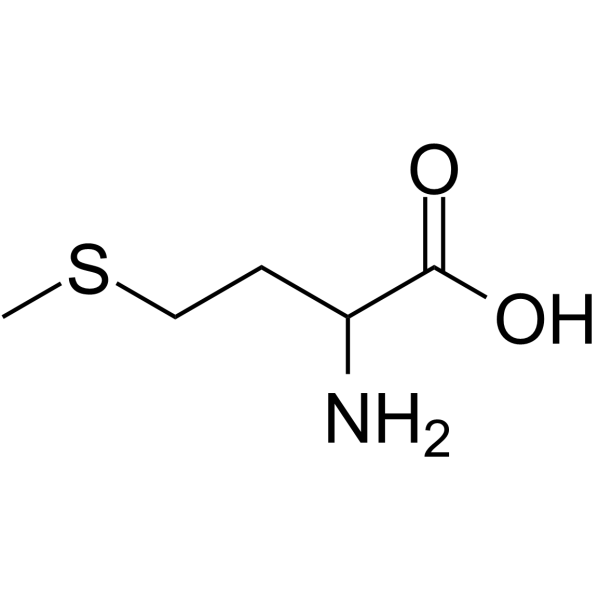
DL-Methionine is an essential amino acid containing sulfur with oxidative stress defense effects. DL-Methionine can be used for animal natural feed. DL-Methionine also kills H. rostochiensis on potato plants .
loading...
    loading...
1
1 Cited Publications
Cat. No.: HY-B2228
CAS No.: 9001-92-7
Proteinase, Aspergillus oryzae is a serine protease that hydrolyzes peptide bonds in protein substrates, preferring alkaline conditions (optimal pH 10.5). It efficiently degrades casein, poly-L-glutamic acid, and poly-L-lysine, with activity irreversibly inhibited by diisopropylfluorophosphate (DFP) and potato inhibitor. This enzyme catalyzes proteolysis via serine residues in its active site, finding applications in food processing (e.g., soy sauce fermentation), detergents, and leather industries due to its high yield in solid-state fermentation and cost-effective production.
loading...
    loading...
1
1 Cited Publications
Cat. No.: HY-N8393
CAS No.: 1355681-10-5
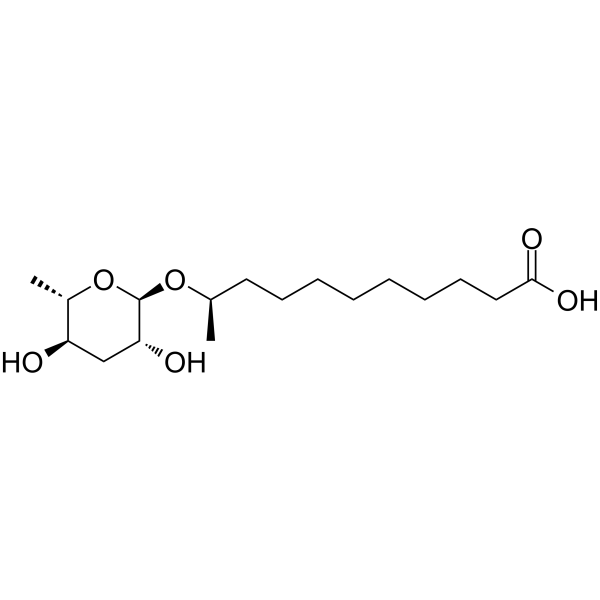
Ascr#18, an ascaroside, is a hormone of nematodes. Ascr#18 is expressed during nematode development. Ascr#18 increases resistance in Arabidopsis, tomato, potato and barley to viral, bacterial, oomycete, fungal and nematode infections .
loading...
    loading...
1
1 Cited Publications
Cat. No.: HY-121497
CAS No.: 5813-86-5
Purity:  99.40%
Synonyms: 3-MBA
Target:  

PARP Bacterial

Research Areas:  

Cancer

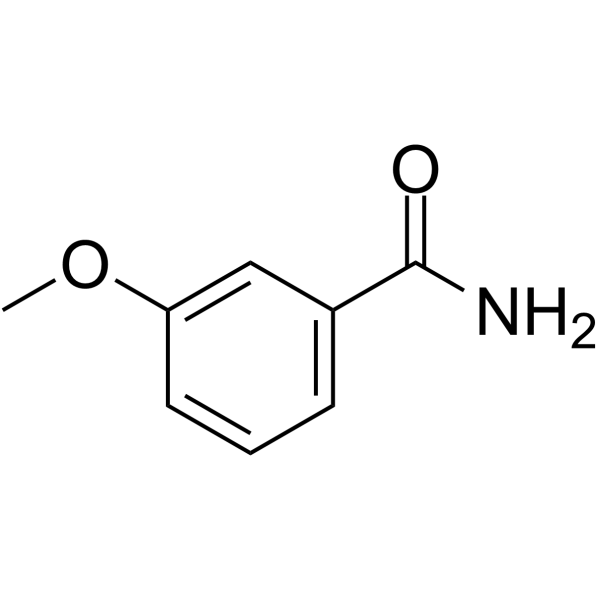
3-Methoxybenzamide (3-MBA), an inhibitor of ADP-ribosyltransferase (ADPRTs) and PARP, inhibits cell division in Bacillus subtilis, leading to filamentation and eventually lysis of cells . 3-Methoxybenzamide (3-MBA) enhances in vitro plant growth, microtuberization, and transformation efficiency of blue potato (Solanum tuberosum L. subsp. andigenum) .
loading...
    loading...
1
1 Cited Publications
Cat. No.: HY-N7271
CAS No.: 80-78-4
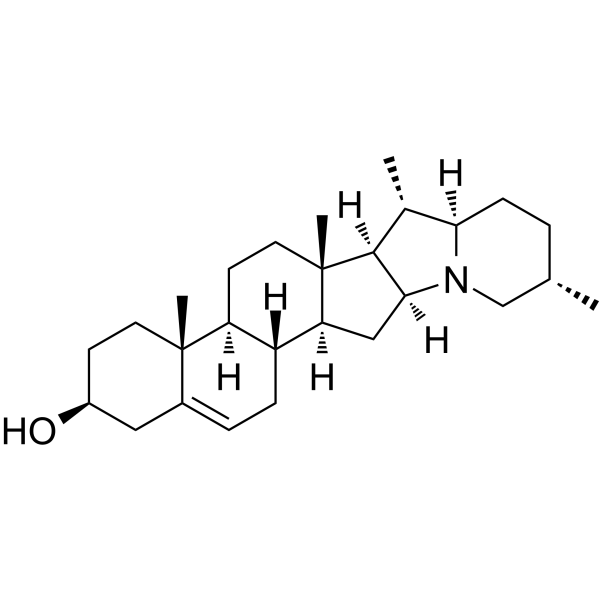
Solanidine is an orally active cholestane alkaloid. Solanidine can be isolated from potato. Solanidine decreases RAD51 and increases γH2AX and p53. Solanidine has anti-tumor effects on LLC tumors and lung cancer. Solanidine promotes breast cancer cell proliferation. Solanidine reduces neovascularization. Solanidine causes abortion in some pregnant mice .
loading...
    loading...
1
1 Cited Publications
Cat. No.: HY-N2459
CAS No.: 134-01-0
Synonyms: YGM-6 chloride
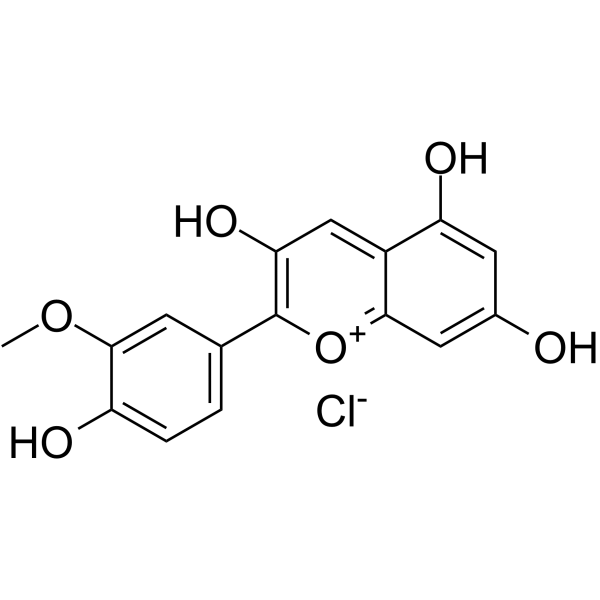
Peonidin (YGM-6) chloride is an anthocyanin compound found in plants such as grapes and purple-fleshed sweet potatoes. Peonidin chloride alone exerts no stable inhibitory effect on LPS (HY-D1056)-mediated inflammatory gene expression. The acylated form of Peonidin chloride exhibits antimutagenic activity .
loading...
    loading...
1
1 Cited Publications
Cat. No.: HY-B1953
CAS No.: 111988-49-9
Research Areas:  

Infection

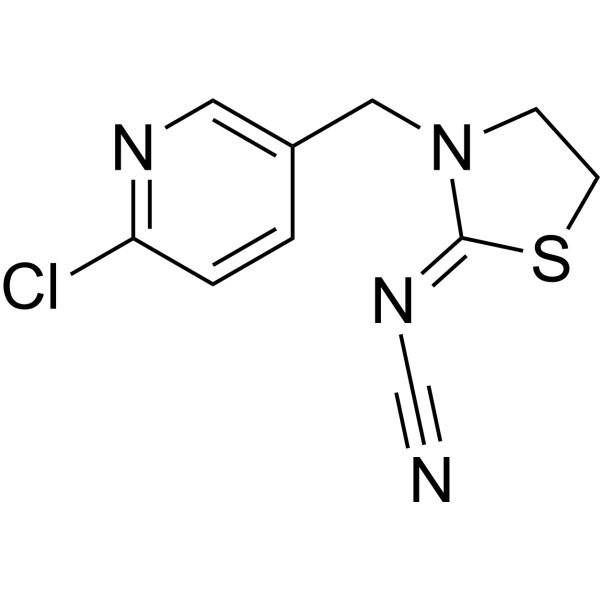
Thiacloprid is an orally active neurotoxic insecticide and also a nAChR agonist. Thiacloprid reduces the viability of healthy cells, depletes reduced glutathione, and increases MDA levels, thereby inducing cytotoxicity and oxidative stress damage. In practical applications, Thiacloprid has lower acute toxicity to honeybees than other compounds of the same class such as Imidacloprid (HY-B0838), but it still significantly impairs the learning and memory function, immune capacity and survival status of honeybees. Thiacloprid induces intestinal microbial dysbiosis and reduces survival rate in middle-aged honeybees, increases the risk of premature collapse in bumblebee colonies, and significantly decreases the final colony weight and reproductive output. Thiacloprid is used in broad-spectrum agricultural pest control, often alone or in combination with Deltamethrin (HY-B1971), and meets the pest management needs of various crops including potatoes, cabbages, various fruits and vegetables, and nuts .
loading...
    loading...
Cat. No.: HY-151862
CAS No.: 88192-19-2
Purity:  99.57%
Research Areas:  

Others

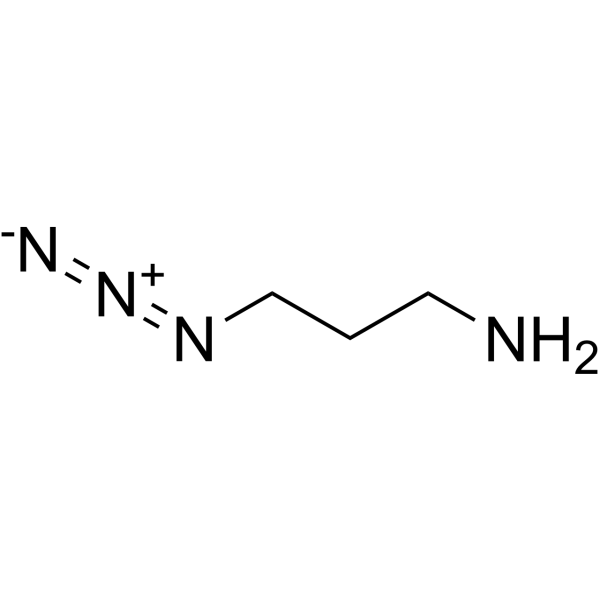
3-Azidopropylamine is a click chemistry reagent containing an azide group. 3-Azidopropylamine can react with the starch sugar of potato starch for complexation and transfection of plasmid DNA . It contains an azide group and can undergo copper-catalyzed azide-alkyne cycloaddition (CuAAc) with molecules containing alkyne groups. It can also undergo ring strain-promoted alkyne-azide cycloaddition (SPAAC) with molecules containing DBCO or BCN groups.
loading...
    loading...
Cat. No.: HY-113449
CAS No.: 727-81-1
Purity:  ≥99.0%
Ubiquinone-1 is an intermediate in the synthesis of Coenzyme Q. Ubiquinone-1 can be reduced by NADPH oxidase, hepatoma cells, Ascorbic acid (HY-B0166) .
loading...
    loading...
Cat. No.: HY-B2225A
CAS No.: 9005-25-8
Synonyms: Edible corn starch (from potato)
Starch (from potato) (Edible corn starch (from potato)) is a type of starch derived from potatoes. Starch (from potato) consists of amylose and amylopectin, and has properties such as easy gelatinization and high viscosity. Starch (from potato) is the main carbohydrate in potatoes and an important raw material for the food industry .
loading...
    loading...
Cat. No.: HY-116954
CAS No.: 21087-64-9
Target:  

DNA/RNA Synthesis

Research Areas:  

Others

Metribuzin is a low-cost non-selective herbicide belonging to the chemical class of triazinones. Metribuzin inhibits plant DNA synthesis and acts on photosystem II, ultimately suppressing photosynthesis. Metribuzin provides excellent control of important annual grass and broadleaf weeds .
loading...
    loading...
Cat. No.: HY-N7398
CAS No.: 3777-69-3
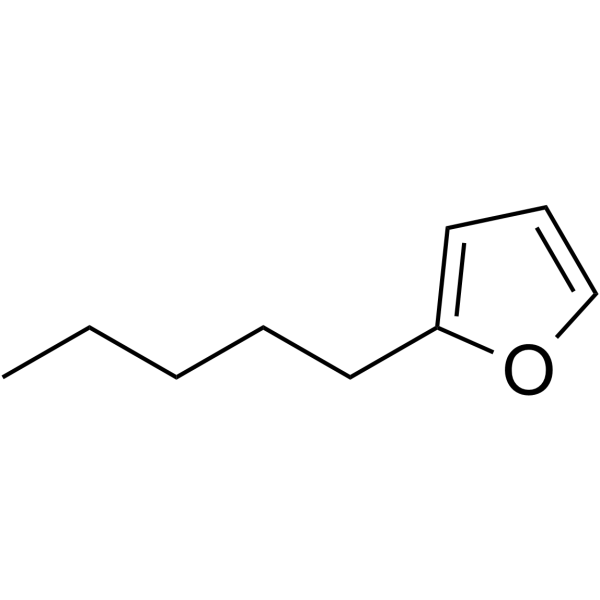
2-Pentylfuran is the compound isolated from steam volatile oils obtained from potatoes at atmospheric pressure. 2-Pentylfuran is a phytohormone .
loading...
    loading...
Cat. No.: HY-W145520
CAS No.: 9037-22-3
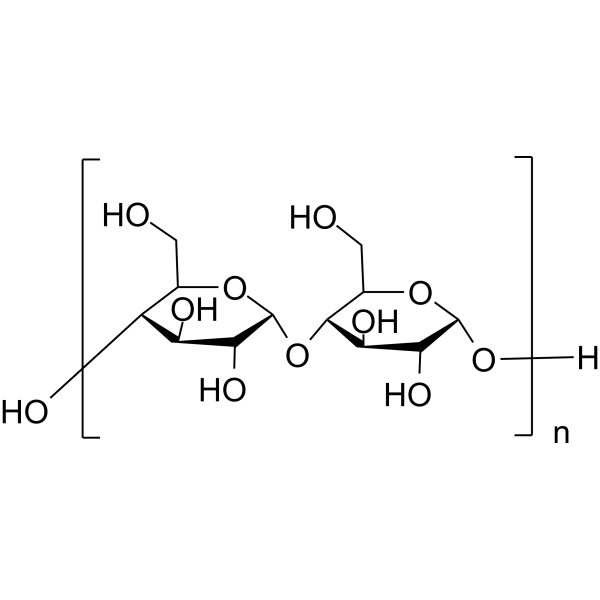
Amylopectin is a branched glucan polymer and one of the two principal components of starch, found in botanical sources including corn, amaranth, and potato .
loading...
    loading...
Cat. No.: HY-128371
CAS No.: 4536-23-6
Purity:  ≥98.0%
Research Areas:  

Others

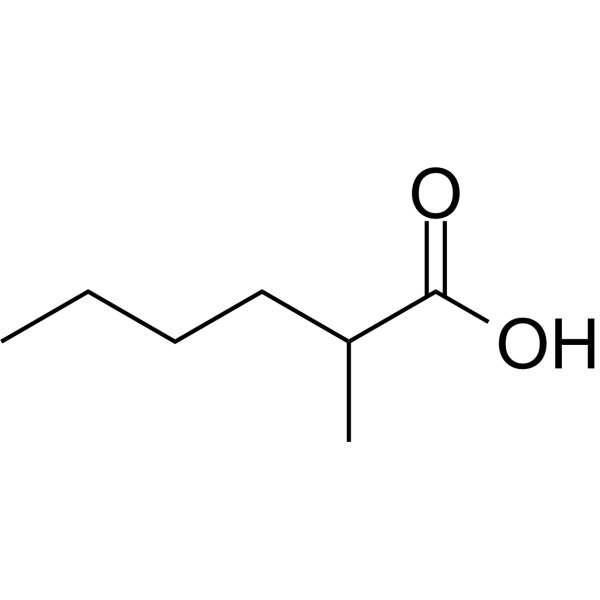
2-Methylhexanoic acid is a saturated branched-chain carboxylic acid with a strong "fatty" or "oily" odor. At high concentrations, it is often described as having the smell of lard, chicken fat or sweat; when diluted, it exhibits a dairy, cream or cheese aroma. Therefore, it is commonly used in the formulation of milk, meat (pork/chicken) and baked food flavors. 2-Methylhexanoic acid occurs naturally in fresh apples, cheese, grape brandy, lamb, potatoes and tea .
loading...
    loading...
Cat. No.: HY-Y1004
CAS No.: 112-30-1
Synonyms: Decyl alcohol
1-Decanol (Decyl alcohol) is a nematicidal agent derived from Houttuynia cordata, with an LC50 of 31.5 μg/mL against potato cyst nematodes (PCN). 1-decanol directly damages nematode surface structures, induces cellular apoptosis, and disrupts the oxidative stress regulation system, while also downregulating defense-related metabolic pathways in potato, thereby promoting the reallocation of metabolic resources from defense to growth. 1-Decanol can be used for the research of potato cyst nematode infestation .
loading...
    loading...
Cat. No.: HY-W115789
CAS No.: 1344-09-8
Sodium silicate is a water-soluble silicate. Sodium silicate is widely used as a binder, particularly in the production of detergents, soaps, and cleaners. Sodium silicate promotes the deposition of suberin polyphenols and lignin at wound sites of potato tubers, accelerates callus structure formation, enhances ROS production, and induces the synthesis of total phenols and flavonoids. Sodium silicate reduces the weight loss rate and disease index of wounded potato tubers during storage .
loading...
    loading...
Cat. No.: HY-B2008
CAS No.: 131807-57-3
Synonyms: DPX-JE874
Research Areas:  

Infection

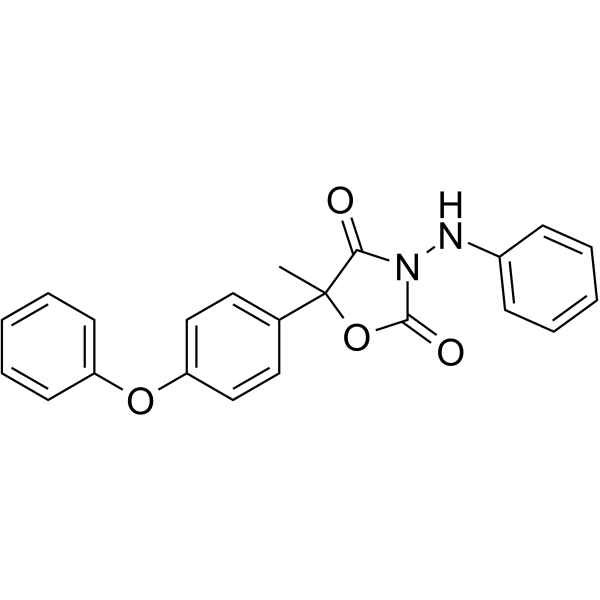
Famoxadone is a fungicide active against various oomycetes. Famoxadone induces rapid lysis of zoospores of P. viticola and P. infestans, and inhibits sporangial differentiation, zoospore release, sporangial germination and mycelial growth. Famoxadone exerts a preventive control effect on plant diseases. Famoxadone can be used in research related to grape downy mildew, potato late blight, tomato late blight and plant oomycete diseases .
loading...
    loading...
Cat. No.: HY-N1033
CAS No.: 140631-27-2
Research Areas:  

Infection

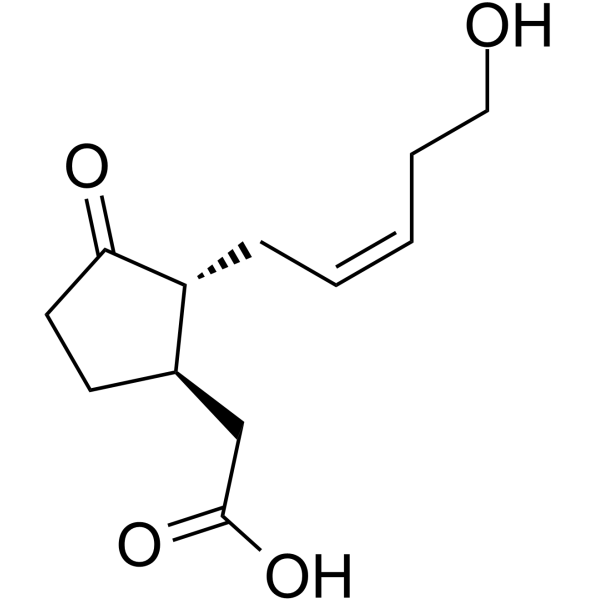
12-Hydroxyjasmonic acid is a metabolite of Jasmonic acid (HY-122464A) and an inducer of defense responses. 12-Hydroxyjasmonic acid can be isolated from potato leaflets. During the response of sugar beet plants to Cercospora beticola infection, 12-Hydroxyjasmonic acid is released through deglycosylation of its glucoside form and participates in the Jasmonic acid-mediated defense signaling pathway. 12-Hydroxyjasmonic acid mediates changes in source-sink relationships during pathogen infection, prioritizing the activation of defense processes over growth processes. 12-Hydroxyjasmonic acid serves as a substrate for salicylic acid Glycosyltransferases in tobacco and rice. 12-Hydroxyjasmonic acid can induce leaflet closure in Samanea saman. 12-Hydroxyjasmonic acid acts as a potato tuber-inducing substance. 12-Hydroxyjasmonic acid does not induce protoplast shrinkage in extensor motor cells of Samanea saman. 12-Hydroxyjasmonic acid can be used in studies related to brown spot disease .
loading...
    loading...
Cat. No.: HY-W040141
CAS No.: 7643-75-6
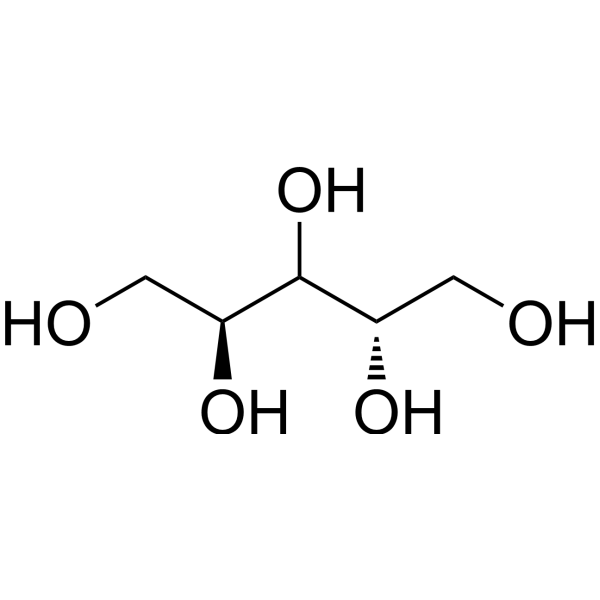
L-Arabinitol is a potential biomarker for the comsuption of the food products such as sweet potato, deerberry, moth bean, and is also associated with Alzheimer's disease and ribose-5-phosphate isomerase deficiency.
loading...
    loading...
Cat. No.: HY-114117
CAS No.: 1477919-27-9
Purity:  98.21%
Synonyms: GF-3242
Research Areas:  

Infection

Tyclopyrazoflor (GF-3242) is a pyridylpyrazole Insecticide. Tyclopyrazoflor exhibits excellent insecticidal efficacy against sap-sucking insects. Tyclopyrazoflor effectively controls insect pests caused by Myzus persicae and Bemisia tabaci larvae .\n

loading...
    loading...

