
1. Search Result
Search Result
Results for "

side-effects

" in MedChemExpress (MCE) Product Catalog:

141

Inhibitors & Agonists

8

Screening Libraries

2

Biochemical Assay Reagents

4

Peptides

1

Inhibitory Antibodies

5

Natural
Products

7

Isotope-Labeled Compounds

1

Click Chemistry

2

Oligonucleotides

Cat. No. Product Name Target Research Areas Chemical Structure
  • HY-138171
    Lipid 5
    3 Publications Verification

    Liposome Others
    Lipid 5 is an amino lipid that affords efficient mRNA delivery in rodent and primate models. Lipid 5 shows optimal pharmacokinetics and non-toxic side effects .
    Lipid 5
  • HY-109017

    VBP15

    Glucocorticoid Receptor Mineralocorticoid Receptor NF-κB Inflammation/Immunology
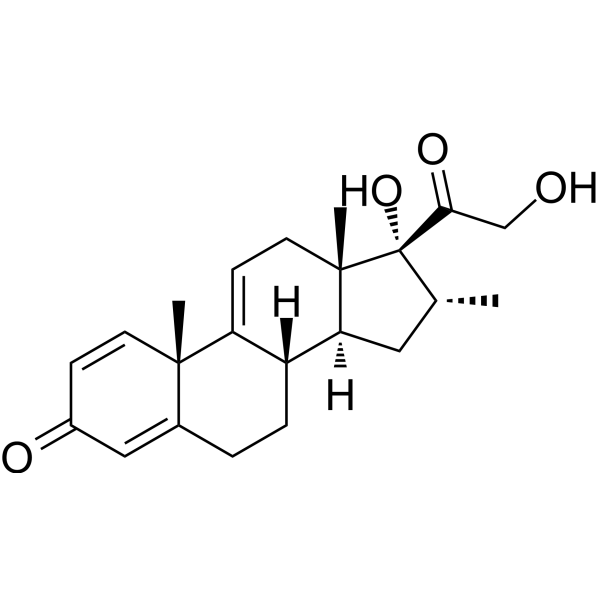
    Vamorolone (VBP15) is a first-in-class, orally active dissociative steroidal anti-inflammatory agent and membrane-stabilizer. Vamorolone improves muscular dystrophy without side effects. Vamorolone shows potent NF-κB inhibition and substantially reduces hormonal effects .
    Vamorolone
  • HY-106406
    Benzylacyclouridine
    2 Publications Verification

    BAU; 5-Benzylacyclouridine

    Drug Derivative Cancer
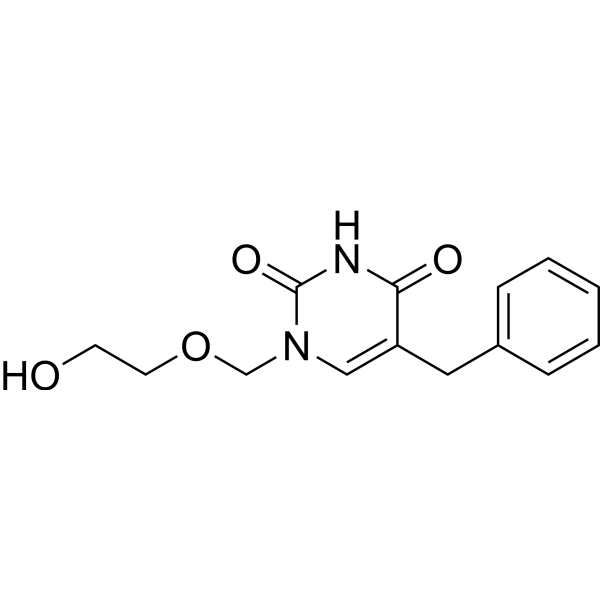
    Benzylacyclouridine (BAU) is a potent and specific inhibitor of uridine phosphorylase, the first enzyme in the catabolism of uridine. Benzylacyclouridine inhibits the metabolic activity of UPP1 and the activity of UPP2. Benzylacyclouridine can modulate the cytotoxic side effects of 5-fluorouracil (5-FU) and its derivatives .
    Benzylacyclouridine
  • HY-119809

    Apoptosis Endogenous Metabolite Cancer
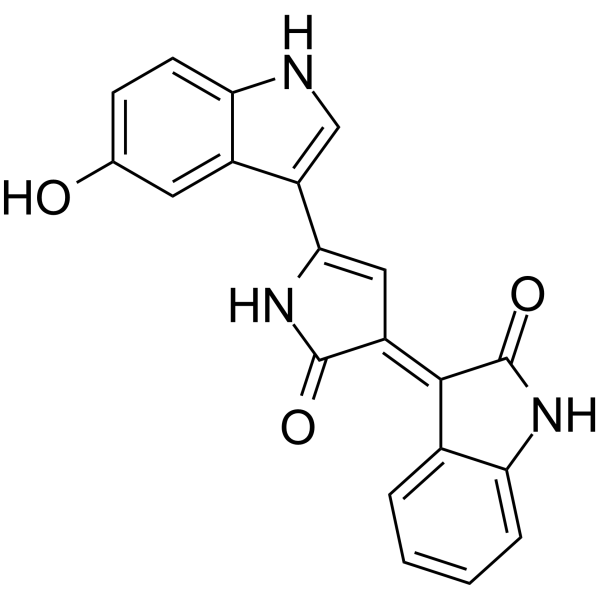
    Violacein, a secondary metabolite produced by several microorganisms, possesses potent anticancer and low side effects. Violacein possesses antioxidant properties. Apoptosis inducer .
    Violacein
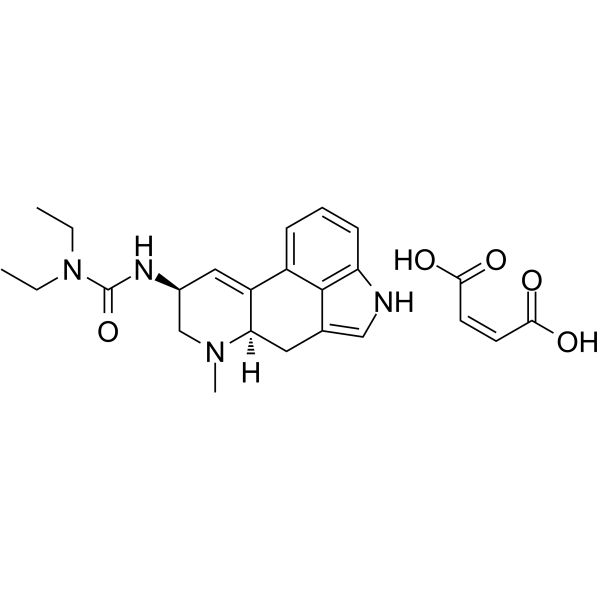
  • HY-110080

    Dopamine Receptor Neurological Disease
    Lisuride (maleate) is a potent agonist of dopamine with a probably direct action on dopaminergic receptors. Lisuride (maleate) is an ergot derivative. Lisuride (maleate) releases the premenstrual mastalgia without significant side effects .
    Lisuride maleate
  • HY-P10709

    Collagen Cardiovascular Disease Cancer
    CREKA peptide is a selective non-covalent binding agent targeting fibrin, type IV collagen, and fibronectin, often used as a targeting ligand to modify delivery carriers. CREKA peptide specifically recognizes fibrin, fibronectin, and type IV collagen that are excessively deposited in the tumor microenvironment or fibrotic tissue, mediating the targeted accumulation of the carrier at the lesion site and promoting drug internalization into target cells (such as cancer cells and activated hepatic stellate cells). CREKA peptide can enhance targeted delivery efficiency, increase drug concentration at the lesion site, and reduce systemic side effects .
    CREKA peptide
  • HY-114237

    Sodium Channel Neurological Disease
    GDC-0276 is a potent, selective, reversible and orally active NaV1.7 inhibitor with an IC50 value of 0.4 nM. GDC-0276 is well tolerated and exhibits a good pharmacokinetic profile. GDC-0276 has the potential for the treatment of pain and to address shortcomings of existing pain medications, such as addiction and off-target side effects .
    GDC-0276
  • HY-160955

    Phosphatase Neurological Disease
    Z218484536 is a selective and brain-penetrant phosphoserine phosphatase (PSPH) inhibitor. Z218484536 binds to PSPH with a Kd value of approximately 0.23 μM. Z218484536 reduces L-serine and D-serine levels in astrocytes. Z218484536 is able to suppress spontaneous epileptic seizures without causing serious side effects. Z218484536 also shows good anti-epileptic effects in the temporal lobe epilepsy (TLE) model .
    Z218484536
  • HY-B0237

    DL-Aminoglutethimide

    Cytochrome P450 Neurological Disease Endocrinology Cancer
    Aminoglutethimide (DL-Aminoglutethimide) is an orally active anticonvulsant with various endocrine-related side effects. Aminoglutethimide blocks multiple steroid hormone synthesis pathways by inhibiting several cytochrome P-450-dependent hydroxylases, such as aromatase, cholesterol side-chain cleavage enzyme, 11-hydroxylase, and 18-hydroxylase, with IC50 values of 0.3, 3.5, 120, and 20 μM, respectively. Aminoglutethimide reduces cortisol levels. Aminoglutethimide can be used in research on Cushing's syndrome, breast cancer, and other conditions .
    Aminoglutethimide
  • HY-172236

    BNC210; IW-2143

    nAChR Neurological Disease
    Soclenicant (BNC210) is an orally active α7 nAChR negative alteration modulator (NAM) with no apparent side effects. Soclenicant exhibits acute anxiolytic activity in rodent models of anxiety. Soclenicant inhibits rat and human α7 nAChR currents (in stably transfected cell lines) induced by acetylcholine, nicotine, choline, and the a7-specific agonist PNU-282987 (HY-12560A) with IC50 values in the range of 1.2 to 3 μM. Soclenicant can be used in studies of anxiety, trauma, and stressor-related disorders .
    Soclenicant
  • HY-116578
    Metopimazine
    3 Publications Verification

    EXP999; RP9965

    Dopamine Receptor Neurological Disease
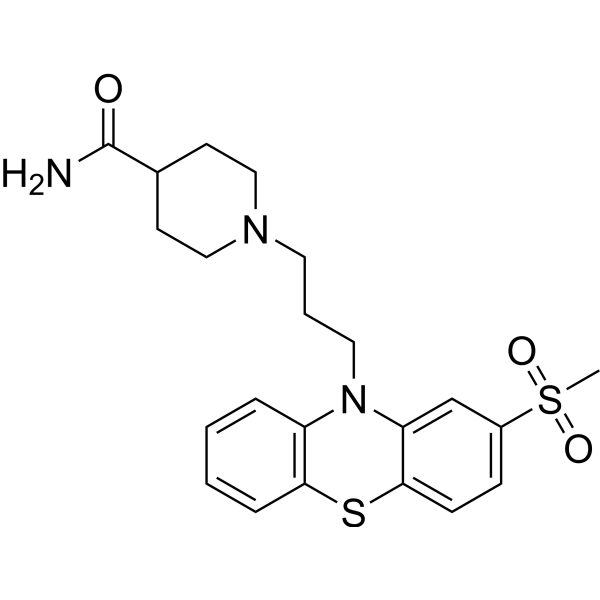
    Metopimazine (EXP999; RP9965) is a phenothiazine, orally available, selective dopamine D2 receptor antagonist that does not penetrate the blood-brain barrier. Metopimazine blocks dopamine D2 receptors in the chemoreceptor trigger zone and the periphery, thereby inhibiting nausea and vomiting. Metopimazine is indicated for chemotherapy-induced nausea and vomiting, and has low central side effects due to its poor brain penetration. The use of metopimazine in acute gastroenteritis may have potential risks .
    Metopimazine
  • HY-16350
    BOLD-100
    1 Publications Verification

    NKP-1339; IT-139; KP-1339

    DNA/RNA Synthesis Apoptosis Cancer
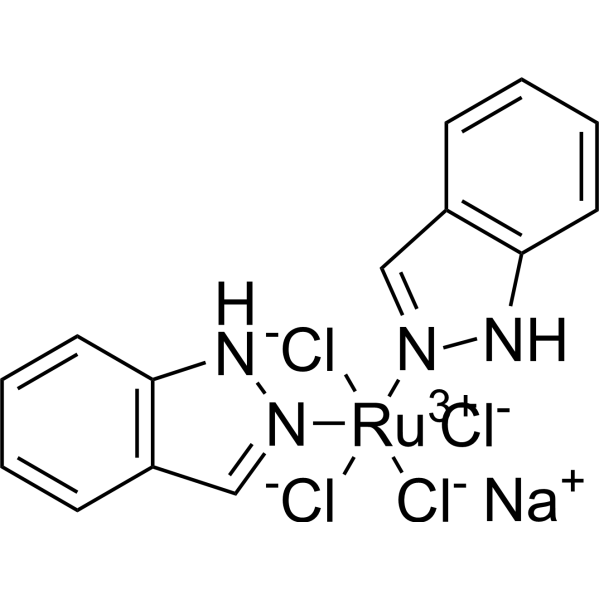
    BOLD-100 (NKP-1339; IT-139) is the first-in-class ruthenium-based anticancer agent in development against solid cancer with limited side effects. BOLD-100 induces G2/M cell cycle arrest, blockage of DNA synthesis, and induction of apoptosis via the mitochondrial pathway. BOLD-100 has a high tumor targeting potential, strongly binds to serum proteins such as albumin and transferrin and activates in the reductive tumor milieu .
    BOLD-100
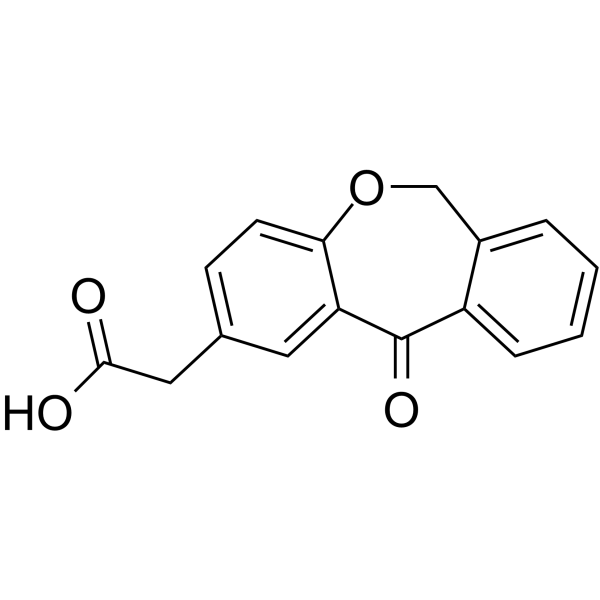
  • HY-W050088

    HP 549

    Drug Derivative Neurological Disease Inflammation/Immunology
    Isoxepac (HP 549) is an orally active non-steroidal anti-inflammatory agent. Isoxepac can inhibit Carrageenan (HY-125474) paw oedema, adjuvant-induced polyarthritis, and prostaglandin synthesis. Isoxepac (200 mg) has an analgesic effect after meniscectomy with a low incidence of side effects. Isoxepac can be used in the research of inflammatory (rheumatoid arthritis) and pain-related diseases .
    Isoxepac
  • HY-B1032

    (±)-Dropropizine; UCB-196

    Histamine Receptor Neurological Disease
    Dropropizine ((±)-Dropropizine; UCB-196) is an orally effective, peripherally selective antitussive that inhibits the activity of peripheral receptors and afferent nerves in the respiratory tract. Dropropizine acts on the cough reflex pathway, does not pass the blood-brain barrier, and has no central nervous system side effects. Dropropizine mainly regulates the level of sensory neuropeptides and inhibits the afferent signal transmission of the cough reflex, thereby alleviating the symptoms of dry cough, and has both mild local anesthetic and antihistamine activity. Dropropizine is mainly used for symptomatic research on dry cough caused by respiratory diseases .
    Dropropizine
  • HY-B2112

    mAChR Neurological Disease
    Valethamate bromide is an ester, serving as an effective rapidly acting anticholinergic antispasmodic and muscle relaxant. Valethamate bromide accelerates labor by improving cervical dilation. Valethamate bromide can significantly shorten the labor process and have fewer side effects .
    Valethamate bromide
  • HY-123352

    (+)-ZK 216348

    Glucocorticoid Receptor Inflammation/Immunology Endocrinology
    ZK 216348 ((+)-ZK 216348) is a nonsteroidal selective glucocorticoid receptor agonist with an IC50 of 20.3 nM. ZK 216348 also binds to Progesterone and mineralocorticoid receptors with IC50s of 20.4 nM and 79.9 nM, respectively. ZK 216348 has antiinflammatory activity similar to Prednisolone and induces less transactivation-mediated side effects .
    ZK 216348
  • HY-107345

    Ombolan

    Prostaglandin Receptor Inflammation/Immunology
    Droxicam (Ombolan) is a non-steroidal anti-inflammatory agent, with strong analgesic activity. Droxicam acts by inhibiting PGE2 varies, and is characterised by being a pro-drug of Piroxicam (HY-B0253). Droxicam is well tolerated with slight side effects in the said mucosa. Droxicam does not show cardiovascular or respiratory effects in cats, and inhibits peritoneal capillary permeability in mouse .
    Droxicam
  • HY-125961

    FGFR Glycosyltransferase Cancer
    T3Inh-1 is a potent and selective inhibitor of ppGalNAc-T3 (IC50=7 μM). T3Inh-1 reduces FGF23 hormone levels in both tissue cells and mice, without causing any toxic side effects. T3Inh-1 also prevents breast cancer cells. The enzyme ppGalNAc-T3 is implicated in at least two medically important pathways: cancer metastasis and stabilization of FGF23 (regulates phosphate levels in the bloodstream) .
    T3Inh-1
  • HY-135741

    iGluR Neurological Disease
    NYX-2925 is an orally active NMDAR modulator. NYX-2925 restores levels of activated Src and Src phosphorylation sites on GluN2A and GluN2B in the mPFC. NYX-2925 shows no effect on CAMKII, and any addictive or sedative/ataxic side effects. NYX-2925 can be used for research of a variety of NMDA receptor-mediated central nervous system disorders .
    NYX-2925
  • HY-103409

    Dopamine Receptor Neurological Disease
    ABT-724 trihydrochloride is a potent and highly selective dopamine D4 receptor agonist with an EC50 of 12.4 nM for human dopamine D4 receptor. ABT-724 trihydrochloride is a potent partial agonist at the rat D4 (EC50 of 14.3 nM) and the ferret D4 receptor (EC50 of 23.2 nM), and has no effect on dopamine D1, D2, D3, or D5 receptors. ABT-724 trihydrochloride could be useful for the treatment of erectile dysfunction and has favorable side-effect profile .
    ABT-724 trihydrochloride
  • HY-16103

    Win 32784; Bitolterol methanesulfonate; S-1540 mesylate

    Drug Derivative Infection
    Bitolterol mesylate (WIN 37284) is a diester-type agonist amine bronchodilator without significant cardiac side effects .
    Bitolterol mesylate
  • HY-115709

    Drug Derivative Cancer
    4,6-O-Benzylidene-D-glucose is a benzaldehyde derivative. 4,6-O-Benzylidene-D-glucose exerts anticancer effects without causing side effects .
    4,6-O-Benzylidene-D-glucose
  • HY-13556

    LY353381; SERM III

    Estrogen Receptor/ERR Metabolic Disease Cancer
    Arzoxifene (LY353381) is an orally active selective estrogen receptor modulator with a fixed ring structure similar to raloxifene. Arzoxifene has minimal side effects with powerful antiestrogenic effects on breast cancer and endometrium, with equally strong favorable estrogenic effects on bone and lipid profile .
    Arzoxifene
  • HY-P99436

    ABR-214936

    Transmembrane Glycoprotein Cardiovascular Disease Inflammation/Immunology Cancer
    Anatumomab mafenatox (ABR-214936) is a 73 KDa recombinant protein to recognize the tumor-associated antigen 5T4, which is widely expressing in malignancy. Anatumomab mafenatox is between a modified form of SEA and a murine Fab. The main side effects of Anatumomab mafenatox are reported to include fever, low blood pressure, pain, nausea and drowsiness .
    Anatumomab mafenatox
  • HY-N1965

    NF-κB p38 MAPK COX Monoamine Oxidase MMP Interleukin Related TNF Receptor Reactive Oxygen Species (ROS) Metabolic Disease Inflammation/Immunology
    Gaultherin is an orally active non-steroidal anti-inflammatory agent. Gaultherin selectively inhibits NF-κB, MAPK, COX-2 (IC50 = 0.35 mg/mL), LOX (IC50 = 0.56 mg/mL) and HYAL (IC50 = 28.58 μg/mL) to exert anti-inflammatory, antipyretic and analgesic effects. Gaultherin exhibits modest direct antioxidant capacity, greater in cell-based models. Gaultherin does not affect COX-1 so that avoids the common gastrointestinal side effects of Aspirin (HY-14654) .
    Gaultherin
  • HY-17509
    Deracoxib
    1 Publications Verification

    SC 046; SC 46; SC 59046

    COX Apoptosis Neurological Disease Inflammation/Immunology Cancer
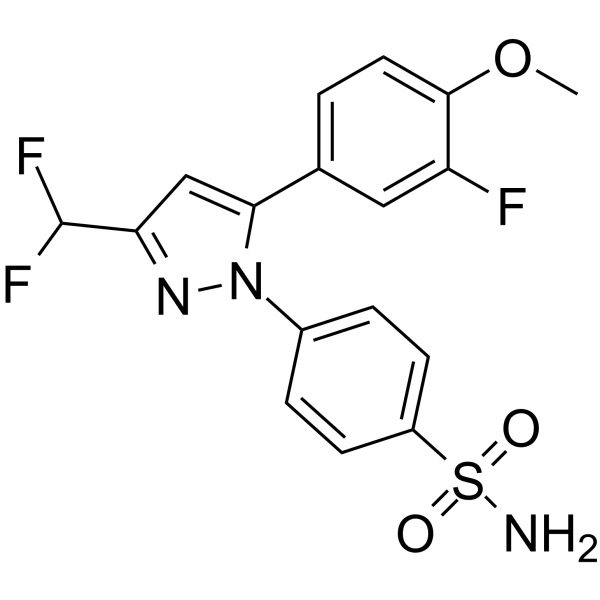
    Deracoxib (SC 046; SC 59046), an orally active COX-2 inhibitor, is a veterinary nonsteroidal anti-inflammatory agent used exclusively in dogs. Deracoxib inhibits the COX-2 enzyme to reduce the production of prostaglandins, effectively controlling pain and inflammation after canine soft tissue surgery. Deracoxib reduces the inhibition of COX-1 and lowers the risk of gastrointestinal side effects. Deracoxib induces tumor cell cycle arrest and apoptosis, and shows anti-tumor activity in canine osteosarcoma, breast tumors and bladder transitional cell carcinomas .
    Deracoxib
  • HY-136281

    Sigma Receptor Neurological Disease
    DuP 734 is a sigma receptor antagonist. DuP 734 is a selective and potent sigma and 5-HT2 receptor ligand with weak affinity for D2 receptors. DuP 734 may have antipsychotic activity without the liability of motor side effects typical of neuroleptics .
    DuP 734
  • HY-179511

    Glycosidase Metabolic Disease
    α-Glucosidase-IN-104 (Compound 9s) is an efficient inhibitor of α-glucosidase with an IC50 of 24.32 μM. α-Glucosidase-IN-104 has a weak inhibitory effect on α-amylase and avoids gastrointestinal side effects. α-Glucosidase-IN-104 can be used for research on type 2 diabetes .
    α-Glucosidase-IN-104
  • HY-118249

    PPAR Neurological Disease
    GSK 1997132B is a benzimidazole-based PPARγ partial agonist that can cross the blood-brain barrier with a pEC50 value of 8.0. GSK 1997132B has no significant effect on PPARα/δ. GSK 1997132B improves the problem of high blood clearance rate of earlier compounds, avoiding side effects such as weight gain and edema. GSK 1997132B can be used for research on Alzheimer's disease .
    GSK 1997132B
  • HY-14330

    Dopamine Receptor Neurological Disease
    ABT-724, a chemical probe, is a potent and highly selective dopamine D4 receptor agonist with an EC50 of 12.4 nM for human dopamine D4 receptor. ABT-724 is a potent partial agonist at the rat D4 (EC50 of 14.3 nM) and the ferret D4 receptor (EC50 of 23.2 nM). ABT-724 has no effect on dopamine D1, D2, D3, or D5 receptors. ABT-724 could be useful for the treatment of erectile dysfunction and has favorable side-effect profile .
    ABT-724
  • HY-U00045

    BRL-38705

    Parasite Others
    Epsiprantel (BRL-38705) is a compound with anti-Echinococcus activity that can cause the death of protoscolex, larvae and adults in vitro, and is more effective against mature worms than larvae in vivo, with no side effects.
    Epsiprantel
  • HY-122281

    Cannabinoid Receptor Others
    JTE 7-31 selectively acts on peripheral cannabinoid receptors, minimizing central nervous system side effects. They exhibit potent immunomodulatory, anti-inflammatory and anti-allergic properties, as well as inhibitory effects on nephritis .
    JTE 7-31
  • HY-106983

    Glucocorticoid Receptor Inflammation/Immunology
    GR 250495X is an inhaled glucocorticoid receptor agonist. GR 250495X is designed as a antedrug, which takes effect locally in the lungs but is rapidly metabolized and inactivated in the bloodstream after entering the systemic circulation, thereby minimizing systemic side effects. GR 250495X can be used in asthma research .
    GR 250495X
  • HY-19233

    Dopamine Receptor Neurological Disease
    BAM-1110 is a dopamine receptor agonist. BAM-1110 exhibits dose-dependent antiparkinsonian activity in MPTP (HY-W114750)-treated monkey models of Parkinson's disease. BAM-1110 has minimal side effects and can be used for the research of Parkinson's disease and other neurological disorders .
    BAM-1110
  • HY-106605

    LY 120363

    Dopamine Receptor 5-HT Receptor Neurological Disease
    Flumezapine (LY 120363) is a potent and balanced antagonist of the dopamine D2 receptor and the 5-hydroxytryptamine receptor (5-HT receptor). Flumezapine does not alter the increase in serum cortisol caused by κ-opioid receptor agonists. Flumezapine inhibits the conditioned avoidance response in rats and has a low risk of extrapyramidal side effects. Flumezapine can be used in antipsychotic research .
    Flumezapine
  • HY-155313

    Drug-Linker Conjugates for ADC Cancer
    β-Glucuronide-NB-bis[N(Me)-methyl ester]-MMAE (compound 20) is auristatins-glucuronide conjugate. Antitumor agent-122 shows in vitro antiproliferative activities against β-glucuronidase pretreated and untreated cancer cells with an IC50 value of 5.7 nM - 9.7 nM. Antitumor agent-122 shows potent antitumor efficacy in HCT-116 xenograft mouse model without inducing side effects .
    β-Glucuronide-NB-bis[N(Me)-methyl ester]-MMAE
  • HY-109747

    MMP Cancer
    RO-28-2653 is an orally active matrix metalloproteinase (MMP) inhibitor. RO-28-2653 exhibits highly selective inhibitory effects on MMP2, MMP9 and membrane-type 1-MMP, and may reduce side effects (such as musculoskeletal pain) compared to broad-spectrum MMP inhibitors. RO-28-2653 shows significant tumor growth inhibition in a rat prostate model. RO-28-2653 can be used in studies of hormone-sensitive tumors .
    RO-28-2653
  • HY-W050088S

    HP 549-d6

    Isotope-Labeled Compounds Drug Derivative Neurological Disease Inflammation/Immunology
    Isoxepac-d6 (HP 549-d6) is the deuterium labeled Isoxepac (HY-W050088). Isoxepac (HP 549) is an orally active non-steroidal anti-inflammatory agent. Isoxepac can inhibit Carrageenan (HY-125474) paw oedema, adjuvant-induced polyarthritis, and prostaglandin synthesis. Isoxepac (200 mg) has an analgesic effect after meniscectomy with a low incidence of side effects. Isoxepac can be used in the research of inflammatory (rheumatoid arthritis) and pain-related diseases .
    Isoxepac-d6
  • HY-153953

    Bcl-2 Family Cancer
    Bcl-2-IN-11 (compound 6) is a potent and selective Bcl-2 activity inhibitor, with an IC50 of 0.9 nM. Bcl-2-IN-11 shows weak inhibition of Bcl-xl (IC50 > 1000 nM). Bcl-2-IN-11 can be used for the research of a variety of cancers caused by abnormal overexpression of Bcl-2 family proteins: especially malignant hematologic diseases of acute lymphoid leukemia, etc. Bcl-2-IN-11 can also avoid toxic side effects caused by Bcl-xl inhibition, such as thrombocytopenia .
    Bcl-2-IN-11
  • HY-130587

    Piperazine sultosylate; A-585

    LDLR Apolipoprotein Metabolic Disease
    Sultosilic acid piperazine salt (Piperazine sultosylate; A-585) is a lipid-lowering agent. Sultosilic acid piperazine salt modifies the blood lipids levels, reduces platelet adhesiveness without promoting peroxisomal activity of hepatocytes or producing other adverse side-effects .
    Sultosilic acid piperazine salt
  • HY-U00020

    Drug Derivative Metabolic Disease
    AU-224 is a benzamide derivative used as a promising gastrointestinal prokinetic agent without significant side effects.
    AU-224
  • HY-122461

    Parasite Infection
    Glycobiarsol is an organic arsenical compound, which can be used as an amoebicidal agent. Glycobiarsol exhibits toxicity and side effects .
    Glycobiarsol
  • HY-139735

    Drug Intermediate Cancer
    Antitumor agent-29 is a novel hepatocyte-targeting antitumor proagent, which exhibits good antitumor activity and low toxic side effects.
    Antitumor agent-29
  • HY-W373206

    Biochemical Assay Reagents Metabolic Disease
    Triampizine is a potent gastric antisecretory agent without the side effects of anticholinergic drugs. Triampizine may react with the excipient magnesium stearate and is used in studies of hyperacidity .
    Triampyzine
  • HY-124406

    mGluR Neurological Disease
    A-794282 is a compound with analgesic activity and is a selective mGlu1 receptor antagonist that significantly reduces pain behaviors in a postoperative pain model, but motor side effects may occur at higher doses.
    A-794282
  • HY-118499

    RIV-2093

    Drug Derivative Endocrinology
    Alpiropride (RIV-2093) is a metoclopramide (HY-17382) analog that is effective in reducing the gastrointestinal side effects of cancer chemotherapy drugs. In animal studies, alpiropride showed a stronger antiemetic effect than metoclopramide .
    Alpiropride
  • HY-147195

    HMG-CoA Reductase (HMGCR) Cardiovascular Disease Metabolic Disease Inflammation/Immunology
    QH536 (Compound 29) is a potent HMGCR degrader with an EC50 of 0.22 μM. QH536 has no side-effect of inducing cholesterol accumulation in cells. QH536 shows anti-inflammatory and can be used for cardiovascular disease and nonalcoholic steatohepatitis research .
    QH536
  • HY-144769

    Topoisomerase Cancer
    SDOX is the Doxorubicin (DOX) proagent. The loaded DOX proagents (SDOX) which can release the parent agents DOX triggered by excessive GSH in tumor cells, minimize the unexpected side effects on normal tissues without compromising the potency .
    SDOX
  • HY-129451

    GABA Receptor Others
    HIE-124 is a potent ultra-short acting hypnotic that exhibits a rapid onset of action and a shorter duration of action with no acute tolerance or noticeable side effects. HIE-124 is promising for research of preanesthetic medication and anesthesia inducer .
    HIE-124
  • HY-19846

    PRX-03140 potassium salt

    5-HT Receptor Others
    VRX-03011 (PRX-03140 (potassium salt)) is a compound with the potential to enhance memory and regulate acetylcholine release. It is a 5-HT? agonist that can enhance memory, regulate hippocampal acetylcholine efflux, and regulate APP metabolism without gastrointestinal side effects.
    VRX-03011

Inquiry Online

Your information is safe with us. * Required Fields.

Salutation


Country or Region *

Applicant Name *


Organization Name *

Department *


Email Address *


Product Name *

Cat. No.


Requested quantity *

Phone Number *


Remarks

Inquiry Online

Inquiry Information

Product Name:
Cat. No.:
Quantity:
MCE Japan Authorized Agent:

