Search Result
Results for "
stem bark
" in MedChemExpress (MCE) Product Catalog:
| Cat. No. |
Product Name |
Target |
Research Areas |
Chemical Structure |
-
- HY-N0163
-
-
-
- HY-W013571
-
|
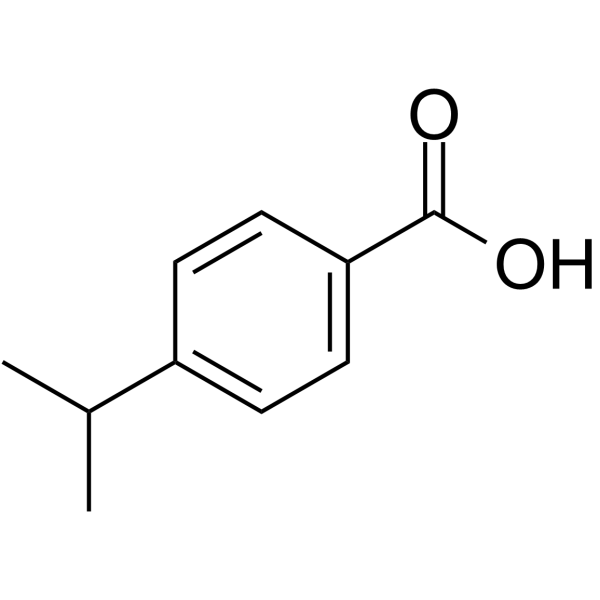
Cuminic acid; p-Isopropyl benzoic acid
|
Fungal
|
Infection
|
|
4-Isopropylbenzoic acid (Cuminic acid; p-Isopropyl benzoic acid) an aromatic monoterpenoid, is isolated from the stem bark of Bridelia retusa. 4-Isopropylbenzoic acid exhibits antifungal activities. 4-Isopropylbenzoic acid is also a reversible and uncompetitive inhibitor of mushroom tyrosinase .
|
-
-
- HY-N1581
-
|
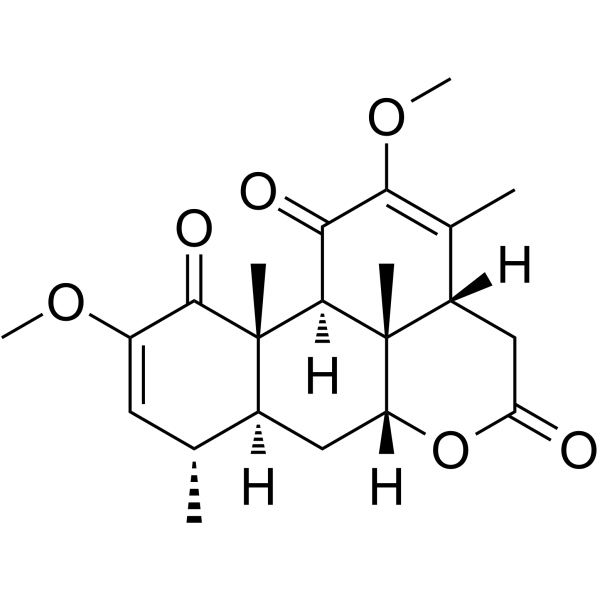
Nigakilactone D
|
Parasite
|
Infection
Endocrinology
|
|
Quassin (Nigakilactone D) is a bioactive triterpenoid from stem bark extract of Quassia amara. Quassin inhibits P. falciparum with an IC50 of 0.15 μM. Quassin possesses reversible antifertility, anti-estrogenic and anti-plasmodial activity .
|
-
-
- HY-N0821
-
|
Griffonin
|
Others
|
Cancer
|
|
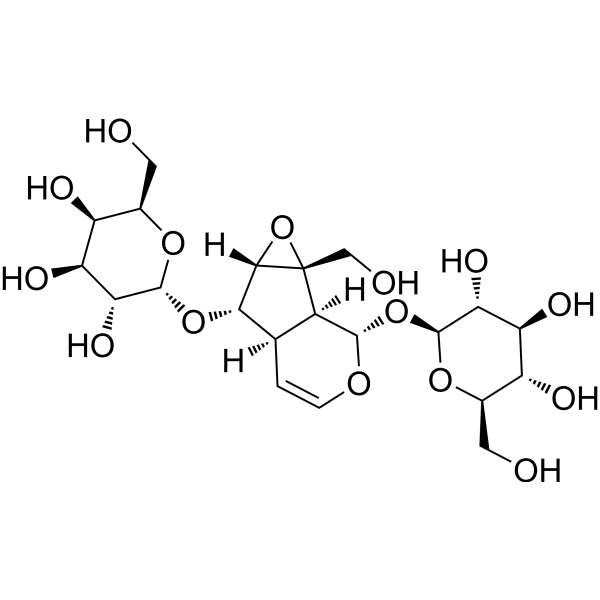
Lithospermoside (Griffonin) is a nature product isolated from the stem bark of Semiaquilegia adoxoides .
|
-
-
- HY-N16690
-
|
|
Bacterial
Fungal
|
Infection
|
|
3-Hydroxy-4-methoxycinnamaldehyde (compound 2) is a cinnamaldehyde from the stem bark of Flemingia paniculata Wall. 3-Hydroxy-4-methoxycinnamaldehyde exhibits antibacterial (both Gram-positive and Gram-negative) and antifungal activities (MIC = 12.5-50 μg/mL). 3-Hydroxy-4-methoxycinnamaldehyde can be used for microbial infections research .
|
-
-
- HY-N0338
-
|
|
Others
|
Others
|
|
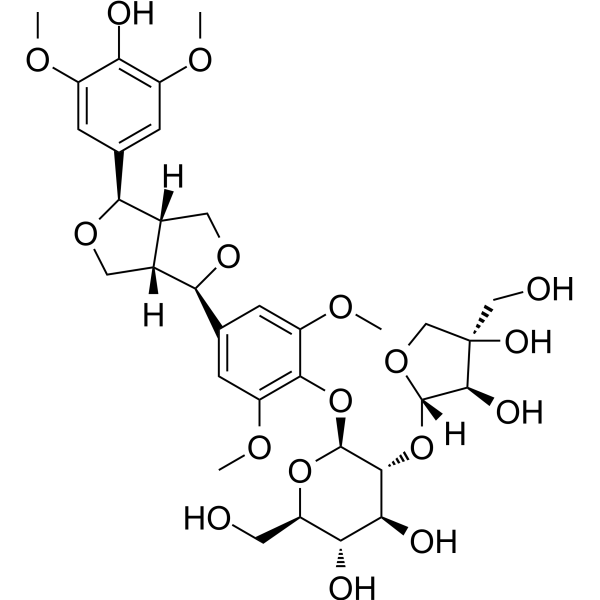
(-)-Syringaresnol-4-O-β-D-apiofuranosyl-(1→2)-β-D-glucopyranoside is a lignan glycoside that can be isolated from the stem bark of Albizia julibrissin Durazz .
|
-
-
- HY-N7625
-
-
-
- HY-N3175
-
|
Fusarindin
|
Others
|
Others
|
|
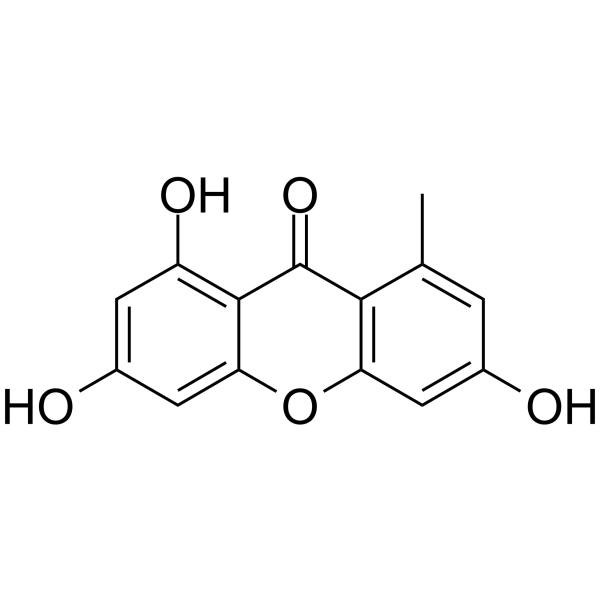
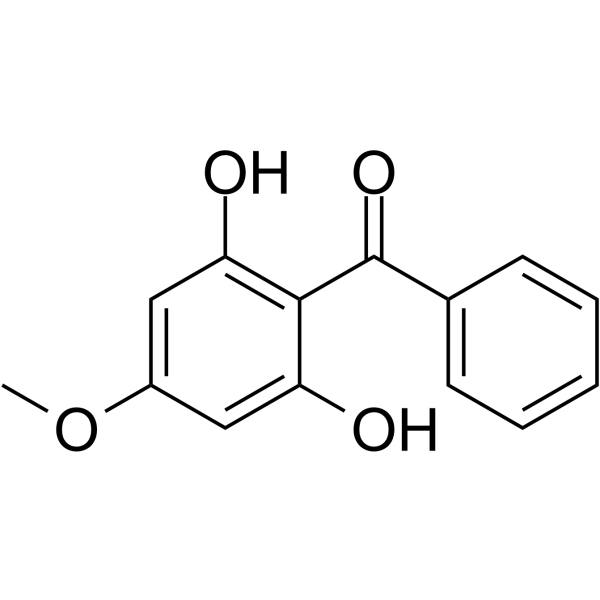
Norlichexanthone is a compound isolated from the stem bark of Kandelia candel (L.) Druce, Rhizophoraceae .
|
-
-
- HY-N1652
-
|
3,3′,4-Tri-O-methylellagic acid
|
Others
|
Others
|
|
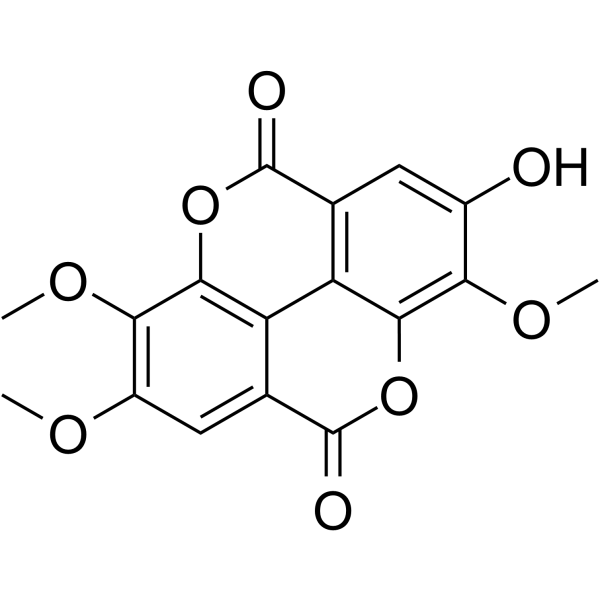
2,3,8-Tri-O-methylellagic acid is a terpenoids that can be isolated from the stem bark of Neoboutonia macrocalyx. 2,3,8-Tri-O-methylellagic acid is found to be 50 times more active than the parent ellagic acid .
|
-
-
- HY-126535
-
|
|
Glycosidase
|
Metabolic Disease
Cancer
|
|
Magnoloside B is an α-glucosidase inhibitor (IC50=0.69 mM), which can be obtained from Magnolia officinalis stem bark. Magnoloside B shows moderate inhibitory activity against MGC-803 and HepG2 cells. Magnoloside B has the potential to study cancer and diabetes .
|
-
-
- HY-N2857
-
|
|
Others
|
Others
|
|
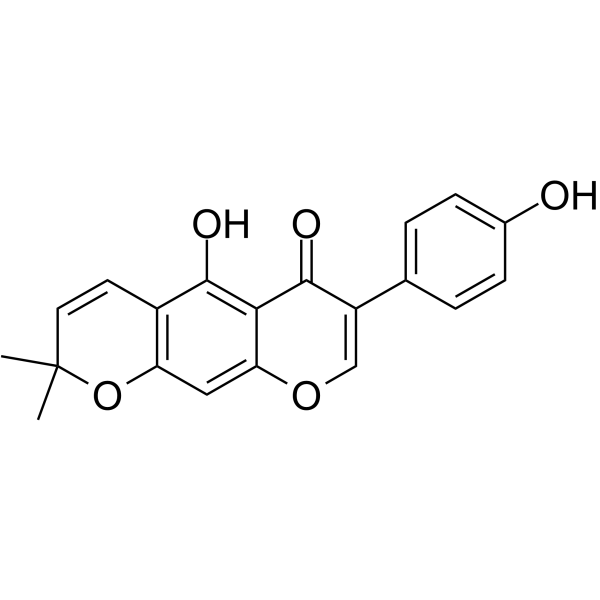
Alpinumisoflavone (compound 2) is a flavonoid derivative isolated from the stem bark of Erythrina lysistemon Hutch .
|
-
-
- HY-N5125
-
-
-
- HY-121211
-
|
|
Parasite
|
Infection
|
|
Digitolutein is a natural product that can be isolated from the stem bark and the roots of Morinda lucida Benth. Digitolutein effectively inhibits the growth of Plasmodium falciparum with an IC50 value of 12.92 μg/mL. Digitolutein can be used for the research of infection .
|
-
-
- HY-N4048
-
|
|
Others
|
Cancer
|
|
Heudelotinone is a dinorditerpenoid that can be isolated from the stem bark and roots of Ricinodendron heudelotii. Heudelotinone shows cytotoxicity against SMMC-7721, A549 and Hela cells with IC50s of 21.68, 16.04 and 10.67 μM, respectively .
|
-
-
- HY-N16598
-
|
|
Others
|
Inflammation/Immunology
|
|
4''-O-Methylcatalposide (compound 7) is a glycoside from the stem bark of Catalpa ovata. 4''-O-Methylcatalposide exhibits peroxynitrite (ONOO −)-scavenging activity with an IC50 of 36.4 μM. 4''-O-Methylcatalposide can be used for anti-inflammatory research .
|
-
-
- HY-N3149
-
|
|
STAT
Apoptosis
Reactive Oxygen Species (ROS)
|
Cancer
|
|
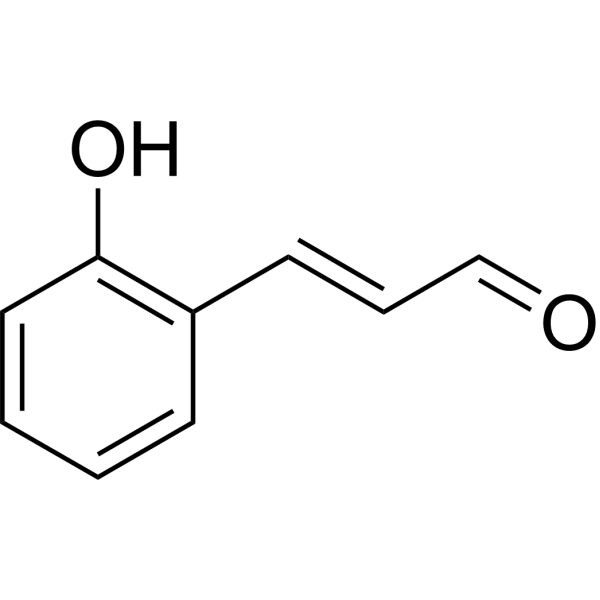
(E)-2-Hydroxycinnamaldehyde is an aldehyde that can be separated from the stem bark of cinnamon. (E)-2-Hydroxycinnamaldehyde inhibits cell proliferation and induces apoptosis by inhibiting signal transduction of STAT3 and reactive oxygen species production. (E)-2-Hydroxycinnamaldehyde has antitumor activity .
|
-
-
- HY-N3637
-
-
-
- HY-N3554
-
|
(+)-Catechol 7-β-D-xylopyranoside
|
Others
|
Others
|
|
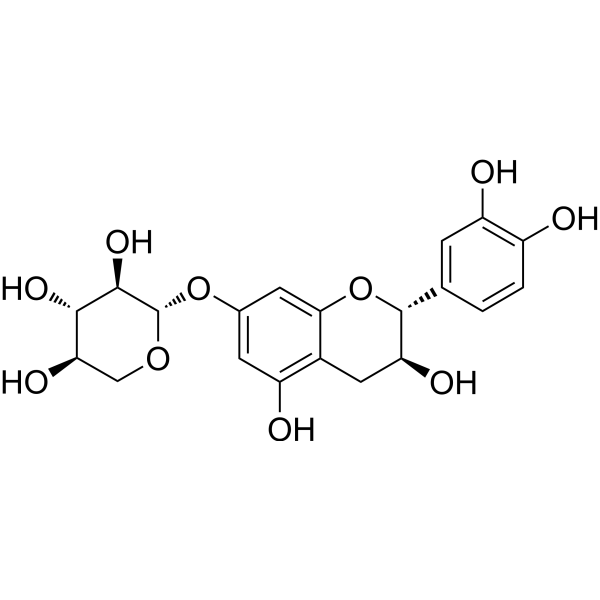
Catechin-7-O-β-D-xylopyranoside is an antioxidant compound with strong DPPH free radical scavenging ability. Catechin-7-O-β-D-xylopyranoside can be extracted from birch inner bark and nepeta stem bark .
|
-
-
- HY-N2105
-
|
L-Dicentrine
|
Fungal
Bacterial
|
Infection
|
|
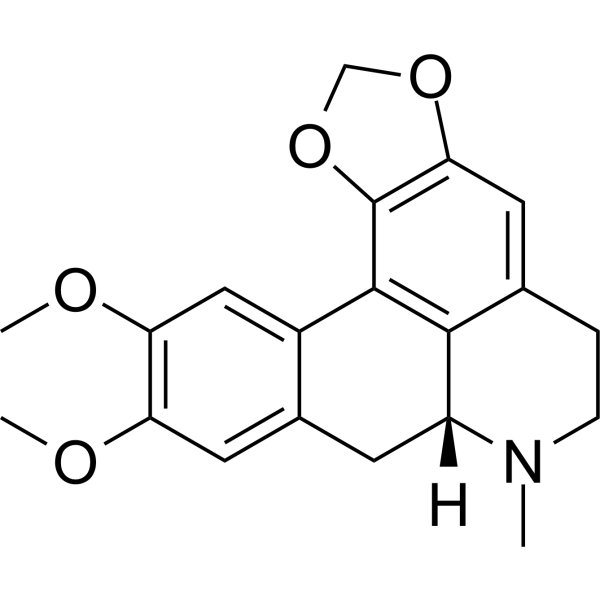
(-)-Dicentrine is an aporphine alkaloid that can be isolated from the stem bark of Talauma arcabucoana. (-)-Dicentrine shows moderate growth inhibition against Staphylococcus aureus and
Candida albicans .
|
-
-
- HY-N3642
-
|
Erythrabyssin I; Erythrabissin I
|
Others
|
Cancer
|
|
Cristacarpin can be extracted from the stem bark of Erythrina suberosa, promotes endoplasmic reticulum (ER) stress, leading to sublethal reactive oxygen species (ROS) production and ultimately cell death through senescence .
|
-
-
- HY-N1251
-
|
|
Others
|
Others
|
|
Scholaricine (compound 13 ) is an alkaloid isolated from the leaf and stem-bark extracts of Alstonia spatulata. Scholaricine reverse multidrug resistance in vincristine-resistant KB cells with an IC50 value of 13.35 μM .
|
-
-
- HY-N0163R
-
-
-
- HY-N8265
-
|
|
HSV
DNA/RNA Synthesis
ATP Synthase
|
Infection
|
|
Abyssinone V is a prenylated flavonoid with predicted anti-viral activity. Abyssinone V can be isolated from the stem bark of Erythrina melanacantha. Abyssinone V possesses good pharmacodynamics properties. Abyssinone V is predicted to be antivirals including anti-herpes (HSV) agent, with mechanisms comprising inhibition of polymerase, ATPase and membrane integrity .
|
-
-
- HY-W068783
-
|
(E)-Piperonylprop-2-enoic acid
|
Endogenous Metabolite
|
Others
|
|
(E)-3,4-(Methylenedioxy)cinnamic acid is a cinnamic acid derivative obtained from the stem bark of Brombya platynema .
|
-
-
- HY-N8134
-
|
|
Dipeptidyl Peptidase
|
Metabolic Disease
|
|
2-Methoxy-5-acetoxy-fruranogermacr-1(10)-en-6-one is a natural product found in the leaves and stem bark of M. glabra. 2-Methoxy-5-acetoxy-fruranogermacr-1(10)-en-6-one displays binding affinities with dipeptidyl peptidase-4 (DPP-4) and α-Amylase. 2-Methoxy-5-acetoxy-fruranogermacr-1(10)-en-6-one has potential antidiabetic activities .
|
-
-
- HY-N1948
-
|
|
Others
|
Others
|
|
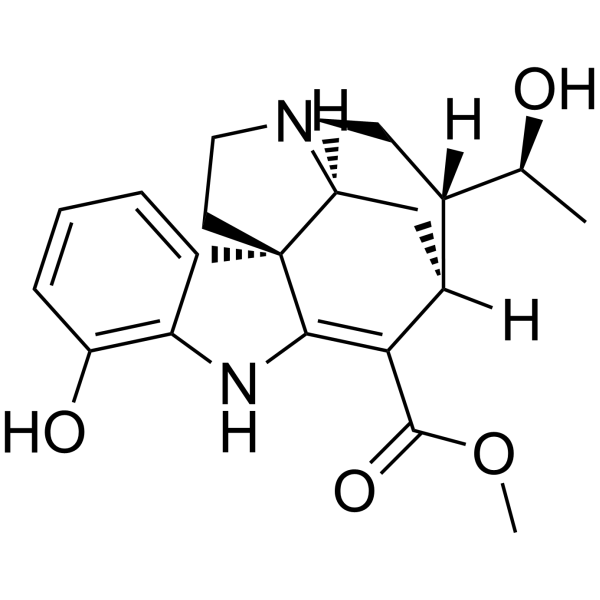
Mitoridine is an indole alkaloid compound isolated from the stem bark of Rauwolfia cumminsii Stapf .
|
-
-
- HY-W013571R
-
|
Cuminic acid (Standard); p-Isopropyl benzoic acid (Standard)
|
Reference Standards
Fungal
|
Infection
|
|
4-Isopropylbenzoic acid (Cuminic acid; p-Isopropyl benzoic acid) an aromatic monoterpenoid, is isolated from the stem bark of Bridelia retusa. 4-Isopropylbenzoic acid exhibits antifungal activities. 4-Isopropylbenzoic acid is also a reversible and uncompetitive inhibitor of mushroom tyrosinase .
|
-
-
- HY-N6247
-
|
|
Others
|
Others
|
|
Fuscaxanthone C is an xanthone isolated from the stem bark of Garcinia fusca .
|
-
-
- HY-N3743
-
|
Dihydroalpinumisoflavone
|
Others
|
Others
|
|
Erythrivarone A is an isoflavone that can be isolated from the stem bark of Erythrina variegate .
|
-
-
- HY-N12157
-
|
|
Others
|
Others
|
|
Noratherosperminine is an alkaloid that can be isolated from the stem bark of Cryptocarya nigra .
|
-
-
- HY-N8364
-
|
|
Others
|
Others
|
|
Evoxanthine is a compound that can be isolated from the stem bark of Pleiocarpa pycnantha .
|
-
-
- HY-N1574
-
|
|
Others
|
Others
|
|
Puerol A is a Phenols product that can be isolated from the stem barks of Sophora japonica. .
|
-
-
- HY-N9041
-
|
|
Others
|
Others
|
|
Pyranojacareubin is a Xanthones product that can be isolated from the stem barks of Calophyllum inophyllum. .
|
-
-
- HY-123252
-
|
Sarcodinine
|
Others
|
Others
|
|
Kurchessine (Sarcodinine) is an alkaloid that can be isolated from the stem bark of Holarrhena antidysenterica .
|
-
-
- HY-N12160
-
|
|
Others
|
Others
|
|
Erythrodiol diacetate (Compound 4) is a triterpenoid compound derived from Erythrina eriotriocha stem bark .
|
-
-
- HY-N3374
-
|
10-O-Methylsarpagine
|
Others
|
Others
|
|
Lochnerine is an indole alkaloid can be isolated from the stem bark extract of Alstonia macrophylla .
|
-
-
- HY-107226
-
|
|
Others
|
Cancer
|
|
Crovatin, isolated from the stem bark of C. oblongifolius, shows anti-tumor effect .
|
-
-
- HY-117164
-
|
|
Others
|
Others
|
|
Longicautadine is a bisindole alkaloid that can be isolated from the root and stem bark of Strychnos nux vomica.
|
-
-
- HY-N12996
-
|
|
Others
|
Others
|
|
Sitosterone is a steroid that can be isolated from stem bark of syzygium aqueum. Sitosterone shows cytotoxicity .
|
-
-
- HY-N1657
-
|
|
Others
|
Others
|
|
2,3-Dihydrohinokiflavone is a flavonoid compound isolated from the stem bark of Rhus tripartite .
|
-
-
- HY-121408
-
|
Xeroboside
|
Others
|
Others
|
|
Hymexelsin (Xeroboside) is an apiose-containing scopoletin glycoside, that can be isolated from the stem bark of Hymenodictyon excelsum .
|
-
-
- HY-N9219
-
|
|
Others
|
Others
|
|
2,5-Dihydroxyxanthone is a Xanthones product that can be isolated from the stem barks of Garcinia tetrandra .
|
-
-
- HY-N1284
-
|
(-)-Seneganolide
|
Others
|
Others
|
|
Seneganolide (compound 1) is isolated from the stem bark of Khaya senegalensis. Seneganolide can be used as insect antifeedant .
|
-
-
- HY-N1069
-
-
-
- HY-116631
-
|
Asaricin
|
Fungal
Insecticide
|
Infection
|
|
Sarisan (Asaricin) is a phenolic derivative with antifungal and insecticidal activity. Sarisan can be found in the stem bark of Ocotea opifera Mart. .
|
-
-
- HY-N8994
-
|
|
Others
|
Cancer
|
|
3-Hydroxy-4',5-dimethoxystilbene is a natural compound found in stem bark of Morus nigra L .
|
-
-
- HY-N1641
-
|
Deacetylkhayanolide E
|
Others
|
Others
|
|
1-O-Deacetylkhayanolide E is a khayanolide, which can be isolated from the stem bark of African mahogany Khaya senegalensis .
|
-
-
- HY-N15409
-
|
|
Others
|
Others
|
|
Epoxymurin A is a compound that can be isolated from the stem bark of Annona Muricata. Epoxymurin A can be used in the study of the biosynthetic pathway of annonaceous acetogenins .
|
-
-
- HY-N12803
-
|
|
Others
|
Others
|
|
2,5-Dihydroxy-7-methoxyflavanone is a flavonoid compound that can be isolated from the stem bark of F. enghiana .
|
-
-
- HY-N12968
-
|
|
Others
|
Others
|
|
R-(-)-Columbianetin is a known coumarin isolated from the root and stem bark of Skimmia reevesiana collected in Taiwan, with specific chemical structure and biological activity .
|
-
- HY-N1531
-
|
Magnotriol A
|
NO Synthase
|
Inflammation/Immunology
|
|
Randaiol is an antioxidant that can be isolated from the stem bark of Magnolia officinalis. Randaiol inhibits LPS-induced NO production and has anti-inflammatory and antioxidant activities .
|
-
- HY-N0821R
-
|
Griffonin (Standard)
|
Reference Standards
Others
|
Cancer
|
|
Lithospermoside (Standard) is the analytical standard of Lithospermoside. This product is intended for research and analytical applications. Lithospermoside (Griffonin) is a nature product isolated from the stem bark of Semiaquilegia adoxoides .
|
-
- HY-N1865
-
|
|
Others
|
Others
|
|
3-Oxotirucalla-7,24-dien-21-oic acid is a natural product, that can be isolated from Stereospermum acuminatissimum stem bark .
|
-
- HY-N9222
-
|
|
Others
|
Others
|
|
9-Deacetyl-9-benzoyl-10-debenzoyltaxchinin A is a Diterpenoids product that can be isolated from the stem-barks of Taxus baccata L. cv. stricta. .
|
-
- HY-N2961
-
|
|
Others
|
Others
|
|
Broussonin B is a phenolic compound isolated from the stem barks of Broussonetia kanzinoki (Moraceae). Broussonin B inhibits adipocyte differentiation in 3T3-L1 cells .
|
-
- HY-N12694
-
|
|
Others
|
Inflammation/Immunology
|
|
3-O-Methylellagic acid-4′-O-α-L-rhamnopyranoside is an ellagic acid glycoside compound that can be isolated from the stem bark of Aphananthe aspera and can be used for the research of inflammation and pain .
|
-
- HY-N10600
-
|
|
Antibiotic
Bacterial
Fungal
|
Infection
|
|
3β-Acetoxyurs-12-en-11-one is a ursane triterpenoid with antimicrobial activity, can be isolated from the stem bark of Morus mesozygia and the leaves of Ficus hirta Vahl (Moraceae) .
|
-
- HY-N9033
-
|
|
Others
|
Others
|
|
9-Deacetyl-9-benzoyl-10-debenzoyl-4β,20-epoxytaxchinin A is a Diterpenoids product that can be isolated from the stem-barks of Taxus baccata L. cv. stricta. .
|
-
- HY-N4162
-
|
|
Others
|
Cancer
|
|
3-Oxo-21α-methoxy-24,25,26,27-tetranortirucall-7-ene-23(21)-lactone is a cytotoxic tirucallane C26 triterpenoid isolated from the stem barks of Aphanamixis grandifolia .
|
-
- HY-N1581R
-
|
Nigakilactone D (Standard)
|
Reference Standards
Parasite
|
Infection
Endocrinology
|
|
Quassin (Standard) is the analytical standard of Quassin. This product is intended for research and analytical applications. Quassin (Nigakilactone D) is a bioactive triterpenoid from stem bark extract of Quassia amara. Quassin inhibits P. falciparum with an IC50 of 0.15 μM. Quassin possesses reversible antifertility, anti-estrogenic and anti-plasmodial activity .
|
-
- HY-N0986
-
|
|
Others
|
Cancer
|
|
1,4,5,6-Tetrahydroxy-7-(3-methylbut-2-enyl)xanthone is a nature product that could be isolated from the stem barks of Garcinia xanthochymus. 1,4,5,6-Tetrahydroxy-7-(3-methylbut-2-enyl)xanthone has antiproliferative active. 1,4,5,6-Tetrahydroxy-7-(3-methylbut-2-enyl)xanthone can be used in research of cancer .
|
-
- HY-N0338R
-
|
|
Reference Standards
Others
|
Others
|
|
(-)-Syringaresnol-4-O-β-D-apiofuranosyl-(1→2)-β-D-glucopyranoside (Standard) is the analytical standard of (-)-Syringaresnol-4-O-β-D-apiofuranosyl-(1→2)-β-D-glucopyranoside. This product is intended for research and analytical applications. (-)-Syringaresnol-4-O-β-D-apiofuranosyl-(1→2)-β-D-glucopyranoside is a lignan glycoside that can be isolated from the stem bark of Albizia julibrissin Durazz .
|
-
- HY-N12964
-
|
|
Others
|
Others
|
|
4-Hydroxycanthin-6-one is a novel quinoline alkaloid isolated from the stem bark of the tree Ailanthus altissima. Five other known compounds were also found in the study. The structures of the new compounds were determined by interpretation of physical and spectroscopic data, and their absolute configurations were determined by electronic circular dichroism spectroscopy and quantum chemical calculations. These compounds showed significant inhibitory activity against lipopolysaccharide (LPS)-induced nitric oxide (NO) production in RAW 264.7 cells, showing potential anti-inflammatory properties .
|
-
- HY-N10858
-
|
|
Others
|
Others
|
|
Chisocheton compound F is a nature product that could be isolated from the stem bark of Melia toosendan .
|
-
- HY-N17501
-
|
|
Others
|
Others
|
|
4',6'-O-(S)-Hexahydroxydiphenylsalicin is a phenolic glucoside that can be isolated from the stem bark of Alangium plantanifolium .
|
-
- HY-N9637
-
|
|
Others
|
Others
|
|
Swietenocoumarin I (Compound 5) is a coumarin compound that can be found in the combined stem bark and roots of Clausena anisata .
|
-
- HY-N18065
-
-
- HY-N9303
-
-
- HY-N18113
-
|
|
Others
|
Others
|
|
Leptodactylone is a compound isolated from the stem bark of Citrus medica L. var. sarcodactylis SWINGLE .
|
-
- HY-N17959
-
|
|
Others
|
Others
|
|
Vitalboside A is a triterpene found in the stem bark of Albizia gummifera .
|
-
- HY-N9138
-
|
|
Others
|
Others
|
|
Tovopyrifolin C is a Xanthones product that can be isolated from the stem barks of Calophyllum venulosum. .
|
-
- HY-N1325
-
|
|
Others
|
Others
|
|
Sanshodiol is a Lignans product that can be isolated from the stem barks of Xanthoxylum piperitum DC. .
|
-
- HY-N17575
-
|
|
Drug Derivative
|
Others
|
|
Alangitanifoliside A (Compound 1) is a phenolic glucoside isolated from the stem bark of Alangium plantanifolium .
|
-
- HY-116189
-
|
|
Others
|
Others
|
|
Julibrine I is a pyridoxine derivative found in the fresh stem bark of Albizzia julibrissin DURAzz, IV .
|
-
- HY-N1297
-
|
NSC380470
|
Others
|
Others
|
|
Sesartemin (NSC380470) is a Xanthones product that can be isolated from the stem barks of Calophyllum inophyllum. .
|
-
- HY-N8611
-
|
|
Others
|
Others
|
|
Specioside B is a Phenols product that can be isolated from the stem barks of Stereospermum acuminatissimum K. Schum. .
|
-
- HY-N18013
-
|
|
Others
|
Others
|
|
Septemloside II (Compound 6) is a triterpene saponin found in the dried stem bark of Kalopanax pictus (Kalopanacis Cortex) .
|
-
- HY-N17448
-
|
|
Drug Derivative
|
Others
|
|
Fraxinuacidoside functions as a norditerpene glucopyranoside with a unique carbon skeleton. Fraxinuacidoside can be found in the stem bark of Fraxinus sieboldiana .
|
-
- HY-N13743
-
|
|
Others
|
Others
|
|
2,7-Dihydroxyxanthone is a xanthone compound that can be isolated from the aerial parts (stems and bark) of Mammea acuminata .
|
-
- HY-N18148
-
|
|
Others
|
Infection
|
|
Trichilin K is a insect antifeeding iimonoid found in the stem bark of Melia toosendan. Trichilin K displays antifeedant activity against Spodoptera eridania larvae .
|
-
- HY-N3066
-
-
- HY-N19721
-
|
|
EBV
|
Infection
Cancer
|
|
Brasimarin B is a 4-phenylcoumarin compound found in the stem bark of Calophyllum brasiliense. Brasimarin B inhibits TPA (HY-18739)-induced EBV-EA activation in Raji cells .
|
-
- HY-N1871
-
|
|
Others
|
Inflammation/Immunology
|
|
4-(2-Hydroxy-1-methoxyethyl)-1,2-benzenediol is a phenylethanoid isolated from the stem bark of Syringa reticulate (Bl.) Hara (Oleaceae) with expectorant and antiasthmatic activity .
|
-
- HY-N17356
-
|
|
DYRK
|
Neurological Disease
|
|
Atalaphyllidine is a natural product. Atalaphyllidine can be isolated from the stem bark of Glycosmis chlorosperma. Atalaphyllidine inhibits DYRK1A kinase activity with an IC50 of 2.2 μM. Atalaphyllidine can be used in the research of neurodegenerative diseases .
|
-
- HY-N7890
-
|
|
Proteasome
|
Cancer
|
|
Isomoreollic acid is a cage xanthonoid. Isomoreollic acid exhibits cytotoxicity against colon cancer cells, with an IC50 > 10 μM for proteasome inhibition. Isomoreollic acid is present in the stem bark of Garcinia lateriflora. Isomoreollic acid can be used in colon cancer research .
|
-
- HY-N17510
-
|
|
Others
|
Inflammation/Immunology
|
|
Regiafuran A is a prenylated 2-arylbenzofuran derivative and free radical scavenger (IC50=1.9 μg/mL). Regiafuran A is isolated from the stem bark of Chlorophora regia. In a competitive enzyme immunoassay for PGE2, Regiafuran A shows no anti-inflammatory potential .
|
-
- HY-N18179
-
|
|
Parasite
|
Infection
|
|
8-Acetonylidihydrochelerythrine is a benzophenanthridine alkaloid found in the stem bark of Zanthoxylum gilletii. 8-Acetonylidihydrochelerythrine inhibits growth of Chloroquine (HY-17589A)-resistant and Chloroquine-sensitive Plasmodium falciparum strains. 8-Acetonylidihydrochelerythrine can be used for the research of malaria .
|
-
- HY-N18386
-
|
|
Sirtuin
MDM-2/p53
|
Neurological Disease
|
|
Altissimacoumarin F (Compound 4) is a terpenylated coumarin. Altissimacoumarin F can be isolated from the stem bark of Ailanthus altissima. Altissimacoumarin F enhances SIRT1 activity, decreases p53 transcriptional activity. Altissimacoumarin F can be used for the research of age-related disorders .
|
-
- HY-N18222
-
|
|
Bacterial
Fungal
|
Infection
|
|
Dihydroavicine is a benzophenanthridine alkaloid antibacterial agent isolated from the stem bark of Zanthoxylum rhoifolium. Dihydroavicine inhibits the growth of Gram-positive bacteria, Gram-negative bacteria, and Candida albicans. Dihydroavicine shows no activity against Saccharomyces cerevisiae and Cryptococcus neoformans. Dihydroavicine can be used for the research of bacterial infections and candidal infections .
|
-
- HY-N16748
-
|
|
Others
|
Cardiovascular Disease
|
|
Heptazoline is a carbazole alkaloid that can be isolated from the stem bark of Clausena excavata. Heptazoline exhibits significant antiplatelet aggregation activity (inhibiting platelet aggregation induced by arachidonic acid, collagen, etc.) and certain vasodilatory activity (inhibiting norepinephrine-induced contraction of rat aorta). Heptazoline can be used in antithrombotic research in the cardiovascular field .
|
-
- HY-N3659
-
-
- HY-N3993
-
-
- HY-N17985
-
|
|
Others
|
Metabolic Disease
Inflammation/Immunology
|
|
Kalopanaxsaponin H is an hederagenin glycoside (saponin) with no hypoglycemic activity upon intraperitoneal injection. Kalopanaxsaponin H can be metabolized by human intestinal bacteria into Kalopanaxsaponin I, Kalopanaxsaponin A, hederagenin 3-O-α-L-arabinopyranoside and hederagenin, among which Kalopanaxsaponin I and hederagenin are the main metabolites. Kalopanaxsaponin H is isolated from the stem bark of Kalopanax pictus and is used in diabetes-related research .
|
-
- HY-N19792
-
|
|
Drug Derivative
|
Cancer
|
|
6-(3'-Methyl-1',3'-butadienyl)-5,7-dimethoxycoumarin is a cytotoxic coumarin compound that can be isolated from the stem bark of Toddalia asiatica. 6-(3'-Methyl-1',3'-butadienyl)-5,7-dimethoxycoumarin can be used for the research of small cell lung cancer .
|
-
- HY-N17763
-
|
|
Others
|
Inflammation/Immunology
|
|
Styraxlignolide G is a furanofuran-type lignan compound that can be isolated from the stem bark of Styrax japonica. Styraxlignolide G exhibits very weak DPPH free radical scavenging activity, while its hydrolyzed aglycone molecule possesses antioxidant activity (IC50=186.7 μM) and is involved in antioxidant-related regulation in the body. Styraxlignolide G can be used in the study of inflammatory diseases.
|
-
- HY-N19724
-
|
|
Fungal
Lipoxygenase
COX
|
Infection
|
|
Buddledin A is a 5-LOX inhibitor (IC50 = 50.4 μM) and a COX inhibitor (IC50 = 13.7 μM). Buddedin A inhibits arachidonic acid metabolism via the 5-LOX and COX pathways, suppresses fungal growth, and exerts toxic effects on fish. Buddedin A may play an ecological role in protecting plant roots and stem barks from fungal infection. Buddedin A can be used in studies related to fungal infections .
|
-
- HY-N17604
-
|
|
Drug Derivative
|
Cancer
|
|
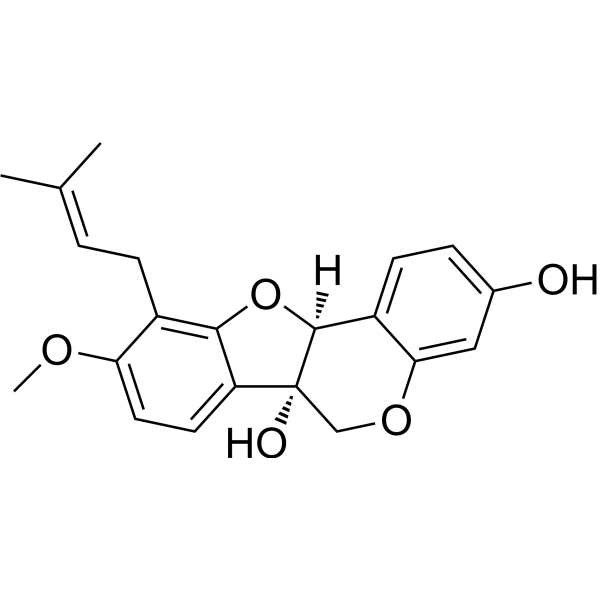
(6aR,11aR)-Edunol (compound 10) is a pterocarpan and antiproliferative agent. (6aR,11aR)-Edunol can be found in the roots of Lonchocarpus bussei and the stem bark of Lonchocarpus eriocalyx. (6aR,11aR)-Edunol exerts antiproliferative effects against drug-sensitive leukemia cells and multidrug-resistant leukemia cells. (6aR,11aR)-Edunol can be used for the research of leukemia .
|
-
- HY-N17896
-
|
|
Tyrosinase
|
Cancer
|
|
Pinoresinol-4-O-β-D-apiosyl-(1→2)β-D-glucoside is a lignan compound and a melanogenesis inhibitor with low cytotoxicity. Pinoresinol-4-O-β-D-apiosyl-(1→2)β-D-glucoside is isolable from the stem bark of Acer buergerianum (Acer buergerianum). Pinoresinol-4-O-β-D-apiosyl-(1→2)β-D-glucoside effectively inhibits the melanogenesis process in α-MSH (HY-P0252)-stimulated B16 melanoma cells. Pinoresinol-4-O-β-D-apiosyl-(1→2)β-D-glucoside exhibits extremely high safety towards normal cells, and serves as an ideal tool molecule for studying melanoma mechanisms and developing related whitening products .
|
-
Your information is safe with us. * Required Fields.
Inquiry Information
- Product Name:
- Cat. No.:
- Quantity:
- MCE Japan Authorized Agent:

