
1. Search Result
Search Result
Pathways Recommended: Stem Cell/Wnt Cell Cycle/DNA Damage
Results for "

tissue cells

" in MedChemExpress (MCE) Product Catalog:

907

Inhibitors & Agonists

20

Screening Libraries

294

Fluorescent Dyes

99

Biochemical Assay Reagents

72

Peptides

30

MCE Kits

23

Inhibitory Antibodies

86

Natural
Products

45

Isotope-Labeled Compounds

18

Click Chemistry

43

Oligonucleotides

4

GMP Molecules

Cat. No. Product Name Target Research Areas Chemical Structure
  • HY-115768
    Compound 48/80
    5 Publications Verification

    Poly-p-methoxyphenethylmethylamine

    Phospholipase Neurological Disease Cancer
    Compound 48/80 (Poly-p-methoxyphenethylmethylamine) is widely used in animal and tissue models as a "selective" mast cell activator. Compound 48/80 acts at the mast cell membrane to stimulate trimeric G-proteins and induces degranulation via phospholipase C and D pathways .
    Compound 48/80
  • HY-B0234
    Estrone
    5+ Cited Publications

    E1; Oestrone

    Estrogen Receptor/ERR Endogenous Metabolite Endocrinology Cancer
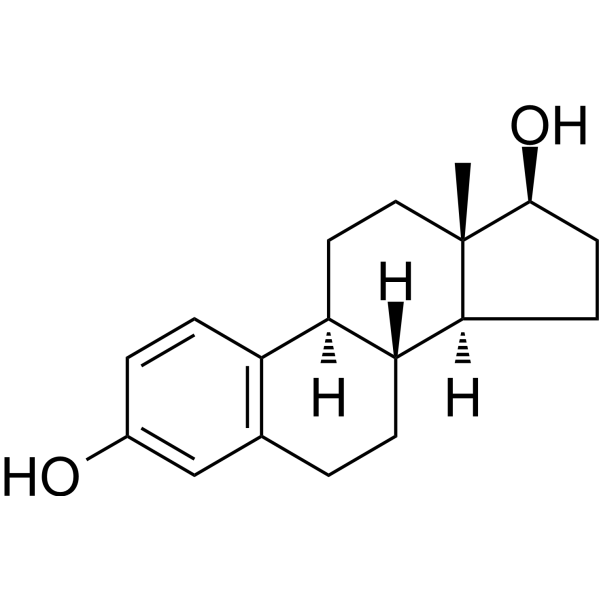
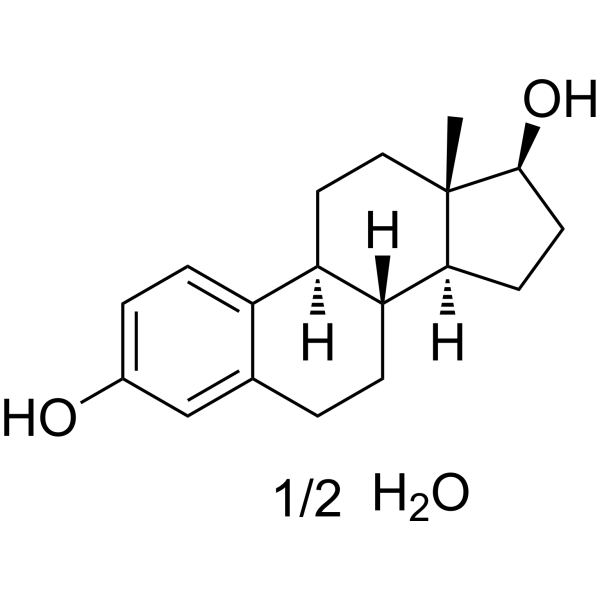
    Estrone (E1) is a natural estrogenic hormone. Estrone is the main representative of the endogenous estrogens and is produced by several tissues, especially adipose tissue. Estrone is the result of the process of aromatization of androstenedione that occurs in fat cells .
    Estrone
  • HY-46760
    LP01
    2 Publications Verification

    Liposome Others
    LP01 (Example 13) is a cationic lipid used in the delivery of biologically active agents to cells and tissues .
    LP01
  • HY-NP010

    MMP Others
    Collagen, rat tail is a kind of collagen extracted from rat tail tendon tissue. Collagen, rat tail stimulates cell growth. Collagen, rat tail is often used as an attachment substrate for cell culture .
    Type I Collagen, from rat tail
  • HY-131166
    Curdlan
    2 Publications Verification

    Bacterial Toll-like Receptor (TLR) NO Synthase C-type Lectin-like Receptors (CTLRs) Reactive Oxygen Species (ROS) Inflammation/Immunology
    Curdlan is a polysaccharide found in bacteria, consisting of a glucose homopolymer with β-1,3-glycosidic linkages . Curdlan can be recognized by Dectin-1 (a C-type lectin receptor), inducing immune responses in tissue mast cells and enhancing dendritic cell effects in tumor immunity. Curdlan holds potential for research in cancer and immune-inflammatory diseases .
    Curdlan
  • HY-B1391
    D-Panthenol
    1 Publications Verification

    Dexpanthenol

    Environmental Pollutants Endogenous Metabolite Inflammation/Immunology Cancer
    D-Panthenol is the biologically-active alcohol of pantothenic acid, which leads to an elevation in the amount of coenzyme A in the cell. D-panthenol exhibits nephroprotective effect in AKI, promotes tissue repair and regeneration.
    D-Panthenol
  • HY-D0220
    Toluidine Blue
    3 Publications Verification

    Toluidine Blue O

    Fluorescent Dye Cancer
    Toluidine Blue (Toluidine Blue O) is an alkaline quinonimine dye (vivo dye) with high affinity for acidic tissue components, staining nuclei blue and polysaccharides purple. Toluidine Blue shows heterostaining properties for mast cells, mucins and chondrocytes. Toluidine Blue can stain different components of plant tissues and cells in different colours. Toluidine Blue is also used as a diagnostic aid to identify malignant lesions, such as cancer .
    Toluidine Blue
  • HY-B0412
    Estriol
    5 Publications Verification

    Oestriol

    Estrogen Receptor/ERR Endogenous Metabolite Cancer
    Estriol (Oestriol), an orally active estrogen, is a ERα and ERβ agonist. Estriol is a potent GPR30 antagonist in estrogen receptor-negative breast cancer cells. Estriol can ameliorate disease severity through immunomodulatory mechanisms that decrease tissue inflammation. Estriol has powerful proconvulsant effects .
    Estriol
  • HY-B1398
    Ampyrone
    1 Publications Verification

    4-Aminophenazone

    COX Drug Metabolite Neurological Disease Inflammation/Immunology Cancer
    Ampyrone (4-Aminophenazone; 4-Aminoantipyrine) is a reversible and low-damage optical clearing agent and non-selective COX inhibitor based on UV absorption properties. Ampyrone can improve the optical transmittance of mouse skin and other tissues. Ampyrone can induce tissue refractive index matching by enhancing UV absorption, reduce light scattering, and achieve tissue transparency in vivo. Ampyrone reduces the synthesis of prostaglandin PGE2, thereby exerting anti-inflammatory, analgesic and antipyretic effects. Ampyrone inhibits DNA damage, cell apoptosis and immune cell phagocytosis induced by Doxorubicin (HY-15142A) and Cisplatin (HY-17394), etc., and participates in the regulation of toxicity in tumor chemotherapy .
    Ampyrone
  • HY-B0234R
    Estrone (Standard)
    5+ Cited Publications

    E1(Standard); Oestrone (Standard)

    Reference Standards Estrogen Receptor/ERR Endogenous Metabolite Endocrinology Cancer
    Estrone (Standard) is the analytical standard of Estrone. This product is intended for research and analytical applications. Estrone (E1) is a natural estrogenic hormone. Estrone is the main representative of the endogenous estrogens and is produced by several tissues, especially adipose tissue. Estrone is the result of the process of aromatization of androstenedione that occurs in fat cells .
    Estrone (Standard)
  • HY-Y1110H

    Magnogene, suitable for insect cell culture

    Environmental Pollutants Biochemical Assay Reagents Others
    Magnesium chloride anhydrous, suitable for insect cell culture is an inorganic salt and cell culture medium component that can be used to prepare Tris buffer. Magnesium chloride anhydrous, suitable for insect cell culture is a component of Hunter's Thrips medium, which supports the in vitro culture of western flower thrip embryonic cells, and promotes the adhesion of tissue fragments/cells as well as the growth of fibroblast-like and epithelial-like cells .
    Magnesium chloride anhydrous, suitable for insect cell culture
  • HY-DY3003

    Biochemical Assay Reagents Others
    Tissue and Cell Fixative (4% Paraformaldehyde, PFA) is mainly composed of paraformaldehyde, phosphate, and deionized water, with a pH of 7.0-7.4. Tissue and Cell Fixative (4% Paraformaldehyde, PFA) is suitable for fixing most tissues and cells, and can effectively protect the morphology and structure of tissues and cells as well as nucleic acids.
    Tissue and Cell Fixative (4% Paraformaldehyde, PFA)
  • HY-P99244

    ILV 094

    Interleukin Related JAK STAT Caspase Bcl-2 Family Inflammation/Immunology
    Fezakinumab (ILV 094) is an anti-IL-22 monoclonal antibody. Fezakinumab inhibits IL-22 signal transduction, and regulates the JAK1/STAT3 pathway as well as apoptotic proteins. Fezakinumab alleviates airway remodeling, alveolar enlargement and inflammatory cell infiltration in lung tissues. Fezakinumab reduces the levels of neutrophils, lymphocytes, eosinophils and macrophages in lung tissues. Fezakinumab can be used in the research of chronic obstructive pulmonary disease and skin diseases .
    Fezakinumab
  • HY-159579

    PROTACs Epigenetic Reader Domain Cancer
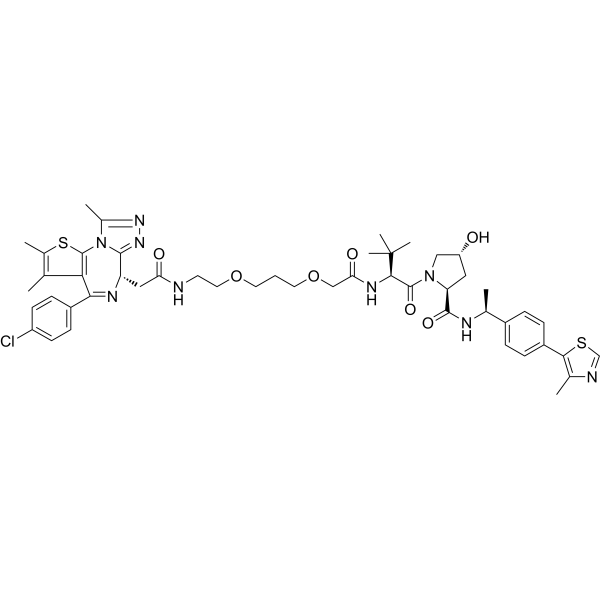
    CW-3308 is an orally active BRD9 PROTAC degrader with an DC50 of 92 nM. CW-3308 forms a ternary complex with BRD9 and cereblon to mediate BRD9 degradation. CW-3308 inhibits the viability of synovial sarcoma and rhabdoid tumor cells. CW-3308 reduces BRD9 protein levels in xenograft tumor tissues and suppresses tumor growth in xenograft models. CW-3308 can be used for the research of synovial sarcoma and rhabdoid tumors .
    CW-3308
  • HY-D0076

    DAF-2

    Fluorescent Dye Cancer
    4,5-Diaminofluorescein is a fluorescent detector for nitric oxide (NO) in cells and tissues .
    4,5-Diaminofluorescein
  • HY-17541
    Cysteine Protease inhibitor
    3 Publications Verification

    Cathepsin Others
    Cysteine Protease inhibitor is a cysteine protease inhibitor. Cysteine Protease inhibitor can be used in immunoblotting experiments of cells or tissues .
    Cysteine Protease inhibitor
  • HY-P2975

    Mouse laminin (Engelbreth-Holm-Swarm murine sarcoma basement membrane)

    Endogenous Metabolite Biochemical Assay Reagents Neurological Disease
    Laminin (Engelbreth-Holm-Swarm murine sarcoma basement membrane) is a crucial structural element in animal tissues, forming part of the scaffolding that supports tissue architecture. It interacts with type IV collagen through entactin and perlecan, connects to cell membranes via integrin receptors, dystroglycan complexes, and Lutheran blood group glycoproteins, and contains functional domains that facilitate collagen binding, cell adhesion, heparin interaction, and promote neurite outgrowth.
    Laminin (Engelbreth-Holm-Swarm murine sarcoma basement membrane)
  • HY-136373

    BAS 479H

    Herbicide Cytochrome P450 DNA/RNA Synthesis Others
    Metazachlor (BAS 479H) is a herbicide belonging to the chloroacetamides class. Metazachlor can inhibit the synthesis of very long chain fatty acids during the germination and emergence of weed seeds, thereby interfering with cell division and tissue differentiation, and thus hindering the normal growth and development of weeds .
    Metazachlor
  • HY-D2186
    BTD probe-1
    1 Publications Verification

    Biochemical Assay Reagents Others
    BTD probe-1 is a benzothiazine-based chemoproteomic probe and selective protein S-sulfenic acid (Cys-SOH) labeling agent. BTD probe-1 labels protein S-sulfenic acids in vitro in cell and tissue samples, and in situ in intact cells, enabling detection or enrichment of modified proteins/peptides. BTD probe-1 exhibits no cytotoxicity in cells at concentrations ≤1 mM. BTD probe-1 enables global, site-specific mapping and quantification of cysteine S-sulfenylation in complex proteomes with lower input material .
    BTD probe-1
  • HY-E70004

    Biochemical Assay Reagents Others
    Microbial neutral proteinase is a neutral proteinase from microorganisms and is useful for cell isolation and tissue dissociation .
    Microbial neutral proteinase
  • HY-B0234S2

    E1-d4; Oestrone-d4

    Estrogen Receptor/ERR Endogenous Metabolite Endocrinology Cancer
    Estrone-d4 is the deuterium labeled Estrone. Estrone (E1) is a natural estrogenic hormone. Estrone is the main representative of the endogenous estrogens and is produced by several tissues, especially adipose tissue. Estrone is the result of the process of aromatization of androstenedione that occurs in fat cells .
    Estrone-d4
  • HY-D0220A
    Toluidine Blue (purity 36%)
    3 Publications Verification

    Toluidine Blue O (purity 36%)

    Fluorescent Dye Others Cancer
    Toluidine Blue (Toluidine Blue O) purity 36% is an alkaline quinonimine dye (vivo dye) with high affinity for acidic tissue components, staining nuclei blue and polysaccharides purple. Toluidine Blue purity 36% shows heterostaining properties for mast cells, mucins and chondrocytes. Toluidine Blue purity 36% can stain different components of plant tissues and cells in different colours. Toluidine Blue purity 36% is also used as a diagnostic aid to identify malignant lesions, such as cancer .
    Toluidine Blue (purity 36%)
  • HY-P99650

    WT1

    Transmembrane Glycoprotein Cancer
    Grisnilimab (WT1) is an IgG2a monoclonal antibody targeting CD7. Grisnilimab only binds to lymphoid tissues and T lymphocytes, with no off-target binding to normal tissues. Grisnilimab can be used to synthesize the immunotoxin WT1-SMPT-dgRTA, which exerts cytotoxic effects on T-lymphoblastic leukemia cells. Grisnilimab is applicable to relevant research on leukemia .
    Grisnilimab
  • HY-B0525

    Antibiotic Bacterial Infection
    Carbenicillin is a broad-spectrum semi-synthetic penicillin antibiotic for gram-negative bacteria. Carbenicillin can interfere the cell wall synthesis while displaying low toxicity to plant tissue .
    Carbenicillin
  • HY-158229

    HepMA

    Biochemical Assay Reagents Others
    Heparin Methacrylate (HepMA) is methacrylated heparin and is an ideal tissue engineering scaffold material and 3D printing bioink . Heparin Methacrylate needs to self-assemble into fibrous hydrogel under the action of photoinitiator LAP (HY-44076), and target bioactive adhesion sites, play an inherent supporting role for tissue cells and biodegradable activity.
    Application: cell culture, biological 3D printing, tissue engineering, etc.
    Heparin Methacrylate
  • HY-158222A

    AlgMA (MW 300000)

    Biochemical Assay Reagents Others
    Alginate Methacryloyl (MW 300000) is a methacryloyl alginate with potential for use as a tissue engineering scaffold and 3D printing ink. Alginate Methacryloyl (MW 300000) is biocompatible, non-immunogenic, has low toxicity and is capable of physical cross-linking with divalent cations such as calcium . Alginate Methacryloyl (MW 300000) needs to self-assemble into fibrous hydrogel under the action of photoinitiator LAP (HY-44076), and target bioactive adhesion sites, play an inherent supporting role for tissue cells and biodegradable activity.
    Application: cell culture, biological 3D printing, tissue engineering, etc.
    Alginate Methacryloyl (MW 300000)
  • HY-141793

    Biotin-ATRA-conjugate

    RAR/RXR PPAR Endogenous Metabolite Autophagy Cancer
    ATRA-biotin (Biotin-ATRA-conjugate) is a biotin-conjugated ATRA. ATRA-biotin can be used to track ATRA in cells or a given tissue .
    ATRA-biotin
  • HY-13973A
    GSK-3 inhibitor 1
    1 Publications Verification

    GSK-3 Metabolic Disease
    GSK-3 inhibitor 1 (compound core 3) is a GSK-3 inhibitor that induces stem/progenitor cell self-renewal (e.g. induces stem/progenitor cell proliferation while maintaining the ability to differentiate into tissue cells in the progeny) .
    GSK-3 inhibitor 1
  • HY-164574

    Radionuclide-Drug Conjugates (RDCs) Cancer
    BCN-DOTA is a cyclooctyne-linked DOTA chelator that can be radiolabeled with zirconium-89 as a radionuclide-labeled drug conjugate (RDC) to target specific biomolecules, cells, or tissues.
    BCN-DOTA
  • HY-144304

    PROTACs EGFR Cancer
    PROTAC EGFR degrader 2 is a potent PROTAC EGFR degrader. PROTAC EGFR degrader 2 exhibits excellent antiproliferative activity with IC50 of 4.0 nM and good EGFR degradation activity with DC50 of 36.51 nM. PROTAC EGFR degrader 2 can be used for the synthesis of nitroreductase (NTR)-responsive PROTAC .
    PROTAC EGFR degrader 2
  • HY-Y1269D

    Salmiac, for molecular biology

    TGF-beta/Smad Apoptosis Chloride Channel Neurological Disease Cancer
    Ammonium chloride (Salmiac), for molecular biology is an inhibitor of Slc26a4 and SMAD2. Ammonium chloride, for molecular biology reduces the protein expression level of Slc26a4 in lung tissue, and attenuates ozone-induced increases in proinflammatory cytokines, inflammatory cells, pulmonary resistance, goblet cell hyperplasia, peribronchial inflammation and thiocyanate levels in mouse tissues and bronchoalveolar lavage fluid. Ammonium chloride, for molecular biology decreases the level of phosphorylated SMAD2, inhibits autophagy by reducing autophagy-related proteins, and enhances Cisplatin (HY-17394)-induced cancer cell apoptosis and DNA double-strand breaks. Ammonium chloride, for molecular biology also inhibits the TCA cycle, reduces ATP production, increases glucose utilization, regulates the levels of lactic acid, glutamic acid and ATP, and induces morphological degeneration of neuroblastoma cells. Ammonium chloride, for molecular biology can be used in studies related to ozone-induced airway injury, hepatocellular carcinoma, human cervical cancer, hepatic encephalopathy, Reye syndrome, epilepsy and neurodegenerative diseases .
    Ammonium chloride, for molecular biology
  • HY-B2241A

    Aluminum potassium sulfate dodecahydrate, for cell culture

    Biochemical Assay Reagents Inflammation/Immunology
    Potassiumalum, for cell culture (Aluminum potassium sulfate dodecahydrate, for cell culture) is an egg white adjuvant. Potassiumalum, for cell culture acts as a mordant to help dyes bind to tissue components, enhancing the staining effect and stability during staining. Potassiumalum, for cell culture can induce allergic reactions in mice. Potassium alum, for cell culture can be used in research for bacterial and tissue staining .
    Potassiumalum, for cell culture
  • HY-158225

    Col1MA

    MMP Others
    Methacrylated Type I collagen (Col1MA) is a methacrylated tissue engineering scaffold material that retains the basic properties of natural collagen . Methacrylated Type I collagen needs to self-assemble into fibrous hydrogel under the action of photoinitiator LAP (HY-44076), and target bioactive adhesion sites, play an inherent supporting role for tissue cells and biodegradable activity.
    Application: cell culture, biological 3D printing, tissue engineering, etc.
    Methacrylated Type I collagen
  • HY-158218

    Gelatin Methacryloyl, 30% methacrylation, Red Fluorescent

    Biochemical Assay Reagents Others
    Red Fluorescent Gelatin Methacryloyl (Red Fluorescent GelMA) is methacryloyl gelatin (GelMA) with red fluorescence, which is obtained by "grafting" fluorescent molecules on GelMA. Red Fluorescent Gelatin Methacryloyl acts as a scaffold and can be used to engineer tissue analogs from the vasculature to cartilage and bone, allowing cells to proliferate and spread . GelMA, 30% methacrylation, Red Fluorescent needs to self-assemble into fibrous hydrogel under the action of photoinitiator LAP (HY-44076), and target bioactive adhesion sites, play an inherent supporting role for tissue cells and biodegradable activity.
    Application: cell culture, biological 3D printing, tissue engineering, etc.
    GelMA, 30% methacrylation, Red Fluorescent
  • HY-158222

    AlgMA (MW 50000)

    Biochemical Assay Reagents Others
    Alginate Methacryloyl (MW 50000) is a methacryloyl alginate with potential for use as a tissue engineering scaffold and 3D printing ink. Alginate Methacryloyl (MW 50000) is biocompatible, non-immunogenic, has low toxicity and is capable of physical cross-linking with divalent cations such as calcium . Alginate Methacryloyl (MW 50000) needs to self-assemble into fibrous hydrogel under the action of photoinitiator LAP (HY-44076), and target bioactive adhesion sites, play an inherent supporting role for tissue cells and biodegradable activity.
    Application: cell culture, biological 3D printing, tissue engineering, etc.
    Alginate Methacryloyl (MW 50000)
  • HY-14370

    LPL Receptor Others Inflammation/Immunology
    LX2931 is an inhibitor of Sphingosine 1-Phosphate Lyase (S1PL). LX2931 works by increasing levels of S1P inside and outside the cell. The decrease in S1PL activity leads to a significant increase in S1P content in tissues, especially in lymphoid tissues which may lead to a restricted exodus of lymphocytes from secondary immune tissues, resulting in lymphocytopenic and immunosuppressive effects in the peripheral circulation. LX2931 can be used in research for the study of autoimmune diseases, especially rheumatoid arthritis .
    LX2931
  • HY-170933

    SGK Cancer
    SGK1-IN-6 is a selective SGK1 inhibitor with an IC50 of 0.39 μM, showing selectivity over SGK2/3. SGK1-IN-6 inhibits cancer cell migration and invasion, improves SGK1 protein thermal stability. SGK1-IN-6 decreases SGK1 protein levels in tumor tissues, suppresses tumor growth in mouse xenograft models. SGK1-IN-6 can be used for the research of prostate cancer .
    SGK1-IN-6
  • HY-158217A

    Gelatin Methacryloyl, 60% methacrylation, Green Fluorescent

    Biochemical Assay Reagents Others
    Green Fluorescent Gelatin Methacryloyl (Green Fluorescent GelMA) is methacryloyl gelatin (GelMA) with green fluorescence, which is obtained by "grafting" fluorescent molecules on GelMA. Green Fluorescent Gelatin Methacryloyl acts as a scaffold and can be used to engineer tissue analogs from the vasculature to cartilage and bone, allowing cells to proliferate and spread . GelMA, 60% methacrylation, Green Fluorescent needs to self-assemble into fibrous hydrogel under the action of photoinitiator LAP (HY-44076), and target bioactive adhesion sites, play an inherent supporting role for tissue cells and biodegradable activity.
    Application: cell culture, biological 3D printing, tissue engineering, etc.
    GelMA, 60% methacrylation, Green Fluorescent
  • HY-158217

    Gelatin Methacryloyl, 30% methacrylation, Green Fluorescent

    Biochemical Assay Reagents Others
    Green Fluorescent Gelatin Methacryloyl (Green Fluorescent GelMA) is methacryloyl gelatin (GelMA) with green fluorescence, which is obtained by "grafting" fluorescent molecules on GelMA. Green Fluorescent Gelatin Methacryloyl acts as a scaffold and can be used to engineer tissue analogs from the vasculature to cartilage and bone, allowing cells to proliferate and spread . GelMA, 30% methacrylation, Green Fluorescent needs to self-assemble into fibrous hydrogel under the action of photoinitiator LAP (HY-44076), and target bioactive adhesion sites, play an inherent supporting role for tissue cells and biodegradable activity.
    Application: cell culture, biological 3D printing, tissue engineering, etc.
    GelMA, 30% methacrylation, Green Fluorescent
  • HY-B0234S1

    E1-d2; Oestrone-d2

    Isotope-Labeled Compounds Estrogen Receptor/ERR Endogenous Metabolite Endocrinology Cancer
    Estrone-d2 is the deuterium labeled Estrone. Estrone (E1) is a natural estrogenic hormone. Estrone is the main representative of the endogenous estrogens and is produced by several tissues, especially adipose tissue. Estrone is the result of the process of aromatization of androstenedione that occurs in fat cells .
    Estrone-d2
  • HY-B0234S

    E1-13C3; Oestrone-13C3

    Isotope-Labeled Compounds Estrogen Receptor/ERR Endogenous Metabolite Endocrinology Cancer
    Estrone- 13C3 is the 13C-labeled Estrone. Estrone (E1) is a natural estrogenic hormone. Estrone is the main representative of the endogenous estrogens and is produced by several tissues, especially adipose tissue. Estrone is the result of the process of aromatization of androstenedione that occurs in fat cells .
    Estrone-13C3
  • HY-130013

    Fluorescent Dye Others
    HKYellow-AM (6/12-mixture) is a yellow fluorescent probe that can detect ONOO- in living cells and tissues with high selectivity and sensitivity without cytotoxicity .
    HKYellow-AM (6/12-mixture)
  • HY-D1672

    Fluorescent Dye Neurological Disease
    TMR Biocytin is a polar tracer used in the research of cell-cell and cell-liposome fusions, as well as membrane permeability and cellular uptake during pinocytosis. TMR Biocytin can be detected using streptavidin, and is an effective neuronal tracer in live tissue (Ex=544 nm, Em=571 nm) .
    TMR Biocytin
  • HY-P0316

    Thrombin NO Synthase Cardiovascular Disease
    TP508 is a 23-amino acid nonproteolytic thrombin peptide that represents a portion of the receptor-binding domain of thrombin molecule. TP508 activates endothelial NO synthase (eNOS) and stimulates production of NO in human endothelial cells. TP508 activates endothelial cells and stem cells to revascularize and regenerate tissues .
    TP508
  • HY-164577

    Radionuclide-Drug Conjugates (RDCs) Cancer
    BCN-DOTA-GA is a cyclooctyne-linked DOTA chelator that can be labeled with radioactive zirconium-89 and used as a radionuclide-labeled drug conjugate (RDC) to target specific biomolecules, cells or tissues.
    BCN-DOTA-GA
  • HY-158228

    PLMA

    Biochemical Assay Reagents Others
    Poly-L-lysine Methacryloyl (PLMA) is methacrylated polylysine. When Poly-L-lysine Methacryloyl is cross-linked on polyetheretherketone (PEEK) through UV-induced cross-linking, it can improve the hydrophilicity of PEEK and retain its own degradation bioinertness . Poly-L-lysine Methacryloyl needs to self-assemble into fibrous hydrogel under the action of photoinitiator LAP (HY-44076), and target bioactive adhesion sites, play an inherent supporting role for tissue cells and biodegradable activity.
    Application: cell culture, biological 3D printing, tissue engineering, etc.
    Poly-L-lysine Methacryloyl
  • HY-125025

    TNF Receptor Metabolic Disease Inflammation/Immunology
    SMI 6860766, a small molecule inhibitor of CD40-TRAF6 interaction, improves glucose tolerance, reduces immune cell accumulation in adipose tissue, and reduces AT inflammation .
    SMI 6860766
  • HY-177249

    Arp2/3 Complex Cardiovascular Disease
    Salvianolic acid A derivative-1 (Compound SAA-30) is a orally active derivative of Salvianolic acid A (HY-N0318). Salvianolic acid A derivative-1 binds to transgelin with a KD of 2.39 μM. Salvianolic acid A derivative-1 promotes cell contractions by facilitating the aggregation of actin. Salvianolic acid A derivative-1 can be used for prevention of myocardial ischemia or other diseases associated with IR tissue injuries .
    Salvianolic acid A derivative-1
  • HY-158218A

    Gelatin Methacryloyl, 60% methacrylation, red fluorescent

    Biochemical Assay Reagents Others
    Red Fluorescent Gelatin Methacryloyl (Red Fluorescent GelMA) is methacryloyl gelatin (GelMA) with red fluorescence, which is obtained by "grafting" fluorescent molecules on GelMA. Red Fluorescent Gelatin Methacryloyl acts as a scaffold and can be used to engineer tissue analogs from the vasculature to cartilage and bone, allowing cells to proliferate and spread . GelMA, 60% methacrylation, Red Fluorescent needs to self-assemble into fibrous hydrogel under the action of photoinitiator LAP (HY-44076), and target bioactive adhesion sites, play an inherent supporting role for tissue cells and biodegradable activity.
    Application: cell culture, biological 3D printing, tissue engineering, etc.
    GelMA, 60% methacrylation, red fluorescent
  • HY-158218B

    Gelatin Methacryloyl, 90% methacrylation, red fluorescent

    Biochemical Assay Reagents Others
    Red Fluorescent Gelatin Methacryloyl (Red Fluorescent GelMA) is methacryloyl gelatin (GelMA) with red fluorescence, which is obtained by "grafting" fluorescent molecules on GelMA. Red Fluorescent Gelatin Methacryloyl acts as a scaffold and can be used to engineer tissue analogs from the vasculature to cartilage and bone, allowing cells to proliferate and spread . GelMA, 90% methacrylation, Red Fluorescent needs to self-assemble into fibrous hydrogel under the action of photoinitiator LAP (HY-44076), and target bioactive adhesion sites, play an inherent supporting role for tissue cells and biodegradable activity.
    Application: cell culture, biological 3D printing, tissue engineering, etc.
    GelMA, 90% methacrylation, red fluorescent

Inquiry Online

Your information is safe with us. * Required Fields.

Salutation


Country or Region *

Applicant Name *


Organization Name *

Department *


Email Address *


Product Name *

Cat. No.


Requested quantity *

Phone Number *


Remarks

Inquiry Online

Inquiry Information

Product Name:
Cat. No.:
Quantity:
MCE Japan Authorized Agent:

