
1. Search Result
Search Result
Results for "

toxic

" in MedChemExpress (MCE) Product Catalog:

2140

Inhibitors & Agonists

24

Screening Libraries

58

Fluorescent Dye

102

Biochemical Assay Reagents

112

Peptides

4

MCE Kits

19

Inhibitory Antibodies

352

Natural
Products

1

Recombinant Proteins

112

Isotope-Labeled Compounds

25

Click Chemistry

53

Oligonucleotides

2

GMP Molecules

Cat. No. Product Name Target Research Areas Chemical Structure
  • HY-128612
    Methylnitronitrosoguanidine
    10+ Cited Publications

    MNNG

    DNA Alkylator/Crosslinker Cancer
    Methylnitronitrosoguanidine (MNNG) is an orally active alkylating agent with toxic and mutagenic effects. Methylnitronitrosoguanidine can as a carcinogen and mutagen . 50% water content, specifications are based on dry weight.
    Methylnitronitrosoguanidine
  • HY-B1945
    DEHP
    5+ Cited Publications

    Bis(2-ethylhexyl) phthalate; Ergoplast FDO; ESBO-D 82

    Environmental Pollutants Endogenous Metabolite Metabolic Disease
    DEHP (Bis(2-ethylhexyl) phthalate) is a widely used plasticizer, which has orally active. DEHP can produce a wide spectrum of toxic effects on organisms including neurotoxicity, liver toxicity, immunotoxicity, and reproductive toxicity .
    DEHP
  • HY-N6771
    Cyclopiazonic acid
    5+ Cited Publications

    Calcium Channel 5-HT Receptor MDM-2/p53 Apoptosis RSV Infection
    Cyclopiazonic acid is an endoplasmic reticulum calcium ATPase (ECAs) inhibitor and human respiratory syncytial virus (RSV) inhibitor (EC50 value of 4.13 μ M), which can reduce the antagonistic effect of 5-HT receptors in rat thoracic aorta, induce p53 dependent cell apoptosis and reproductive toxicity in mouse testes, and inhibit the biological activation of aflatoxin B [1][4][5].
    Cyclopiazonic acid
  • HY-15185
    Nirogacestat
    10+ Cited Publications

    PF-3084014

    γ-secretase Apoptosis Cancer
    Nirogacestat (PF-3084014) is a reversible, orally bioavailable, noncompetitive, and selective γ-secretase inhibitor with an IC50 of 6.2 nM. Inhibition of Notch signaling by Nirogacestat while minimizing gastrointestinal toxicity presents a promising approach for research of Notch receptor-dependent cancers .
    Nirogacestat
  • HY-105174

    JAK FAK Inflammation/Immunology
    BPC 157 is the 15-amino acide fragment of gastric peptide BPC. BPC 157 exhibits wound healing promoting and neuroprotective activity. BPC 157 maintains the integrity of the gastrointestinal mucosa without significant toxicity. BPC 157 acetate counteracts NSAIDs/insulin overdose/copper-induced toxicity. BPC 157 ameliorates specific (over)stimulated/damaged neurotransmitter systems-induced behavioral disorders through serotonergic and dopaminergic systems .
    BPC 157
  • HY-13679
    Sodium 2-mercaptoethanesulfonate
    2 Publications Verification

    Mesnum

    Glutathione Peroxidase Cancer
    Mesna (Sodium 2-mercaptoethanesulfonate) is an antioxidant which has cytoprotective effects. Mesna is widely used as a systemic protective agent against chemotherapy toxicity. Mesna is also used to reduce hemorrhagic cystitis induced by cyclophosphamide .
    Sodium 2-mercaptoethanesulfonate
  • HY-B1161
    Methoprene
    10+ Cited Publications

    ZR-515

    Environmental Pollutants Insecticide Others
    Methoprene, an insect juvenile growth hormone mimic, is a growth-regulating insecticide that manifests its toxicity to target organisms by acting as a juvenile hormone agonist .
    Methoprene
  • HY-W017464

    N-Acetyl-4-benzoquinone Imine

    Drug Metabolite Endogenous Metabolite Metabolic Disease
    NAPQI is the toxic metabolite of Acetaminophen (HY-66005). NAPQI is also an inhibitor of enzymes in the vitamin K cycle. NAPQI is rapidly detoxified by glutathione (GSH), but in situations of GSH deficiency, excess NAPQI reacts with cysteine residues in proteins, causing cell death and toxicity in the liver .
    NAPQI
  • HY-126050
    (R)-Pantetheine
    2 Publications Verification

    Pantetheine

    Endogenous Metabolite Metabolic Disease
    (R)-Pantetheine is the biosynthetic precursor to CoA. (R)-Pantetheine and its corresponding disulfide pantethine, play a key role in metabolism as a building block of coenzyme A (CoA). (R)-Pantetheine has high toxicity .
    (R)-Pantetheine
  • HY-W018025

    Bacterial Fungal Parasite Endogenous Metabolite Infection Inflammation/Immunology
    5,6-Dihydroxyindole, a melanin precursor, has a broad-spectrum antibacterial, antifungal, antiviral, antiparasitic activity. 5,6-Dihydroxyindole has cytotoxic effects and is strongly toxic against various pathogens .
    5,6-Dihydroxyindole
  • HY-B0006B

    (S)-BM 14190

    Adrenergic Receptor Cardiovascular Disease
    (S)-Carvedilol, the S-enantiomer of Carvedilol, is a non-selective β/α-1 blocker. (S)-Carvedilol exerts protection against the vascular or cardiac toxicity of Doxorubicin (DOX) .
    (S)-Carvedilol
  • HY-B0973

    DBT; Diphenylene sulfide

    Cytochrome P450 Aryl Hydrocarbon Receptor Metabolic Disease
    Dibenzothiophene is an orally active and a noncompetitive CYP1A inhibitor. Dibenzothiophene inhibits CYP1A-mediated EROD activity with a Km of 0.592 μM. Dibenzothiophene interacts with the AHR pathway. Dibenzothiophene enhances the embryotoxicity of β-naphthoflavone (HY-114740). Dibenzothiophene shows acute toxicity in mice. Dibenzothiophene is mainly used for the study of the mechanism of developmental toxicity in organisms .
    Dibenzothiophene
  • HY-148163
    Polystyrene sulfonic acid (30% in water)
    1 Publications Verification

    Biochemical Assay Reagents Others
    Polystyrene sulfonic acid (30% in water) is a potentially toxic hazardous substance. Polystyrene-derived microplastics (PS-MPs) are harmful to zebrafish hearts and induce male reproductive toxicity in mice. MCE offers Polystyrene products in solution packaging .
    Polystyrene sulfonic acid (30% in water)
  • HY-B0172S
    Lithocholic acid-d4
    1 Publications Verification

    3α-Hydroxy-5β-cholanic acid-d4

    Isotope-Labeled Compounds Autophagy Apoptosis Metabolic Disease
    Lithocholic acid-d4 is the deuterium labeled Lithocholic acid, which is a toxic secondary bile acid .
    Lithocholic acid-d4
  • HY-15185B
    Nirogacestat dihydrobromide
    10+ Cited Publications

    PF-3084014 dihydrobromide; PF-03084014 dihydrobromide

    γ-secretase Apoptosis Cancer
    Nirogacestat dihydrobromide (PF-3084014 dihydrobromide) is a reversible, orally bioavailable, noncompetitive, and selective γ-secretase inhibitor with an IC50 of 6.2 nM. Inhibition of Notch signaling by Nirogacestat dihydrobromide while minimizing gastrointestinal toxicity presents a promising approach for research of Notch receptor-dependent cancers .
    Nirogacestat dihydrobromide
  • HY-W042156

    Fungal Neurological Disease
    Aegeline, a main alkaloid, mimics the yeast SNARE protein Sec22p in suppressing α-synuclein and Bax toxicity in yeast. Aegeline restores growth of yeast cells suppressed by either αsyn or Bax. Antioxidant activity .
    Aegeline
  • HY-150169

    TGF-β Receptor Cancer
    THRX-144644 is a Lung-restricted ALK5 inhibitor with an IC50 value of 0.14 nM. THRX-144644 avoids systemic toxicities associated with TGFβ pathway inhibition .
    THRX-144644
  • HY-120635

    PD-1/PD-L1 Inflammation/Immunology Cancer
    BMS-1001 is an orally active human PD-L1/PD-1 immune checkpoint inhibitor. BMS-1001 exhibits low-toxicity in cells. The IC50 value of BMS-1001 in a homogeneous time-resolved fluorescence (HTRF) binding assay is 2.25 nM .
    BMS-1001 hydrochloride
  • HY-W011108

    Cholinesterase (ChE) Neurological Disease
    Obidoxime dichloride is a non-full spectrum oxime agent and can be used as an antidote for organophosphate nerve agent poisoning. Obidoxime dichloride reactivates sarin-inhibited acetylcholinesterase (AChE) and reduces acute toxicity of sarin-evaluated .
    Obidoxime dichloride
  • HY-146682

    Aldehyde Dehydrogenase (ALDH) Apoptosis Cancer
    KS100 is a potent ALDH inhibitor with IC50s of 230, 1542, 193 nM for ALDH1A1, ALDH2, and ALDH3A1, respectively. KS100 shows antiproliferative and anticancer effects with low low toxic. KS100 significantly increases ROS activity, lipid peroxidation and toxic aldehyde accumulation. KS10600 induces apoptosis and cell cycle arrest at the G2/M phase .
    KS100
  • HY-W040269
    Dehydrothio-p-toluidine
    1 Publications Verification

    DHPT

    Fluorescent Dye Others
    Dehydrothio-p-toluidine (DHPT) is a chemical intermediate used in dyestuff production. Dehydrothio-p-toluidine shows inhalation toxicity in acute and subchronic conditions .
    Dehydrothio-p-toluidine
  • HY-W013058

    DBDPE; 1,2-Bis(perbromophenyl)ethane

    Biochemical Assay Reagents Neurological Disease Metabolic Disease
    Decabromodiphenyl ethane (DBDPE; 1,2-Bis(perbromophenyl)ethane) is a brominated flame retardant. Decabromodiphenyl ethane can exhibit neurotoxicity, thyroid toxicity, reproductive developmental toxicity, hepatotoxicity, and oxidative stress in living organisms .
    Decabromodiphenyl ethane
  • HY-119896

    Environmental Pollutants Herbicide Neurological Disease
    Clethodim is a postemergence herbicide. Clethodim shows developmental toxicity and neurotoxicity in zebrafish embryos and larvae .
    Clethodim
  • HY-W018749
    Clopyralid
    1 Publications Verification

    Environmental Pollutants Herbicide Others
    Clopyralid is a toxic and biorefractory herbicide. Clopyralid can form ionic liquids with increased efficacy against weeds and reduced leaching from soils .
    Clopyralid
  • HY-148913

    CaMK Neurological Disease
    CS587 is a specific inhibitor of CaMK1D with neurocytotoxicity at 10 μM. CS587 modulates the sensitivity of neuronal cells to Aβ oligomer toxicity .
    CS587
  • HY-137979

    UGT Neurological Disease
    Flunitrazolam is an orally active designer Benzodiazepine. Flunitrazolam is biologically toxic, class in psychoactive substances .
    Flunitrazolam
  • HY-W019877

    Environmental Pollutants Biochemical Assay Reagents Metabolic Disease
    Sodium sulfate decahydrate is a ubiquitous salt that reaches toxic concentrations due to mining and other industrial activities. Sodium sulfate can be used to enhance the conjugation of phenolic drugs with sulfate and to treat hypercalcemia .
    Sodium sulfate decahydrate
  • HY-146683

    Aldehyde Dehydrogenase (ALDH) Apoptosis Cancer
    KS106 is a potent ALDH inhibitor with IC50s of 334, 2137, 360 nM for ALDH1A1, ALDH2, and ALDH3A1, respectively. KS106 shows antiproliferative and anticancer effects with low low toxic.KS106 significantly increases ROS activity, lipid peroxidation and toxic aldehyde accumulation. KS106 induces apoptosis and cell cycle arrest at the G2/M phase .
    KS106
  • HY-79504

    Environmental Pollutants Parasite Infection Cancer
    Ferrocene is an important structural core in bioorganometallic chemistry because of its inherent stability, excellent redox properties, and low toxicity. Ferrocene has antimalarial and anticancer properties .
    Ferrocene
  • HY-171702

    Drug Derivative Others
    8PPD-Q, a para-phenylenediamine quinonec, is a rubber antioxidant. 8PPD-Q has superior antioxidant and anti-ozone activities but is toxic to the aquatic species, especially salmonids. 8PPD-Q can be used for environmental pollution research .
    8PPD-Q
  • HY-B1945R
    DEHP (Standard)
    1 Publications Verification

    Bis(2-ethylhexyl) phthalate (Standard); Ergoplast FDO (Standard); ESBO-D 82 (Standard)

    Reference Standards Endogenous Metabolite Metabolic Disease
    DEHP (Standard) is the analytical standard of DEHP. This product is intended for research and analytical applications. DEHP (Bis(2-ethylhexyl) phthalate) is a widely used plasticizer, which has orally active. DEHP can produce a wide spectrum of toxic effects on organisms including neurotoxicity, liver toxicity, immunotoxicity, and reproductive toxicity .
    DEHP (Standard)
  • HY-W001953

    Environmental Pollutants Endogenous Metabolite Others
    2-Naphthalenemethanol is the metabolite of environmental pollutant 2-methylnaphthalene. 2-Naphthalenemethanol covalently binds to alveolar protein and induces pulmonary toxicity .
    2-Naphthalenemethanol
  • HY-125851

    TGF-β Receptor Inflammation/Immunology
    TP-008, a chemical probe, is a potent, selective and orally active (Activin-Like Kinase 5) ALK5 inhibitor with pIC50 and pEC50 values of 7.6 and 6.63, respectively. TGFβRI-IN-2 can produce observed cardiac toxicity in vivo at high dose .
    TP-008
  • HY-119904

    Cholinesterase (ChE) Infection
    Malaoxon is a pesticide metabolite. Malaoxon can induce cellular death in cultured human pulmonary cells. Malaoxon can be used for the research of pulmonary toxicity .
    Malaoxon
  • HY-P4984

    Biochemical Assay Reagents Inflammation/Immunology Cancer
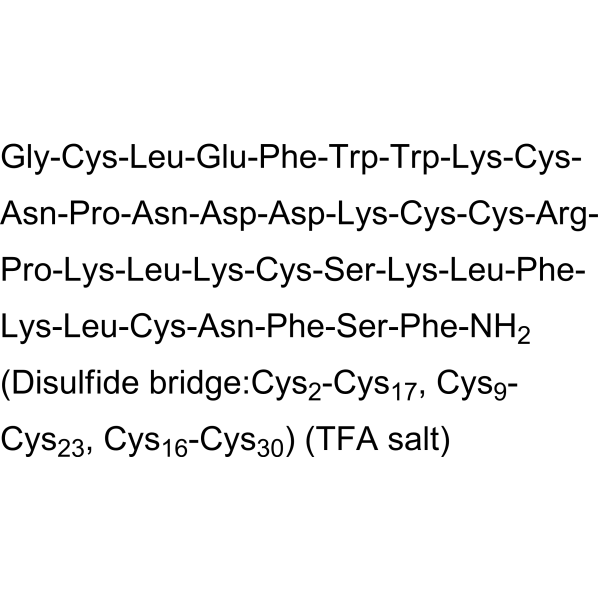
    Toxic Shock Syndrome Toxin-1 (TSST-1) (58-78) is a T cell proliferation activator. Toxic Shock Syndrome Toxin-1 (TSST-1) (58-78) promotes the in vitro proliferation of human peripheral blood mononuclear cells (PBMC) in a dose-dependent manner. Toxic Shock Syndrome Toxin-1 (TSST-1) (58-78) can be used in research on inflammatory and immunity, as well as cancer .
    Toxic Shock Syndrome Toxin-1 (TSST-1) (58-78)
  • HY-N0073A

    Insecticide Others
    Spirostan-3-ol is a useful tool to keep bees away from areas recently treated with toxic insecticides .
    Spirostan-3-ol
  • HY-P3322

    PC 5

    Biochemical Assay Reagents Others
    Phytochelatin 5 is metal-binding compound produced by plants. Phytochelatin 5 may reduce bioavailability of dietary toxic metals such as cadmium .
    Phytochelatin 5
  • HY-163035

    TNF Receptor IFNAR Inflammation/Immunology
    EM-163 is a summative BB-Loop analog. EM-163 can alleviate inflammation and prevent death from toxic shock by targeting the TIR domain of MyD88. EM-163 can be used in the study of SEB poisoning (SEB: Staphylococcal enterotoxin B) .
    EM-163
  • HY-106588

    SKI 2053R

    DNA Alkylator/Crosslinker Cancer
    Heptaplatin (SKI 2053R) is a platinum derivative with anticancer activity against various cancer cell lines, including cisplatin-resistant tumor cell lines. SKI-2053R is active in the research of gastric adenocarcinoma and has favorable toxicity profiles .
    Heptaplatin
  • HY-132297A
    PARP1-IN-5 dihydrochloride
    1 Publications Verification

    PARP Cancer
    PARP1-IN-5 dihydrochloride is a low toxicity, orally active, potent and selective PARP-1 inhibitor (IC50 =14.7 nM). PARP1-IN-5 dihydrochloride can be used for the research of cancer .
    PARP1-IN-5 dihydrochloride
  • HY-143459

    Tyrosinase Cancer
    Tyrosinase-IN-5 (compound 16c) is a potent inhibitor of tyrosinase with an IC50 of 0.02 μM. Tyrosinase-IN-5 efficiently suppresses the melanogenesis without significant toxicity on cells .
    Tyrosinase-IN-5
  • HY-136504

    Dianthrone

    Others Others
    Bianthrone (Dianthrone) is a natural product that can be isolated from Rheum officinale Baill. Bianthrone is a potential toxic marker of Polygonum multiflorum Thunb .
    Bianthrone
  • HY-N7262

    Others Cancer
    Hydroxyvalerenic acid is isolated from Verbena officinalis, has a low toxicity with IC50 values of 123 and 165 μM against GLC4 and COLO 320 cells, respectively .
    Hydroxyvalerenic acid
  • HY-W335972

    Phosphatase Others
    N-Lauryldiethanolamine is an antistatic agent with a strong inhibitory effect on cell growth at 30 μM, showing some lysosomotropic behavior. N-Lauryldiethanolamine is toxic at a concentration of ≥10 μM in the osteogenesis inhibition assay .
    N-Lauryldiethanolamine
  • HY-120647

    PD-1/PD-L1 Inflammation/Immunology Cancer
    BMS-1001 is an orally active human PD-L1/PD-1 immune checkpoint inhibitor. BMS-1001 exhibits low-toxicity in cells. The IC50 value of BMS-1001 in a homogeneous time-resolved fluorescence (HTRF) binding assay is 2.25 nM .
    BMS-1001
  • HY-W101609

    Cholinesterase (ChE) Others
    Phenylethyl isovalerate is a synthetic flavoring substance with very low acute oral toxicity. Phenylethyl isovalerate after long-term low-dose intake increases the activity of alanine aminotransferase (ALT) and the level of sulfhydryl groups in the serum, but decreases the activity of cholinesterase (ChE) .
    Phenylethyl isovalerate
  • HY-160533

    Molecular Glues IKZF Family Cancer
    IKZF1-degrader-2 (Compound 3) is an IKZF1 molecular glues degrader. IKZF1-degrader-2 has anticancer activity and low toxicity .
    IKZF1-degrader-2
  • HY-139424

    Bacterial Cancer
    SQ609 is a lead compound from a library of dipiperidines. SQ609 inhibits more than 90% of intracellular bacterial growth at 4μg/ml and is toxic to these cells. SQ609 displays a potent antitubercular activity .
    SQ609
  • HY-W129230

    2-Hydroxybenzoic acid diethylamine

    Reactive Oxygen Species (ROS) Others
    Salicylic acid diethylamine (2-Hydroxybenzoic acid diethylamine) is a hormone involved in plant signaling. Salicylic acid diethylamine antagonizes the oxidative damaging effect of metal toxicity directly by acting as an antioxidant to scavenge the ROS and by activating the antioxidant systems of plants and indirectly by reducing uptake of metals from their medium of growth .
    Salicylic acid diethylamine
  • HY-B1161R

    ZR-515 (Standard)

    Insecticide Reference Standards Others
    Methoprene (Standard) is the analytical standard of Methoprene. This product is intended for research and analytical applications. Methoprene, an insect juvenile growth hormone mimic, is a growth-regulating insecticide that manifests its toxicity to target organisms by acting as a juvenile hormone agonist .
    Methoprene (Standard)

Inquiry Online

Your information is safe with us. * Required Fields.

Salutation


Country or Region *

Applicant Name *


Organization Name *

Department *


Email Address *


Product Name *

Cat. No.


Requested quantity *

Phone Number *


Remarks

Inquiry Online

Inquiry Information

Product Name:
Cat. No.:
Quantity:
MCE Japan Authorized Agent:

