



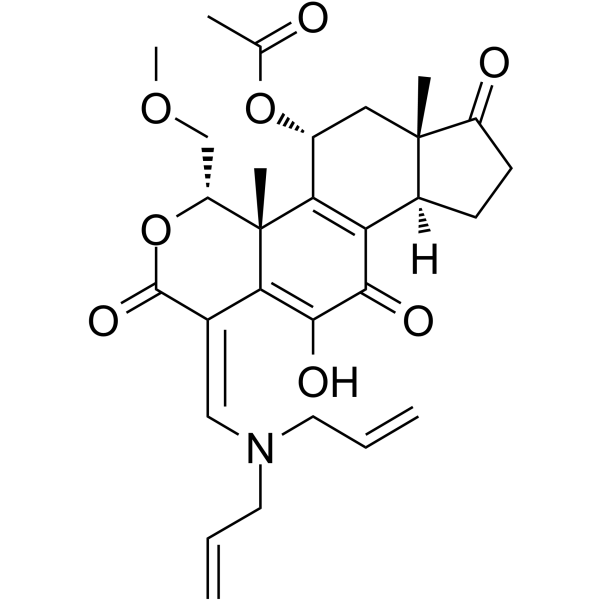
Sonolisib
Based on 1 publication(s) in Google Scholar
Sonolisib (PX-866), an improved Wortmannin analogue, is an oral, irreversible, and pan-isoform inhibitor of PI3K (IC50=0.1 nM (p110α), 1.0 nM (p120γ), 2.9 nM (p110δ)). Antitumor activity.
For research use only. We do not sell to patients.
- Purity : 98.36%
- CAS No.: 502632-66-8
- Formula: C29H35NO8
- Molecular Weight:525.59
-
Storage:Powder -20°C, 3 years
* The compound is unstable in solutions, freshly prepared is recommended.

To place orders, for customer services and technical support, please contact: MedChemExpress USA
Tel: 609-228-6898 E-mail: [email protected] [email protected]


-
 Biological Activity
-
Chemical Information
-
Solvent & Solubility
- Protocols
- Purity & Documentation
- References
-
 Help & FAQs


-
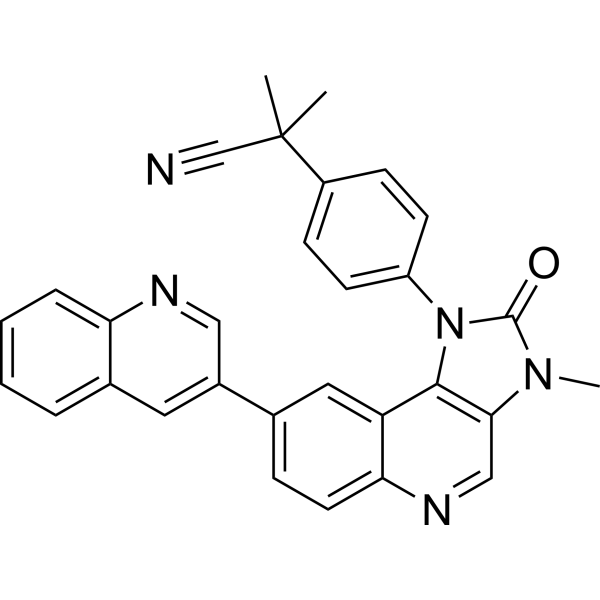
HY-50673
DactolisibPI3K/mTOR Inhibitor -
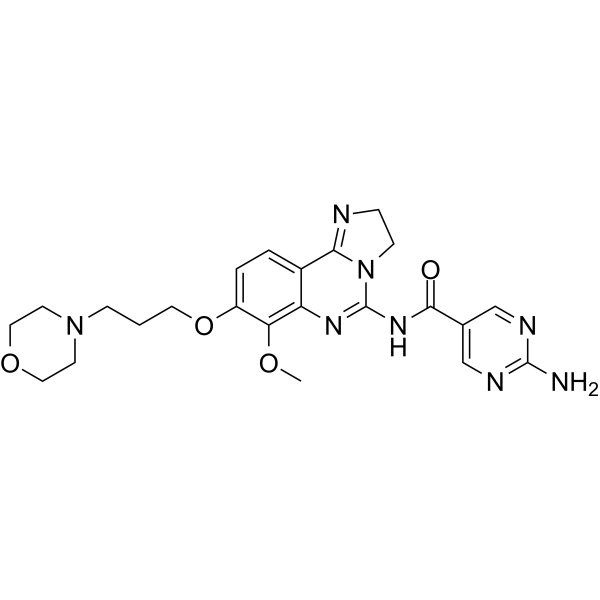
HY-15346
CopanlisibPI3K Inhibitor -
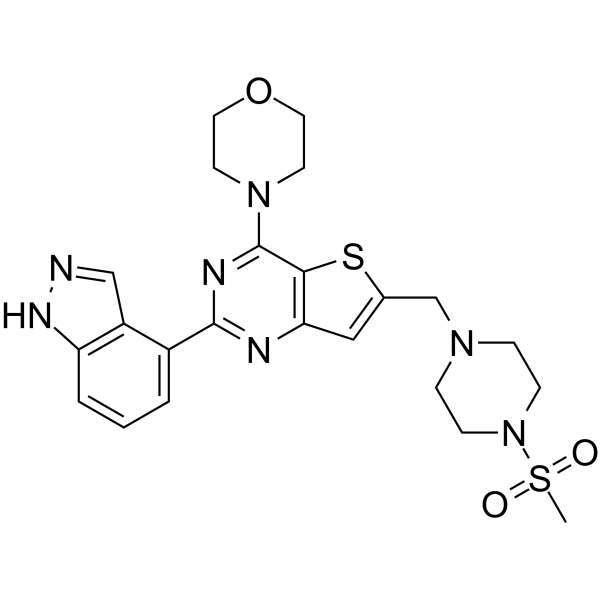
HY-50094
PictilisibPI3Kα/δ Inhibitor -
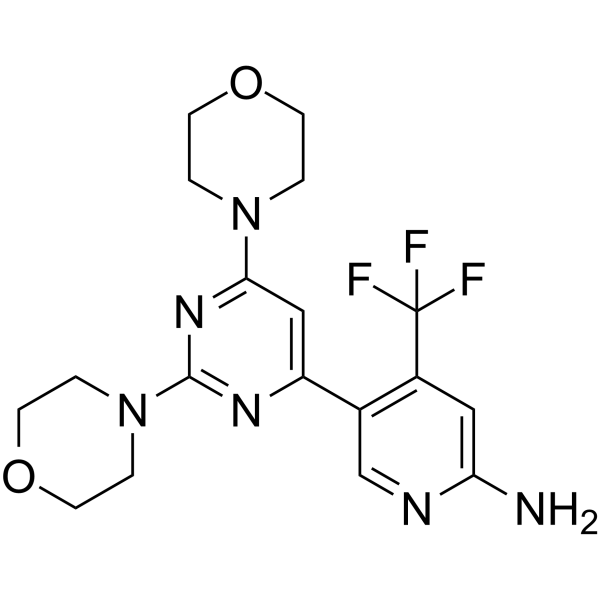
HY-70063
BuparlisibPI3K Inhibitor -
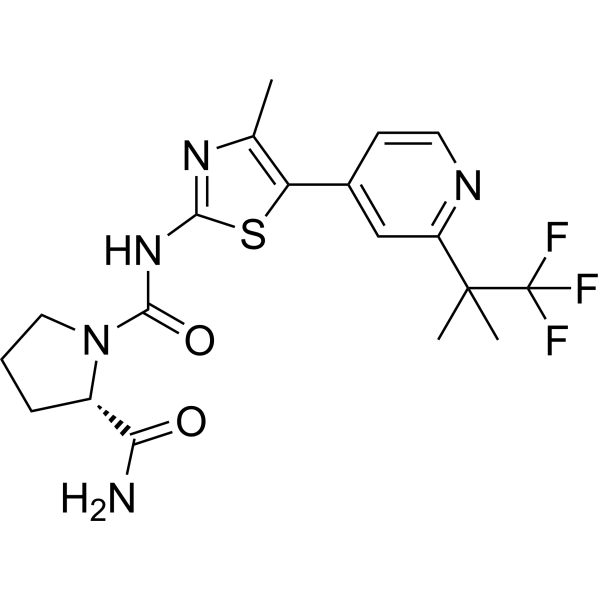
HY-15244
AlpelisibPI3Kα Inhibitor -
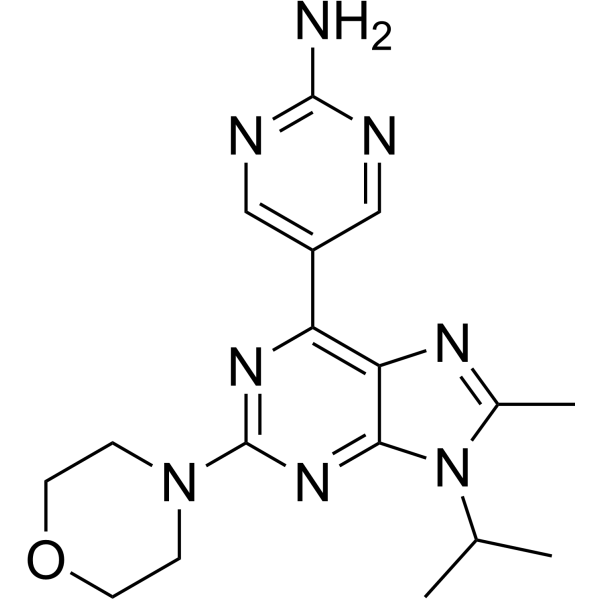
HY-16585
VS-5584PI3K/mTOR Inhibitor -
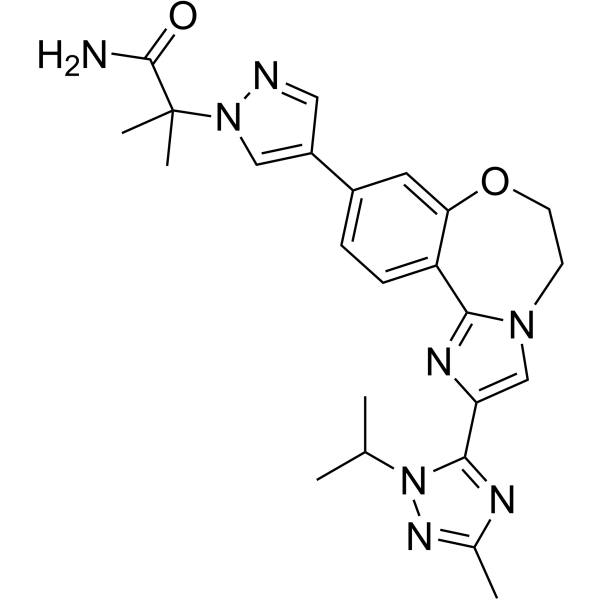
HY-13898
TaselisibPIK3CA Inhibitor -
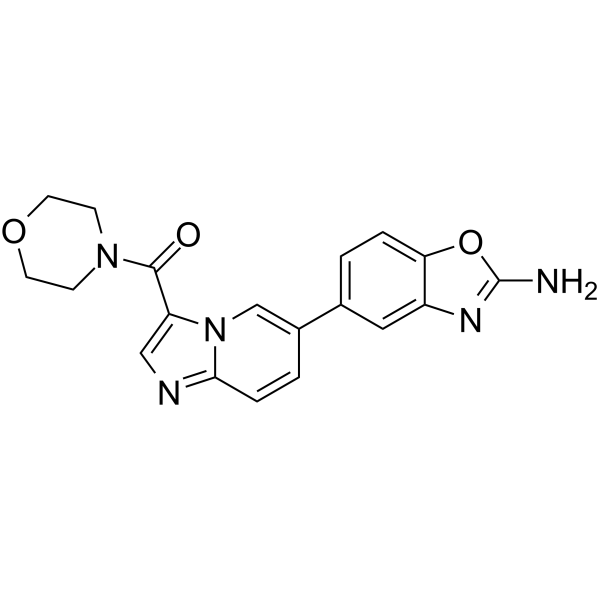
HY-12285
Serabelisibp110α Inhibitor -
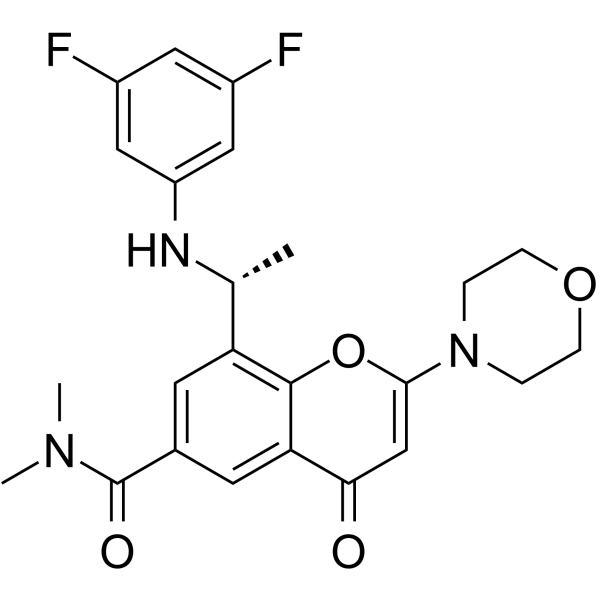
HY-12330
AZD8186PI3K Inhibitor -
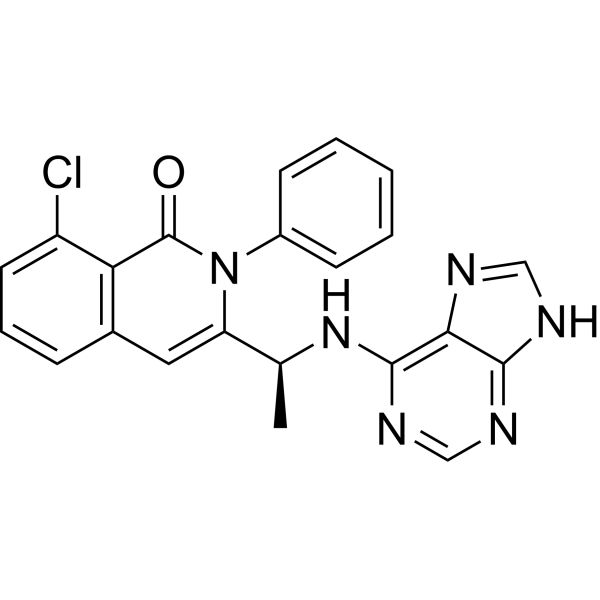
HY-17044
DuvelisibPI3Kδ Inhibitor -
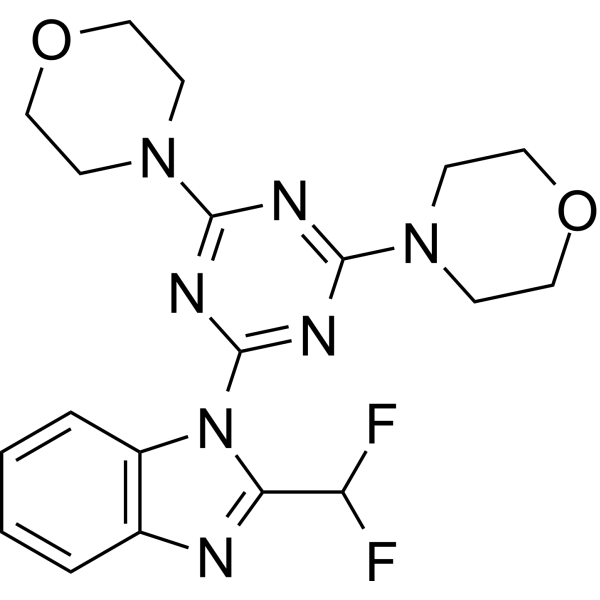
HY-50847
ZSTK474Autophagy Inducer -
HY-10114
TGX-221Keap1-Nrf2 Interaction Inhibitor
Publications Citing Use of MedChemExpress (MCE) Sonolisib
More

Biological Activity
Description
|
p110α 0.1 nM (IC50) |
p110δ 2.9 nM (IC50) |
p120γ 1 nM (IC50) |
Cellular Effect
|
Cell Line

|
Type | Value | Description | References |
|---|---|---|---|---|
| LNCaP | IC50 |
0.573 μM
Compound: 4, PX-866
|
Growth inhibition of human LNCap cells
Growth inhibition of human LNCap cells
|
[PMID: 18269228] |
In Vitro
Sonolisib (PX-866) inhibits the production of the secondary messenger phosphatidylinositol-3,4,5-trisphosphate (PIP3) and activation of the PI3K/Akt signaling pathway, which may result in inhibition of tumor cell growth and survival in susceptible tumor cell populations[3].
MedChemExpress (MCE) has not independently confirmed the accuracy of these methods. They are for reference only.
Clinical Trial
| NCT Number | Sponsor | Condition | Start Date |
Phase
|
|---|---|---|---|---|
| NCT01329991 | Plexxikon| | 2011-05 | PHASE1 |


Chemical Information
-
CAS No. 502632-66-8
-
Appearance Solid
-
Molecular Weight 525.59
-
Formula C29H35NO8
-
Color Yellow to orange
-
SMILES
O=C1C([C@@](CC2)([H])[C@@]3(C)C2=O)=C([C@H](OC(C)=O)C3)[C@]4(C)C(/C(C(O[C@@H]4COC)=O)=C\N(CC=C)CC=C)=C1O
-
Synonyms
PX-866
-
Shipping
Room temperature in continental US; may vary elsewhere.
-
Storage
Powder -20°C 3 years * The compound is unstable in solutions, freshly prepared is recommended.


Publications (1)
-
Journal Impact Factor
-
Most Recent


Solvent & Solubility
In Vitro:
DMSO : 100 mg/mL (190.26 mM; Need ultrasonic; Hygroscopic DMSO has a significant impact on the solubility of product, please use newly opened DMSO)
Please refer to the solubility information to select the appropriate solvent. The compound is unstable in solutions, freshly prepared is recommended.
Please refer to the solubility information to select the appropriate solvent. The compound is unstable in solutions, freshly prepared is recommended.
Concentration (start) × Volume (start) = Concentration (final) × Volume (final)
In Vivo:
Select the appropriate dissolution method based on your experimental animal and administration route.
- For the following dissolution methods, please ensure to first prepare a clear stock solution using an In Vitro approach and then sequentially add co-solvents:
- To ensure reliable experimental results, the clarified stock solution can be appropriately stored based on storage conditions. As for the working solution for In Vivo experiments, it is recommended to prepare freshly and use it on the same day.
- The percentages shown for the solvents indicate their volumetric ratio in the final prepared solution. If precipitation or phase separation occurs during preparation, heat and/or sonication can be used to aid dissolution.
Add each solvent one by one: 10% DMSO 40% PEG300 5% Tween-80 45% Saline
Solubility: ≥ 2.5 mg/mL (4.76 mM); Clear solution
This protocol yields a clear solution of ≥ 2.5 mg/mL (saturation unknown).
Taking 1 mL working solution as an example, add 100 μL DMSO stock solution (25.0 mg/mL) to 400 μL PEG300, and mix evenly; then add 50 μL Tween-80 and mix evenly; then add 450 μL Saline to adjust the volume to 1 mL.
Preparation of Saline: Dissolve 0.9 g sodium chloride in ddH₂O and dilute to 100 mL to obtain a clear Saline solution.
Add each solvent one by one: 10% DMSO 90% (20% SBE-β-CD in Saline)
Solubility: ≥ 2.5 mg/mL (4.76 mM); Clear solution
This protocol yields a clear solution of ≥ 2.5 mg/mL (saturation unknown).
Taking 1 mL working solution as an example, add 100 μL DMSO stock solution (25.0 mg/mL) to 900 μL 20% SBE-β-CD in Saline, and mix evenly.
Preparation of 20% SBE-β-CD in Saline (4°C, storage for one week): 2 g SBE-β-CD powder is dissolved in 10 mL Saline, completely dissolve until clear.
In Vivo Dissolution Calculator
Please enter the basic information of animal experiments:
-
-
-
-
Recommended: Prepare an additional quantity of animals to account for potential losses during experiments.
Please enter your animal formula composition:
-
%DMSO +
Recommended: Keep the proportion of DMSO in working solution below 2% if your animal is weak.
-
%+
-
+%Tween-80 + +
-
%Saline +
The co-solvents required include: DMSO, . All of co-solvents are available by MedChemExpress (MCE). , Tween 80. All of co-solvents are available by MedChemExpress (MCE).
Working solution concentration: 0.22 mg/mL
Method for preparing stock solution: mg drug dissolved in μL DMSO. Stock solution concentration: mg/mL. * The compound is unstable in solutions, freshly prepared is recommended.
1. Take μL DMSO stock solution;
2. Add μL .
μL , mix evenly;
3. Then add μL Tween 80, mix evenly;
4. Then add μL
Please ensure that the stock solution in the first step is dissolved to a clear state, and add co-solvents in sequence. You can use ultrasonic heating (ultrasonic cleaner, recommended frequency 20-40 kHz), vortexing, etc. to assist dissolution.


Purity & Documentation
-
Data Sheet (281 KB)
-
SDS (393 KB)
- English - EN (393 KB)
- Français - FR (393 KB)
- Deutsch - DE (393 KB)
- Norwegian - NO (393 KB)
- Español - ES (393 KB)
- Swedish - SV (393 KB)
- Italian - IT (393 KB)
- Korean - KR (393 KB)
- Portuguese - PT (393 KB)
-
Handling Instructions (2659 KB)
References
[1]. Ihle NT, et al. The phosphatidylinositol-3-kinase inhibitor PX-866 overcomes resistance to the epidermal growthfactor receptor inhibitor ZD1839 in A-549 human non-small cell lung cancer xenografts. Mol Cancer Ther. 2005 Sep;4(9):1349-57. [Content Brief]
[2]. Bowles DW, et al. A Randomized, Phase II Trial of C225 With or Without PX-866, an Irreversible Oral Phosphatidylinositol 3-Kinase Inhibitor, in Patients With Metastatic Colorectal Carcinoma. Clin Colorectal Cancer. 2016 Dec;15(4):337-344.e2. [Content Brief]
[3]. Sonolisib


Complete Stock Solution Preparation Table
Please refer to the solubility information to select the appropriate solvent. The compound is unstable in solutions, freshly prepared is recommended.
| Optional Solvent | Concentration Solvent Mass | 1 mg | 5 mg | 10 mg | 25 mg |
|---|---|---|---|---|---|
| DMSO | 1 mM | 1.9026 mL | 9.5131 mL | 19.0262 mL | 47.5656 mL |
| 5 mM | 0.3805 mL | 1.9026 mL | 3.8052 mL | 9.5131 mL | |
| 10 mM | 0.1903 mL | 0.9513 mL | 1.9026 mL | 4.7566 mL | |
| 15 mM | 0.1268 mL | 0.6342 mL | 1.2684 mL | 3.1710 mL | |
| 20 mM | 0.0951 mL | 0.4757 mL | 0.9513 mL | 2.3783 mL | |
| 25 mM | 0.0761 mL | 0.3805 mL | 0.7610 mL | 1.9026 mL | |
| 30 mM | 0.0634 mL | 0.3171 mL | 0.6342 mL | 1.5855 mL | |
| 40 mM | 0.0476 mL | 0.2378 mL | 0.4757 mL | 1.1891 mL | |
| 50 mM | 0.0381 mL | 0.1903 mL | 0.3805 mL | 0.9513 mL | |
| 60 mM | 0.0317 mL | 0.1586 mL | 0.3171 mL | 0.7928 mL | |
| 80 mM | 0.0238 mL | 0.1189 mL | 0.2378 mL | 0.5946 mL | |
| 100 mM | 0.0190 mL | 0.0951 mL | 0.1903 mL | 0.4757 mL |


Sonolisib Related Classifications
HY-N6775 Related Classifications
 Powered by Bioz