



CUDC-101
Based on 7 publication(s) in Google Scholar
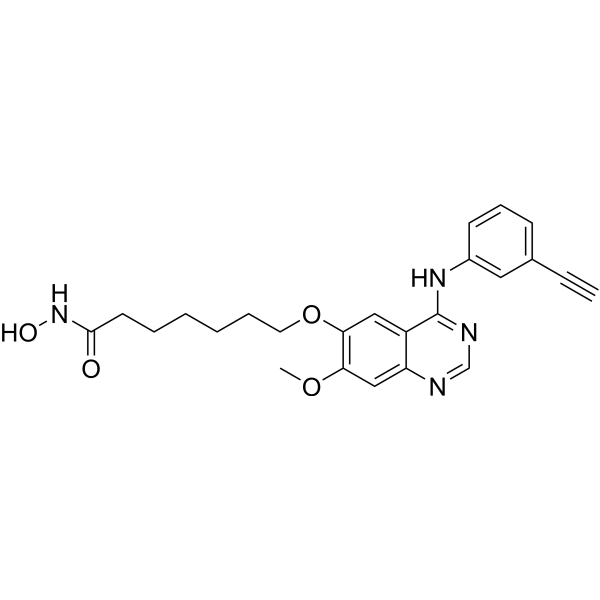
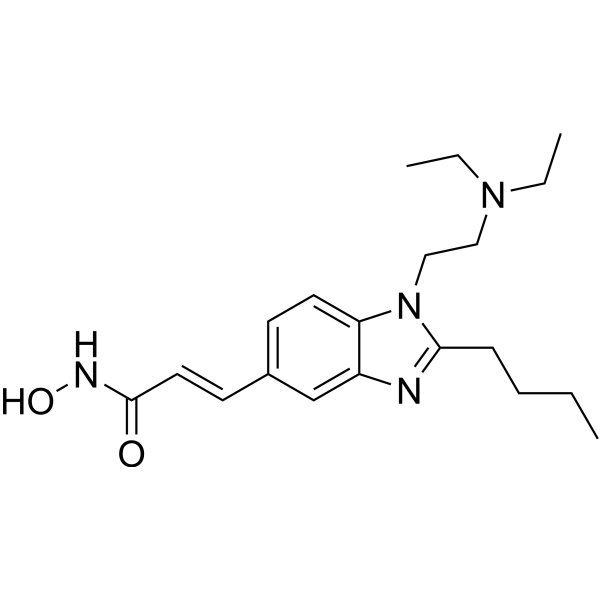
CUDC-101 is a potent inhibitor of HDAC, EGFR, and HER2 with IC50s of 4.4, 2.4, and 15.7 nM, respectively. CUDC-101 is a click chemistry reagent, it contains an Alkyne group and can undergo copper-catalyzed azide-alkyne cycloaddition (CuAAc) with molecules containing Azide groups.
For research use only. We do not sell to patients.
- Purity: 99.05%
- CAS No.: 1012054-59-9
- Formula: C24H26N4O4
- Molecular Weight:434.49
-
Storage:Powder -20°C, 3 years , 4°C, 2 years ; In solvent -80°C, 1 year , -20°C, 6 months

To place orders, for customer services and technical support, please contact: MedChemExpress USA
Tel: 609-228-6898 E-mail: [email protected] [email protected]


-
 Biological Activity
-
Chemical Information
-
Solvent & Solubility
- Protocol
- Purity & Documentation
- References
-
 Help & FAQs


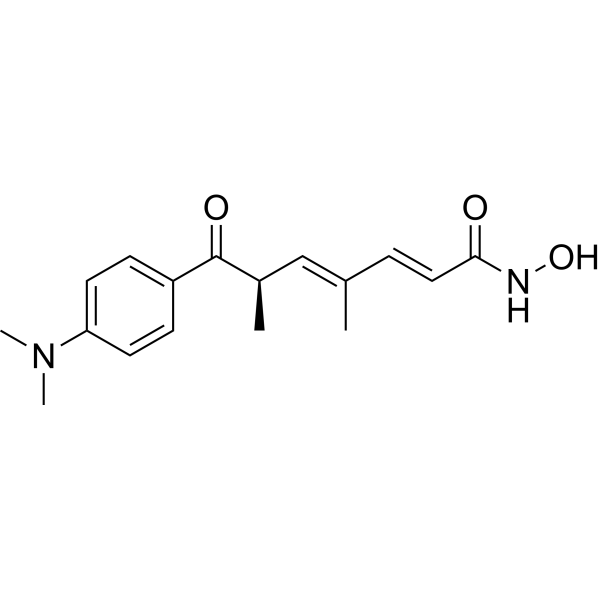
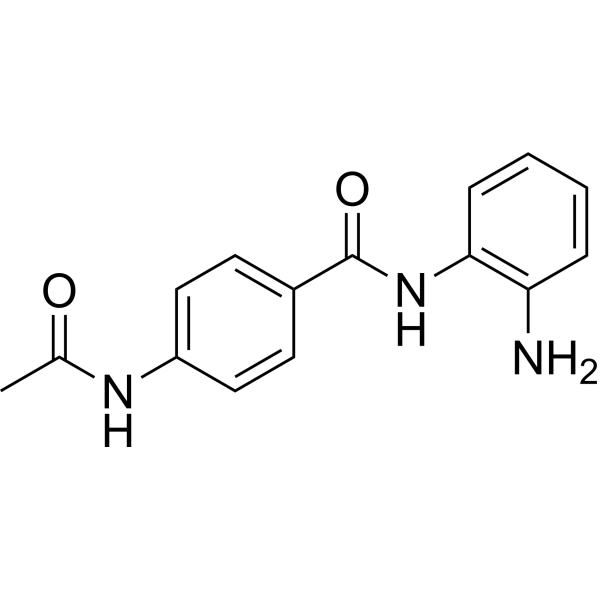
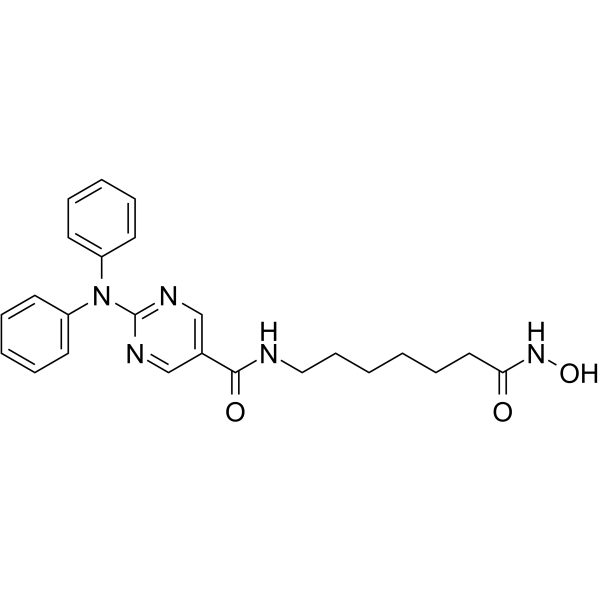
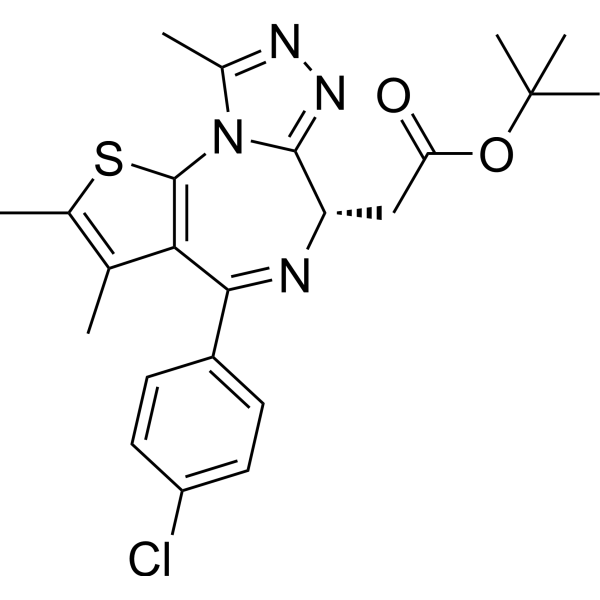
Publications Citing Use of MedChemExpress (MCE) CUDC-101
More- Sci Transl Med. 2018 Jul 18;10(450):eaaq1093. [Abstract]
- Cancers (Basel). 2022 Mar 19;14(6):1575. [Abstract]
- Cancers (Basel). 2020 Jun 6;12(6):1484. [Abstract]
- Am J Cancer Res. 2018 Dec 1;8(12):2402-2418. [Abstract]
- Leuk Res. 2021 Jul:106:106575. [Abstract]
- Elife. 2020 Dec 7:9:e61405. [Abstract]
- Patent. US20180263995A1.
 Customer Validation & Images

-
WB
-
WB
All EGFR Isoforms
More

Biological Activity
Description
IC50 & Target
[1]|
EGFR 2.4 nM (IC50) |
HER2 15.7 nM (IC50) |
HDAC 4.4 nM (IC50) |
HDAC1 4.5 nM (IC50) |
HDAC2 12.6 nM (IC50) |
HDAC3 9.1 nM (IC50) |
HDAC4 13.2 nM (IC50) |
HDAC6 5.1 nM (IC50) |
HDAC5 11.4 nM (IC50) |
HDAC9 67.2 nM (IC50) |
HDAC10 26.1 nM (IC50) |
HDAC8 79.8 nM (IC50) |
HDAC7 373 nM (IC50) |
Cellular Effect
|
Cell Line

|
Type | Value | Description | References |
|---|---|---|---|---|
| BXPC-3 | IC50 |
0.27 μM
Compound: 8, CDUC-101
|
Antiproliferative activity against human BxPC3 cells after hrs by ATP content assay
Antiproliferative activity against human BxPC3 cells after hrs by ATP content assay
|
[PMID: 20143778] |
| CAPAN-1 | IC50 |
0.8 μM
Compound: 8, CDUC-101
|
Antiproliferative activity against human Capan1 cells after hrs by ATP content assay
Antiproliferative activity against human Capan1 cells after hrs by ATP content assay
|
[PMID: 20143778] |
| HCC827 | IC50 |
0.6 μM
Compound: 8, CDUC-101
|
Antiproliferative activity against human HCC827 cells after hrs by ATP content assay
Antiproliferative activity against human HCC827 cells after hrs by ATP content assay
|
[PMID: 20143778] |
| HeLa | IC50 |
4.2 nM
Compound: 7; CUDC-101
|
Inhibition of HDAC in human HeLa cell nuclear extract using COLOR DE LYS as substrate by fluorometric analysis
Inhibition of HDAC in human HeLa cell nuclear extract using COLOR DE LYS as substrate by fluorometric analysis
|
[PMID: 27769671] |
| HeLa | IC50 |
4.4 nM
Compound: 7; CUDC-101
|
Inhibition of HDAC (unknown origin) in human HeLa cell nuclear extract using Color de Lys as substrate
Inhibition of HDAC (unknown origin) in human HeLa cell nuclear extract using Color de Lys as substrate
|
[PMID: 30418766] |
| HeLa | IC50 |
4.4 nM
Compound: 8, CDUC-101
|
Inhibition of HDAC in human HeLa cell nuclear extract
Inhibition of HDAC in human HeLa cell nuclear extract
|
[PMID: 20143778] |
| Hep 3B2 | IC50 |
0.23 μM
Compound: 8, CDUC-101
|
Antiproliferative activity against human Hep3B2 cells after hrs by ATP content assay
Antiproliferative activity against human Hep3B2 cells after hrs by ATP content assay
|
[PMID: 20143778] |
| HepG2 | IC50 |
0.13 μM
Compound: 8, CDUC-101
|
Antiproliferative activity against human HepG2 cells after hrs by ATP content assay
Antiproliferative activity against human HepG2 cells after hrs by ATP content assay
|
[PMID: 20143778] |
| MCF7 | IC50 |
0.55 μM
Compound: 8, CDUC-101
|
Antiproliferative activity against human MCF7 cells after hrs by ATP content assay
Antiproliferative activity against human MCF7 cells after hrs by ATP content assay
|
[PMID: 20143778] |
| MCF7 | IC50 |
0.55 μM
Compound: CUDC-101
|
Cytotoxicity against human MCF7 cells assessed as reduction in cell viability by MTT assay
Cytotoxicity against human MCF7 cells assessed as reduction in cell viability by MTT assay
|
[PMID: 32320239] |
| MDA-MB-231 | IC50 |
0.1 μM
Compound: 8, CDUC-101
|
Antiproliferative activity against human MDA-MB-231 cells after hrs by ATP content assay
Antiproliferative activity against human MDA-MB-231 cells after hrs by ATP content assay
|
[PMID: 20143778] |
| NCI-H358 | IC50 |
0.4 μM
Compound: 8, CDUC-101
|
Antiproliferative activity against human NCI-H358 cells after hrs by ATP content assay
Antiproliferative activity against human NCI-H358 cells after hrs by ATP content assay
|
[PMID: 20143778] |
| NCI-H460 | IC50 |
0.7 μM
Compound: 8, CDUC-101
|
Antiproliferative activity against human H460 cells after hrs by ATP content assay
Antiproliferative activity against human H460 cells after hrs by ATP content assay
|
[PMID: 20143778] |
| SK-BR-3 | IC50 |
0.04 μM
Compound: 8, CDUC-101
|
Antiproliferative activity against human SK-BR-3 cells after hrs by ATP content assay
Antiproliferative activity against human SK-BR-3 cells after hrs by ATP content assay
|
[PMID: 20143778] |
| SK-HEP1 | IC50 |
0.22 μM
Compound: 8, CDUC-101
|
Antiproliferative activity against human SKHEP1 cells after hrs by ATP content assay
Antiproliferative activity against human SKHEP1 cells after hrs by ATP content assay
|
[PMID: 20143778] |
In Vitro
CUDC-101 inhibits both class I and class II HDACs, but not class III, Sir-type HDACs. CUDC-101 displays broad antiproliferative activity in many human cancer cell types. CUDC-101 is a potent and selective HDAC, EGFR, and HER2 inhibitor with only weak inhibition of the following protein kinases (IC50): KDR (VEGFR2) (849 nM), Src (11000 nM), Lyn (840 nM), Lck (5910 nM), Abl-1 (2890 nM), FGFR-2 (3430 nM), Flt-3 (1500 nM), and Ret (3200 nM)[1].
CUDC-101 (300 nM) inhibits both the full length AR (flAR) and the AR variant AR-V7[2].
CUDC-101 is the most active agent in all three ATC cell lines screened for inhibitors of EGFR and HDACs, with half-maximal inhibitory concentration (IC50) at 0.15 μM for 8505c, and 1.66 μM for both C-643 and SW-1736 cells. CUDC-101 inhibits cancer cell migration and modulates epithelial-mesenchymal transition marker expression in ATC cells. CUDC-101 also inhibits HDAC and MAPK pathway, induces p21, and decreases survivin and XIAP expression in ATC cells[3].
CUDC-101 (1 μM) increases the acetylation of p53 and α-tubulin, nonhistone substrates of HDAC, in treated cancer cells. CUDC-101 modulates RTK activity and expression and exhibits immediate and stable inhibition of RTK and downstream Akt signaling[4].
MedChemExpress (MCE) has not independently confirmed the accuracy of these methods. They are for reference only.
In Vivo
In an in vivo mouse model of metastatic ATC, CUDC-101 inhibits tumor growth and metastases, and significantly prolongs survival[3].
CUDC-101 (120 mg/kg) is effective against a broad range of tumor types in xenograft models[4].
MedChemExpress (MCE) has not independently confirmed the accuracy of these methods. They are for reference only.
Clinical Trial
| NCT Number | Sponsor | Condition | Start Date |
Phase
|
|---|---|---|---|---|
| NCT01329991 | Plexxikon| | 2011-05 | PHASE1 |


Chemical Information
-
CAS No. 1012054-59-9
-
Appearance Solid
-
Molecular Weight 434.49
-
Formula C24H26N4O4
-
Color White to yellow
-
SMILES
C#CC1=CC=CC(NC2=NC=NC3=CC(OC)=C(C=C23)OCCCCCCC(NO)=O)=C1
-
Shipping
Room temperature in continental US; may vary elsewhere.
-
Storage
Powder -20°C 3 years 4°C 2 years In solvent -80°C 1 year -20°C 6 months


Publications (7)
-
Journal Impact Factor
-
Most Recent
-
Sci Transl Med
PP2A inhibition is a druggable MEK inhibitor resistance mechanism in KRAS-mutant lung cancer cells. [Abstract]2018 Jul 18;10(450):eaaq1093. PMID: 30021885 -
Cancers (Basel)
Identification of New Vulnerabilities in Conjunctival Melanoma Using Image-Based High Content Drug Screening. [Abstract]2022 Mar 19;14(6):1575. PMID: 35326726 -
Cancers (Basel)
2020 Jun 6;12(6):1484. PMID: 32517259 -
Am J Cancer Res
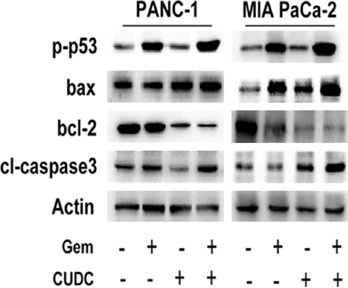
Antitumor activity of the novel HDAC inhibitor CUDC-101 combined with gemcitabine in pancreatic cancer. [Abstract]2018 Dec 1;8(12):2402-2418. PMID: 30662800
CUDC-101 purchased from MedChemExpress. Usage Cited in: Am J Cancer Res. 2018 Dec 1;8(12):2402-2418. [Abstract]
Western analysis of protein levels of p-p53, cl-caspase3 and the ratio of bax/bcl-2 in the treatment of Germ or/and CUDC.
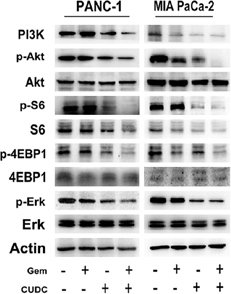
CUDC-101 purchased from MedChemExpress. Usage Cited in: Am J Cancer Res. 2018 Dec 1;8(12):2402-2418. [Abstract]
PANC-1 and MIA PaCa-2 cells are treated with CUDC-101 and/or gemcitabine for 48 h, and western blot analysis shows increased inhibition of the PI3K, p-Akt, p-S6, p-4EBP1 and p-Erk proteins.
-
Leuk Res
2021 Jul:106:106575. PMID: 33878513 -
Elife
2020 Dec 7:9:e61405. PMID: 33284104 -


Solvent & Solubility
In Vitro:
DMSO : 25 mg/mL (57.54 mM; Need ultrasonic; Hygroscopic DMSO has a significant impact on the solubility of product, please use newly opened DMSO)
Please refer to the solubility information to select the appropriate solvent. Once prepared, please aliquot and store the solution to prevent product inactivation from repeated freeze-thaw cycles.
Storage method and period of stock solution: -80°C, 1 year; -20°C, 6 months. When stored at -80°C, please use it within 1 year. When stored at -20°C, please use it within 6 months.
Please refer to the solubility information to select the appropriate solvent. Once prepared, please aliquot and store the solution to prevent product inactivation from repeated freeze-thaw cycles.
Storage method and period of stock solution: -80°C, 1 year; -20°C, 6 months. When stored at -80°C, please use it within 1 year. When stored at -20°C, please use it within 6 months.
Concentration (start) × Volume (start) = Concentration (final) × Volume (final)
In Vivo:
Select the appropriate dissolution method based on your experimental animal and administration route.
- For the following dissolution methods, please ensure to first prepare a clear stock solution using an In Vitro approach and then sequentially add co-solvents:
- To ensure reliable experimental results, the clarified stock solution can be appropriately stored based on storage conditions. As for the working solution for In Vivo experiments, it is recommended to prepare freshly and use it on the same day.
- The percentages shown for the solvents indicate their volumetric ratio in the final prepared solution. If precipitation or phase separation occurs during preparation, heat and/or sonication can be used to aid dissolution.
Add each solvent one by one: 10% DMSO 40% PEG300 5% Tween-80 45% Saline
Solubility: ≥ 2.08 mg/mL (4.79 mM); Clear solution
This protocol yields a clear solution of ≥ 2.08 mg/mL (saturation unknown).
Taking 1 mL working solution as an example, add 100 μL DMSO stock solution (20.8 mg/mL) to 400 μL PEG300, and mix evenly; then add 50 μL Tween-80 and mix evenly; then add 450 μL Saline to adjust the volume to 1 mL.
Preparation of Saline: Dissolve 0.9 g sodium chloride in ddH₂O and dilute to 100 mL to obtain a clear Saline solution.
Add each solvent one by one: 10% DMSO 90% (20% SBE-β-CD in Saline)
Solubility: ≥ 2.08 mg/mL (4.79 mM); Clear solution
This protocol yields a clear solution of ≥ 2.08 mg/mL (saturation unknown).
Taking 1 mL working solution as an example, add 100 μL DMSO stock solution (20.8 mg/mL) to 900 μL 20% SBE-β-CD in Saline, and mix evenly.
Preparation of 20% SBE-β-CD in Saline (4°C, storage for one week): 2 g SBE-β-CD powder is dissolved in 10 mL Saline, completely dissolve until clear.
For the following dissolution methods, please prepare the working solution directly:
It is recommended to prepare fresh solutions and use them promptly within a short period of time.
The percentages shown for the solvents indicate their volumetric ratio in the final prepared solution. If precipitation or phase separation occurs during preparation, heat and/or sonication can be used to aid dissolution.
Add each solvent one by one: 50% PEG300 50% Saline
Solubility: 16.67 mg/mL (38.37 mM); Suspended solution; Need ultrasonic
In Vivo Dissolution Calculator
Please enter the basic information of animal experiments:
-
-
-
-
Recommended: Prepare an additional quantity of animals to account for potential losses during experiments.
Please enter your animal formula composition:
-
%DMSO +
Recommended: Keep the proportion of DMSO in working solution below 2% if your animal is weak.
-
%+
-
+%Tween-80 + +
-
%Saline +
The co-solvents required include: DMSO, . All of co-solvents are available by MedChemExpress (MCE). , Tween 80. All of co-solvents are available by MedChemExpress (MCE).
Working solution concentration: 0.22 mg/mL
Method for preparing stock solution: mg drug dissolved in μL DMSO. Stock solution concentration: mg/mL.
1. Take μL DMSO stock solution;
2. Add μL .
μL , mix evenly;
3. Then add μL Tween 80, mix evenly;
4. Then add μL
Please ensure that the stock solution in the first step is dissolved to a clear state, and add co-solvents in sequence. You can use ultrasonic heating (ultrasonic cleaner, recommended frequency 20-40 kHz), vortexing, etc. to assist dissolution.

Protocol
Kinase Assay[1]
The activities of Class I and II HDACs are assessed using the Biomol Color de Lys system. Briefly, HeLa cell nuclear extracts are used as a source of HDACs. Different concentrations of drugs are added to HeLa cell nuclear extracts in the presence of a colorimetric artificial substrate. Developer is added at the end of the assay and enzyme activity is measured in the Wallac Victor II 1420 microplate reader at 405 nM.
MedChemExpress (MCE) has not independently confirmed the accuracy of these methods. They are for reference only.
Cell Assay[1]
Cancer cell lines are plated at 5000 to 10 000 cells per well in 96-well flat-bottomed plates with varying concentrations of compounds. The cells are incubated with compounds for 72 h in the presence of 0.5% of fetal bovine serum. Growth inhibition is assessed by an adenosine triphosphate (ATP) content assay using the Perkin-Elmer ATPlite kit.
MedChemExpress (MCE) has not independently confirmed the accuracy of these methods. They are for reference only.
Animal Administration[1]
Four- to six-week-old female athymic mice (nude nu/nu CD-1) are inoculated subcutaneously into the right hind flank region with 1 to 5×10⁶ cells in a medium suspension of 100−200 μL. For orthotopic implantation of breast cancer cells, a cell suspension in 100 μL of medium is injected directly into the mammary fat pads through a 27G needle. Different doses of CUDC-101, standard anticancer agents and vehicle are administered orally, intraperitoneally, or via tail vein injection as indicated.
MedChemExpress (MCE) has not independently confirmed the accuracy of these methods. They are for reference only.


Purity & Documentation
-
Data Sheet (279 KB)
-
SDS (393 KB)
- English - EN (393 KB)
- Français - FR (393 KB)
- Deutsch - DE (393 KB)
- Norwegian - NO (393 KB)
- Español - ES (393 KB)
- Swedish - SV (393 KB)
- Italian - IT (393 KB)
- Korean - KR (393 KB)
- Portuguese - PT (393 KB)
-
Handling Instructions (2659 KB)
References
[1]. Xiong Cai et al Discovery of 7-(4-(3-Ethynylphenylamino)-7-methoxyquinazolin-6-yloxy)-N-hydroxyheptanamide (CUDC-101) as a Potent Multi-Acting HDAC, EGFR, and HER2 Inhibitor for the Treatment of Cancer J. Med. Chem., 2010, 53 (5), pp 2000–2009 [Content Brief]
[2]. Lai CJ, et al. CUDC-101, a multitargeted inhibitor of histone deacetylase, epidermal growth factor receptor, and human epidermal growth factor receptor 2, exerts potent anticancer activity.Cancer Res. 2010 May 1;70(9):3647-56. Epub 2010 Apr 13. [Content Brief]
[3]. Sun H, et al. CUDC-101, a Novel Inhibitor of Full-Length Androgen Receptor (flAR) and Androgen Receptor Variant 7 (AR-V7) Activity: Mechanism of Action and In Vivo Efficacy. Horm Cancer. 2016 Jun;7(3):196-210. [Content Brief]
[4]. Zhang L, et al. Dual inhibition of HDAC and EGFR signaling with CUDC-101 induces potent suppression of tumor growth and metastasis in anaplastic thyroid cancer. Oncotarget. 2015 Apr 20;6(11):9073-85. [Content Brief]


Complete Stock Solution Preparation Table
Please refer to the solubility information to select the appropriate solvent. Once prepared, please aliquot and store the solution to prevent product inactivation from repeated freeze-thaw cycles.
Storage method and period of stock solution: -80°C, 1 year; -20°C, 6 months. When stored at -80°C, please use it within 1 year. When stored at -20°C, please use it within 6 months.
| Optional Solvent | Concentration Solvent Mass | 1 mg | 5 mg | 10 mg | 25 mg |
|---|---|---|---|---|---|
| DMSO | 1 mM | 2.3015 mL | 11.5077 mL | 23.0155 mL | 57.5387 mL |
| 5 mM | 0.4603 mL | 2.3015 mL | 4.6031 mL | 11.5077 mL | |
| 10 mM | 0.2302 mL | 1.1508 mL | 2.3015 mL | 5.7539 mL | |
| 15 mM | 0.1534 mL | 0.7672 mL | 1.5344 mL | 3.8359 mL | |
| 20 mM | 0.1151 mL | 0.5754 mL | 1.1508 mL | 2.8769 mL | |
| 25 mM | 0.0921 mL | 0.4603 mL | 0.9206 mL | 2.3015 mL | |
| 30 mM | 0.0767 mL | 0.3836 mL | 0.7672 mL | 1.9180 mL | |
| 40 mM | 0.0575 mL | 0.2877 mL | 0.5754 mL | 1.4385 mL | |
| 50 mM | 0.0460 mL | 0.2302 mL | 0.4603 mL | 1.1508 mL |


CUDC-101 Related Classifications
HY-10223 Related Classifications
 Powered by Bioz