



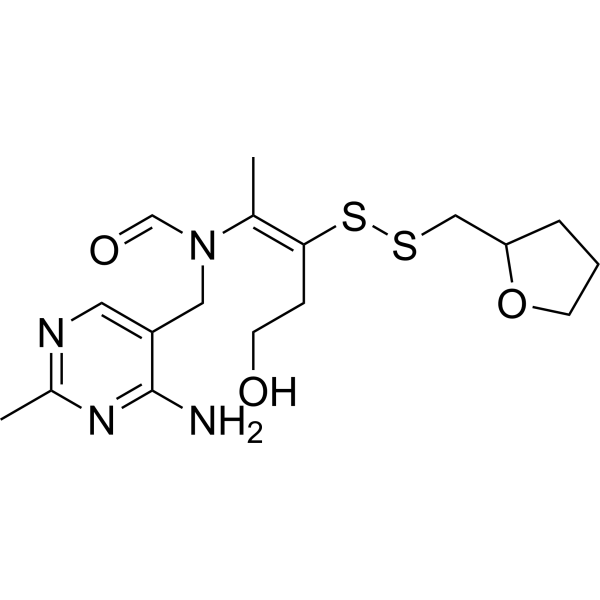
Fursultiamine

Based on 1 Customer Validation
Fursultiamine is a vitamin B1 derivative, has anti-nociceptive and antineoplastic activity. Fursultiamine can be used for vitamin B1?deficiency, osteoarthritis (OA) and cancer research.
For research use only. We do not sell to patients.
- Purity : 99.71%
- CAS No.: 804-30-8
- Formula: C17H26N4O3S2
- Molecular Weight:398.54
-
Storage:Powder -20°C, 3 years , 4°C, 2 years ; In solvent -80°C, 2 years , -20°C, 1 year

To place orders, for customer services and technical support, please contact: MedChemExpress USA
Tel: 609-228-6898 E-mail: [email protected] [email protected]


-
 Biological Activity
-
Chemical Information
-
Solvent & Solubility
- Purity & Documentation
- References
-
 Help & FAQs


-
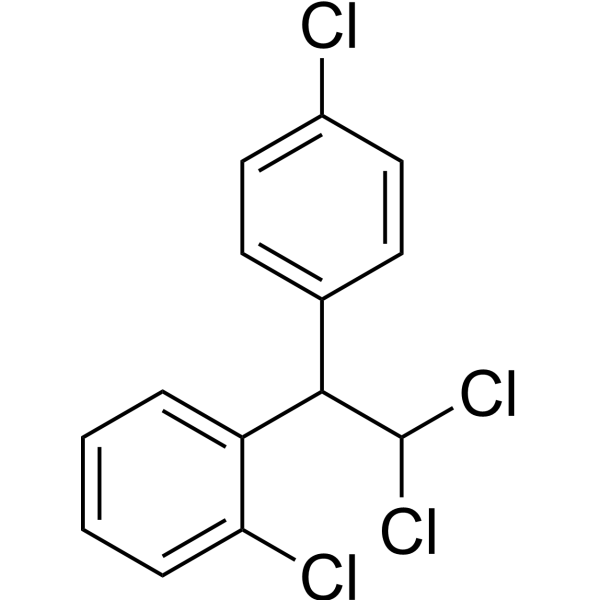
HY-13690
MitotaneAntineoplastic Agent -
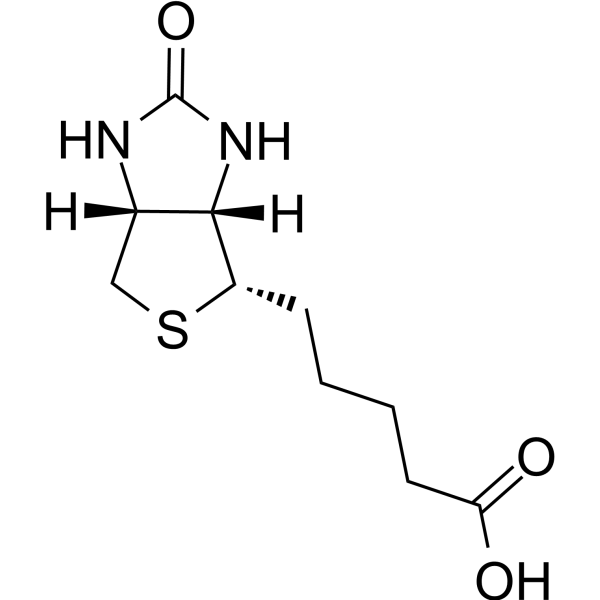
HY-B0511
BiotinVitamin B7 -
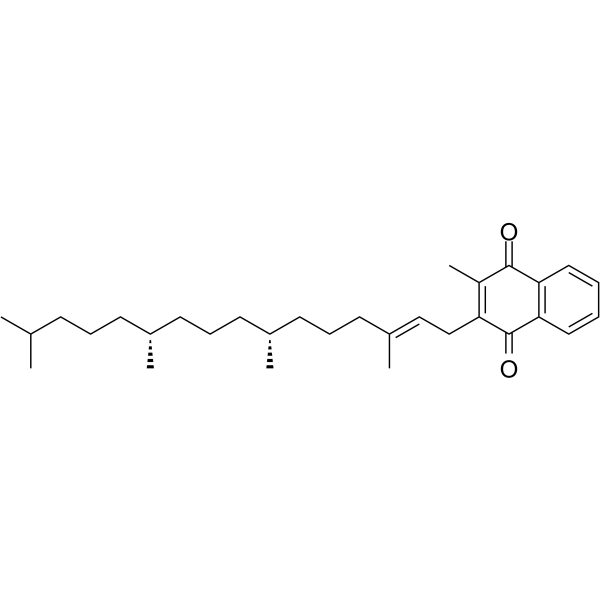
HY-N0684
Vitamin K1Endogenous Metabolite -
HY-B2156
Menaquinone-4Endogenous Metabolite -
HY-101445
TroloxAntioxidant -

HY-B1342
Vitamin A -
HY-B0456
RiboflavinVitamin B2 -
HY-B0143
NiacinB3 vitamin -

HY-B2082R
Fursultiamine (Standard)Hepcidin Antagonist -
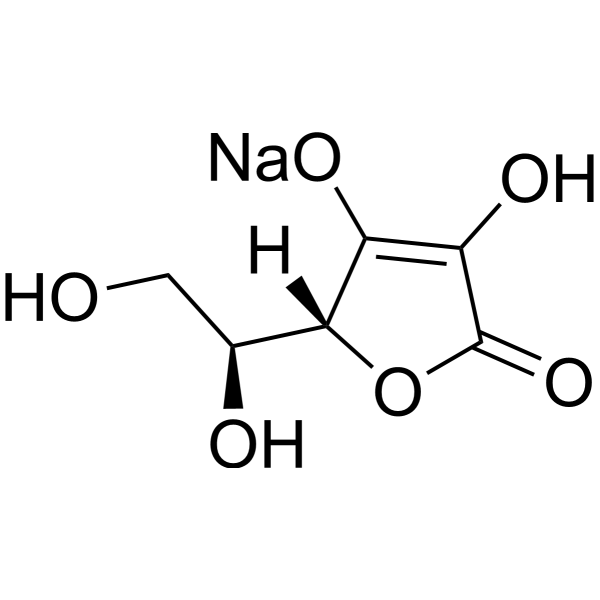
HY-B0166A
L-Ascorbic acid sodium saltCalcium Channel Inhibitor -
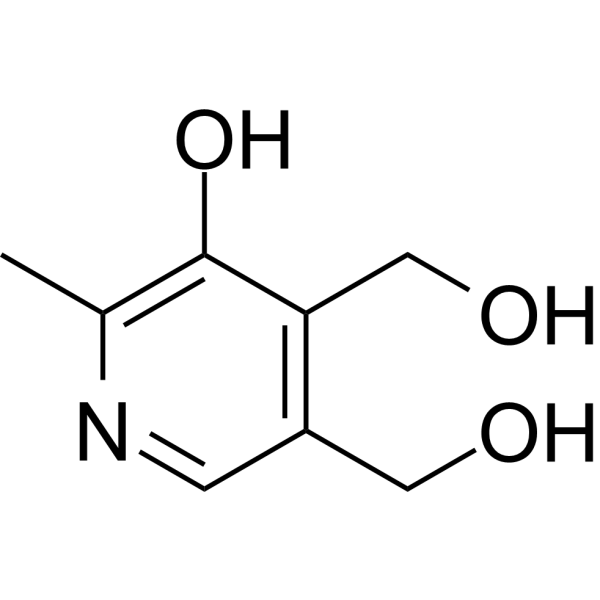
HY-B1328
PyridoxinePyridine Derivative -
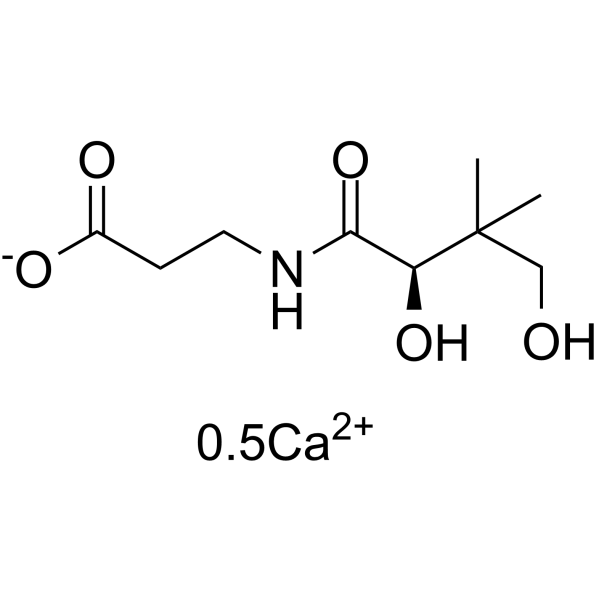
HY-N0681
D-Pantothenic acid hemicalcium saltVitamin
All VEGFR Isoforms
More

Biological Activity
Description
In Vitro
Fursultiamine (10 μM, 24 h) inhibits Sorafenib (HY-10201)-induced cell death of HepG2 and Huh7, inhibits the cleavage of caspase-3 and PARP[3], inhibits NF-κB signaling pathway.
Fursultiamine (100 μM, 12 h) inhibits LPS (HY-D1056)-induced expression of IL-6, IL-8 and MCP-1 in cell ARPE-19[4].
Fursultiamine (100 μM, 12 h) enhances the mitochondrial respiration, reactivates mitochondrial pyruvate dehydrogenase, and improves the metabolic reprogramming under hypoxia conditions[4].
MedChemExpress (MCE) has not independently confirmed the accuracy of these methods. They are for reference only.
-
Cell Line:ARPE-19
-
Concentration:100 μM
-
Incubation Time:12 h
-
Result:Inhibited expression of IL-6, IL-8 and MCP-1.
In Vivo
Fursultiamine (50 mg/kg, po, once a day for 7 days) ameliorates laser induced choroidal neovascularization lesions (CNV) in mouse models[4].
MedChemExpress (MCE) has not independently confirmed the accuracy of these methods. They are for reference only.
Clinical Trial
| NCT Number | Sponsor | Condition | Start Date |
Phase

|
|---|---|---|---|---|
| NCT01329991 | 2011-05 | PHASE1 |


Chemical Information
-
CAS No. 804-30-8
-
Appearance Solid
-
Molecular Weight 398.54
-
Formula C17H26N4O3S2
-
Color White to off-white
-
SMILES
O=CN(CC1=CN=C(C)N=C1N)/C(C)=C(SSCC2OCCC2)\CCO
-
Shipping
Room temperature in continental US; may vary elsewhere.
-
Storage
Powder -20°C 3 years 4°C 2 years In solvent -80°C 2 years -20°C 1 year


Solvent & Solubility
In Vitro:
DMSO : 106.7 mg/mL (267.73 mM; Need ultrasonic and warming; Hygroscopic DMSO has a significant impact on the solubility of product, please use newly opened DMSO)
H2O : ≥ 6.67 mg/mL (16.74 mM)
* "≥" means soluble, but saturation unknown.
Please refer to the solubility information to select the appropriate solvent. Once prepared, please aliquot and store the solution to prevent product inactivation from repeated freeze-thaw cycles.
Storage method and period of stock solution: -80°C, 2 years; -20°C, 1 year. When stored at -80°C, please use it within 2 years. When stored at -20°C, please use it within 1 year.
* Note: If you choose water as the stock solution, please dilute it to the working solution, then filter and sterilize it with a 0.22 μm filter before use.
Please refer to the solubility information to select the appropriate solvent. Once prepared, please aliquot and store the solution to prevent product inactivation from repeated freeze-thaw cycles.
Storage method and period of stock solution: -80°C, 2 years; -20°C, 1 year. When stored at -80°C, please use it within 2 years. When stored at -20°C, please use it within 1 year.
* Note: If you choose water as the stock solution, please dilute it to the working solution, then filter and sterilize it with a 0.22 μm filter before use.
Concentration (start) × Volume (start) = Concentration (final) × Volume (final)
In Vivo:
Select the appropriate dissolution method based on your experimental animal and administration route.
- For the following dissolution methods, please ensure to first prepare a clear stock solution using an In Vitro approach and then sequentially add co-solvents:
- To ensure reliable experimental results, the clarified stock solution can be appropriately stored based on storage conditions. As for the working solution for In Vivo experiments, it is recommended to prepare freshly and use it on the same day.
- The percentages shown for the solvents indicate their volumetric ratio in the final prepared solution. If precipitation or phase separation occurs during preparation, heat and/or sonication can be used to aid dissolution.
Add each solvent one by one: 10% DMSO 40% PEG300 5% Tween-80 45% Saline
Solubility: ≥ 2.5 mg/mL (6.27 mM); Clear solution
This protocol yields a clear solution of ≥ 2.5 mg/mL (saturation unknown).
Taking 1 mL working solution as an example, add 100 μL DMSO stock solution (25.0 mg/mL) to 400 μL PEG300, and mix evenly; then add 50 μL Tween-80 and mix evenly; then add 450 μL Saline to adjust the volume to 1 mL.
Preparation of Saline: Dissolve 0.9 g sodium chloride in ddH₂O and dilute to 100 mL to obtain a clear Saline solution.
Add each solvent one by one: 10% DMSO 90% (20% SBE-β-CD in Saline)
Solubility: ≥ 2.5 mg/mL (6.27 mM); Clear solution
This protocol yields a clear solution of ≥ 2.5 mg/mL (saturation unknown).
Taking 1 mL working solution as an example, add 100 μL DMSO stock solution (25.0 mg/mL) to 900 μL 20% SBE-β-CD in Saline, and mix evenly.
Preparation of 20% SBE-β-CD in Saline (4°C, storage for one week): 2 g SBE-β-CD powder is dissolved in 10 mL Saline, completely dissolve until clear.
In Vivo Dissolution Calculator
Please enter the basic information of animal experiments:
-
-
-
-
Recommended: Prepare an additional quantity of animals to account for potential losses during experiments.
Please enter your animal formula composition:
-
%DMSO +
Recommended: Keep the proportion of DMSO in working solution below 2% if your animal is weak.
-
%+
-
+%Tween-80 + +
-
%Saline +
The co-solvents required include: DMSO, . All of co-solvents are available by MedChemExpress (MCE). , Tween 80. All of co-solvents are available by MedChemExpress (MCE).
Working solution concentration: 0.22 mg/mL
Method for preparing stock solution: mg drug dissolved in μL DMSO. Stock solution concentration: mg/mL.
1. Take μL DMSO stock solution;
2. Add μL .
μL , mix evenly;
3. Then add μL Tween 80, mix evenly;
4. Then add μL
Please ensure that the stock solution in the first step is dissolved to a clear state, and add co-solvents in sequence. You can use ultrasonic heating (ultrasonic cleaner, recommended frequency 20-40 kHz), vortexing, etc. to assist dissolution.


Purity & Documentation
-
Data Sheet (278 KB)
-
SDS (254 KB)
- English - EN (254 KB)
- Français - FR (254 KB)
- Deutsch - DE (254 KB)
- Norwegian - NO (254 KB)
- Español - ES (254 KB)
- Swedish - SV (254 KB)
- Italian - IT (254 KB)
- Korean - KR (254 KB)
- Portuguese - PT (254 KB)
-
Handling Instructions (2659 KB)
References
[2]. Kobayashi T, et al. Fursultiamine, a vitamin B1 derivative, enhances chondroprotective effects of glucosamine hydrochloride and chondroitin sulfate in rabbit experimental osteoarthritis. Inflamm Res. 2005 Jun;54(6):249-55. [Content Brief]
[3]. Xiao-Yi Xiong, et al. Toll-Like Receptor 4/MyD88-Mediated Signaling of Hepcidin Expression Causing Brain Iron Accumulation, Oxidative Injury, and Cognitive Impairment After Intracerebral Hemorrhage. Circulation. 2016 Oct 4;134(14):1025-1038. [Content Brief]
[4]. Wang J, et al., Hepcidin Downregulation Correlates With Disease Aggressiveness And Immune Infiltration in Liver Cancers. Front Oncol. 2021 Jun 30;11:714756. [Content Brief]
[5]. Do JY, et al., Fursultiamine Alleviates Choroidal Neovascularization by Suppressing Inflammation and Metabolic Reprogramming. Invest Ophthalmol Vis Sci. 2020 Oct 1;61(12):24. [Content Brief]


Complete Stock Solution Preparation Table
Please refer to the solubility information to select the appropriate solvent. Once prepared, please aliquot and store the solution to prevent product inactivation from repeated freeze-thaw cycles.
Storage method and period of stock solution: -80°C, 2 years; -20°C, 1 year. When stored at -80°C, please use it within 2 years. When stored at -20°C, please use it within 1 year.
| Optional Solvent | Concentration Solvent Mass | 1 mg | 5 mg | 10 mg | 25 mg |
|---|---|---|---|---|---|
| H2O / DMSO | 1 mM | 2.5092 mL | 12.5458 mL | 25.0916 mL | 62.7290 mL |
| 5 mM | 0.5018 mL | 2.5092 mL | 5.0183 mL | 12.5458 mL | |
| 10 mM | 0.2509 mL | 1.2546 mL | 2.5092 mL | 6.2729 mL | |
| 15 mM | 0.1673 mL | 0.8364 mL | 1.6728 mL | 4.1819 mL | |
| DMSO | 20 mM | 0.1255 mL | 0.6273 mL | 1.2546 mL | 3.1364 mL |
| 25 mM | 0.1004 mL | 0.5018 mL | 1.0037 mL | 2.5092 mL | |
| 30 mM | 0.0836 mL | 0.4182 mL | 0.8364 mL | 2.0910 mL | |
| 40 mM | 0.0627 mL | 0.3136 mL | 0.6273 mL | 1.5682 mL | |
| 50 mM | 0.0502 mL | 0.2509 mL | 0.5018 mL | 1.2546 mL | |
| 60 mM | 0.0418 mL | 0.2091 mL | 0.4182 mL | 1.0455 mL | |
| 80 mM | 0.0314 mL | 0.1568 mL | 0.3136 mL | 0.7841 mL | |
| 100 mM | 0.0251 mL | 0.1255 mL | 0.2509 mL | 0.6273 mL |
* Note: If you choose water as the stock solution, please dilute it to the working solution, then filter and sterilize it with a 0.22 μm filter before use.


Fursultiamine Related Classifications
HY-B2082 Related Classifications
 Powered by Bioz