



Ginsenoside Rb3
Based on 1 publication(s) in Google Scholar
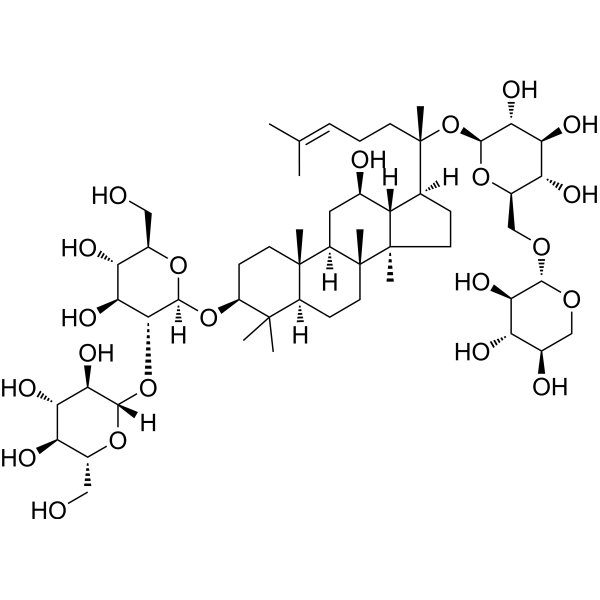
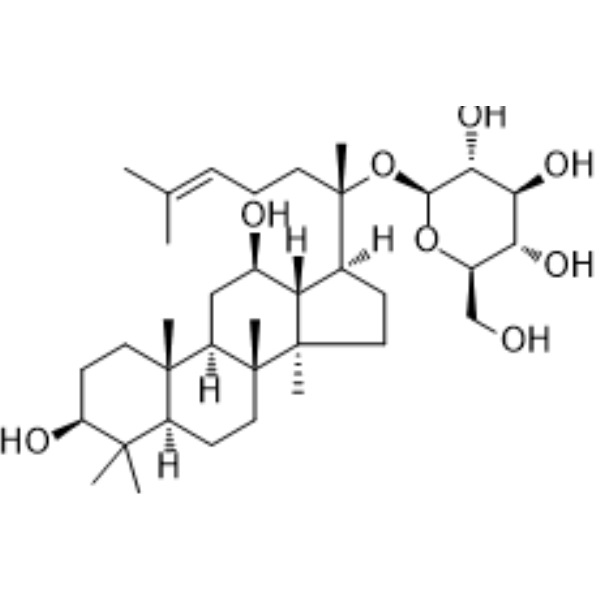
Ginsenoside Rb3 is extracted from steamed Panax ginseng C. A. Meyer. Ginsenoside Rb3 exhibits inhibitory effect on TNFα-induced NF-κB transcriptional activity with an IC50 of 8.2 μM in 293T cell lines. Ginsenoside Rb3 also inhibits the induction of COX-2 and iNOS mRNA.
For research use only. We do not sell to patients.
- Purity : 99.87%
- CAS No.: 68406-26-8
- Formula: C53H90O22
- Molecular Weight:1079.27
-
Storage:Powder -20°C, 3 years , 4°C, 2 years ; In solvent -80°C, 6 months , -20°C, 1 month

To place orders, for customer services and technical support, please contact: MedChemExpress USA
Tel: 609-228-6898 E-mail: [email protected] [email protected]


-
 Biological Activity
-
Chemical Information
-
Solvent & Solubility
- Protocols
- Purity & Documentation
- References
-
 Help & FAQs


-
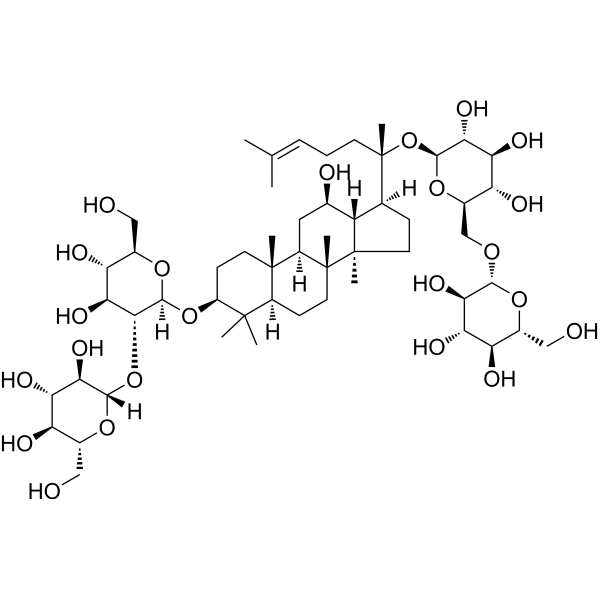
HY-N0039
Ginsenoside Rb1Autophagy Inducer -
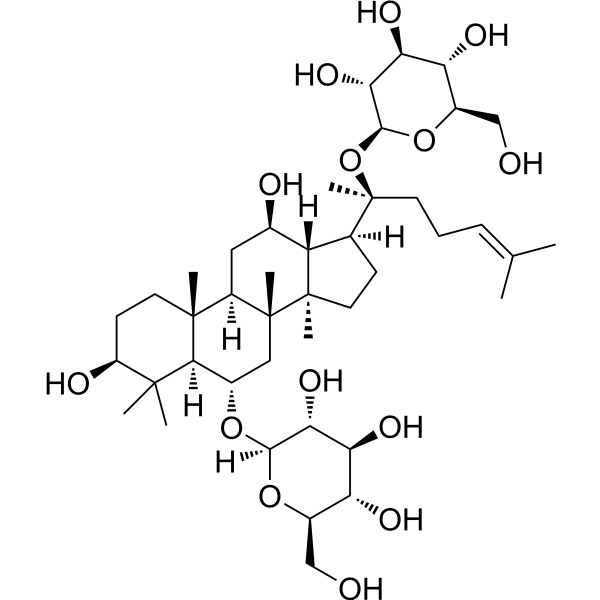
HY-N0045
Ginsenoside Rg1Apoptosis Inducer -
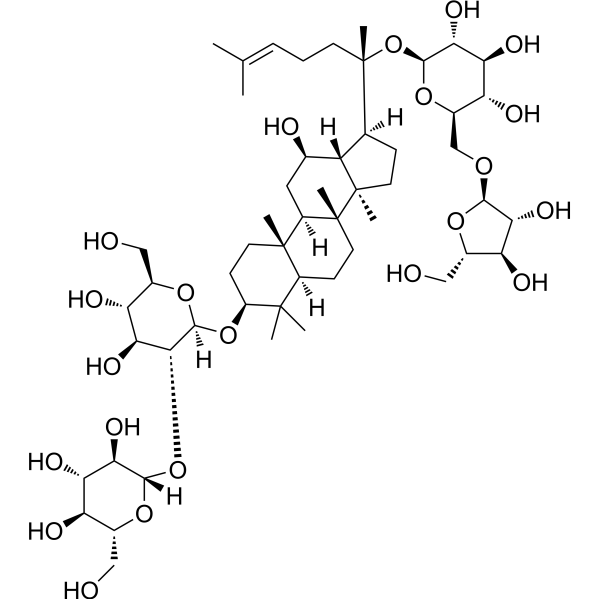
HY-N0042
Ginsenoside RcTNF Receptor Inhibitor -
HY-N0604
Ginsenoside Rh1Endogenous Metabolite -
HY-N0043
Ginsenoside RdCytochrome P450 Inhibitor -
HY-N0601
Ginsenoside RfCalcium Channel Inhibitor -
HY-N0603
20(S)-Ginsenoside Rg3Sodium Channel Inhibitor -
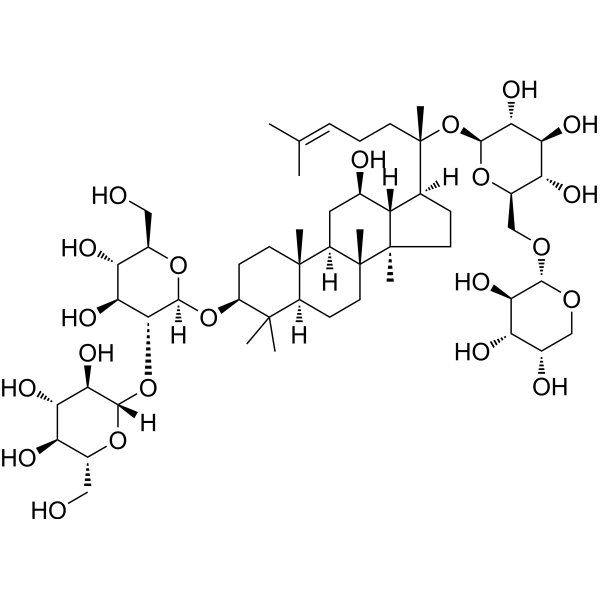
HY-N0040
Ginsenoside Rb2Influenza Virus Inhibitor -
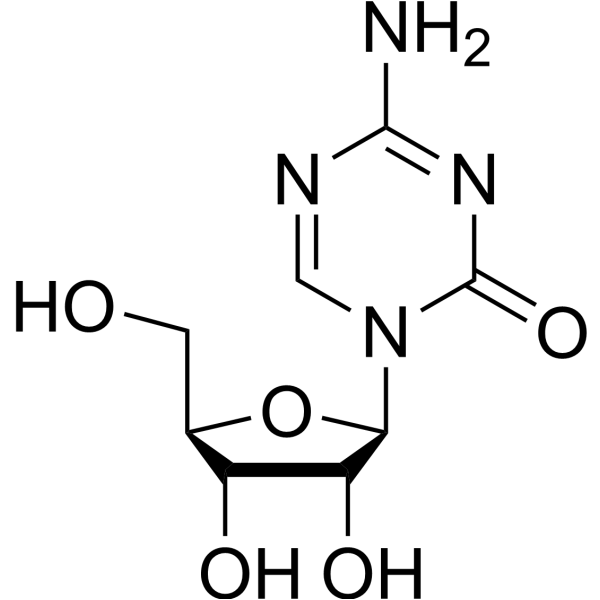
HY-10586
5-AzacytidineDNMT Inhibitor -
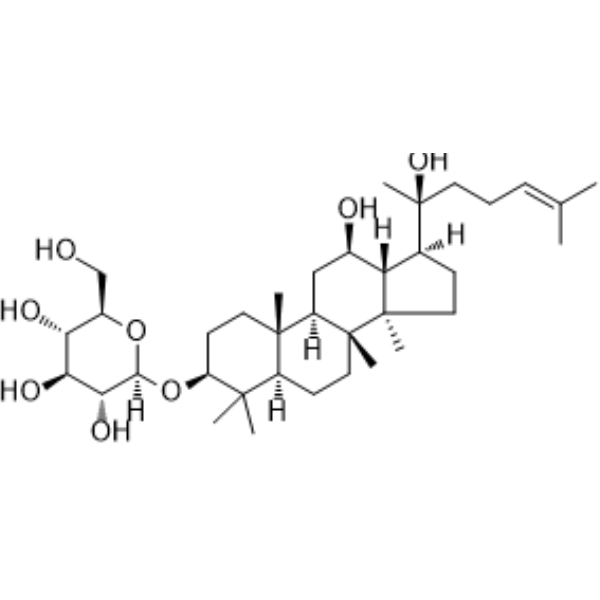
HY-N0605
Ginsenoside Rh2Caspase Activator -
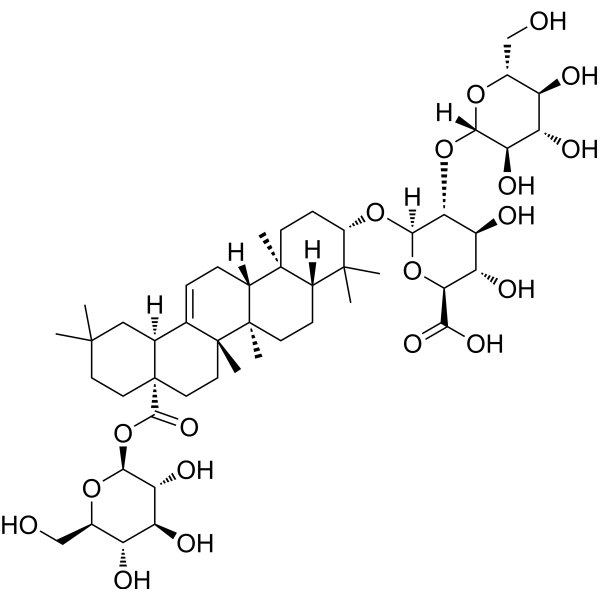
HY-N0607
Ginsenoside RoCalcium Channel Antagonist -
HY-N0904
Ginsenoside C-KNO Synthase/COX Inhibitor
Publications Citing Use of MedChemExpress (MCE) Ginsenoside Rb3
More

Biological Activity
Description
IC50 & Target
[1]|
NF-κB 8.2 μM (IC50, in 293T cell lines) |
iNOS |
COX-2 |
Cellular Effect
|
Cell Line

|
Type | Value | Description | References |
|---|---|---|---|---|
| Erythrocyte | IC50 |
2.65 μM
Compound: 69
|
Inhibition of AAPH-induced hemolysis of human erythrocytes
Inhibition of AAPH-induced hemolysis of human erythrocytes
|
[PMID: 32006794] |
In Vitro
Ginsenoside Rb3 (0.1-10 μM) is tested for inhibition of tumor necrosis factor-α (TNF)-induced nuclear factor kappa-light-chain-enhancer of activated B cells (NF-κB) luciferase reporter activity using a human kidney 293T cell-based assay. Ginsenoside Rb3 shows the significant activity with an IC50 of 8.2 μM. Ginsenoside Rb3 also inhibits the induction of cyclooxygenase-2 (COX-2) and inducible nitric oxide synthase (iNOS) messenger Ribonucleic acid (mRNA) in a dose-dependent manner after HepG2 cells have been treated with TNF-α (10 ng/mL)[1].
Ginsenoside Rb3 (0.1-10 μM) significantly increases cell viability and inhibits lactate dehydrogenase (LDH) release in a dose-dependent manner. PC12 cell viability as determined by MTT reduction is also markedly decreased after the cell is exposed to oxygen and glucose deprivation (OGD)/OGD-Rep. But, when the cells are pretreated with Ginsenoside Rb3 (0.1, 1, and 10 μM), OGD/OGD-Rep induced cell toxicity is significantly attenuated, which is concentration-dependently attenuated by Ginsenoside Rb3 treatment. The viabilities are raised to 52.8%±5.6%, 64.6%±5.7%, and 76.4%±8.8%, respectively, compared with the control group[2].
MedChemExpress (MCE) has not independently confirmed the accuracy of these methods. They are for reference only. Further protocols information, click here.
In Vivo
MedChemExpress (MCE) has not independently confirmed the accuracy of these methods. They are for reference only.


Chemical Information
-
CAS No. 68406-26-8
-
Appearance Solid
-
Molecular Weight 1079.27
-
Formula C53H90O22
-
Color White to off-white
-
SMILES
C[C@]([C@@](C[C@H]1O)([H])[C@]2(CC[C@@H]3O[C@@](O[C@H](CO)[C@@H](O)[C@@H]4O)([H])[C@@H]4O[C@]([C@@H]([C@@H](O)[C@@H]5O)O)([H])O[C@@H]5CO)C)(CC[C@@]2([H])C3(C)C)[C@]6([C@@]1([H])[C@]([C@@](CC/C=C(C)/C)(C)O[C@@H]([C@@H]([C@@H](O)[C@@H]7O)O)O[C@@H]7CO[C@H](OC[C@@H](O)[C@@H]8O)[C@@H]8O)([H])CC6)C
-
Synonyms
Gypenoside IV
-
Structure Classification
-
Initial Source
-
Shipping
Room temperature in continental US; may vary elsewhere.
-
Storage
Powder -20°C 3 years 4°C 2 years In solvent -80°C 6 months -20°C 1 month


Publications (1)
-
Journal Impact Factor
-
Most Recent
-
Microorganisms
Ginsenoside Rb3 Suppresses Peste des Petits Ruminants Virus Replication by Inhibiting Autophagy to Potentiate Immune Responses. [Abstract]2026 Mar 26;14(4):738. PMID: 42075134


Solvent & Solubility
In Vitro:
DMSO : 100 mg/mL (92.66 mM; Need ultrasonic; Hygroscopic DMSO has a significant impact on the solubility of product, please use newly opened DMSO)
Please refer to the solubility information to select the appropriate solvent. Once prepared, please aliquot and store the solution to prevent product inactivation from repeated freeze-thaw cycles.
Storage method and period of stock solution: -80°C, 6 months; -20°C, 1 month. When stored at -80°C, please use it within 6 months. When stored at -20°C, please use it within 1 month.
Please refer to the solubility information to select the appropriate solvent. Once prepared, please aliquot and store the solution to prevent product inactivation from repeated freeze-thaw cycles.
Storage method and period of stock solution: -80°C, 6 months; -20°C, 1 month. When stored at -80°C, please use it within 6 months. When stored at -20°C, please use it within 1 month.
Concentration (start) × Volume (start) = Concentration (final) × Volume (final)
In Vivo:
Select the appropriate dissolution method based on your experimental animal and administration route.
- For the following dissolution methods, please ensure to first prepare a clear stock solution using an In Vitro approach and then sequentially add co-solvents:
- To ensure reliable experimental results, the clarified stock solution can be appropriately stored based on storage conditions. As for the working solution for In Vivo experiments, it is recommended to prepare freshly and use it on the same day.
- The percentages shown for the solvents indicate their volumetric ratio in the final prepared solution. If precipitation or phase separation occurs during preparation, heat and/or sonication can be used to aid dissolution.
Add each solvent one by one: 10% DMSO 40% PEG300 5% Tween-80 45% Saline
Solubility: ≥ 2.5 mg/mL (2.32 mM); Clear solution
This protocol yields a clear solution of ≥ 2.5 mg/mL (saturation unknown).
Taking 1 mL working solution as an example, add 100 μL DMSO stock solution (25.0 mg/mL) to 400 μL PEG300, and mix evenly; then add 50 μL Tween-80 and mix evenly; then add 450 μL Saline to adjust the volume to 1 mL.
Preparation of Saline: Dissolve 0.9 g sodium chloride in ddH₂O and dilute to 100 mL to obtain a clear Saline solution.
Add each solvent one by one: 10% DMSO 90% (20% SBE-β-CD in Saline)
Solubility: ≥ 2.5 mg/mL (2.32 mM); Clear solution
This protocol yields a clear solution of ≥ 2.5 mg/mL (saturation unknown).
Taking 1 mL working solution as an example, add 100 μL DMSO stock solution (25.0 mg/mL) to 900 μL 20% SBE-β-CD in Saline, and mix evenly.
Preparation of 20% SBE-β-CD in Saline (4°C, storage for one week): 2 g SBE-β-CD powder is dissolved in 10 mL Saline, completely dissolve until clear.
In Vivo Dissolution Calculator
Please enter the basic information of animal experiments:
-
-
-
-
Recommended: Prepare an additional quantity of animals to account for potential losses during experiments.
Please enter your animal formula composition:
-
%DMSO +
Recommended: Keep the proportion of DMSO in working solution below 2% if your animal is weak.
-
%+
-
+%Tween-80 + +
-
%Saline +
The co-solvents required include: DMSO, . All of co-solvents are available by MedChemExpress (MCE). , Tween 80. All of co-solvents are available by MedChemExpress (MCE).
Working solution concentration: 0.22 mg/mL
Method for preparing stock solution: mg drug dissolved in μL DMSO. Stock solution concentration: mg/mL.
1. Take μL DMSO stock solution;
2. Add μL .
μL , mix evenly;
3. Then add μL Tween 80, mix evenly;
4. Then add μL
Please ensure that the stock solution in the first step is dissolved to a clear state, and add co-solvents in sequence. You can use ultrasonic heating (ultrasonic cleaner, recommended frequency 20-40 kHz), vortexing, etc. to assist dissolution.

Protocols
-
Dual Luciferin reporter gene assay
Luciferin reporter gene assay is a reporting system to detect the activity of Firefly Luciferase using luciferin as a substrate, which is often used in the research of miRNA target gene verification and promoter transcriptive activity regulation. Dual luciferase usually refers to Firefly luciferase and Renilla luciferase.
-
RNA extraction experimental
By lysing cells, releasing RNA, and removing impurities such as proteins and DNA, high-purity RNA products are finally obtained. The commonly used traditional method is the guanidine isothiocyanate/phenol/chloroform method (Trizol), which is suitable for a variety of animal materials including animal tissues, microorganisms, cultured cells, etc., and most plant materials.
-
Research Protocol for Inflammation-related Diseases
The NLRP3 inflammasome is a cytosolic innate immune signaling platform that integrates priming signals and danger-signal activation to promote caspase-1 activation, maturation of IL-1β and IL-18, and gasdermin D-mediated pyroptotic cell death. The core experimental logic is to determine whether inflammatory disease phenotypes are driven by increased NLRP3 expression, ASC-containing inflammasome assembly, caspase-1 cleavage, GSDMD cleavage, and extracellular release of IL-1β/IL-18 rather than by nonspecific cell injury alone. The pathway is strongly linked to inflammation-related disease phenotypes because monosodium urate crystals activate NALP3/NLRP3 inflammasome signaling in gout-like crystal inflammation, cholesterol crystals activate NLRP3 inflammasomes in atherogenesis models, and DSS-induced intestinal inflammation has been reported to involve NLRP3 inflammasome activity. However, experimental colitis studies also show context-dependent protective effects of NLRP3 inflammasome co


Purity & Documentation
-
Data Sheet (298 KB)
-
SDS (393 KB)
- English - EN (393 KB)
- Français - FR (393 KB)
- Deutsch - DE (393 KB)
- Norwegian - NO (393 KB)
- Español - ES (393 KB)
- Swedish - SV (393 KB)
- Italian - IT (393 KB)
- Korean - KR (393 KB)
- Portuguese - PT (393 KB)
-
Handling Instructions (2659 KB)
References
[1]. He F, et al. Antitumor effects of dammarane-type saponins from steamed Notoginseng. Pharmacogn Mag. 2014 Jul;10(39):314-7. [Content Brief]
[2]. Zhu JR, et al. Protective effects of ginsenoside Rb(3) on oxygen and glucose deprivation-induced ischemic injury in PC12 cells. Acta Pharmacol Sin. 2010 Mar;31(3):273-80. [Content Brief]
[3]. Huang G, et al. Ginsenosides Rb3 and Rd reduce polyps formation while reinstate the dysbiotic gut microbiota and the intestinal microenvironment in ApcMin/+ mice. Sci Rep. 2017 Oct 2;7(1):12552. [Content Brief]


Complete Stock Solution Preparation Table
Please refer to the solubility information to select the appropriate solvent. Once prepared, please aliquot and store the solution to prevent product inactivation from repeated freeze-thaw cycles.
Storage method and period of stock solution: -80°C, 6 months; -20°C, 1 month. When stored at -80°C, please use it within 6 months. When stored at -20°C, please use it within 1 month.
| Optional Solvent | Concentration Solvent Mass | 1 mg | 5 mg | 10 mg | 25 mg |
|---|---|---|---|---|---|
| DMSO | 1 mM | 0.9266 mL | 4.6328 mL | 9.2655 mL | 23.1638 mL |
| 5 mM | 0.1853 mL | 0.9266 mL | 1.8531 mL | 4.6328 mL | |
| 10 mM | 0.0927 mL | 0.4633 mL | 0.9266 mL | 2.3164 mL | |
| 15 mM | 0.0618 mL | 0.3089 mL | 0.6177 mL | 1.5443 mL | |
| 20 mM | 0.0463 mL | 0.2316 mL | 0.4633 mL | 1.1582 mL | |
| 25 mM | 0.0371 mL | 0.1853 mL | 0.3706 mL | 0.9266 mL | |
| 30 mM | 0.0309 mL | 0.1544 mL | 0.3089 mL | 0.7721 mL | |
| 40 mM | 0.0232 mL | 0.1158 mL | 0.2316 mL | 0.5791 mL | |
| 50 mM | 0.0185 mL | 0.0927 mL | 0.1853 mL | 0.4633 mL | |
| 60 mM | 0.0154 mL | 0.0772 mL | 0.1544 mL | 0.3861 mL | |
| 80 mM | 0.0116 mL | 0.0579 mL | 0.1158 mL | 0.2895 mL |


Ginsenoside Rb3 Related Classifications
HY-N0041 Related Classifications
 Powered by Bioz