



Vimirogant
Based on 1 publication(s) in Google Scholar
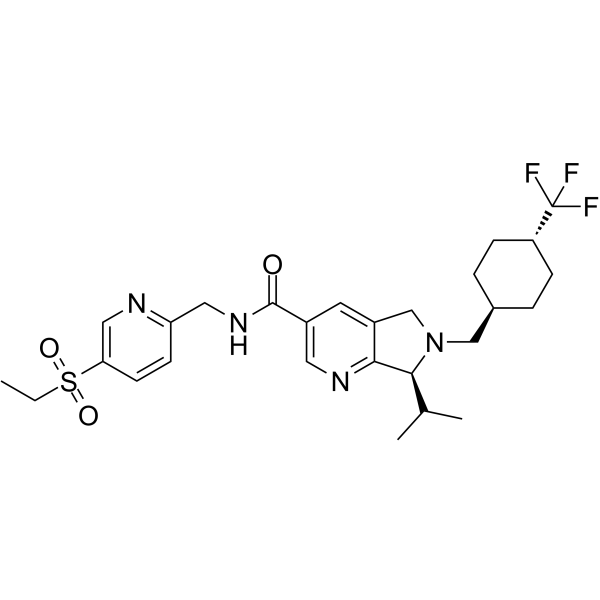
Vimirogant (VTP-43742) is a potent, selective, and orally active RORγt inhibitor with a Ki of 3.5 nM for binding to RORγt. VTP-43742 blocks Th17 cell differentiation and reduces IL-17A production by inhibiting RORγt-mediated transcriptional activity, thereby suppressing the RORγt/Th17/IL-17 inflammatory axis. VTP-43742 can be used for research on autoimmune diseases and inflammation-related diseases.
Nur für Forschungszwecke. Wir verkaufen nicht an Patienten.
- CAS. Nr.: 1802706-04-2
- Formel: C27H35F3N4O3S
- Molecular Weight:552.65
-
Speicherung:
Please store the product under the recommended conditions in the Certificate of Analysis.

To place orders, for customer services and technical support, please contact: MedChemExpress USA
Tel: 609-228-6898 E-mail: [email protected] [email protected]


-
 Biologische Aktivität
-
Chemical Information
- Protokoll
- Reinheit & Dokumentation
- Verweise
-
 Help & FAQs


-
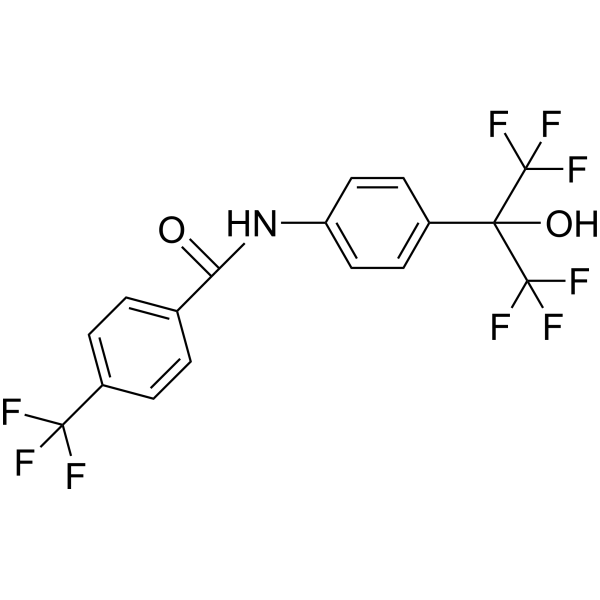
HY-14422
SR1078RORα/RORγ Agonist -
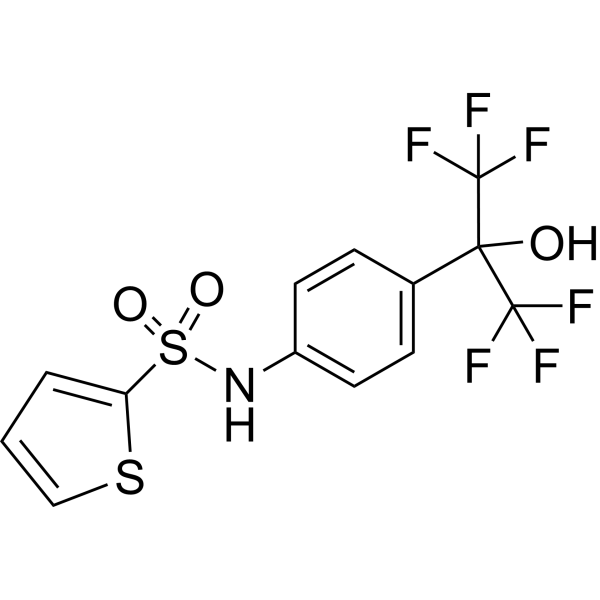
HY-14413
SR3335RORα Inverse Agonist -
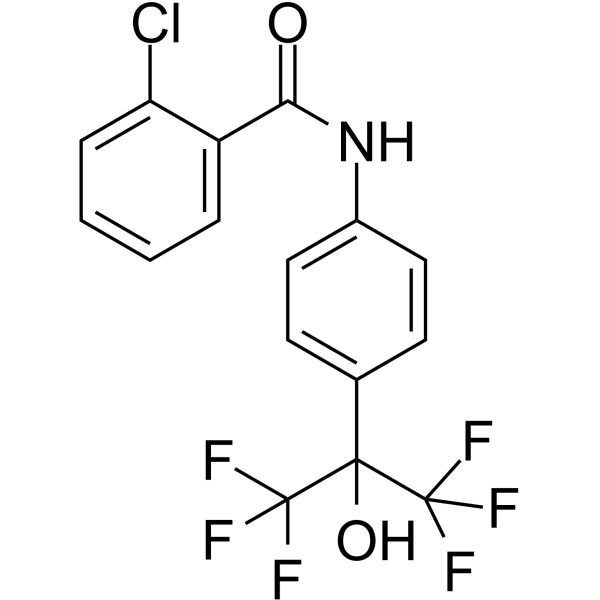
HY-101454
SR0987RORγt Agonist -
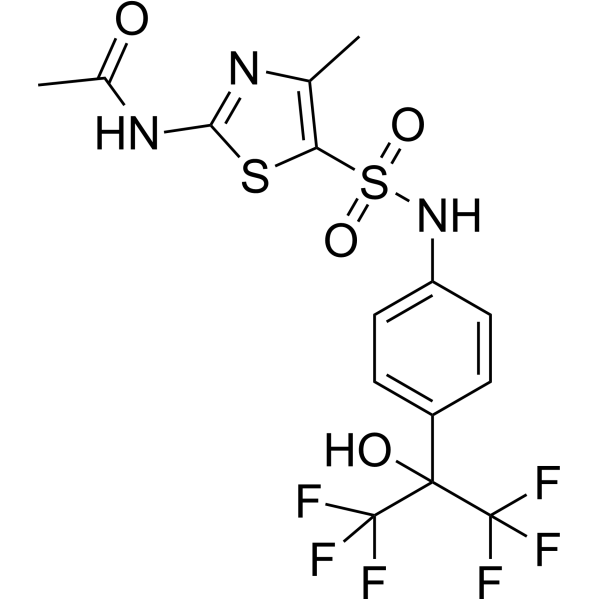
HY-13421
SR1001RORα/γt Inverse Agonist -
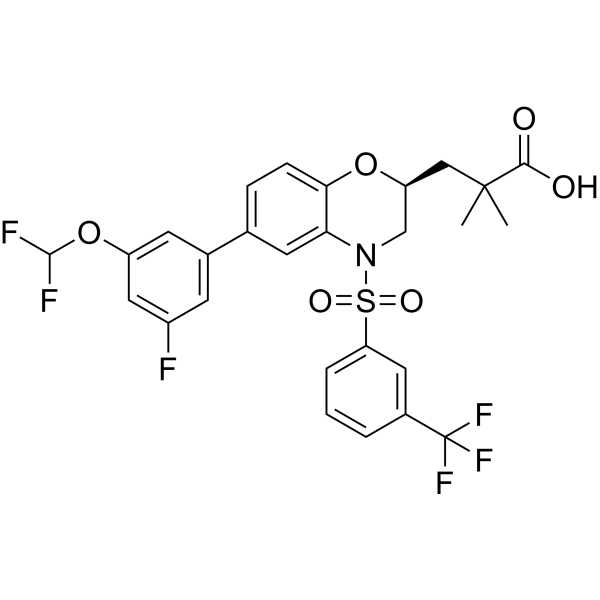
HY-104037
CintirorgonRORγ Agonist -
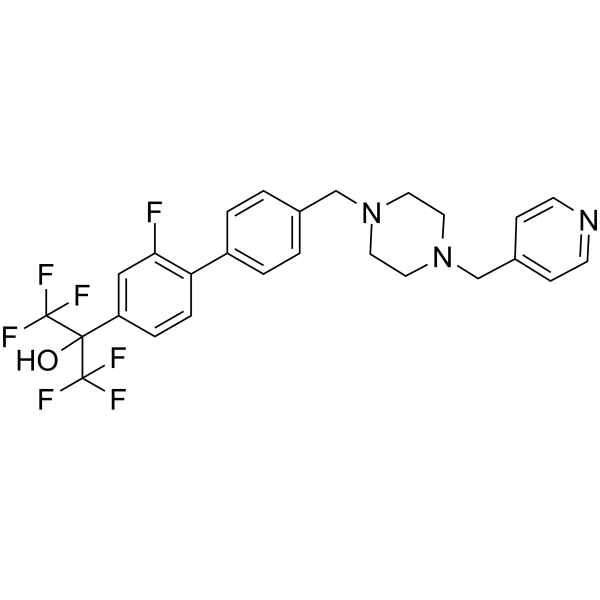
HY-16998
SR2211RORγ Inverse Agonist -
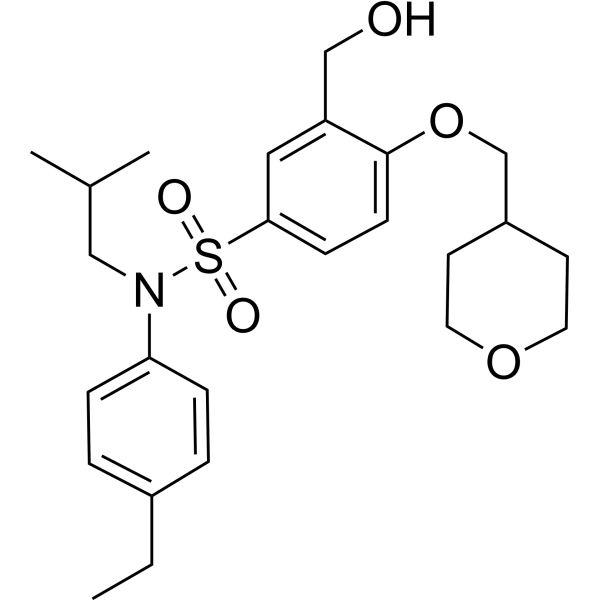
HY-19770
GSK2981278RORγ Inverse Agonist -
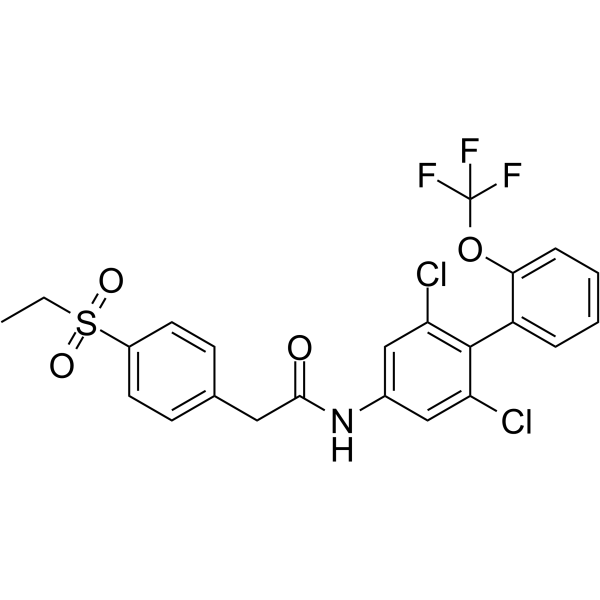
HY-12776
GSK805RORγt Inhibitor -
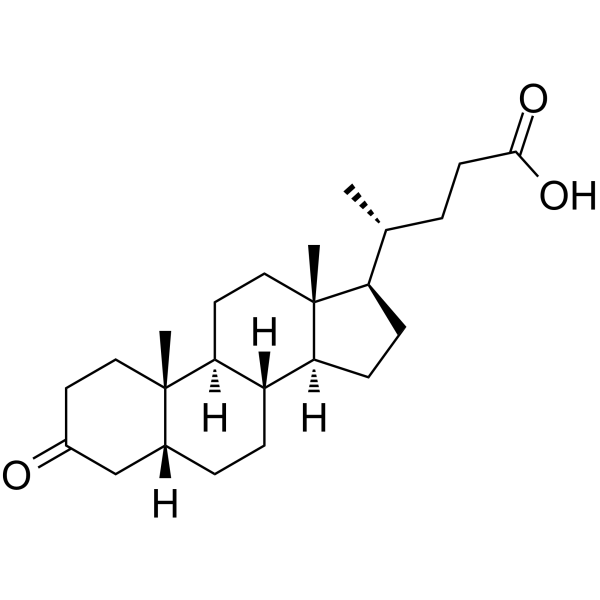
HY-125801
3-Oxo-5β-cholanoic acidTH17 Cell Differentiation Inhibitor -
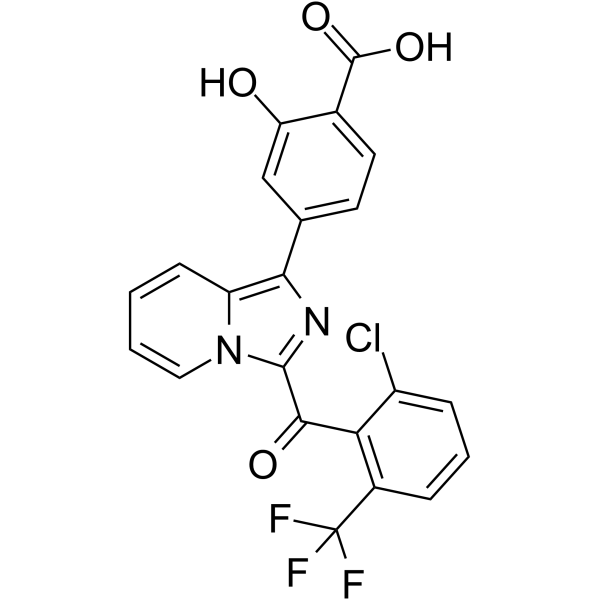
HY-19774
GNE-0946RORγ/RORc Agonist -
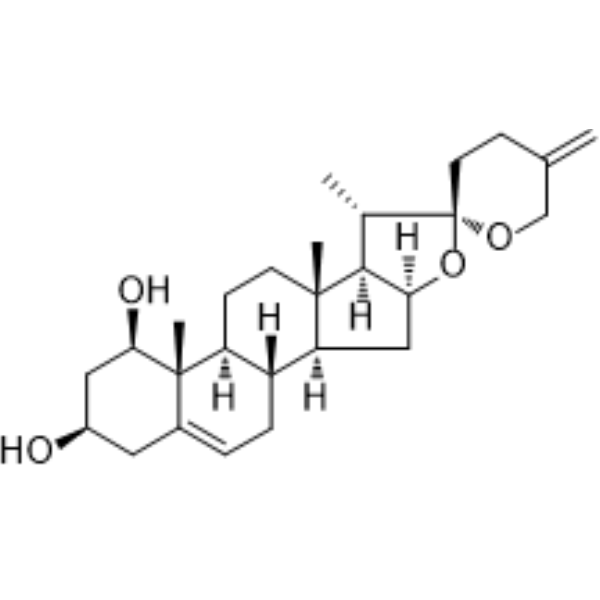
HY-N2253
NeoruscogeninRORα Agoinst -

HY-104037R
Cintirorgon (Standard)Reference Standard
Publications Citing Use of MedChemExpress (MCE) Vimirogant
More

Biologische Aktivität
Beschreibung
IC50 & Target
[3]|
RORγt 3.5 nM (Ki) |
Cellular Effect
|
Cell Line

|
Type | Value | Description | References |
|---|---|---|---|---|
| PBMC | IC50 |
21 nM
Compound: 22; VTP-43742, AGN 242428
|
Inhibition of IL-17A secretion in human PBMC cells
Inhibition of IL-17A secretion in human PBMC cells
|
[PMID: 30010338] |
In Vitro
MedChemExpress (MCE) has not independently confirmed the accuracy of these methods. They are for reference only.
In Vivo
Vimirogant (high dose; prophylactic administration) completely suppresses EAE clinical scores in the chronic EAE study, with a greater degree of inhibition than MM17F3; it also suppresses Th17-related markers in the spinal cord and reduces demyelination and inflammatory cell infiltration[4].
Vimirogant (30 μg/kg; p.o.; 7 days; combined with SYD 2.50 g/kg) inhibits colonic mucosal inflammatory injury more strongly than SYD alone in DSS-induced colitis mice[5].
MedChemExpress (MCE) has not independently confirmed the accuracy of these methods. They are for reference only.
-
Animal Model:C57BL/6N mice (male, 6-8 weeks old, 20 g, SPF grade)[5]
-
Dosage:30 μg/kg
-
Administration:i.g.; daily; 7 days
-
Result:Considerably decreased M1 macrophage polarization in the colonic mucosa.
Produced milder colonic inflammatory lesions and lower sensitivity to DSS-induced colitis.
Did not alter IL-17a expression according to the article text.
Clinical Trial
| NCT Number | Sponsor | Condition | Start Date |
Phase
|
|---|---|---|---|---|
| NCT01329991 | 2011-05 | PHASE1 |


Chemical Information
-
CAS. Nr. 1802706-04-2
-
Molecular Weight 552.65
-
Formel C27H35F3N4O3S
-
SMILES
O=C(C1=CN=C([C@H](C(C)C)N(C[C@H]2CC[C@H](C(F)(F)F)CC2)C3)C3=C1)NCC4=NC=C(S(=O)(CC)=O)C=C4
-
Synonyms
VTP-43742
-
Versand
Room temperature in continental US; may vary elsewhere.
-
Speicherung
Please store the product under the recommended conditions in the Certificate of Analysis.


Publications (1)
-
Journal Impact Factor
-
Most Recent
-
J Ethnopharmacol
Shaoyao decoction alleviates DSS-induced colitis by inhibiting IL-17a-mediated polarization of M1 macrophages. [Abstract]2025 Jan 30;337(Pt 3):118941. PMID: 39427735


Reinheit & Dokumentation
Verweise
[2]. Gege C, et al. RORγt inhibitors as potential back-ups for the phase II candidate VTP-43742 from Vitae Pharmaceuticals: patent evaluation of WO2016061160 and US20160122345. Expert opinion on therapeutic patents. 2017 Jan;27(1):1-8. [Content Brief]
[5]. Wang S, et al. Shaoyao decoction alleviates DSS-induced colitis by inhibiting IL-17a-mediated polarization of M1 macrophages. Journal of ethnopharmacology. 2025 Jan 30;337(Pt 3):118941. [Content Brief]

Calculators
Konzentration (Stammlösung) × Volumen (Stammlösung) = Konzentration (Ziellösung) × Volumen (Ziellösung)


Vimirogant Related Classifications
HY-103637 Related Classifications
 Powered by Bioz