



Cancer Immunotherapy
Cancer immunotherapy (CIT) is a type of biological therapy, aiming to improve anti-tumor immune responses with fewer off-target effects than chemotherapy. Several types of immunotherapy include: oncolytic virus therapies, cancer vaccines, cytokine therapies, adoptive cell transfer (ACT), and immune checkpoint inhibitors (ICIs). In particular, ICIs and ACT have obtained immense clinical response, but their efficacy varies from person to person. Immune cells can be harnessed to eliminate tumor cells, such as T cells, B cells, NK cells, and myeloid cells. T cells have potent tumor-killing capability, therefore, a plethora of cancer immunotherapy research have focused on inducing T-cell-mediated anti-tumor responses. CTLA-4 and PD-1 are found on the cell surface of T cells as co-inhibitory receptors. The breakthrough in cancer immunotherapy results from the identification and subsequent targeting of checkpoint mechanisms in T cells with monoclonal antibodies against CTLA-4 and programmed death-ligand 1/programmed death-1 (PD-L1/PD-1).
Several types of cancers (e.g., melanoma, mismatch repair-deficient cancers, bladder cancer, and non-small cell lung cancer) have achieved significant clinical responses in T-cell checkpoint blockade therapies. However, single-mode immunotherapy faces challenges such as low immune response, low tumor infiltration, and complex immunosuppressive tumor microenvironment. Recently, combined therapies based on tumor immunity have received extensive attention in the research of enhancing tumor cells immunogenicity and inhibiting their growth. For example, anti CTLA-4 and PD-1, immune checkpoint blockade (ICB) combined with chemotherapy, anti-angiogenic drugs and kinase inhibitors.
-
Echinatin (Standard)
 0 ImagesCat. No.: HY-N0269RCAS No.: 34221-41-5
Echinatin (Standard) is the analytical standard of Echinatin. This product is intended for research and analytical applications. Echinatin is a chalcone isolated from the Chinese herbal medicine Gancao with hepatoprotective and anti-inflammatory effects. Echinatin can be quickly absorbed and eliminated and extensively distributed with an absolute bioavailability of approximately 6.81% in Rat.
-
DGKζ-IN-6
 0 ImagesCat. No.: HY-169317CAS No.: 3058005-75-4
-
3,3'-Bi[1H-indole]
![3,3'-Bi[1H-indole]](https://file.medchemexpress.com/product_pic/hy-w616426.gif "Click to View 3,3'-Bi[1H-indole] Product Detail") 0 ImagesCat. No.: HY-W616426CAS No.: 13637-37-1
0 ImagesCat. No.: HY-W616426CAS No.: 13637-37-13,3'-Bi[1H-indole] is a MtbFtsZ inhibitor. 3,3'-Bi[1H-indole] inhibits the GTPase activity of MtbFtsZ. 3,3'-Bi[1H-indole] increases the cell length of Mycobacterium smegmatis and Bacillus subtilis. 3,3'-Bi[1H-indole] can be used in the research of tuberculosis.
-
CAIX/XII/NAMPT-IN-1
 0 ImagesCat. No.: HY-181350
CAIX/XII/NAMPT-IN-1 is a triple inhibitor of carbonic anhydrase IX/XII and nicotinamide phosphoribosyltransferase (NAMPT) with a hCA IX Ki of 78.1 nM, hCA XII Ki of 64.4 nM, and hNAMPT IC50 of 168 nM. CAIX/XII/NAMPT-IN-1 induces apoptosis, ROS accumulation, suppresses ERK/AKT signaling, inhibits DNA synthesis, and causes mitochondrial dysfunction. CAIX/XII/NAMPT-IN-1 exerts antiproliferative effects against multiple cancer cells under normoxic and hypoxic conditions. CAIX/XII/NAMPT-IN-1 can be used for the research of cancer, such as renal carcinoma, glioblastoma and colorectal cancer.
-
Tesirine (GMP)
 0 ImagesCat. No.: HY-128952GCAS No.: 1595275-62-9Synonyms: SG3249 (GMP)
Tesirine (GMP) (SG3249 (GMP)) is Tesirine (HY-128952) produced by using GMP guidelines. GMP small molecules works appropriately as an auxiliary reagent for cell therapy manufacture. Tesirine (SG3249) is an antibody-drug conjugate (ADC) pyrrolobenzodiazepine (PBD) dimer payload. Tesirine combines potent antitumor activity with desirable physicochemical properties such as favorable hydrophobicity and improved conjugation characteristics. SG3199 (HY-101161) is the released warhead component of the ADC payload Tesirine. SG3199 retains picomolar activity in a panel of cancer cell lines. PBD dimers are highly efficient DNA minor groove cross-linking agents with potent cytotoxicity.
-
TAS266
 0 ImagesCat. No.: HY-P992473
TAS266 is a tetrameric nanobody agonist targeting DR5. TAS266 selectively induces cancer cell death. TAS266 triggers sustained tumor regression in xenograft models and also elicits immunogenic responses including antibody binding. TAS266 exhibits superior anti-tumor efficacy compared with traditional DR5-targeting strategies. TAS266 can be used in research related to pancreatic cancer and advanced solid tumors.
-
Pimicotinib hydrochloride
 0 ImagesCat. No.: HY-153920ACAS No.: 2866305-19-1Synonyms: ABSK021 hydrochloride
Pimicotinib (ABSK021) hydrochloride is a selective and orally active CSF1R inhibitor with an IC50 value of 19.48 nM (determined by inhibiting ADP production). Pimicotinib hydrochloride exhibits anti-tumor activity.
-
Mal-CO-PEG5-NHS ester
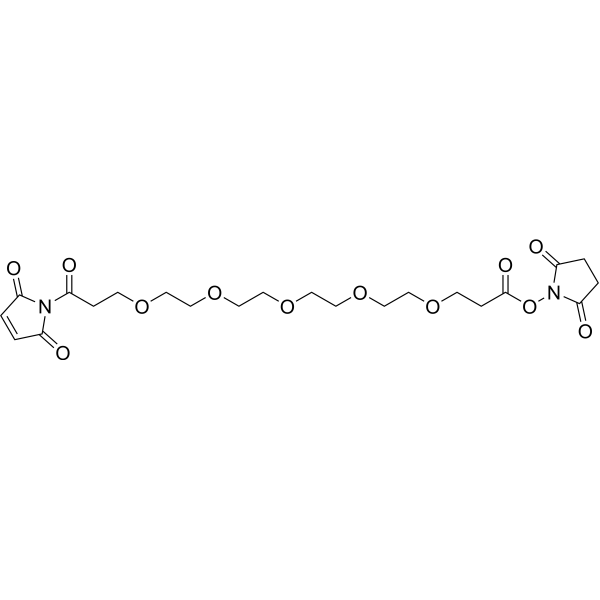 0 ImagesCat. No.: HY-133544CAS No.: 1232769-29-7
Mal-CO-PEG5- NHS ester is a non-cleavable 5 unit PEG ADC linker used in the synthesis of antibody-drug conjugates (ADCs).
-
PD-L1/PD-1-IN-1
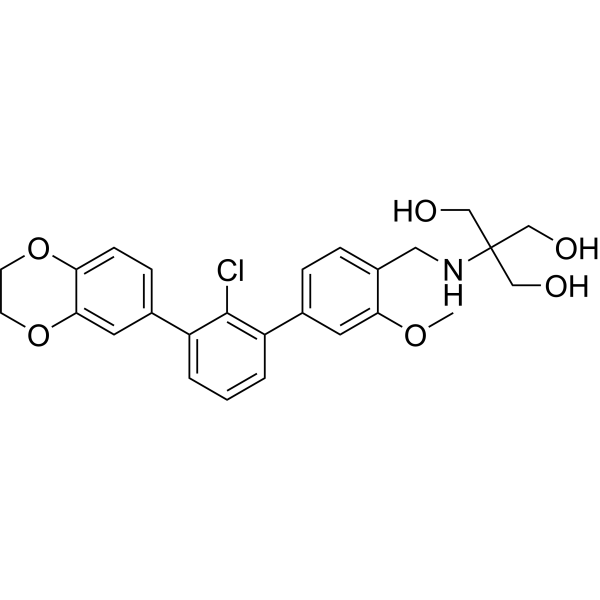 0 ImagesCat. No.: HY-160585CAS No.: 2753642-49-6
PD-L1/PD-1-IN-1 (compound 8j) is a potent inhibitor of PD-L1/PD interaction, with IC50 < 1 nM. PD-L1/PD-1-IN-1 plays an important role in anti-tumor research.
-
AM0001
 0 ImagesCat. No.: HY-P991347
AM0001 is a human monoclonal antibody (mAb) targeting PDCD1/PD-1/CD279. AM0001 can be used in cancer research.
-
Myrtenal
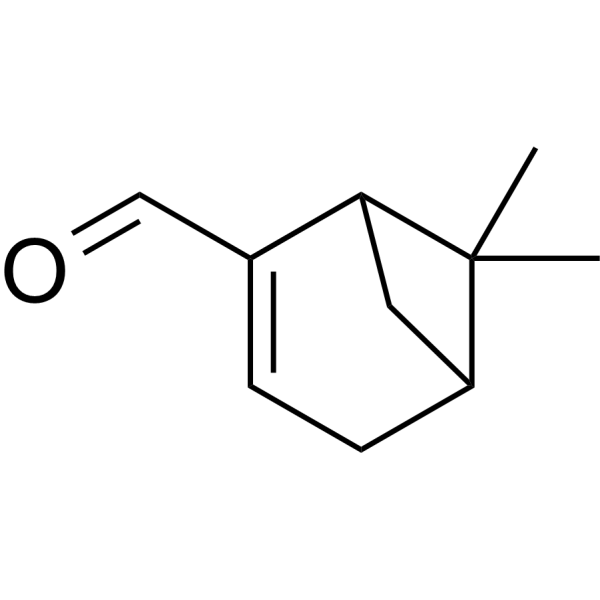 0 Images
Myrtenal ((±)-Myrtenal) is a monoterpene that acts as an antineoplastic agent. Myrtenal inhibits liver cancer by preventing DEN-PB-induced upregulation of TNF-α protein expression.
-
MJ33
 0 ImagesCat. No.: HY-136271CAS No.: 137300-78-8
MJ-33 is a competitive phospholipase A₂ (PLA₂) inhibitor with an IC50 of 0.3 μM. MJ-33 inhibits the activation of NOX2 by blocking the PLA₂ activity of Prdx6, thereby reducing the production of ROS. MJ-33 effectively inhibits the activity of acidic PLA₂ (pH 4.0), reduces the degradation of pulmonary surfactant phosphatidylcholine (PC), but has no effect on alkaline PLA₂ (pH 8.5). MJ-33 significantly alleviates lung oxidative damage induced by ischemia-reperfusion (I/R). MJ-33 significantly inhibits the invasive, migratory and adhesive abilities of prostate cancer cells by suppressing the MAPK, AKT, NF-κB and AP-1 signaling pathways. MJ-33 can be used to study ROS-related diseases and prostate cancer.
-
N,N-Dimethyl-idarubicin
 0 ImagesCat. No.: HY-163918CAS No.: 3033865-16-3
N,N-Dimethyl-idarubicin, an Idarubicin (HY-17381) derivative, is a potent histone evictor which does not induce DNA double-strand breaks. N,N-Dimethyl-idarubicin, an anthracycline, is an effective cytotoxic agent for ABCB1-overexpressing, Doxorubicin-resistant cells.
-
ADG-2e
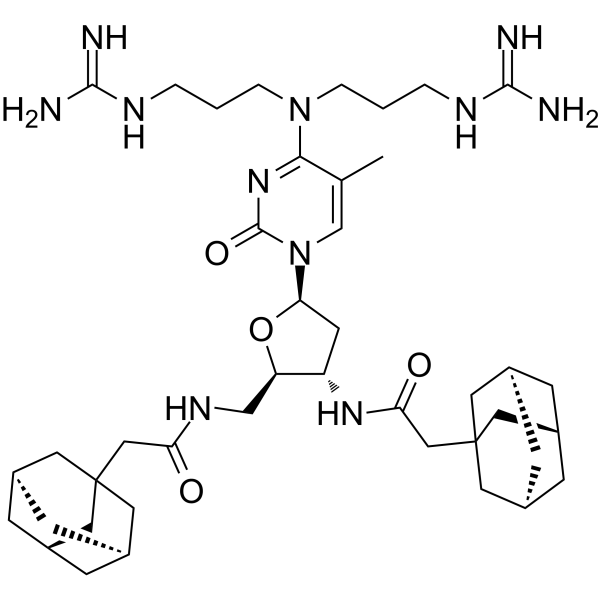 0 ImagesCat. No.: HY-147522CAS No.: 2419951-75-8
ADG-2e is a potent antibacterial agent with MICs of 16, 4, 2, and 2 μg/mL for E. coli [KCTC 1682], P. aeruginosa [KCTC 1637], B.subtilis [KCTC 3068], and S. aureus [KCTC 1621], respectively. ADG-2e shows anti-metastatic activity against breast cancer cells.
-
UNC10415667
 0 ImagesCat. No.: HY-178322
UNC10415667 is a non-competitive, non-prodrug NSD2 degrader with a DC50 of 460 nM in U2OS NSD2 HiBiT cells. UNC10415667 forms a reversible covalent hemithioacetal bond with Cys326 of FBXO22, promoting the formation of a ternary complex with FBXO22 and NSD2, which in turn triggers the polyubiquitination and degradation of NSD2 via the ubiquitin-proteasome system. UNC10415667 can form complexes with FBXO22, NSD2 and BACH1 simultaneously, driving the synchronized degradation of NSD2 and BACH1 without competition. UNC10415667 can be used in research related to multiple myeloma, acute lymphoblastic leukemia, and prostate cancer.
-
Hispolon (Standard)
 0 ImagesCat. No.: HY-150521RCAS No.: 173933-40-9
4-Hydrazinobenzoic acid (Standard) is the analytical standard of 4-Hydrazinobenzoic acid. This product is intended for research and analytical applications. 4-Hydrazinobenzoic acid is a biochemical reagent that can be used as a biological material or organic compound for life science related research.
-
RAJQ14
 0 ImagesCat. No.: HY-181495CAS No.: 2375455-53-9
RAJQ14 is a BRD4 PROTAC-like CAP-TAC (Proteasome Cap Targeting Chimeras) degrader. RAJQ14 binds to 19S proteasome cap subunits RPN1, RPN10, RPN13, and USP14 to recruit target proteins to the proteasome for ubiquitination-independent, proteasome-dependent degradation. RAJQ14 can be used for the research of cancer (Pink: BRD4 Ligand (HY-181496); Blue: Proteasome Ligand (HY-128978); Black: Linker).

-
CS2009
 0 ImagesCat. No.: HY-P992511
CS2009 is a trispecific antibody targeting PD-1, CTLA-4 and VEGFA. CS2009 blocks the interactions of PD-1/PD-L1, CTLA-4/CD80 and VEGFA/VEGFR2, mediates checkpoint inhibition, and suppresses tumor angiogenesis. CS2009 reactivates PD-1/CTLA-4 double-positive tumor-infiltrating T lymphocytes, induces T cell activation, enhances tumor growth inhibition, promotes vascular normalization, improves T lymphocyte infiltration, and converts the immunosuppressive tumor microenvironment into an immunocompetent one. CS2009 can be used for the research of various advanced solid tumors.



