



SU9516
Based on 5 publication(s) in Google Scholar
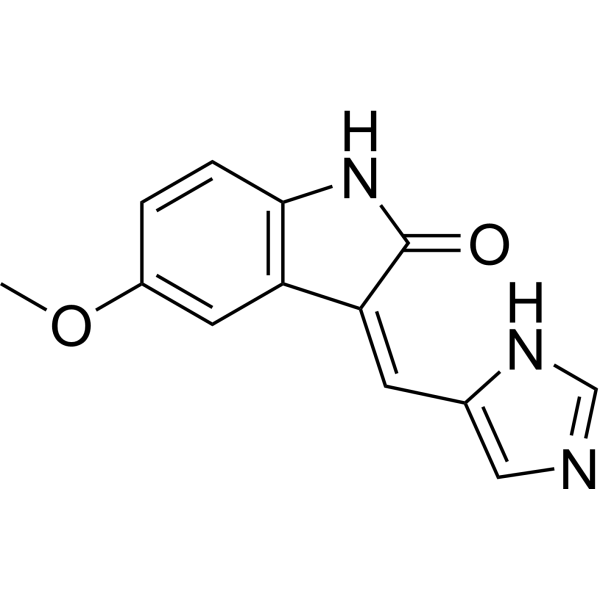
SU9516 is a potent CDK2 inhibitor, with an IC50 of 22 nM, and also shows inhibitory effects on CDK1 and CDK4, with IC50s of 40, 200 nM, respectively.
For research use only. We do not sell to patients.
- Purity : 99.85%
- CAS No.: 377090-84-1
- Formula: C13H11N3O2
- Molecular Weight:241.25
-
Storage:Powder -20°C, 3 years , 4°C, 2 years ; In solvent -80°C, 2 years , -20°C, 1 year

To place orders, for customer services and technical support, please contact: MedChemExpress USA
Tel: 609-228-6898 E-mail: [email protected] [email protected]


-
 Biological Activity
-
Chemical Information
-
Solvent & Solubility
- Purity & Documentation
- References
-
 Help & FAQs


-
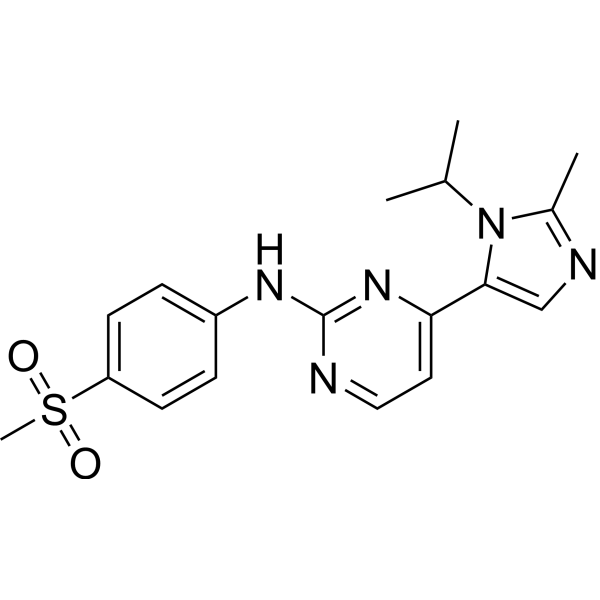
HY-10012
AZD-5438CDK1/2/9 Inhibitor -
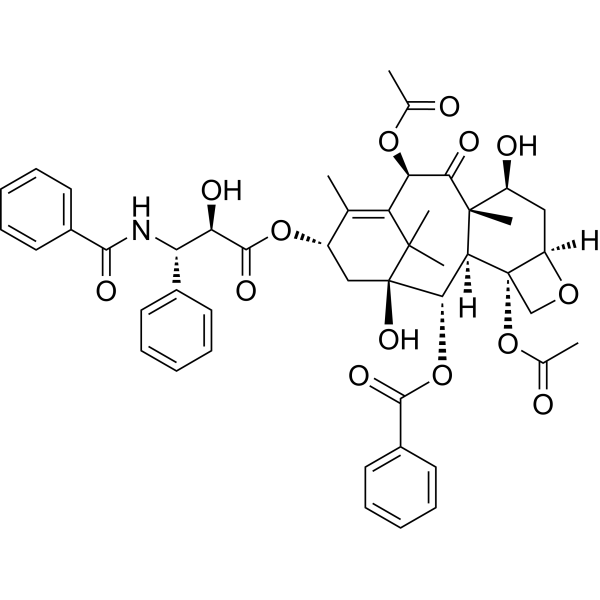
HY-B0015
PaclitaxelAntitumor Agent -
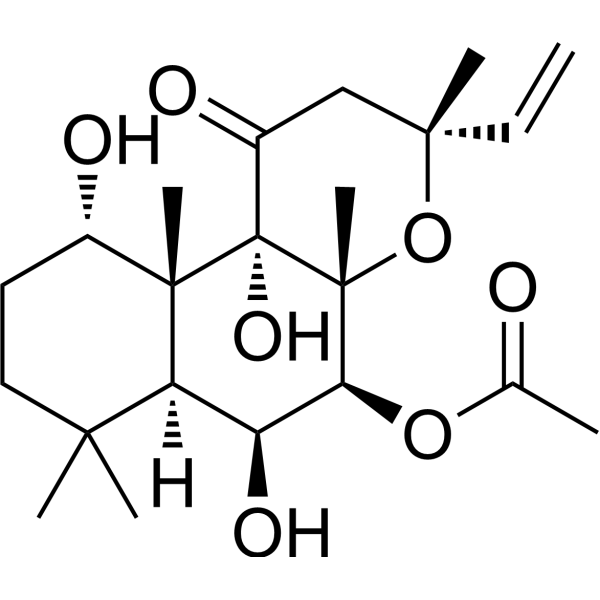
HY-15371
ForskolinAdenylate Cyclase Activator -
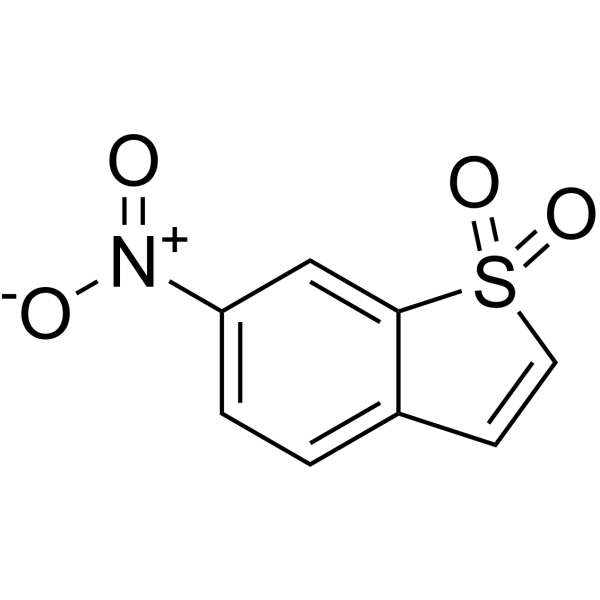
HY-13818
StatticSTAT3 Inhibitor -
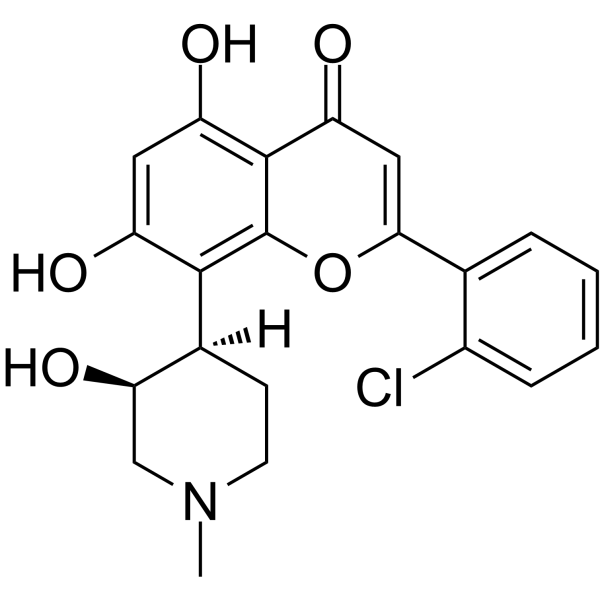
HY-10005
FlavopiridolCDK Inhibitor -
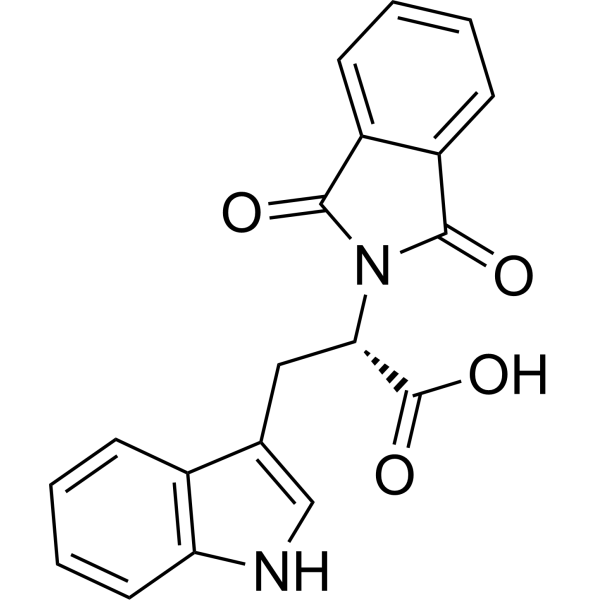
HY-13642
RG108DNMT Inhibitor -
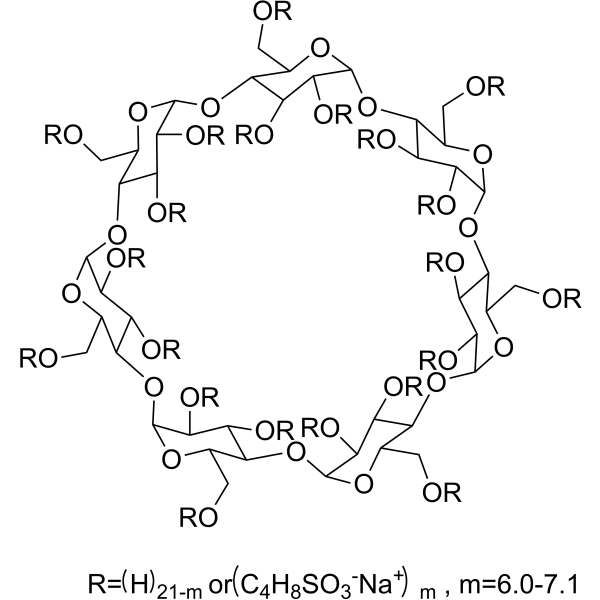
HY-17031
SBE-β-CDExcipient -
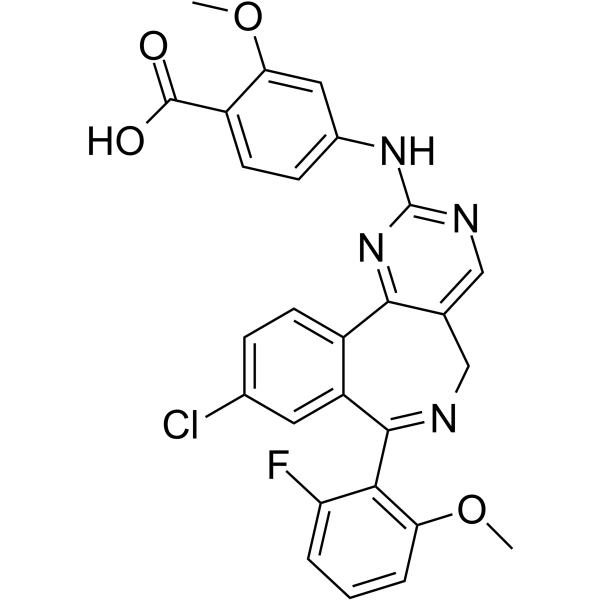
HY-10971
AlisertibAurora A Kinase Inhibitor -
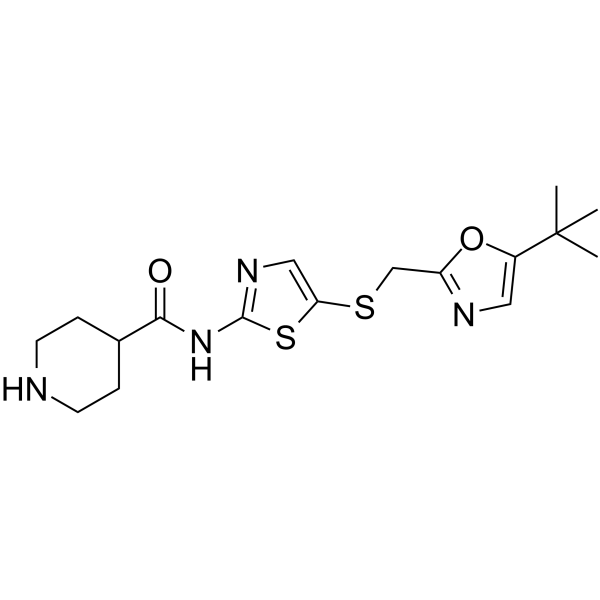
HY-10008
SNS-032CDK Inhibitor -
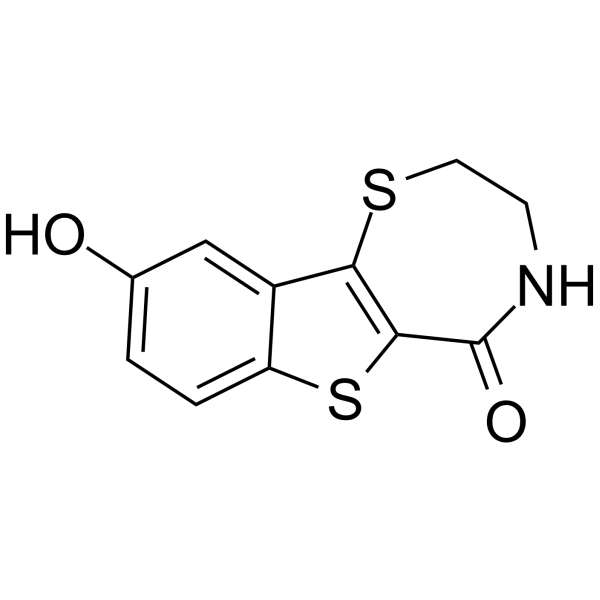
HY-15528
kb NB 142-70PKD Inhibitor -
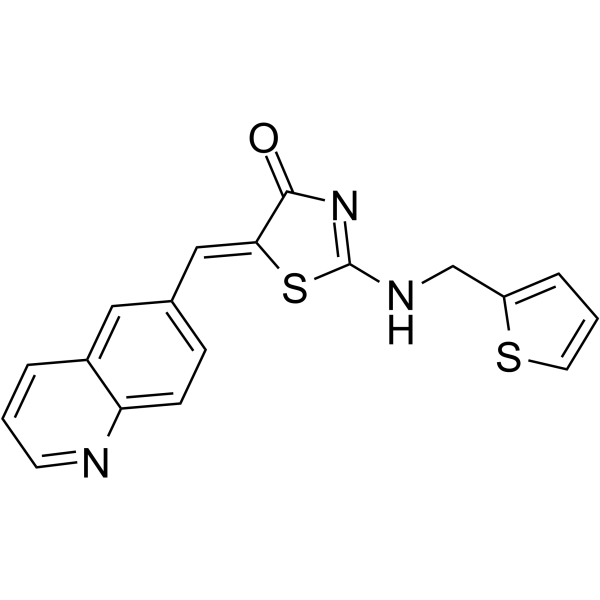
HY-12529
Ro-3306CDK1 Inhibitor -
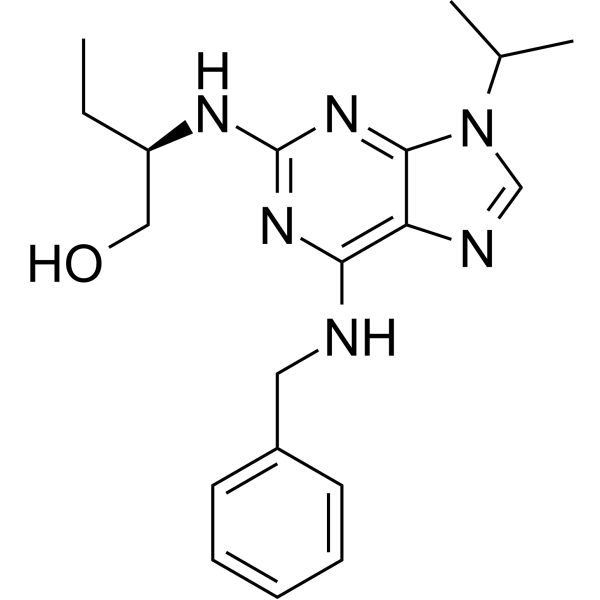
HY-30237
(R)-RoscovitineCDKs Inhibitor
Publications Citing Use of MedChemExpress (MCE) SU9516
More

Biological Activity
Description
IC50 & Target
[1]|
CDK2 22 nM (IC50) |
CDK1 40 nM (IC50) |
CDK4 200 nM (IC50) |
PDGFr 18000 nM (IC50) |
Cellular Effect
|
Cell Line

|
Type | Value | Description | References |
|---|---|---|---|---|
| Sf9 | IC50 |
0.022 μM
Compound: SU9516
|
Inhibition of GST-tagged CDK5/p25 (unknown origin) expressed in Baculovirus infected Sf9 cells using histone H1 as substrate as substrate in presence of [gamma-33P]-ATP by radiometric filter binding assay
Inhibition of GST-tagged CDK5/p25 (unknown origin) expressed in Baculovirus infected Sf9 cells using histone H1 as substrate as substrate in presence of [gamma-33P]-ATP by radiometric filter binding assay
|
[PMID: 30234987] |
| Sf9 | IC50 |
0.026 μM
Compound: SU9516
|
Inhibition of His-tagged CDK2/cyclin E (unknown origin) expressed in Baculovirus infected Sf9 cells using histone H1 as substrate in presence of [gamma-33P]-ATP by radiometric filter binding assay
Inhibition of His-tagged CDK2/cyclin E (unknown origin) expressed in Baculovirus infected Sf9 cells using histone H1 as substrate in presence of [gamma-33P]-ATP by radiometric filter binding assay
|
[PMID: 30234987] |
| Sf9 | IC50 |
0.168 μM
Compound: SU9516
|
Inhibition of His-tagged CDK1/cyclin B1 (unknown origin) expressed in Baculovirus infected Sf9 cells using histone H1 as substrate in presence of [gamma-33P]-ATP by radiometric filter binding assay
Inhibition of His-tagged CDK1/cyclin B1 (unknown origin) expressed in Baculovirus infected Sf9 cells using histone H1 as substrate in presence of [gamma-33P]-ATP by radiometric filter binding assay
|
[PMID: 30234987] |
| Sf9 | IC50 |
0.905 μM
Compound: SU9516
|
Inhibition of GST-tagged CDK7/cyclinH/MAT1 (unknown origin) expressed in Baculovirus infected Sf9 cells using YSPTSPS-2 KK peptide as substrate as substrate in presence of [gamma-33P]-ATP by radiometric filter binding assay
Inhibition of GST-tagged CDK7/cyclinH/MAT1 (unknown origin) expressed in Baculovirus infected Sf9 cells using YSPTSPS-2 KK peptide as substrate as substrate in presence of [gamma-33P]-ATP by radiometric filter binding assay
|
[PMID: 30234987] |
| Sf9 | IC50 |
1.5 μM
Compound: SU9516
|
Inhibition of GST-tagged CDK9/CyclinT1 (unknown origin) expressed in Baculovirus infected Sf9 cells using YSPTSPS-2 KK peptide as substrate as substrate in presence of [gamma-33P]-ATP by radiometric filter binding assay
Inhibition of GST-tagged CDK9/CyclinT1 (unknown origin) expressed in Baculovirus infected Sf9 cells using YSPTSPS-2 KK peptide as substrate as substrate in presence of [gamma-33P]-ATP by radiometric filter binding assay
|
[PMID: 30234987] |
| Sf9 | IC50 |
1.6 μM
Compound: SU-9516
|
Inhibition of human recombinant His-tagged RET expressed in Sf9 insect cells
Inhibition of human recombinant His-tagged RET expressed in Sf9 insect cells
|
[PMID: 20117004] |
| Sf9 | IC50 |
1.7 μM
Compound: SU9516
|
Inhibition of GST-tagged CDK4/cyclin D1 (unknown origin) expressed in Baculovirus infected Sf9 cells using RPPTLSPIPHIPR peptide as substrate in presence of [gamma-33P]-ATP by radiometric filter binding assay
Inhibition of GST-tagged CDK4/cyclin D1 (unknown origin) expressed in Baculovirus infected Sf9 cells using RPPTLSPIPHIPR peptide as substrate in presence of [gamma-33P]-ATP by radiometric filter binding assay
|
[PMID: 30234987] |
In Vitro
SU9516 shows slight activities against PKC, p38, PDGFr and EGFR, with IC50 of >10, >10, 18, and >100 μM. SU9516 (5 μM) decreases cdk2-specific Phosphorylation of pRB and inhibits cell cycle progression in RKO cells. SU9516 (5 μM) also induces apoptosis in RKO and SW480 Cells[1]. SU9516 (5 μM) results in enhanced pRb/E2F complex formation in HT-29 cells. SU9516 enhances presence of E2F species in multiprotein complexes[2]. SU9516 (5 μM) rapidly induces cytochrome crelease, Bax mitochondrial translocation, and apoptosis in association with pronounced down-regulation of the antiapoptotic protein Mcl-1. SU9516 causes down-regulation of Mcl-1 mRNA levels in human leukemia cells. Furthermore, SU9516 treatment results in a marked increase in reactive oxygen species production[3].
MedChemExpress (MCE) has not independently confirmed the accuracy of these methods. They are for reference only.


Chemical Information
-
CAS No. 377090-84-1
-
Appearance Solid
-
Molecular Weight 241.25
-
Formula C13H11N3O2
-
Color Orange to reddish brown
-
SMILES
O=C1NC2=C(C=C(OC)C=C2)/C1=C/C3=CN=CN3
-
Shipping
Room temperature in continental US; may vary elsewhere.
-
Storage
Powder -20°C 3 years 4°C 2 years In solvent -80°C 2 years -20°C 1 year


Publications (5)
-
Journal Impact Factor
-
Most Recent
-
Signal Transduct Target Ther
Selective depletion of tumor-associated SAMHD1 enhances chemotherapeutic efficacy and antitumor immune responses. [Abstract]2025 Dec 15;10(1):406. PMID: 41392286 -
J Exp Clin Cancer Res
Wilms' tumor 1-associating protein promotes renal cell carcinoma proliferation by regulating CDK2 mRNA stability. [Abstract]2018 Feb 27;37(1):40. PMID: 29482572 -
Cell Death Differ
2021 Feb;28(2):799-813. PMID: 33110215 -
J Biosci Bioeng
Effect of cell-extracellular matrix interaction on myogenic characteristics and artificial skeletal muscle tissue. [Abstract]2020 Jul;130(1):98-105. PMID: 32278672 -


Solvent & Solubility
In Vitro:
DMSO : ≥ 100 mg/mL (414.51 mM; Hygroscopic DMSO has a significant impact on the solubility of product, please use newly opened DMSO)
* "≥" means soluble, but saturation unknown.
Please refer to the solubility information to select the appropriate solvent. Once prepared, please aliquot and store the solution to prevent product inactivation from repeated freeze-thaw cycles.
Storage method and period of stock solution: -80°C, 2 years; -20°C, 1 year. When stored at -80°C, please use it within 2 years. When stored at -20°C, please use it within 1 year.
Please refer to the solubility information to select the appropriate solvent. Once prepared, please aliquot and store the solution to prevent product inactivation from repeated freeze-thaw cycles.
Storage method and period of stock solution: -80°C, 2 years; -20°C, 1 year. When stored at -80°C, please use it within 2 years. When stored at -20°C, please use it within 1 year.
Concentration (start) × Volume (start) = Concentration (final) × Volume (final)
In Vivo:
Select the appropriate dissolution method based on your experimental animal and administration route.
- For the following dissolution methods, please ensure to first prepare a clear stock solution using an In Vitro approach and then sequentially add co-solvents:
- To ensure reliable experimental results, the clarified stock solution can be appropriately stored based on storage conditions. As for the working solution for In Vivo experiments, it is recommended to prepare freshly and use it on the same day.
- The percentages shown for the solvents indicate their volumetric ratio in the final prepared solution. If precipitation or phase separation occurs during preparation, heat and/or sonication can be used to aid dissolution.
Add each solvent one by one: 10% DMSO 40% PEG300 5% Tween-80 45% Saline
Solubility: ≥ 3.25 mg/mL (13.47 mM); Clear solution
This protocol yields a clear solution of ≥ 3.25 mg/mL (saturation unknown).
Taking 1 mL working solution as an example, add 100 μL DMSO stock solution (32.5 mg/mL) to 400 μL PEG300, and mix evenly; then add 50 μL Tween-80 and mix evenly; then add 450 μL Saline to adjust the volume to 1 mL.
Preparation of Saline: Dissolve 0.9 g sodium chloride in ddH₂O and dilute to 100 mL to obtain a clear Saline solution.
In Vivo Dissolution Calculator
Please enter the basic information of animal experiments:
-
-
-
-
Recommended: Prepare an additional quantity of animals to account for potential losses during experiments.
Please enter your animal formula composition:
-
%DMSO +
Recommended: Keep the proportion of DMSO in working solution below 2% if your animal is weak.
-
%+
-
+%Tween-80 + +
-
%Saline +
The co-solvents required include: DMSO, . All of co-solvents are available by MedChemExpress (MCE). , Tween 80. All of co-solvents are available by MedChemExpress (MCE).
Working solution concentration: 0.22 mg/mL
Method for preparing stock solution: mg drug dissolved in μL DMSO. Stock solution concentration: mg/mL.
1. Take μL DMSO stock solution;
2. Add μL .
μL , mix evenly;
3. Then add μL Tween 80, mix evenly;
4. Then add μL
Please ensure that the stock solution in the first step is dissolved to a clear state, and add co-solvents in sequence. You can use ultrasonic heating (ultrasonic cleaner, recommended frequency 20-40 kHz), vortexing, etc. to assist dissolution.


Purity & Documentation
-
Data Sheet (281 KB)
-
SDS (393 KB)
- English - EN (393 KB)
- Français - FR (393 KB)
- Deutsch - DE (393 KB)
- Norwegian - NO (393 KB)
- Español - ES (393 KB)
- Swedish - SV (393 KB)
- Italian - IT (393 KB)
- Korean - KR (393 KB)
- Portuguese - PT (393 KB)
-
Handling Instructions (2659 KB)
References
[1]. Lane ME, et al. A novel cdk2-selective inhibitor, SU9516, induces apoptosis in colon carcinoma cells. Cancer Res. 2001 Aug 15;61(16):6170-7. [Content Brief]
[2]. Yu B, et al. SU9516, a cyclin-dependent kinase 2 inhibitor, promotes accumulation of high molecular weight E2F complexes in human colon carcinoma cells. Biochem Pharmacol. 2002 Oct 1;64(7):1091-100. [Content Brief]
[3]. Gao N, et al. The three-substituted indolinone cyclin-dependent kinase 2 inhibitor 3-[1-(3H-imidazol-4-yl)-meth-(Z)-ylidene]-5-methoxy-1,3-dihydro-indol-2-one (SU9516) kills human leukemia cells via down-regulation of Mcl-1 through a transcriptional mechanism. Mol Pharmacol. 2006 Aug;70(2):645-55. [Content Brief]


Complete Stock Solution Preparation Table
Please refer to the solubility information to select the appropriate solvent. Once prepared, please aliquot and store the solution to prevent product inactivation from repeated freeze-thaw cycles.
Storage method and period of stock solution: -80°C, 2 years; -20°C, 1 year. When stored at -80°C, please use it within 2 years. When stored at -20°C, please use it within 1 year.
| Optional Solvent | Concentration Solvent Mass | 1 mg | 5 mg | 10 mg | 25 mg |
|---|---|---|---|---|---|
| DMSO | 1 mM | 4.1451 mL | 20.7254 mL | 41.4508 mL | 103.6269 mL |
| 5 mM | 0.8290 mL | 4.1451 mL | 8.2902 mL | 20.7254 mL | |
| 10 mM | 0.4145 mL | 2.0725 mL | 4.1451 mL | 10.3627 mL | |
| 15 mM | 0.2763 mL | 1.3817 mL | 2.7634 mL | 6.9085 mL | |
| 20 mM | 0.2073 mL | 1.0363 mL | 2.0725 mL | 5.1813 mL | |
| 25 mM | 0.1658 mL | 0.8290 mL | 1.6580 mL | 4.1451 mL | |
| 30 mM | 0.1382 mL | 0.6908 mL | 1.3817 mL | 3.4542 mL | |
| 40 mM | 0.1036 mL | 0.5181 mL | 1.0363 mL | 2.5907 mL | |
| 50 mM | 0.0829 mL | 0.4145 mL | 0.8290 mL | 2.0725 mL | |
| 60 mM | 0.0691 mL | 0.3454 mL | 0.6908 mL | 1.7271 mL | |
| 80 mM | 0.0518 mL | 0.2591 mL | 0.5181 mL | 1.2953 mL | |
| 100 mM | 0.0415 mL | 0.2073 mL | 0.4145 mL | 1.0363 mL |


SU9516 Related Classifications
HY-18629 Related Classifications
 Powered by Bioz