



Akt
PKB; Protein kinase B
Akt/PKB (Protein kinase B), a serine/threonine protein kinase with antiapoptotic activity, is one of the major downstream targets of PtdIns(3,4,5)P3 signaling pathway. It contains a pleckstrin homology domain (PH domain) that specifically binds PtdIns(3,4,5)P3 on the plasma membrane. Akt phosphorylation and activation are directly determined by the level of PtdIns(3,4,5)P3 on the plasma membrane, which is regulated by PI3K.
Akt consists of three isoforms: PKBα/Akt1, PKBβ/Akt2 and PKBγ/Akt3. Akt isoforms have an N-terminal PH (pleckstrin homology) domain and a kinase domain, which are separated by a 39-amino-acid hinge region. Catalytically active Akt regulates the function of numerous substrates involved in cell survival, growth, proliferation, metabolism and protein synthesis.
Akt is a crucial mediator of cell survival and its deactivation is implicated in various stress-induced pathological cell death and degenerative diseases.
Akt Isoform Specific Products
All Product Categories
-
Akt Inhibitors
(1006)
View all products
-
Akt Agonists
(7)
View all products
-
Akt Activators
(300)
View all products
-
Akt Modulators
(25)
View all products
-
Akt Chemical
(1)
View all products
-
Akt Inducers
(9)
View all products
-
Akt Degraders
(11)
View all products
-
Akt Control
(1)
View all products
-
Akt Substrate
(1)
View all products
-
Akt Ligands
(6)
View all products
-
AKT Serine/Threonine Kinase 2 (AKT2) Proteins
(5)
View all products
-
AKT Serine/Threonine Kinase 3 (AKT3) Proteins
(6)
View all products
-
Akt Related Products (1475)
Related Products (1475)

-
Recombinant Proteins (11)
-
Antibodies (11)
-
Akt Isoform Comparison
-
LC-MG-5
 0 ImagesCat. No.: HY-184321LC-MG-5 is a selective molecular glue degrader targeting FGFR2, with a DC50 of 231.7 nM in KATO III cells. LC-MG-5 induces proteasomal degradation of FGFR2 in a DCAF16-dependent manner via a covalent molecular glue mechanism. LC-MG-5 inhibits cancer cell proliferation. LC-MG-5 suppresses PI3K/AKT and MAPK/ERK signaling pathways mediated by FGFR2. LC-MG-5 can be used in the research of gastric cancer.
-
Benazepril-d5 hydrochloride
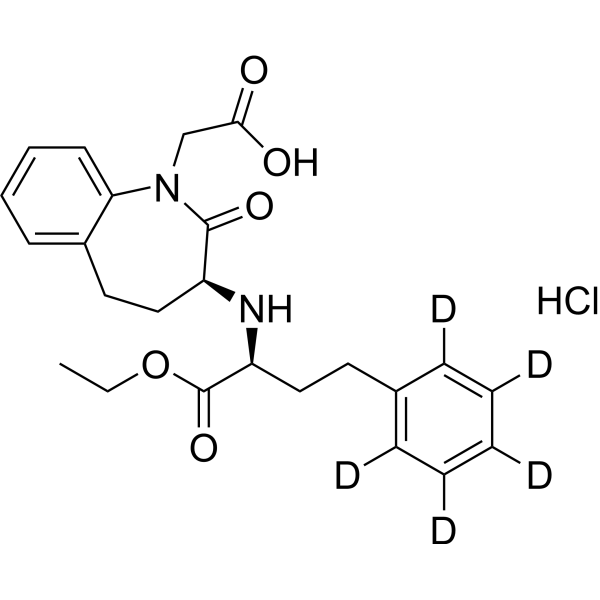 0 ImagesCat. No.: HY-B0093ASCAS No.: 1279026-26-4Synonyms: CGS14824A-d5 hydrochlorideBenazepril-d5 hydrochloride is deuterium labeled Benazepril hydrochloride. Benazepril hydrochloride is an orally active angiotensin-converting enzyme (ACE) inhibitor to reduce angiotensin-II production. Benazepril hydrochloride inhibits oxidative stress and inhibits apoptosis by the PI3K/Akt signaling pathway. In addition, Benazepril hydrochloride improves diabetic nephropathy and decreases proteinuria. Benazepril hydrochloride can be used in the study of hypertension, heart failure and diabetic nephropathy.
-
Butrin
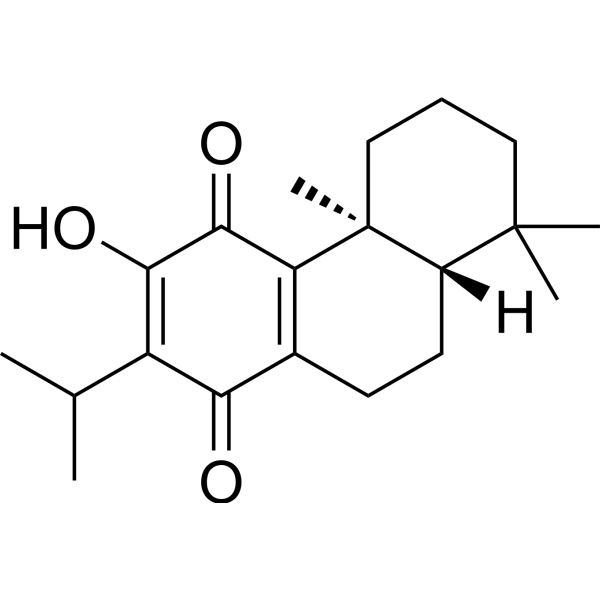
 0 ImagesButrin is a compound found in Butea monosperma flowers. Butrin reduces expression of SIRT1, AURKB, cyclin D1, pAKT, GSK-3β, β-catenin, and TGF-3β expression, enhances apoptosis and ROS production in cancer cells. Butrin downregulates Wnt and NF-κB signaling, mitigates oxidative stress, reduces proinflammatory cytokine (TNF-α, IL-6 and IL-8) production and suppresses neuroinflammation. Butrin inhibits IKK enzyme activity. Butrin can be used for the researches of colorectal cancer, Alzheimer’s disease, and rheumatoid arthritis.
-
EEF1A2-IN-1
 0 ImagesCat. No.: HY-179370EEF1A2-IN-1 is a potent and covalen EEF1A2 inhibitor. EEF1A2-IN-1 exhibits selective antiproliferative activity against osteosarcoma (OS) cells. EEF1A2-IN-1 induces apoptosis by inhibiting EEF1A2 and downregulating the AKT signaling pathway. EEF1A2-IN-1 inhibits tumor growth in a xenograft mouse model. EEF1A2-IN-1 can be used for the research of OS.
-
FAK inhibitor 7
 0 ImagesCat. No.: HY-162879CAS No.: 2890814-94-3FAK inhibitor 7 is a type of FAK inhibitor with an IC50 value of 3.58 nM. FAK inhibitor 7 can inhibit the downstream signaling cascades of FAK (like Src and AKT), causing ovarian cancer cells to stall in the G0/G1 phase and induce cytotoxic autophagy. FAK inhibitor 7 can also suppress tumor metastasis and growth in ovarian cancer mice.
-
α-Solanine (Standard)
 0 ImagesCat. No.: HY-N6602RCAS No.: 20562-02-1α-Solanine (Standard) is the analytical standard of α-Solanine. This product is intended for research and analytical applications. α-solanine, a bioactive component and one of the major steroidal glycoalkaloids in Solanum nigrum, has been observed to inhibit growth and induce apoptosis in cancer cells.
-
20-5,14-HEDE-d2-1
 0 ImagesCat. No.: HY-160099S1Synonyms: WIT003-d2-120-5,14-HEDE-d2-1 (WIT003-d2-1) is the deuterated-labeled 20-5,14-HEDE (HY-160099). 20-5,14-HEDE (WIT003) is an analog of 20-HETE. 20-5,14-HEDE activates PI3K/Akt signaling pathway, thereby exhibiting anti-apoptotic and cell survival promoting effects. 20-5,14-HEDE is the agonist for 20-HETE that increases intracellular Ca2+ concentrations, thereby enhancing vasoconstriction.
-
PROTAC SOS1 degrader-3
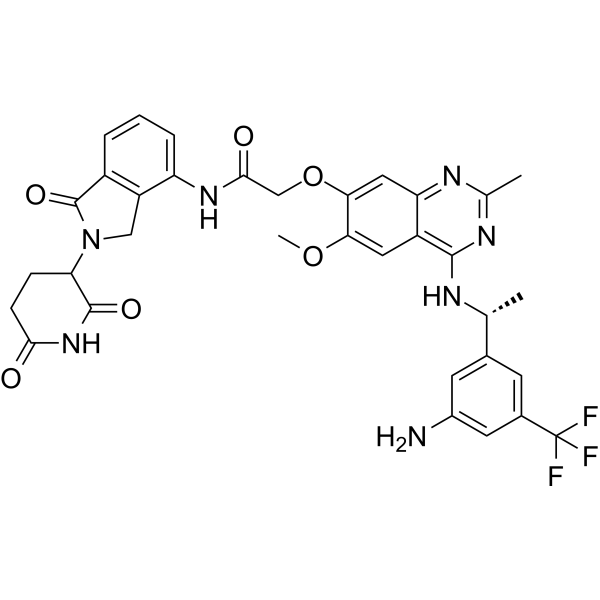 0 ImagesCat. No.: HY-152145CAS No.: 3029320-99-5PROTAC SOS1 degrader-3 is a PROTAC degrader targeting SOS1, which induces the targeted degradation of SOS1 via the ubiquitin-proteasome system, with DC50 values ranging from 0.19 μM to 0.75 μM in multiple distinct colorectal cancer cell lines. PROTAC SOS1 degrader-3 inhibits the phosphorylation of AKT and ERK. PROTAC SOS1 degrader-3 induces apoptosis and morphological changes in KRAS-mutant colorectal cancer organoids. PROTAC SOS1 degrader-3 can be applied in studies related to kras-mutant colorectal cancer.
-
WB-308
 0 ImagesCat. No.: HY-116504CAS No.: 1373764-87-4WB-308 is a novel small molecule that was identified as an inhibitor of EGFR by an in vitro EGFR kinase activity system. WB-308 was able to reduce the proliferation and clonogenicity of NSCLC cells, causing G2/M phase arrest and apoptosis. In addition, WB-308 inhibited tumor growth in two in vivo animal models (lung orthotopic transplantation model and patient-derived clonal mouse model). WB-308 impaired the phosphorylation of EGFR, AKT, and ERK1/2 proteins. Compared with Gefitinib, WB-308 had lower cytotoxicity. This study showed that WB-308 is a new EGFR-TKI that may be considered as an alternative to Gefitinib in the clinical treatment of NSCLC.
-
PROTAC TG2 Degrader-3
 0 ImagesCat. No.: HY-181732CAS No.: 3054388-18-7PROTAC TG2 Degrader-3 is a TG2 (TGM2) PROTAC degrader. PROTAC TG2 Degrader-3 inhibits the adhesion and migration of ovarian cancer cells. PROTAC TG2 Degrader-3 can be used for the research of ovarian cancer.
-
Doxycycline monohydrate (Standard)
 0 ImagesCat. No.: HY-W008923RCAS No.: 17086-28-1Doxycycline monohydrate (Standard) is the analytical standard of Doxycycline monohydrate (HY-W008923). Doxycycline monohydrate is an orally active highly lipophilic, tissue-permeable MMP inhibitor with broad-spectrum antibacterial activity. Doxycycline monohydrate is also a semi-synthetic antibiotic with chelating properties, which blocks bacterial protein synthesis and inhibits extracellular matrix degradation through interactions with zinc and calcium atoms. Doxycycline monohydrate also inhibits mitochondrial biogenesis, translation, and the expression of respiratory chain proteins. Doxycycline monohydrate induces apoptosis, inhibits autophagy and EMT, downregulates stem cell markers, and activates the PI3K-AKT pathway, thereby effectively inhibiting the viability and proliferation of cancer cells such as breast cancer cells. Doxycycline monohydrate also promotes the survival and self-renewal of embryonic stem cells and neural stem cells, and reduces the frequency of medium changes in culture. Doxycycline monohydrate has been applied in studies related to breast cancer, prostate cancer, bladder cancer, and other cancers.
-
AKT-IN-7
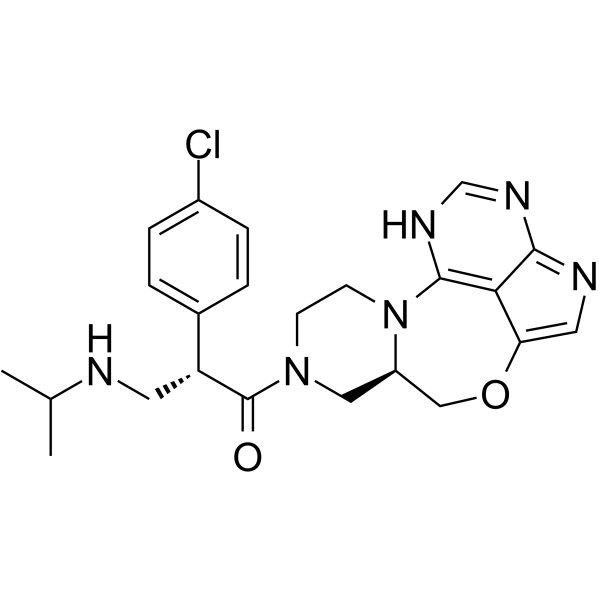 0 ImagesCat. No.: HY-143610CAS No.: 2654025-97-3AKT-IN-7 (compound 1-P1) is a potent AKT inhibitor. AKT-IN-7 has the potential for cancer research.
-
MS5033
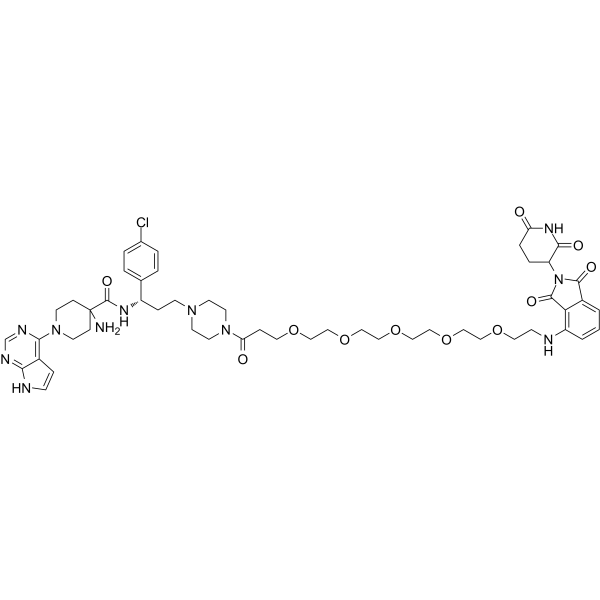 0 ImagesCat. No.: HY-143882CAS No.: 2376137-29-8MS5033 is a CRBN-recruiting PROTAC degrader that targets AKT1. The IC50 values of MS5033 against human AKT range from 1.3 nM to 798 nM, with Kd values ranging from 4.8 nM to 160 nM. MS5033 inhibits downstream AKT signaling pathways, including the phosphorylation of PRAS40, thereby suppressing cancer cell proliferation and colony formation and inducing cancer cell apoptosis. MS5033 can be used in research on glioma, prostate cancer, triple-negative breast cancer, breast cancer and solid tumors.
-
X-370
 0 ImagesCat. No.: HY-12482CAS No.: 1280725-80-5X-370 is a PI3Kδ inhibitor (IC50 = 7 nM). X-370 inhibits the survival of leukemia cells, inducing G1 arrest and apoptosis. X-370 blocks PDK1 binding and phosphorylation of MEK1/2, eliminating Akt and Erk1/2 signaling. X-370 can be used in research on B-cell acute lymphoblastic leukemia (B-ALL).

-
ALK-IN-31
 0 ImagesCat. No.: HY-173493CAS No.: 3043840-25-8ALK-IN-31 (Compound Ld-10) is an orally active ALK inhibitor (IC50: 1135 nM). ALK-IN-31 exhibits excellent antiproliferative activity against lung cancer H2228 cells with an IC50 value of 1.35 μM. ALK-IN-31 induces apoptosis and arrests cell proliferation in the G0/G1 phase by affecting mitochondrial function. ALK-IN-31 exerts its anti-tumor effect by downregulating the expression of p-AKT and p-mTOR in the PI3K-AKT-mTOR signaling pathway downstream of ALK. ALK-IN-31 can be used in the study of non-small cell lung cancer (NSCLC).

-
LIB3S0280
 0 ImagesCat. No.: HY-172620Purity: 99.89%LIB3S0280 is a potent TBK1 inhibitor with an IC50 value of 493.9 nM. LIB3S0280 exhibits better anticancer effects in pancreatic cancer cell lines with high TBK1 expression. LIB3S0280 inhibits TBK1 downstream signaling pathways, including PI3K/AKT and NF-κB. LIB3S0280 induces G2/M arrest, apoptosis and cellular senescence. LIB3S0280 can be used for pancreatic ductal adenocarcinoma (PDAC) research.
-
FGFR-IN-25
 0 ImagesCat. No.: HY-181005FGFR-IN-25 (Compound 19E) is a FGFR inhibitor (IC50s: 1.30 nM and 0.85 nM for FGFR1 and FGFR2, respectively) and radiosensitizer. FGFR-IN-25 effectively reduces the phosphorylation of FGFR1 and its key downstream effectors, pAKT and pERK. FGFR-IN-25 exerts broad-spectrum antitumor activity against gastric cancer, colorectal carcinoma, hepatocellular carcinoma, breast cancer, triple-negative breast cancer, and glioblastoma. FGFR-IN-25, when combined with radiotherapy, synergistically activates the ROS-Caspase-3-GSDME axis, downregulates PD-L1 expression, and induces immunogenic cell death (ICD). FGFR-IN-25 combined with radiotherapy improves the antitumor efficacy.




