



Akt
PKB; Protein kinase B
Akt/PKB (Protein kinase B), a serine/threonine protein kinase with antiapoptotic activity, is one of the major downstream targets of PtdIns(3,4,5)P3 signaling pathway. It contains a pleckstrin homology domain (PH domain) that specifically binds PtdIns(3,4,5)P3 on the plasma membrane. Akt phosphorylation and activation are directly determined by the level of PtdIns(3,4,5)P3 on the plasma membrane, which is regulated by PI3K.
Akt consists of three isoforms: PKBα/Akt1, PKBβ/Akt2 and PKBγ/Akt3. Akt isoforms have an N-terminal PH (pleckstrin homology) domain and a kinase domain, which are separated by a 39-amino-acid hinge region. Catalytically active Akt regulates the function of numerous substrates involved in cell survival, growth, proliferation, metabolism and protein synthesis.
Akt is a crucial mediator of cell survival and its deactivation is implicated in various stress-induced pathological cell death and degenerative diseases.
Akt Isoform Specific Products
All Product Categories
-
Akt Inhibitors
(993)
View all products
-
Akt Agonists
(7)
View all products
-
Akt Activators
(298)
View all products
-
Akt Modulators
(25)
View all products
-
Akt Chemical
(1)
View all products
-
Akt Inducers
(9)
View all products
-
Akt Degraders
(11)
View all products
-
Akt Control
(1)
View all products
-
Akt Substrate
(1)
View all products
-
Akt Ligands
(6)
View all products
-
AKT Serine/Threonine Kinase 2 (AKT2) Proteins
(5)
View all products
-
AKT Serine/Threonine Kinase 3 (AKT3) Proteins
(6)
View all products
-
Akt Related Products (1461)
Related Products (1461)

-
Recombinant Proteins (11)
-
Antibodies (11)
-
Akt Isoform Comparison
-
SH543
 0 ImagesCat. No.: HY-180112SH543 is a potent anti-osteoporosis agent. SH543 inhibits nuclear factor κB ligand (RANKL)-induced osteoclastogenesis with an IC50 of 3.3 nM. SH543 directly binds to KEAP1, activates the Nrf2-HO-1 antioxidant pathway, reduces ROS levels, and inhibits PI3K-AKT and MAPK signaling pathways. SH543 attenuates pathological bone loss in ovariectomized mice. SH543 can be used for osteoporosis research.
-
Tubulin-IN-55
 0 ImagesCat. No.: HY-175874CAS No.: 353258-94-3Tubulin-IN-55 is a tubulin inhibitor. Tubulin-IN-55 disrupts the PI3K/Akt signaling pathway in cancer cells. Tubulin-IN-55 exerts broad-spectrum anti-proliferative activity against multiple tumor cells (HeLa, HCT116, 4T1, A549, H1299, MDA-MB231). Tubulin-IN-55 induces G2/M phase arrest and apoptosis, and inhibits tumor cell migration/invasion in cancer cells. Tubulin-IN-55 demonstrates potent antitumor efficacy in orthotopic autologous transplantation mice. Tubulin-IN-55 can be used for the study of cancer.
-
AKT-IN-12
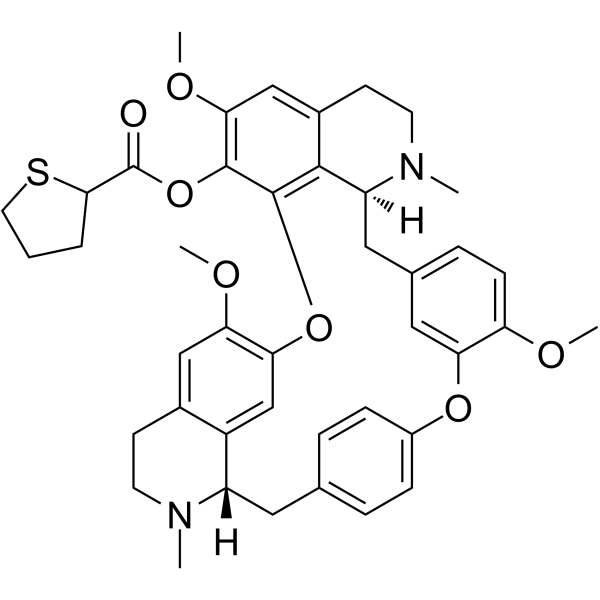 0 ImagesCat. No.: HY-147513CAS No.: 2396718-52-6
-
BJ-2302
 0 ImagesCat. No.: HY-182614CAS No.: 1631056-29-5BJ-2302 is a Src kinase inhibitor with an IC50 of 3.23 μM, and inhibits cathepsin S (CTSS) activity.BJ-2302 binds to Src, suppresses PI3K/AKT and Ras/Raf/ERK pathways, and reduces CTSS and MMP-9 expression.BJ-2302 inhibits cancer cell invasion, metastasis, proliferation, and tumor growth.BJ-2302 does not induce cytotoxicity in normal breast epithelial cells.BJ-2302 can be used for the research of breast cancer and triple-negative breast cancer.
-
Glycybenzofuran
 0 ImagesCat. No.: HY-N14540CAS No.: 1253641-15-4Glycybenzofuran is a flavonoid. Glycybenzofuran can be isolated from G. uralensis. Glycybenzofuran is a potent, competitive, selective PTP1B inhibitor. Glycybenzofuran shows excellent inhibitory selectivity against PTP1B. Glycybenzofuran increases insulin-stimulated pAkt levels. Glycylbenzofuran can be used in the research of hepatocellular carcinoma.
-
Solanesol (Standard)
 0 ImagesCat. No.: HY-N0576RCAS No.: 13190-97-1Solanesol (Standard) is the analytical standard of Solanesol (HY-N0576). This product is intended for research and analytical applications. Solanesol is an orally active aliphatic terpene alcohol. Solanesol is mainly found in tobacco and other Solanaceae plants. Solanesol induces HO-1 and Hsp70 expression, activates p38 and Akt signaling pathways, and inhibits Apoptosis (reduces caspase-3 and PARP cleavage). Solanesol has antioxidant, anti-inflammatory, and neuroprotective activities. Solanesol can be used in the research of Huntington's disease, alcoholic liver disease, chronic inflammatory pain, anxiety, Alzheimer's disease, and bipolar disorder.
-
Kaempferol 3-O-(2G-glucosylrutinoside)-7-O-glucoside
 0 ImagesCat. No.: HY-N18025CAS No.: 131559-50-7Kaempferol 3-O-(2G-glucosylrutinoside)-7-O-glucoside is an anti-inflammatory agent. Kaempferol 3-O-(2G-glucosylrutinoside)-7-O-glucoside exerts significant anti-inflammatory effects in LPS (HY-D1056)-induced RAW 264.7 macrophages by inhibiting the NF-κB, MAPK and Akt signaling pathways, thereby reducing the production of inflammatory mediators (NO, PGE2) and pro-inflammatory cytokines (TNF-α, IL-1β, IL-6).
-
AKT-IN-20
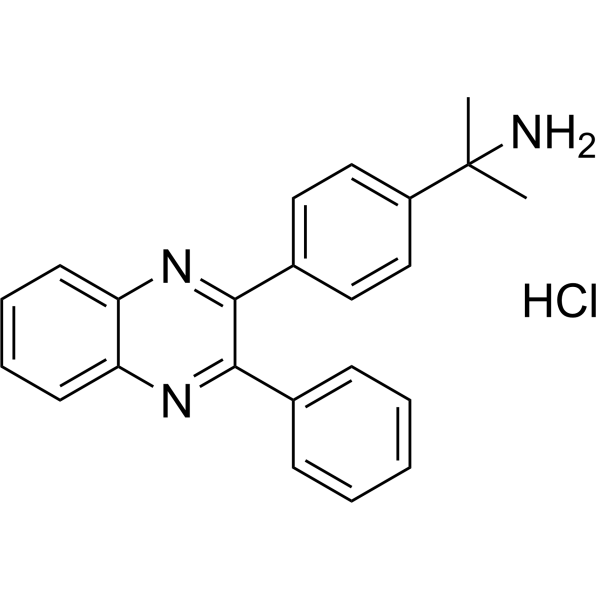 0 ImagesCat. No.: HY-16034CAS No.: 473382-50-2
-
Melafolone
 0 ImagesCat. No.: HY-165394CAS No.: 129724-42-1Melafolone is a potent dual COX-2/EGFR inhibitor with IC50s of 13.2 μM (COX-2) and 17.4 μM (EGFR). Melafolone enhances the effect of anti-PD-1 through vascular normalization and PD-L1 downregulation via the PI3K/Akt pathway in Lewis lung carcinoma (LLC) and CMT167 models. Melafolone can be used for lung cancer research.
-
EGFR-IN-176
 0 ImagesCat. No.: HY-178057CAS No.: 2754394-10-8EGFR-IN-176 is an orally active and ATP-competitive EGFR mutant inhibitor (particularly C797S-mediated EGFR triple mutant). EGFR-IN-176 effectively inhibits subsequent AKT signaling and induces apoptosis in Ba/F3 and PC-9 cells expressing EGFR19del/T790M/C797S and EGFRL858R/T790M/C797S. EGFR-IN-176 selectively inhibits EGFR signaling in cell lines harboring EGFR triple mutation and shows no inhibitory effect against A431 cells that express wild-type EGFR. EGFR-IN-176 can effectively inhibit the enzymatic activity of ALK (IC50 < 0.5 nM). EGFR-IN-176 can be used for the study of non-small cell lung cancer (NSCLC).
-
Creatine-13C monohydrate
 0 ImagesCat. No.: HY-W017462S1CAS No.: 286437-18-1Creatine-13C monohydrate is the 13C-labeled Creatine monohydrate (HY-W017462). Creatine monohydrate, an endogenous amino acid derivative, plays an important role in cellular energy, especially in muscle and brain.
-
CYB-5067
 0 ImagesCat. No.: HY-184598CYB-5067 is a FGFR molecular glue degrader with a DC50 of 27 nM against FGFR2. CYB-5067 inhibits FGFR1, FGFR3, FGFR4 and downstream FGFR signaling pathways, induces antiproliferative activity in vitro, and exhibits sustained target protein inhibition in vivo without obvious hook effect. CYB-5067 shows significant tumor growth inhibitory activity in the ETV6-FGFR2 fusion Ba/F3 xenograft model. CYB-5067 can be used for the research of FGFR-driven cancers.
-
EGFR-IN-120
 0 ImagesCat. No.: HY-161923EGFR-IN-120 (Compound 11eg) is an orally active EGFR inhibitor. EGFR-IN-120 inhibits EGFRL858R/T790M/C797S with an IC50 value of 0.053 μM, and has a relatively weak effect on EGFRWT (IC50: 1.05 μM). EGFR-IN-120 inhibits the phosphorylation of EGFR and main downstream effectors (STAT3, AKT, and Erk). EGFR-IN-120 induces cell cycle arrest and cell apoptosis in EGFR mutant cells. EGFR-IN-120 inhibits the proliferation of the NSCLC cells harboring EGFRL858R/T790M/C797S with an IC50 of 0.052 μM.
-
EGFR-IN-191
 0 ImagesCat. No.: HY-181093EGFR-IN-191 is an anti-tumor agent targeting both EGFR and AKT. EGFR-IN-191 exerts its anti-tumor activity by inducing DNA damage, apoptosis, cell cycle arrest, and inhibition of the PI3K/AKT-EGFR signaling pathway in tumor cells. EGFR-IN-191 can be used in the study of tumors such as triple-negative breast cancer.
-
PI3Kα-IN-23
 0 ImagesCat. No.: HY-163501CAS No.: 3033941-92-0PI3Kα-IN-23 (Compound 9) is an inhibitor of PI3Ka H1047R.
-
Jolkinolide B (Standard)
 0 ImagesCat. No.: HY-N0732RCAS No.: 37905-08-1Jolkinolide B (Standard) is the analytical standard of Jolkinolide B (HY-N0732). This product is intended for research and analytical applications. Jolkinolide B is a bioactive diterpene isolated from the roots of Euphorbia fischeriana Steud with oral activity. Jolkinolide B downregulates XIAP, cIAP1, cIAP2, and phosphorylated Akt, upregulates Smac, activates caspase-3 and caspase-9, and inhibits NF-κB, TGFβ/smad3 and JAK/STAT3 pathways. Jolkinolide B exerts comprehensive biological effects including inducing cancer cell apoptosis, suppressing inflammatory responses, improving lung function, alleviating hepatic steatosis and eliminating intracellular Mycobacterium tuberculosis. Jolkinolide B can be used for the research of leukemia, histiocytic lymphoma, asthma, metabolic dysfunction-associated steatotic liver disease and tuberculosis.
-
PI3K/HDAC-IN-4
 0 ImagesCat. No.: HY-172889CAS No.: 3085191-45-0PI3K/HDAC-IN-4 (Compound 31f) is a PI3K/HDAC dual inhibitor (IC50: 0.2μM). PI3K/HDAC-IN-4 shows high selectivity for HDAC1-3 (IC50 values of 75.5 nM, 70.9 nM, and 1.9 nM, respectively). PI3K/HDAC-IN-4 is a potent PIK3 inhibitor with IC50 values of 2.5 nM, 80.5 nM, 10.0 nM, and 57.2 nM for PI3Kα, β, δ, and γ, respectively. PI3K/HDAC-IN-4 significantly induces tumor cell apoptosis by simultaneously inhibiting the PI3K/AKT/mTOR signaling pathway and HDAC1-3. PI3K/HDAC-IN-4 exhibits potent antiproliferative activity in a variety of tumor cell lines (e.g., MV4-11, Jeko-1, HL60, and MCF-7, with IC50 values of 0.2, 0.9, 0.8, and 1.5 μM, respectively). PI3K/HDAC-IN-4 can be used in the study of lymphoma and leukemia.
-
Cyanidin 3,5-diglucoside chloride (Standard)
 0 ImagesCat. No.: HY-129138RCAS No.: 2611-67-8Cyanidin 3,5-diglucoside (chloride) (Standard) is the analytical standard of Cyanidin 3,5-diglucoside (chloride) (HY-129138). This product is intended for research and analytical applications. Cyanidin 3,5-diglucoside chloride is an anthocyanin. Cyanidin 3,5-diglucoside chloride inhibits inflammatory cytokines (IL-1α, IL-1β, and IL-6) expression and NO production. Cyanidin 3,5-diglucoside chloride inhibits the phosphorylation of STAT3, IκB, ERK, p38, and AKT. Cyanidin 3,5-diglucoside chloride inhibits high pressure-induced decrease in GLAST. Cyanidin 3,5-diglucoside chloride exerts anti-inflammatory and skin barrier modulating effects. Cyanidin 3,5-diglucoside chloride can be used in retinal research.
-
D-myo-Inositol-1,3,4,5,6-pentaphosphate sodium
 0 ImagesCat. No.: HY-175068Synonyms: Ins(1,3,4,5,6)P5 sodiumD-myo-Inositol-1,3,4,5,6-pentaphosphate sodium (Ins(1,3,4,5,6)P5 sodium) is a small intracellular signaling molecule. D-myo-Inositol-1,3,4,5,6-pentaphosphate sodium inhibits the PI3K/Akt signaling pathway. D-myo-Inositol-1,3,4,5,6-pentaphosphate sodium inhibits Akt/PKB phosphorylation and kinase activity, inducing apoptosis in cancer cells. D-myo-Inositol-1,3,4,5,6-pentaphosphate sodium inhibits the formation of tubular structures in endothelial cells in an in vitro angiogenesis mouse model. D-myo-Inositol-1,3,4,5,6-pentaphosphate sodium can be used in research on ovarian cancer, lung cancer, breast cancer, and other cancers, as well as in cardiovascular and cerebrovascular diseases such as angiogenesis.
-
Trimebutine-d3 hydrochloride
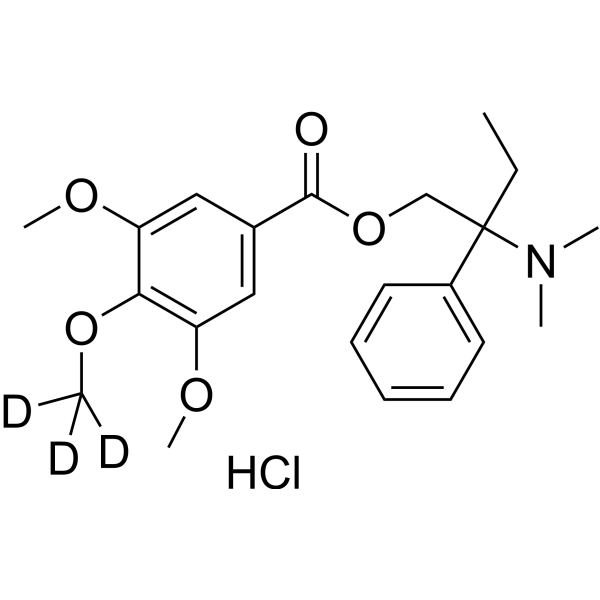 0 ImagesCat. No.: HY-B0380S2Trimebutine-d3 hydrochloride is deuterium labeled Trimebutine hydrochloride. Trimebutine hydrochloride is a multi-target inhibitor and opioid receptor agonist with antimuscarinic activity. Trimebutine hydrochloride inhibits L-type Ca2+ channels and large-conductance calcium-activated potassium channels (BKCa channels), thereby inhibiting extracellular calcium influx and potassium ion efflux. Trimebutine hydrochloride also targets Toll-like receptors, inhibits Toll-like receptor 2/4/7/8/9 signals, and inhibits LPS-induced IRAK1 activation, as well as ERK1/2, JNK and NF-κB activation, thereby exerting anti-inflammatory effects. Trimebutine hydrochloride also induces tumor cell apoptosis by inhibiting the AKT/ERK pathway. Trimebutine hydrochloride also inhibits excessive contraction of smooth muscle and can be used in the study of gastrointestinal disorders such as irritable bowel syndrome (IBS).




