



Bacterial
Anything that destroys bacteria or suppresses their growth or their ability to reproduce. Heat, chemicals such as chlorine, and antibiotic drugs all have antibacterial properties. Many antibacterial products for cleaning and handwashing are sold today. Such products do not reduce the risk for symptoms of viral infectious diseases in otherwise healthy persons. This does not preclude the potential contribution of antibacterial products to reducing symptoms of bacterial diseases in the home.
All Product Categories
-
Bacterial Inhibitors
(7547)
View all products
-
Bacterial Agonists
(3)
View all products
-
Bacterial Antagonists
(9)
View all products
-
Bacterial Activators
(25)
View all products
-
Bacterial Modulators
(27)
View all products
-
Bacterial Chemicals
(2)
View all products
-
Bacterial Inducers
(6)
View all products
-
Bacterial Controls
(14)
View all products
-
Bacterial Substrates
(2)
View all products
-
Bacterial Ligand
(1)
View all products
-
Productos relacionados con Bacterial (8884)
Productos relacionados con (8884)

-
Antibodies (14)
-
Related Compound Screening Libraries (1)
-
Cefcapene pivoxil hydrochloride hydrate
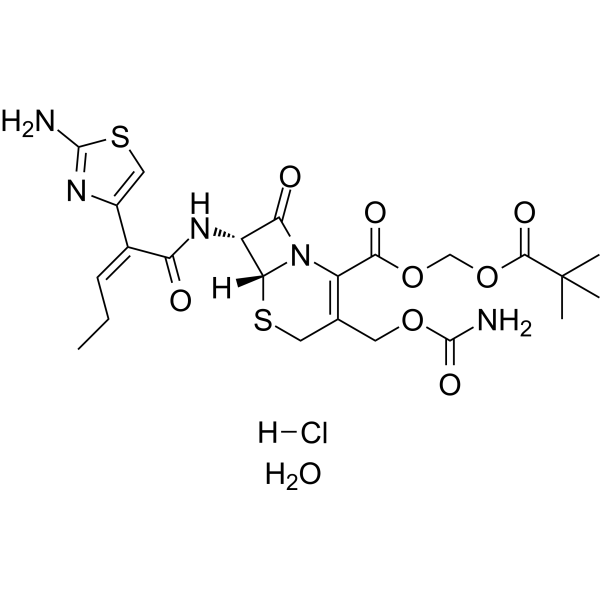 0 ImagesCefcapene pivoxil hydrochloride hydrate, the pivalate ester prodrug form of Cefcapene, is an orally active third-generation cephalosporin with a wide spectrum of anti-bacterial activity. Cefcapene pivoxil hydrochloride hydrate has the potential for the palmoplantar pustulosis (PPP) research.
-
Thionin acetate
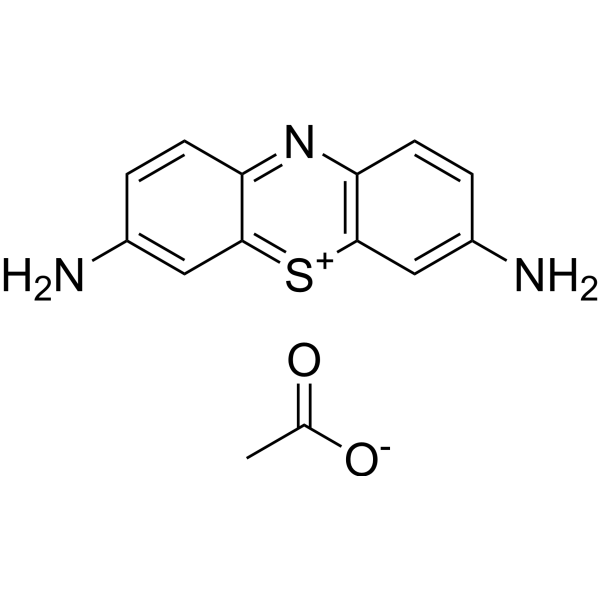 0 ImagesReferencia número: HY-D0955No. CAS: 78338-22-4Synonyms: Thionine acetateThionin acetate is a compound present in the seeds, stems, roots, and leaves of many plant species with antibacterial activity. Thionin acetate is a metachromatic cationic histological dye widely used in biological staining, such as Nissl staining.
-
Cymal-6
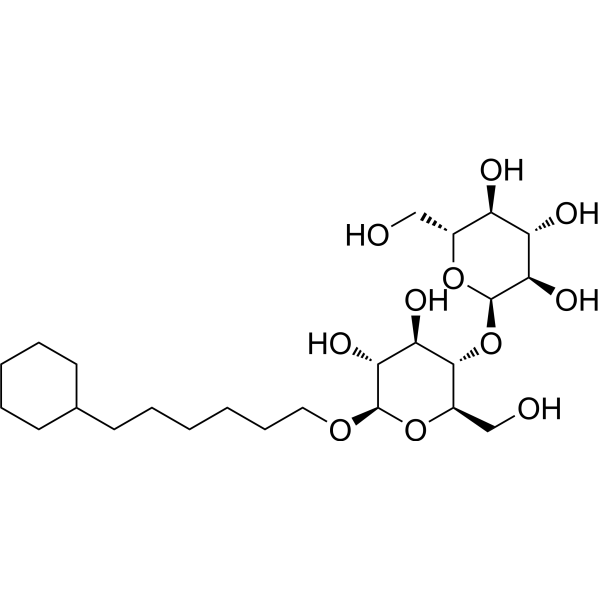 0 ImagesSynonyms: Cyclohexyl-hexyl-β-D-maltosideCymal-6 (Cyclohexyl-hexyl-β-D-maltoside) is a potent TEM-1 beta-lactamase inhibitor with an Ki value of 40.05 µM. Cymal-6 (Cyclohexyl-hexyl-β-D-maltoside) can be used as glycosidic surfactant.
-
Azlocillin sodium salt
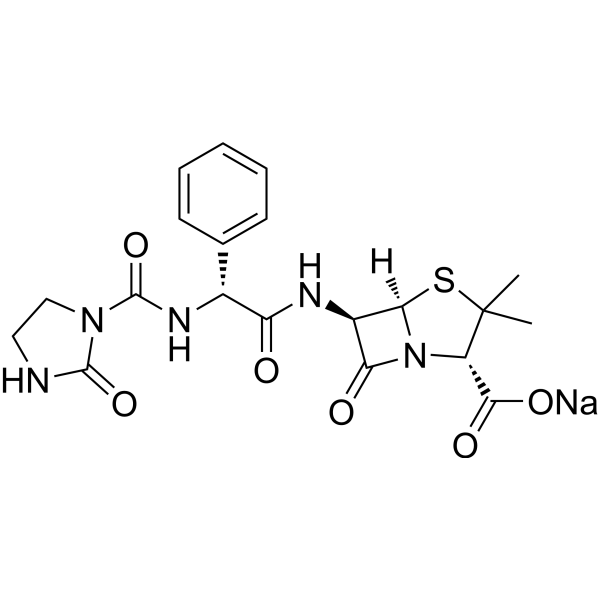 0 ImagesSynonyms: Sodium azlocillinAzlocillin sodium salt (Sodium azlocillin), a semisynthetic penicillin, is a broad spectrum β-lactam antibiotic. Azlocillin sodium salt shows antipseudomonal activity, and also potent against the malarial parasite Plasmodium falciparum.
-
Metronidazole (Standard)
 0 ImagesMetronidazole (Standard) is the analytical standard of Metronidazole. This product is intended for research and analytical applications. Metronidazole is an orally active nitroimidazole antibiotic. Metronidazole can cross blood brain barrier. Metronidazole can be used for the research of anaerobic infections.
-
Salicyl alcohol
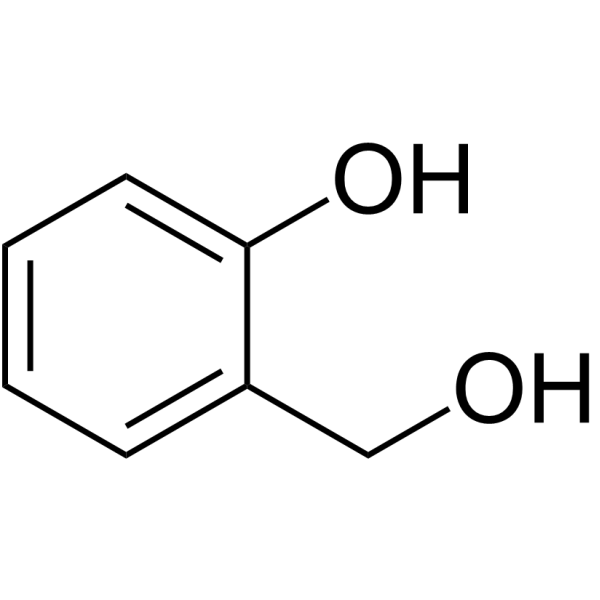 0 ImagesSynonyms: 2-Hydroxybenzyl alcohol; SaligeninSalicyl alcohol (2-Hydroxybenzyl alcohol; Saligenin) is a phenolic alcohol-type topical anesthetic and strong sensitizer with antiseptic, antibacterial and antipyretic activities. Salicyl alcohol serves as a precursor for salicin synthesis. Salicyl alcohol induces contact dermatitis and eczematous skin reactions, and is a well-known allergen identified in phenolic resins. Salicyl alcohol is isolated from the barks of European aspen (Populus tremula), rowan (Sorbus aucuparia) and willow (Salix spp.). Salicyl alcohol is used in studies related to allergic contact dermatitis.
-
N-3-Hydroxybutyryl-L-homoserine lactone
 0 ImagesSynonyms: 3-OH-C4-HSL; N-3-Hydroxybutanoyl-L-homoserine lactone; N-3-Hydroxybutyryl-L-HSLN-3-Hydroxybutyryl-L-homoserine lactone (3-OH-C4-HSL) is an acyl-homoserine lactone, that can be isolated from Vibrionaceae. N-3-Hydroxybutyryl-L-homoserine lactone is a signaling molecule that is involved in bacterial quorum sensing (QS). N-3-Hydroxybutyryl-L-homoserine lactone senses the density of bacterial population, regulates the cellular process, such as bioluminescence, biofilm formation, and exo-enzyme production.
-
TGFBR1-IN-2
 0 ImagesReferencia número: HY-164793No. CAS: 733806-89-8TGFBR1-IN-2 (Compound AQA) is a TGFBR1 inhibitor and an antibacterial agent. TGFBR1-IN-2 is a substrate for cytochrome P450s. TGFBR1-IN-2 contains the pyridyl-6-methyl moiety necessary for Mycobacterium tuberculosis inhibition and has potent inhibitory activity against non-replicating and persistent Mycobacterium tuberculosis.
-
Lincomycin hydrochloride
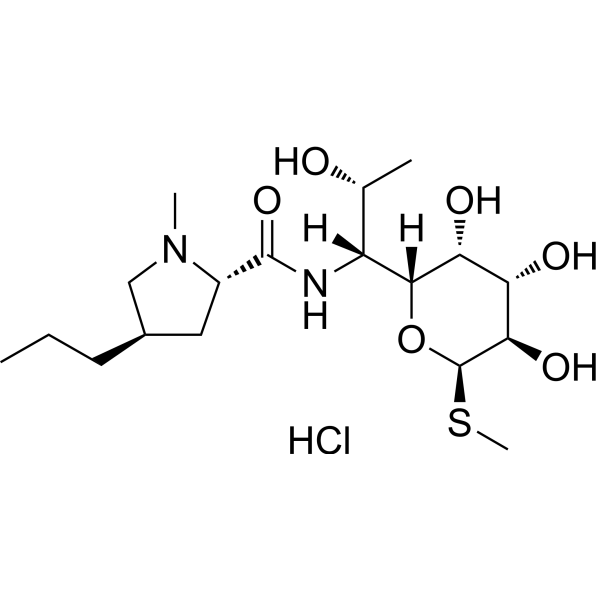 0 ImagesLincomycin hydrochloride (U10149A) is an orally active lincosamide antibiotic. Lincomycin hydrochloride binds to the ribosomes of Gram-positive bacteria to inhibit protein synthesis. Lincomycin hydrochloride can inhibit chloroplast translation, disrupt chloroplast integrity, and activate chloroplast-to-nucleus retrograde signaling in Arabidopsis thaliana seedlings. Lincomycin hydrochloride induces alterations in lipid profiles and liver injury, disrupts blood glucose and insulin levels, and increases growth rate in mice.
-
Demeclocycline
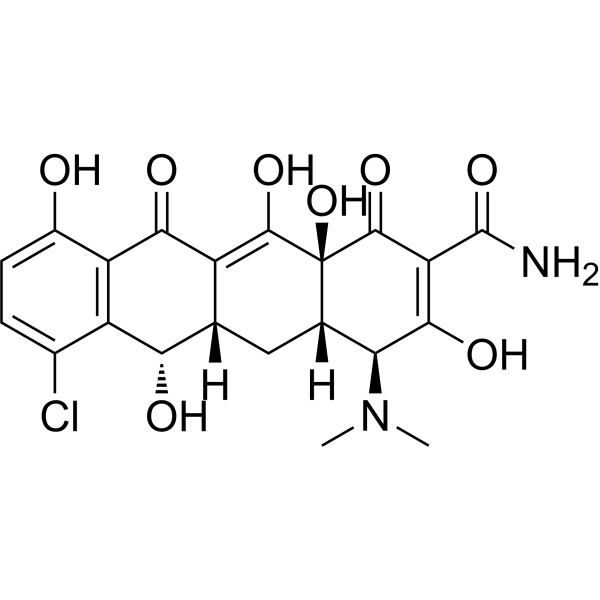 0 ImagesDemeclocycline is an orally active tetracycline antibiotic. Demeclocycline impairs protein synthesis by binding to the 30S ribosomal subunit to inhibit binding of aminoacyl tRNA. Demeclocycline shows anti-bacterial activitise to a wide variety of bacterial infections.
-
Cadazolid
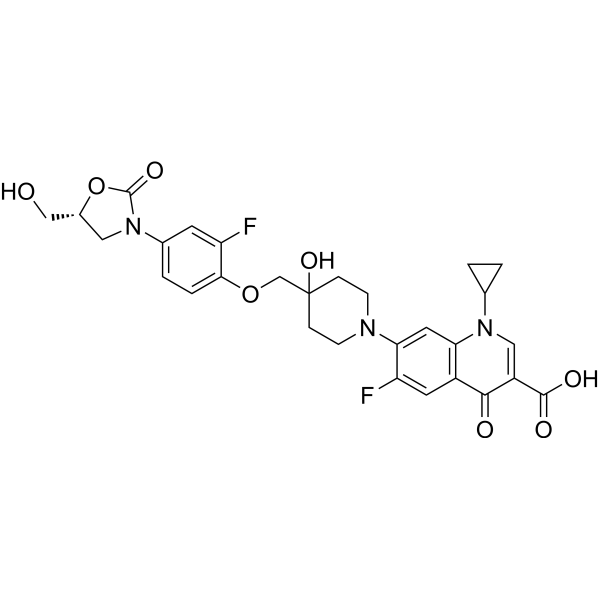 0 ImagesSynonyms: ACT-179811Cadazolid (ACT-179811) is a new oxazolidinone antibiotic with potent activity against Clostridium difficile.
-
Hydroxylamine (50% w/w in water)
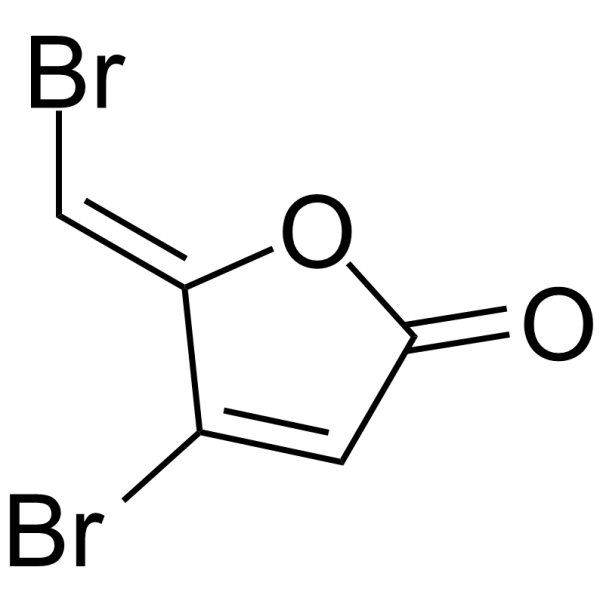
 0 ImagesHydroxylamine (50% w/w in water) is an inorganic highly reactive compound and antibacterial agent. Hydroxylamine (50% w/w in water) acutely activates the transport activity of GLUT1, inhibits Monoamine oxidase activity. Hydroxylamine (50% w/w in water) inhibits nitrite oxidizing bacteria. Hydroxylamine (50% w/w in water) activates glucose uptake. Hydroxylamine (50% w/w in water) can be used in the research of inflammatory diseases and allergies[1][2][3][4].
-
5,7-Dihydroxycoumarin
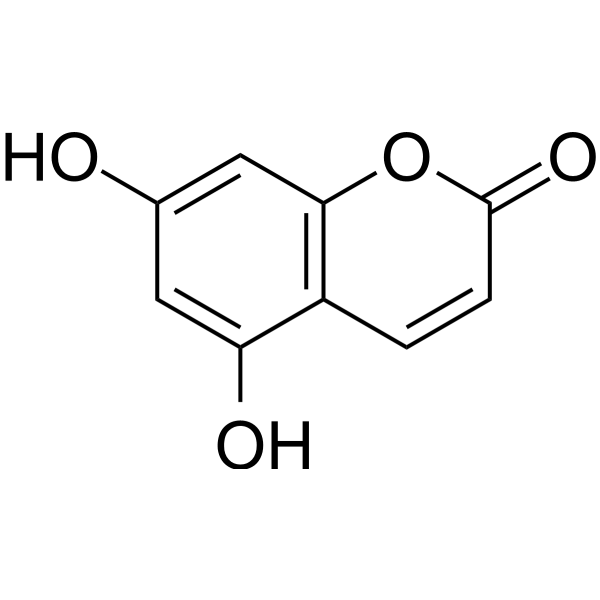 0 Images5,7-Dihydroxycoumarin is a coumarin isolated from the inflorescences of Macaranga triloba. 5,7-dihydroxycoumarin displays antibacterial characteristics with an MIC value in the range of 1000 mg/mL to >1000 mg/mL. Some 5,7-dihydroxycoumarin derivatives have antioxidant properties.
-
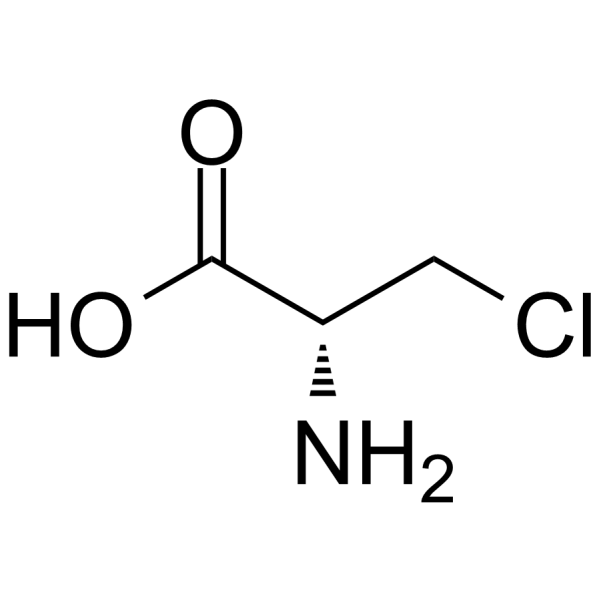
L18-MDP
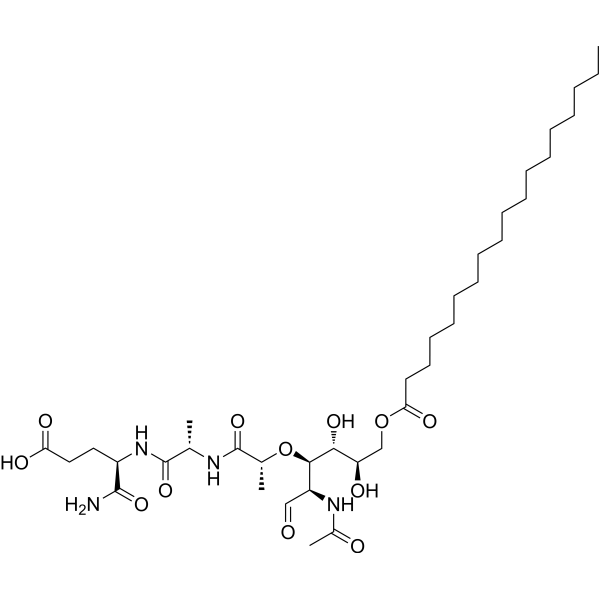 0 ImagesL18-MDP is a derivative of muramyl dipeptide, an antibacterial agent. L18-MDP has antibacterial activity and has potential applications in bacterial and fungal infections.
-
Maduramicin ammonium
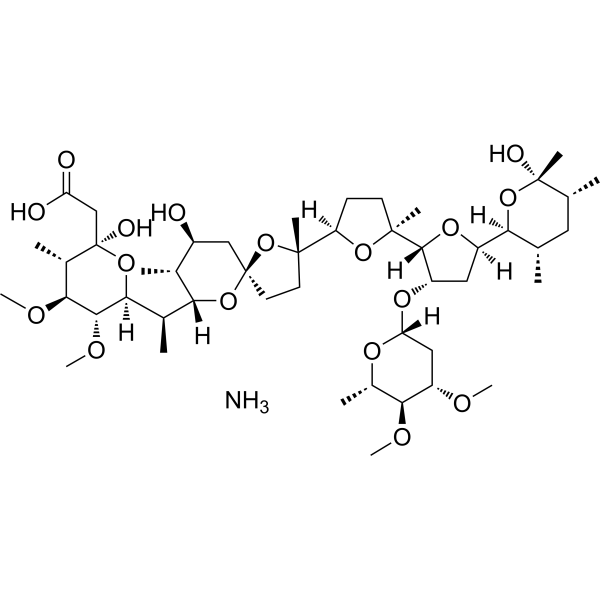 0 ImagesSynonyms: Maduramycin ammoniumMaduramicin ammonium (Maduramycin ammonium) is isolated from the actinomycete Actinomadura rubra. Maduramicin ammonium (Maduramycin ammonium) is an anticoccidial agent for the the treatment of Eimeria spp., E. adenoeides, E. gallopavonis, and E. dispersa infection. Maduramicin ammonium (Maduramycin ammonium) induces cell apoptosis in chicken myocardial cells via intrinsic and extrinsic pathways.
-
Enoxacin hydrate
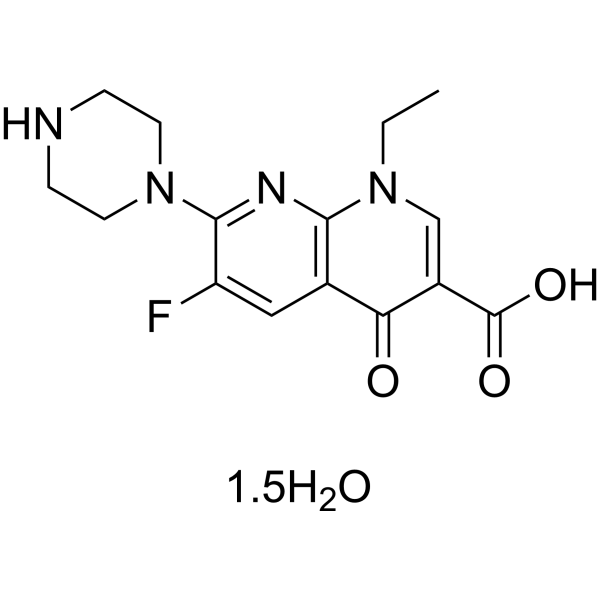 0 ImagesSynonyms: Enoxacin sesquihydrate; AT-2266 hydrate; CI-919 hydrateEnoxacin hydrate (Enoxacin sesquihydrate), a fluoroquinolone, interferes with DNA replication and inhibits bacterial DNA gyrase (IC50=126 µg/ml) and topoisomerase IV (IC50=26.5 µg/ml). Enoxacin hydrate is a miRNA processing activator and enhances siRNA-mediated mRNA degradation and promotes the biogenesis of endogenous miRNAs. Enoxacin hydrate has potent activities against gram-positive and -negative bacteria. Enoxacin hydrate is a cancer-specific growth inhibitor that acts by enhancing TAR RNA-binding protein 2 (TRBP)-mediated microRNA processing.
-
Tribuloside
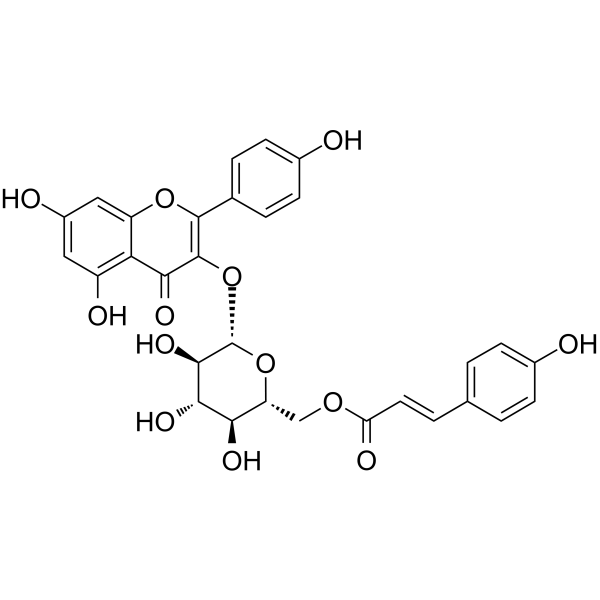 0 ImagesTribuloside is a flavonoid and PDE4 inhibitor (IC50: 6 μM). Tribuloside exhibits antibacterial and antioxidant activities, capable of scavenging DPPH free radicals. Tribuloside also promotes melanogenesis. Tribuloside can be used in the research of hypopigmentary diseases, sun protection, and inflammatory diseases such as acute lung injury.




