



Biochemical Assay Reagents
Biochemical agents refers to the life science research related to biological material or organic compounds. Due to a wide range of life sciences, rapid development, and therefore a wide variety of such agents, complex in nature. There are electrophoresis reagents, chromatography reagents, centrifuged reagents, immunological reagent, labeled reagent, staining agents, penetration agents and carcinogens variable, insecticides, culture, buffering agents, electron microscopy reagents, protein and nucleic acid precipitating agent, condensing agent ultrafiltration membrane, clinical diagnostic reagents, dyes, antioxidants, preservatives, detergents and surfactants, standard biochemical reagents, biochemical reagents quality control materials, separation material, etc..
All Product Categories
-
Biochemical Assay Reagents Inhibitors
(10)
View all products
-
Biochemical Assay Reagents Modulator
(1)
View all products
-
Biochemical Assay Reagents Chemicals
(7)
View all products
-
Biochemical Assay Reagents Inducer
(1)
View all products
-
Biochemical Assay Reagents Controls
(59)
View all products
-
Biochemical Assay Reagents Substrates
(4)
View all products
-
Biochemical Assay Reagents Ligands
(2)
View all products
-
Biochemical Assay Reagents Related Products (16057)
Related Products (16057)

-
Antibodies (44)
-
Thermolysin, Bacillus thermoproteolyticus rokko
 0 ImagesThermolysin, Bacillus thermoproteolyticus rokko (EC 3.4.24.27) (TML) is a thermostable neutral metalloproteinase enzyme secreted by the Gram-positive bacteria Bacillus thermoproteolyticus. Thermolysin catalyzes the hydrolysis of peptide bonds containing hydrophobic residues.
Optimal pH: 8.0. Considerably stable from pH 5 to 9.5.
Optimal temperature : 70 °C
-
PEG20000
 0 ImagesCat. No.: HY-Y0873QCAS No.: 25322-68-3Synonyms: Polyethylene glycol 20000PEG20000 (Polyethylene glycol 20000) can be used as a solubilizer. PEG20000 is a kind of biological materials or organic compounds that are widely used in life science research, can be degraded by bacteria.
-
FITC-Dextran (MW 2000000)
 0 ImagesCat. No.: HY-128868ICAS No.: 60842-46-8FITC-Dextran (MW 2000000) is a compound belonging to the class of fluorescent dyes. It is commonly used in biomedical research as a tracer molecule to label and track cells or other biological matter. FITC-Dextran consists of fluorescein isothiocyanate (FITC) and dextran, a complex carbohydrate derived from starch. The combination of the two creates a stable fluorescent tracer that can be viewed under a microscope or quantified using specialized detection instruments.
-
I2959
 0 ImagesI2959 is widely used as a photoinitiator for photochemical cross-linking of hydrogels, and the combination of I2959 and CMA hydrogel has been used as a bio-ink for biological 3D printing applications. In addition, I2959 has a high free radical generation efficiency and is cytotoxic to rapidly dividing cell lines.
-
Diethyl succinate
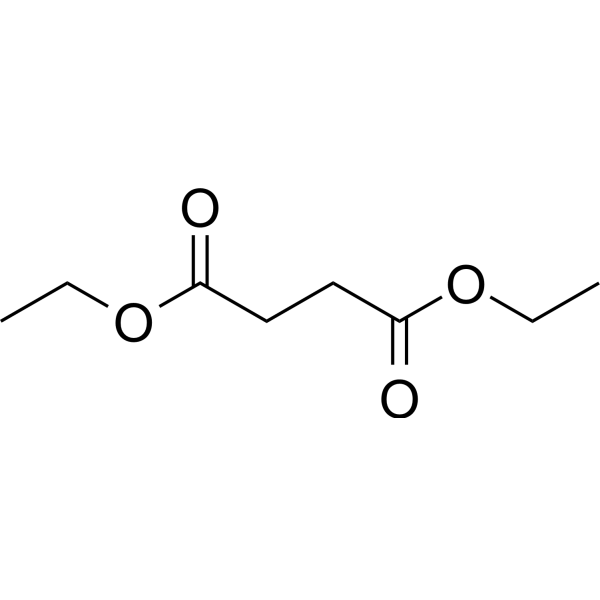 0 ImagesDiethyl succinate (Diethyl Butanedioate) can be utilized at physiological pH, allowing it to penetrate biological membranes and integrate into the cells of tissue cultures, where it is metabolized via the tricarboxylic acid cycle. Diethyl succinate modulates the polarization and activation of microglial cells by reducing mitochondrial fission and the levels of reactive oxygen species (ROS), thereby exerting an inflammatory protective effect in primary microglial cells. Furthermore, Diethyl succinate is non-toxic and can be used in flavorings and seasonings.
-
Sodium 2-mercaptoethanesulfonate
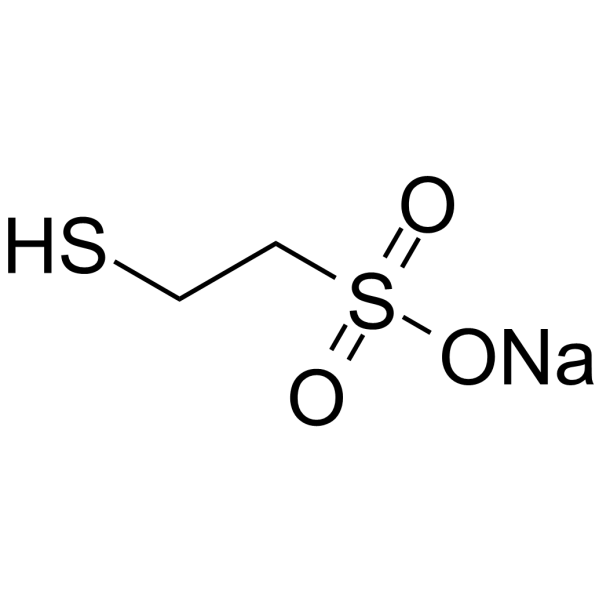 0 ImagesSynonyms: MesnumSodium 2-mercaptoethanesulfonate (Mesnum) is a thiol-containing urinary tract protective agent and aldehyde scavenger that detoxifies acrolein via its thiol group to form an inert thioether excreted in urine, and competitively inhibits human myeloperoxidase, thereby mitigating Cyclophosphamide (HY-17420)-induced cytogenetic damage. Sodium 2-mercaptoethanesulfonate can be used for research on hemorrhagic cystitis.
-
HPMC (Viscosity:11250-21000mPa.s)
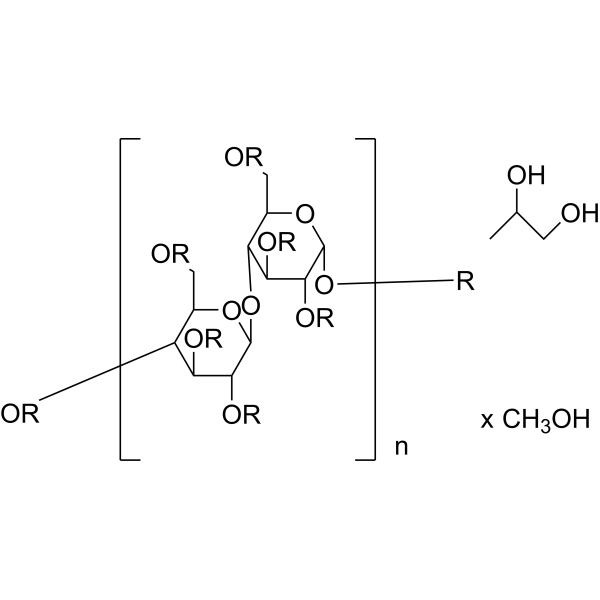 0 ImagesSynonyms: Hypromellose (Viscosity:11250-21000mPa.s); (Hydroxypropyl)methyl cellulose (Viscosity:11250-21000mPa.s); Celacol HPM 5000 (Viscosity:11250-21000mPa.s)HPMC (Viscosity:11250-21000mPa.s) is a hydrophilic, non-ionic cellulose ether used to form swellable-soluble matrices.
-
Methyl cellulose(Viscosity:4000mPa.s)
 0 ImagesCat. No.: HY-125861ECAS No.: 9004-67-5Synonyms: MC(Viscosity:4000mPa.s)Methyl cellulose (MC) (Viscosity:4000mPa.s) is a non-ionic cellulose ether with surface activity and thermogelation properties. Methyl cellulose (Viscosity:4000mPa.s) is widely used as drug delivery agents, thickeners, stabilizers, emulsifiers, etc., in industries such as pharmaceuticals, food, cosmetics, and construction.
-
Iron(II) sulfate heptahydrate, 99%
 0 ImagesIron(II) sulfate heptahydrate, 99% (Ferrous sulfate heptahydrate, 99%) is an orally active iron salt. Iron(II) sulfate heptahydrate, 99% replaces iron found in hemoglobin and myoglobin, allowing for the transportation of oxygen via hemoglobin. Iron(II) sulfate heptahydrate, 99% is mainly used for the prevention of iron-deficiency anemia. Iron(II) sulfate heptahydrate, 99% also has anti-tumor effects on chronic myeloid leukemia and breast cancer.
-
PEG200
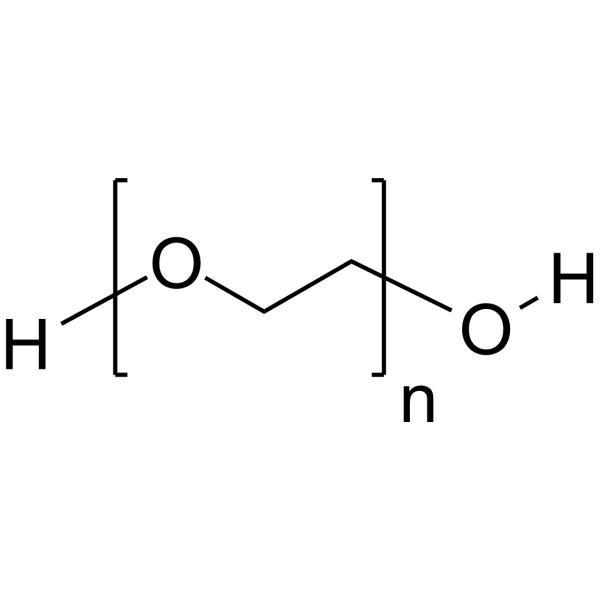 0 ImagesSynonyms: Polyethylene glycol 200PEG200 (Polyethylene glycol 200), a neutral polymer of molecular weight 200, is a water-soluble, low immunogenic and biocompatible polymer formed by repeating units of ethylene glycol.
-
FITC-Dextran (MW 3000-5000)
 0 ImagesCat. No.: HY-128868BCAS No.: 60842-46-8FITC-Dextran (MW 3000-5000) is a fluorescent probe for fluorescein isothiocyanate (FITC) dextran (Ex=495 nm; Em=525 nm). FITC-Dextran (MW 3000-5000) can be used as a marker to reveal heat shock-induced cell damage and to study the early and late stages of apoptosis. FITC-Dextran (MW 3000-5000) can also be used for cell permeability studies, such as blood-brain barrier permeability and determination of the extent of blood-brain barrier disruption. Storage: protect from light.
-
HBTU
 0 ImagesSynonyms: N-HBTUHBTU (N-HBTU) is a guanidinium-based peptide coupling reagent and immunological sensitizer. HBTU can be used in combination with bases such as DIPEA (HY-130142) to complete coupling reactions, with HOBt and TMU as by-products. HBTU is a standard reagent in automated solid-phase peptide synthesis, particularly for the Fmoc/tBu strategy, which effectively promotes coupling steps, but it is not suitable for sterically hindered amino acids or dipeptide derivatives. HBTU can induce rhinitis, dermatitis, bronchial asthma and severe allergic reactions. HBTU can be used to study the pathogenesis of allergic reactions, occupational rhinitis, allergic contact dermatitis and bronchial asthma.

-
PEG2000
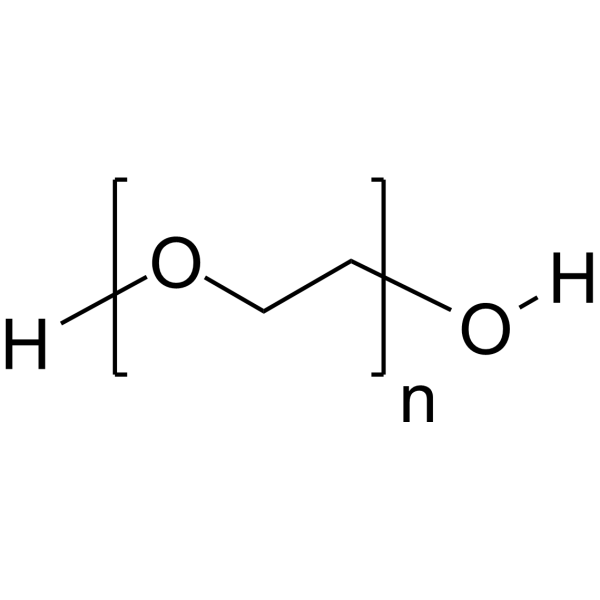 0 ImagesSynonyms: Polyethylene glycol 2000PEG2000 (Polyethylene glycol 2000) is a solvent for a large number of substances. PEG2000 can be used as a carrier material and modifying agent. PEG2000 is widely used in a variety of pharmaceutical formulations.
-
MES monohydrate
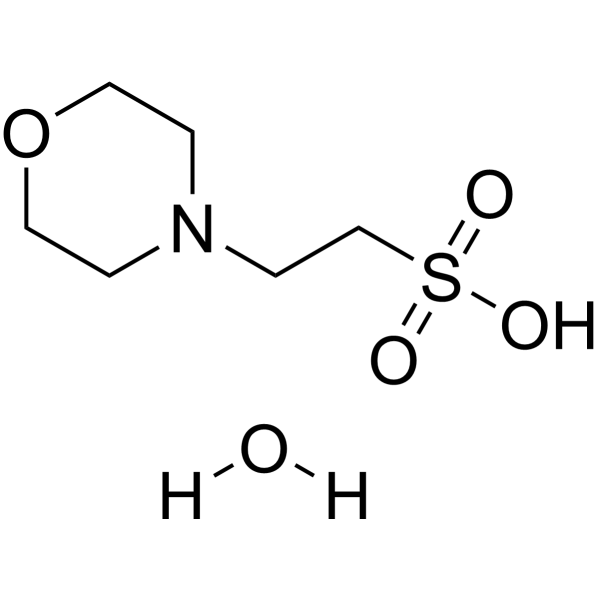 0 ImagesSynonyms: 2-Morpholinoethanesulphonic acid monohydrateMES (2-Morpholinoethanesulphonic acid) monohydrate is a kind of amphoteric ion buffer, the buffer capacity ranging pH 5.5-7.0. As a Good's buffer, MES monohydrate is widely used in biochemistry and molecular biology experiments, such as cell culture, enzyme activity determination, electrophoresis and protein studies.
-
Hexa-His
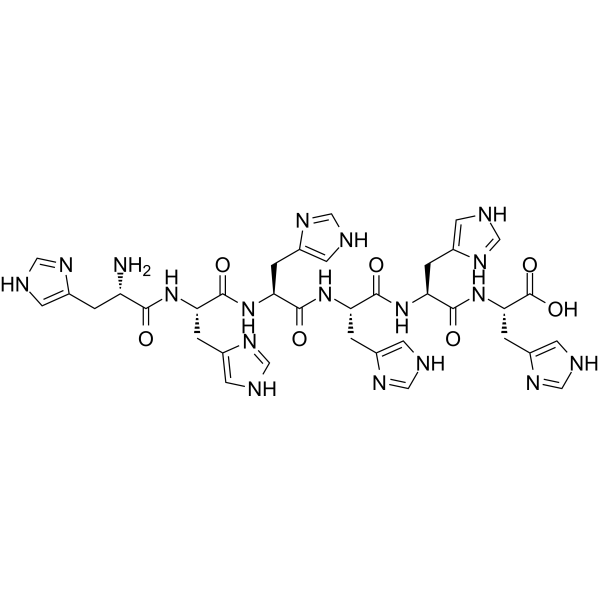 0 ImagesSynonyms: 6X His TagHexa-His (6X His Tag) is a commonly used affinity tag made up of six histidine residues. HEXA-HIS can bind to affinity chromatography media containing transition metal ions like nickel (Ni2+) or cobalt (Co2+), making it useful for protein purification.
-
PNGase F
 0 ImagesCat. No.: HY-P2929CAS No.: 83534-39-8PNGase F, a glycosidase, catalyzes the cleavage of an internal glycoside bond in an oligosaccharide. PNGase F removes nearly all N-linked oligosaccharides from glycoproteins. PNGase F can release N-glycans from glycoproteins in glycoanalytical workflows.
-
Sodium alginate (Viscosity 200±20mpa.s)
 0 ImagesSodium alginate is an anionic straight chain polysaccharide. Sodium alginate can be obtained from different species of algae. Sodium alginate has different properties, such as pH-sensitivity, nontoxicity, nonimmunogenicity. Sodium alginate has weak gelation, viscosity, and film-forming properties. Sodium alginate can be utilized to prepare gels and film materials for food preservation. Sodium alginate is a versatile functional biomaterial for viscosity enhancement, stabilizer, matrixing agent, encapsulation polymer, bioadhesive and film former.
-
Tissue and Cell Fixative (4% Paraformaldehyde, PFA)
 0 ImagesCat. No.: HY-DY3003Tissue and Cell Fixative (4% Paraformaldehyde, PFA) is mainly composed of paraformaldehyde, phosphate, and deionized water, with a pH of 7.0-7.4. Tissue and Cell Fixative (4% Paraformaldehyde, PFA) is suitable for fixing most tissues and cells, and can effectively protect the morphology and structure of tissues and cells as well as nucleic acids.




