



CDK
Cyclin dependent kinase
CDKs (Cyclin-dependent kinases) are serine-threonine kinases first discovered for their role in regulating the cell cycle. They are also involved in regulating transcription, mRNA processing, and the differentiation of nerve cells. CDKs are relatively small proteins, with molecular weights ranging from 34 to 40 kDa, and contain little more than the kinase domain. In fact, yeast cells can proliferate normally when their CDK gene has been replaced with the homologous human gene. By definition, a CDK binds a regulatory protein called a cyclin. Without cyclin, CDK has little kinase activity; only the cyclin-CDK complex is an active kinase.
There are around 20 Cyclin-dependent kinases (CDK1-20) known till date. CDK1, 4 and 5 are involved in cell cycle, and CDK 7, 8, 9 and 11 are associated with transcription.
CDK levels remain relatively constant throughout the cell cycle and most regulation is post-translational. Most knowledge of CDK structure and function is based on CDKs of S. pombe (Cdc2), S. cerevisia (CDC28), and vertebrates (CDC2 and CDK2). The four major mechanisms of CDK regulation are cyclin binding, CAK phosphorylation, regulatory inhibitory phosphorylation, and binding of CDK inhibitory subunits (CKIs).
CDK Isoform Specific Products
-
CDK
(487)
View all products
-
CDK1
(187)
View all products
-
CDK2
(303)
View all products
-
CDK3
(28)
View all products
-
CDK4
(224)
View all products
-
CDK5
(97)
View all products
-
CDK6
(169)
View all products
-
CDK7
(115)
View all products
-
CDK8
(57)
View all products
-
CDK9
(202)
View all products
-
CDK11
(9)
View all products
-
CDK12
(51)
View all products
-
CDK13
(25)
View all products
-
CDK14
(6)
View all products
-
CDK16
(8)
View all products
-
CDK19
(25)
View all products
-
CDC
(21)
View all products
-
CLK
(31)
View all products
-
Pho85
(1)
View all products
-
CDK10
(1)
View all products
-
CDK15
(1)
View all products
-
CDK17
(2)
View all products
-
CDK18
(1)
View all products
-
CDK20
(1)
View all products
-
PITSLRE
(1)
View all products
All Product Categories
-
CDK Inhibitors
(1062)
View all products
-
CDK Agonists
(3)
View all products
-
CDK Antagonists
(2)
View all products
-
CDK Activators
(15)
View all products
-
CDK Modulators
(15)
View all products
-
CDK Degraders
(85)
View all products
-
CDK Controls
(4)
View all products
-
CDK Substrate
(1)
View all products
-
CDK Ligands
(15)
View all products
-
Cyclin-Dependent Kinases (CDKs) Proteins
(81)
View all products
-
Cyclin Dependent Kinase 1 (CDK1) Proteins
(9)
View all products
-
Cyclin-Dependent Kinase 2 (CDK2) Proteins
(12)
View all products
-
Cyclin-Dependent Kinase 3 (CDK3) Proteins
(6)
View all products
-
Cyclin-Dependent Kinase 4 (CDK4) Proteins
(5)
View all products
-
Cyclin-Dependent Kinase 5 (CDK5) Proteins
(5)
View all products
-
Cyclin-Dependent Kinase 6 (CDK6) Proteins
(6)
View all products
-
Cyclin-Dependent Kinase 7 (CDK7) Proteins
(4)
View all products
-
CDK Related Products (1322)
Related Products (1322)

-
Recombinant Proteins (83)
-
Antibodies (42)
-
CDK Isoform Comparison
-
CDK6/9-IN-2
 0 ImagesCat. No.: HY-175013CAS No.: 3068529-24-5CDK6/9-IN-2 is a highly active dual inhibitor of CDK6 (IC50 = 15 nM) and CDK9 (IC50 = 22 nM). CDK6/9-IN-2 is selective for CDK2, CDK8, and CDK11. CDK6/9-IN-2 inhibits the proliferation of HaCaT cells induced by IFN-γ/TNF-α and suppresses the STAT3 pathway and the expression of inflammatory factors. CDK6/9-IN-2 can alleviate psoriatic dermatitis and is useful in psoriasis research.
-
Toyocamycin (Standard)
 0 ImagesCat. No.: HY-103248RCAS No.: 606-58-6Synonyms: Vengicide (Standard)DL-Aspartic acid (Standard) is the analytical standard of DL-Aspartic acid. This product is intended for research and analytical applications. DL-Aspartic acid (DL-Asp-OH) is a kind of biological materials or organic compounds that are widely used in life science research.
-
CDK8-IN-11 hydrochloride
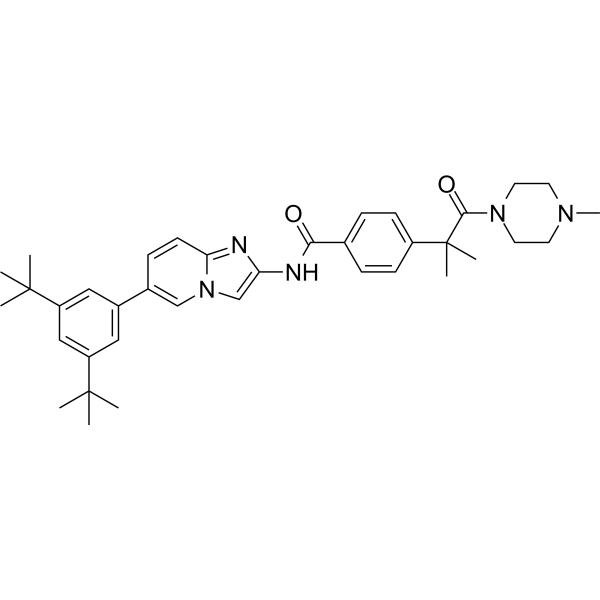
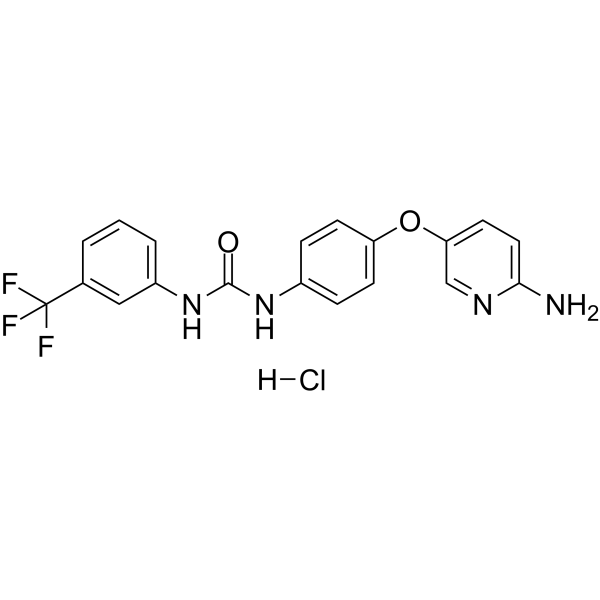 0 ImagesCat. No.: HY-151463A
-
LS-Q2
 0 ImagesCat. No.: HY-182986LS-Q2 is a highly selective CDK4/9 inhibitor with IC50 values of 1.4 nM and 6.2 nM. LS-Q2 inhibits cancer cells proliferation, induces G2/M phase arrest, apoptosis and reduces pSer2 RNA polymerase II expression. LS-Q2 interacts synergistically with BET and Bcl-2 inhibitors to drive antitumor activity. LS-Q2 can be used for the research of cancer, such as malignant solid tumors.
-
Apoptosis inducer 50
 0 ImagesCat. No.: HY-179052Apoptosis inducer 50 (Compound 5e) is an apoptosis inducer as well as an autophagy inducer agent. Apoptosis inducer 50 exhibits potent and selective anti-cancer activity against triple-negative breast cancer cells and metastatic colon cancer cells. Apoptosis inducer 50 upregulates the expression of pro-apoptotic proteins (Bax, Bim, cleaved Caspase-9) and downregulates the expression of the anti-apoptotic protein (BCL-XL). Apoptosis inducer 50 upregulates key autophagy markers such as Beclin-1 and ATG5, and enhances the conversion of LC3-I to LC3-II., Apoptosis inducer 50 arrests cancer cells in the G1/S phase by upregulating the expression of p21 and p27 while downregulating Cyclin D1. Apoptosis inducer 50 increases the level of ROS.
-
EGFR-IN-169
 0 ImagesCat. No.: HY-175531EGFR-IN-169 is an epidermal growth factor (EGFR) (IC50 = 5.19 μM) inhibitor form panaxadiol. EGFR-IN-169 interferes with the migration and growth of colorectal cancer cells by inhibiting EGFR-mediated RalA/EMT pathway. EGFR-IN-169 shows an IC50 value of 4.46 μM and SI of 16.92 for HCT-116 cells. EGFR-IN-169 inhibits CDKs activity, induces G0/G1 cycle arrest and inhibits migration and invasion. EGFR-IN-169 reduces mitochondrial membrane potential and induces apoptosis and ROS production. EGFR-IN-169 can be used for the research of cancer, such as colorectal cancer.
-
Cdk2/Cyclin Inhibitory Peptide II
 0 ImagesCat. No.: HY-P3731CAS No.: 237392-85-7Cdk2/Cyclin Inhibitory Peptide II (Tat-LDL), a CDK2 inhibitor, kills U2OS osteosarcoma cells in a dose-dependent manner.
-
CDK2-IN-45
 0 ImagesCat. No.: HY-172872CDK2-IN-45 (Compound 8f) is a CDK2 inhibitor (IC50: 0.64 μM). CDK2-IN-45 inhibits the proliferation of DU-145 and PC-3 cell lines with IC50 of 2.20 μM and 4.17 μM, respectively. CDK2-IN-45 induces G0/G1 cell cycle arrest and apoptosis. CDK2-IN-45 can be used in prostate cancer research.
-
CDK1-IN-7
 0 ImagesCat. No.: HY-176189CAS No.: 933009-51-9
-
Haspin-IN-1
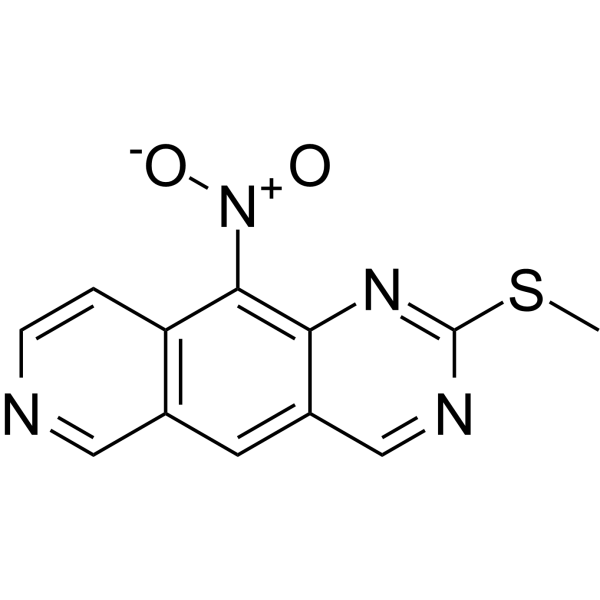 0 ImagesCat. No.: HY-146586CAS No.: 2768474-30-0Haspin-IN-1 (compound 2a) is a haspin inhibitor with an IC50 of 119 nM. Haspin-IN-1 also inbibits CLK1 and DYRK1A with IC50s of 221 nM and 916.3 nM, respectively.
-
Rafutrombopag diolamine
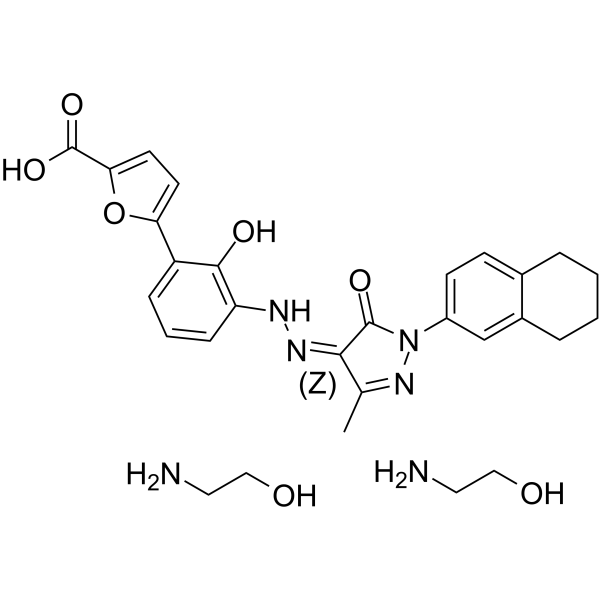 0 ImagesCat. No.: HY-125101ACAS No.: 1257792-42-9Rafutrombopag (Hetrombopag) diolamine is an orally active nonpeptide thrombopoietin receptor (TPOR/MPL) agonist. Rafutrombopag diolamine can chelate iron and alleviate iron overload while promoting haematopoiesis. Rafutrombopag diolamine specifically stimulates proliferation and differentiation of human TPOR-expressing cells, including 32D-MPL and human hematopoietic stem cells through stimulation of STAT, PI3K and ERK signalling pathways. Rafutrombopag diolamine effectively up-regulates G1-phase-related proteins, including p-RB, Cyclin D1 and CDK4/6, normalizes progression of the cell cycle, and prevents apoptosis by modulating BCL-XL/BAK expression in 32D-MPL cells. Rafutrombopag diolamine protects cardiomyocyte survival from oxidative stress damage as an enhancer of stem cells. Rafutrombopag diolamine can be used for the study of immune thrombocytopenia and oxidative stress-related cardiovascular disease.

-
CDK2-IN-52
 0 ImagesCat. No.: HY-177957CAS No.: 3038638-82-0CDK2-IN-52 (Compound Cpb No 39) is a selective cyclin-dependent kinase 2 (CDK2) inhibitor with a DC50 value of 1-10 nM. CDK2-IN-52 induces cell cycle arrest and suppresses tumor cell proliferation. CDK2-IN-52 is promising for research of CDK2-overexpressing malignancies such as breast and ovarian cancers.
-
CDK2-IN-14
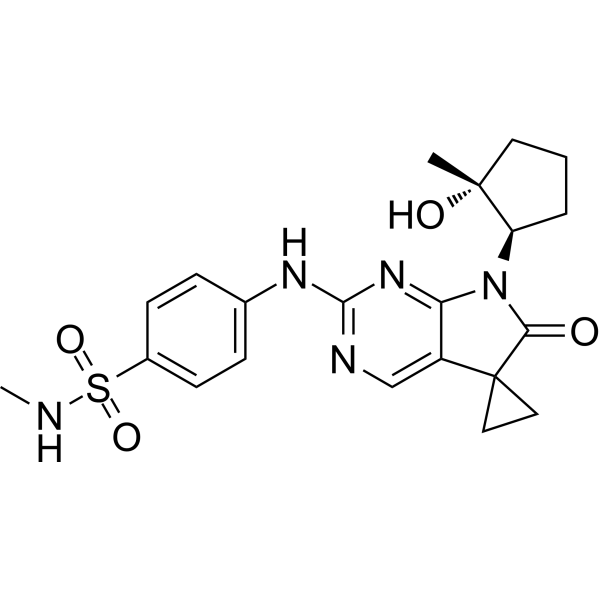 0 ImagesCat. No.: HY-151580CAS No.: 2862836-22-2
-
Briciclib sodium
 0 ImagesCat. No.: HY-16366ACAS No.: 865784-01-6Synonyms: ON 014185 sodiumBriciclib (ON 014185) sodium is a eukaryotic translation initiation factor 4E (eIF4E) inhibitor. Briciclib sodium exhibits broad-spectrum anti-cancer activity, including in mantle cell leukemia, breast cancer, gastric cancer, and esophageal cancer cells. Briciclib sodium reduces the expression of cyclin D1 and c-Myc, and enhances the expression of P53 and Cleaved Caspase 3 pro-apoptotic proteins. Briciclib sodium can be used for the study of hematological system tumors and solid tumors.
-
LQ23
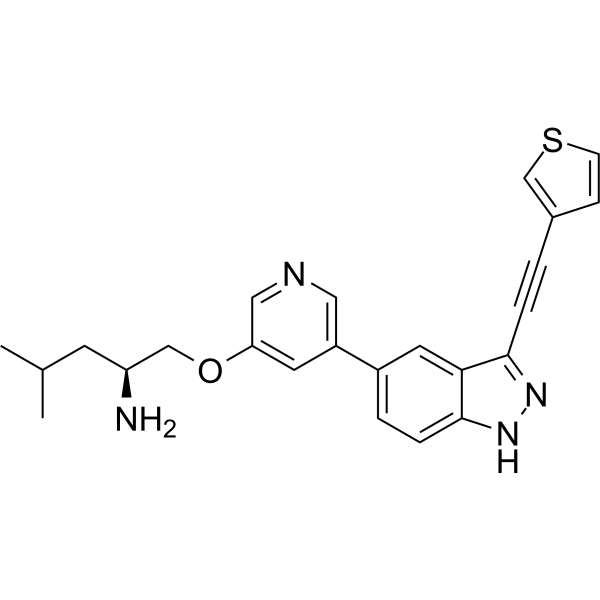 0 ImagesCat. No.: HY-162398CAS No.: 2997615-62-8LQ23 is a selective inhibitor for CDC2-like kinase 2 (CLK2) with an IC50 of 1.4 nM. LQ23 exhibits anti-inflammatory activity.
-
CDK4/6-IN-10
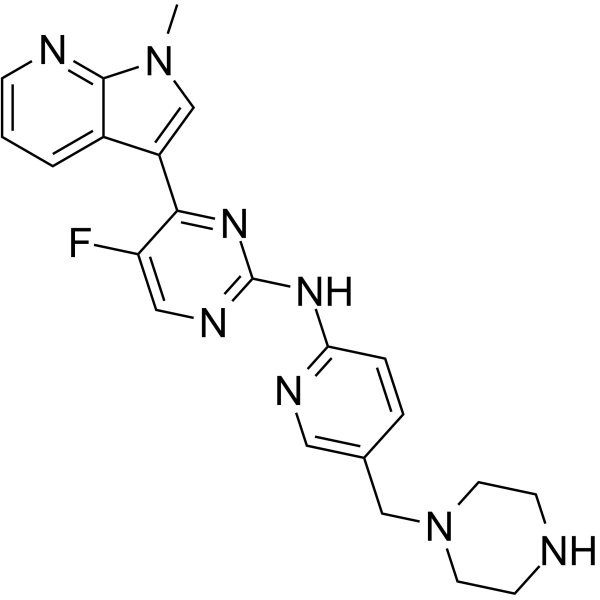 0 ImagesCat. No.: HY-115993CAS No.: 2688098-11-3
![[pSer2, pSer5, pSer7]-CTD TFA](https://file.medchemexpress.com/product_pic/hy-p1933a.gif "Click to View [pSer2, pSer5, pSer7]-CTD TFA Product Detail")
-
FKA-9i
 0 ImagesCat. No.: HY-181098CAS No.: 3060515-85-4FKA-9i is an orally active anticancer agent. FKA-9i directly binds to and promotes the degradation of oncoproteins LRPPRC (kd: 7.387 μM), YBX1 (kd: 16.52 μM) and RPN1 (kd: 26.82 μM). FKA-9i inhibits the MAPK signaling pathway and mitochondrial oxidative phosphorylation. FKA-9i also induces cancer cell cycle arrest, apoptosis, mitochondrial dysfunction and ROS accumulation. FKA-9i can be used in the research of tumors such as gastric cancer.




