



CDK2
Cyclin-dependent kinase 2 (CDK2) is a serine/threonine kinase that forms active complexes with cyclin E and cyclin A to regulate the G1/S transition and S-phase progression during cell-cycle control[1][2]. CDK2 functions within the cyclin-CDK regulatory network that coordinates DNA replication, cell proliferation, and checkpoint signaling, thereby linking cell-cycle progression to genome stability mechanisms[2][3]. Mechanistically, aberrant CDK2 activation promotes uncontrolled proliferation and contributes to tumor development in multiple cancer types, making CDK2 a relevant therapeutic target in oncology research[1][3]. In disease models, elevated CDK2 activity has been associated with tumor growth, while genetic or pharmacological suppression of CDK2 can impair cancer-cell proliferation and enhance antitumor responses[1][4]. Compared with related cell-cycle kinases such as CDK1, CDK2 preferentially associates with cyclins E and A and exhibits distinct conformational and regulatory properties that support selective inhibitor development[5]. This isoform-specific behavior is important because CDK1 can compensate for several cell-cycle functions, whereas CDK2 remains particularly relevant in cyclin E-driven and replication-associated oncogenic contexts[1][3]. For experimental applications, selective CDK2 inhibitors are widely used to investigate cell-cycle regulation, DNA-replication stress, and cancer-cell dependency on cyclin E/CDK2 signaling, supporting both mechanistic studies and therapeutic discovery programs[1][3].
References:
- [1]. Tadesse S, et al. Cyclin-Dependent Kinase 2 Inhibitors in Cancer Therapy: An Update. J Med Chem. 2019 May 9;62(9):4233-4251. [Content Brief]
- [2]. Pellarin I, et al. Cyclin-dependent protein kinases and cell cycle regulation in biology and disease. Signal Transduct Target Ther. 2025 Jan 13;10(1):11. doi: 10.1038/s41392-024-02080-z. PMID: 39800748; PMCID: PMC11734941. [Content Brief]
- [3]. Asghar U, et al. The history and future of targeting cyclin-dependent kinases in cancer therapy. Nat Rev Drug Discov. 2015 Feb;14(2):130-46. [Content Brief]
- [4]. Chen Y, et al. CDK2 inhibition sensitizes anthracycline-induced immunogenic cell death and enhances the efficacy of anti-PD-1 therapy. Front Immunol. 2025 Jun 10;16:1570040. doi: 10.3389/fimmu.2025.1570040. PMID: 40557162; PMCID: PMC12185487. [Content Brief]
- [5]. Foster WJ, et al. Hippocampal mGluR1-dependent long-term potentiation requires NAADP-mediated acidic store Ca2+ signaling. Sci Signal. 2018 Nov 27;11(558):eaat9093. [Content Brief]
All Product Categories
-
CDK2 Related Products (313)
Related Products (313)

-
Recombinant Proteins (12)
-
Antibodies (3)
-
CDK2-IN-15
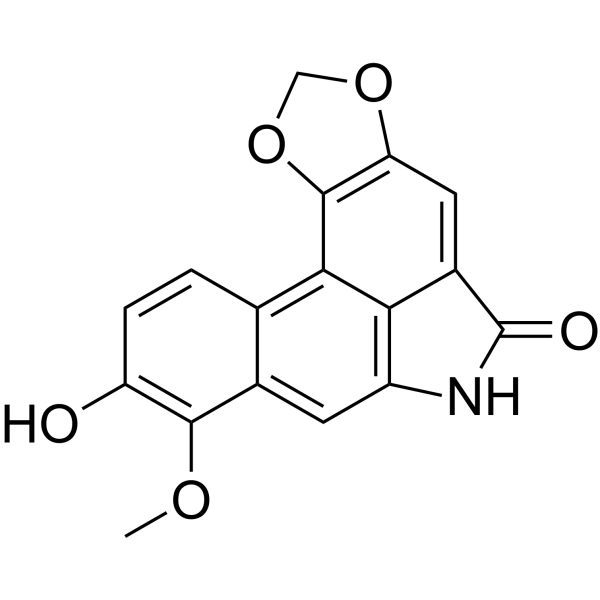 0 ImagesCat. No.: HY-148651CAS No.: 1219915-83-9
-
LS-Q2
 0 ImagesCat. No.: HY-182986LS-Q2 is a highly selective CDK4/9 inhibitor with IC50 values of 1.4 nM and 6.2 nM. LS-Q2 inhibits cancer cells proliferation, induces G2/M phase arrest, apoptosis and reduces pSer2 RNA polymerase II expression. LS-Q2 interacts synergistically with BET and Bcl-2 inhibitors to drive antitumor activity. LS-Q2 can be used for the research of cancer, such as malignant solid tumors.
-
CDK2-IN-45
 0 ImagesCat. No.: HY-172872CDK2-IN-45 (Compound 8f) is a CDK2 inhibitor (IC50: 0.64 μM). CDK2-IN-45 inhibits the proliferation of DU-145 and PC-3 cell lines with IC50 of 2.20 μM and 4.17 μM, respectively. CDK2-IN-45 induces G0/G1 cell cycle arrest and apoptosis. CDK2-IN-45 can be used in prostate cancer research.
-
CDK2-IN-52
 0 ImagesCat. No.: HY-177957CAS No.: 3038638-82-0CDK2-IN-52 (Compound Cpb No 39) is a selective cyclin-dependent kinase 2 (CDK2) inhibitor with a DC50 value of 1-10 nM. CDK2-IN-52 induces cell cycle arrest and suppresses tumor cell proliferation. CDK2-IN-52 is promising for research of CDK2-overexpressing malignancies such as breast and ovarian cancers.
-
CDK2-IN-44
 0 ImagesCat. No.: HY-173310CAS No.: 3051587-93-7CDK2-IN-44 (Compound 46) is an inhibitor of cyclin-dependent kinase 2 (CDK2). CDK2-IN-44 can effectively inhibit the proliferation of cancer cells and exert its activity in inhibiting cancer cell growth by arresting the cell cycle, promoting Apoptosis, and inducing cellular senescence. CDK2-IN-44 holds promise for use in the research of ovarian cancer and breast cancer.
-
AG-012986 dihydrochloride
 0 ImagesCat. No.: HY-182470CAS No.: 486414-32-8AG-012986 (dihydrochloride) is a pan-CDK inhibitor with Ki values of 44 nM (CDK1), 9.2 nM (CDK4), 94 nM (CDK2), and IC50 values of 22 nM (CDK5), 4 nM (CDK9). AG-012986 (dihydrochloride) causes apoptosis of T-cells by targeting upstream kinases in the p38 Mitogen-activated protein kinase (MAPK) pathway and impairing cellular survival. AG-012986 (dihydrochloride) induces cell cycle arrest, retinoblastoma protein hypophosphorylation, and reduces Ki-67 expression. AG-012986 (dihydrochloride) exerts antiproliferative activity in tumor cells, demonstrates antitumor efficacy in human xenograft models, and causes retinal and peripheral neurotoxicity, plus immune cell toxicity. AG-012986 (dihydrochloride) can be used for the research of colon carcinoma, non-small cell lung carcinoma, lung carcinoma, breast carcinoma, ovarian tumor, pancreatic carcinoma, osteosarcoma, lymphoma, leukemia, retinotoxicity.
-
CDK2-IN-56
 0 ImagesCat. No.: HY-10793CAS No.: 802536-13-6
-
CDK2-IN-14-d3
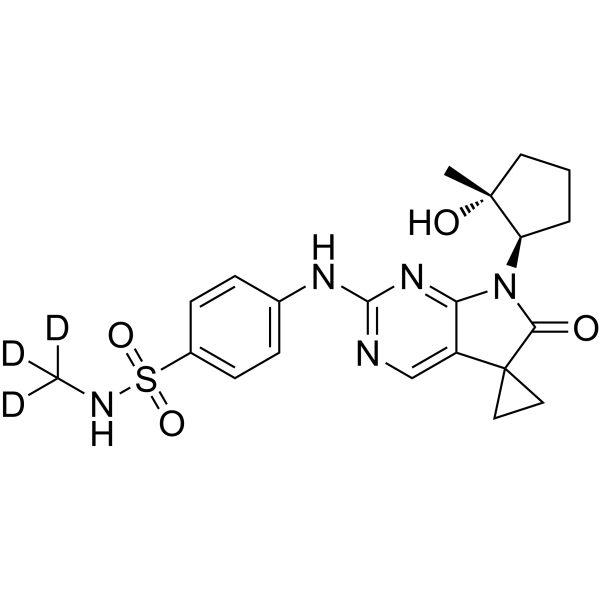 0 ImagesCat. No.: HY-151580SCAS No.: 2498658-25-4CDK2-IN-14-d3 is a potent and selective CDK2 inhibitor. CDK2-IN-14-d3 can be used in research of cancer.
-
CDK7-IN-27
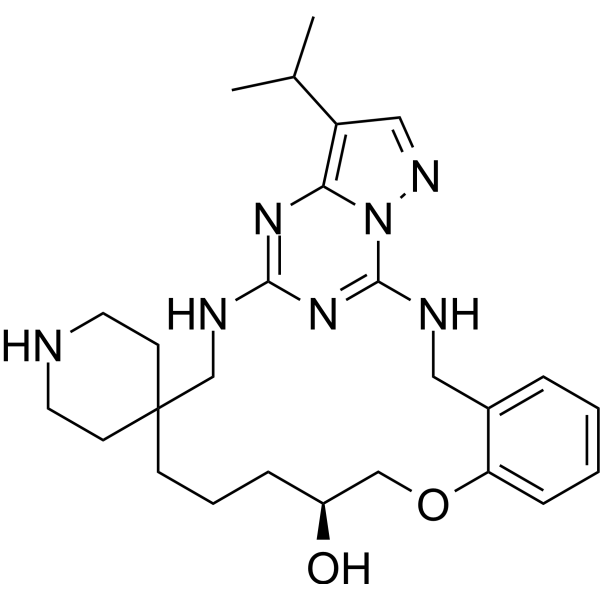 0 ImagesCat. No.: HY-162416CAS No.: 3025006-89-4CDK7-IN-27 (Compound 37) is a selective inhibitor for cyclin-dependent kinase 7 (CDK7), with Ki of 3 nM. CDK7-IN-27 arrests the cell cycle at G0/G1 phase.
-
UNC10112785
 0 ImagesCat. No.: HY-128491CAS No.: 748142-06-5UNC10112785 is a serine/threonine kinase inhibitor with a human GSK-3β IC50 of 0.031 μM, human CDK-2 IC50 of 0.016 μM, and human CDK-4 IC50 of 1.99 μM. UNC10112785 can be used for the research of type 2 diabetes.
-
Anticancer agent 298
 0 ImagesCat. No.: HY-181116Anticancer agent 298 is a bi-nuclear Cu(II)-hydrazone complexe. Anticancer agent 298 can bind to the CDK-2 active site (PDB ID: 3IG7) via hydrogen bonds with key amino acid residues. Anticancer agent 298 exerts cytotoxic effects against hepatocellular carcinoma cells, and has lower cytotoxicity against normal human embryonic kidney cells. Anticancer agent 298 can be used for the research of hepatocellular carcinoma.
-
VEGFR2-IN-86
 0 ImagesCat. No.: HY-182789VEGFR2-IN-86 is a dual VEGFR2/CDK2 inhibitor, with an IC50 of 0.06 μM against VEGFR2 and an IC50 of 0.78 μM against CDK2. VEGFR2-IN-86 induces G-phase cell cycle arrest, reduces colony-forming ability and tumor cell migration capacity, and exerts antiproliferative activity in cancer cells. VEGFR2-IN-86 can be used for the research of breast cancer and prostate cancer.

-
Isosilybin B (Standard)
 0 ImagesCat. No.: HY-N7045RCAS No.: 142796-22-3Isosilybin B (Standard) is the analytical standard of Isosilybin B (HY-N7045). This product is intended for research and analytical applications. Isosilybin B is a flavonolignan. Isosilybin B can be isolated from Silybum marianum. Isosilybin B can regulate cell cycle-related proteins (e.g., reduce cyclins (D3, D1, A, E), Cdk4, Cdk2, Cdc25A), and activate Caspases (Caspase-9 and Caspase-3). Isosilybin B can promote Apoptosis, reduce androgen receptor (AR) and PSA. Isosilybin B has anticancer activity against prostate cancer.
-
BRD4/AKT-IN-1
 0 ImagesCat. No.: HY-183273CAS No.: 3087270-50-3BRD4/AKT-IN-1 is a BRD4/AKT inhibitor with BRD4 IC50 66.12 nM and AKT1 IC50 143.81 nM. BRD4/AKT-IN-1 blocks BRD4-mediated c-Myc transcriptional regulation, modulates AKT1 signaling, decouples AKT phosphorylation from pro-survival effectors. BRD4/AKT-IN-1 induces G0/G1 cell cycle arrest via downregulated phosphorylated RB, cyclin E1, CDK2. BRD4/AKT-IN-1 elevates LC3B levels to promote autophagy. BRD4/AKT-IN-1 promotes apoptosis in cancer cells. BRD4/AKT-IN-1 can be used for the research of metastatic castration-resistant prostate cancer.

-
PROTAC CDK2-pRb degrader-1
 0 ImagesCat. No.: HY-186132CAS No.: 3030276-48-0PROTAC CDK2-pRb degrader-1 is an orally active PROTAC-class degrader of CDK2. PROTAC CDK2-pRb degrader-1 effectively inhibits the phosphorylation of retinoblastoma protein (Rb) at serine residues 807/811 by inducing ubiquitination and proteasomal degradation of CDK2. PROTAC CDK2-pRb degrader-1 exhibits significant activity against human cells (with EC50 values of 12 nM and 125 nM, respectively). In xenograft models, PROTAC CDK2-pRb degrader-1 effectively inhibits tumor growth and induces tumor stasis, making it suitable for research related to CCNE1-amplified cancers (such as ovarian cancer, gastric cancer, and breast cancer).
-
Tyrphostin AG17
 0 ImagesCat. No.: HY-183456CAS No.: 71308-35-5Tyrphostin AG17 is an orally active CDK2 inhibitor and EGFR tyrosine kinase antagonist. Tyrphostin AG17 reduces the levels of p21 and p16. Tyrphostin AG17 induces G1 phase cell cycle arrest, Apoptosis, mitochondrial dysfunction, decreased ATP levels, and inhibits DNA, RNA and protein synthesis, adipogenesis, and lipid synthesis. Tyrphostin AG17 inhibits fat accumulation, white adipose tissue hypertrophy, and alterations of glycogen and lipid inclusions in hepatocytes in obese mice without changing their serum biochemical parameters. Tyrphostin AG17 exhibits anticancer effects. Tyrphostin AG17 can be used in research related to immunoblastic lymphoma, leukemia, ovarian cancer, glioblastoma, colon cancer, breast cancer, melanoma, obesity and hepatic steatosis.
-
Cyproheptadine (Standard)
 0 ImagesCyproheptadine (Standard) is the analytical standard of Cyproheptadine (HY-B1622). This product is intended for research and analytical applications. Cyproheptadine acts as a p38 MAP kinase activator, CHK2 activator, histamine H1 receptor inhibitor and serotonin receptor inhibitor. Cyproheptadine mediates cell cycle arrest via G1 phase arrest, G1/S transition arrest, G0/G1 phase arrest, reduced expression of cyclins D1/D2/D3, upregulated expression of HBP1, p16, p21, p27, and decreased phosphorylation of retinoblastoma protein. Cyproheptadine induces Apoptosis by increasing PARP and cleaved PARP, as well as activating the mitochondrial caspase pathway. Cyproheptadine inhibits tumor growth with extremely low toxicity to normal cells. Cyproheptadine can be used in research related to hepatocellular carcinoma, multiple myeloma and acute myeloid leukemia.




