



COX
Cyclooxygenase
Cyclooxygenase (COX), officially known as prostaglandin-endoperoxide synthase (PTGS), is an enzyme that is responsible for formation of important biological mediators called prostanoids, including prostaglandins, prostacyclin and thromboxane. Pharmacological inhibition of COX can provide relief from the symptoms of inflammation and pain. Drugs, like Aspirin, that inhibit cyclooxygenase activity have been available to the public for about 100 years. Two cyclooxygenase isoforms have been identified and are referred to as COX-1 and COX-2. Under many circumstances the COX-1 enzyme is produced constitutively (i.e., gastric mucosa) whereas COX-2 is inducible (i.e., sites of inflammation). Non-steroidal anti-inflammatory drugs (NSAID), such as aspirin and ibuprofen, exert their effects through inhibition of COX. The main COX inhibitors are the non-steroidal anti-inflammatory drugs (NSAIDs).
COX Isoform Specific Products
All Product Categories
-
COX Related Products (1315)
Related Products (1315)

-
Antibodies (6)
-
COX Isoform Comparison
-
Buddlejasaponin IV
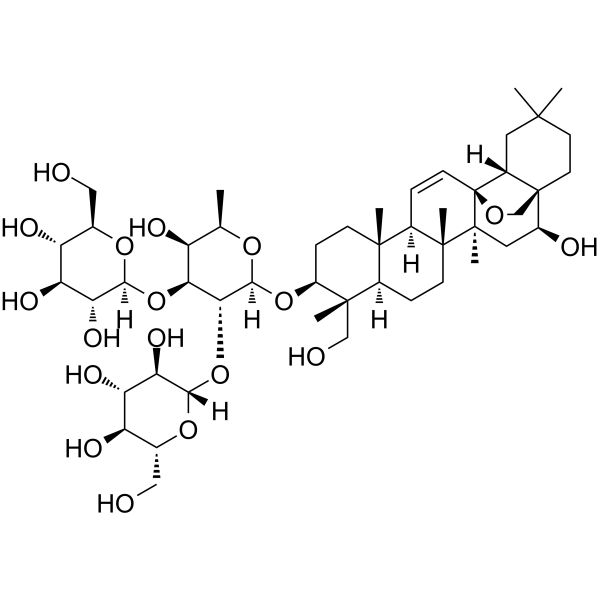 0 ImagesCat. No.: HY-125131CAS No.: 139523-30-1Buddlejasaponin IV (BS‐IV) exerts anti-inflammatory and cytotoxic effects against cancer cells.
-
Etoricoxib hydrochloride
 0 ImagesCat. No.: HY-15321ACAS No.: 202409-40-3Synonyms: MK-0663 hydrochloride; L-791456 hydrochlorideEtoricoxib hydrochloride (MK-0663 hydrochloride) is a synthetic nonsteroidal anti-inflammatory drug with cyclooxygenase-2 inhibitory activity. Etoricoxib hydrochloride can inhibit the conversion of arachidonic acid to prostaglandins, thereby reducing inflammation and pain. Etoricoxib hydrochloride is used to inhibit osteoarthritis and has anti-inflammatory and bone remodeling effects. The formulation of etoricoxib hydrochloride is prepared by emulsion solvent evaporation technology and exhibits good cell compatibility and enhanced alkaline phosphatase activity.
-
Indomethacin heptyl ester
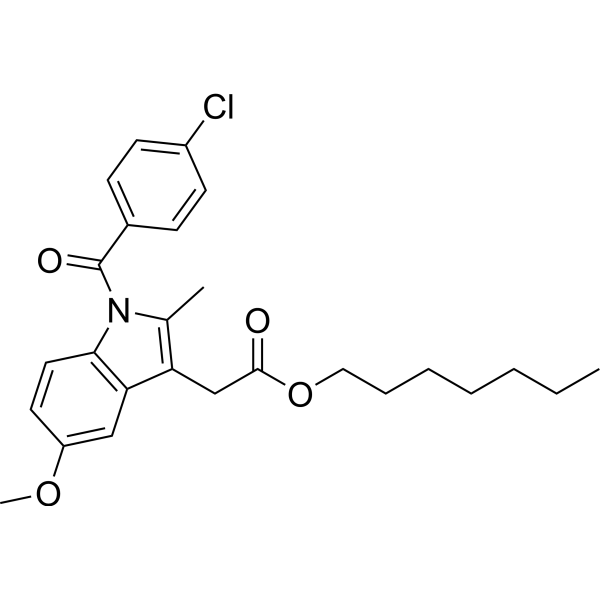 0 ImagesCat. No.: HY-114795CAS No.: 282728-47-6Indomethacin heptyl ester is a selective COX-2 inhibitor with IC50 of 0.04 μM, exhibits anti-inflammatory activity.
-
4-Acetylaminoantipyrine-d3
 0 ImagesCat. No.: HY-W268542S1CAS No.: 342821-66-34-Acetylaminoantipyrine-d3 is the deuterium labeled 4-Acetylaminoantipyrine (HY-W268542). 4-Acetylaminoantipyrine (4-AA) is a derivative of antipyrine (HY-B0171). 4-Acetylaminoantipyrine acts as a PGE2-dependent blocker and inhibitor of cyclooxygenase (COX). 4-Acetylaminoantipyrine can inhibit Cu/ZnSOD. 4-Acetylaminoantipyrine can spontaneously bind with bovine serum albumin (BSA) and alter its conformation.
-
COX-2/15-LOX/mPGES1-IN-1
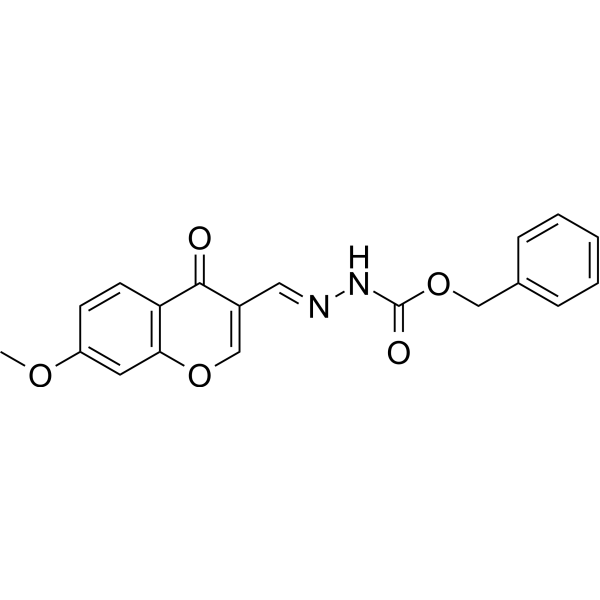 0 ImagesCat. No.: HY-162166CAS No.: 3027770-84-6
-
[10]-Shogaol (Standard)
![[10]-Shogaol (Standard)](https://file.medchemexpress.com/product_pic/hy-n2434r.gif "Click to View [10]-Shogaol (Standard) Product Detail") 0 ImagesCat. No.: HY-N2434RCAS No.: 36752-54-2-Shogaol (Standard) is the analytical standard of -Shogaol (HY-N2434). This product is intended for research and analytical applications. [10]-Shogaol is an orally active antioxidant. [10]-Shogaol can be extracted from ginger (Zingiber officinale). [10]-Shogaol1 inhibits COX-2 with an IC50 value of 7.5 μM. [10]-Shogaol inhibits the production of proinflammatory cytokines (IL-1β, IL-6). [10]-Shogaol inhibits NF-κB phosphorylation. [10]-Shogaol has anti-inflammatory effects. [10]-Shogaol has anticancer effects against Docetaxel (HY-B0011)-resistant prostate cancer. [10]-Shogaol exhibits larvicidal activity against L5 larvae of Angiostrongylus cantonensis.
0 ImagesCat. No.: HY-N2434RCAS No.: 36752-54-2-Shogaol (Standard) is the analytical standard of -Shogaol (HY-N2434). This product is intended for research and analytical applications. [10]-Shogaol is an orally active antioxidant. [10]-Shogaol can be extracted from ginger (Zingiber officinale). [10]-Shogaol1 inhibits COX-2 with an IC50 value of 7.5 μM. [10]-Shogaol inhibits the production of proinflammatory cytokines (IL-1β, IL-6). [10]-Shogaol inhibits NF-κB phosphorylation. [10]-Shogaol has anti-inflammatory effects. [10]-Shogaol has anticancer effects against Docetaxel (HY-B0011)-resistant prostate cancer. [10]-Shogaol exhibits larvicidal activity against L5 larvae of Angiostrongylus cantonensis.
-
4-Methylamino antipyrine-d3-1
 0 ImagesCat. No.: HY-W701503CAS No.: 1246820-06-34-Methylamino antipyrine-d3-1 is the deuterium labeled 4-Methylamino antipyrine-1. 4-Methylamino antipyrine is an active metabolite of Metamizole. Metamizole is a pyrazolone non-steroidal anti-inflammatory drug (NSAID) and inhibits COX. Metamizole is an nonopioid analgesic agent and can be used for pain and fever. 4-Methylamino antipyrine has analgesic, antipyretic, and relatively weak antiinflammatory properties.
-
JAK05
 0 ImagesCat. No.: HY-170586JAK05 exhibits inhibitory activity against Helicobacter pylori, inhibits strains J63, J196 and J107 with MIC of 3-5 µg/mL. JAK05 exhibits binding affinity to H+/K+-ATPase, COX-1/2, TNF-α and PGE2, reveals antioxidant and anti-inflammatory activities. JAK05 exhibits anti-ulcer activity in rat ethanol-induced gastric ulcer models.
-
5-LOX/sEH-IN-1
 0 ImagesCat. No.: HY-159169CAS No.: 3040383-48-75-LOX/sEH-IN-1 (Compound 8o) is a dual 5-LOX/sEH-IN-1 inhibitor with cardioprotective effects, exhibiting IC50 values of 3.05 μM and 2.20 nM respectively, and 5-LOX/sEH-IN-1 can also inhibit the activity of COX-2 (IC50=10.50 μM). 5-LOX/sEH-IN-1 has analgesic and anti-inflammatory effects, while reducing ulcer pathogenicity, and can be used to develop anti-inflammatory agents with fewer gastrointestinal and cardiovascular side effects.
-
Licofelone-d6
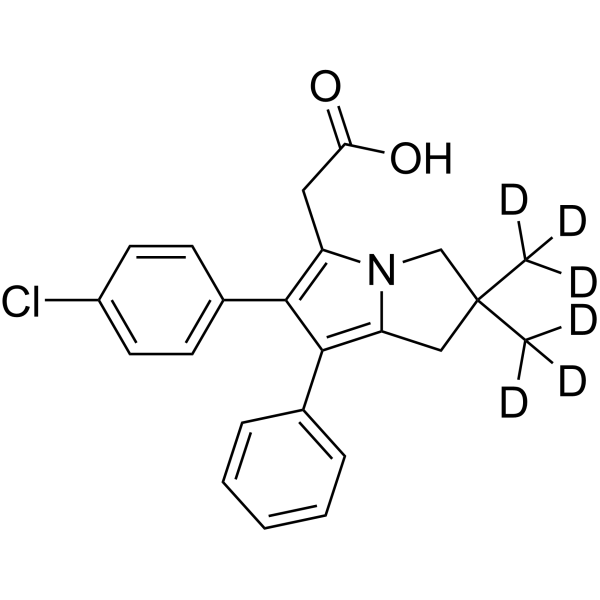 0 ImagesCat. No.: HY-B1452S1CAS No.: 1178549-81-9Synonyms: ML-3000-d6Licofelone-d6 is the deuterium labeled Licofelone. Licofelone (ML-3000) is a dual COX/5-lipoxygenase (5-LOX) inhibitor (IC50=0.21/0.18 μM, respectively) for the treatment of osteoarthritis. Licofelone exerts anti-inflammatory and anti-proliferative effects. Licofelone induces apoptosis, and decreases the production of proinflammatory leukotrienes and prostaglandins.
-
Indobufen sodium
 0 ImagesCat. No.: HY-18763ACAS No.: 94135-04-3Synonyms: Ibustrin sodiumIndobufen sodium is a platelet aggregation inhibitor. Indobufen sodium is a reversible platelet cyclooxygenase (Cox) activity inhibitor. Indobufen sodium suppresses thromboxane A2 (TxA2) synthesis. Indobufen sodium down-regulates tissue factor (TF) in monocytes.
-
Mefenamic acid-13C6
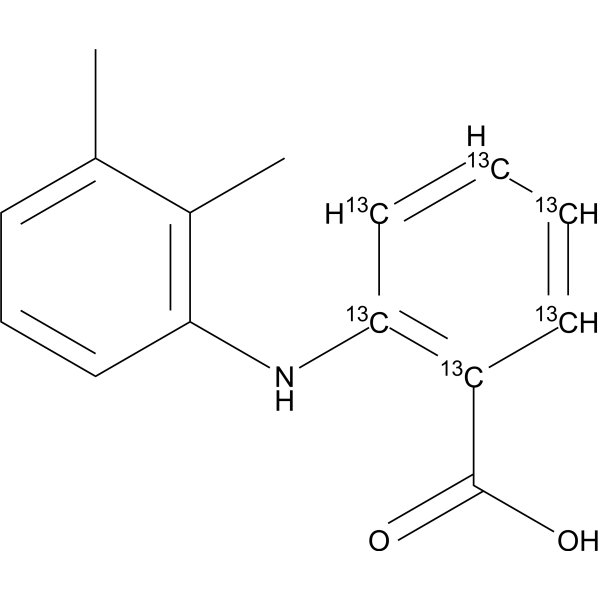 0 ImagesCat. No.: HY-B0574S2CAS No.: 1325559-19-0Mefenamic acid-13C6 is the 13C-labeled Mefenamic acid. Mefenamic acid is a BBB-permeable non-steroidal anti-inflammatory agent, acting as a competitive inhibitor of hCOX-1 and hCOX-2, with IC50s of 40 nM and 3 μM for hCOX-1 and hCOX-2, respectively.
-
COX-2/NLRP3-IN-1
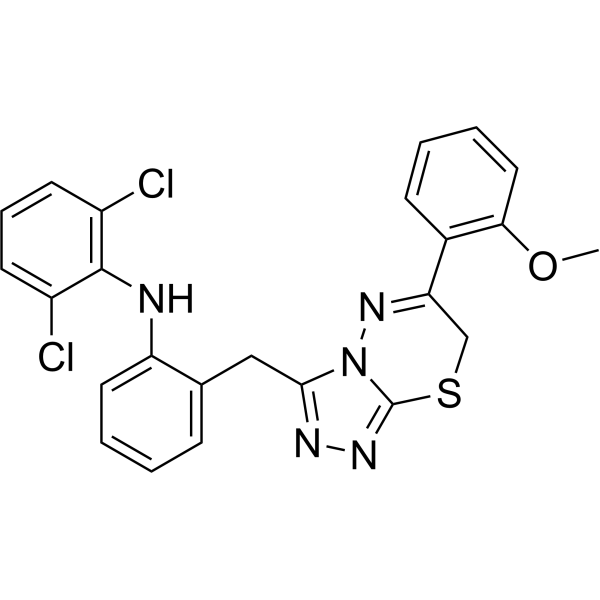 0 ImagesCat. No.: HY-161266CAS No.: 3057274-61-7COX-2/NLRP3-IN-1 (Compound 6k) is a COX-2/NLRP3 inhibitor with a IC50 of 1.53 μM for COX-2. COX-2/NLRP3-IN-1 exerts anti-inflammatory effects by inhibiting the NF-κB/NLRP3 signaling pathway.
-
COX-2/Aromatase-IN-2
 0 ImagesCat. No.: HY-181236CAS No.: 1622452-45-2COX-2/Aromatase-IN-2 is a potent dual inhibitor of COX-2 and aromatase. COX-2/Aromatase-IN-2 can simultaneously inhibit COX-2 and aromatase, suppress inflammation and induce proliferation inhibition of breast cancer cells. COX-2/Aromatase-IN-2 exerts anti-breast cancer and anti-inflammatory effects in the MCF-7 breast cancer cell and carrageenan-induced rat paw edema model. COX-2/Aromatase-IN-2 can be used for the study of inflammation and breast cancer.
-
RNP-11
 0 ImagesCat. No.: HY-187563RNP-11 is a selective COX-2 inhibitor with an IC50 of 42.85 μg/mL against human COX-2, and also acts as a bactericide and anti-inflammatory agent. RNP-11 inhibits the production of pro-inflammatory cytokines (IL-6, TNF-α, IL-1β, disrupts bacterial cell membranes and induces bacterial cell death. RNP-11 exhibits activity against strains of Staphylococcus and Enterococcus, including Methicillin (HY-121544)-resistant Staphylococcus aureus and Vancomycin (HY-B0671)-resistant Enterococcus faecium. RNP-11 reduces the load of Staphylococcus aureus, exerting dual effects of pathogen clearance and inflammatory response alleviation in a mouse skin infection model,. RNP-11 can be used in research related to infections caused by Staphylococcus, Staphylococcus aureus and Enterococcus faecium.

-
Rosmanol (Standard)
 0 ImagesCat. No.: HY-N5015RCAS No.: 80225-53-2Rosmanol (Standard) is the analytical standard of Rosmanol. This product is intended for research and analytical applications. Rosmanol could inhibit the oxidation of low density lipoprotein (LPL) and significantly inhibit lipopolysaccharide induced iNOS and COX-2 expression, with anti-inflammatory effect.
-
Atractylochromene
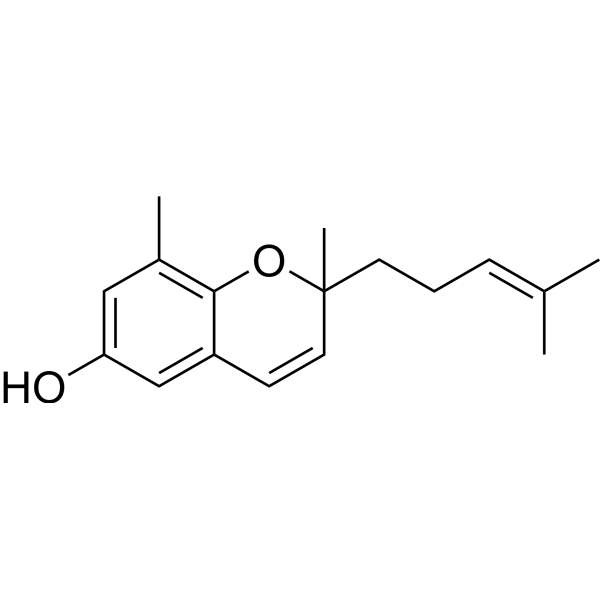 0 ImagesCat. No.: HY-N8480CAS No.: 203443-33-8Atractylochromene is a potent dual inhibitor of 5-LOX/COX-1 with IC50s of 0.6 and 3.3 μM, respectively.
-
MCI
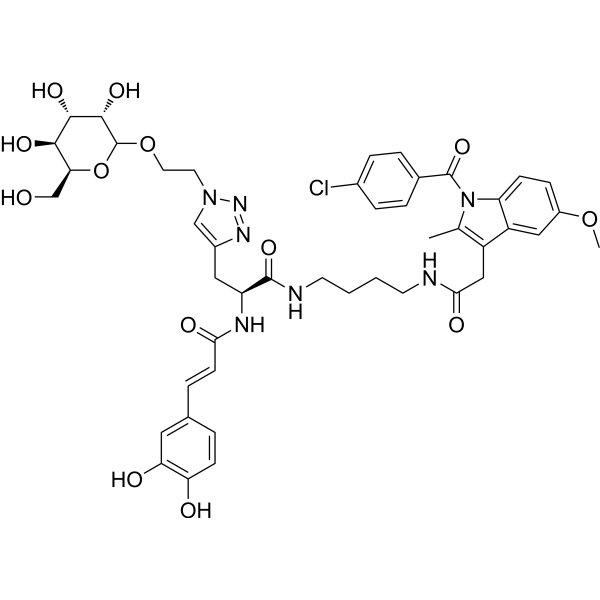 0 ImagesCat. No.: HY-155031MCI alleviates inflammation by macrophage reprogramming via targeting ROS scavenging and COX-2 downregulation. MCI inhibits COX-2 with an IC50 value of 1.23 μM. MCI has significant anti-inflammatory effects in collagen-induced arthritis (CIA) models. MCI can be used in research for rheumatoid arthritis (RA).
-
COX-2-IN-59
 0 ImagesCat. No.: HY-179125COX-2-IN-59 is a potent and selective COX-2 inhibitor with an IC50 of 0.052 μM. COX-2-IN-59 exhibits 200-fold selectivity over COX-1 (IC50 = 11.16 μM). COX-2-IN-59 reduces COX-2 levels, induces cell cycle arrest, and triggers apoptosis by increasing Bax expression, decreasing Bcl-2 levels, and activating caspase-3. COX-2-IN-59 can be used for the research of colon cancer.




