



COX-2
Cyclooxygenase-2 (COX-2) is an inducible enzyme catalyzing the conversion of arachidonic acid to prostaglandin endoperoxides, central to prostanoid biosynthesis and inflammatory signaling[1][2]. Mechanistically, COX-2 activity is regulated by both its catalytic and allosteric subunits, allowing modulation by fatty acids and selective inhibitors, distinguishing it from constitutive COX-1[2]. COX-2 is strongly upregulated in response to pro-inflammatory cytokines, hypoxia, and tumor microenvironment signals, orchestrating prostaglandin E2 (PGE2) production and downstream activation of NF-κB and PI3K-Akt pathways[3][4][5]. In disease models, COX-2 contributes to cancer progression, atherosclerosis, and migraine through modulation of immune responses, vascular smooth muscle activity, and neuronal-glial interactions[6][7][5]. Compared with COX-1, COX-2 expression is more context-dependent and spatially regulated, being highly inducible in endothelial cells, arterial versus venous smooth muscle, and neuronal populations under stress or inflammatory stimuli[8][9][10]. Experimental studies demonstrate COX-2 as a critical mediator of ischemic preconditioning in the heart, providing cardioprotection via PGE2 and PGI2 signaling[11]. Selective COX-2 inhibitors, including synthetic NSAIDs and dual COX/LOX modulators, are utilized to interrogate COX-2 function and develop anti-inflammatory therapies with reduced gastrointestinal and cardiovascular side effects[3][12]. Agonist studies further highlight receptor-mediated induction of COX-2, exemplifying its role in colon carcinoma and trigeminal ganglia models[13][7].
References:
- [1]. Smith FG, et al. Cyclooxygenase (COX) Inhibitors and the Newborn Kidney. Pharmaceuticals (Basel). 2012 Oct 25;5(11):1160-76. [Content Brief]
- [2]. Ahmadi M, et al. Non-steroidal anti-inflammatory drugs: recent advances in the use of synthetic COX-2 inhibitors. RSC Med Chem. 2022 Feb 14;13(5):471-496. [Content Brief]
- [3]. Bolli R, et al. Discovery of a new function of cyclooxygenase (COX)-2: COX-2 is a cardioprotective protein that alleviates ischemia/reperfusion injury and mediates the late phase of preconditioning. Cardiovasc Res. 2002 Aug 15;55(3):506-19. [Content Brief]
- [4]. Kirkby NS, et al. COX-2 protects against atherosclerosis independently of local vascular prostacyclin: identification of COX-2 associated pathways implicate Rgl1 and lymphocyte networks. PLoS One. 2014 Jun 2;9(6):e98165. [Content Brief]
- [5]. Segelcke D, et al. The role of the spinal cyclooxygenase (COX) for incisional pain in rats at different developmental stages. Eur J Pain. 2020 Feb;24(2):312-324. [Content Brief]
- [6]. Chatzipieris FP, et al. Recent advances in dual COX/LOX inhibitor design (2020-2024). Life. 2026;16(1):163. [Content Brief]
- [7]. Yang WL, et al. Cholinergic receptor up-regulates COX-2 expression and prostaglandin E(2) production in colon cancer cells. Carcinogenesis. 2000 Oct;21(10):1789-93. [Content Brief]
- [8]. Hsieh HL, et al. c-Src-dependent EGF receptor transactivation contributes to ET-1-induced COX-2 expression in brain microvascular endothelial cells. J Neuroinflammation. 2012 Jul 2;9:152. [Content Brief]
- [9]. Neeb L, et al. IL-1β stimulates COX-2 dependent PGE₂ synthesis and CGRP release in rat trigeminal ganglia cells. PLoS One. 2011 Mar 4;6(3):e17360. [Content Brief]
- [10]. Chen S, et al. 288 The COX-2 pathway as a mediator of resistance to anti-PD-1 therapy. J Immunother Cancer. 2021;9(Suppl 2):A312.
- [11]. Bishop-Bailey D, et al. Differential induction of cyclooxygenase-2 in human arterial and venous smooth muscle: role of endogenous prostanoids. Arterioscler Thromb Vasc Biol. 1998 Oct;18(10):1655-61. [Content Brief]
- [12]. Majumder M, et al. COX-2 Elevates Oncogenic miR-526b in Breast Cancer by EP4 Activation. Mol Cancer Res. 2015 Jun;13(6):1022-33. [Content Brief]
- [13]. Scott KF, et al. Functional coupling and differential regulation of the phospholipase A2-cyclooxygenase pathways in inflammation. J Leukoc Biol. 1999 Oct;66(4):535-41. [Content Brief]
- [14]. Smith WL, et al. Interactions of fatty acids, nonsteroidal anti-inflammatory drugs, and coxibs with the catalytic and allosteric subunits of cyclooxygenases-1 and -2. J Biol Chem. 2019 Feb 1;294(5):1697-1705. [Content Brief]
-
COX-2 Related Products (502)
Related Products (502)


-
COX-2-IN-24
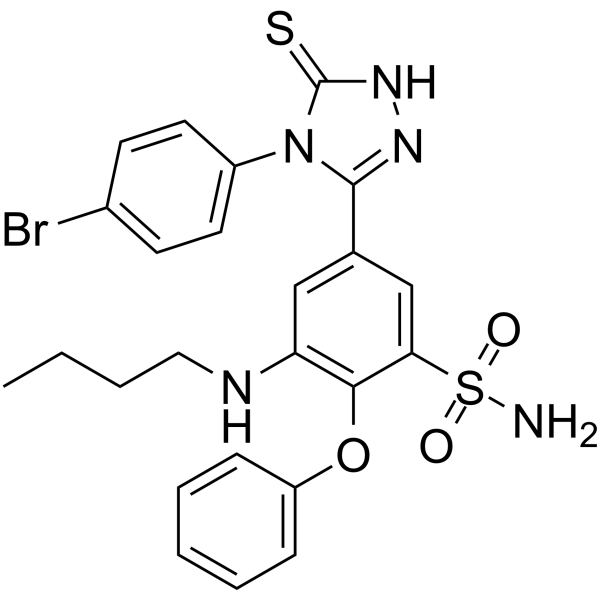 0 ImagesCat. No.: HY-147963CAS No.: 2417995-10-7COX-2-IN-24 is an orally active inhibitor of COX-2 with IC50 value of 0.17 μM, shows anti-inflammatory and low ulcerogenic activities.
-
PI3K/AKT-IN-6
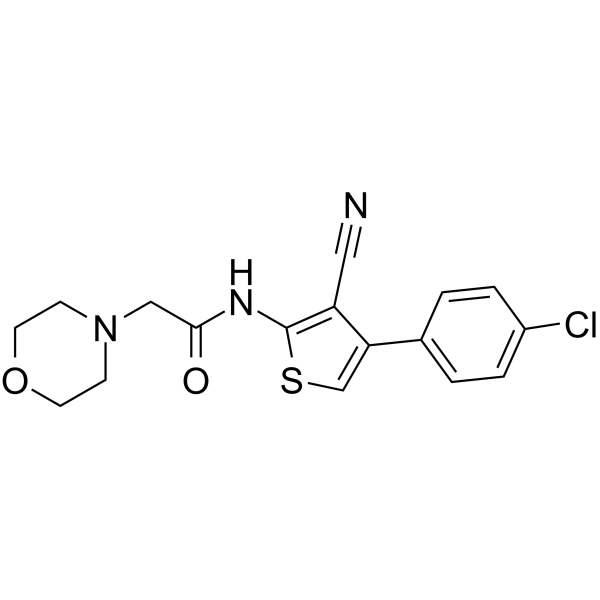
 0 ImagesCat. No.: HY-182282PI3K/AKT-IN-6 is an orally effective PI3K/AKT signaling pathway inhibitor and anti-inflammatory agent. PI3K/AKT-IN-6 inhibits the production of pro-inflammatory cytokines TNF-α and IL-6, and downregulates the expression of inflammatory mediators COX-2 and iNOS. PI3K/AKT-IN-6 improves related symptoms in colitis mice. PI3K/AKT-IN-6 can be used for the research of inflammatory diseases such as colitis.
-
COX-2-IN-57
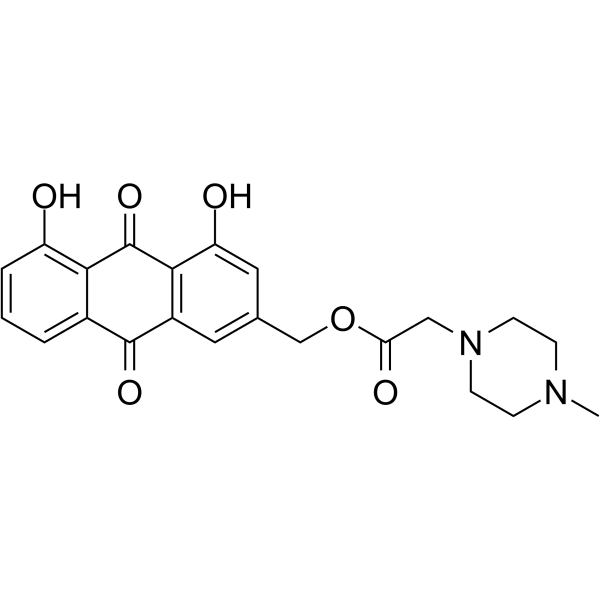
 0 ImagesCat. No.: HY-175637COX-2-IN-57 is an orally active COX-2 inhibitor with an IC50 value of 0.02 μM. COX-2-IN-57 reduces MyD88 expression and decreases serum levels of COX-2, PGE2, and COX-1 in Cisplatin (HY-17394)/radiation-induced neuropathy rat model. COX-2-IN-57 demonstrates superior antinociceptive efficacy in hot plate, cold allodynia, and Randall-Selitto tests, along with hepato-/renal protection. COX-2-IN-57 can be used for the study of inflammation.
-
Leupeptin hydrochloride
 0 ImagesCat. No.: HY-183478CAS No.: 39740-82-4Leupeptin hydrochloride is a broad-spectrum protease inhibitor. By inhibiting the activation of the PTEN/PI3K/Akt/NF-κB/ERK1/2/p38 signaling pathway, Leupeptin hydrochloride significantly reduces LPS-induced NO and ROS production, mitochondrial membrane potential hyperpolarization, phagocytic activity, pro-inflammatory cytokine release, and M1 polarization in mouse peritoneal macrophages, and reverses autophagic flux impairment. It also decreases Concanavalin A (HY-P2149)-induced proliferation index of mouse splenic lymphocytes and the Th1/IL-10 and Th2/IL-10 cytokine ratios, thereby modulating innate and adaptive immune responses. Leupeptin hydrochloride inhibits blood coagulation and tumorigenesis in mouse skin. Leupeptin hydrochloride can be used in research on chronic inflammatory diseases and skin tumorigenesis.
-
TLR4-IN-2
 0 ImagesCat. No.: HY-173388CAS No.: 1019984-44-1TLR4-IN-2 (Compound Racemic-11k) is inhibitors of TLR4, JNK, and NF-κB. TLR4-IN-2 inhibits NO production in LPS-stimulated RAW264.7 cells with an IC50 value of 23.2 µM. TLR4-IN-2 exerts anti-inflammatory activity by inhibiting TLR4 expression, reducing JNK phosphorylation, thereby suppressing the activation of NF-κB, blocking the transcription of inflammation-related genes, reducing the expression of iNOS and COX-2, and decreasing the production of inflammatory mediators such as NO, PGE 2, and TNF-α. TLR4-IN-2 is promising for research of inflammatory diseases, such as rheumatoid arthritis and various inflammatory disorders.
-
4-Methoxycinnamic acid ethyl ester
 0 Images4-Methoxycinnamic acid ethyl ester (Ethyl p-methoxycinnamate) is an orally active natural compound found. 4-Methoxycinnamic acid ethyl ester exerts anti-inflammatory effects by inhibiting cyclooxygenase (COX-1 (IC50 = 1.12 μM) and COX-2 (IC50 = 0.83 μM)), NF-κB (IC50 = 88.7 μM) and cytokine production (TNF-α (IC50 = 96.84 μg/mL) and IL-1β (IC50 = 166.4 μg/mL)). 4-Methoxycinnamic acid ethyl ester inhibits tumor cell proliferation, migration and cancer metabolism and induces apoptosis.4-Methoxycinnamic acid ethyl ester inhibits VEGF expression, thereby inhibiting angiogenesis. 4-Methoxycinnamic acid ethyl ester has a significant inhibitory effect on dengue virus and Mycobacterium tuberculosis. 4-Methoxycinnamic acid ethyl ester has analgesic effects in rats.
-
RS-57067
 0 ImagesCat. No.: HY-171470CAS No.: 179382-91-3RS-57067 is a COX-2 inhibitor with a Ki of 16.9 μM. RS-57067 reduces the production of prostaglandins (such as PGE2) by inhibiting COX-2, thereby alleviating the inflammatory response. RS-57067 can be used in the research of inflammatory and immune diseases.
-
1,1,2-Triphenylhex-1-ene
 0 ImagesCat. No.: HY-187141CAS No.: 69052-92-21,1,2-Triphenylhex-1-ene is an orally active COX-2 inhibitor with an IC50 of 7.9 μM against ovine COX-2. 1,1,2-Triphenylhex-1-ene attenuates inflammation by inhibiting COX-2. 1,1,2-Triphenylhex-1-ene relieves abdominal contractions. 1,1,2-Triphenylhex-1-ene can be used in research related to inflammation and pain.
-
Licoflavanone
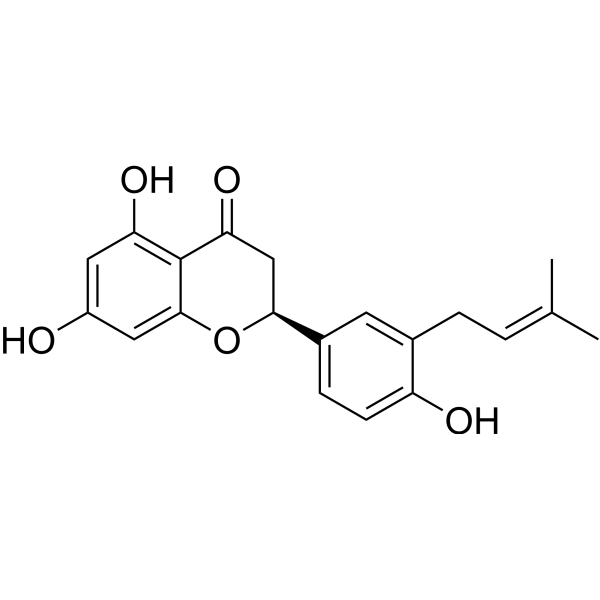 0 ImagesCat. No.: HY-N10133CAS No.: 119240-82-3Synonyms: 3′-PrenylnaringeninLicoflavanone (3′-Prenylnaringenin) is a flavanone with antioxidant, anti-inflammatory and anticancer activities. Licoflavanone can be isolated from the leaf extract of Glycyrrhiza glabra. Licoflavanone downregulates the mTOR/PI3K/AKT signaling pathway to inhibit the proliferation, migration and invasion of cancer cells, while activates Bax, Bad and multiple caspase enzymes to induce apoptosis. Its anti-inflammatory effect is manifested by reducing the nuclear translocation of NF-κB, decreasing the phosphorylation levels of p38, JNK and ERK1/2, thereby inhibiting the expression of nitric oxide, proinflammatory cytokines, COX-2 and iNOS. Licoflavanone is used in studies on nasopharyngeal carcinoma and related mechanisms.
-
N-(p-Coumaroyl) Serotonin (Standard)
 0 ImagesCat. No.: HY-129440RCAS No.: 68573-24-0N-(p-Coumaroyl) Serotonin (Standard) is the analytical standard of N-(p-Coumaroyl) Serotonin (HY-129440). This product is intended for research and analytical applications. N-(p-Coumaroyl) Serotonin is an orally active polyphenol found in safflower seeds with potent anti-inflammatory, antioxidant, and antitumor activities. N-(p-Coumaroyl) Serotonin suppresses NF‑κB, TLR4/MyD88 and MAPK signaling, activates NQO1/HO‑1 pathways, and inhibits pro‑inflammatory cytokines, iNOS and COX‑2 and ROS production. N-(p-Coumaroyl) Serotonin induces S‑phase arrest and apoptosis in glioblastoma cells, reduces atherosclerotic lesions, and alleviates renal and vascular injuries. N-(p-Coumaroyl) Serotonin acts as a vasodilator, regulates calcium dynamics. N-(p-Coumaroyl) Serotonin can be used for the research of neurodegenerative diseases, atherosclerosis, glioblastoma, and acute renal failure.
-
Ramifenazone-d7
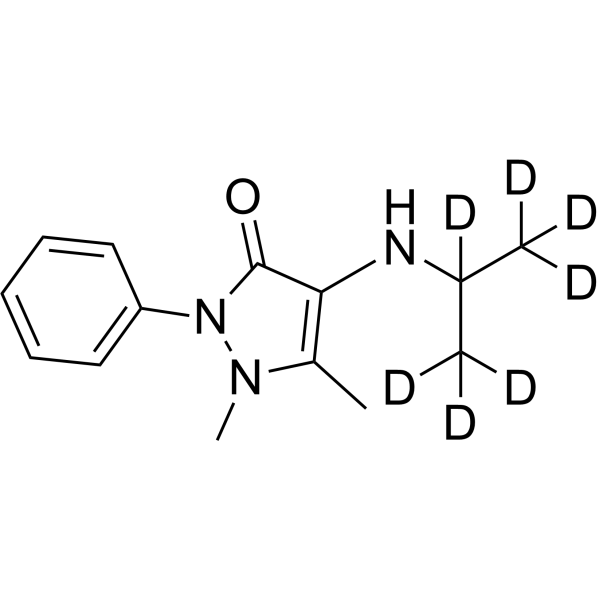 0 ImagesCat. No.: HY-B1137SCAS No.: 1330180-51-2Synonyms: Isopropylaminoantipyrine-d7Ramifenazone-d7 (Isopropylaminoantipyrine-d7) is the deuterated-labeled Ramifenazone (HY-B1137). Ramifenazone (Isopropylaminoantipyrine) is a pyrazolone non-steroidal anti-inflammatory agent (NSAID) and a potent COX-2 inhibitor. Ramifenazone exhibits analgesic, antipyretic, anti-inflammatory, and antibacterial activities. Ramifenazone can be used for research on inflammation.
-
NCX 466
 0 ImagesCat. No.: HY-103388CAS No.: 1262956-64-8NCX 466 is an orally active COX-1 and COX-2 inhibitor that exhibits anti-inflammatory and analgesic effects. Additionally, NCX 466 acts as a NO donor, exerting anti-inflammatory and antioxidant effects by improving microcirculation. NCX 466 significantly reduces the levels of transforming growth factor-β (TGF-β) and oxidative stress markers (such as thiobarbituric acid reactive substances (TBARS) and 8-hydroxy-2'-deoxyguanosine (8-OHdG)), and it decreases leukocyte recruitment during inflammation by reducing myeloperoxidase (MPO) activity, thereby preventing bleomycin (HY-108345)-induced pulmonary fibrosis in mice.

-
meso-Zeaxanthin
 0 ImagesCat. No.: HY-167632CAS No.: 31272-50-1Synonyms: (3R,3′S)-Zeaxanthinmeso-Zeaxanthin ((3R,3′S)-Zeaxanthin) is an orally active xanthophyll carotenoid. meso-Zeaxanthin inhibits CYP1A1, CYP1A2, CYP2B1/2, COX-2, TNF-α and iNOS, and enhances the activities of Uridine diphosphate glucuronosyltransferase and Glutathione-S-transferase. meso-Zeaxanthin quenches oxygen free radicals. meso-Zeaxanthin filters short-wavelength blue light, alleviates oxidative damage and visual abnormalities. meso-Zeaxanthin reduces tumor incidence, prolongs tumor latency and survival rate of tumor-bearing mice, and inhibits paw edema. meso-Zeaxanthin can be used in research related to sarcoma and age-related macular degeneration.
-
Indomethacin N-octyl amide
 0 ImagesCat. No.: HY-134138CAS No.: 282728-65-8
-
N-Caffeoyl serotonin
 0 ImagesCat. No.: HY-W347202CAS No.: 928765-97-3N-Caffeoyl serotonin is a COX-2 inhibitor, with IC50 and Kᵢ values of 42.5 μM and 65.5 μM against COX-2, respectively. N-Caffeoyl serotonin exhibits weak inhibitory activity against BACE1, with an IC50 > 400 μM. N-Caffeoyl serotonin has free radical scavenging activity. N-Caffeoyl serotonin can be used in the research of allergic diseases and Alzheimer's disease.
-
7-Acetoxycoumarin
 0 ImagesCat. No.: HY-N20744CAS No.: 10387-49-2Synonyms: Acetylumbelliferone7-Acetoxycoumarin (Acetylumbelliferone) is an anti-inflammatory inhibitor with antibacterial and amoebicidal activities. 7-Acetoxycoumarin reduces the phosphorylation levels of ERK, JNK, NF-κB and p38 MAPK. 7-Acetoxycoumarin downregulates the protein and mRNA expression levels of iNOS and COX-2. 7-Acetoxycoumarin inhibits the production of IL-1β, IL-6, TNF-α, NO and PG2. 7-Acetoxycoumarin reduces the degradation of IκBα. 7-Acetoxycoumarin can be used in studies related to amoebiasis and Bacillus lentus infection.



