CXCR
CXC chemokine receptors; C-X-C motif chemokine receptors
CXCRs (CXC chemokine receptors) are integral membrane proteins that specifically bind and respond to cytokines of the CXC chemokine family. They represent one subfamily of chemokine receptors, a large family of G protein-linked receptors that are known as seven transmembrane (7-TM) proteins, since they span thecell membrane seven times. There are currently seven known CXC chemokine receptors in mammals, named CXCR1 through CXCR7. CXCR1 and CXCR2 are closely related receptors that recognize CXC chemokines that possess an E-L-R amino acid motif immediately adjacent to their CXC motif. CXCR3 is expressed predominantly on T lymphocytes. CXCR4 is the receptor for a chemokine known as CXCL12 (or SDF-1) and, as with CCR5, is utilized by HIV-1 to gain entry into target cells. The chemokine receptor CXCR5 is selectively expressed on B cells and is involved in lymphocyte homing and the development of normal lymphoid tissue. CXCR6 was formerly called three different names (STRL33, BONZO, and TYMSTR) before being assigned CXCR6 based on its chromosomal location and its similarity to other chemokine receptors in its gene sequence. CXCR7 was originally called RDC-1 (an orphan receptor) but has since been shown to cause chemotaxis in T lymphocytes in response to CXCL12 (the ligand for CXCR4) prompting the renaming of this molecule as CXCR7.
CXCR Isoform Specific Products
All Product Categories
-
CXCR Inhibitors
(107)
View all products
-
CXCR Agonists
(25)
View all products
-
CXCR Antagonists
(128)
View all products
-
CXCR Activators
(12)
View all products
-
CXCR Modulators
(19)
View all products
-
CXCR Inducer
(1)
View all products
-
CXCR Degrader
(1)
View all products
-
CXCR Controls
(2)
View all products
-
CXCR Ligand
(1)
View all products
-
CXC Chemokines Proteins
(140)
View all products
-
CXC Chemokine Receptor Proteins
(13)
View all products
-
CXCR2 Proteins
(3)
View all products
-
CXCR3 Proteins
(3)
View all products
-
CXCR4 Proteins
(6)
View all products
-
CXCR Related Products (355)
Related Products (355)

-
Recombinant Proteins (153)
-
Antibodies (9)
-
Related Compound Screening Libraries (1)
-
CXCR Isoform Comparison
-
LIH383 TFA
 0 ImagesCat. No.: HY-P10333APurity: 98.70%LIH383 TFA is an agonist of ACKR3 (CXCR7) (EC50=0.61 nM). LIH383 TFA efficiently induces the recruitment of β-arrestin to ACKR3 but does not trigger typical G protein signaling.
-
BVT173187
 0 ImagesBVT173187 is a selective inhibitor of the neutrophil formyl peptide receptor FPR1, with activity that inhibits FPR1 activation. BVT173187 inhibits FPR1 agonist-induced activation in neutrophils, reduces adhesion molecule mobilization and superoxide anion production, and has inhibitory activity on FPR1 similar to that of earlier described peptide antagonists, but also has effects on C5aR and CXCR signaling.
-
CXCL-CXCR1/2-IN-1
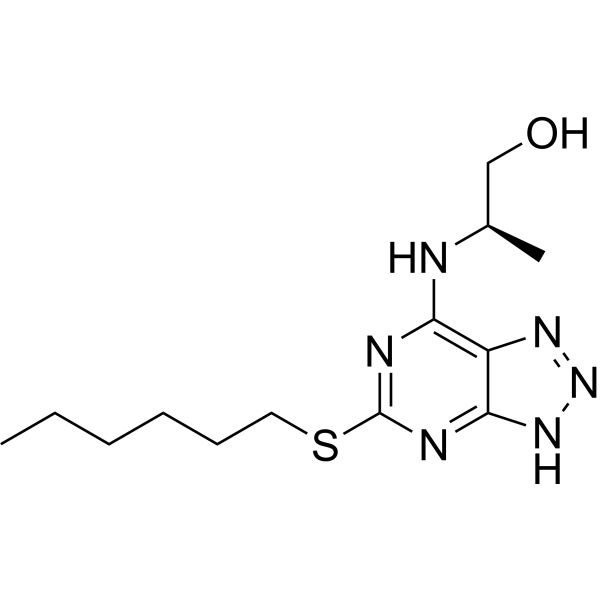
 0 ImagesCXCL-CXCR1/2-IN-1 is an orally active ELR+CXCL-CXCR1/2 pathway inhibitor with an EC50 of 42.7 nM for CXCR2. CXCL-CXCR1/2-IN-1 shows anticancer and antiangiogenic effects.
-
Anditixafortide
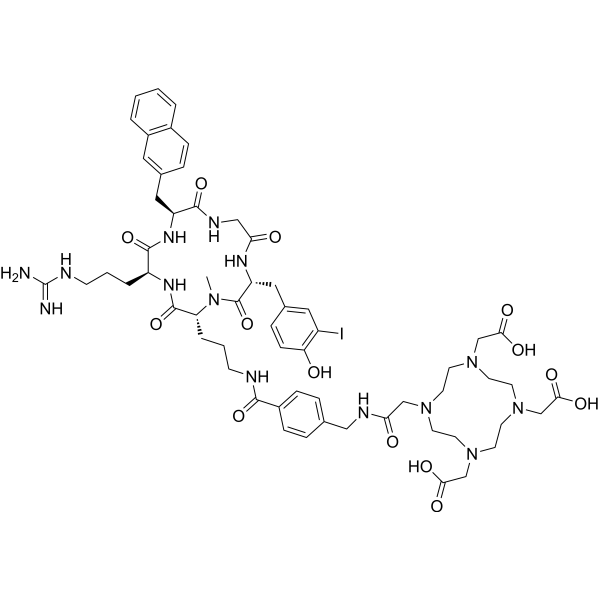 0 ImagesSynonyms: PentixatherAnditixafortide (Pentixather) is an endoradiotherapeutic vector. Anditixafortide is a CXCR4-targeting peptide derivative. Anditixafortide can be used for the synthesis/research of Radionuclide-Drug Conjugates (RDCs).
-
Anti-CXCR3/GPR9/CD183 Antibody
 0 ImagesCat. No.: HY-P990394Purity: 98.45%Anti-CXCR3/GPR9/CD183 Antibody is a human-derived antibody expressed in CHO, targeting CXCR3/GPR9/CD183. The Anti-CXCR3/GPR9/CD183 Antibody has a huIgG1 heavy chain and a huκ light chain, with a predicted molecular weight (MW) of 150 kDa. For the isotype control of Anti-CXCR3/GPR9/CD183 Antibody, please refer to Human IgG1 kappa, Isotype Control (HY-P99001).
-
Balixafortide
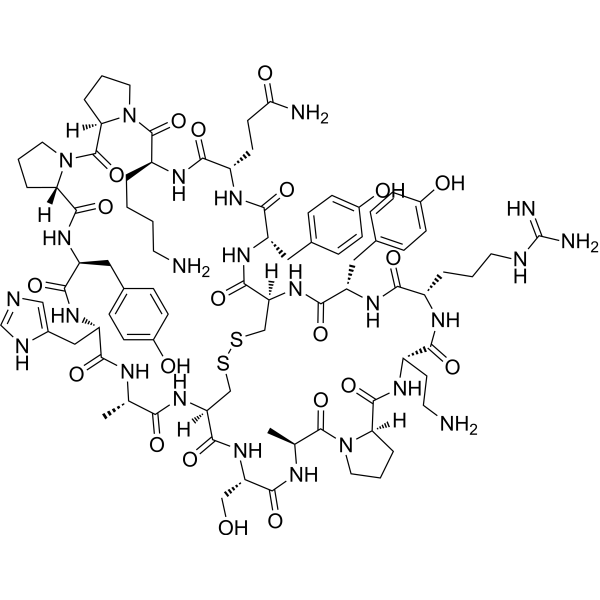 0 ImagesSynonyms: POL6326Balixafortide (POL6326) is a potent, selective, well-tolerated peptidic CXCR4 antagonist with an IC50 < 10 nM. Balixafortide shows 1000-fold selective for CXCR4 than a large panel of receptors including CXCR7. Balixafortide blocks β-arrestin recruitment and calcium flux with IC50s < 10 nM. Balixafortide is also a potent hematopoietic stem and progenitor cell (HSPC) mobilizing agent. Anti-cancer effects.
-
CXCR2-IN-2
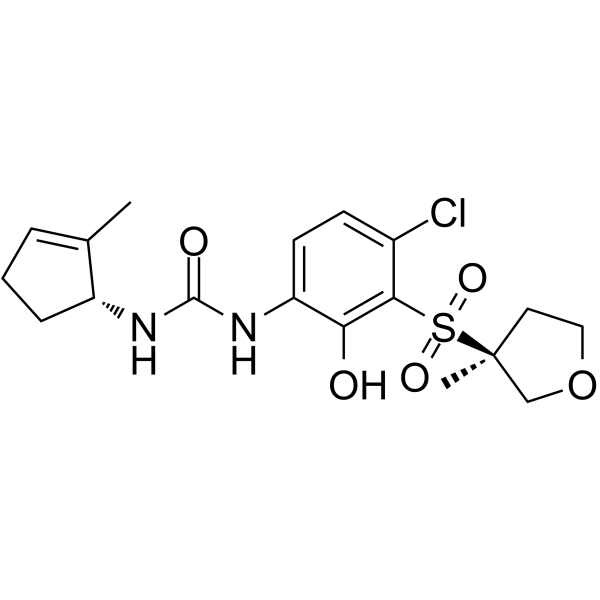 0 ImagesCXCR2-IN-2 is a selective, brain penetrant, and orally bioavailable CXCR2 antagonist (IC50=5.2 nM/1 nM in β-arrestin assay/CXCR2 Tango assay, respectively). CXCR2-IN-2 displays ~730-fold selectivity over CXCR1 and >1900-fold selectivity over all other chemokine receptors. CXCR2-IN-2 inhibits human whole blood Gro-α induced CD11b expression with an IC50 of 0.04 μM.
-
Vimnerixin
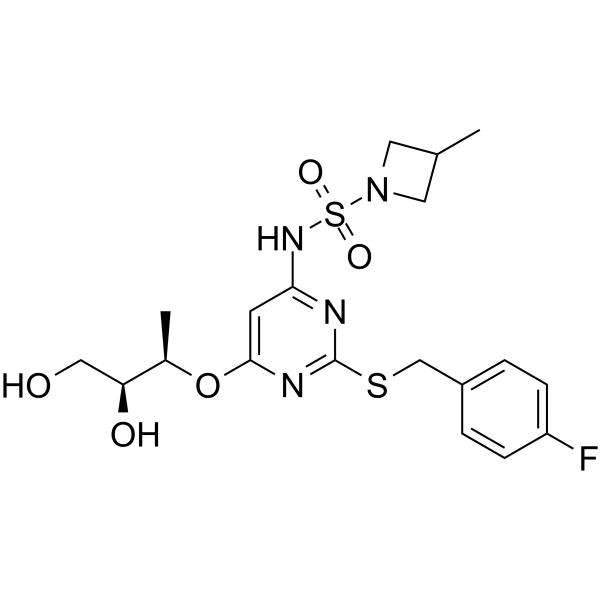 0 ImagesSynonyms: AZD4721; RIST4721Vimnerixin (AZD4721) is the potent and orally active antagonist of acidic CXC chemokine receptor 2 (CXCR2). Vimnerixin has the potential for the research of inflammatory disease.
-
Pegevongitide
 0 ImagesSynonyms: AV-001Pegevongitide (AV-001) is a Tie2 agonist. Pegevongitide resists the increased endothelial cell permeability induced by SARS-CoV-2 infection. Pegevongitide activates the angiogenin (angiogenin)/Tie2 signaling pathway. Pegevongitide reduces perivascular space dilation and upregulates perivascular Aquaporin-4 expression. Pegevongitide decreases the expression of TNF-α, PAI-1, CXCL9 and P-selectin, improves white matter integrity, enhances cognitive function and exerts neuroprotective effects. Pegevongitide improves white matter integrity in middle-aged rats with vascular dementia induced by multiple microinfarctions. Pegevongitide can be used in related research on diseases such as COVID-19 and vascular dementia.
-
MK-1966
 0 ImagesCat. No.: HY-P991257MK-1966 is an anti-IL-10 antibody. MK-1966 inhibits secretion of cytokines from activated macrophages, production of CC and CXC chemokines, and a TH1 response, down-regulates MHC and costimulatory molecules on dendritic cells (DCs), and induces regulatory T cells. MK-1966 can be used for the research of cancer , such as gastric cancer.
-
CCX-777
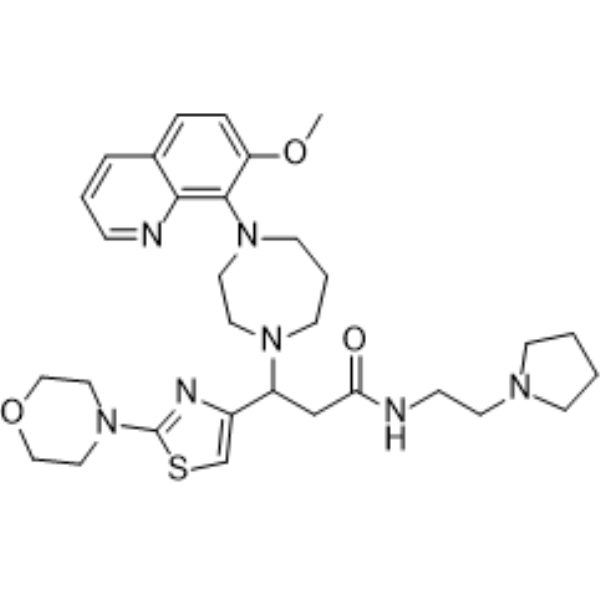 0 ImagesCCX-777 is an orthosteric binder and partial agonist of CXCR7/ACKR3. CCX-777 induces the recruitment of β-arrestin 2 and affects the rebinding of chemokines to ACKR3. CCX-777 functions to stabilize the ACKR3 receptor and promotes the formation of a monodisperse, stable complex of the receptor in DDM/CHS micelles. CCX-777 is widely used in cancer-related research.
-
CXCR2 antagonist 2
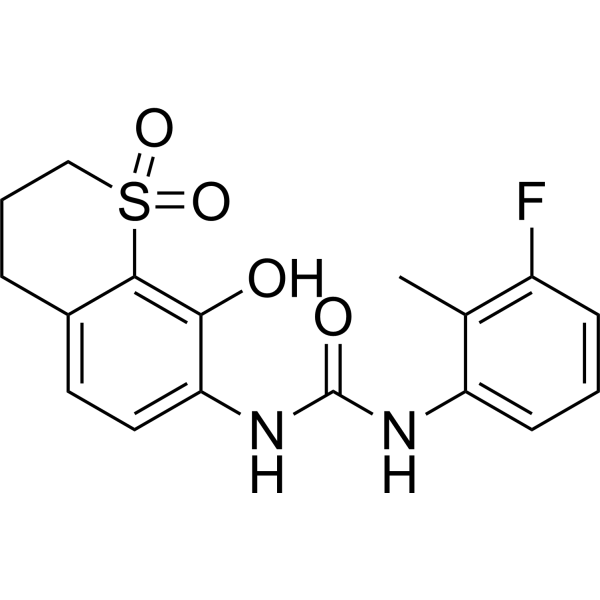 0 ImagesCXCR2 antagonist 2 is a potent CXCR2 antagonist for cancer immunoresearch with an IC50 value of 95 nM.
-
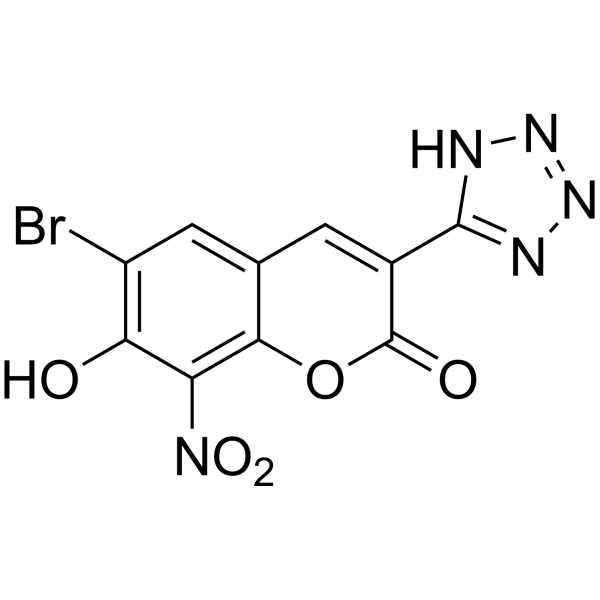
KRH-3955 hydrochloride
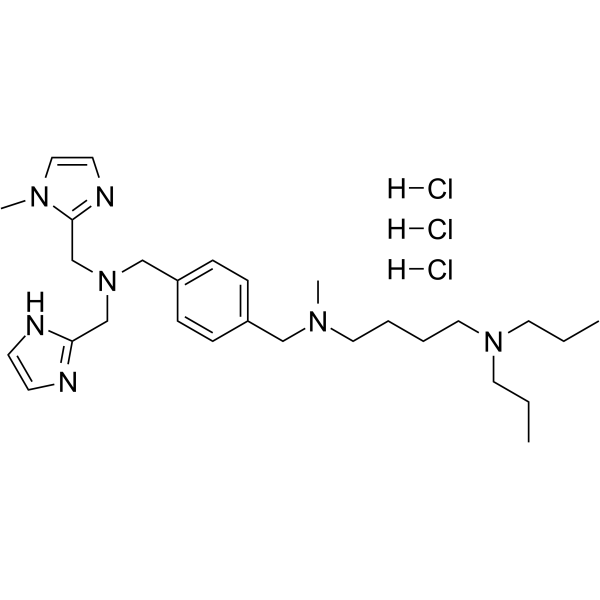 0 ImagesCat. No.: HY-122058ACAS No.: 2253744-59-9
-
Anti-CXCL8/IL-8 Antibody
 0 ImagesCat. No.: HY-P990392Purity: 99.51%Anti-CXCL8/IL-8 Antibody is a human antibody expressed in CHO cells that targets CXCL8/IL-8. The Anti-CXCL8/IL-8 Antibody is composed of a huIgG1 heavy chain and a huκ light chain, with a predicted molecular weight (MW) of 145 kDa. The isotype control for Anti-CXCL8/IL-8 Antibody can be referenced as Human IgG1 kappa, Isotype Control (HY-P99001).
-
Calotatug ginistinag
 0 ImagesCat. No.: HY-164919CAS No.: 2847102-44-5Synonyms: XMT-2056Calotatug ginistinag (XMT-2056) is an antibody-drug conjugate (ADC) targeting HER2, linked to a payload composed of XMT-1519 conjugate-1 (HY-148067) and STING agonist-20 (HY-148068). Calotatug ginistinag activates the STING signaling pathway in tumor cells and tumor-resident immune cells, induces the production of type I interferons and cytokines (CXCL10, IFN-β, IL-6, TNF-α, triggers innate anti-tumor immune responses, and exerts a bystander effect. Calotatug ginistinag exhibits efficacy against HER2-expressing cancer cells in co-culture with PBMCs. Calotatug ginistinag induces tumor regression and reduces systemic inflammation in various tumor models. Combination treatment with Calotatug ginistinag, Trastuzumab (HY-P9907) and T-DXd (HY-138298) yields benefits. Calotatug ginistinag can be used in studies related to HER2-expressing solid tumors such as breast cancer, gastric cancer and ovarian cancer.
-
CXCR2 antagonist 8
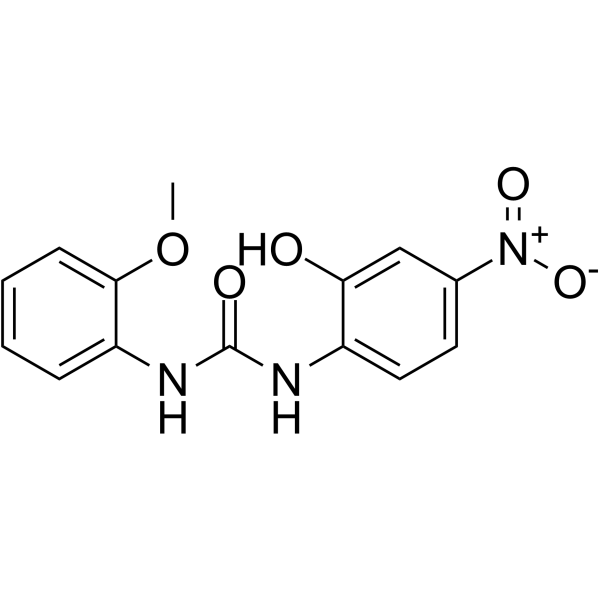 0 ImagesCXCR2 antagonist 8 is a potent and selective CXCR2 antagonist. CXCR2 antagonist 8 can be used for insulin resistance research.