



Ferroptosis
Ferroptosis
Ferroptosis is a non-apoptotic form of regulated cell death. It is distinct from other regulated cell death phenotypes, such as apoptosis and necroptosis. Ferroptosis is characterized by extensive lipid peroxidation, which can be suppressed by iron chelators or lipophilic antioxidants. Mechanistically, Ferroptosis inducers are divided into two classes: (1) inhibitors of cystine import via system xc− (e.g., Erastin), which subsequently causes depletion of glutathione (GSH), and (2) covalent inhibitors (e.g., (1S, 3R)-RSL3) of glutathione peroxidase 4 (GPX4). Since GPX4 reduces lipid hydroperoxides using GSH as a co-substrate, both compound classes ultimately result in loss of GPX4 activity, followed by elevated levels of lipid reactive oxygen species (ROS) and consequent cell death.
Ferroptosis is an iron- and ROS-dependent form of regulated cell death (RCD). Misregulated Ferroptosis has been implicated in multiple physiological and pathological processes, including cancer cell death, neurotoxicity, neurodegenerative diseases, acute renal failure, drug-induced hepatotoxicity, hepatic and heart ischemia/reperfusion injury, and T-cell immunity.
All Product Categories
-
Ferroptosis Related Products (771)
Related Products (771)

-
Antibodies (6)
-
Related Compound Screening Libraries (1)
-
Ferroptosis Signaling Pathway
-
GPX4-IN-18
 0 ImagesCat. No.: HY-175041CAS No.: 3016433-00-1GPX4-IN-18 (Compound 17) is a ferrocene-containing inhibitor of glutathione peroxidase 4 (GPX4). GPX4-IN-18 is also an inducer of ferroptosis. GPX4-IN-18 can increase the production of ROS and malondialdehyde (MDA) levels in OS-RC-2 clear cell renal cell carcinoma cells. GPX4-IN-18 induces ferroptosis in HT-1080 cells with IC50s of 0.007 μM (absence of ferrostatin-1) and 1.486 μM (presence of ferrostatin-1). GPX4-IN-18 reduces in vivo tumor volume and intratumoral GPX4 levels in OS-RC-2 xenograft murine model.
-
Ferroptosis inducer-15
 0 ImagesCat. No.: HY-182802CAS No.: 3097756-33-4Ferroptosis inducer-15 is a ferroptosis inducer. Ferroptosis inducer-15 downregulates GPX4 expression, triggers lipid peroxidation via ROS accumulation, and disrupts mitochondrial membrane potential to drive ferroptosis. Ferroptosis inducer-15 increases splenic CD4+ T cell proportion, promotes CD8+ cytotoxic T cell tumor infiltration, and activates antitumor immune responses. Ferroptosis inducer-15 exerts antiproliferative activity against colorectal cancer cells and inhibits tumor growth in xenograft mice models without significant body weight loss. Ferroptosis inducer-15 can be used for the research of cancer, such as colorectal cancer.
-
afi-FSP1-1
 0 ImagesCat. No.: HY-175738CAS No.: 3072951-35-7afi-FSP1-1 is a Ferroptosis suppressor protein 1 (FSP1) inhibitor with an Ki of 0.283 μM. afi-FSP1-1 has a superior binding capacity to FSP1-FAD-NAD+. afi-FSP1-1 can induces ferroptosis in cancer cells. afi-FSP1-1 can be used for cancers research.
-
Artemisinin-d3
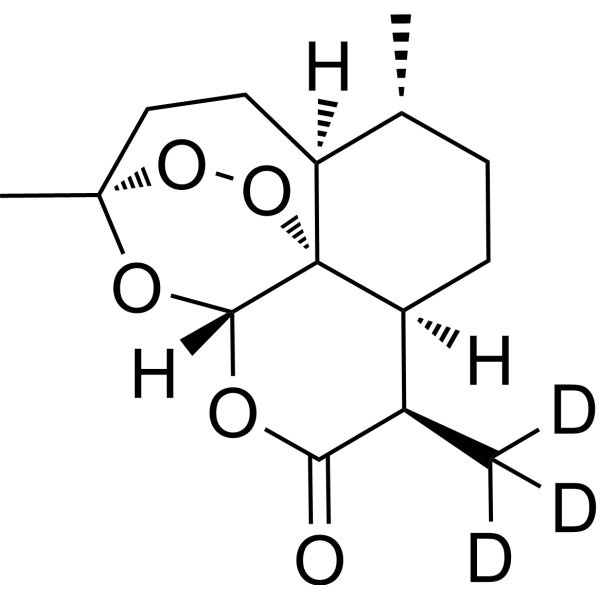 0 ImagesCat. No.: HY-B0094SCAS No.: 176652-07-6Synonyms: Qinghaosu-d3; NSC 369397-d3Artemisinin-d3 is the deuterium labeled Artemisinin. Artemisinin (Qinghaosu), a sesquiterpene lactone, is an anti-malarial agent isolated from the aerial parts of Artemisia annua L. plants. Artemisinin inhibits AKT signaling pathway by decreasing pAKT in a dose-dependent manner. Artemisinin reduces cancer cell proliferation, migration, invasion, tumorigenesis and metastasis and has neuroprotective effects.
-
3-Hydroxyphenylacetic acid-d6
 0 ImagesCat. No.: HY-W001083S23-Hydroxyphenylacetic acid-d6 is the deuterium labeled 3-Hydroxyphenylacetic acid (HY-W001083). 3-Hydroxyphenylacetic acid is an orally active flavonoid metabolite produced by intestinal flora, with blood pressure-lowering activity. 3-Hydroxyphenylacetic acid can also inhibit ferroptosis by upregulating the expression of GPX4, thereby improving spermatogenic dysfunction in aged mice. In addition, abnormal levels of 3-Hydroxyphenylacetic acid are closely related to certain diseases, such as autism spectrum disorders.
-
mTOR/GLS1-IN-1
 0 ImagesCat. No.: HY-179003mTOR/GLS1-IN-1 (Compoud 9d) is a potent dual targeted mTOR/GLS1 inhibitor. Has anti proliferative activity against various tumor cells. mTOR/GLS1-IN-1 dose dependently induces ROS accumulation, induces autophagosome formation, and induces apoptosis. mTOR/GLS1-IN-1 can increase Fe2+, decrease GPX4, and induce ferroptosis. mTOR/GLS1-IN-1 can inhibit cell migration, invasion, and angiogenesis. mTOR/GLS1-IN-1 can be used in the research of cancer, such as breast cancer.
-
Ferroptosis-IN-4
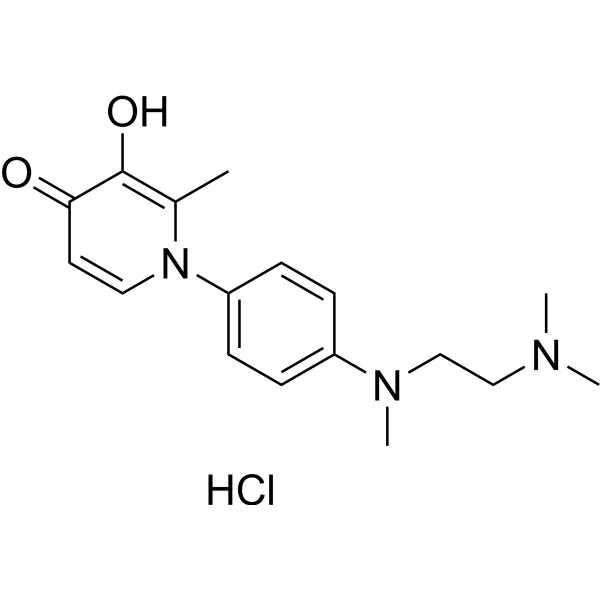 0 ImagesCat. No.: HY-149719CAS No.: 2798922-35-5Ferroptosis-IN-4 (compound 6k) is a ferroptosis inhibitor with EC50 value of 20 μM. Ferroptosis-IN-4 has no obvious cytotoxicity. Ferroptosis-IN-4 has a protective effect in glycerol-induced RM-AKI mice with alleviating kidney dysfunction.
-
Ferroptosis inducer-17
 0 ImagesCat. No.: HY-184662Ferroptosis inducer-17 is a ferroptosis inducer that downregulates GPX4 and activates the CTSB and cGAS-STING pathways. Ferroptosis inducer-17 exhibits cytotoxicity against cancer cells but low toxicity toward normal cells. Ferroptosis inducer-17 accumulates in mitochondria and lysosomes, thereby inducing ROS production, lipid peroxidation, mitochondrial membrane depolarization, lysosomal iron accumulation, increased membrane permeability, and enhanced oxidative stress. Ferroptosis inducer-17 inhibits tumor growth in cisplatin-resistant xenograft models. Ferroptosis inducer-17 can be used for cancer-related research.
-
β-Lactamase/Ferroptosis-IN-1
 0 ImagesCat. No.: HY-184667CAS No.: 3115648-56-8β-Lactamase/Ferroptosis-IN-1 is a dual inhibitor of β-Lactamase and ferroptosis, β-Lactamase/Ferroptosis-IN-1 inhibits NDM-1 (metallo-β-lactamase, MBLs, IC50 = 1.8 μM) and KPC-2 (serine-β-lactamase, SBLs, IC50 = 2.6 μM). β-Lactamase/Ferroptosis-IN-1 exerts synergistic antibacterial effects with antibiotics against multidrug-resistant Gram-negative bacteria (MDR-GNB), and alleviates LPS (HY-D1056)-induced acute lung injury by inhibiting ferroptosis via upregulating FTH1 and GPX4 expression and reducing MDA levels. β-Lactamase/Ferroptosis-IN-1 can be used for the study of MDR-GNB infections and acute lung injury.
-
Ferroptocide
 0 ImagesCat. No.: HY-158775CAS No.: 2505218-38-0Ferroptocide is a cell death inducer that triggers ferroptosis and has anti-tumor activity. Ferroptocide can induce oxidative stress, leading to G2/M cell cycle arrest and apoptosis activation in LNCaP cells, while also effectively inhibiting the cell viability of both LNCaP and TRAMP-C1 cells. Ferroptocide can be used to study its capability to induce mitochondrial autophagy and to trigger immunogenic cell death (ICD) in prostate cancer cells.
-
Anticancer agent 359
 0 ImagesCat. No.: HY-187687CAS No.: 2740603-37-4Anticancer agent 359 is a ferroptosis inducer. Anticancer agent 359 inhibits the proliferation, colony formation and migration of bladder cancer cells in a concentration-dependent manner. Anticancer agent 359 induces ferroptosis by downregulating SREBP1 to inhibit FASN transcription, reducing the expression of NRF2/SLC7A11/GPX4, decreasing GSH, promoting ROS accumulation and lipid peroxidation; this effect is reversible by Ferrostatin-1 (HY-100579). Anticancer agent 359 acts synergistically with Talazoparib (HY-16106). Anticancer agent 359 inhibits tumor growth in vivo without obvious hepatotoxicity or nephrotoxicity. Anticancer agent 359 can be used in the research of bladder cancer.
-
Trigonelline chloride (Standard)
 0 ImagesTrigonelline (chloride) (Standard) is the analytical standard of Trigonelline (chloride). This product is intended for research and analytical applications. Trigonelline chloride is an alkaloid with potential antidiabetic activity that can be isolated from Trigonella foenum-graecum L or Leonurus artemisia. Trigonelline chloride is a potent Nrf2 inhibitor that blocks Nrf2-dependent proteasome activity, thereby enhancing apoptosis in pancreatic cancer cells. Trigonelline chloride also has anti-HSV-1, antibacterial, and antifungal activity, and induces ferroptosis.
-
KY0418
 0 ImagesCat. No.: HY-186143CAS No.: 3024369-07-8KY0418 is a selective GPX4 inhibitor. KY0418 selectively and covalently modifies the selenocysteine residue of GPX4 and inhibits GPX4 activity. KY0418 induces ferroptosis and suppresses cell proliferation. KY0418 can be used for the study of ferroptosis and cancer.
-
Anticancer agent 239
 0 ImagesCat. No.: HY-162688Anticancer agent 239 (Compound 5) is a ligand of hTERT promoter G-quadruplex DNA structures (hTERT G4) (Kd = 1.1 μM), and downregulates hTERT expression. Anticancer agent 239 decreases telomerase activity, shortens telomere length, and induces DNA damage, acute cellular senescence, and apoptosis. Anticancer agent 239 causes mitochondrial dysfunction, disrupts iron metabolism and activates ferroptosis in cancer cells. Anticancer agent 239 inhibits tumor growth in MDA-MB-231 xenograft mouse model.
-
YL3147
 0 ImagesCat. No.: HY-181548CAS No.: 3123207-48-4YL3147 is a ferroptosis inhibitor. YL3147 also acts as a radical-trapping antioxidant that directly prevents the spread of lipid peroxidation and blocks ferroptosis. YL3147 exerts significant cardioprotective effects in mouse cardiomyopathy models. YL3147 can be used in studies related to cardiomyopathy.
-
Antitumor agent-217
 0 ImagesCat. No.: HY-183312Antitumor agent-217 is a dual mitochondria-targeted anticancer agent. Antitumor agent-217 exhibits potent and selective antiproliferative activity against bladder cancer cell line J82 (IC50 = 6.3 μM), and inhibits colony formation and migration of J82 cells. Antitumor agent-217 accumulates in mitochondria, alters mitochondrial morphology, reduces ATP production, increases ROS generation and decreases mitochondrial membrane potential. Antitumor agent-217 induces apoptosis (Apoptosis) and ferroptosis (Ferroptosis) in bladder cancer cells. Antitumor agent-217 can be used for the research of bladder cancer.
-
CAR-2
 0 ImagesCat. No.: HY-D2620CAS No.: 3030055-40-1CAR-2 is a BODIPY-based photosensitizer that induces ferroptosis in photodynamic therapy (PDT) by targeting the endoplasmic reticulum (ER) and lipid droplets (LDs). CAR-2 exhibits phototoxicity in breast cancer cells with IC50 of 0.01-0.02 μM. CAR-2 exhibits antitumor efficacy in 4T1 xenograft mouse models.
-
Ciclopirox-d11
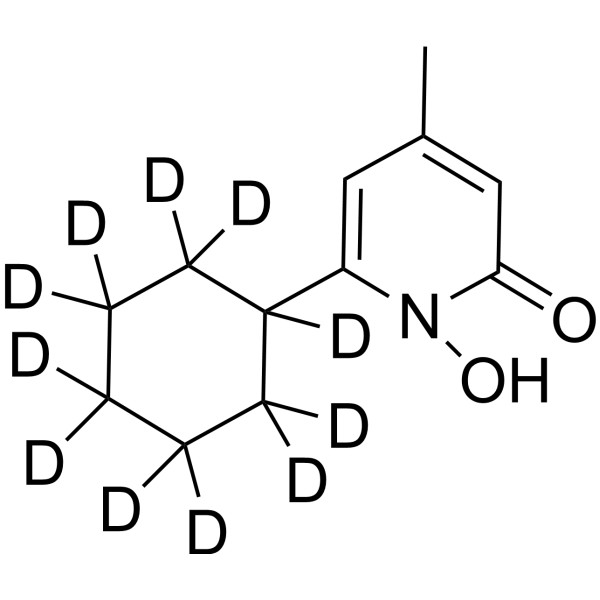 0 ImagesCat. No.: HY-B0450SSynonyms: HOE296b-d11Ciclopirox-d11 is the deuterium labeled Ciclopirox. Ciclopirox (HOE296b) is a synthetic antifungal agent that can be used for superficial mycoses reseaech. Ciclopirox olamine has a very broad spectrum of activity and inhibits dermatophytes, yeasts, molds, and many Gram-positive and Gram-negative species pathogenic.
-
PROTAC FSP1 degrader 1
 0 ImagesCat. No.: HY-179384CAS No.: 3096510-51-6PROTAC FSP1 degrader 1 is a highly efficient and selective PROTAC degrader targeting FSP1. PROTAC FSP1 degrader 1 significantly induces the accumulation of intracellular lipid peroxides. PROTAC FSP1 degrader 1 exhibits synergistic induction of ferroptosis with GPX4 inhibitors. PROTAC FSP1 degrader 1 can induce ROS production. PROTAC FSP1 degrader 1 upregulates the mRNA expression of ferroptosis-related proteins (GPX4, FTH1, ACSL4, TfR1, FSP1). PROTAC FSP1 degrader 1 can be used for the study of triple-negative breast cancer.
-
ZX782
 0 ImagesCat. No.: HY-161972ZX782 is a HyT GPX4 degrader and a ferroptosis inducer, which induces GPX4 degradation and significantly increases lipid ROS accumulation in HT1080 cells. ZX782 can be used to treat AD by reducing the size and/or number of brain amyloid plaques and by inhibiting the spread of IL-1beta-positive microglial-like cells around amyloid plaques. ZX782 is labeled with hydrophobic benzyl alcohol (HBA) and appears bright blue under acidic conditions, which can be used for quantitative determination. ZX782 is composed of target protein ligand (red part) ML-210 (HY-100003), PROTAC linker (black part) Bromo-PEG2-CH2-Boc (HY-141371) and Hty molecule (blue part) Adamantan-1-ylmethanamine (HY-W037848). The conjugate consisting of Hyt and linker parts is Adamantan-C-amide-PEG2-C-Br (HY-161974), and the activity control of the target protein ligand is Hydroxyl-ML-210 (HY-161973).




