



Ferroptosis
Ferroptosis
Ferroptosis is a non-apoptotic form of regulated cell death. It is distinct from other regulated cell death phenotypes, such as apoptosis and necroptosis. Ferroptosis is characterized by extensive lipid peroxidation, which can be suppressed by iron chelators or lipophilic antioxidants. Mechanistically, Ferroptosis inducers are divided into two classes: (1) inhibitors of cystine import via system xc− (e.g., Erastin), which subsequently causes depletion of glutathione (GSH), and (2) covalent inhibitors (e.g., (1S, 3R)-RSL3) of glutathione peroxidase 4 (GPX4). Since GPX4 reduces lipid hydroperoxides using GSH as a co-substrate, both compound classes ultimately result in loss of GPX4 activity, followed by elevated levels of lipid reactive oxygen species (ROS) and consequent cell death.
Ferroptosis is an iron- and ROS-dependent form of regulated cell death (RCD). Misregulated Ferroptosis has been implicated in multiple physiological and pathological processes, including cancer cell death, neurotoxicity, neurodegenerative diseases, acute renal failure, drug-induced hepatotoxicity, hepatic and heart ischemia/reperfusion injury, and T-cell immunity.
All Product Categories
-
Ferroptosis Related Products (771)
Related Products (771)

-
Antibodies (6)
-
Related Compound Screening Libraries (1)
-
Ferroptosis Signaling Pathway
-
DMAPT-DTCs-1,3-diaminopropane-DTCs-DMAPT dimethanesulfonate
 0 ImagesCat. No.: HY-182918DMAPT-DTCs-1,3-diaminopropane-DTCs-DMAPT dimethanesulfonate is an orally active prodrug of MMB-DTCs-1,3-diaminopropane-DTCs-MMB (HY-182917). DMAPT-DTCs-1,3-diaminopropane-DTCs-DMAPT dimethanesulfonate induces apoptosis, ferroptosis, and cuproptosis in lung cancer cells. DMAPT-DTCs-1,3-diaminopropane-DTCs-DMAPT dimethanesulfonate can be used in the research of lung cancer.
-
Trolox (GMP)
 0 ImagesCat. No.: HY-101445GCAS No.: 53188-07-1
-
Zileuton-d4
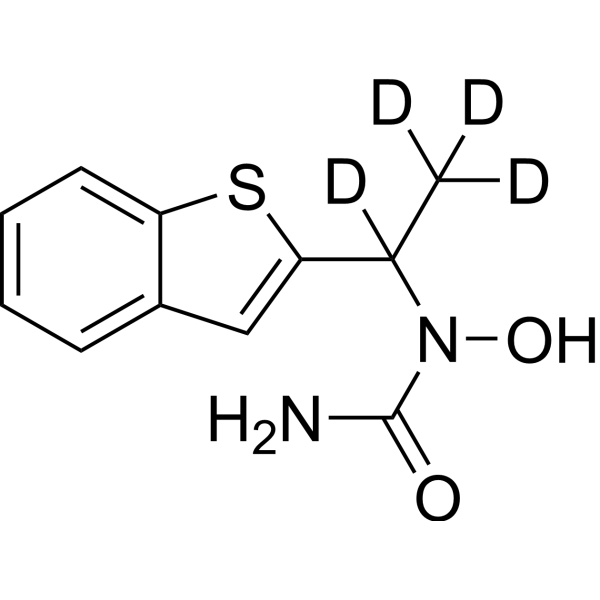 0 ImagesCat. No.: HY-14164SCAS No.: 1189878-76-9Zileuton-d4 is the deuterium labeled Zileuton. Zileuton (A 64077) is a potent and selective inhibitor of 5-lipoxygenase with antiasthmatic properties.
-
Ferroptosis-IN-26
 0 ImagesCat. No.: HY-183589Ferroptosis-IN-26 is a CEPT1-targeting ferroptosis inhibitor. Ferroptosis-IN-26 enhances CEPT1-dependent phosphatidylcholine remodeling to enrich cellular membranes with monounsaturated fatty acid-containing phosphatidylcholine (PC-MUFA). Ferroptosis-IN-26 suppresses lipid peroxidation. Ferroptosis-IN-26 can be used for the research of acute liver injury.
-
Ferroptosis-IN-24
 0 ImagesCat. No.: HY-182390Ferroptosis-IN-24 is a non-classical ferroptosis inhibitor capable of crossing the blood-brain barrier, with nanomolar inhibitory activity against ferroptosis induced by RSL3 (HY-100218A) and Erastin (HY-15763). Ferroptosis-IN-24 alleviates oxidative stress, reduces lipid peroxidation accumulation, and restores redox homeostasis. Ferroptosis-IN-24 is applicable to research related to cerebral ischemia-reperfusion injury and acute liver injury.
-
TrxR/EGFR-IN-1
 0 ImagesCat. No.: HY-168492CAS No.: 3038386-42-1TrxR/EGFR-IN-1 is a TrxR/GFR inhibitor and a Gefitinib (HY-50895) derivative. TrxR/EGFR-IN-1 inhibits TrxR and EGFR, downregulates p‑EGFR, p‑AKT, and p‑ERK; promotes GPX4 protein degradation through dual autophagy-lysosomal and proteasomal pathways, triggering ferroptosis. TrxR/EGFR-IN-1 induces endoplasmic reticulum stress, immunogenic cell death, and apoptosis, increasing intracellular ROS and oxidative stress. TrxR/EGFR-IN-1 exhibits in vitro antiproliferative activity against both Gefitinib-sensitive and Gefitinib-resistant non-small cell lung cancer. TrxR/EGFR-IN-1 inhibits tumor growth in the PC9GR xenograft tumor model. TrxR/EGFR-IN-1 can be used for lung cancer-related research.
-
AY-4
 0 ImagesCat. No.: HY-174867CAS No.: 3091513-13-9AY-4 (Compound AY-4) is an efficient PROTAC degrader targeting FTH1 (Kd = 3.17 nM). AY-4 effectively upregulates the levels of ferrous (Fe2+) and ferric (Fe3+) ions in cells. AY-4 is a potential anticancer candidate compound that regulates iron homeostasis through ferritin degradation and enhances the efficacy of existing drugs. AY-4 can effectively reduce the level of FTH1 in breast cancer cells (Pink: FTH1 ligand AY-2 (HY-174871); Blue: E3 ligand Pomalidomide (HY-10984); Black: Linker, Pomalidomide-PEG3-acid (HY-174872)).
-
L-Glutamine-5-13C
 0 ImagesCat. No.: HY-W766574CAS No.: 2714331-41-4L-Glutamine-5-13C Hydrochloride is the 13C-labeled L-Glutamine (HY-N0390). L-Glutamine (L-Glutamic acid 5-amide) is a non-essential amino acid present abundantly throughout the body and involved in many metabolic processes. L-Glutamine provides a source of carbons for oxidation in some cells.
-
Emodinanthrone (Standard)
 0 ImagesPro-xylane (Standard) is the analytical standard of Pro-xylane. This product is intended for research and analytical applications. Emodinanthrone (EmodAn) is a MARCH7 stabilizer that inhibits ferroptosis (EC50=70 nM). Emodinanthrone is also a precursor to Emodin (HY-14393) and possesses antibiotic activity. Emodinanthrone directly binds to MARCH7 and blocks its ubiquitination-mediated degradation at the K608 site; this action enhances MARCH7-mediated K48 ubiquitination and degradation of NCOA4, as well as its regulation of the intracellular localization of TFR1 via K63 ubiquitination, thereby reducing the intracellular labile iron pool and blocking ferroptosis. Emodinanthrone demonstrates in vivo cardioprotective effects and exhibits a favorable safety profile. Emodinanthrone is applicable to research on ferroptosis-related cardiovascular diseases, including Doxorubicin (HY-15142A)-induced cardiomyopathy and myocardial ischemia-reperfusion injury.
-
Nafuredin A
 0 ImagesCat. No.: HY-184460CAS No.: 224427-79-6Nafuredin A is a trinorsesquiterpene and polyketide derivative found in the mangrove sediment-derived fungi Talaromyces sp. SCSIO 41412 and Trichoderma harzianum D13. Nafuredin A regulates the ferroptosis pathway and upregulates ferroptosis-related genes. Nafuredin A alleviates hypoxia-reoxygenation-induced injury in oxygen-glucose deprivation/reperfusion cell models. Nafuredin A reduces pro-inflammatory cytokines and exerts hepatoprotective effects in animal models of hepatic ischemia-reperfusion injury. Nafuredin A inhibits the growth of phytopathogenic fungi Magnaporthe oryzae and Valsa mali. Nafuredin A can be used in studies related to hepatic ischemia-reperfusion injury and phytopathogenic fungal infections.
-
Keap1-p-p62-IN-1
 0 ImagesCat. No.: HY-184204Keap1-p-p62-IN-1 is a potent and selective Keap1-p-p62 inhibitor with an IC50 of 0.11 μM. Keap1-p-p62-IN-1 shows 18.73-fold selectivity over Keap1-Nrf2 interaction. Keap1-p-p62-IN-1 normalizes Nrf2 ubiquitination, sensitizes cells to Sorafenib (HY-10201)-induced ferroptosis. Keap1-p-p62-IN-1 can be used for the research of p62 aberrant hepatocellular carcinoma.
-
4-Hydroxyestrone-13C6
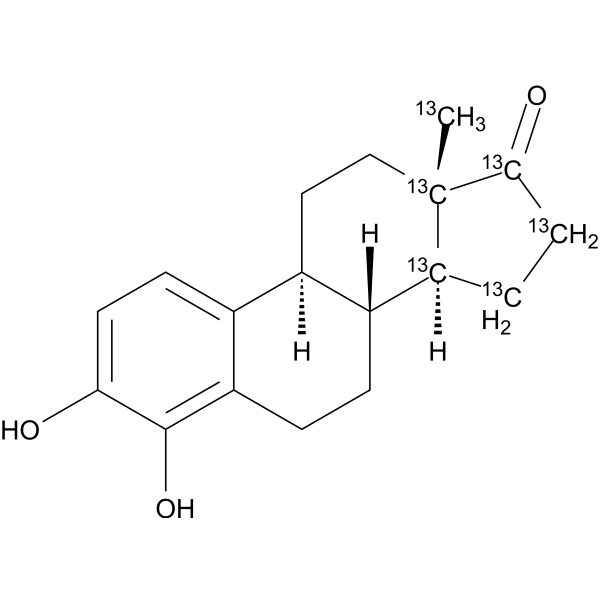 0 ImagesCat. No.: HY-W009300S1Synonyms: 4-OHE1-13C64-Hydroxyestrone (4-OHE1)-13C6 is a 13C-labeled 4-Hydroxyestrone (HY-W009300). 4-Hydroxyestrone is a brain-penetrant estrogen metabolite. 4-Hydroxyestrone shows neuroprotective effects involving increased cytoplasmic localization of p53 resulting from SIRT1-mediated p53 deacetylation. 4-Hydroxyestrone relies on PDI to mediate its protective effect against chemically induced ferroptosis in estrogen receptor-negative cancer cells. 4-Hydroxyestrone inhibits lipid peroxidation and lipid-ROS accumulation. 4-Hydroxyestrone blocks preovulatory luteinizing hormone surges in Rattus norvegicus. 4-Hydroxyestrone can be used for the researches of neurodegeneration, breast cancer and endocrine disease.
-
GPX4-IN-11
 0 ImagesCat. No.: HY-162717CAS No.: 951570-56-2GPX4-IN-11 (compound I14) is a potent inhibitor of GPX4, with the KD of 45.7 μM. GPX4-IN-11 plays an important role in ferroptosis research.
-
Chlorido[N,N'-disalicylidene-1,2-phenylenediamine]iron(III)
![Chlorido[N,N'-disalicylidene-1,2-phenylenediamine]iron(III)](https://file.medchemexpress.com/product_pic/hy-w698255.gif "Click to View Chlorido[N,N'-disalicylidene-1,2-phenylenediamine]iron(III) Product Detail") 0 ImagesCat. No.: HY-W698255CAS No.: 39916-28-4Chlorido[N,N'-disalicylidene-1,2-phenylenediamine]iron(III) generates lipid-based ROS and induce ferroptosis
0 ImagesCat. No.: HY-W698255CAS No.: 39916-28-4Chlorido[N,N'-disalicylidene-1,2-phenylenediamine]iron(III) generates lipid-based ROS and induce ferroptosis
-
Trigonelline-d3-1 chloride
 0 ImagesCat. No.: HY-N0415S1Synonyms: Trigonelline-d3-1 hydrochlorideTrigonelline-d3-1 chloride (Trigonelline-d3-1 hydrochloride) is the deuterium labeled Trigonelline chloride (HY-N0415). Trigonelline chloride is an alkaloid with potential antidiabetic activity that can be isolated from Trigonella foenum-graecum L or Leonurus artemisia. Trigonelline chloride is a potent Nrf2 inhibitor that blocks Nrf2-dependent proteasome activity, thereby enhancing apoptosis in pancreatic cancer cells. Trigonelline chloride also has anti-HSV-1, antibacterial, and antifungal activity, and induces ferroptosis.
-
6-Methoxydihydrosanguinarine hydrochloride
 0 ImagesCat. No.: HY-N3000A6-Methoxydihydrosanguinarine hydrochloride is an alkaloid with activity across multiple cancer cell types. 6-Methoxydihydrosanguinarine hydrochloride activates IRE1/JNK signaling, blocks Akt/mTOR and PI3K/AKT/mTOR pathways, reduces expression of Cdc25C, CyclinB1, Cdc2, YAP/TAZ, Survivin, GPX4, and EGFR, upregulates IRE1 and DR5, and activates JNK and caspases. 6-Methoxydihydrosanguinarine hydrochloride induces apoptosis, G2/M phase arrest, DNA damage, ROS generation, lipid peroxidation, ferroptosis, autophagy, and suppresses cancer cell growth. 6-Methoxydihydrosanguinarine hydrochloride disruptes the biofilm formation of Candida albicans (C. albicans). 6-Methoxydihydrosanguinarine hydrochloride can be used for the research of non-small cell lung cancer, hepatocellular carcinoma, melanoma, colon carcinoma, ovarian cancer and breast cancer.
-
Chalcones A-N-5
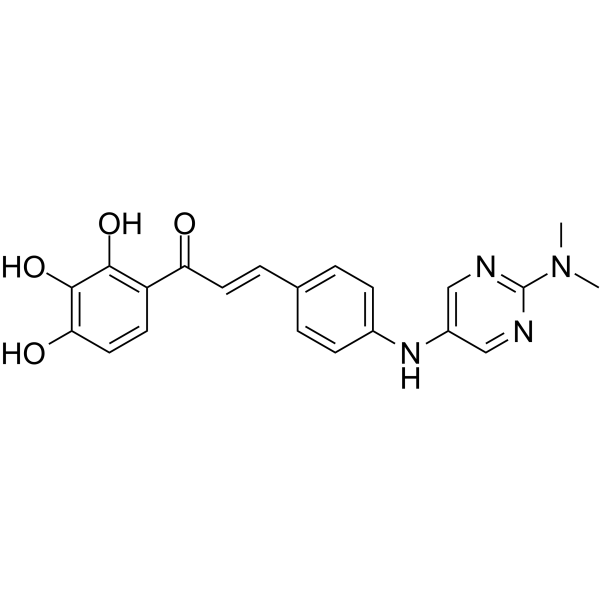 0 ImagesCat. No.: HY-145858CAS No.: 2756846-09-8Chalcones A-N-5 is a trihydroxy chalcone derivative compound. Chalcones A-N-5 doesn’t show cytotoxicity at the concentration lower than 100 µM (with IC50 > 1 mM), but has a significant effect on promoting cell proliferation. Chalcones A-N-5 potentially promotes neuronal cell growth in the damaged brain tissue. Chalcones A-N-5 also inhibits ferroptosis induced by RSL or erastin and reduces the lipid peroxidation levels induced by Aβ1-42 protein aggregation. Chalcones A-N-5 is a promising molecular skeleton candidate for further development of lead compound for in vivo test to research AD.
-
GPX4-IN-24
 0 ImagesCat. No.: HY-183294CAS No.: 2834106-56-6GPX4-IN-24 is an orally active glutathione peroxidase 4 (GPX4) inhibitor with a human IC50 of 10.90 μM, human Kd of 10.04 μM. GPX4-IN-24 suppresses GPX4 enzymatic activity, disrupts redox homeostasis, drives lipid peroxidation, promotes lipid peroxidation, and induces ferroptosis. GPX4-IN-24 can be used for the research of triple-negative breast cancer.
-
L-Glutamic acid-15N,d5
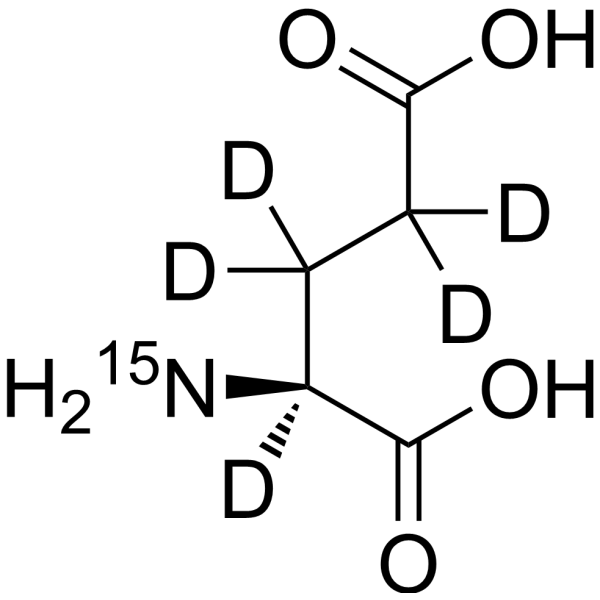 0 ImagesCat. No.: HY-14608S9L-Glutamic acid-15N,d5 is the deuterium and 15N-labeled L-Glutamic acid. L-Glutamic acid acts as an excitatory transmitter and an agonist at all subtypes of glutamate receptors (metabotropic, kainate, NMDA, and AMPA). L-Glutamic acid shows a direct activating effect on the release of DA from dopaminergic terminals.
-
Ferroptosis inducer-10
 0 ImagesCat. No.: HY-175811Ferroptosis inducer-10 is a ferroptosis inducer. Ferroptosis inducer-10 can inhibit A549 cells growth with an IC50 of 0.76 μM. Ferroptosis inducer-10 can deplete GSH, elevate ROS and MDA, and downregulate GPX4 expression. Ferroptosis inducer-10 can induce cell G2/M phase and inhibit migration. Ferroptosis inducer-10 can be used for the research of cancer, such as non-small lung cancer.




