



Ferroptosis Inducer
-
Cetzole
 0 ImagesCat. No.: HY-168093CAS No.: 3043764-86-6
Cetzole (Compound 1) is a ferroptosis inducer that induces cell death through ROS accumulation. The CC50 values of Cetzole for NCI-H522, NCI-H522 GFP-SCL7A11 #8, NCI-H522 RV-GFP, HT-1080, NARF2, and MDA-MB-231 are 2.56, 10.31, 2.71, 3.07, 14.9, and 6.28 μM, respectively. Cetzole holds potential for research in the field of cancer.
-
2',4-Dihydroxychalcone
 0 ImagesCat. No.: HY-141462CAS No.: 13323-66-5
2',4-Dihydroxychalcone is an orally active natural chalcone flavonoid. 2',4-Dihydroxychalcone restores intestinal barrier integrity by upregulating tight junction proteins, regulates intestinal flora balance and alleviates inflammation. 2',4-Dihydroxychalcone induces GPX4 degradation, ferroptosis and apoptosis, triggers cell cycle arrest, and exhibits broad anti-tumor activity. 2',4-Dihydroxychalcone also possesses antifungal activity, antileishmanial activity, and reduces the hemolytic effect and virulence of Vibrio vulnificus.
-
RSL3-NH2
 0 ImagesCat. No.: HY-175615CAS No.: 3051815-39-2
RSL3-NH2 is a GPX4 inhibitor and ferroptosis inducer. RSL3-NH2 triggers the iron-dependent cell death pathway associated with lipid peroxidation by inhibiting GPX4 activity. RSL3-NH2 exhibits significant cytotoxicity against colorectal cancer cells and effectively induces their ferroptosis. RSL3-NH2 can serve as a ADC payload for synthesizing antibody-drug conjugates (ADC) and be used in colorectal cancer-related research.
-
Nrf2-IN-4
 0 ImagesCat. No.: HY-175209CAS No.: 2417486-06-5
Nrf2-IN-4 is a Nrf2 inhibitor. Nrf2-IN-4 induces ferroptosis via NRF2 inhibition. Nrf2-IN-4 disrupts cellular iron homeostasis, facilitates ferritin degradation, and ultimately triggers ferroptosis. Nrf2-IN-4 induces lysosome activation by promoting iron-dependent ROS production and lysosomal acidification. Nrf2-IN-4 demonstrates significant antitumor efficacy. Nrf2-IN-4 can be used for the study of breast cancer.
-
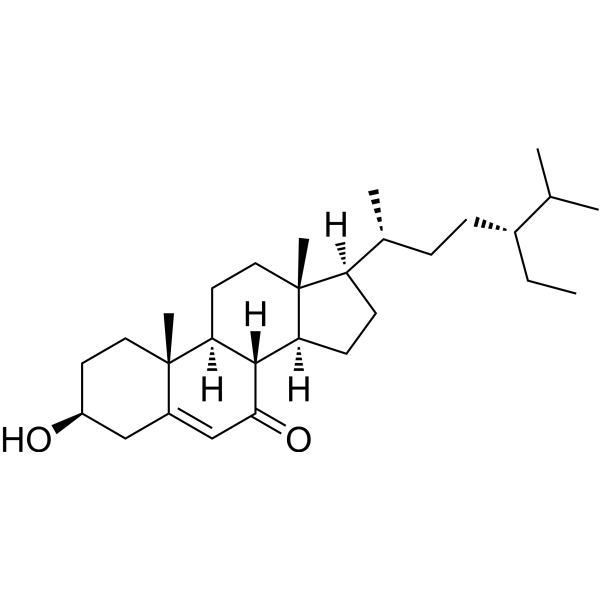
7-Ketositosterol
 0 Images
7-Ketositosterol is an orally active inducer of apoptosis and ferroptosis. 7-Ketositosterol inhibits the phosphorylation of ERK1/2 and NF-κB, promotes the opening of the mitochondrial/apoptotic pathway, and induces ferroptosis in macrophages by increasing the levels of malondialdehyde, Fe2+ and ROS. 7-Ketositosterol upregulates the expression of gut microbiota-dependent PDLIM3, activates the p38MAPK/NF-κB signaling pathway, alters the composition of gut microbiota, increases the abundance of pathogenic bacteria, and exacerbates colitis in mice. 7-Ketositosterol can be used in studies related to breast cancer, liver cancer, and colitis.
-
Dopamine-13C,15N hydrochloride
 0 ImagesSynonyms: ASL279-13C,15N
Dopamine-13C,15N (hydrochloride) is the 13C and 15N labeled Dopamine hydrochloride.
-
2-Acetamidophenol (Standard)
 0 ImagesSynonyms: Orthocetamol (Standard)
2-Acetamidophenol (Standard) is the analytical standard of 2-Acetamidophenol. This product is intended for research and analytical applications. 2-Acetamidophenol (Orthocetamol) is a regulator that targets ferroptosis and glutathione metabolic pathways, is the ortho-regioisomer of Paracetamol (HY-66005). 2-Acetamidophenol has anti-atherosclerotic activity, and inhibiting total cholesterol (TC) and triglyceride (TG) in a zebrafish hyperlipidemia model with IC50s for 30 μM and 40 μM, respectively. 2-Acetamidophenol upregulates the expression of glutathione synthesis-related genes (such as GCLC, GCLM, GSS) and iron ion transport genes (such as FPN1, FTH), reduces the accumulation of intracellular reactive oxygen species (ROS) and ferrous ions (Fe2+), and enhances the activity of glutathione peroxidase GPX4, thereby inhibiting macrophage phagocytosis of oxidized low-density lipoprotein (ox-LDL) and foam cell formation.
-
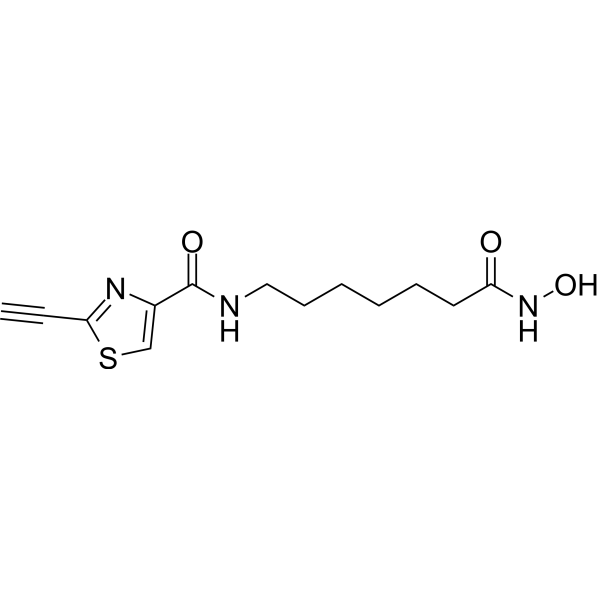
HDAC-IN-48
 0 ImagesCat. No.: HY-151872CAS No.: 3031411-05-6
HDAC-IN-48 is a potent HDAC inhibitor. HDAC-IN-48 is a hybrid molecule with great cytotoxic profile (GI50~20 nM). HDAC-IN-48 consists of harmacophores of SAHA and CETZOLE molecules. HDAC-IN-48 induces ferroptosis and inhibits HDAC proteins. HDAC-IN-48 is a click chemistry reagent, it contains an Alkyne group and can undergo copper-catalyzed azide-alkyne cycloaddition (CuAAc) with molecules containing Azide groups.
-
Ferroptosis inducer-9
 0 ImagesCat. No.: HY-175698
Ferroptosis inducer-9 is a ferroptosis inducer and colchicine site tubulin polymerization inhibitor. Ferroptosis inducer-9 inhibits MCF-7 cell growth with an IC50 of 14 nM and inhibits [3H]colchicine binding. Ferroptosis inducer-9 reduces expression of GPX4 and FTH, increases COX2 and ACSL4, lowers GSH, NADP+, and NADPH levels, increases LPO, MDA, and Fe(II) levels, and decreases SOD concentrations. Ferroptosis inducer-9 demonstrates significant anti-tumor efficacy in HCT116 CRC xenograft model. Ferroptosis inducer-9 can be used for the study of triple negative breast cancer (TNBC) and colorectal cancer (CRC).
-
GPX4-IN-12
 0 ImagesCat. No.: HY-162718CAS No.: 931704-14-2
GPX4-IN-12 (compound I22) is a non-covalent GPX4 inhibitor. GPX4-IN-12 induces ferroptosis and inhibits cell growth of HT1080 cells.
-
ISR/ROS-activator-1
 0 ImagesCat. No.: HY-184243CAS No.: 3099924-90-7
ISR/ROS-activator-1 is a naphthoquinone compound derived from Shikonin (HY-N0822), and also dual activator of the ISR/ROS pathway. ISR/ROS-activator-1 induces Apoptosis and Ferroptosis. ISR/ROS-activator-1 selectively inhibits gastric cancer. ISR/ROS-activator-1 is applicable to gastric cancer-related research.
-
Levobupivacaine-d9 hydrochloride
 0 ImagesCat. No.: HY-B0653ASSynonyms: (S)-(–)-Bupivacaie-d9hydrochloride
Levobupivacaine-d9 ((S)-(–)-Bupivacaie-d9) hydrochloride is deuterium labeled Levobupivacaine hydrochloride (HY-B0653A). Levobupivacaine hydrochloride ((S)-(-)-Bupivacaine monohydrochloride) is a long-acting amide local agent that can suppress or relieve pain. Levobupivacaine hydrochloride exerts agent that can suppress or relieve pain. and analgesic effects through reversible blockade of neuronal sodium channel. Levobupivacaine hydrochloride can inhibit impulse transmission and conduction in cardiovascular and other tissues, possessing certain cardiac and CNS toxicity. Levobupivacaine hydrochloride is metabolized by hepatic cytochrome P450 (CYP450) enzymes in vivo. Levobupivacaine hydrochloride can also induce ferroptosis by miR-489-3p/SLC7A11 signaling in gastric cancer.
-
Jujuboside B (Standard)
 0 ImagesCat. No.: HY-N0660RCAS No.: 55466-05-2
Jujuboside B (Standard) is the analytical standard of Jujuboside B. This product is intended for research and analytical applications. Jujuboside B is a bioactive saponin component isolated from Ziziphi Spinosae Semen (sour jujube seed), with oral efficacy and blood-brain barrier permeability. Jujuboside B induces acute leukemia cell death and drives necroptosis apoptosis by activating the RIPK1/RIPK3/MLKL pathway. Jujuboside B upregulates the expression of NOXA, PARP and caspase-3, activates AMPK, inhibits the proliferation of breast cancer cells, and induces cell apoptosis and autophagy. Jujuboside B inhibits angiogenesis and tumor growth by blocking the VEGFR-2 signaling pathway. Jujuboside B alleviates liver injury in mice by regulating the Nrf2-STING signaling pathway. Jujuboside B alleviates liver injury by regulating anti-inflammatory responses and downregulating the expression of 11β-HSD2. Jujuboside B induces ferroptosis and overcomes radioresistance in non-small cell lung cancer via the PPARγ-ATF3-Gpx4 signaling pathway. Jujuboside B exerts inhibitory effects on platelet aggregation. Jujuboside B inhibits febrile seizures by suppressing the activity of AMPA receptors. Jujuboside B reverses chronic unpredictable mild stress-promoted tumor progression by blocking the PI3K/Akt and MAPK/ERK pathways and dephosphorylating CREB signaling. Jujuboside B is applicable to related studies on acute leukemia, breast cancer, PM2.5-induced lung injury, hepatotoxicity, liver injury, colorectal cancer, non-small cell lung cancer, thromboembolic diseases, cardiovascular diseases associated with high platelet aggregation, febrile seizures, and depressive-like phenotypes.
-
DHODH-IN-33
 0 ImagesCat. No.: HY-179531CAS No.: 3026839-88-0
DHODH-IN-33 is a selective dihydroorotate dehydrogenase (DHODH) inhibitor with potent activity against A549 (IC50 = 5.22 μM) and 5637 (IC50 = 3.03 μM). DHODH-IN-33 induces autophagy-dependent ferroptosis (mitochondrial dysfunction, lipid peroxidation, and ROS accumulation) with no notable toxicity in vivo. DHODH-IN-33 exerts anti-cancer effect by promoting the autophagy-dependent degradation of DHODH. DHODH-IN-33 can be used for non-small cell lung cancer and bladder cancer.
-
NA-Ir
 0 ImagesCat. No.: HY-162944CAS No.: 3031762-97-4
NA-Ir is a Ferroptosis inducer. NA-Ir targets mitochondrial DNA (mtDNA) and activates the cGAS-STING pathway to induce ferritinophagy (Autophagy), while also generating reactive oxygen species (ROS) through photodynamic therapy (PDT), depleting glutathione (GSH), and downregulating glutathione peroxidase 4 (GPX4), thereby triggering lipid peroxidation and Ferroptosis. NA-Ir exhibits higher anticancer activity under light exposure and selectively inhibits cancer cells with high H2S levels.
-
TCL6148
 0 ImagesCat. No.: HY-P11929
TCL6148 is a ferroptosis inducer targeting GOT1, with a KD of 25.84 μM for GOT1. TCL6148 inhibits the viability of renal cell carcinoma 786-O and A498 cells, with IC50 values of 7.896 μM and 7.468 μM, respectively. TCL6148 induces ferroptosis by increasing Fe2+, ROS and lipid peroxidation, reducing GSH and inhibiting the GOT1/GPX4 pathway; it also inhibits proliferation and migration of RCC cells, enhances cellular sensitivity to Sunitinib (HY-10255A) and suppresses the growth of RCC xenograft tumors. TCL6148 can be used in research on renal cell carcinoma and ferroptosis.
-
WMK-1
 0 ImagesCat. No.: HY-186145CAS No.: 2814563-83-0
WMK-1 is a 1,2,4,5-tetraoxane derivative and ferroptosis inducer, with significantly higher cytotoxicity against cancer cells than non-cancerous cells. WMK-1 triggers ferroptosis in cancer cells and cancer stem cells. WMK-1 can be used for the research of cancer.
-
PROTAC GPX4 degrader-3
 0 ImagesCat. No.: HY-161930
PROTAC GPX4 degrader-3 is a glutathione peroxidase 4 (GPX4) PROTAC degrader with a DC50 of 0.019 μM in HT1080 cells. PROTAC GPX4 degrader-3 degrades GPX4 primarily via the ubiquitin-proteasome system (UPS) in a dose- and time-dependent manner. PROTAC GPX4 degrader-3 induces lipid peroxidation (LPO) and ROS accumulation, thereby triggering ferroptosis (ferroptosis). PROTAC GPX4 degrader-3 exhibits in vitro anti-tumor activity against cancer cells. PROTAC GPX4 degrader-3 can be used in the research of fibrosarcoma, triple-negative breast cancer, and renal cell carcinoma.
-
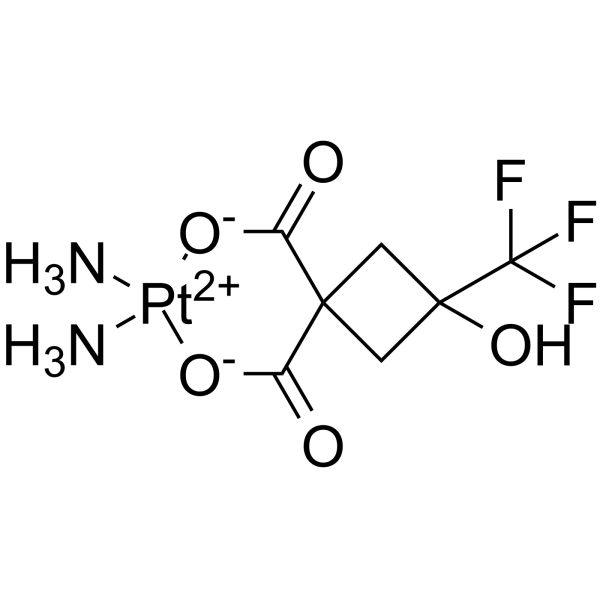
Antitumor agent-77
 0 ImagesCat. No.: HY-151429CAS No.: 2870703-21-0
Antitumor agent-77 is an antitumor agent, inhibits cancer cells growth and migration. Antitumor agent-77 triggers ferroptosis by inhibiting GPx-4 and elevating COX2. Antitumor agent-77 also activates intrinsic apoptotic pathway (Bax-Bcl-2-caspase-3) and hinders Epithelial-mesenchymal transition (EMT) process of cancer cells.
-
TDP1-IN-6
 0 ImagesCat. No.: HY-183546
TDP1-IN-6 is a TDP1 inhibitor with an IC50 of 1.52 μM. Combination of TDP1-IN-6 with Topotecan (HY-13768) enhances DNA damage, induces Apoptosis, triggers S-phase cell cycle arrest, and promotes Ferroptosis. TDP1-IN-6 can be used for the research of cervical cancer.



