



IL-1
IL-1 is a core inflammatory cytokine family that links innate inflammation with acquired immunity and regulates host responses to infection, tissue injury, and sterile danger signals[1]. Mechanistically, IL-1α and IL-1β signal through IL-1R1, recruit accessory receptor components, and activate inflammatory gene programs that amplify cytokines, chemokines, COX-2, iNOS, and matrix metalloproteinases[2]. In disease models and human inflammatory disorders, deregulated IL-1α/IL-1β signaling contributes to severe acute or chronic inflammation, autoimmune disease, autoinflammatory disease, metabolic disease, neurological disease, degenerative disease, and cancer[3]. Compared with related isoforms, IL-1α can act as an active precursor and is often cell-associated, whereas IL-1β requires enzymatic processing and functions mainly as a secreted inflammatory mediator[2][3]. This isoform distinction matters in tumor models, where IL-1β promotes inflammation, tumor invasiveness, and immunosuppression, while cell-associated IL-1α can stimulate anti-tumor cell immunity[2]. For experimental and translational research, IL-1 inhibitors provide pathway tools because anakinra, bermekimab, canakinumab, gevokizumab, and rilonacept have been evaluated across immune-mediated disorders[4].- IL-1α and IL-1β share receptors but differ in localization, processing, and inflammatory context.- IL-1 blockade supports mechanistic studies of autoinflammation, tissue injury, tumor immunity, and cytokine amplification.
References:
- [1]. Dinarello CA. Overview of the IL-1 family in innate inflammation and acquired immunity. Immunol Rev. 2018 Jan;281(1):8-27. doi: 10.1111/imr.12621. PMID: 29247995; PMCID: PMC5756628. et al. Overview of the IL-1 family in innate inflammation and acquired immunity. Immunol Rev. 2018 Jan;281(1):8-27. [Content Brief]
- [2]. Voronov E, et al. Unique Versus Redundant Functions of IL-1α and IL-1β in the Tumor Microenvironment. Front Immunol. 2013 Jul 8;4:177. [Content Brief]
- [3]. Galozzi P, et al. The revisited role of interleukin-1 alpha and beta in autoimmune and inflammatory disorders and in comorbidities. Autoimmun Rev. 2021 Apr;20(4):102785. [Content Brief]
- [4]. Arnold DD, et al. Systematic Review of Safety and Efficacy of IL-1-Targeted Biologics in Treating Immune-Mediated Disorders. Front Immunol. 2022 Jul 6;13:888392. [Content Brief]
All Product Categories
-
IL-1 Inhibitors
(369)
View all products
-
IL-1 Agonist
(1)
View all products
-
IL-1 Antagonists
(2)
View all products
-
IL-1 Activators
(15)
View all products
-
IL-1 Modulators
(24)
View all products
-
IL-1 Inducers
(23)
View all products
-
IL-1 Degrader
(1)
View all products
-
IL-1 Ligands
(2)
View all products
-
IL-1 Proteins
(43)
View all products
-
IL-1 Related Products (468)
Related Products (468)

-
Recombinant Proteins (45)
-
Antibodies (1)
-
APG-2305
 0 ImagesCat. No.: HY-P12213APG-2305 is a selective IL-23 receptor inhibitor. APG-2305 inhibits IL-23-induced STAT3 phosphorylation, reduces the expression of pro-inflammatory cytokines (IL-1, IL-6, IL-22) without altering IL-17 levels, and alleviates inflammation in multiple in vivo models. APG-2305 is used for research on inflammatory autoimmune diseases.
-
Alvelestat tosylate
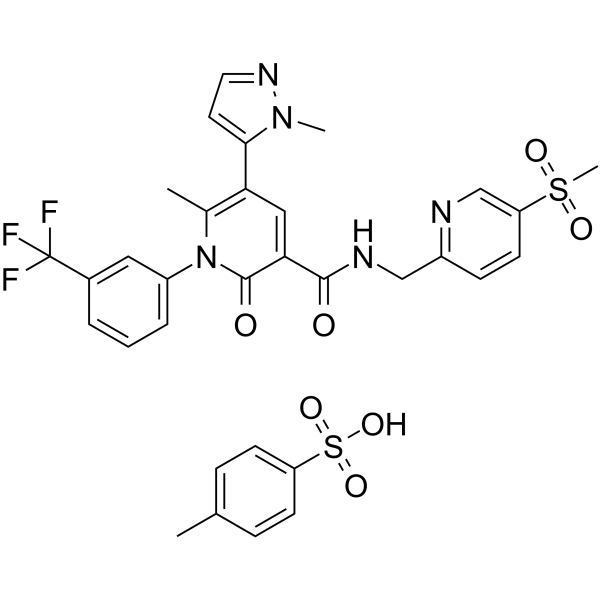 0 ImagesCat. No.: HY-15651ACAS No.: 1240425-05-1Synonyms: AZD9668 tosylateAlvelestat tosylate (AZD9668 tosylate) is an orally active, selective inhibitor of neutrophil elastase. Alvelestat tosylate reduces elastase activity, myeloperoxidase release, neutrophil recruitment and activation, and calcium phosphate precipitation; promotes smooth muscle cell colonization and collagen deposition; and inhibits the formation of neutrophil extracellular traps (NETs) as well as NET-derived neutrophil elastase activity. Alvelestat tosylate restores endothelial dysfunction, regulates antioxidant factors, improves the expression of endothelial tight junctions, reduces vascular leakage, and accelerates wound healing. Alvelestat tosylate prevents pulmonary hemorrhage, matrix protein degradation, airspace enlargement, and small airway wall remodeling; and alleviates cigarette-induced inflammatory responses. Alvelestat tosylate inhibits the growth of abdominal aortic aneurysms exacerbated by Porphyromonas gingivalis. Alvelestat tosylate can be used in research related to chronic obstructive pulmonary disease, abdominal aortic aneurysm, radiation-induced skin injury, and bronchiectasis.
-
Papiliocin
 0 ImagesCat. No.: HY-P11093Papiliocin is a potent peptide antibiotic with both anti-inflammatory and antibacterial activities. Papiliocin is primarily active against Gram-negative bacteria. Papiliocin exhibits strong anti-inflammatory activity against cell, exerting its anti-inflammatory activity by inhibiting the production of NO and the secretion of TNF-α and MIP-2. Papiliocin participates in the innate defense response mechanism by inhibiting the Toll-like receptor pathway and NF-κB. Papiliocin induces apoptosis in fungal cells and increases the total level of intracellular ROS. Papiliocin acts as an effective antiseptic peptide in sepsis models. Papiliocin is useful in anti-inflammatory and antibacterial research.
-
7-O-Methyl glabranin
 0 ImagesCat. No.: HY-N19816CAS No.: 75291-75-77-O-Methyl glabranin is a flavonoid compound and also an inhibitor of LPS-induced TNF-α and IL-1β production. 7-O-Methyl glabranin can be used in the research of diseases such as inflammation.
-
NF-κB-IN-20
 0 ImagesCat. No.: HY-175833NF-κB-IN-20 is an orally active NF-κB inhibitor. NF-κB-IN-20 directly binds to the Keap1 protein, activating the Keap1/Nrf2/HO-1 antioxidant pathway, and simultaneously inhibiting the NF-κB inflammatory pathway, thereby synergistically reducing oxidative stress and inflammatory responses. NF-κB-IN-20 M11 inhibits the expression of IL-6, IL-1β, and TNF-α, significantly reduces the level of ROS, and restores the mitochondrial membrane potential. NF-κB-IN-20 can be used for the study of acute lung injury (ALI).
-
Heparin disaccharide II-S trisodium
 0 ImagesCat. No.: HY-N18952CAS No.: 136098-05-0Heparin disaccharide II-S trisodium (Compound HSH-9) is a heparin-derived disaccharide. Heparin disaccharide II-S trisodium inhibits the spontaneous secretion of proinflammatory mediators IL-8 and IL-1β in intestinal epithelial cells at the post-transcriptional stage.
-
13(S)-HOTrE
 0 Images13 (S)-HOTrE is an oxylipin metabolite of α-Linolenic acid (HY-N0728). 13 (S)-HOTrE mediates the inactivation of the NLRP3 inflammasome through the PPAR-γ pathway to exert anti-inflammatory effects. 13 (S)-HOTrE inhibits NF-κB nuclear translocation, ROS production, autophagy and IL-1β levels, induces apoptosis, and increases IL-10 levels. 13 (S)-HOTrE alleviates LPS-induced inflammatory responses in macrophages, prolongs the survival time of septic mice, and regulates the immunometabolic phenotype in parenteral nutrition mouse models. 13 (S)-HOTrE can be used in the research of immune and inflammation-related diseases.
-
E5090
 0 ImagesCat. No.: HY-105516CAS No.: 131420-91-2E5090 is an orally active inhibitor of IL-1 generation which is converted in vivo into the pharmacologically active deacetylated form (DA-E5090). E5090 can be utilized in immunology research.
-
Alvelestat (Standard)
 0 ImagesSynonyms: AZD9668 (Standard)Alvelestat (Standard) (AZD9668 (Standard)) is the analytical standard of Alvelestat (HY-15651). This product is intended for research and analytical applications. Alvelestat (AZD9668) is an orally active, selective inhibitor of neutrophil elastase. Alvelestat reduces elastase activity, myeloperoxidase release, neutrophil recruitment and activation, and calcium phosphate precipitation; promotes smooth muscle cell colonization and collagen deposition; and inhibits the formation of neutrophil extracellular traps (NETs) as well as NET-derived neutrophil elastase activity. Alvelestat restores endothelial dysfunction, regulates antioxidant factors, improves the expression of endothelial tight junctions, reduces vascular leakage, and accelerates wound healing. Alvelestat prevents pulmonary hemorrhage, matrix protein degradation, airspace enlargement, and small airway wall remodeling; and alleviates cigarette-induced inflammatory responses. Alvelestat inhibits the growth of abdominal aortic aneurysms exacerbated by Porphyromonas gingivalis. Alvelestat can be used in research related to chronic obstructive pulmonary disease, abdominal aortic aneurysm, radiation-induced skin injury, and bronchiectasis.
-
Xanthine oxidase-IN-21
 0 ImagesCat. No.: HY-180271Xanthine oxidase-IN-21, a Genipin (HY-17389) derivative, is an orally active mixed competitive xanthine oxidase (XOD) inhibitor with an IC50 of 0.68 μM. Xanthine oxidase-IN-21 reduces renal fibrosis by decreasing α-SMA expression and suppresses pro-inflammatory cytokines IL-1β, IL-6, and TNF-α through NF-κB pathway regulation. Xanthine oxidase-IN-21 also inhibits URAT1 and GLUT9 expression, promoting uric acid excretion and lowering serum uric acid levels. Xanthine oxidase-IN-21 shows significantly hepatorenal protection activity. Xanthine oxidase-IN-21 can be used for the research of hyperuricemia.
-
4-Methoxycinnamic acid ethyl ester
 0 Images4-Methoxycinnamic acid ethyl ester (Ethyl p-methoxycinnamate) is an orally active natural compound found. 4-Methoxycinnamic acid ethyl ester exerts anti-inflammatory effects by inhibiting cyclooxygenase (COX-1 (IC50 = 1.12 μM) and COX-2 (IC50 = 0.83 μM)), NF-κB (IC50 = 88.7 μM) and cytokine production (TNF-α (IC50 = 96.84 μg/mL) and IL-1β (IC50 = 166.4 μg/mL)). 4-Methoxycinnamic acid ethyl ester inhibits tumor cell proliferation, migration and cancer metabolism and induces apoptosis.4-Methoxycinnamic acid ethyl ester inhibits VEGF expression, thereby inhibiting angiogenesis. 4-Methoxycinnamic acid ethyl ester has a significant inhibitory effect on dengue virus and Mycobacterium tuberculosis. 4-Methoxycinnamic acid ethyl ester has analgesic effects in rats.
-
Licocoumarone
 0 ImagesCat. No.: HY-N20713CAS No.: 118524-14-4Licocoumarone is an active component derived from licorice. Licocoumarone has an IC50 of 12.56 μM and a Kd of 14.90 μM against human DYRK1A. Licocoumarone inhibits NF-κB activation by blocking IκBα degradation and p65 phosphorylation, interferes with MAPK activation via inhibiting phosphorylation, and downregulates the expression of iNOS. Licocoumarone inhibits LPS-induced expression of IL-1β, IL-6 and IL-10; it induces apoptosis of pancreatic cancer cells apoptosis and acts as a neuraminidase inhibitor (IC50 = 27.8 μM). Licocoumarone exhibits anti-inflammatory and antimicrobial activities, with antibacterial activity against Listeria and antifungal activity against Candida parapsilosis. Licocoumarone can be used in studies related to immune and inflammatory diseases, pancreatic cancer, and specific bacterial and fungal infections.
-
Pseudoginsenoside RT4
 0 ImagesCat. No.: HY-N17685CAS No.: 98474-77-2Pseudoginsenoside RT4 is an orally active anti-inflammatory agent. Pseudoginsenoside RT4 can be isolated from Panax pseudoginseng subsp. Himalaicus, Panax vietnamensis Ha et Grushv, and Panax quinquefolius L. Pseudoginsenoside RT4 reduces the levels of TNF-α, IL-6, and IL-1β, elevates the level of IL-10, improves the histopathological features of colon tissue, maintains the ultrastructure of colonic epithelium, protects the integrity of cell monolayers, increases the expression of tight junction proteins, raises the total content of short-chain fatty acids, corrects intestinal flora disorder, reduces the disease activity index score, restores colon length, and decreases the spleen index. Pseudoginsenoside RT4 exhibits hepatoprotective effects. Pseudoginsenoside RT4 can be used in studies related to ulcerative colitis.
-
ATP trisodium
 0 ImagesCat. No.: HY-B2176JCAS No.: 20978-32-9Synonyms: Adenosine 5'-triphosphate trisodiumATP (Adenosine 5'-triphosphate) trisodium is a central component of energy storage and metabolism in vivo. ATP trisodium provides the metabolic energy to drive metabolic pumps and serves as a coenzyme in cells. ATP trisodium is an important endogenous signaling molecule in immunity and inflammation. ATP trisodium can activate the NLRP3 inflammasome and induce IL-1β and chemokines secretion. ATP trisodium has anti-bacterial infection effects and can protect mice against bacterial infection in mice.
-
Vulgarin
 0 ImagesVulgarin is an orally active, naturally occurring eudesmane sesquiterpene with multiple biological activities including anti-inflammatory and antioxidant properties. Vulgarin targets and inhibits HMGB1, NF-κB and iNOS, while regulating key genes involved in hepatic gluconeogenesis; it also blocks inflammatory signaling pathways and inhibits the production and release of pro-inflammatory cytokines such as TNF-α and IL-1β. Vulgarin effectively alleviates pancreatic oxidative stress by reducing lipid peroxidation levels and restoring antioxidant enzyme activity. Vulgarin reverses abnormally elevated serum pancreatic enzyme levels, preserves the integrity of pancreatic acinar cells, and reduces pancreatic edema, hemorrhage and inflammatory infiltration. Vulgarin remodels the function of pancreatic endocrine cells, restores insulin content in β cells, and downregulates glucagon levels in α cells and somatostatin levels in δ cells. Vulgarin can be used in studies related to pancreatic injury and diabetes.
-
Alvelestat-13C,d3
 0 ImagesCat. No.: HY-15651SSynonyms: AZD9668-13C,d3Alvelestat-13C,d3 (AZD9668-13C,d3) is the deuterated, 13C-labeled Alvelestat (HY-15651). Alvelestat (AZD9668) is an orally active, selective inhibitor of neutrophil elastase. Alvelestat reduces elastase activity, myeloperoxidase release, neutrophil recruitment and activation, and calcium phosphate precipitation; promotes smooth muscle cell colonization and collagen deposition; and inhibits the formation of neutrophil extracellular traps (NETs) as well as NET-derived neutrophil elastase activity. Alvelestat restores endothelial dysfunction, regulates antioxidant factors, improves the expression of endothelial tight junctions, reduces vascular leakage, and accelerates wound healing. Alvelestat prevents pulmonary hemorrhage, matrix protein degradation, airspace enlargement, and small airway wall remodeling; and alleviates cigarette-induced inflammatory responses. Alvelestat inhibits the growth of abdominal aortic aneurysms exacerbated by Porphyromonas gingivalis. Alvelestat can be used in research related to chronic obstructive pulmonary disease, abdominal aortic aneurysm, radiation-induced skin injury, and bronchiectasis.
-
Hecubine
 0 ImagesCat. No.: HY-N9164CAS No.: 62874-52-6Hecubine is a monoterpene indole alkaloid found in Ervatamia ocinalis. Hecubine activates TREM2 expression, reduces LPS (HY-D1056)-stimulated inammatory cytokines (TNF-α、IL-6、IL-1β) overexpression, as well as suppresses the levels of TLR4-, MyD88-, MAPK/PI3K/AKT- and NF-κB-related proteins. Hecubin also exhibits antioxidative effect, reduces ROS production and activates of the Nrf2/HO-1 pathway. Hecubine rescues LPS-induced behavioral deficits in zebrash larvae. Hecubine can be used for the research of neural inflammation-associated central nervous system diseases.
-
Decarine
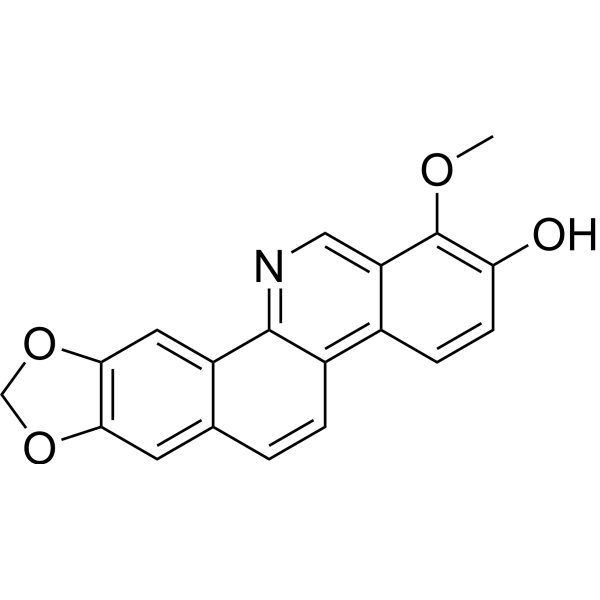 0 ImagesCat. No.: HY-N3700CAS No.: 54354-62-0Synonyms: RutacelineDecarine (Rutaceline) is a benzophenanthridine alkaloid found in Zanthoxylum species. Decarinewith shows anti-inflammatory, antimycobacterial, and anti-HIV activity. Decarine inhibits NO, TNF-α, IL-1β, IL-6, and IL-8 production in inflammatory cell models. Decarine inhibits growth of Mycobacterium tuberculosis strains, reduces intracellular Mycobacterium tuberculosis survival, and shows low cytotoxicity toward human macrophages. Decarine inhibits HIV replication in acutely infected lymphocytes. Decarine can be used for the researches of inflammation, tuberculosis, and HIV infection.
-
Alvelestat hydrochloride
 0 ImagesCat. No.: HY-15651BCAS No.: 1240425-11-9Synonyms: AZD9668 hydrochlorideAlvelestat hydrochloride (AZD9668 hydrochloride) is an orally active, selective inhibitor of neutrophil elastase. Alvelestat hydrochloride reduces elastase activity, myeloperoxidase release, neutrophil recruitment and activation, and calcium phosphate precipitation; promotes smooth muscle cell colonization and collagen deposition; and inhibits the formation of neutrophil extracellular traps (NETs) as well as NET-derived neutrophil elastase activity. Alvelestat hydrochloride restores endothelial dysfunction, regulates antioxidant factors, improves the expression of endothelial tight junctions, reduces vascular leakage, and accelerates wound healing. Alvelestat hydrochloride prevents pulmonary hemorrhage, matrix protein degradation, airspace enlargement, and small airway wall remodeling; and alleviates cigarette-induced inflammatory responses. Alvelestat hydrochloride inhibits the growth of abdominal aortic aneurysms exacerbated by Porphyromonas gingivalis. Alvelestat hydrochloride can be used in research related to chronic obstructive pulmonary disease, abdominal aortic aneurysm, radiation-induced skin injury, and bronchiectasis.
-
Hibiscetin
 0 ImagesHibiscetin is an orally active anti-inflammatory, antioxidant, antihyperglycemic, hypolipidemic, hepatoprotective and neuroprotective agent. Hibiscetin reduces the levels of TNF-α, IL-1β and IL-6. Hibiscetin inhibits lipid peroxidation, reduces MDA levels, and induces the activities of antioxidant enzymes CAT, GSH and SOD. Hibiscetin lowers blood glucose, reverses reduced insulin levels, regulates adipokine levels, and reduces elevated AST and ALT levels. Hibiscetin alleviates Rotenone (HY-B1756)-induced akinesia and catalepsy, normalizes neurotransmitter levels, and modulates the activities of activated caspase 3 and BDNF. Hibiscetin can be used in the research of type 2 diabetes, Parkinson's disease and Huntington's disease.




