



Keap1-Nrf2 Activator
-
3-Hydroxyphenylacetic acid-d5
 0 ImagesCat. No.: HY-W001083S1
2-(3-Hydroxyphenyl-2,4,6-d3)acetic-2,2-d2 acid is the deuterium labeled 3-Hydroxyphenylacetic acid (HY-W001083). 3-Hydroxyphenylacetic acid is an orally active flavonoid metabolite produced by intestinal flora, with blood pressure-lowering activity. 3-Hydroxyphenylacetic acid can also inhibit ferroptosis by upregulating the expression of GPX4, thereby improving spermatogenic dysfunction in aged mice. In addition, abnormal levels of 3-Hydroxyphenylacetic acid are closely related to certain diseases, such as autism spectrum disorders.
-
Dendrobine (Standard)
 0 Images
Dendrobine (Standard) is the analytical standard of Dendrobine. This product is intended for research and analytical applications. Dendrobine is an alkaloid isolated from Dendrobium nobile. Dendrobine possesses antiviral activity against influenza A viruses, with IC50s of 3.39 μM, 2.16 μM and 5.32 μM for A/FM-1/1/47 (H1N1), A/Puerto Rico/8/34 H274Y (H1N1) and A/Aichi/2/68 (H3N2), respectively. Dendrobine activates the JNK/p38/Nrf2 signaling pathway. Dendrobine exhibits antiviral, antitumor, anti-inflammatory, and neuroprotective properties.
-
2-Trifluoromethyl-2'-methoxychalcone
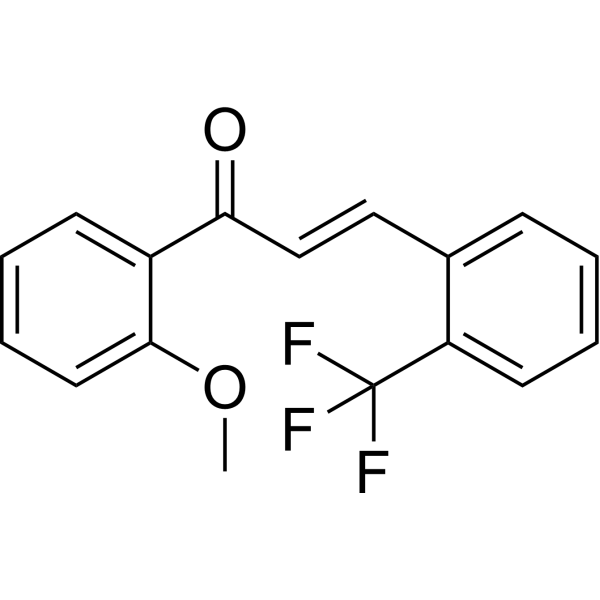 0 ImagesCat. No.: HY-124345CAS No.: 1309371-03-6
2-Trifluoromethyl-2'-methoxychalcone is a chalcone derivative. 2-Trifluoromethyl-2'-methoxychalcone is a potent Nrf2 activator. 2-Trifluoromethyl-2'-methoxychalcone can be used for oxidative stress and inflammation related diseases research.
-
3-Hydroxyphenylacetic acid (Standard)
 0 Images
3-Hydroxyphenylacetic acid (Standard) is the analytical standard of 3-Hydroxyphenylacetic acid (HY-W001083). This product is intended for research and analytical applications. 3-Hydroxyphenylacetic acid is an orally active flavonoid metabolite produced by intestinal flora, with blood pressure-lowering activity. 3-Hydroxyphenylacetic acid can also inhibit ferroptosis by upregulating the expression of GPX4, thereby improving spermatogenic dysfunction in aged mice. In addition, abnormal levels of 3-Hydroxyphenylacetic acid are closely related to certain diseases, such as autism spectrum disorders.
-
4-Octyl itaconate (Standard)
 0 ImagesSynonyms: 4-OI (Standard)
4-Octyl itaconate (Standard) is the analytical standard of 4-Octyl itaconate. This product is intended for research and analytical applications. 4-Octyl Itaconate is a cell-permeable Itaconate derivative. Itaconate is an anti-inflammatory metabolite that activates Nrf2 via alkylation of KEAP1[1].
-
Resveratrol (GMP)
 0 Images
Resveratrol (GMP) is Resveratrol (HY-16561) produced by using GMP guidelines. GMP small molecules work appropriately as an auxiliary reagent for cell therapy manufacture. Resveratrol (trans-Resveratrol; SRT501), a natural polyphenolic phytoalexin that possesses anti-oxidant, anti-inflammatory, cardioprotective, and anti-cancer properties. Resveratrol (SRT 501) has a wide spectrum of targets including mTOR, JAK, β-amyloid, Adenylyl cyclase, IKKβ, DNA polymerase. Resveratrol also is a specific SIRT1 activator. Resveratrol is a potent pregnane X receptor (PXR) inhibitor. Resveratrol is an Nrf2 activator, ameliorates aging-related progressive renal injury in mice model. Resveratrol increases production of NO in endothelial cells.
-
17-Oxo-4(Z),7(Z),10(Z),13(Z),15(E),19(Z)-docosahexaenoic acid
 0 ImagesCat. No.: HY-139408CAS No.: 1233715-28-0Synonyms: 17-Oxo-DHA; 17-Oxo-4(Z),7(Z),10(Z),13(Z),15(E),19(Z)-DHA
17-Oxo-4(Z),7(Z),10(Z),13(Z),15(E),19(Z)-docosahexaenoic acid (17-Oxo-DHA) is a metabolite of lipoxygenase-mediated oxidation of DHA. 17-Oxo-4(Z),7(Z),10(Z),13(Z),15(E),19(Z)-docosahexaenoic acid is a PPARγ agonist and activates a Nrf2 dependent antioxidant reaction.
-
NEPP11
 0 ImagesCat. No.: HY-180327CAS No.: 313051-12-6
NEPP11 is a cyclopentenone prostaglandin analogue. NEPP11 can inhibit glutamate-induced HT22 cell death in mouse hippocampus and prevent manganese-induced apoptosis in PC12 cells. NEPP11 can activate Nrf2 and maintain MEK1/2 and ERK1/2 activity by inhibiting c-Raf downregulation. NEPP11 exerts a neuroprotective effect in a mouse model of focal cerebral ischemia caused by permanent middle cerebral artery occlusion.
-
PIISVYWK
 0 ImagesCat. No.: HY-P11589CAS No.: 2016043-80-2
-
Bisdemethoxycurcumin
 0 ImagesCat. No.: HY-N2942CAS No.: 52328-96-8
Bisdemethoxycurcumin is an orally effective curcuminoid. Bisdemethoxycurcumin downregulates pro-inflammatory cytokines in macrophages by inhibiting the phosphorylation of PI3K/Akt and p38 MAPK. Bisdemethoxycurcumin relieves autophagy inhibition and promotes lipophagy to clear vascular smooth muscle foam cells by inhibiting the PDK1/Akt/mTOR pathway. Bisdemethoxycurcumin activates the cAMP/Epac/AMPKα axis and the NRF2/HO-1 antioxidant axis, thereby indirectly inhibiting the phosphorylation of NF-κB p65 and pro-inflammatory outputs such as IL-1β/IL-6/TNF-α, so as to alleviate pulmonary oxidative stress, inflammatory infiltration and pulmonary edema. Bisdemethoxycurcumin blocks NLRP3-mediated pyroptosis and protects cartilage extracellular matrix degradation by activating NRF2/HO-1. Bisdemethoxycurcumin also exerts a synergistic effect with potassium iodide against Candida.
-
CF-Carvacrol
 0 ImagesCat. No.: HY-175005
CF-Carvacrol is an orally active lipid-lowering agent synthesized by merging the pharmacophores of Carvacrol (HY-N0711) and Clofibric acid (HY-B1415). CF-Carvacrol has a good affinity for PPAR-α. CF-Carvacrol has significant hypolipidemic activity and may exert antioxidant and anti-inflammatory activity by activating the Nrf2/HO-1 signaling pathway to reduce liver injury. CF-Carvacrol can be used for the study of CF-induced liver damage.
-
S217879
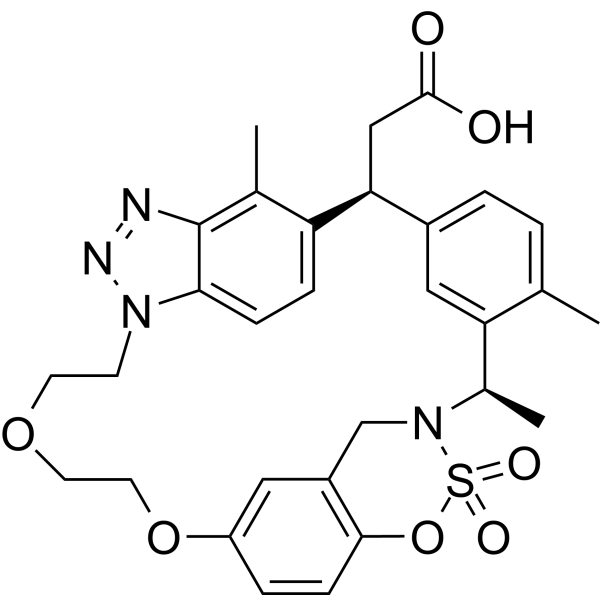 0 ImagesCat. No.: HY-156065CAS No.: 2700303-28-0
S217879 is an orally active and selective NRF2 activator. S217879 activates the NRF2 pathway by specifically disrupting the KEAP1 (Kd: 4.15 nM)-NRF2 interaction, and upregulates the antioxidant response. S217879 also ameliorates steatohepatitis and reduces the degree of liver fibrosis. S217879 can be used in the research of metabolic dysfunction-associated steatotic liver disease and nonalcoholic steatohepatitis.
-
Bardoxolone methyl-d3
 0 ImagesCat. No.: HY-13324SSynonyms: RTA 402-d3; NSC 713200-d3; CDDO Methyl ester-d3
Bardoxolone methyl-d3 (RTA 402-d3) is the deuterated-labeled Bardoxolone methyl (HY-13324). Bardoxolone methyl (RTA 402) is an orally active and blood-brain-barrier-penetrant activator of Nrf2 and an inhibitor of SARS-CoV-2 3CL protease. Bardoxolone methyl inhibits SARS-CoV-2 replication in Vero cells with an EC50 value of 0.29 μM. Bardoxolone methyl increases levels of pNrf2 and HO-1, inhibits inflammatory mediators like pNFκB and MCP-1. Bardoxolone methyl activates the Nrf2 pathway to enhance antioxidant and anti-inflammatory responses, inhibits viral replication, and improves mitochondrial function. Bardoxolone methyl can be used in research on chemotherapy-induced neuropathic pain (CINP), COVID-19, and chronic kidney disease (CKD).
-
Nrf2/HO-1 activator 3
 0 ImagesCat. No.: HY-170867
Nrf2/HO-1 activator 3 (Compound C3a) is the activator for Nrf2 signaling pathway that promotes the Nrf2 translocation into nuclei and upregulates the expression of heme oxygenase-1 HO-1. Nrf2/HO-1 activator 3 inhibits the overespression of ROS and MDA in H2O2- or glucose-stimulated H9c2 cardiomyocytes, inhibits the cell viability and colony formation, thereby exhibiting antioxidant efficacy.
-
Alginate oligosaccharides
 0 ImagesCat. No.: HY-N20693Synonyms: AOS
Alginate oligosaccharides (AOS) are orally effective linear oligosaccharides with anti-inflammatory, antioxidant and antimicrobial activities. Alginate oligosaccharides inhibit the activation of NLRP3 inflammasome and NF-κB, promote nuclear translocation of Nrf2 and phosphorylation of AMPK, and reduce the enhanced functional level of TRPV1. Alginate oligosaccharides improve oxidative stress, ROS production, mitochondrial bioenergetic dysfunction and gait impairment. Alginate oligosaccharides inhibit the release of neuropeptides; alter the structure and viscoelasticity of mucin matrix; disrupt bacterial and fungal biofilms; regulate gut microbiota; and exert anti-apoptotic effects.
-
Tovophyllin A
 0 ImagesCat. No.: HY-N18091CAS No.: 40738-44-1
Tovophyllin A is an orally active xanthonoid compound. Tovophyllin A exerts neuroprotective effects against Parkinson's disease by activating the Akt/GSK3β signaling pathway. Tovophyllin A protects mouse models of liver injury by activating Nrf2. Tovophyllin A exhibits protective anti-inflammatory activity in mouse models of acute lung injury. Tovophyllin A inhibits the activation of NF-κB and subsequent release of pro-inflammatory cytokines. Tovophyllin A reduces apoptotic cell death (Apoptosis). Tovophyllin A has antiplasmodial activity. Tovophyllin A shows cytotoxic activity against lung epithelial cancer cells and breast cancer cells. Tovophyllin A can be used in research related to Parkinson's disease, liver injury, acute lung injury, lung epithelial cancer, and breast cancer.
-
FSVVPSPK
 0 ImagesCat. No.: HY-P11608CAS No.: 2016043-82-4
FSVVPSPK is an orally active peptide. FSVVPSPK exerts significant anti-adipogenic, antioxidant and anti-inflammatory effects in vitro and in vivo, mainly through activating the HO-1/Nrf2 pathway. FSVVPSPK can be used in research related to obesity and metabolic disorders.
-
JHB-17
 0 ImagesCat. No.: HY-184115
JHB-17 is an IKKβ inhibitor with blood-brain barrier permeability, with an IC50 of 1.1 μM and a KD of 1.293 μM. JHB-17 is a non-ATP competitive inhibitor targeting the allosteric site of IKKβ, and it inhibits the phosphorylation of IKKβ. JHB-17 promotes the nuclear translocation of Nrf2, upregulates the expression of HO-1, SLC7A11 and glutathione, and reduces ROS to exert antioxidant effects. JHB-17 reduces cerebral infarction volume and improves neurobehavioral function. JHB-17 can be used in the research of cerebral ischemia-reperfusion injury.
-
SH543
 0 ImagesCat. No.: HY-180112
SH543 is a potent anti-osteoporosis agent. SH543 inhibits nuclear factor κB ligand (RANKL)-induced osteoclastogenesis with an IC50 of 3.3 nM. SH543 directly binds to KEAP1, activates the Nrf2-HO-1 antioxidant pathway, reduces ROS levels, and inhibits PI3K-AKT and MAPK signaling pathways. SH543 attenuates pathological bone loss in ovariectomized mice. SH543 can be used for osteoporosis research.



