



MDM-2/p53 Activator
-
FMP
 0 ImagesCat. No.: HY-168877
FMP is a Platinum(IV) complexe. FMP significantly upregulates the expression of γ-H2AX and p53. FMP increases the production of ROS. FMP markedly upregulates the expressions of Apoptosis-related proteins (DR5, Fas, caspase-8, Cyt-c, caspase-3, cleaved-PARP1, Bax). FMP shows antiproliferative activity against breast cancer.
-
UCI-14
 0 Images
UCI-14 is a gltA1/lprQ modulator with in vitro anti-tuberculosis activity against drug-sensitive and multidrug-resistant mycobacteria. UCI-14 upregulates the expression of genes encoding citrate synthase I, downregulates the expression of genes encoding conserved mycobacterial lipoprotein, and alters the carbon metabolism of mycobacteria. UCI-14 reactivates the expression of wild-type p53 target genes in p53-mutated cells. UCI-14 can be used in the research of tuberculosis and cancer.
-
Topoisomerase I-IN-18
 0 ImagesCat. No.: HY-178373
Topoisomerase I-IN-18, a derivative of Thiosemicarbazide (HY-Y0032), is a Topoisomerase I inhibitor. Topoisomerase I-IN-18 can disrupt DNA synthesis and transcription. Topoisomerase I-IN-18 inhibits tumor cell proliferation by inducing S-phase cell cycle arrest. Topoisomerase I-IN-18 can enhance mitochondria-mediated apoptosis, suppress cell migration, and increase intracellular Reactive Oxygen Species (ROS) levels. Topoisomerase I-IN-18 can increase p53 protein expression, γH2AX phosphorylation, upregulate Bax expression, downregulate Bcl-2 expression, and activate the caspase cascade. Topoisomerase I-IN-18 can be used for the study of lung cancer.
-
Glycocholic acid-13C2,d4N
 0 ImagesCat. No.: HY-W754548
Glycocholic acid-13C2,d4 is the deuterium labeled and 13C-labeled Glycocholic acid (HY-N1423). Glycocholic acid is a bile acid derivative. Glycocholic acid downregulates MDR1, Bcl-2, MRP1, MRP2 and FXR, upregulates Bax, p53, caspase-9, caspase-3, TGR5 and S1PR2. Glycocholic acid inhibits multidrug resistance and efflux pumps, induces mitochondrial apoptosis, and enhances chemosensitivity. Glycocholic acid modulates related bile acid receptor signaling. Glycocholic acid suppresses growth and conjugation of Enterobacteriaceae and increases their antibiotic susceptibility. Glycocholic acid can be used for the research of colon adenocarcinoma and cholangiocarcinoma (CCA).
-
Lenalidomide-13C5,15N
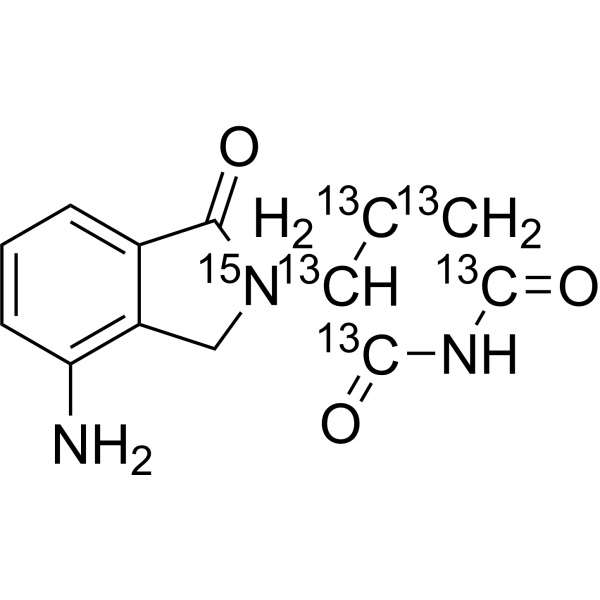 0 ImagesCat. No.: HY-A0003S2Synonyms: CC-5013-13C5,15N
Lenalidomide-13C5,15N (CC-5013-13C5,15N) is the 13C, 15N-labeled Lenalidomide (HY-A0003). Lenalidomide (CC-5013) is an orally active immunomodulatory agent that binds CRBN as a molecular glue to alter substrate specificity, inducing ubiquitination and proteasome-dependent degradation of IKZF1, IKZF3 and CK1α. Lenalidomide induces apoptosis by degrading IKZF1/3, and activates p53 by degrading CK1α. Lenalidomide promotes IL-2 release and effector functions of CD8+ T/NK cells, while inhibiting TNF-α secretion and M1-type pyroptosis. Lenalidomide can be used in research related to hematological malignancies, acute liver failure and acute kidney injury.
-
Solanidine (Standard)
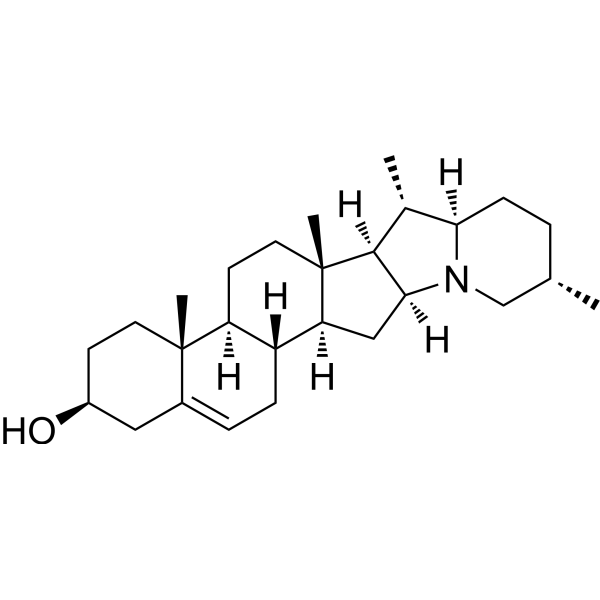 0 Images
Solanidine (Standard) is the analytical standard of Solanidine. This product is intended for research and analytical applications. Solanidine is an orally active cholestane alkaloid. Solanidine can be isolated from potato. Solanidine decreases RAD51 and increases γH2AX and p53. Solanidine has anti-tumor effects on LLC tumors and lung cancer. Solanidine promotes breast cancer cell proliferation. Solanidine reduces neovascularization. Solanidine causes abortion in some pregnant mice.
-
p53 Activator 12
 0 ImagesCat. No.: HY-158151CAS No.: 2746374-04-7
p53 Activator 12 (compound 510B) is a potent p53 activator. p53 Activator 12 binds to mutant p53 and restores the ability of the p53 mutant to bind DNA.
-
β-Zearalenol-13C18
 0 ImagesCat. No.: HY-N6741S
β-Zearalenol-13C18 is the 13C-labeled β-Zearalenol (HY-N6741). β-Zearalenol is a zearalenone metabolite and Estrogen receptor binder (Kd = 0.406 nM) that induces apoptosis through activation of p53, JNK, and p38 kinases and the mitochondrial apoptosis pathway, while inhibiting CYP19A1 and inducing autophagy via SIRT1. β-Zearalenol is used in research on cardiotoxicity, mycotoxin-induced reproductive toxicity, and breast cancer.
-
SN-28049
 0 Images
SN-28049 is a new DNA-binding topoisomerase II-directed antitumor agent. SN-28049 activates the p53 pathway. SN-28049 exhibits anticancer activity against colorectal cancer.
-
SJ44236
 0 ImagesCat. No.: HY-170900
SJ44236 is a BET PROTAC degrader with activity against BRD2, BRD3 and BRD4 (DC50 = 127 pM). SJ44236 induces ubiquitination and proteasomal degradation by forming a ternary complex with BET proteins and CRBN-DDB1. SJ44236 downregulates c-Myc, upregulates p53 and reduces cancer cell viability. SJ44236 can be used for the research of leukemia and medulloblastoma.
-
p53 Activator 10
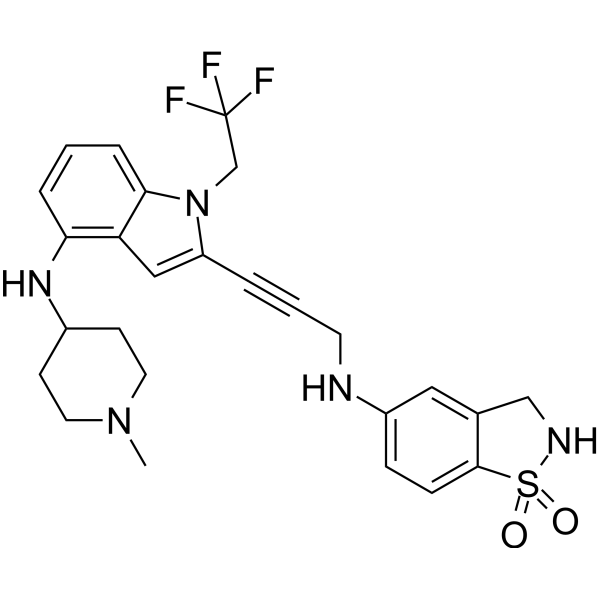 0 ImagesCat. No.: HY-160449CAS No.: 2849484-29-1
p53 Activator 10 (Example C-2) is a compound that targets the y220c mutant of p53. p53 Activator 10 activation is involved in the downstream effects of tumor suppression.

-
Diuron (Standard)
 0 Images
Diuron (Standard) is the analytical standard of Diuron (HY-B0860). This product is intended for research and analytical applications. Diuron is an orally active phenylurea herbicide. Diuron inhibits photosynthesis in plants by blocking the formation of ATP and NADH. Diuron increases the production of ROS. Diuron increases expression of p53 in certain cell lines. Diuron has herbicidal activity against annual and perennial broadleaf weeds and grass weeds. Diuron promotes DMBA/BBN-induced bladder cancer. Diuron can be used in breast cancer research.
-
Leucettamol A
 0 ImagesCat. No.: HY-125660CAS No.: 151124-32-2
Leucettamol A is an inhibitor of Ubc13 (ubiquitin E2 enzyme)-Uev1A interaction, with an IC50 of 50 μg/mL. Leucettamol A can potentially activate the expression of cancer suppressor p53 and is a precursor of anticancer agents. Leucettamol A can be isolated from a marine sponge, Leucetta aff. Microrhaphis.
-
BMH-9
 0 ImagesCat. No.: HY-118912CAS No.: 457937-39-2
BMH-9 (Compound Z54) is a modulator for nuclear receptor subfamily 2, group F, member 6 (NR2F6) (also known as nuclear orphan receptor Ear2). BMH-9 is an activator for p53 signaling pathway through interaction with DNA. BMH-9 inhibits proliferation of human cancer cells, exhibits antitumor efficacy in NOD-SCID mouse models.
-
Apoptosis inducer 65
 0 ImagesCat. No.: HY-189411
Apoptosis inducer 65 is an apoptosis inducer with antiproliferative activity against cancer cells. Apoptosis inducer 65 induces G0/G1 cell cycle arrest and intrinsic apoptosis by upregulating p53, BAX, and caspase-7, while downregulating Bcl-2. Apoptosis inducer 65 inhibits ROS, NO, TNF-α, IL-1β, and IL-6 in macrophages. Apoptosis inducer 65 can be used for research on hepatocellular carcinoma and inflammation.
-
p53 Activator 16
 0 ImagesCat. No.: HY-179506
P53 Activator 16 (Compound JC16) is a p53 activator. P53 Activator 16 exhibits selective cytotoxicity and pro-apoptotic (apoptosis) activity towards p53-Y220C mutant cancer cells, while having little effect on wild-type or P53-deficient cells. P53 Activator 16 induces the conformational transition of cell p53-Y220C from the mutant form to the wild-type form, accompanied by the transcriptional activation of p53 target genes, without increasing the overall level of p53 protein. P53 Activator 16 can be used for the study of p53 mutant cancers.
-
N-Desmethyl clomipramine
 0 Images
N-Desmethyl clomipramine (Desmethylclomipramine; Norclomipramine) is the orally active major active metabolite of the tricyclic antidepressant Clomipramine (HY-B0457A), possessing multiple activities including anti-inflammatory, antioxidant, antibacterial, and antiparasitic effects. N-Desmethyl clomipramine blocks autophagosome-lysosome fusion, leading to the accumulation of LC3-II, p62, ATG7, WIPI2, and ATG5-12, reactivates the p53/p21 pathway, induces apoptosis through C-PARP and C-CAS3, and inhibits the proliferation, migration, and invasion of renal cancer cells. N-Desmethyl clomipramine inhibits LdTOPIA, inducing R-loop accumulation in the nucleus of Leishmania, ultimately causing parasite death. N-Desmethyl clomipramine can be used for research on depression, metastatic renal cell carcinoma, and leishmaniasis.
-
Kevetrin
 0 ImagesCat. No.: HY-16270CAS No.: 500863-50-3Synonyms: 3-Cyanopropyl carbamimidothioate; 4-Isothioureidobutyronitrile
Kevetrin (3-Cyanopropyl carbamimidothioate; 4-Isothioureidobutyronitrile) is an apoptosis inducer that exhibits p53-dependent and p53-independent antitumor activity. In TP53 wild-type models, Kevetrin activates and stabilizes the p53 protein by altering the processing of MDM2, thereby inducing cell cycle arrest and apoptosis. Kevetrin shows higher sensitivity in mutant models. Kevetrin is applicable for the research of various cancers including acute myeloid leukemia and breast cancer.



