



NF-κB
Nuclear factor-κB; Nuclear factor-kappaB
NF-κB (Nuclear factor kappa-light-chain-enhancer of activated B cells) is a protein complex that controls transcription of DNA. NF-κB is found in almost all animal cell types and is involved in cellular responses to stimuli such as stress, cytokines, free radicals, ultraviolet irradiation, oxidized LDL, and bacterial or viral antigens. NF-κB plays a key role in regulating the immune response to infection. Incorrect regulation of NF-κB has been linked to cancer, inflammatory, and autoimmune diseases, septic shock, viral infection, and improper immune development. NF-κB has also been implicated in processes of synaptic plasticity and memory. There are five proteins in the mammalian NF-κB family: NF-κB1, NF-κB2, RelA, RelB, c-Rel.
NF-κB Isoform Specific Products
All Product Categories
-
NF-κB Inhibitors
(1599)
View all products
-
NF-κB Agonists
(6)
View all products
-
NF-κB Antagonist
(1)
View all products
-
NF-κB Activators
(141)
View all products
-
NF-κB Modulators
(34)
View all products
-
NF-κB Inducers
(3)
View all products
-
NF-κB Degraders
(4)
View all products
-
NF-κB Controls
(7)
View all products
-
NF-κB Ligands
(2)
View all products
-
NF-κB Related Products (1934)
Related Products (1934)

-
Antibodies (32)
-
NF-κB Signaling Pathway
-
NF-κB Isoform Comparison
-
N-(p-Coumaroyl) Serotonin (Standard)
 0 ImagesCat. No.: HY-129440RCAS No.: 68573-24-0N-(p-Coumaroyl) Serotonin (Standard) is the analytical standard of N-(p-Coumaroyl) Serotonin (HY-129440). This product is intended for research and analytical applications. N-(p-Coumaroyl) Serotonin is an orally active polyphenol found in safflower seeds with potent anti-inflammatory, antioxidant, and antitumor activities. N-(p-Coumaroyl) Serotonin suppresses NF‑κB, TLR4/MyD88 and MAPK signaling, activates NQO1/HO‑1 pathways, and inhibits pro‑inflammatory cytokines, iNOS and COX‑2 and ROS production. N-(p-Coumaroyl) Serotonin induces S‑phase arrest and apoptosis in glioblastoma cells, reduces atherosclerotic lesions, and alleviates renal and vascular injuries. N-(p-Coumaroyl) Serotonin acts as a vasodilator, regulates calcium dynamics. N-(p-Coumaroyl) Serotonin can be used for the research of neurodegenerative diseases, atherosclerosis, glioblastoma, and acute renal failure.
-
Pulegone (Standard)
 0 ImagesPulegone (Standard) is the analytical standard of Pulegone (HY-N1500). This product is intended for research and analytical applications. Pulegone is a monoterpene ketone compound widely present in the essential oils of many plants. Pulegone can also be used as a bird repellent. Pulegone has multiple activities such as anti-inflammatory, antibacterial, antifungal, and anti-hyperalgesic effects. Pulegone is particularly effective against bacteria of the Salmonella species.
-
Ruberythric acid
 0 ImagesCat. No.: HY-W718178CAS No.: 152-84-1Ruberythric acid is a natural product found in madder (Rubia tinctorum). Acid treatment induces hydrolysis of Ruberythric acid, producing pentose-containing sugar residues and alizarin. Ruberythric acid inhibits stimulus-induced phosphorylation of IKK, IκBα and p65 in the NF-κB pathway, regulates tight junction integrity, suppresses stimulus-induced MLCK activation and myosin light chain phosphorylation, reduces tight junction disruption associated with cytoskeletal contraction, alleviates stimulus-induced increase in intestinal permeability, and prevents stimulus-induced redistribution of tight junction proteins. Ruberythric acid forms red salts when dissolved in alkali and can be used as a dye. Ruberythric acid is applicable to research related to inflammatory bowel disease.
-
4-Octylphenol
 0 Images4-Octylphenol is a hormone disruptor that has gender-specific effects on male reproductive cells, significantly reducing the mitotic index and the number of spermatogonia. 4-Octylphenol can cause inflammatory damage to fish gills by activating the complement system through the C3a/C3aR axis and the C5a/C5aR1 axis, this leads to complement activation and causes immune suppression due to the imbalance between Th1/Th2 cells and regulatory T cells (Treg)/Th17 cells, as well as inflammatory damage via the Toll-like receptor 7 (Toll-like Receptor (TLR))/IκBα/NF-κB pathway.
-
Sodium propionate-13C-1
 0 ImagesCat. No.: HY-B1773AS1CAS No.: 83587-76-2Sodium propionate-13C-1 is the 13C-labeled Propionate sodium (HY-B1773A). Sodium propionate is an orally active short-chain fatty acid. Sodium propionate can be produced by intestinal bacteria from the metabolism of dietary fiber. Sodium propionate increases PPAR-γ, inhibits NF-κB activation, and reduces COX-2 expression and NO production. Sodium propionate also induces Apoptosis and Autophagy. Sodium propionate reduces HSV-1-induced keratitis. Sodium propionate has anticancer effects against glioblastoma. Sodium propionate exhibits neuroprotective, antioxidant, and anti-inflammatory activities. Sodium propionate can be used in the research of spinal cord injury and Alzheimer's disease.
-
NF-κB-IN-22
 0 ImagesCat. No.: HY-184964CAS No.: 3041997-77-4NF-κB-IN-22 is an inhibitor targeting IKKβ, IκBα and NF-κB p65. NF-κB-IN-22 selectively inhibits the proliferation, migration and invasion of various cancer cells, arrests the cell cycle, and suppresses tumor growth in vivo, while exhibiting low toxicity to normal cells. NF-κB-IN-22 induces DNA damage, ROS production and apoptosis through endoplasmic reticulum stress and mitochondrial apoptotic pathways. NF-κB-IN-22 inhibits the phosphorylation of IKKβ, IκBα and NF-κB p65, blocks the NF-κB signaling pathway, and suppresses the nuclear translocation of NF-κB p65. NF-κB-IN-22 reverses the resistance to cisplatin (HY-17394). NF-κB-IN-22 can be used in research related to lung cancer, gastric cancer and liver cancer.
-
p53-MDM2-IN-3
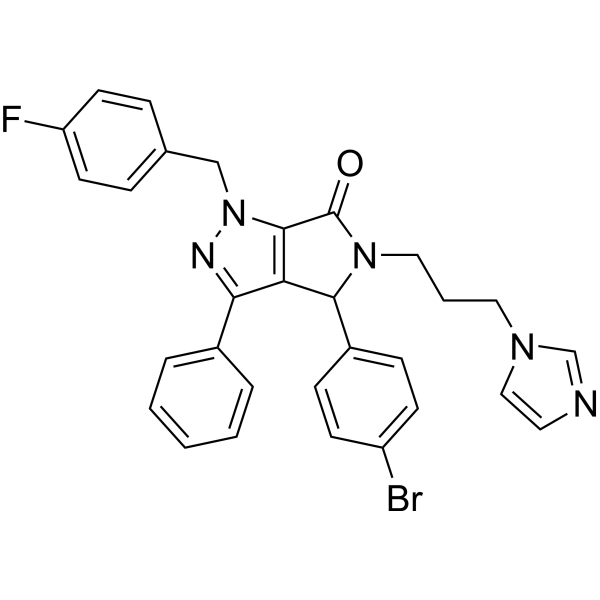 0 ImagesCat. No.: HY-121893CAS No.: 1542066-74-9p53-MDM2-IN-3 (Compound 5s) is an orally active p53-MDM2 inhibitor with a Ki value of 0.25 μM. p53-MDM2-IN-3 exerts antitumor activity by inhibiting NF-κB pathway.
-
2,4,5-Trimethoxybenzoic acid (Standard)
 0 Images2,4,5-Trimethoxybenzoic acid (Standard) is the analytical standard of 2,4,5-Trimethoxybenzoic acid (HY-Y0586). This product is intended for research and analytical applications. 2,4,5-Trimethoxybenzoic acid (Asaronic acid) is a compound identified in purple perilla extracts. 2,4,5-Trimethoxybenzoic acid inhibits LPS (HY-D1056)-induced inflammatory responses, inhibits the activation of NF-κB and STAT signaling pathways. 2,4,5-Trimethoxybenzoic acid inhibits M1 macrophage phenotype-mediated inflammation in diabetes.
-
Elatoside F
 0 ImagesCat. No.: HY-N13098CAS No.: 144118-18-3Elatoside F is a triterpenoid saponin with anti-inflammatory activity. Elatoside F inhibits lipopolysaccharide-induced nitric oxide production and nuclear factor NF-κB activation. Elatoside F can be isolated from Aralia elata in one step.
-
(S)-(-)-Anatabine
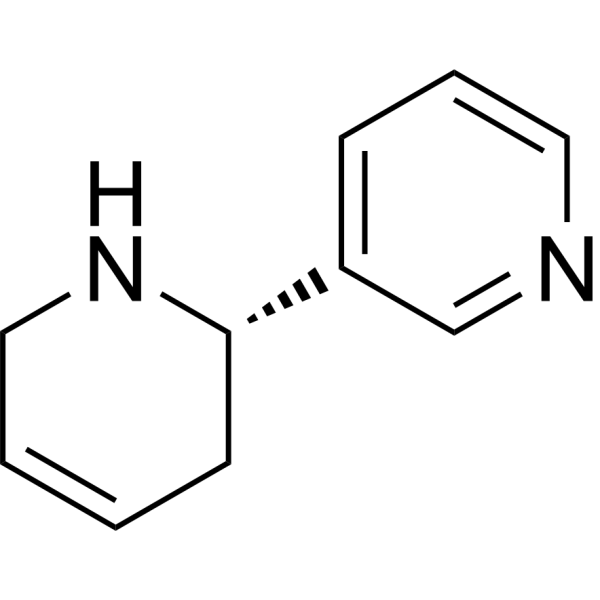 0 Images(S)-(-)-Anatabine is an NFκB/BACE-1 inhibitor with blood-brain barrier penetration. (S)-(-)-Anatabine inhibits NFκB activation via phosphorylation of its p65 subunit. (S)-(-)-Anatabine inhibits BACE-1 transcription and reduces BACE-1 protein levels. (S)-(-)-Anatabine lowers production of Aβ1-40 and Aβ1-42 by reducing β-cleavage of amyloid precursor protein without affecting α-cleavage. (S)-(-)-Anatabine can be used for the research of Alzheimer's disease.
-
Mitraphylline (Standard)
 0 ImagesMitraphylline (Standard) is the analytical standard of Mitraphylline. This product is intended for research and analytical applications. Mitraphylline is the major pentacyclic oxindolic alkaloid presented in Uncaria tomentosa. Mitraphylline inhibits lipopolysaccharide-mediated activation of primary human neutrophils. Mitraphylline exhibits antiproliferative activity in human glioma and neuroblastoma cell lines. Mitraphylline can inhibit interleukin release in vivo.
-
Amorfrutin A
 0 ImagesCat. No.: HY-130073CAS No.: 80489-90-3
-
9-PAHSA-d4
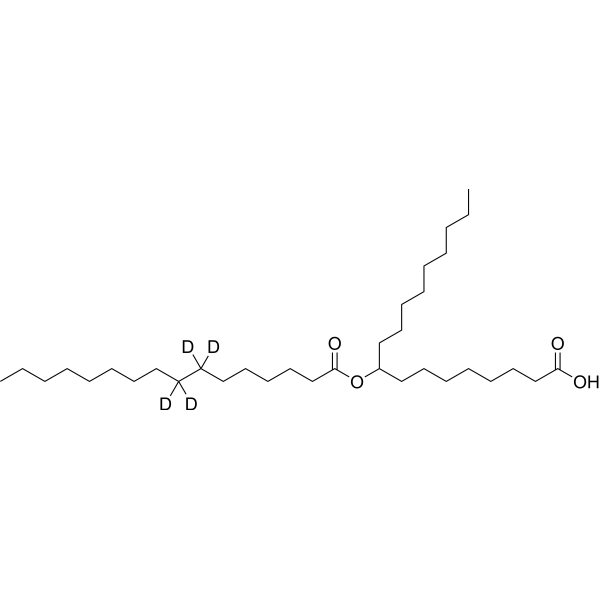 0 ImagesCat. No.: HY-120657SCAS No.: 2704278-85-19-PAHSA-d4 is the deuterium labeled 9-PAHSA. 9-PAHSA is an orally active endogenous GPR120 agonist (EC50=18 μM). 9-PAHSA significantly inhibits LPS-induced inflammatory responses by blocking the NF-κB pathway. 9-PAHSA induces adipocyte browning, enhances glucose uptake and reduces lipid accumulation, while improving mitochondrial function and the survival rate of steatotic hepatocytes. In terms of neuroprotection, 9-PAHSA regulates the expression of REST and BDNF in the prefrontal cortex of diabetic mice, and effectively prevents spatial working memory deficits and abnormal social behaviors. 9-PAHSA does not directly regulate insulin secretion or improve systemic insulin sensitivity, and possesses specific anti-inflammatory, metabolic regulatory and neuroprotective properties. 9-PAHSA can be used in the research of diabetes-related cognitive impairment, obesity and non-alcoholic fatty liver disease.

-
Gamma-glutamylcysteine ammonium
 0 ImagesCat. No.: HY-113402BSynonyms: γ-Glu-Cys ammoniumGamma-glutamylcysteine ammonium (γ-Glu-Cys ammonium) is an orally active, blood-brain barrier permeable dipeptide. Gamma-glutamylcysteine ammonium activates AMPK, SIRT1, IL-4/STAT6, AC/cAMP/PI3K, IGF-1R/IRS1/PI3K, and Nrf2 signaling pathways; it inhibits NF-κB, JAK1/STAT1/3, MAPKs, cadmium-induced p38 MAPK, JNK, and PI3K/Akt signaling pathways. Gamma-glutamylcysteine ammonium regulates macrophage polarization, modulates the trafficking of CD36 and GLUT4, induces glutathione synthesis, improves metabolic dysfunction, reduces lipid deposition, ameliorates glucose homeostasis, inhibits apoptosis (Apoptosis), stabilizes mitochondria, suppresses lipid peroxidation, iron accumulation and ferroptosis (Ferroptosis), reduces ds-HMGB1 levels, reverses mechanical hyperalgesia, and alleviates hepatic lipid droplet formation. Gamma-glutamylcysteine ammonium is applicable to research related to inflammatory bowel disease, type 2 diabetes, cadmium-induced neurotoxicity, Alzheimer's disease, cerebral ischemia/reperfusion injury, neuropathy, and alcoholic liver disease.
-
Micheliolide (Standard)
 0 ImagesMicheliolide is a sesquiterpene lactone with anti-cancer and anti-inflammatory effects, which is derived from Michelia compressa and Michelia champaca. Micheliolide can attenuate high glucose-stimulated NF-κB activation, IκBα degradation, and the expression of MCP-1, TGF-β1, and FN in mouse mesangial cells. Micheliolide inhibits LPS (HY-D1056)-induced activation of NF-κB and PI3K/Akt/p70S6K pathways to play an anti-inflammatory role. Micheliolide inhibits dextran sodium sulphate (DSS) (HY-116282)-induced inflammatory intestinal disease, colitis-associated cancer and rheumatic arthritis.
-
DHMEQ racemate
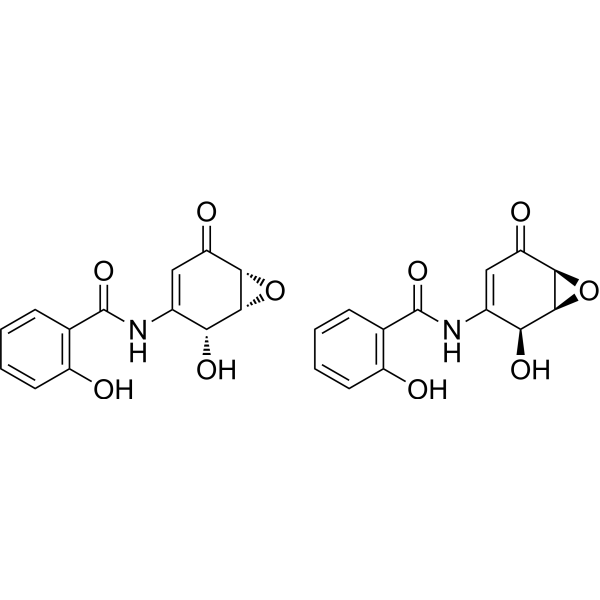 0 ImagesCat. No.: HY-14645BCAS No.: 287194-38-1Synonyms: rel-DHMEQDHMEQ racemate is a NF-κB inhibitor. DHMEQ racemate is less active than (-)-DHMEQ.
-
Hypaconitine (Standard)
 0 ImagesHypaconitine (Standard) is the analytical standard of Hypaconitine. This product is intended for research and analytical applications. Hypaconitine inhibits the KCNH2 current with an IC50 of 8.1 nM, and exhibits cardiotoxicity. Hypaconitine inhibits TGF-β1-induced epithelial-mesenchymal transition (EMT) in A549 cell through the inhibition of NF-κB nuclear translocation. Hypaconitine acts as the neuromuscular blocker. Hypaconitine is orally active.
-
Osteoprotegerin
 0 ImagesCat. No.: HY-183516CAS No.: 19220-35-0Synonyms: OPGOsteoprotegerin (OPG) belongs to the tumor necrosis factor receptor (TNFR) superfamily. Osteoprotegerin blocks the RANKL-RANK interaction as well as the binding of TRAIL to its receptor. Osteoprotegerin activates NF-κB to induce the expression of ICAM-1, VCAM-1 and E-selectin, and activates the phosphorylation of ERK1/2. Osteoprotegerin regulates osteoclast activity, inhibits osteoclast maturation and formation, bone lysis and bone resorption, and increases bone mass. Osteoprotegerin regulates vascular endothelial cell function. Osteoprotegerin can be used in the research of cardio-cerebrovascular and bone-related diseases.
-
Armepavine (Standard)
 0 ImagesArmepavine (Standard) is the analytical standard of Armepavine. This product is intended for research and analytical applications. Armepavine, an active compound from Nelumbo nucifera, exerts not only anti-inflammatory effects on human peripheral blood mononuclear cells, but also immunosuppressive effects on T lymphocytes and on lupus nephritic mice. Armepavine inhibits TNF-α-induced MAPK and NF-κB signaling cascades.




