



PARP1
PARP1 (poly(ADP-ribose) polymerase 1) is a nuclear ADP-ribosyltransferase that functions as an early sensor of DNA strand breaks and catalyzes poly(ADP-ribosyl)ation to recruit DNA repair factors and coordinate chromatin remodeling at sites of genomic damage[1][2]. Mechanistically, PARP1 is a central component of the DNA damage response and plays critical roles in single-strand break repair and base excision repair through the recruitment of repair proteins such as XRCC1 and associated repair complexes[1][3]. Beyond local DNA repair, PARP1 contributes to genome surveillance by transmitting damage signals that influence repair pathway selection, replication stress responses, and maintenance of genomic stability[1][4]. In disease contexts, impaired PARP1-regulated repair can promote genomic instability, whereas elevated dependence on PARP1-mediated repair is a characteristic feature of multiple cancer models, particularly tumors with homologous recombination defects[4][5]. Compared with the related isoform PARP2, PARP1 accounts for the majority of DNA damage-induced poly(ADP-ribose) synthesis and displays distinct DNA-binding properties, including efficient recognition of single-strand DNA breaks, while PARP2 preferentially recognizes repair intermediates such as DNA gaps and flaps[3][6]. These functional distinctions support nonredundant contributions of PARP1 and PARP2 to the spatial and temporal organization of DNA repair pathways[3]. For experimental applications, PARP inhibitors have become widely used tools for investigating DNA damage responses and synthetic lethality, particularly in BRCA1/2-deficient tumor models, where suppression of PARP1-dependent repair enhances the accumulation of unrepaired DNA lesions and promotes selective cancer cell death[5][7].
References:
- [1]. Wang F, et al. PARPs and PARP inhibitors: molecular mechanisms and clinical applications. Mol Biomed. 2025 Dec 29;6(1):152. [Content Brief]
- [2]. Sciencedirect.topics.
- [3]. Yelamos J, et al. PARP-1 and PARP-2: New players in tumour development. Am J Cancer Res. 2011;1(3):328-346. Epub 2011 Jan 8. PMID: 21968702; PMCID: PMC3180065. [Content Brief]
- [4]. Petropoulos M, et al. Transcription-replication conflicts underlie sensitivity to PARP inhibitors. Nature. 2024 Apr;628(8007):433-441. [Content Brief]
- [5]. Rose M, et al. PARP Inhibitors: Clinical Relevance, Mechanisms of Action and Tumor Resistance. Front Cell Dev Biol. 2020 Sep 9;8:564601. [Content Brief]
- [6]. Szántó M, et al. Specific and shared biological functions of PARP2 - is PARP2 really a lil' brother of PARP1? Expert Rev Mol Med. 2024;26:e13.
- [7]. Underhill C, et al. A review of PARP inhibitors: from bench to bedside. Ann Oncol. 2011 Feb;22(2):268-79. [Content Brief]
-
PARP1 Related Products (211)
Related Products (211)

-
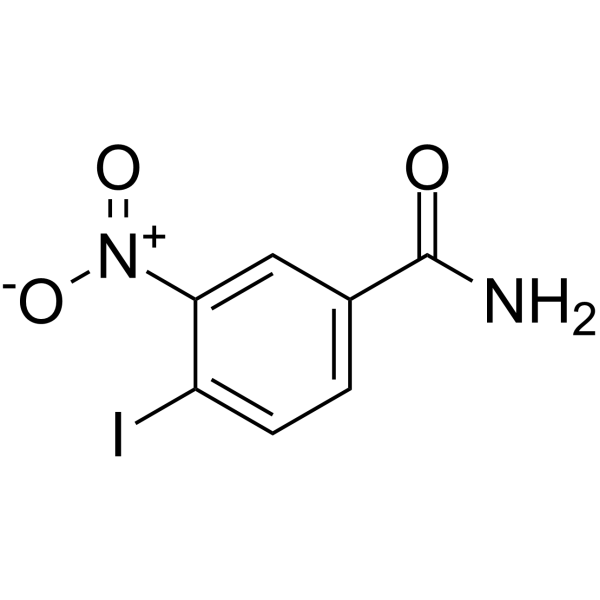
Antibodies (2)
-
7-Methylguanine
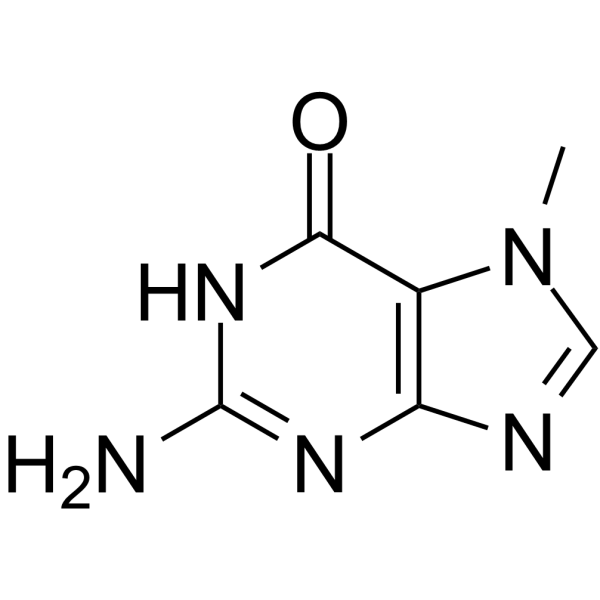 0 Images7-Methylguanine is an orally active and competitive PARP-1 inhibitor with a Ki value of 61 μM. 7-Methylguanine is a metabolite of nucleic acids. 7-Methylguanine has anticancer activity against uterine sarcoma and colon adenocarcinoma. 7-Methylguanine is used as a probe for protein-DNA interactions.
-
MN-64
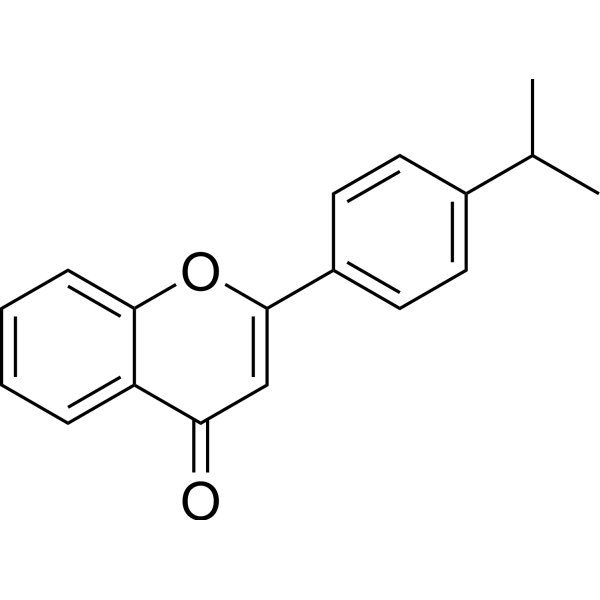 0 ImagesMN-64 is a potent tankyrase 1 inhibitor, with IC50s of 6 nM, 72 nM, 19.1 μM, and 39.4 μM for TNKS1, TNKS2, ARTD1 and ARTD2, respectively.
-
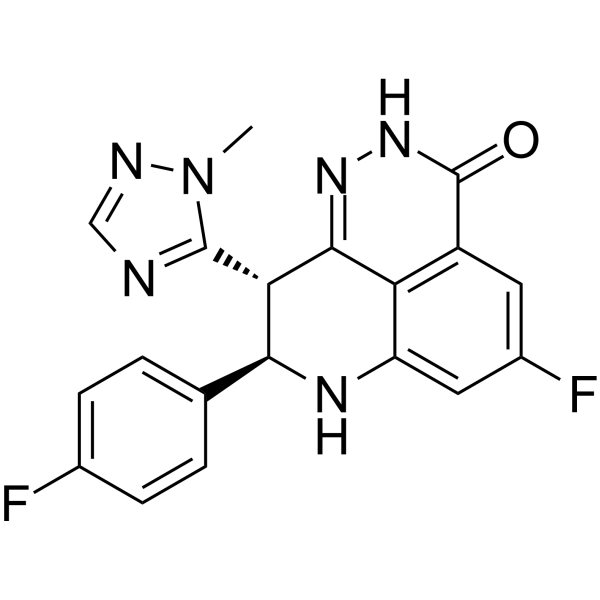
PARP14 inhibitor H10
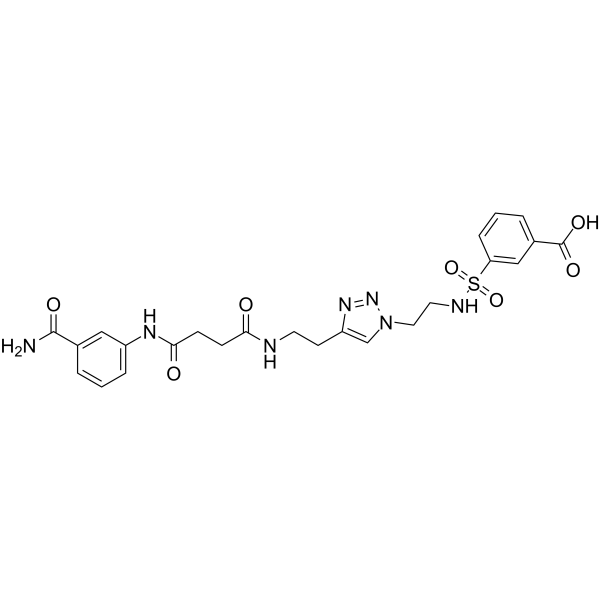 0 ImagesPARP14 inhibitor H10, compound H 10, is a selective inhibitor against PARP14 (IC50=490 nM), over other PARPs (≈24 fold over PARP1). PARP14 inhibitor H10 induces caspase-3/7-mediated cell apoptosis.
-
BYK204165
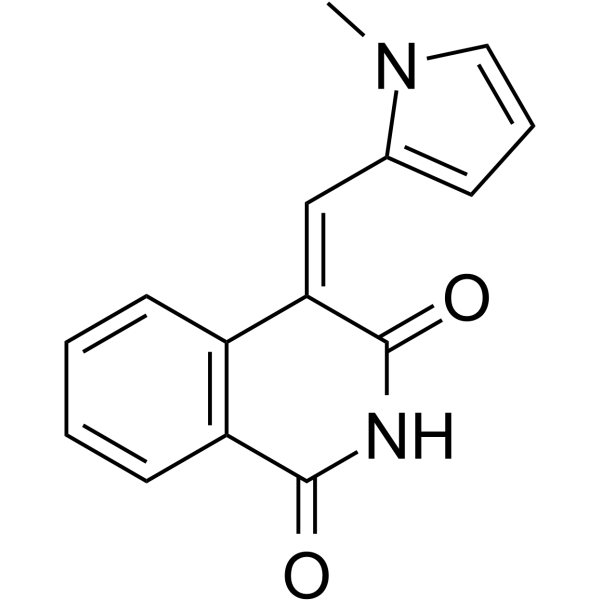 0 ImagesBYK204165 is a potent and selective PARP1 inhibitor. BYK204165 inhibits cell-free recombinant human PARP-1 (hPARP-1) with a pIC50 of 7.35 (pKi=7.05), and murine PARP-2 (mPARP-2) with a pIC50 of 5.38, respectively. BYK204165 displays 100-fold selectivity for PARP-1.
-
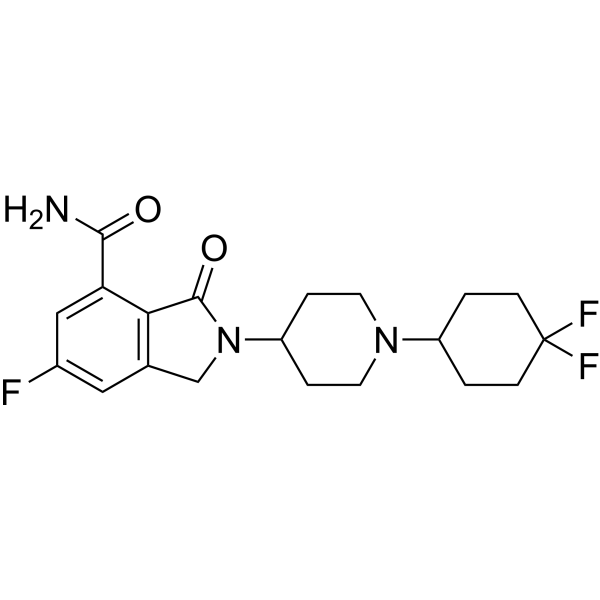
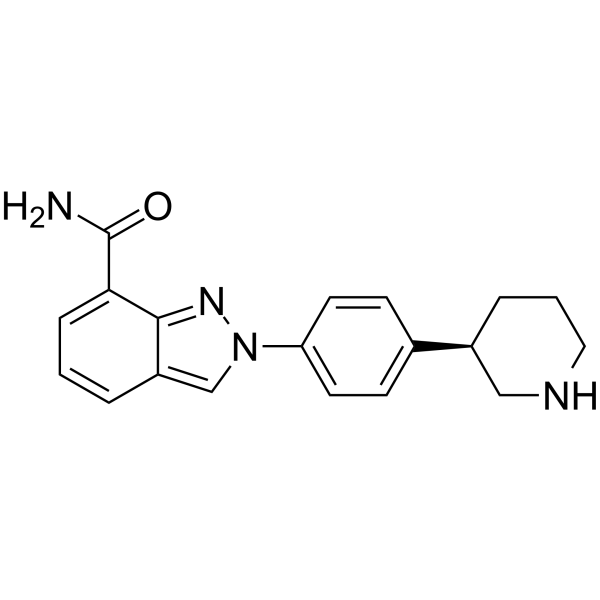
PROTAC PARP1 degrader-1
 0 ImagesPROTAC PARP1 degrader-1 is a PARP1 PROTAC degrader with a DC50 value of 252.5 nM. PROTAC PARP1 degrader-1, combined with Daunorubicin (HY-13062A), induces the accumulation of cytoplasmic DNA fragments, activates the cGAS/STING innate immune pathway, and remodels the tumor microenvironment. PROTAC PARP1 degrader-1 can be used in research related to breast cancer.
-
PROTAC PARP1 degrader
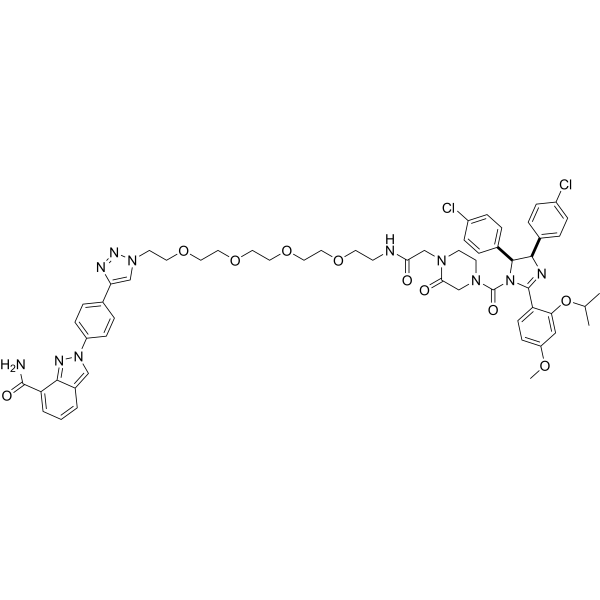 0 ImagesPROTAC PARP1 degrader is a PROTAC PARP1 degrader. PROTAC PARP1 degrader mediates the interaction between PARP1 and MDM2 E3 ubiquitin ligase, thereby inducing ubiquitination of PARP1 and subsequent proteasome-mediated degradation. PROTAC PARP1 degrader selectively inhibits the growth of breast cancer cells. PROTAC PARP1 degrader induces cell apoptosis by activating caspase-3 and phosphatidylserine externalization. PROTAC PARP1 degrader can be used in the research of triple-negative breast cancer.
-
PARP7-IN-16
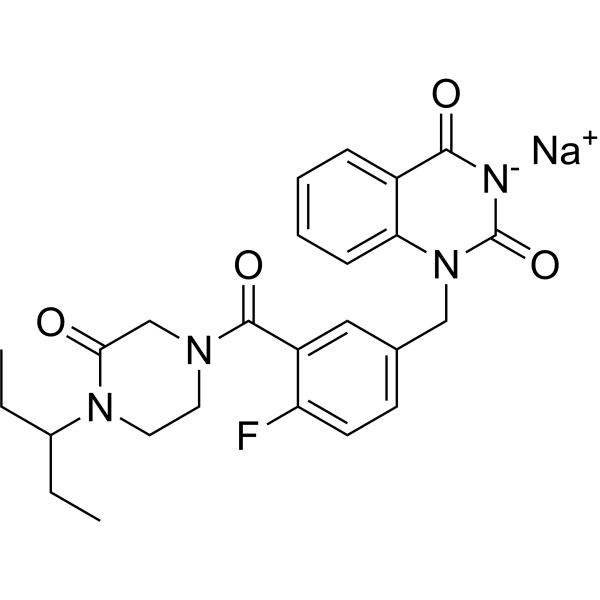 0 ImagesCat. No.: HY-156419CAS No.: 2435657-10-4
-
ASP3026
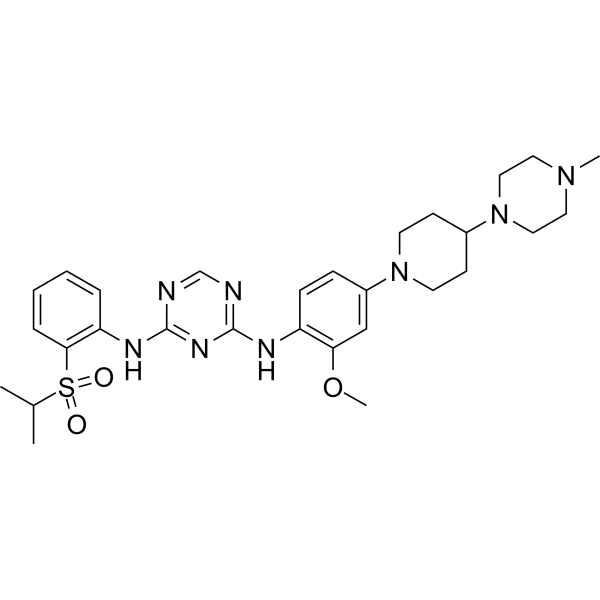 0 ImagesASP3026 is a selective and orally active inhibitor of anaplastic lymphoma kinase (ALK). ASP3026 is a selective and oral active anaplastic lymphoma kinase (ALK) inhibitor with a IC50 value of 3.5 nM. ASP3026 can inhibit the phosphorylation of IGF-1R, STAT3, AKT and JNK proteins, and induce the cleavage of caspase 3 and PARP. It also inhibited ROS and ACK. ASP3026 can be used in anti-tumor research.
-
PARP7-IN-16 free base
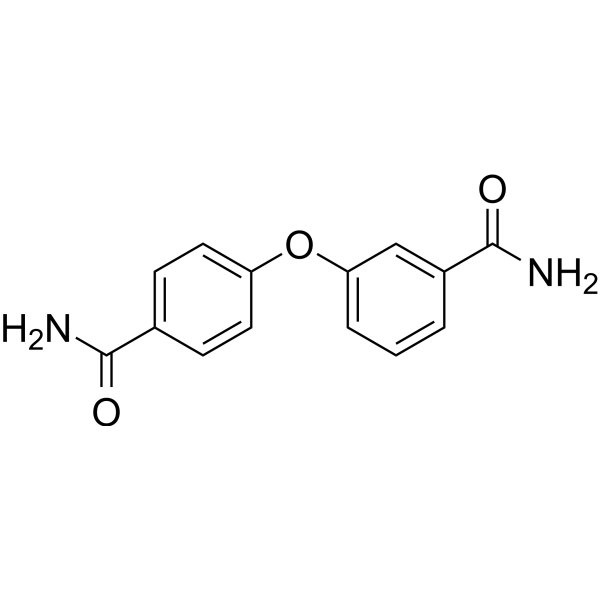
 0 ImagesPARP7-IN-16 free base is the free base form of PARP7-IN-16 (HY-156419). PARP7-IN-16 free base is a selective and orally active inhibitor of PARP-1/2/7, with IC50s of 0.94, 0.87 and 0.21 nM, respectively. PARP7-IN-16 can be used for the research of breast cancer and prostate cancer.

-
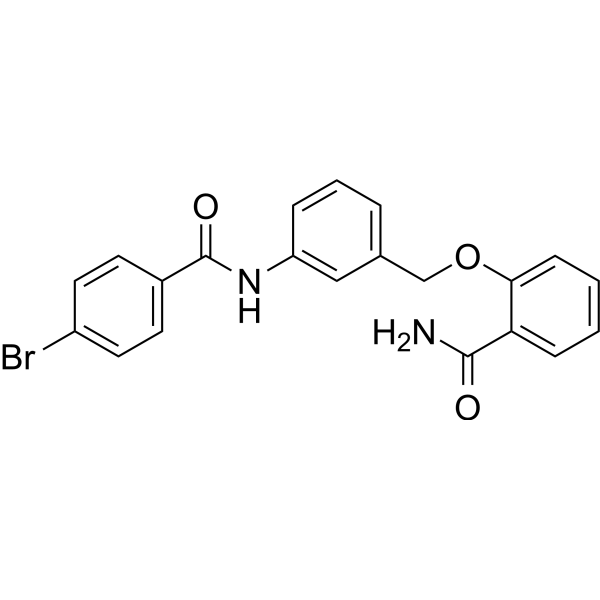
PARP1-IN-5 dihydrochloride
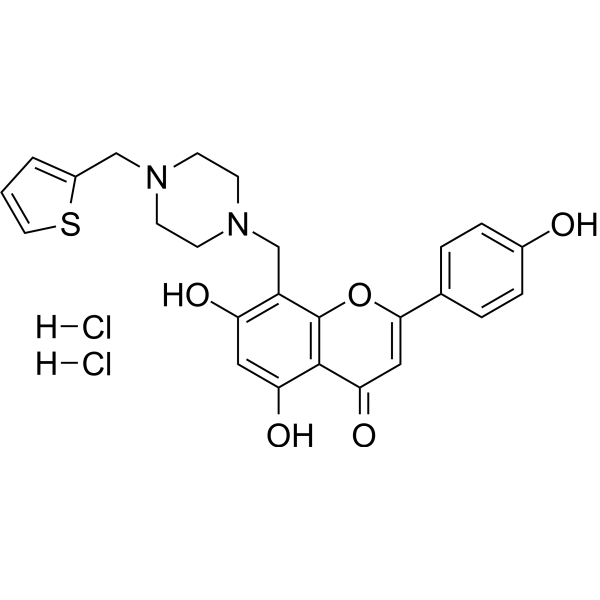 0 ImagesCat. No.: HY-132297ACAS No.: 2823308-89-8PARP1-IN-5 dihydrochloride is a low toxicity, orally active, potent and selective PARP-1 inhibitor (IC50 =14.7 nM). PARP1-IN-5 dihydrochloride can be used for the research of cancer.
-
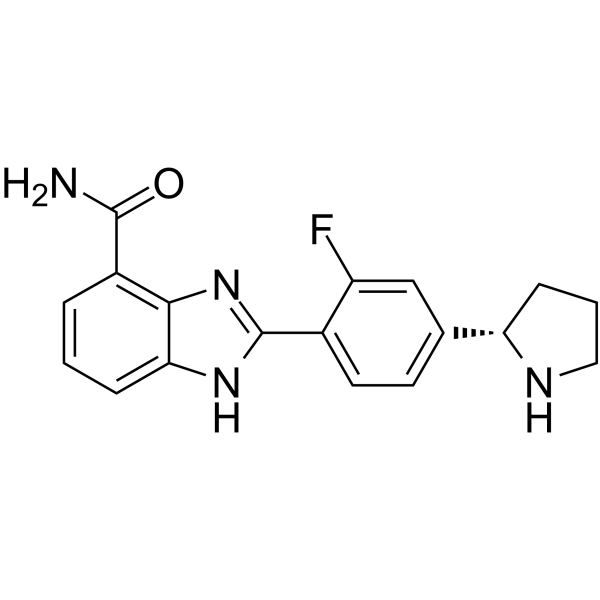
PARPYnD
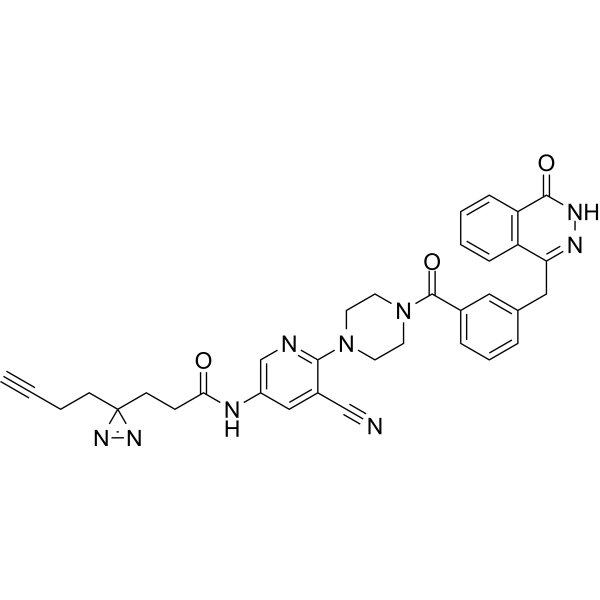 0 ImagesPARPYnD is a PARP enzyme photoaffinity probe (AfBP) based on the triple PARP1/2/6 inhibitor AZ9482 (HY-119653), which induces breast cancer Formation of multipolar spindles (MPS) in cells. PARPYnD inhibits PAPR wih IC50 of 38 nM (PARP1), 6 nM (PARP2), 230 nM (PARP6), respectively. PARPYnD enriches recombinant PARP6 incorporated into cell lysates and inhibits PARP6 in cell-free assays, but it does not label PARP6 in intact cells.
-
A-620223
 0 ImagesCat. No.: HY-10615CAS No.: 272769-49-0A-620223 is a PARP-1 inhibitor with a Ki of 8 nM against PARP-1 and EC50 of 3 nM in a whole cell assay. A-620223 demonstrates good in vivo efficacy in a B16F10 subcutaneous murine melanoma model in combination with Temozolomide (TMZ) (HY-17364) and in an MX-1 breast xenograph model in combination with Cisplatin (HY-17394). A-620223 can be used for the studies of melanoma and breast cancer.




