



AP-1 Activator
-
BRP
 0 ImagesCat. No.: HY-P10927Purity: 99.62%Synonyms: BRINP2-related peptide
BRP is a 12-peptide derived from BRINP2 that can cross the blood-brain barrier. BRP induces the central activation of FOS in neuronal cells via the cAMP-PKA-CREB signaling pathway. BRP exerts anorectic and anti-obesity effects without triggering nausea or aversive responses. The action of BRP is independent of the leptin, GLP-1 receptor and melanocortin 4 receptor pathways. BRP is applicable to obesity-related research.
-
Aaptamine
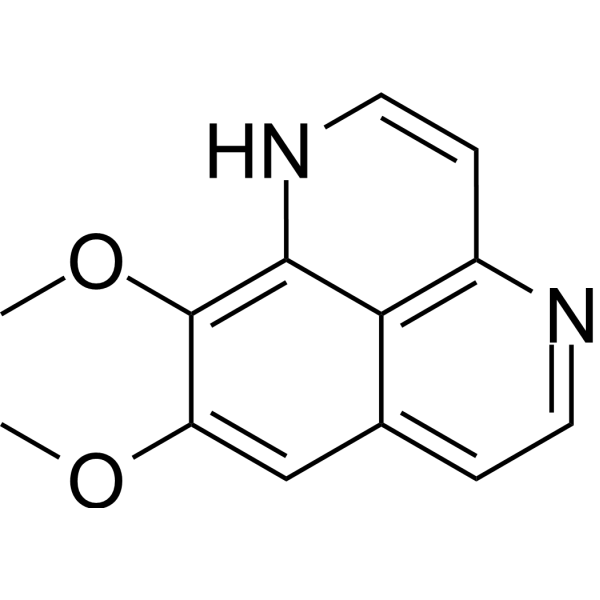 0 Images
Aaptamine is an alkaloid that can be isolated from the sponge Aaptos suberitoides. Aaptamine is a competitive antagonist of the α-adrenergic receptor, as well as an inhibitor of the proteasome and cholinesterase. Aaptamine is cytotoxic to tumor cells and can induce apoptosis, cell cycle arrest of tumor cells, and the expression of p21 through a p53-independent pathway. Aaptamine has multiple activities such as anti-tumor, antioxidant, antibacterial, and analgesic effects.
-
Nimustine hydrochloride
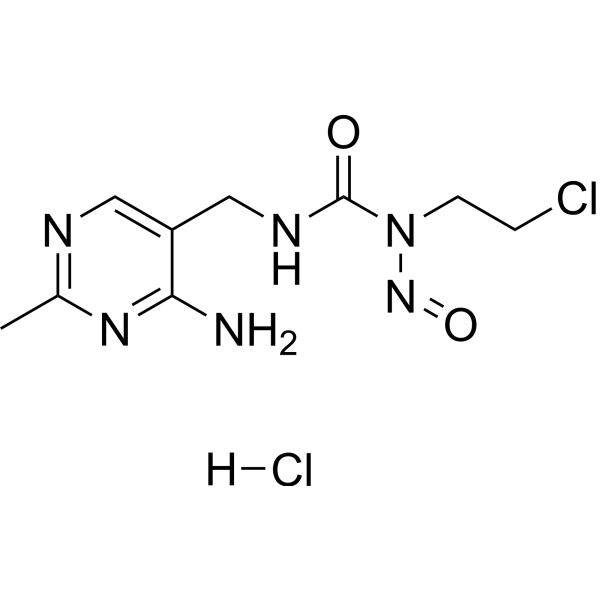 0 ImagesSynonyms: ACNU
Nimustine hydrochloride (ACNU) is the hydrochloride salt form of Nimustine (HY-13703). Nimustine hydrochloride is an alkylating agent, which induces DNA double-strand breaks (DSBs) and inter-strand crosslinks (ICLs), thereby activating the DNA damage response (DDR) signaling pathway. Nimustine hydrochloride activates p38 MAPK/JNK signaling pathway, and exhibits antitumor activity.
-
BRP TFA
 0 ImagesCat. No.: HY-P10927ASynonyms: BRINP2-related peptide TFA
BRP (BRINP2-related peptide) TFA is a 12-peptide derived from BRINP2 that can cross the blood-brain barrier. BRP TFA induces the central activation of FOS in neuronal cells via the cAMP-PKA-CREB signaling pathway. BRP TFA exerts anorectic and anti-obesity effects without triggering nausea or aversive responses. The action of BRP TFA is independent of the leptin, GLP-1 receptor and melanocortin 4 receptor pathways. BRP TFA is applicable to obesity-related research.
-
Benzanthrone
 0 Images
Benzanthrone is an immunotoxic, pro-inflammatory Photosensitizer. Benzanthrone upregulates iNOS, COX-2 and inflammatory cytokines; activates ERK1/2, p38, JNK, AP-1 and NF-κB; inhibits Nrf2; and induces oxidative stress and DNA damage. Upon radiation exposure, Benzanthrone generates singlet oxygen and superoxide anion radicals, induces photohemolysis and lipid peroxidation, and alters the levels of skin xenobiotic enzymes. Benzanthrone exhibits differential genotoxicity in different cell lines. Benzanthrone possesses skin tumor-initiating and promoting activities. Benzanthrone can be used in skin tumor-related studies.
-
Nimustine
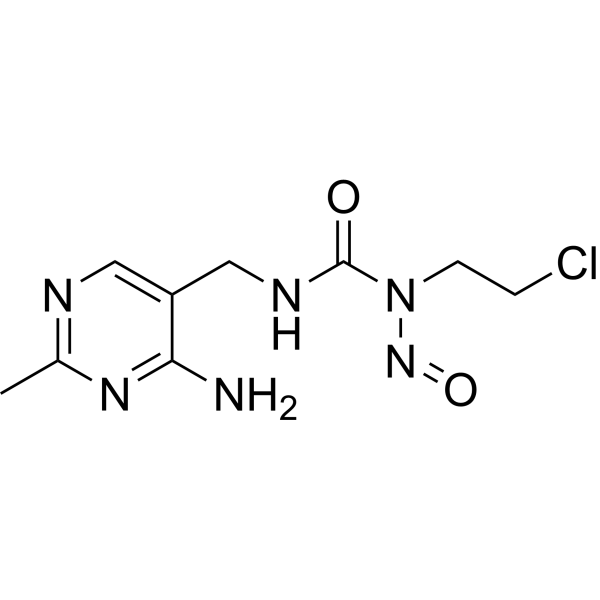 0 ImagesCat. No.: HY-13703CAS No.: 42471-28-3
Nimustine is an alkylating agent, which induces DNA double-strand breaks (DSBs) and inter-strand crosslinks (ICLs), thereby activating the DNA damage response (DDR) signaling pathway. Nimustine activates p38 MAPK/JNK signaling pathway, and exhibits antitumor activity.
-
12(S)-HPETE
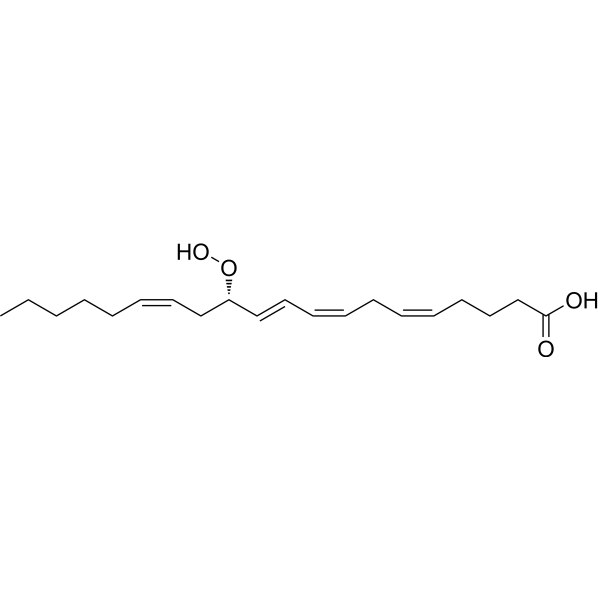 0 ImagesCat. No.: HY-113443CAS No.: 71774-10-2
12(S)-HPETE is a 12-hydroxyeicosatetraenoic acid. 12(S)-HPETE has the function of regulating vascular tone. 12(S)-HPETE induces the expression of c-Fos and c-Jun protein and increases activating protein 1 (AP-1) activity in vascular smooth muscle cells.12(S)-HPETE may play a physiological role in vasomotor regulation through endothelium itself and crosstalk between blood cells and endothelium. 12(S)-HPETE can be used in the study of cerebrovascular tension.
-
CGC-11144 hydrochloride
 0 ImagesCat. No.: HY-187643CAS No.: 304911-07-7
CGC-11144 hydrochloride is a polyamine analog. CGC-11144 hydrochloride reduces the kinase activities of CDK4, CDK2 and CDK6, induces activation of the p53 pathway and p53-dependent p21 expression, and mediates cell cycle regulation, growth inhibition and apoptosis. CGC-11144 hydrochloride induces G1 phase cell cycle arrest, downregulates cyclin D1 and cyclin B1, upregulates cyclin E, induces dephosphorylation of pRb, and inhibits ERα-mediated transcriptional activity by disrupting the DNA binding of Sp1/Sp3 to the ERα promoter, while also stimulating activation of the JNK/AP-1 pathway. CGC-11144 hydrochloride can be used in research related to breast cancer, choroidal neovascularization and cancer.
-
GO-Y078
 0 ImagesCat. No.: HY-137059CAS No.: 1217503-60-0
GO-Y078 is a curcumin (HY-N0005) analog. GO-Y078 activates p38/JNK1/2. GO-Y078 activates the MAPK pathway, Caspase 3/8/9, PARP, AP-1, DR5, and TP53, while inhibiting cIAP-1, XIAP, and NF-κB. GO-Y078 induces sub-G1/G2/M phase arrest and Apoptosis. GO-Y078 impairs angiogenesis. GO-Y078 can be used in research related to osteosarcoma, cervical cancer, oral squamous cell carcinoma, and peritoneal metastasis of gastric cancer.
-
Nidulal
 0 ImagesCat. No.: HY-N14495CAS No.: 185853-14-9
Nidulal induces differentiation of human promyelocytic leukemia cells. In COS-7 cells it selectively activates AP-1 dependent signal transduction.



