



c-Myc Inhibitor
-
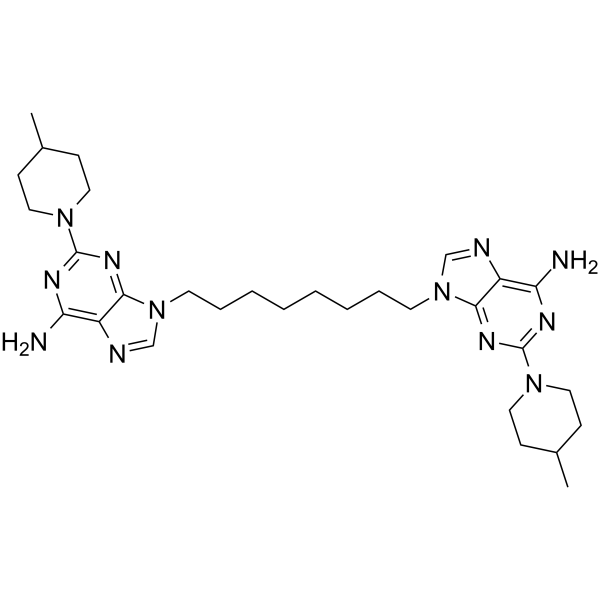
SGI-1776-VHL-02
 0 ImagesCat. No.: HY-186146CAS No.: 3013618-84-0
SGI-1776-VHL-02 is a stereoselective PIM PROTAC degrader. SGI-1776-VHL-02 promotes the ubiquitination and degradation of PIM1, PIM2 and PIM3. SGI-1776-VHL-02 downregulates c-myc protein levels, induces Apoptosis. SGI-1776-VHL-02 has anti-cancer activity against prostate cancer. SGI-1776-VHL-02 can be used in studies related to prostate cancer.
-
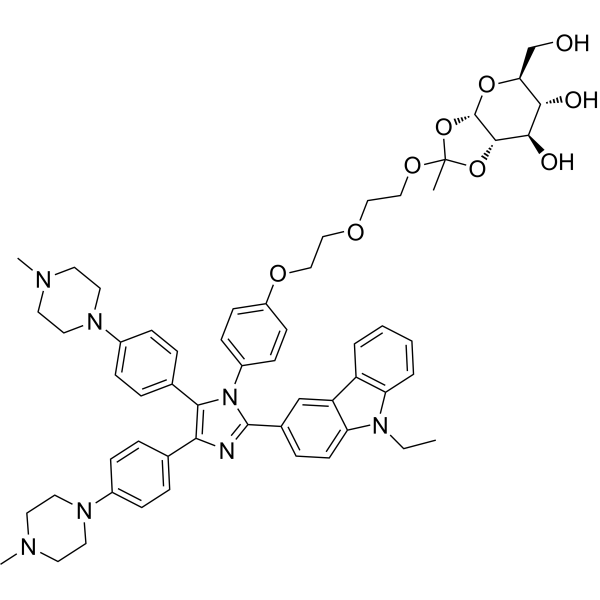
Anticancer agent 84
 0 ImagesCat. No.: HY-151471CAS No.: 2714510-72-0
Anticancer agent 84 is an anticancer agent. Anticancer agent 84 represses the transcription of c-MYC by stabilizing the G-quadruplex (G4) structure. Anticancer agent 84 can be used for the research of cancer.
-
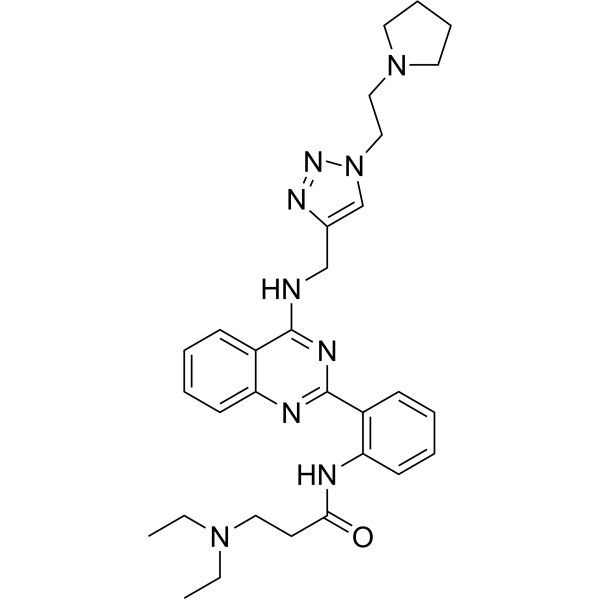
CDK9/EZH2-IN-2
 0 ImagesCat. No.: HY-189422
CDK9/EZH2-IN-2 is a potent dual CDK9 and EZH2 inhibitor with an IC50 of 8.9 nM against EZH2. CDK9/EZH2-IN-2 inhibits anti-apoptotic proteins and induces DNA damage by blocking the activity of CDK9 and EZH2, ultimately leading to tumor cell apoptosis. CDK9/EZH2-IN-2 can be used for research on diffuse large B-cell lymphoma.
-
PROTAC BET Degrader-14
 0 ImagesCat. No.: HY-179588
PROTAC BET Degrader-14 is a highly efficient PROTAC targeting BET (bromodomain and extra-terminal domain). PROTAC BET Degrader-14 can degrade all BET (BRD2, BRD3, BRD4) family proteins. PROTAC BET Degrader-14 potently degrades BET proteins in U2OS osteosarcoma cell lines (BRD4 DC50 = 130 nM) and KYSE180 esophageal squamous cell carcinoma cell lines (DC50 = 40 nM). PROTAC BET Degrader-14’s dependence on the ubiquitin-proteasome system. PROTAC BET Degrader-14 decreases levels of BET-regulated gene products c-Myc, RUNX2, and KRT14. PROTAC BET Degrader-14 can be used for the study of osteosarcoma.
-
4-O-Methyl-ascochlorin
 0 ImagesCat. No.: HY-N15121CAS No.: 38561-40-9
4-O-Methyl-ascochlorin (Compound MAC) is a derivative of Ascochlorin (HY-101021). 4-O-Methyl-ascochlorin can selectively induce apoptosis of K562 leukemia cells, cause G1 phase arrest and downregulate c-Myc expression. 4-O-Methyl-ascochlorin can promote the phosphorylation of AMPK and inhibit the phosphorylation of mTOR and its target proteins, including p70S6 K and 4E-BP-1. 4-O-Methyl-ascochlorin can be used for research of leukemia.
-
Briciclib sodium
 0 ImagesCat. No.: HY-16366ACAS No.: 865784-01-6Synonyms: ON 014185 sodium
Briciclib (ON 014185) sodium is a eukaryotic translation initiation factor 4E (eIF4E) inhibitor. Briciclib sodium exhibits broad-spectrum anti-cancer activity, including in mantle cell leukemia, breast cancer, gastric cancer, and esophageal cancer cells. Briciclib sodium reduces the expression of cyclin D1 and c-Myc, and enhances the expression of P53 and Cleaved Caspase 3 pro-apoptotic proteins. Briciclib sodium can be used for the study of hematological system tumors and solid tumors.
-
N-Myc-IN-1
 0 ImagesCat. No.: HY-186247CAS No.: 885986-52-7
N-Myc-IN-1 is a selective N-Myc inhibitor/degrader with a Kd value of 1.47 μM. N-Myc-IN-1 promotes phosphorylation of N-Myc at threonine-58, triggers N-Myc degradation via the ubiquitin-proteasome pathway, and suppresses the expression of N-Myc target genes. N-Myc-IN-1 reduces the viability of MYCN-dependent tumor cells and induces apoptosis. N-Myc-IN-1 can be used in the research of neuroblastoma.
-
BIIB021 mesylate
 0 ImagesCat. No.: HY-10212ACAS No.: 1225041-97-3Synonyms: CNF2024 mesylate
BIIB021 (CNF2024) mesylate is the mesylate of BIIB021 (HY-10212). BIIB021 is an orally active Hsp90 inhibitor. BIIB021 inhibits the proliferation of chronic myeloid leukemia (CML) cells, with IC50 values of K562, K562/G, 32Dp210, and 32Dp210-T315I cells are 513.99, 603.53, 110.08, and 148.07 nM, respectively. BIIB021 degrades BCR-ABL protein and inhibits the β-catenin/c-Myc pathway. BIIB021 can also induce autophagy in CML cells. BIIB021 can be used for the research of CML.
-
Ro 31-7837
 0 ImagesCat. No.: HY-121917CAS No.: 120280-33-3
APTO-253 (LOR-253) hydrochloride is a small molecule that inhibits c-Myc expression, stabilizes G-quadruplex DNA, and induces cell cycle arrest and apoptosis in acute myeloid leukemia cells. APTO-253 hydrochloride mediates anticancer activity via induction of Kruppel-like factor 4 (KLF4) tumor suppressor. APTO-253 hydrochloride exhibits antiarthritic activity.
-
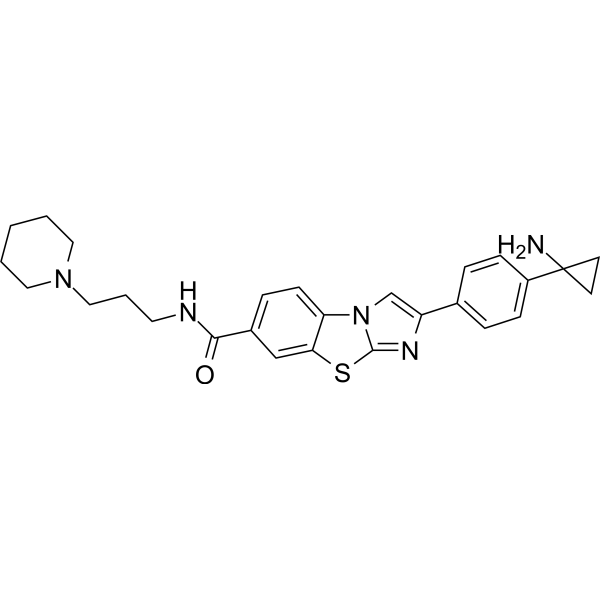
KI-MS2-008
 0 ImagesCat. No.: HY-159756B
KI-MS2-008 is a selective Max binder. KI-MS2-008 results in the stabilization of Max homodimers and the attenuation of Myc. KI-MS2-008 has anticancer activity against Myc-dependent cancer.
-
c-Myc inhibitor 16 iodide
 0 ImagesCat. No.: HY-176066ACAS No.: 3061380-62-6
c-Myc inhibitor 16 iodide (Compound W11) is a selective c-Myc G-quadruplex (c-Myc G4) inhibitor. c-Myc inhibitor 16 iodide inhibits the transcription and translation of the c-Myc gene, disrupts the tumor cell cycle, arrests cell growth in the G0/G1 phase and activates the mitochondrial apoptosis pathway to induce early apoptosis of cancer cells. c-Myc inhibitor 16 iodide is promising for research of breast cancer.
-
c-Myc inhibitor 4
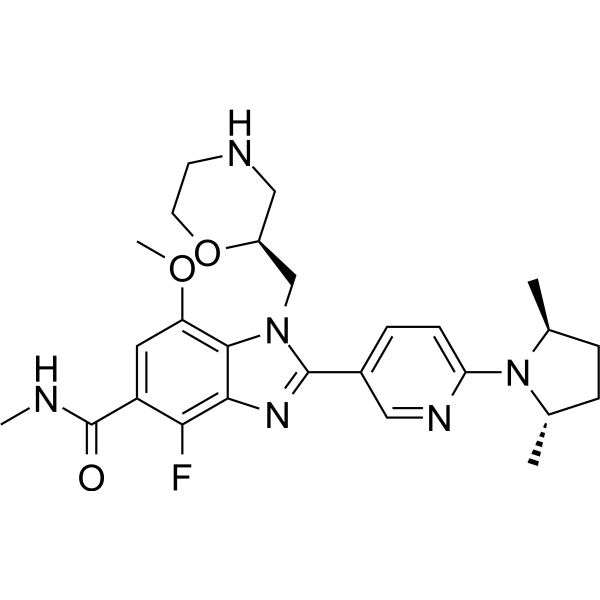 0 ImagesCat. No.: HY-139885CAS No.: 2763366-92-1
c-Myc inhibitor 4 is a potent, orally bioavailable c-MYC-reducing compound.
-
EP12
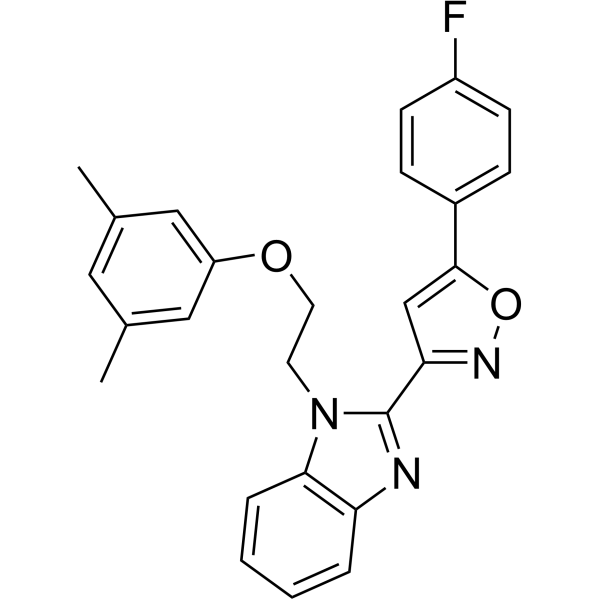 0 ImagesCat. No.: HY-149513CAS No.: 2882916-73-4
EP12 is a c-Myc inhibitor. EP12 is a c-Myc G4 stabilizer. EP12 induces apoptosis and DNA damage in multiple myeloma cells. EP12 disrupts the nuclear translocation of P65/P50 by interfering with the NF-κB signaling pathway. EP12 inhibits multiple myeloma growth.
-
PROTAC FLT3/CHK1 Degrader-1
 0 ImagesCat. No.: HY-178858
PROTAC FLT3/CHK1 Degrader-1 is a PROTAC FLT3/CHK1 degrader, with DC50 values of 5.88 nM (FLT3) and 4.17 nM (CHK1), respectively. PROTAC FLT3/CHK1 Degrader-1 can inhibit the phosphorylation of FLT3 downstream signaling effectors STAT5 (Tyr694), AKT (Ser473), and ERK (Tyr204), downregulate the protein level of c-Myc and maintain the expression of p53 protein. PROTAC FLT3/CHK1 Degrader-1 induces Apoptosis in cells. PROTAC FLT3/CHK1 Degrader-1 shows significant anti-tumor efficacy in mice bearing MV-4-11 subcutaneous xenografts. PROTAC FLT3/CHK1 Degrader-1 can be used for the study of acute myeloid leukemia (AML).
-
JR4-187
 0 ImagesCat. No.: HY-182241CAS No.: 2446965-01-9
JR4-187 is an orally active, copper-dependent anticancer agent. JR4-187 downregulates genes involved in oxidative phosphorylation, MYC targets and E2F targets in cancer cells, while upregulates genes involved in the TNF-α signaling pathway, p53 pathway and KRAS signaling pathway, and downregulates CTR1 protein. JR4-187 induces ROS production, apoptosis, copper-dependent cytotoxicity, and exhibits selective cytotoxicity against KRAS-mutant cancer cells. JR4-187 is well tolerated in mouse models of pancreatic cancer. JR4-187 can be used in research related to cancers such as pancreatic ductal adenocarcinoma, colon cancer and rectal cancer.
-
PROTAC BET Degrader-18
 0 ImagesCat. No.: HY-184335CAS No.: 3097564-20-7
PROTAC BET Degrader-18 is a PROTAC targeting BET, with a DC50 of 0.676 nM in HEK293-BRD4-HiBiT-KI cells. PROTAC BET Degrader-18 mainly targets and degrades BRD4 (EC50 = 59.91 nM), and exhibits weak degradation activity against BRD2. PROTAC BET Degrader-18 inhibits the expression of downstream oncoprotein c-Myc, thereby inducing cell cycle arrest and apoptosis, while suppressing oncoprotein expression. PROTAC BET Degrader-18 shows antiproliferative activity against acute myeloid leukemia cells and triple-negative breast cancer cells. PROTAC BET Degrader-18 demonstrates antitumor efficacy in xenograft mouse models. PROTAC BET Degrader-18 can be used for the research of acute myeloid leukemia and triple-negative breast cancer.
-
MKI-2 hydrochloride
 0 ImagesCat. No.: HY-185310APurity: 99.57%
MKI-2 hydrochloride is a selective MASTL inhibitor with an IC50 of 37.44 nM. MKI-2 hydrochloride induces mitotic catastrophe resulting from the modulation of the MASTL-PP2A axis in breast cancer cells. MKI-2 hydrochloride reduces phospho-ENSA, total, phospho-c-Myc levels. MKI-2 hydrochloride inhibts cancer cells proliferation, migration and induces DNA damage. MKI-2 hydrochloride inhibits germinal vesicle breakdown in mouse oocytes. MKI-2 hydrochloride can be used for the research of cancer, such as breast cancer.



