



Fluorescent Dye
Fluorescence is a phenomenon of photoluminescence in luminescence. When an atom is irradiated by light, some electrons around the nucleus jump from their original orbitals to higher energy orbitals under the influence of light energy, i.e., from the ground state to the first or second excited single-line state, etc. Due to the instability of the first or second excited singlet state, the electron returns from the excited singlet state to the ground state accompanied by released energy, resulting in fluorescence.
Fluorescent dyes can be covalently bound or physically adsorbed in the structure of the substance. The fluorescence properties allow for the characterization, localization and quantitative analysis of the labeled object. Fluorescent dyes have shown great potential for the detection of proteins, nucleic acids, cells, and immunoassays, attributed to the advantages in non-radioactive contamination, simple experimental operation and easy observation.
Fluorescent dyes have penetrated many fields such as pharmacology, physiology, environmental science, and information science, as well as functional studies of proteins and drug screening.
All Product Categories
-
Fluorescent Dye Related Products (4914)
Related Products (4914)

-
Antibodies (4)
-
Griffonia Simplicifolia Lectin I Isolectin B4 (Fluorescein)
 0 ImagesCat. No.: HY-NP0132Synonyms: GSL I Isolectin B4 (Fluorescein)Griffonia Simplicifolia Lectin I Isolectin B4 (GSL I Isolectin B4) Fluorescein is a plant lectin that can be used as a probe to specifically bind biomolecules (such as polysaccharides, peptides, etc.).Griffonia Simplicifolia Lectin I Isolectin B4 (GSL I Isolectin B4) Fluorescein is a biological material or organic compound that can be used in life science research.
-
5-Aminofluorescein
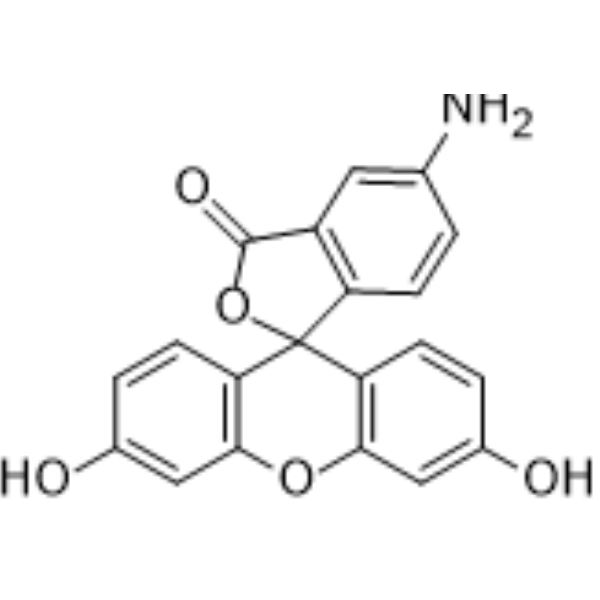 0 Images5-Aminofluorescein (5-AF) is a fluorescence marker, covalently bound to human serum albumin. The excitation wavelength is 495 nm and the emission wavelength is 535 nm.
-
MHI-148
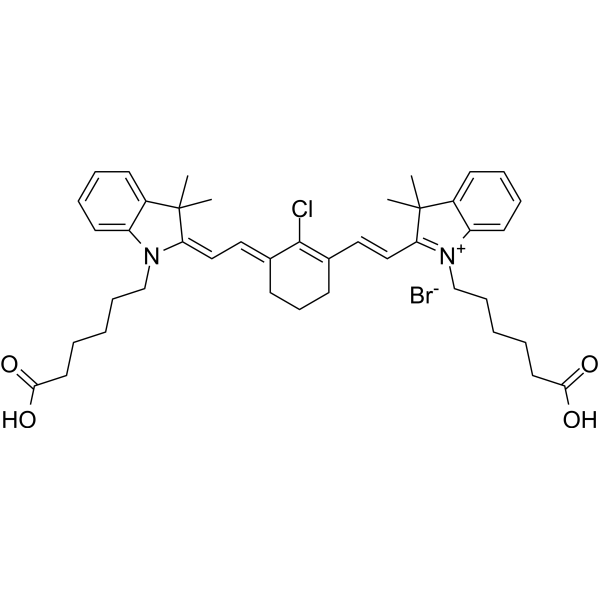 0 ImagesSynonyms: IR-808MHI-148 is a near-infrared heptamethine cyanine dye with tumor-targeting properties for cancer detection, diagnosis and research. MHI-148 is immediately taken up and accumulated by lysosomes and mitochondria of tumor cells, but not in lysosomes and mitochondria of normal cells.
-
Enhanced Green Fluorescent Protein (EGFP) (200-208)
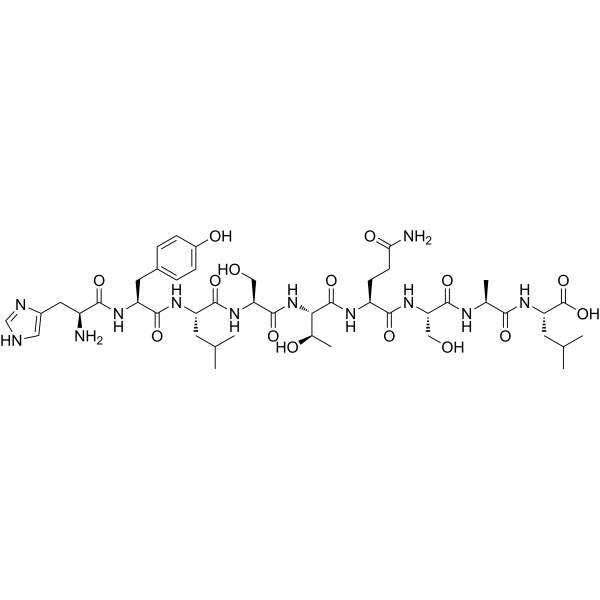 0 ImagesEnhanced Green Fluorescent Protein (EGFP) (200-208) is a specific peptide of enhanced green fluorescent protein (EGFP), containing 9 amino acids, and is the immunodominant epitope of EGFP1].
-
3,3'-Diethyloxacarbocyanine iodide
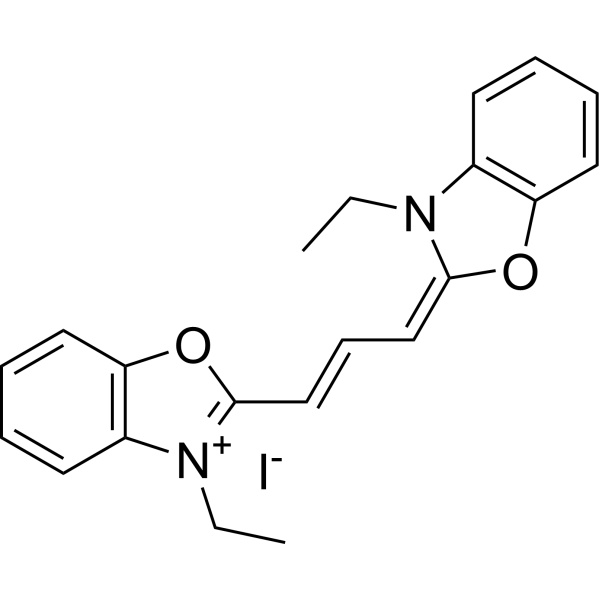 0 ImagesSynonyms: DiOC2(3)3,3'-Diethyloxacarbocyanine iodide (DiOC2 (3)) is a Fluorescent probe used for microviscosity detection, micelle and microemulsion probing, critical micelle concentration determination, photophysical property research, and bacterial membrane potential assessment. The excitation wavelength of 3,3'-Diethyloxacarbocyanine iodide is 355 nm.
-
2,3-Diaminonaphthalene
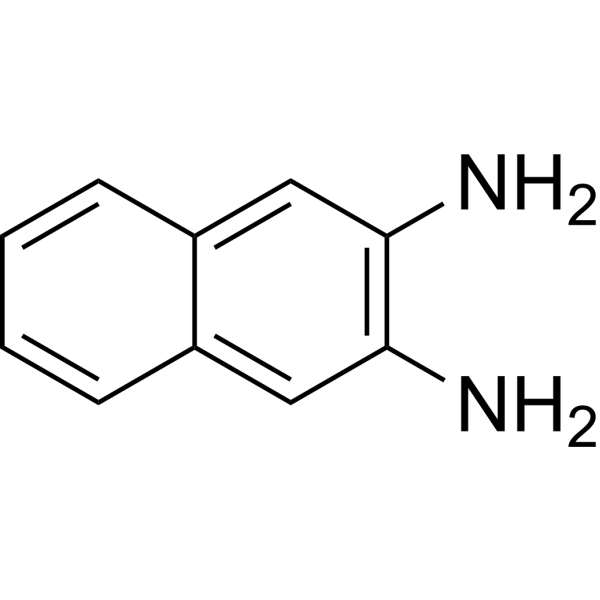 0 Images2,3-Diaminonaphthalene is a fluorescent reagent used to detect selenium and nitric oxide (NO). 2,3-Diaminonaphthalene binds to selenium to form pyrazolene selenol, with excitation/emission maxima at 365 nm and 525 nm, respectively. 2,3-Diaminonaphthalene binds to NO2− to form the fluorescent product, 1-(H)-napthotriazole, with excitation/emission maxima at 360 nm and 440 nm, respectively.
-
Rhodamine 110
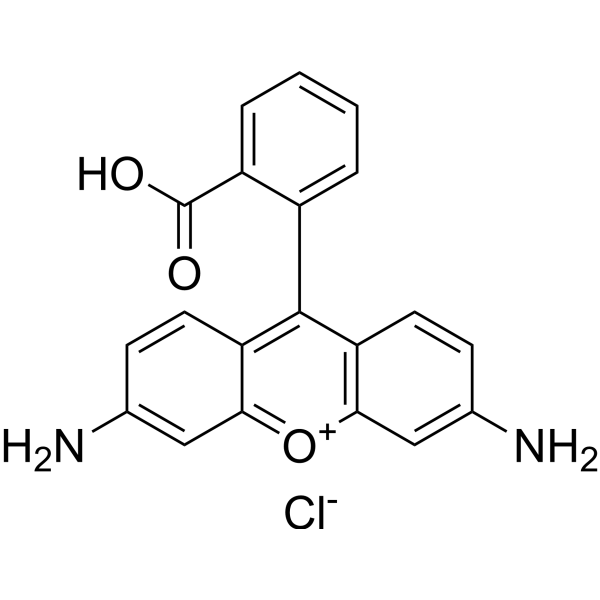 0 ImagesSynonyms: Rhodamine 110 chloride; RH110Rhodamine 110 is a sensitive and selective substrate for assaying proteinases in solution or inside living cells. The excitation wavelength is 498 nm and the emission wavelength is 521 nm.
-
18:1 Liss Rhod PE
 0 ImagesSynonyms: 18:1 Lissamine rhodamine PE18:1 Liss Rhod (18:1 Lissamine rhodamine) PE is a fluorescent phospholipid and fluorescent probe.18:1 Liss Rhod PE admixes into phospholipid inks for large-scale monitoring of dip-pen nanolithography-generated lithographic structures via fluorescence microscopy.18:1 Liss Rhod PE undergoes phase separation or self-quenching under certain conditions in thin lipid membrane stacks.
-
Cy5.5-COOH
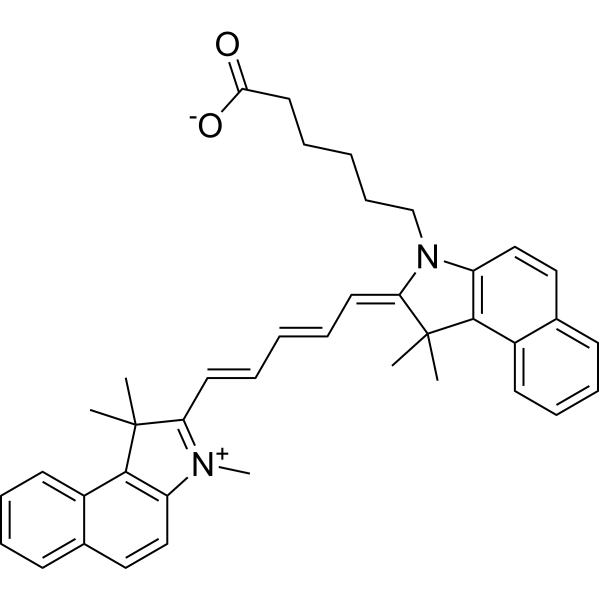 0 ImagesSynonyms: Cyanine 5.5 carboxylic acidCy5.5-COOH (Cyanine 5.5 carboxylic acid) is a fluorescent dye that emits fluorescence at 710 nm upon excitation at 650 nm. Cy5.5-COOH possesses excellent spectral properties, including a narrow absorption spectrum, high sensitivity, and stability. Cy5.5-COOH can be used for bioimaging and disease diagnosis.
-
Wheat Germ Agglutinin
 0 ImagesCat. No.: HY-NP091Synonyms: WGAWheat Germ Agglutinin (WGA) is a plant lectin that can be used as a probe to specifically bind biomolecules (such as polysaccharides, peptides, etc.).Wheat Germ Agglutinin (WGA) is a biological material or organic compound that can be used in life science research.
-
800CW NHS ester
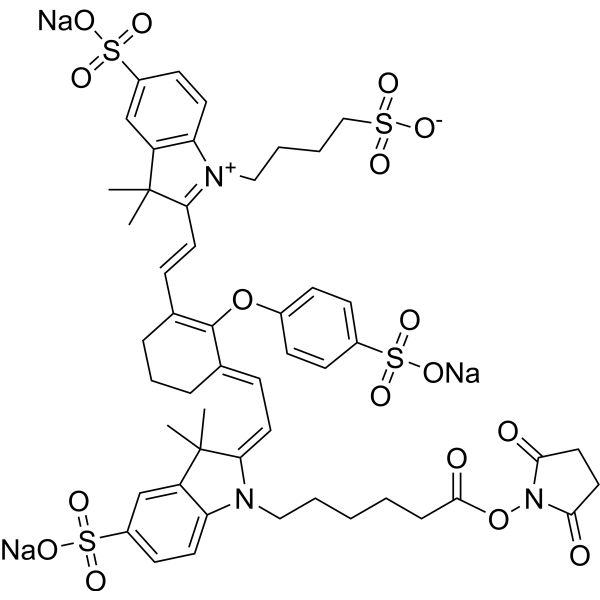 0 ImagesCat. No.: HY-D1872CAS No.: 956579-01-4800CW NHS ester is a near-infrared fluorescent dye active ester that can conjugate with amine-containing small molecules, antibodies, peptides, and other substances to form fluorescent conjugates. 800CW NHS ester exhibits high fluorescence quantum yield and low non-specific binding properties. 800CW NHS ester can be used in biomedical research such as microbial infection imaging, tumor imaging, and biochemical detection.
-
Ponceau 4R
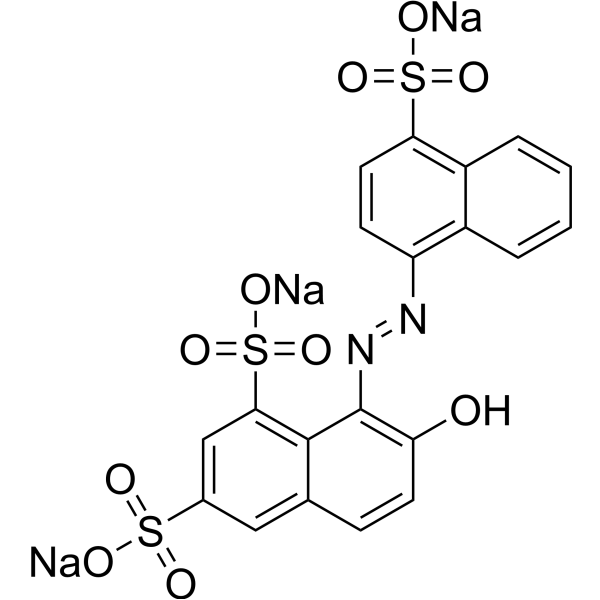 0 ImagesPonceau 4R is a synthetic colorant that can be used for food coloring. Ponceau 4R is a strawberry red azo dye that can be used in a variety of foods, usually synthesized from aromatic hydrocarbons, and is stable to light, heat, and acids.
-
Cresyl Violet acetate
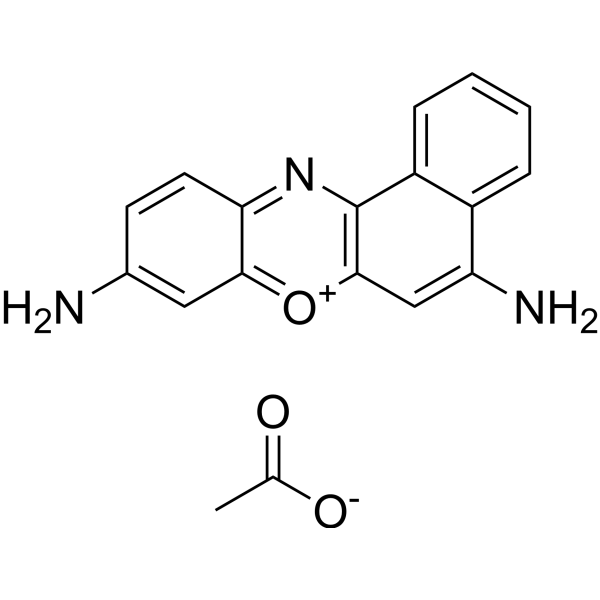 0 ImagesCat. No.: HY-101888CAS No.: 10510-54-0Cresyl Violet acetate is a dye, which can be used to stain neurons.
-
Mito-FerroGreen
 0 ImagesCat. No.: HY-D2295Purity: 98.0%Mito-FerroGreen is a mitochondria-specific Fluorescent indicator used to detect mitochondrial Fe2+ levels (excitation: 488 nm; emission: 500-550 nm). Mito-FerroGreen can be applied to research related to colorectal cancer and chronic heart failure.
-
BODIPY-C12
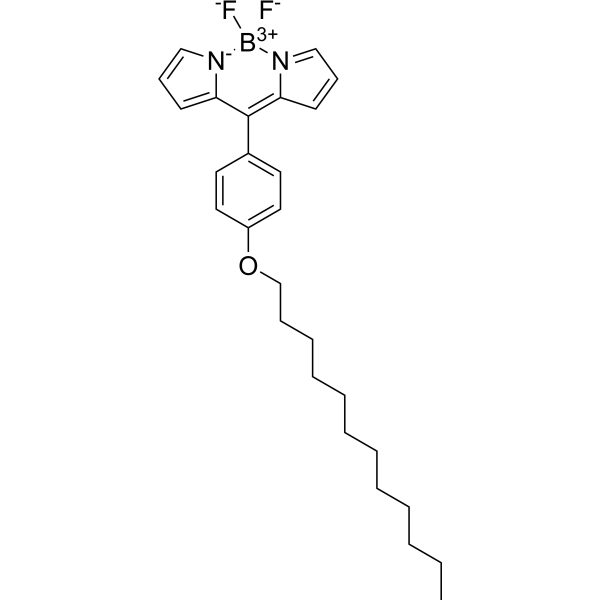 0 ImagesBODIPY-C12 is a boron-dipyrromethene derivative containing a lipophilic tail (excitation 490 nm). BODIPY-C12 is a hydrophobic molecular and sensitivity to the surrounding environment and can be used to quantify viscosity, critical micelle concentration, and critical micelle temperature.
-
NTPAN-MI
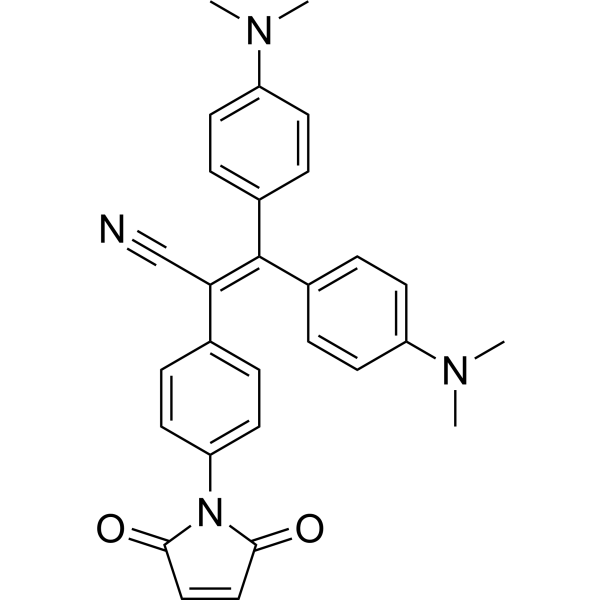 0 ImagesCat. No.: HY-D1781CAS No.: 2411398-95-1NTPAN-MI is a fluorescent probe (excitation wavelength: 405 nm). NTPAN-MI is selectively activated after labeling unfolded proteins with exposed thiols, thereby reporting the degree of protein homeostasis.
-
Wheat germ agglutinin-AF555
 0 ImagesCat. No.: HY-NP163CSynonyms: WGA-AF555Wheat germ agglutinin-AF555 (WGA-AF555) is a membrane-staining lectin conjugate that combines wheat germ agglutinin with the Alexa Fluor 555 fluorescent dye. Wheat germ agglutinin-AF555 is used for precise staining and contour delineation of cell membranes. Wheat germ agglutinin-AF555 also effectively distinguishes between surface vimentin and intracellular vimentin in cells.
-
5(6)-CFDA
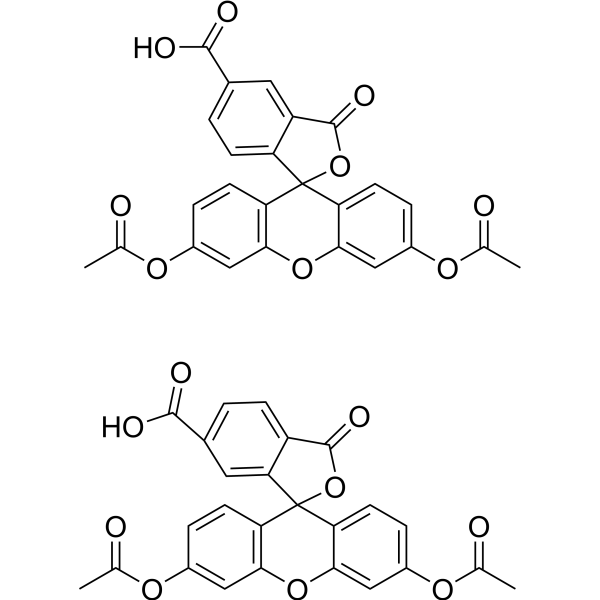 0 ImagesSynonyms: 5-(6)-Carboxyfluorescein diacetate; CFDA5(6)-CFDA is a common aliphatic luciferin-line organism. CFDA conducts free diffusion into cells, and then it is hydrolyzed into carboxyl fluorescein (CF) by intracellular non-specific lipase. CF containing portion contains an additional negative charge so that it is better retained in cells, compared to fluorescein dyes.




