



Fluorescent Dye
Fluorescence is a phenomenon of photoluminescence in luminescence. When an atom is irradiated by light, some electrons around the nucleus jump from their original orbitals to higher energy orbitals under the influence of light energy, i.e., from the ground state to the first or second excited single-line state, etc. Due to the instability of the first or second excited singlet state, the electron returns from the excited singlet state to the ground state accompanied by released energy, resulting in fluorescence.
Fluorescent dyes can be covalently bound or physically adsorbed in the structure of the substance. The fluorescence properties allow for the characterization, localization and quantitative analysis of the labeled object. Fluorescent dyes have shown great potential for the detection of proteins, nucleic acids, cells, and immunoassays, attributed to the advantages in non-radioactive contamination, simple experimental operation and easy observation.
Fluorescent dyes have penetrated many fields such as pharmacology, physiology, environmental science, and information science, as well as functional studies of proteins and drug screening.
All Product Categories
-
Fluorescent Dye Related Products (4914)
Related Products (4914)

-
Antibodies (4)
-
Coumarin-3-carboxylic Acid
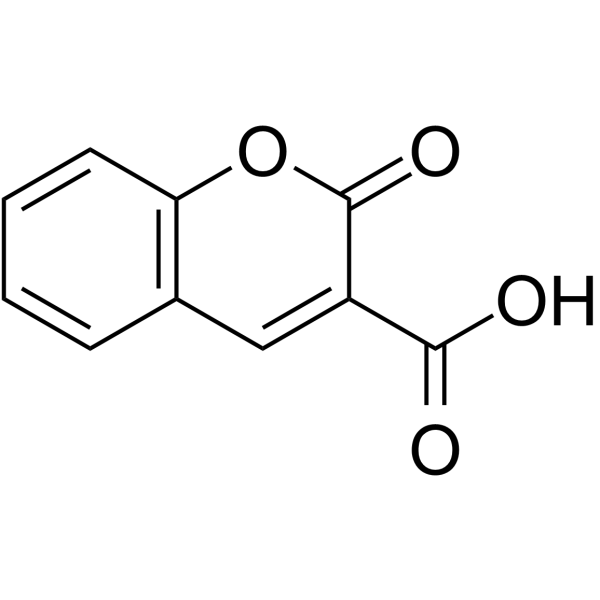 0 ImagesSynonyms: 2-Oxochromene-3-carboxylic acidCoumarin-3-carboxylic acid (2- Oxochromene-3-carboxylic acid) is an important initial compound for the synthesis of coumarins which are well known natural products for their diverse biological activities. Lanthanide complexes of Coumarin-3-carboxylic acid exhibit antiproliferative activity towards K-562 cell line.
-
6-ROX
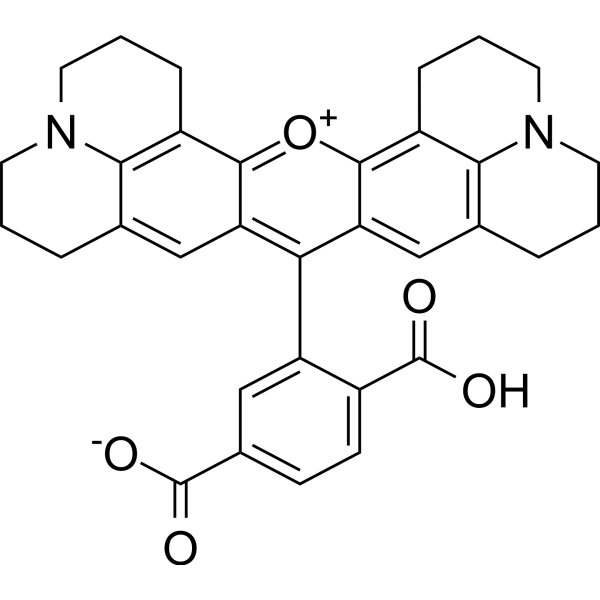 0 ImagesSynonyms: 6-Carboxy-X-rhodamine6-ROX is a selective fluorescent probe and potential inhibitor of COX-2. 6-ROX binds to the active site of COX-2 and inhibits its conversion of arachidonic acid into prostaglandins. 6-ROX is often used in the field of optical imaging related to tumors and inflammation, and helps detect diseased tissues with high expression of COX-2.
-
PCI-33380
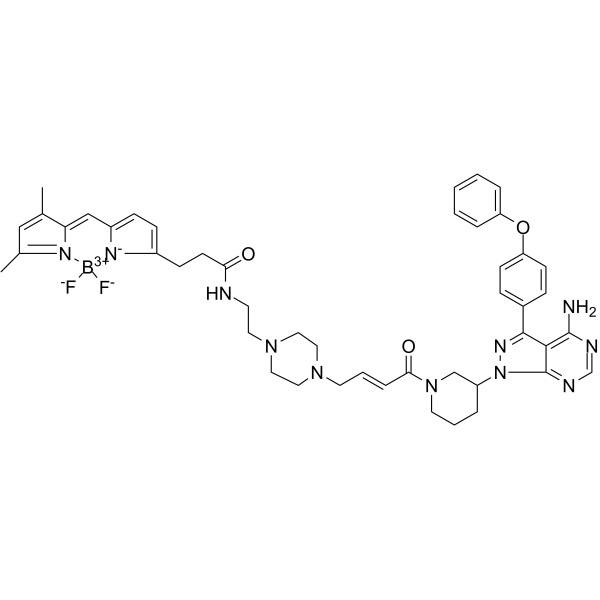 0 ImagesPCI-33380 is a fluorescent probe ( (Ex=532 nm, Em=555 nm). PCI-33380 consists of a (BTK) inhibitor PCI-32765 (HY-10997) attaching with a Bodipy-FL fluorophore via a piperazine linker. PCI-33380 binds predominantly to Btk in B cell lysates with cell permeable activity. PCI-33380 can be used for imaging live cancer cells such as non-Hodgkin lymphoma research
-
Fluorescein Biotin
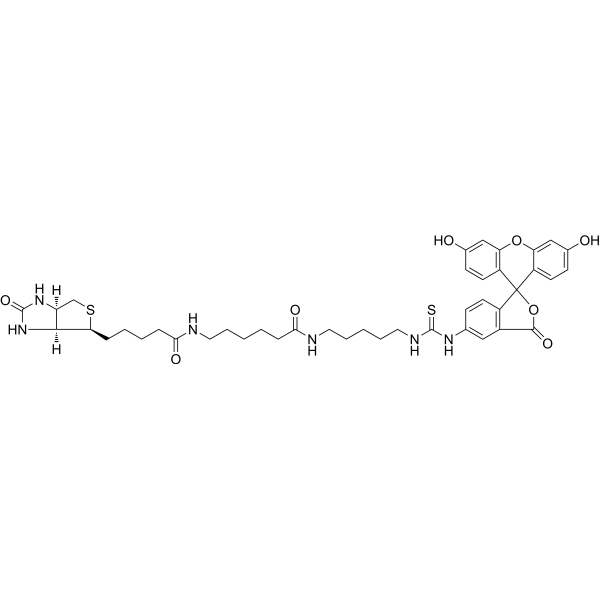 0 ImagesCat. No.: HY-D1030CAS No.: 134759-22-1Fluorescein Biotin is a fluorescent modulator with avidin and streptavidin binding activity. Fluorescein Biotin binds to the biotin-binding sites of avidin and streptavidin, and this binding induces significant fluorescence quenching.
-
Rhodamine dithenoyl hydrazide
 0 ImagesRhodamine dithenoyl hydrazide (probe 1) possesses excellent recognition and selectivity for Fe3+ ion. Rhodamine dithenoyl hydrazide exhibits Excitation/Emission maxima of 543/550-700 nm, respectively.
-
4-(Aminosulfonyl)-7-fluoro-2,1,3-benzoxadiazole
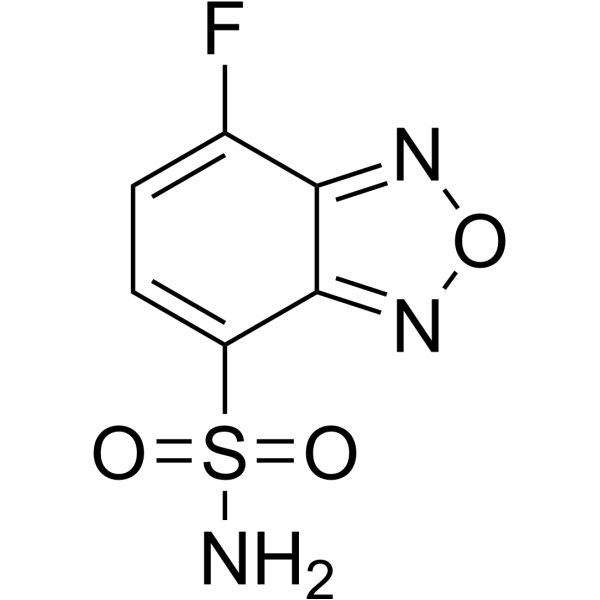 0 ImagesSynonyms: ABD-F4-(Aminosulfonyl)-7-fluoro-2,1,3-benzoxadiazole (ABD-F) is a fluorescent reagent for the sensitive and specific detection of thiols (Ex/Em: 380/510 nm). 4-(Aminosulfonyl)-7-fluoro-2,1,3-benzoxadiazole has low fluorescence background, and good stability of fluorophor.
-
BODIPY-581/591 NHS ester
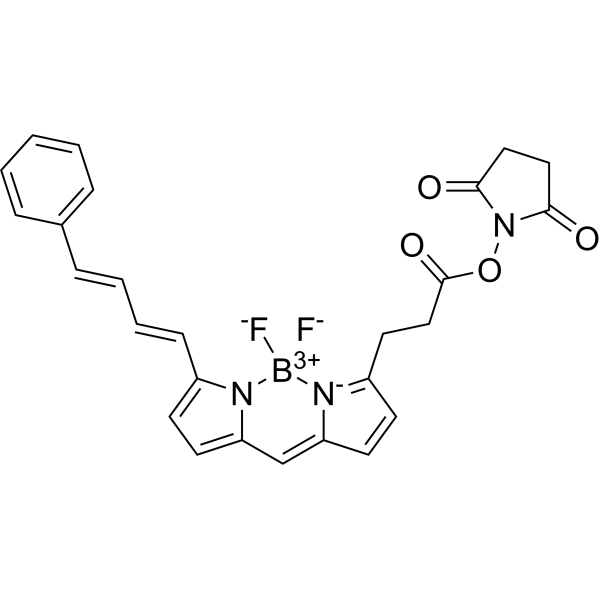 0 ImagesCat. No.: HY-D1691CAS No.: 150152-70-8BODIPY-581/591 NHS ester is a bright, red fluorescent dye (excitation: 581 nm; emission: 591 nm). BODIPY-581/591 NHS ester can be used for the labeling of amine containing biomolecules.
-
DiR (solution)
 0 ImagesCat. No.: HY-DY1013CAS No.: 100068-60-8DiR (solution) is a long-chain carbocyanine dye. Carbocyanine dyes are widely used as Di to label cells, organelles, liposomes, viruses and lipoproteins.
Solvent and concentration: DMSO: 5 mM
-
BZiPAR
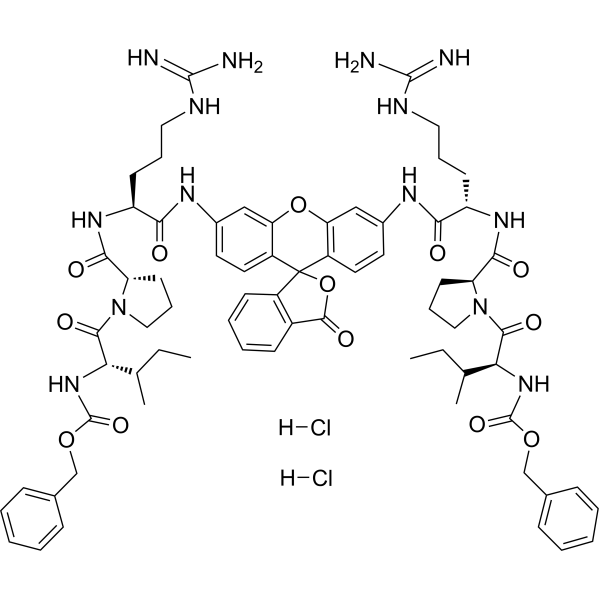 0 ImagesCat. No.: HY-D1685CAS No.: 254451-46-2BZiPAR is a fluorescent probe. BZiPAR also is a substrate of trypsin that becomes fluorescent after cleavage by the protease.
-
CAY10731
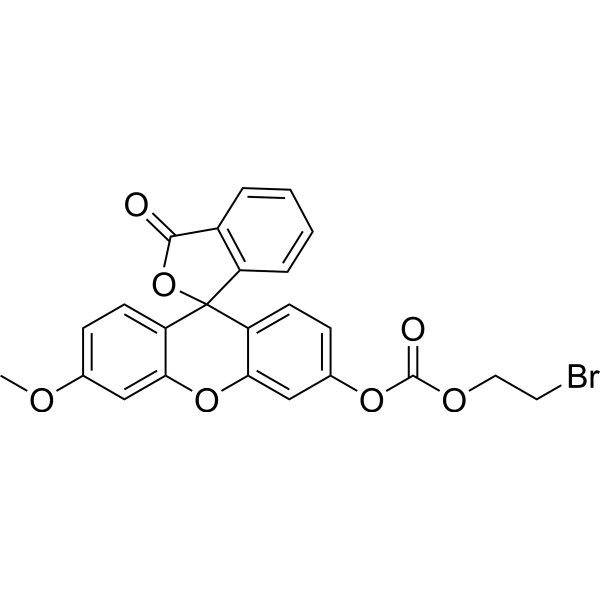 0 ImagesCat. No.: HY-D1275CAS No.: 2119597-33-8CAY10731 (compound 3) is a highly selective fluorescent probe for detection of hydrogen sulfide (H2S). CAY10731 is used to monitor exo- and endogenous H2S in both cancer and normal cells. CAY10731 is applied for imaging of H2S in living tissues at variable depths and in nematodes.
-
N-ε-propargyloxycarbonyl-L-lysine
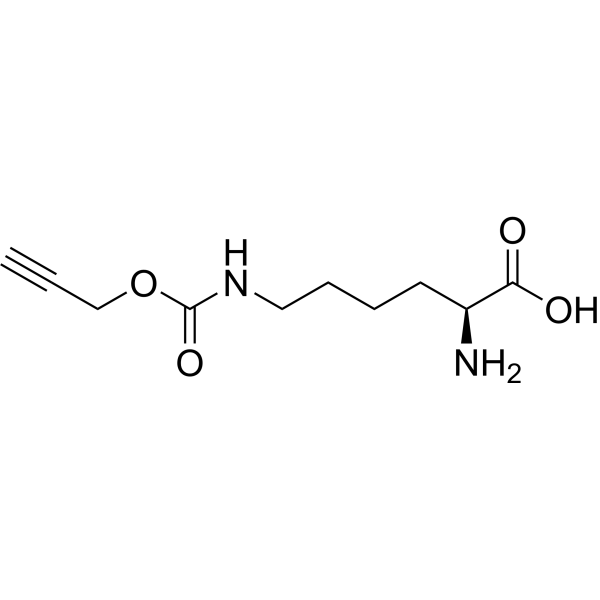 0 ImagesSynonyms: H-L-Lys(Poc)-OHN-ε-propargyloxycarbonyl-L-lysine (H-L-Lys(Poc)-OH) is a lysine-based unnatural amino acid (UAA). N-ε-propargyloxycarbonyl-L-lysine is widely used for bio-conjugation of fluorescent probes in diverse organisms from E. coli to mammalian cells even in animals. N-ε-propargyloxycarbonyl-L-lysine is a click chemistry reagent, it contains an Alkyne group and can undergo copper-catalyzed azide-alkyne cycloaddition (CuAAc) with molecules containing Azide groups.
-
Peanut Agglutinin (Biotinylated)
 0 ImagesCat. No.: HY-NP0182Synonyms: PNA (Biotinylated)Peanut Agglutinin (PNA) Biotinylated is a biotinylated lectin that specifically recognizes and binds to the Galβ1-3GalNAc sequence, thereby targeting SPESP1 and TF blood group antigens. As an acrosome-specific marker, Peanut Agglutinin Biotinylated stains mouse spermatocytes and sperm acrosomes with high specificity, and this binding depends not only on SPESP1 but also recognizes other testicular acrosomal glycoproteins. Peanut Agglutinin Biotinylated accurately identifies TF antigens in Reed-Sternberg cells, histiocytosis X cells, and esophageal squamous cell carcinoma, without cross-reacting with non-specific cells. Peanut Agglutinin Biotinylated maintains staining stability in both B-5 and formalin fixatives, and serves as an important tool for the study of Hodgkin's disease, histiocytosis X, and various malignant tumors.
-
ANTS
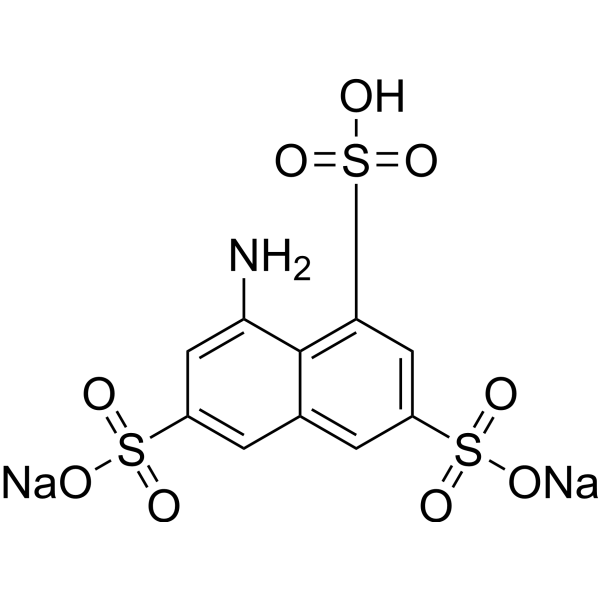 0 ImagesANTS is a fluorescent dye used for liposome leakage assays and liposome-based membrane permeability experiments. Excitation wavelength: 380 nm; emission wavelength: 520 nm.
-
RhoNox-1 (solution)
 0 ImagesCat. No.: HY-DY1030CAS No.: 1447815-38-4RhoNox-1 (solution) is a fluorescent probe for the specific detection of divalent iron ions, and when RhoNox-1 reacts with Fe2+. RhoNox-1 can generate an irreversible orange (red) fluorescent product (Ex/Em:540/575 nm). FeRhoNox-1 can enter the cell well, suitable for the detection of Fe2+ in living cells, and tends to be localized in the Golgi apparatus.
Solvent and concentration: DMSO: 5 mM
-
ER-Tracker Red (solution)
 0 ImagesCat. No.: HY-DY1026ER-Tracker dye is a derivative of BODIPY series dyes coupled with Glibenclamide (HY-15206) , highly selective binding to the endoplasmic reticulum, non-toxic to cells at low concentrations, this type of dye is an environmentally sensitive probe, and formaldehyde treatment can still retain part of the fluorescence, with high fluorescence life, good extinction coefficient and other characteristics. Glibenclamide is an atp-dependent K+ channel blocker (Kir6, KATP) and CFTR Cl-channel blocker that binds in the endoplasmic reticulum. ER-Tracker is not suitable for staining cells after fixation. Ex/Em=587/615 nm.
Solvent and concentration: DMSO: 1 mM
-
SYBR Green II
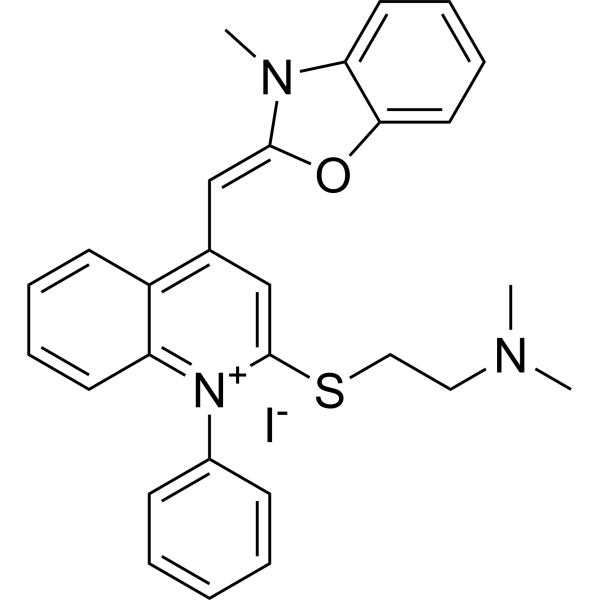 0 ImagesCat. No.: HY-D1098CAS No.: 195199-08-7SYBR Green II is a fluorescent nucleic acid dye that mainly binds single-stranded nucleotides. SYBR Green II is sensitive to oligonucleotides or larger nucleic acid polymers in a variety of cells and gels. SYBR Green II can be used to study cell structure, membrane integrity or function, and cell cycle distribution. Wavelength 484/515 nm.

-
Indigo carmine
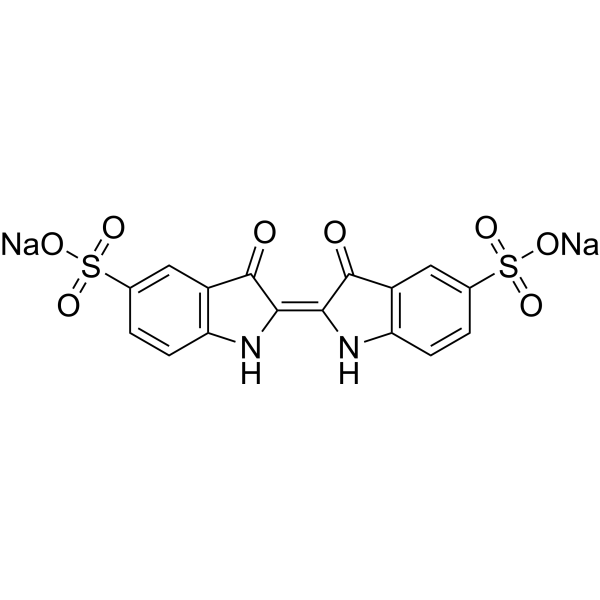 0 ImagesSynonyms: Indigotindisulfonate sodium; C.I.Acid Blue 74Indigo carmine is an efficient reagent for the determination of ozone by chemlluminescence (CL).




