



GRK2
GRK2 (G protein-coupled receptor kinase 2) is a ubiquitously expressed serine/threonine kinase that functions as a central regulator of G protein-coupled receptor (GPCR) signaling through receptor phosphorylation, β-arrestin recruitment, receptor desensitization, and internalization[1][2]. Mechanistically, GRK2 acts beyond canonical GPCR regulation by interacting with multiple signaling proteins, including Gαq, MAPK-associated pathways, and non-receptor substrates, thereby serving as a multifunctional signaling hub that integrates cellular responses to extracellular stimuli[3][4]. Through these activities, GRK2 influences diverse biological processes such as inflammation, migration, metabolism, and cardiovascular homeostasis[4][5]. In disease contexts, elevated GRK2 expression has been consistently associated with heart failure, cardiovascular dysfunction, obesity-related metabolic disorders, and insulin resistance, while genetic or pharmacological attenuation of GRK2 activity shows protective effects in experimental models[5][6]. Compared with related isoforms, GRK2 belongs to the ubiquitously expressed GRK2 subfamily together with GRK3, yet exhibits distinct regulatory interactions and has emerged as the most extensively studied isoform in cardiovascular and metabolic pathophysiology[1][5]. For experimental applications, GRK2 has attracted considerable interest as a therapeutic target, and multiple small-molecule inhibitors have been developed to suppress its kinase activity or interfere with its signaling functions, providing valuable tools for mechanistic studies and preclinical disease research[6][7].
References:
- [1]. Watari K, et al. Multiple functions of G protein-coupled receptor kinases. J Mol Signal. 2014 Mar 6;9(1):1. [Content Brief]
- [2]. Evron T, et al. GRK2: multiple roles beyond G protein-coupled receptor desensitization. Trends Pharmacol Sci. 2012 Mar;33(3):154-64. [Content Brief]
- [3]. Carman CV, et al. Selective regulation of Galpha(q/11) by an RGS domain in the G protein-coupled receptor kinase, GRK2. J Biol Chem. 1999 Nov 26;274(48):34483-92. [Content Brief]
- [4]. Penela P, et al. G protein-coupled receptor kinase 2 (GRK2) as a multifunctional signaling hub. Cell Mol Life Sci. 2019 Nov;76(22):4423-4446. [Content Brief]
- [5]. Kim MJ, et al. Can We Design a Nogo Receptor-Dependent Cellular Therapy to Target MS? Cells. 2018 Dec 20;8(1):1. [Content Brief]
- [6]. Arcones AC, et al. G protein–coupled receptor kinase 2 at crossroads of metabolic and cardiovascular diseases. Current Opinion in Endocrine and Metabolic Research. 2021 Feb 1;16:75-85.
- [7]. Guccione M, et al. G-Protein-Coupled Receptor Kinase 2 (GRK2) Inhibitors: Current Trends and Future Perspectives. J Med Chem. 2016 Oct 27;59(20):9277-9294. [Content Brief]
-
GRK2 Related Products (34)
Related Products (34)

- 1
- 2
-
CMPD101
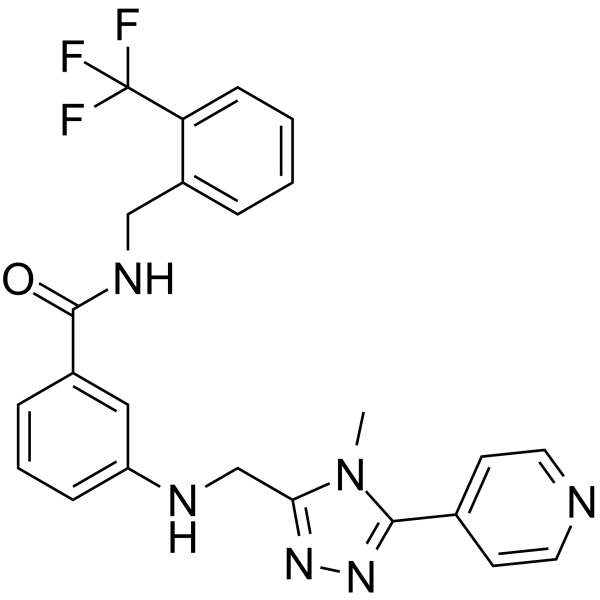 0 ImagesCMPD101 is a potent, highly selective and membrane-permeable small-molecule inhibitor of GRK2/3 with IC50 of 18 nM and 5.4 nM, respectively. CMPD101 exhibits less selectively against GRK1, GRK5, ROCK-2 and PKCα with IC50s of 3.1 μM , 2.3 μM, 1.4 μM and 8.1 μM, respectively. CMPD101 can be used for the study of heart failure.
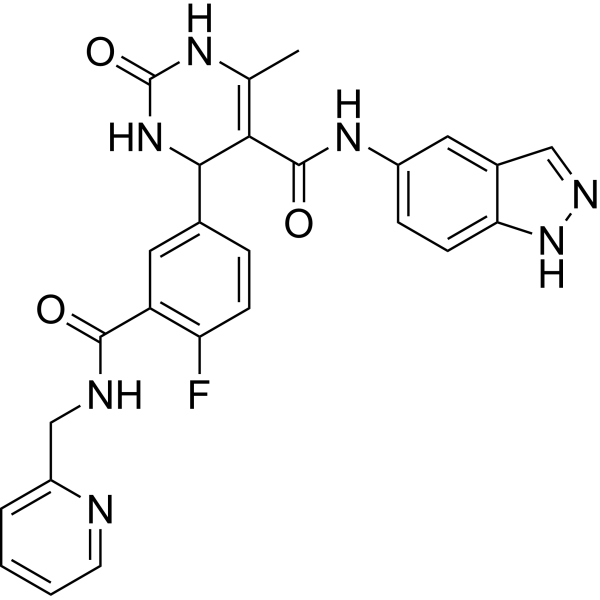
-
CCG258208 hydrochloride
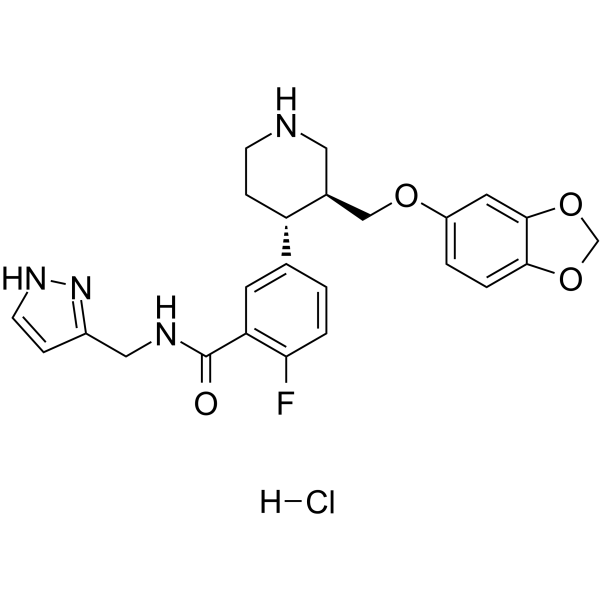 0 ImagesCat. No.: HY-109562APurity: 98.05%Synonyms: GRK2-IN-1 hydrochlorideCCG258208 (GRK2-IN-1) hydrochloride is a potent and selective GRK2 (G protein-coupled receptor kinase 2) inhibitor (IC50=30 nM) while maintaining 230-fold selectivity over GRK5 (IC50=7.09 μM) and more than 2500-fold selectivity over GRK1 (IC50=87.3 μM), PKA, and ROCK1. CCG258208 hydrochloride can be used in heart failure research.
-
GRK2 Inhibitor 2
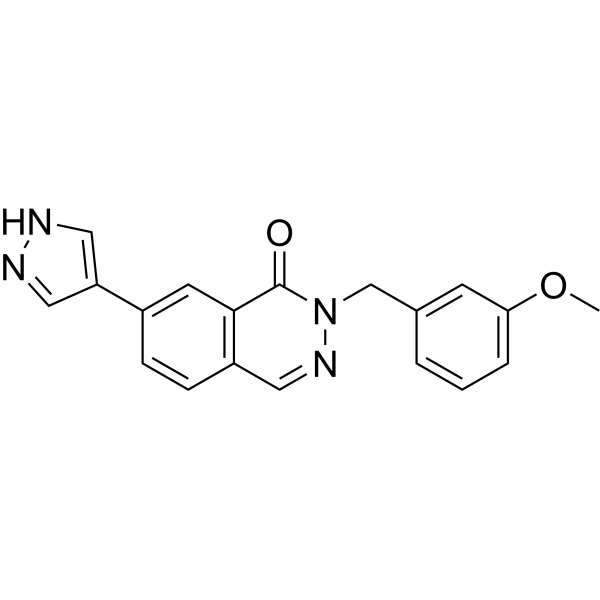 0 ImagesGRK2 Inhibitor 2 is an orally active and selective G protein-coupled receptor kinase 2 (GRK) inhibitor with an IC50 of 19 nM. GRK2 Inhibitor 2 also inhibits Aurora-A with an IC50 of 137 nM. GRK2 Inhibitor 2 can be used in the study of congestive heart failure (HF).
-
Locostatin
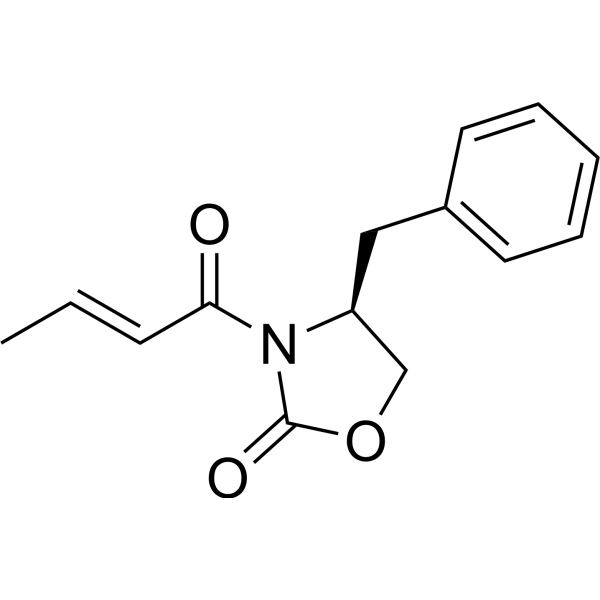 0 ImagesSynonyms: UIC-1005Locostatin (UIC-1005) is a potent RKIP inhibitor. Locostatin binds Raf kinase inhibitor RKIP protein and disrupts the interaction of RKIP with Raf-1 kinase and G protein-coupled receptor kinase 2. Locostatin inhibits cell proliferation and migration. Locostatin can be used to synthesize chemical probes toward PEBP-proteins. Locostatin aggravates thioacetamide (HY-Y0698)-induced acute liver failure in mice .
-
Paroxetine hydrochloride (Standard)
 0 ImagesSynonyms: BRL29060 hydrochloride (Standard); BRL29060A (Standard)Paroxetine (hydrochloride) (Standard) is the analytical standard of Paroxetine (hydrochloride). This product is intended for research and analytical applications. Paroxetine hydrochloride is a potent selective serotonin-reuptake inhibitor, commonly prescribed as an GRK2 inhibitor with IC50 of 14?μM. Paroxetine hydrochloride can be used for the research of depressive disorder.
-
Paroxetine hydrochloride hemihydrate (Standard)
 0 ImagesSynonyms: BRL29060 hydrochloride hemihydrate (Standard); BRL29060A hemihydrate (Standard)Paroxetine (hydrochloride hemihydrate) (Standard) is the analytical standard of Paroxetine (hydrochloride hemihydrate). This product is intended for research and analytical applications. Paroxetine hydrochloride hemihydrate is a potent selective serotonin-reuptake inhibitor, commonly prescribed as an antidepressant and has GRK2 inhibitory ability with IC50 of 14?μM.
-
GRK2 modulator 1
 0 ImagesCat. No.: HY-183057CAS No.: 2234900-83-3GRK2 modulator 1 is an orally active, brain-penetrant and selective GRK2 modulator. GRK2 modulator 1 enhances the active, non-phosphorylated GRK2 and prevents mitochondrial GRK2 and TOMM6 aggregation. GRK2 modulator 1 enhances the non-amyloidogenic processing of APP and prevent PHF-tau, neurodegeneration, and neuronal loss. GRK2 modulator 1 decreases the senescence marker, UPAR, reduces the Alzheimer disease (AD)-related mortality, and prolongs survival. GRK2 modulator 1 exerts neuroprotection by inhibiting HDAC6, and counteracts age-related cardiac dysfunction. GRK2 modulator 1 can be used for research on AD.
-
GSK180736A
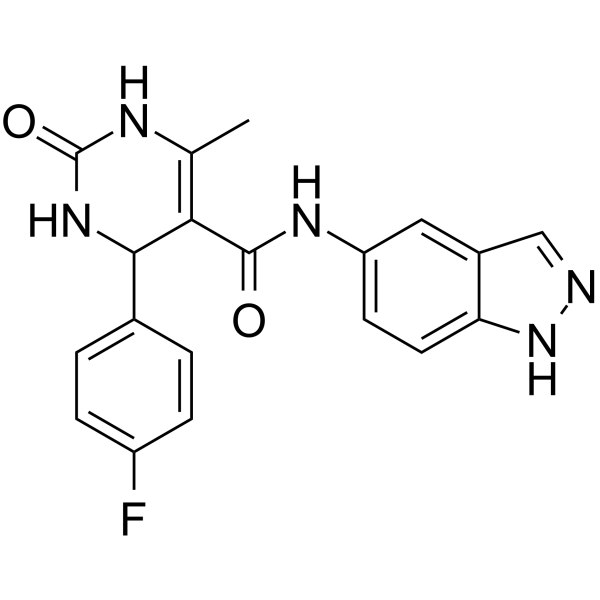 0 ImagesGSK180736A is potent Rho-associated coiled-coil kinase 1 (ROCK1) inhibitor with an IC50 of 100 nM. GSK180736A is also a selective and ATP-competitive G protein-coupled receptor kinase 2 (GRK2) inhibitor with an IC50 of 0.77 μM.
-
Paroxetine hydrochloride hemihydrate
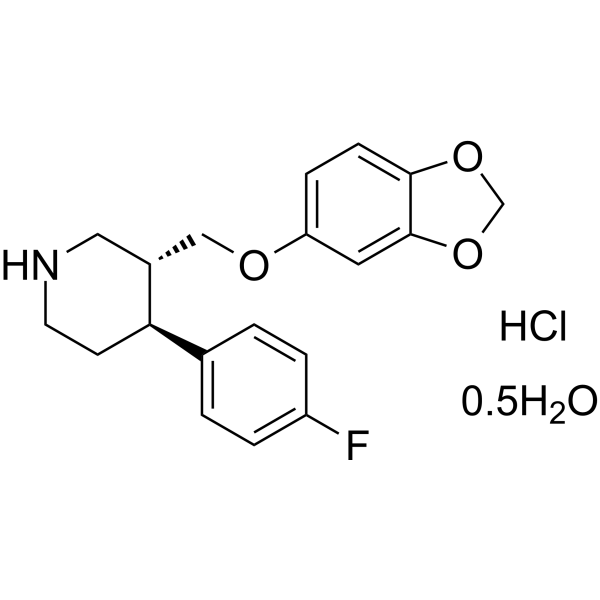 0 ImagesSynonyms: BRL29060 hydrochloride hemihydrate; BRL29060A hemihydrateParoxetine (BRL29060) hydrochloride hemihydrate is an orally active and selective serotonin reuptake inhibitor (SSRI) and apoptosis inducer with blood-brain barrier permeability. Paroxetine hydrochloride hemihydrate inhibits nitric oxide synthase and CYP2D6, induces desensitization of 5-HT1A/1B/1D autoreceptors, downregulates 5-HT2 receptors, and promotes the production of inflammatory cytokines. Paroxetine hydrochloride hemihydrate is a weak norepinephrine (NE) uptake inhibitor and possesses antitumor activity. Paroxetine hydrochloride hemihydrate is widely used in research concerning depression, obsessive-compulsive disorder, panic disorder, social phobia, generalized anxiety disorder, post-traumatic stress disorder, premenstrual dysphoric disorder, hot flashes, and related conditions.
-
CCG273441
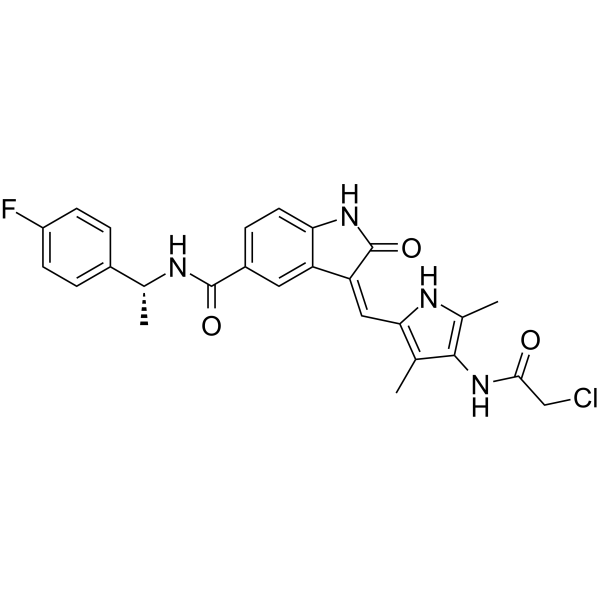 0 ImagesCCG273441 is a covalent inhibitor of G protein-coupled receptor (GPCR) kinase 5 (GRK5) with an IC50 value of 3.8 nM. CCG273441 is highly selective to GRK5 over GRK2 (IC50=4.8 μM) by binding Cys474, a GRK5 subfamily-specific residue, as a covalent handle.
-
GRK2 Inhibitor 1
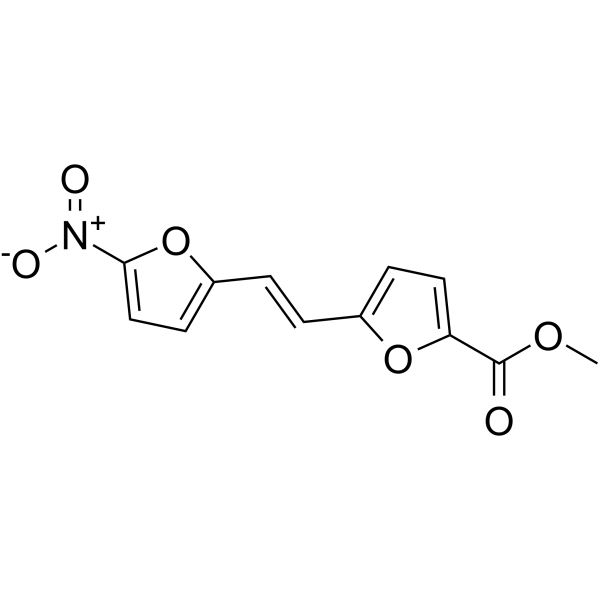 0 ImagesGRK2 Inhibitor 1 (methyl 5-[2-(5-nitro-2-furyl)vinyl]-2-furoate) is a dual GRK2/β-ARK1 inhibitor that induces dopamine (DA) inhibition reversal (DIR). GRK2 Inhibitor 1 can also block serotonin-induced or neurotensin-induced DIR reversal. Note: DIR refers to the phenomenon in which neurons in addiction-related brain pathways become less sensitive to DA inhibition when exposed to moderate concentrations of DA for a long time.
-
CCG258747
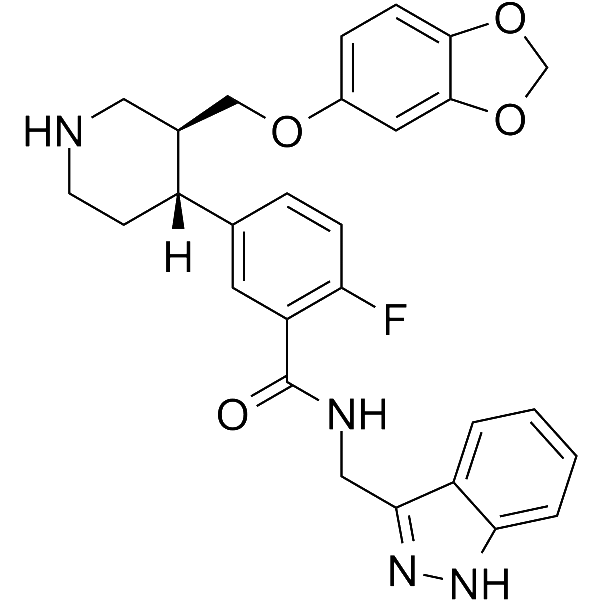 0 ImagesCCG258747 is a selective GRK2 inhibitor (IC50 = 18 nM) with high selectivity over GRK1, GRK5, PKA, and ROCK1 (518, 83, > 5500, and > 550-fold, respectively). CCG258747 also blocks the internalization of the µ-opioid receptor (MOR). CCG258747 attenuates IgE mediated anaphylaxis by inhibiting GRK2 and FcεRI signaling pathway but activates mast cells via MRGPRX2 and MRGPRB2. CCG258747 can be used to study diseases related to overexpression of GRK2 (such as heart failure, opioid tolerance).

-
GRK2 degrader-1
 0 ImagesGRK2 degrader-1 (compound 1) is a potent and orally active GRK2 degrader. GRK2 degrader-1 degrades GRK2 via the ubiquitin-proteasome pathway. GRK2 degrader-1 inhibits right ventricular remodeling and elevation of pulmonary artery pressure in a pulmonary artery hypertension (PAH) mouse model. GRK2 degrader-1 can be used for PAH research.
-
Takeda103A
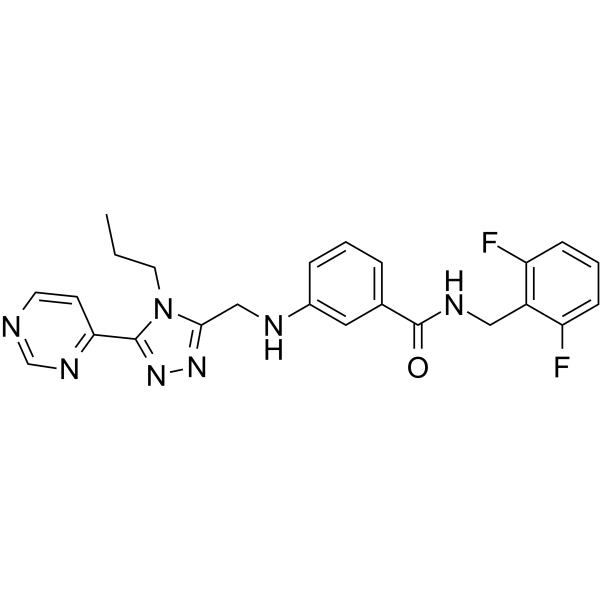 0 ImagesTakeda103A is a potent inhibitor of GRK2. G protein-coupled receptors (GPCRs) are central to many physiological processes. Takeda103A has the potential for the research of heart failure.
-
GRK2 Human Pre-designed siRNA Set A
 0 ImagesCat. No.: HY-RS05813
GRK2 Human Pre-designed siRNA Set A contains three designed siRNAs for GRK2 gene (Human), as well as a negative control, a positive control, and a FAM-labeled negative control.
-
CCG258208
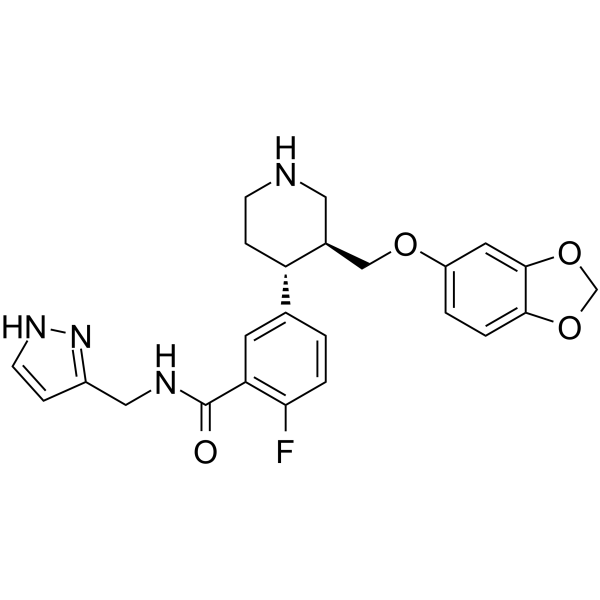 0 ImagesCat. No.: HY-109562CAS No.: 2055990-90-2Synonyms: GRKs-IN-1CCG258208 (GRK2-IN-1) is a potent and selective GRK2 (G protein-coupled receptor kinase 2) inhibitor (IC50=30 nM) while maintaining 230-fold selectivity over GRK5 (IC50=7.09 μM) and more than 2500-fold selectivity over GRK1 (IC50=87.3 μM), PKA, and ROCK1. CCG258208 can be used in heart failure research.
-
CCG 224061
 0 ImagesCat. No.: HY-120718CAS No.: 2055990-82-2CCG 224061 is a G protein-coupled receptor kinase 2 (GRK2) inhibitor with a IC50 of 0.066 μM. CCG 224061 inhibits GRK activity in cardiomyocytes. CCG 224061 is applicable to research related to heart disease, heart failure, myocardial hypertrophy and hypertension.
-
CCG-271423
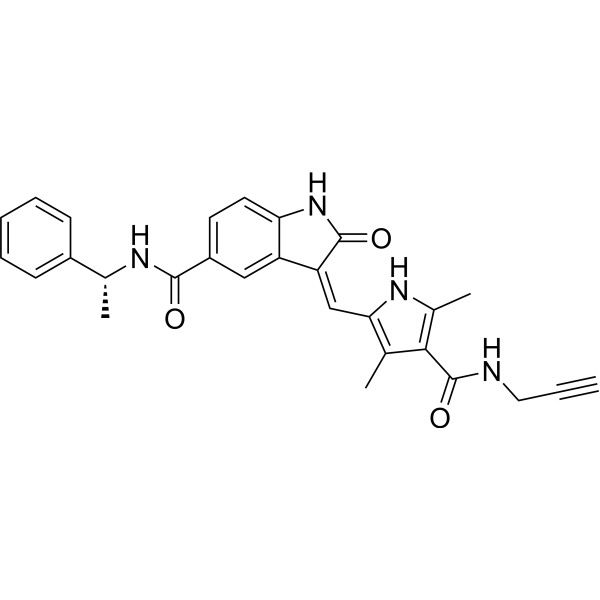 0 ImagesCat. No.: HY-150039CAS No.: 2750413-88-6CCG-271423 is a potent and selective GRK5 inhibitor with IC50 values of 0.0021 μM and 44 μM for GRK5 and GRK2, respectively. CCG-271423 inhibits cardiomyocyte contractility and decreases in Ca2+ transience. CCG-271423 is a click chemistry reagent, it contains an Alkyne group and can undergo copper-catalyzed azide-alkyne cycloaddition (CuAAc) with molecules containing Azide groups.
- 1
- 2



