



OAT Inhibitor
-
1,3-Dimethyluric acid (Standard)
 0 Images
1,3-Dimethyluric acid Standard is the analytical standard of 1,3-Dimethyluric acid (HY-W014993). This product is intended for research and analytical applications. 1,3-Dimethyluric acid is a major metabolite of Theophylline (HY-B0809) in vivo. 1,3-Dimethyluric acid is an inhibitor of human organic anion transporter 1 (hOAT1) with an IC50 of 9.2 μM. 1,3-Dimethyluric acid inhibits hOAT1-mediated substrate uptake and transport through competitive binding. 1,3-Dimethyluric acid is also a component of urinary calculi. 1,3-Dimethyluric acid can be used in research on urolithiasis.
-
18β-Glycyrrhetyl-3-O-sulfate (Standard)
 0 ImagesCat. No.: HY-148682RCAS No.: 10251-38-4Synonyms: Glycyrrhetic acid 3-O-hydrogen sulfate (Standard)
(Z)-Methyl icos-11-enoate (Standard) is the analytical standard of (Z)-Methyl icos-11-enoate. This product is intended for research and analytical applications. (Z)-Methyl icos-11-enoate is a biochemical reagent that can be used as a biological material or organic compound for life science related research.
-
SOAT-IN-3
 0 ImagesCat. No.: HY-182542CAS No.: 3056728-00-5
SOAT-IN-3 is a selective inhibitor of sodium-dependent organic anion transporter (SOAT/SLC10A6). SOAT-IN-3 reduces intracellular estradiol synthesis, the process of dehydroepiandrosterone (DHEA) production from DHEAS, and DHEAS-induced cancer cell proliferation. SOAT-IN-3 shows no cytotoxicity against breast cancer cells at the tested concentrations. SOAT-IN-3 can be used in the research of breast cancer.
-
Erlotinib-13C6 hydrochloride
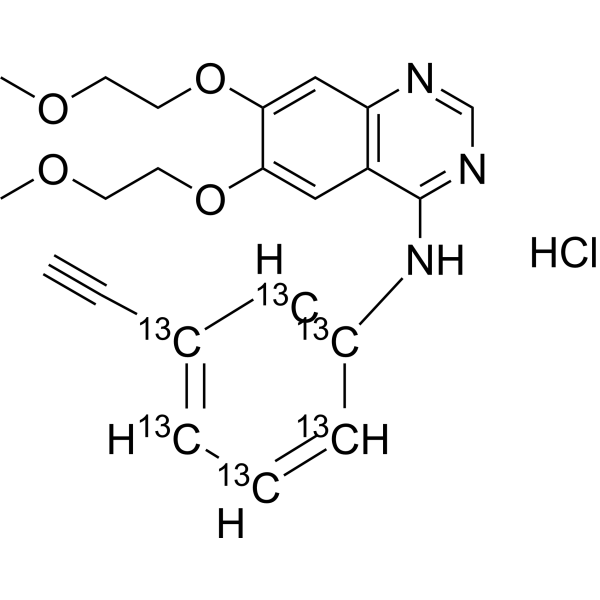 0 ImagesCat. No.: HY-12008S1CAS No.: 1210610-07-3Synonyms: CP-358774-13C6 hydrochloride; NSC 718781-13C6 hydrochloride; OSI-774-13C6 hydrochloride
Erlotinib-13C6 hydrochloride (CP-358774-13C6 hydrochloride) is the 13C-labeled Erlotinib Hydrochloride (HY-12008). Erlotinib (CP-358774) Hydrochloride is a selective, orally active EGFR tyrosine kinase inhibitor. Erlotinib Hydrochloride also acts as a substrate and inhibitor of OATP2B1, with an IC50 of approximately 0.079 μM for inhibiting OATP2B1-mediated uptake of estrone 3-sulfate. Erlotinib Hydrochloride blocks EGFR phosphorylation, downstream signal transduction, as well as the growth and proliferation of cancer cells. Erlotinib Hydrochloride inhibits MMP-10-mediated renal injury, fibrotic lesions, the ERK1/2, GSK-3β and β-catenin signaling pathways, as well as the deposition of fibronectin, α-SMA, collagen and renal injury markers. Erlotinib Hydrochloride is metabolized via CYP3A to produce the active metabolite OSI-420. Erlotinib Hydrochloride can be used in research related to non-small cell lung cancer, gastric cancer, papillary renal cell carcinoma, EGFR inhibitor resistance and renal fibrosis.
-
1,3-Dimethyluric acid-d3
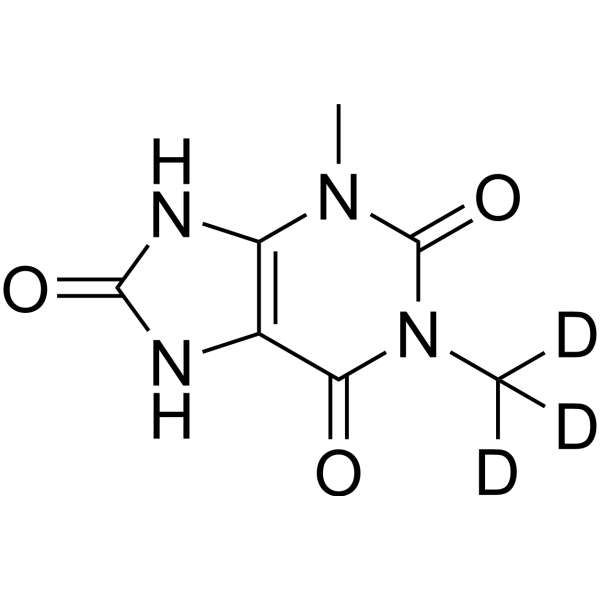 0 ImagesCat. No.: HY-W014993S1
1,3-Dimethyluric acid-d3 is the deuterated-labeled 1,3-Dimethyluric acid (HY-W014993). 1,3-Dimethyluric acid is a major metabolite of Theophylline (HY-B0809) in vivo. 1,3-Dimethyluric acid is an inhibitor of human organic anion transporter 1 (hOAT1) with an IC50 of 9.2 μM. 1,3-Dimethyluric acid inhibits hOAT1-mediated substrate uptake and transport through competitive binding. 1,3-Dimethyluric acid is also a component of urinary calculi. 1,3-Dimethyluric acid can be used in research on urolithiasis.
-
NLRP3/URAT1-IN-1
 0 ImagesCat. No.: HY-175645CAS No.: 2994637-53-3
NLRP3/URAT1-IN-1 is an orally active double inhibitor of NLRP3 and URAT1 (IC50 = 3.81 μM). NLRP3/URAT1-IN-1 inhibits IL-1β release in LPS (HY-D1056) and ATP-stimulated mouse bone marrow-derived macrophages (BMDMs), with an IC50 of 2.61 μM. NLRP3/URAT1-IN-1 reduces serum uric acid (SUA) and alleviates liver/kidney damage in mice with acute hyperuricemia (HUA). NLRP3/URAT1-IN-1can be used for the study of gout and hyperuricemia.
-
Pradigastat sodium
 0 ImagesCat. No.: HY-16278ACAS No.: 956136-98-4Synonyms: LCQ 908 sodium
Pradigastat sodium (LCQ 908 sodium) is a selective and orally effective diacylglyceryl acyltransferase 1 (DGAT1) inhibitor with IC50 at 0.157 µM. Pradigastat is primarily used to study diseases associated with abnormal triglyceride metabolism. Pradigastat has anti-obesity and anti-diabetic effects. Pradigastat inhibited BCRP, OATP1B1, OATP1B3 and OAT3 activities with IC50 of 5 µM, 1.66µM, 3.34µM and 0.973µM, respectively. In addition, Pradigastat has antiviral activity and can inhibit hepatitis C virus replication in vitro.
-
Euphol acetate
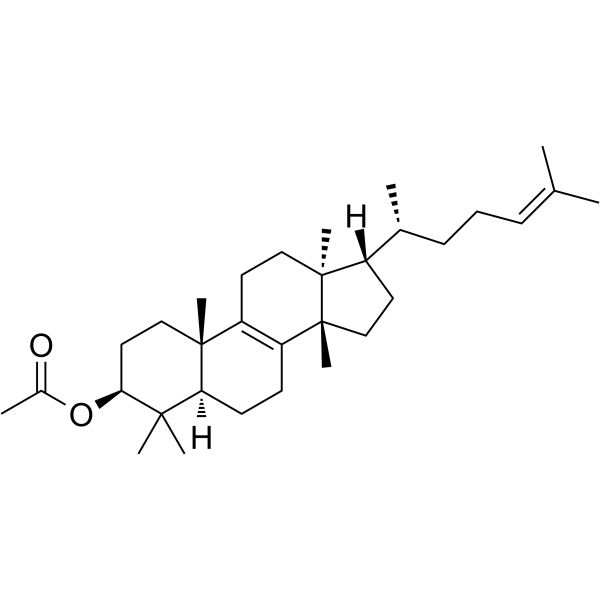 0 ImagesCat. No.: HY-138142CAS No.: 13879-04-4
Euphol acetate is a triterpene that can be isolated from Euphorbia broteri. Euphol acetate is an inhibitor of hepatic transport proteins organic anion-transporting polypeptide 1/3 (OATP1B1/3).
-
1,3-Dimethyluric acid-13C4,15N3
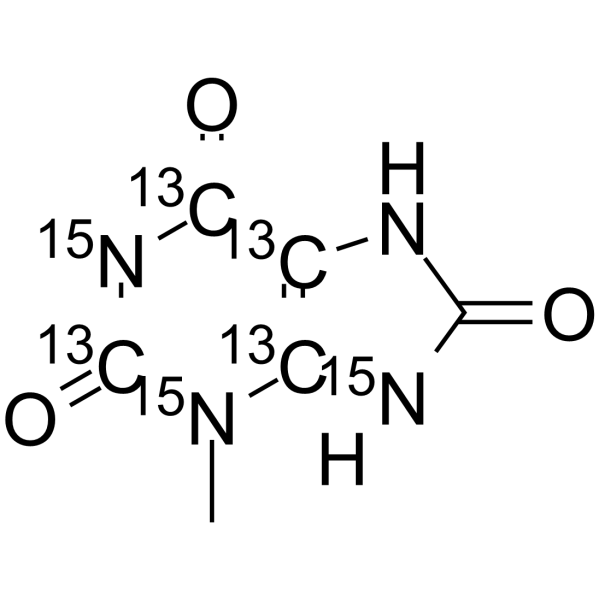 0 ImagesCat. No.: HY-W014993SCAS No.: 1173019-16-3
1,3-Dimethyluric acid-13C4,15N3 is the 15N and 13C-labeled 1,3-Dimethyluric acid (HY-W014993). 1,3-Dimethyluric acid is a major metabolite of Theophylline (HY-B0809) in vivo. 1,3-Dimethyluric acid is an inhibitor of human organic anion transporter 1 (hOAT1) with an IC50 of 9.2 μM. 1,3-Dimethyluric acid inhibits hOAT1-mediated substrate uptake and transport through competitive binding. 1,3-Dimethyluric acid is also a component of urinary calculi. 1,3-Dimethyluric acid can be used in research on urolithiasis.
-
Cabotegravir-d6
 0 ImagesCat. No.: HY-15592S4Synonyms: GSK-1265744-d6; S/GSK1265744-d6
Cabotegravir-d6 (GSK-1265744-d6) is the deuterium labeled Cabotegravir (HY-15592). Cabotegravir (GSK-1265744) is a orally active and long-acting HIV integrase strand transfer inhibitor and organic anion transporter 1/3 (OAT1/OAT3) inhibitor with IC50 values of 2.5 nM, 0.41 μM and 0.81 μM for HIVADA, OAT3 and OAT1, respectively. Cabotegravir is primarily metabolized by uridine diphosphate glucuronosyltransferase (UGT) 1A1, with low potential to interact with other antiretroviral agents (ARVs). Cabotegravir can be used to research AIDS.
-
Erlotinib-13C6
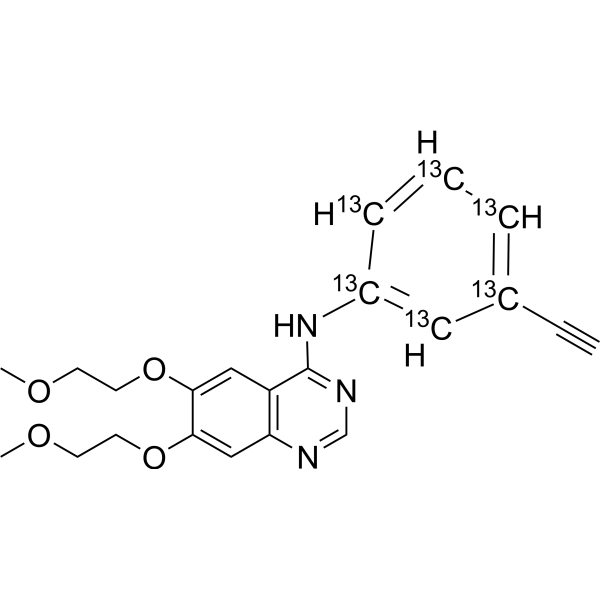 0 ImagesCat. No.: HY-50896S1CAS No.: 1211107-68-4Synonyms: CP-358774-13C6; NSC 718781-13C6; OSI-774-13C6
Erlotinib-13C6 (CP-358774-13C6) is the 13C-labeled Erlotinib (HY-50896). Erlotinib (CP-358774) is a selective, orally active EGFR tyrosine kinase inhibitor. Erlotinib also acts as a substrate and inhibitor of OATP2B1, with an IC50 of approximately 0.079 μM for inhibiting OATP2B1-mediated uptake of estrone 3-sulfate. Erlotinib blocks EGFR phosphorylation, downstream signal transduction, as well as the growth and proliferation of cancer cells. Erlotinib inhibits MMP-10-mediated renal injury, fibrotic lesions, the ERK1/2, GSK-3β and β-catenin signaling pathways, fibronectin, α-SMA, collagen deposition, and renal injury markers. Erlotinib is metabolized via CYP3A to produce the active metabolite OSI-420. Erlotinib can be used in research related to non-small cell lung cancer, gastric cancer, papillary renal cell carcinoma, pancreatic cancer, renal fibrosis, and other conditions.
-
Cabotegravir (Standard)
 0 ImagesSynonyms: GSK-1265744 (Standard); S/GSK1265744 (Standard)
Cabotegravir (Standard) is the analytical standard of Cabotegravir. This product is intended for research and analytical applications. Cabotegravir (GSK-1265744) is a orally active and long-acting HIV integrase strand transfer inhibitor and organic anion transporter 1/3 (OAT1/OAT3) inhibitor with IC50 values of 2.5 nM, 0.41 μM and 0.81 μM for HIVADA, OAT3 and OAT1, respectively. Cabotegravir is primarily metabolized by uridine diphosphate glucuronosyltransferase (UGT) 1A1, with low potential to interact with other antiretroviral agents (ARVs). Cabotegravir can be used to research AIDS.
-
URAT1-IN-15
 0 ImagesCat. No.: HY-180227
URAT1-IN-15 (Compound 9) is an orally active, selective URAT1 inhibitor with an IC50 of 69.81 nM. URAT1-IN-15 inhibits CYP2C9 (IC50 = 8.39 μM). URAT1-IN-15 shows uricosuric activity. URAT1-IN-15 can be used in the research of hyperuricemia.
-
Erlotinib-d8
 0 ImagesCat. No.: HY-50896S3CAS No.: 1266656-97-6Synonyms: CP-358774-d8; NSC 718781-d8; OSI-774-d8
Erlotinib-d8 (CP-358774-d8) is the deuterated-labeled Erlotinib (HY-50896). Erlotinib (CP-358774) is a selective, orally active EGFR tyrosine kinase inhibitor. Erlotinib also acts as a substrate and inhibitor of OATP2B1, with an IC50 of approximately 0.079 μM for inhibiting OATP2B1-mediated uptake of estrone 3-sulfate. Erlotinib blocks EGFR phosphorylation, downstream signal transduction, as well as the growth and proliferation of cancer cells. Erlotinib inhibits MMP-10-mediated renal injury, fibrotic lesions, the ERK1/2, GSK-3β and β-catenin signaling pathways, as well as the deposition of fibronectin, α-SMA, collagen and renal injury markers. Erlotinib is metabolized via CYP3A to produce the active metabolite OSI-420. Erlotinib can be used in research related to non-small cell lung cancer, gastric cancer, papillary renal cell carcinoma, EGFR inhibitor resistance and renal fibrosis.
-
Lesinurad-d4
 0 ImagesCat. No.: HY-15258S1CAS No.: 1850305-60-0Synonyms: RDEA594-d4
-
Pradigastat (Standard)
 0 ImagesCat. No.: HY-16278RCAS No.: 956136-95-1Synonyms: LCQ-908 (Standard)
Pradigastat (Standard) is the analytical standard of Pradigastat. This product is intended for research and analytical applications. Pradigastat (LCQ-908) is a selective and orally effective diacylglyceryl acyltransferase 1 (DGAT1) inhibitor with IC50 at 0.157 µM. Pradigastat is primarily used to study diseases associated with abnormal triglyceride metabolism. Pradigastat has anti-obesity and anti-diabetic effects. Pradigastat inhibited BCRP, OATP1B1, OATP1B3 and OAT3 activities with IC50 of 5 µM, 1.66µM, 3.34µM and 0.973µM, respectively. In addition, Pradigastat has antiviral activity and can inhibit hepatitis C virus replication in vitro.
-
6-Hydroxyindole (Standard)
 0 Images
6-Hydroxyindole (Standard) is the analytical standard of 6-Hydroxyindole (HY-W002438). This product is intended for research and analytical applications. 6-Hydroxyindole is an orally active, endogenous long-acting OATP1B1 inhibitor. 6-Hydroxyindole does not alter the cell surface expression or subcellular localization of OATP1B1. 6-Hydroxyindole protects cells against Ferroptosis. 6-Hydroxyindole possesses intrinsic radical-trapping antioxidant activity. 6-Hydroxyindole serves as a component of oxidative hair dyes. 6-Hydroxyindole can be used in research related to renal failure and neurodegenerative diseases.
-
Epaminurad (Standard)
 0 ImagesCat. No.: HY-111345RCAS No.: 1198153-15-9Synonyms: UR-1102 (Standard); URC-102 (Standard)
Epaminurad (Standard) is the analytical standard of Epaminurad (HY-111345). This product is intended for research and analytical applications. Epaminurad (UR-1102) is an orally active, potent and selective URAT1 (urate transporter 1) inhibitor, with a Ki of 0.057 μM. Epaminurad quite modestly inhibits OAT1 and OAT3 (organic anion transporter). Epaminurad is a uricosuric agent. Epaminurad can be used for gout and hyperuricemia research.
-
DRAinh-A250
 0 ImagesCat. No.: HY-124706CAS No.: 858747-13-4
DRAinh-A250 is an orally active inhibitor of mouse and human SLC26A3 (DRA). DRAinh-A250 inhibits SLC26A3-mediated anion transport, blocks colonic fluid absorption, reduces luminal fluid alkalization in the distal colonic loops of mice, and alleviates Loperamide (HY-156131)-induced constipation in wild-type and cystic fibrosis mice. DRAinh-A250 can be used in the research of constipation and cystic fibrosis-related constipation.
-
Erlotinib mesylate
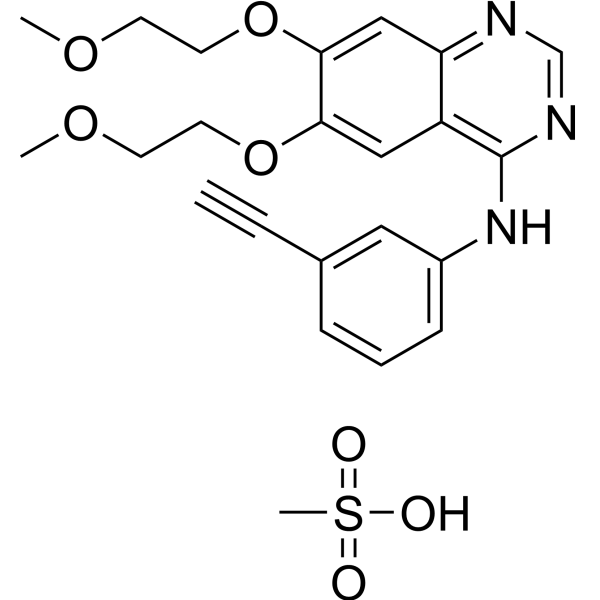 0 ImagesCat. No.: HY-12008ACAS No.: 248594-19-6Synonyms: CP-358774 mesylate; NSC 718781 mesylate; OSI-774 mesylate
Erlotinib (CP-358774) mesylate is a selective, orally active EGFR tyrosine kinase inhibitor. Erlotinib mesylate also acts as a substrate and inhibitor of OATP2B1, with an IC50 of approximately 0.079 μM for inhibiting OATP2B1-mediated uptake of estrone 3-sulfate. Erlotinib mesylate blocks EGFR phosphorylation, downstream signal transduction, as well as the growth and proliferation of cancer cells. Erlotinib mesylate inhibits MMP-10-mediated renal injury, fibrotic lesions, the ERK1/2, GSK-3β and β-catenin signaling pathways, as well as the deposition of fibronectin, α-SMA, collagen and renal injury markers. Erlotinib mesylate is metabolized via CYP3A to produce the active metabolite OSI-420. Erlotinib mesylate can be used in research related to non-small cell lung cancer, gastric cancer, papillary renal cell carcinoma, EGFR inhibitor resistance and renal fibrosis.



