



Reactive Oxygen Species (ROS) Inducer
-
3-O-Methyltolcapone (Standard)
 0 ImagesCat. No.: HY-100642RCAS No.: 134612-80-9Synonyms: Ro 40-7591 (Standard)
3-O-Methyltolcapone (Standard) (Ro 40-7591 (Standard)) is the analytical standard of 3-O-Methyltolcapone (HY-174062). 3-O-Methyltolcapone (Ro 40-7591) is a metabolite of Tolcapone (HY-17406). Tolcapone (Ro 40-7592) is a selective, potent and orally active COMT inhibitor with an IC50of 773 nM. Tolcapone can inhibits α-syn and Aβ42 oligomerization and fibrillogenesis. Tolcapone can cause oxidative stress and induce cancer cells apoptosis and ROS production. Tolcapone can be used for the researches of cancer and neurological disease, such as Parkinson disease and neuroblastoma.
-
Bifenazate (Standard)
 0 Images
Bifenazate (Standard) is the analytical standard of Bifenazate. This product is intended for research and analytical applications. Bifenazate is a carbazate acaricide that control 100% of mites at a concentration of 25 ppm. Bifenazate is a positive allosteric modulator of GABA receptor. Bifenazate is the inhibitor for the mitochondrial electron transport chain complex III.
-
Diquat dibromide hydrate (Standard)
 0 Images
Diquat (dibromide hydrate) (Standard) is the analytical standard of Diquat (dibromide hydrate). This product is intended for research and analytical applications. Diquat dibromide hydrate is a comprehensive herbicide. Diquat dibromide hydrate increases the production of ROS and triggers mitophagy. Diquat dibromide hydrate generates free radicals such as superoxide anions through redox cycles, which induce oxidative stress. Diquat dibromide hydrate is cytotoxic, reproductive, and neurotoxic. Diquat dibromide hydrate is used in cotton, soybean, and other crops to combat noxious weeds.
-
Acetylgliotoxin
 0 ImagesCat. No.: HY-183421CAS No.: 146016-64-0Synonyms: Gliotoxin monoacetate
Acetylgliotoxin (Gliotoxin monoacetate) is a farnesyltransferase (FTase) inhibitor with an IC50 of 4.4 μM against human targets. Acetylgliotoxin inhibits the growth of fungal, bacterial, and viral pathogens; it binds to free protein thiols and induces ROS production. Acetylgliotoxin increases the survival rate of Caenorhabditis elegans infected with Candida albicans, but exhibits toxicity at higher concentrations. Acetylgliotoxin is applicable to research related to Candida albicans infections.
-
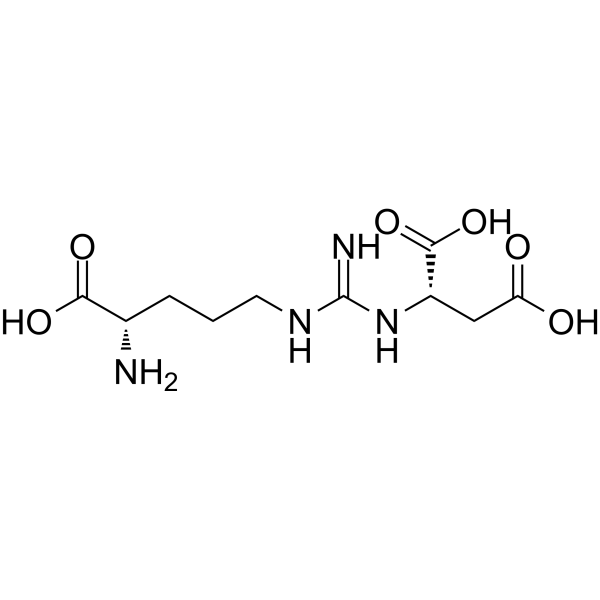
Argininosuccinic acid
 0 Images
Argininosuccinic acid is an intermediate metabolite in the urea cycle, and its level is associated with argininosuccinic aciduria. Argininosuccinic acid can induce oxidative stress, leading to lipid and protein oxidation, reduction of glutathione, and decrease in antioxidant enzyme activity. Argininosuccinic acid can be converted into guanidinosuccinic acid, a nitric oxide mimic, under the action of nitric oxide-derived free radicals. Argininosuccinic acid can be used in the research of metabolic diseases, renal failure, nervous system diseases, etc.
-
Graveoline (Standard)
 0 Images
Graveoline (Standard) is the analytical standard of Graveoline (HY-12538). This product is intended for research and analytical applications. Graveoline (Rutamine) is an orally active alkaloid with various activities such as antifungal, antiparasitic, anti-inflammatory, and antitumor effects. Graveoline can induce tumor cell apoptosis and autophagy through a reactive oxygen species-mediated pathway. Graveoline has an MIC of 500 μg/mL for Candida albicans. Graveoline can be used in the research of various diseases such as tumors and liver injury.
-
Methiocarb
 0 Images
Methiocarb (Mercaptodimethur) is an orally active carbamate insecticide. Methiocarb exerts dose-dependent toxic effects on onions. In addition to inhibiting acetylcholinesterase to induce cholinergic excitation, Methiocarb can induce lipid peroxidation in liver, kidney, brain and testicular tissues and alter reduced glutathione levels by generating ROS. Methiocarb can be used for agricultural pest control and research on oxidative stress-related cellular damage in mammals.
-
Antibacterial agent 351
 0 ImagesCat. No.: HY-184284CAS No.: 2798832-23-0
Antibacterial agent 351 is a broad-spectrum antibacterial agent. Antibacterial agent 351 binds to the allosteric site of PBP2a, induces conformational changes, and reduces the level of PBP2a in MRSA. Antibacterial agent 351 acts as a DNA intercalator to interfere with bacterial DNA function. Antibacterial agent 351 disrupts bacterial redox homeostasis via excessive production of ROS and RNS, depletes intracellular GSH, induces lipid peroxidation, and triggers bacterial cell death. Antibacterial agent 351 enhances the activity of Metronidazole (HY-B0318) against anaerobic bacteria and extends the antibacterial spectrum of Metronidazole to aerobic bacteria. Antibacterial agent 351 can be used in the research of bacterial infections (including MRSA infections).
-
ROS inducer 9
 0 ImagesCat. No.: HY-172602CAS No.: 3081689-97-3
ROS inducer 9 (compound 4e) is an antibacterial agent with a MIC value of 0.25 μg/mL against E. coli. ROS inducer 9 kills bacteria by inhibiting GSH activity and increasing ROS levels. ROS inducer 9 shows low toxicity to erythrocytes and RAW 264.7 cells.
-
Antibacterial agent 292
 0 ImagesCat. No.: HY-178212CAS No.: 3065015-86-0
Antibacterial agent 292 is a 3-pyrazolylindole derivative. Antibacterial agent 292 is an anti-bacterial agent. Antibacterial agent 292 shows potent inhibitory activity against Xanthomonas oryzae pv oryzae (Xoo) and Xanthomonas axonopodis pv citri (Xac), with EC50 values of 2.54 and 3.49 μg/mL. Antibacterial agent 292 can suppress biofilm formation, bacterial motility, and extracellular polysaccharide production, induce morphological alterations and promote ROS accumulation, ultimately triggers bacterial apoptosis. Antibacterial agent 292 down-regulates the expression of genes associated with the type VI secretion system (T6SS). Antibacterial agent 292 can be used in rice bacterial blight and citrus canker.
-
DA29
 0 ImagesCat. No.: HY-187371
DA29 is a human caseinolytic protease P (hClpP) activator, with an EC50 of 0.85 μM and a Kd of 185 nM. DA29 binds to the hydrophobic allosteric pocket of this enzyme, activates its proteolytic function, and displaces hClpX from the hClpXP complex. DA29 induces mitochondrial dysfunction and ROS accumulation. DA29 exerts cytotoxic effects on cancer cells and organoids. DA29 can be used in the research of diffuse intrinsic pontine glioma.
-
Cartap hydrochloride (Standard)
 0 ImagesCat. No.: HY-W040028RCAS No.: 15263-52-2
Cartap (hydrochloride) (Standard) is the analytical standard of Cartap (hydrochloride). This product is intended for research and analytical applications. Cartap hydrochloride, an organonitrogen insecticide, can cause a marked irreversible Ca2+-dependent contracture in both isolated mouse and rabbit phrenic nerve-diaphragms. Cartap hydrochloride significantly increases the level of endogenous reactive oxygen species (ROS) in C2C12 cells.
-
CL097 (Standard)
 0 Images
CL097 (Standard) is the analytical standard of CL097. This product is intended for research and analytical applications. CL097, a potent TLR7 and TLR8 agonist, induces pro-inflammatory cytokines in macrophages. CL097 induces NADPH oxidase priming, resulting in an increase of the fMLF-stimulated ROS production.
-
2-Ethoxybenzamide (Standard)
 0 Images
2-Ethoxybenzamide (Standard) is the analytical standard of 2-Ethoxybenzamide (HY-B1428). 2-Ethoxybenzamide (Ethenzamide) is a nonsteroidal anti-inflammatory agent that shows analgesic and antipyretic effects. 2-Ethoxybenzamide induces melanin synthesis via cAMP response element-binding protein (CREB) phosphorylation. 2-Ethoxybenzamide can be used in the research of hypopigmentation and inflammation-related diseases.
-
Antibacterial agent 276
 0 ImagesCat. No.: HY-172793
Antibacterial agent 276 (compound B3) is an antibacterial agent with EC50 values of 1.32 μg/mL and 2.80 μg/mL against Xanthomonas oryzae pv.oryzae and Xanthomonas axonopodis pv.citri,respectively. Antibacterial agent 276 disrupts the intracellular redox balance, and results in the accumulation of reactive oxygen species (ROS) and subsequent induction of apoptosis.
-
SDH-IN-42
 0 ImagesCat. No.: HY-179287
SDH-IN-42 (Compound D28) is a SDH (IC50: 5.38 μg/mL) inhibitor and antifungal agent. SDH-IN-42 exerts antifungal activity against R. solani by disrupting mycelial morphology, increasing cell membrane permeability, inducing the production and accumulation of ROS, and impairing mitochondrial function.
-
TPP2a bromide
 0 ImagesCat. No.: HY-122802CAS No.: 1838592-80-5
TPP2a bromide is a thioredoxin reductase (TrxR) inhibitor with an IC50 value of 1.16 μM, and also acts as a TrxR-specific fluorescent probe with environment-sensitive fluorescence. TPP2a bromide selectively forms covalent interactions with subcellular mitochondrial TrxR, thereby modifying its Sec498 residue. TPP2a bromide can increase the level of reactive oxygen species (ROS) in cells and induce mitochondrial apoptosis in cancer cells. TPP2a bromide exhibits enhanced cytotoxicity against cancer cell lines. TPP2a bromide can be used in research related to cervical cancer, lung cancer, etc.
-
Dimethachlor
 0 ImagesCat. No.: HY-121423CAS No.: 50563-36-5
-
Mofarotene
 0 ImagesCat. No.: HY-127149CAS No.: 125533-88-2Synonyms: Ro 40-8757
Mofarotene (Ro 40-8757), an arotinoid, is anticancer compound. Mofarotene induces apoptosis, associated with mitochondrial membrane depolarization, activation of caspase-3 and -9, and enhanced production of reactive oxygen species. Mofarotene inhibits hematopoiesis in vitro by inhibiting maturation from primitive progenitor cells.
-
Nivitol
 0 ImagesCat. No.: HY-108046CAS No.: 869743-37-3Synonyms: UP302
Nivitol (UP302) is a natural phenolic compound discovered from Dianella ensifolia and also acts as a Tyrosinase inhibitor. Nivitol competitively and reversibly inhibits tyrosinase, suppressing melanin production. Nivitol inhibits homogentisate 1,2-dioxygenase (HGD). In human leukemia cells, Nivitol inhibits PI3K/AKT pathway phosphorylation, increases ROS, decreases mitochondrial membrane potential, and induces G2/M cell cycle arrest, apoptosis, and PINK1/Parkin-mediated mitophagy. Nivitol exhibits inhibition of tumor growth in the MV411 xenograft mouse model. Nivitol is used for research on exogenous ochronosis, hyperpigmentation, and leukemia.



