



AKN-028

Based on 1 Customer Validation
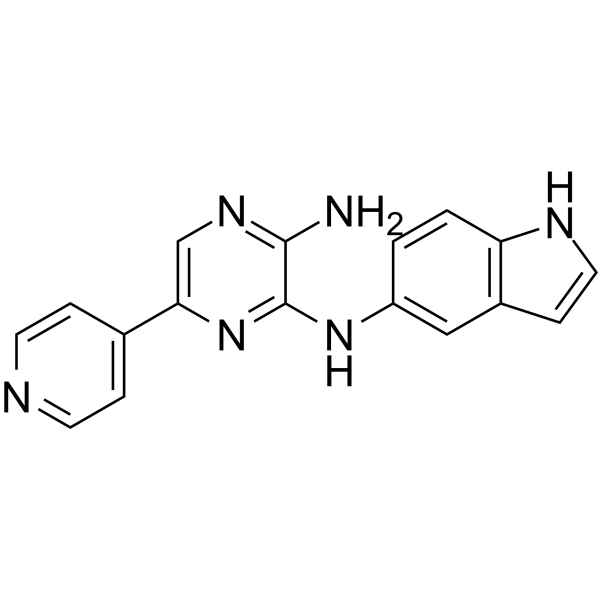
AKN-028, a novel tyrosine kinase (TK) inhibitor, is a potent, orally active FMS-like receptor tyrosine kinase 3 (FLT3) inhibitor with an IC50 value of 6 nM. AKN-028 inhibits FLT3 autophosphorylation. AKN-028 induces dose-dependent cytotoxic response (mean IC50=1 μM). AKN-028 induces apoptosisby activation of caspase 3. AKN-028 can be used in research of acute myeloid leukemia (AML).
For research use only. We do not sell to patients.
- Purity : 99.72%
- CAS No.: 1175017-90-9
- Formula: C17H14N6
- Molecular Weight:302.33
-
Storage:Powder -20°C, 3 years , 4°C, 2 years ; In solvent -80°C, 6 months , -20°C, 1 month

To place orders, for customer services and technical support, please contact: MedChemExpress USA
Tel: 609-228-6898 E-mail: [email protected] [email protected]


-
 Biological Activity
-
Chemical Information
- Protocols
- Purity & Documentation
- References
-
 Help & FAQs


-
HY-12333
DenfivontinibFLT3 Inhibitor -
HY-13001
QuizartinibFLT3 Inhibitor -
HY-13016
CabozantinibVEGFR2/MET Inhibitor -

HY-13016R
Cabozantinib (Standard)VEGFR2/MET Inhibitor -
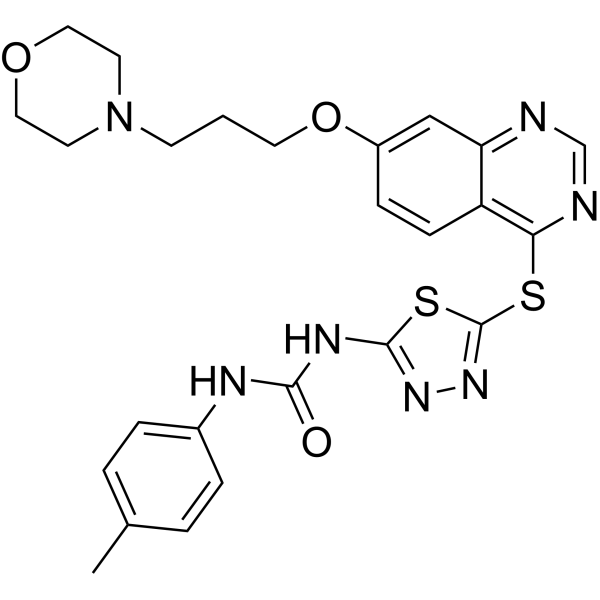
HY-12960
SKLB4771Flt3 Inhibitor -
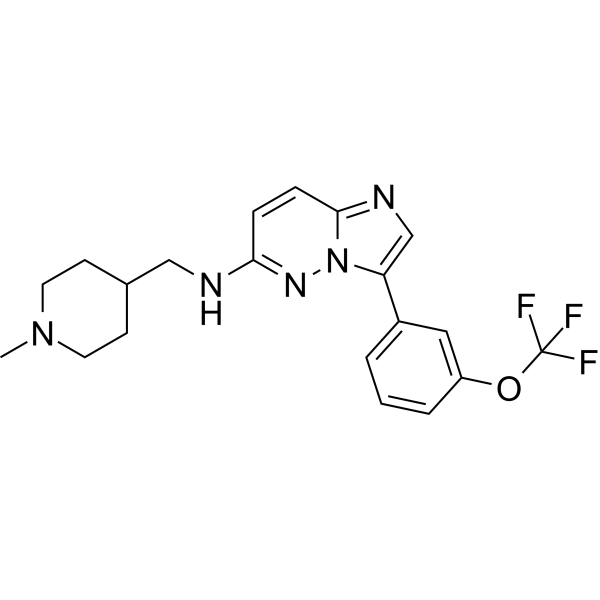
HY-13287
SGI-1776 free baseAutophagy Inducer -
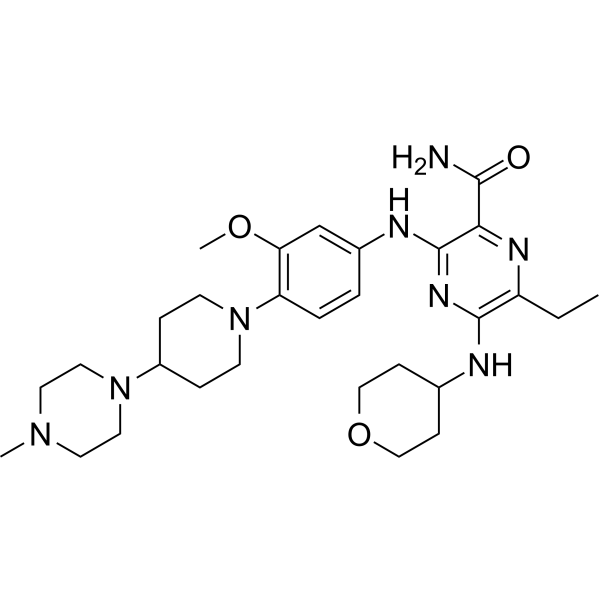
HY-12432
GilteritinibFLT3/AXL Inhibitor -
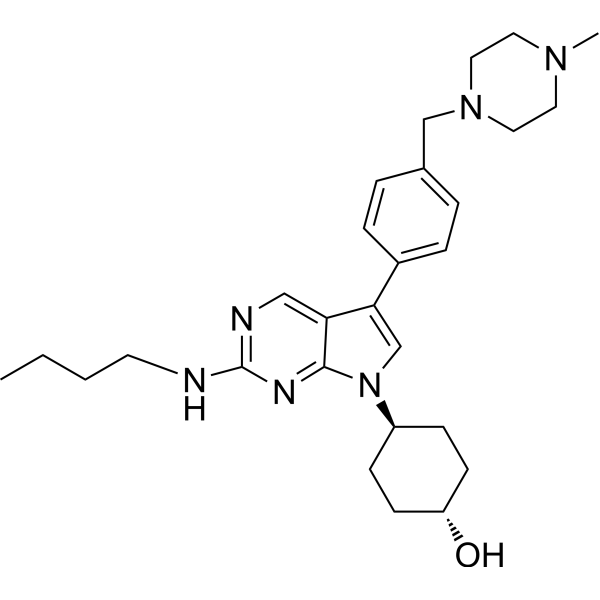
HY-12344
UNC2025MER/FLT3 Inhibitor -
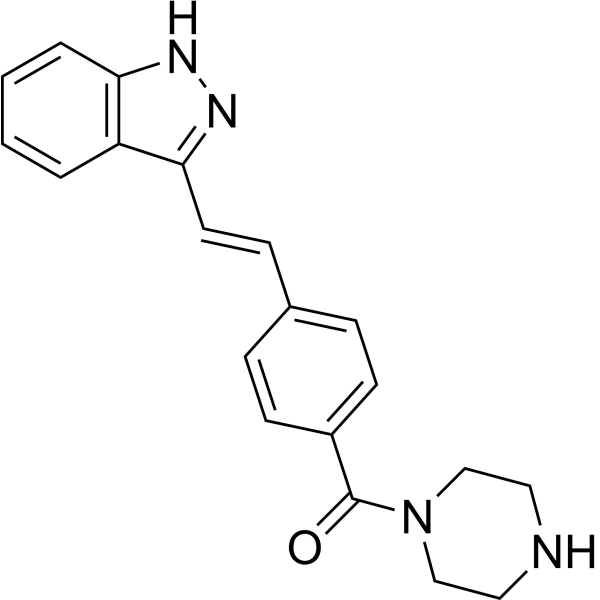
HY-10339
KW-2449Multi-Kinase Inhibitor -
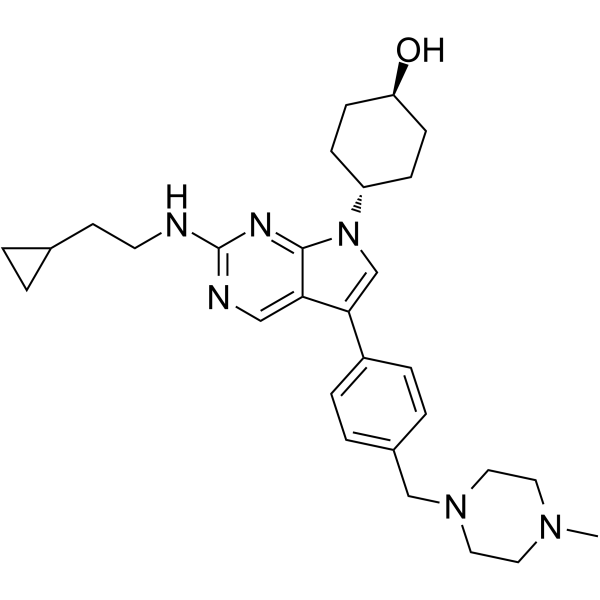
HY-101549
MRX-2843MERTK/FLT3 Inhibitor -

HY-12432R
Gilteritinib (Standard)FLT3/AXL Inhibitor -
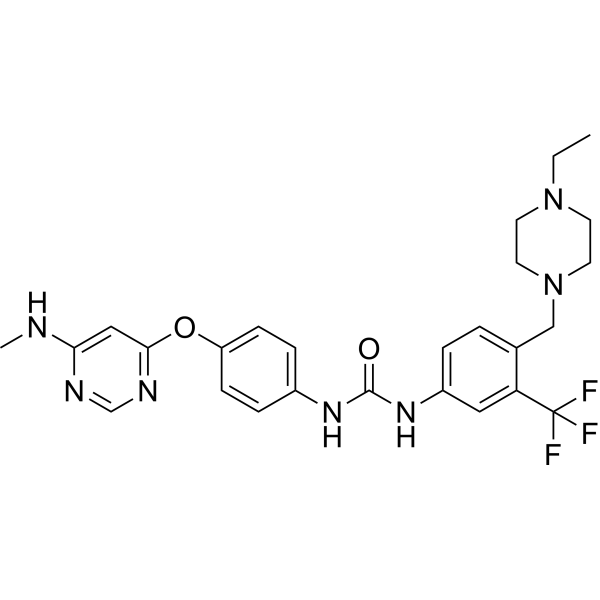
HY-15002
AST 487c-Kit Inhibitor
All Caspase Isoforms
More

Biological Activity
Description
IC50 & Target
IC50: 6 nM (FLT3), 140 nM (CLK1), 220 nM (RPS6KA), 520 nM (VEGFR2), and 120 nM (FGFR2)[1]
In Vitro
AKN-028 (0.1 nM-100 μM; 15 h; mouse embryonal fibroblasts and human acute megakaryoblastic leukemia M07 cells) inhibits FLT3 and KIT autophosphorylation in a dose-dependent manner[1].
AKN-028 (10 μM; 72 h; tumor cell lines) is cytotoxic to AML cell lines and induces apoptosis in the AML cell line MV4-11[1].
MedChemExpress (MCE) has not independently confirmed the accuracy of these methods. They are for reference only. Further protocols information, click here.
-
Cell Line:Mouse embryonal fibroblasts either overexpressing FLT-wt, FLT3-TKD or FLT3-ITD and human acute megakaryoblastic leukemia M07 cells overexpressing KIT
-
Concentration:0.1 nM-100 μM
-
Incubation Time:15 hours
-
Result:Inhibited FLT3 and KIT autophosphorylation.
-
Cell Line:Tumor cell lines
-
Concentration:10 μM
-
Incubation Time:72 hours
-
Result:Had cytotoxic activity was highest in MV4-11 and MOLM-13 (IC50<50 nM), followed by the three other AML cell lines (IC50=0.5-6 μM).
In Vivo
MedChemExpress (MCE) has not independently confirmed the accuracy of these methods. They are for reference only.
-
Animal Model:Male C57 black mice with MV4-11 xenografts[1]
-
Dosage:15 mg/kg
-
Administration:Subcutaneous injection; twice daily, for 6 days
-
Result:Inhibited tumor growth and did not affect body weight.
Clinical Trial
| NCT Number | Sponsor | Condition | Start Date |
Phase

|
|---|---|---|---|---|
| NCT01329991 | Plexxikon| | 2011-05 | PHASE1 |


Chemical Information
-
CAS No. 1175017-90-9
-
Appearance Solid
-
Molecular Weight 302.33
-
Formula C17H14N6
-
Color Light brown to brown
-
SMILES
NC1=NC=C(N=C1NC2=CC3=C(C=C2)NC=C3)C4=CC=NC=C4
-
Shipping
Room temperature in continental US; may vary elsewhere.
-
Storage
Powder -20°C 3 years 4°C 2 years In solvent -80°C 6 months -20°C 1 month

Protocols
-
Cell Cytotoxicity Assay
Cytotoxicity assays are usually based on the assessment of cell membrane damage, which can also be indirectly detected by measuring cell viability. Detection methods include MTT assay, CKK-8 assay, LDH assay and ATP assay, etc.
-
Apoptosis Solutions
Apoptosis is a regulated, generally non-lytic cell-death pathway that removes unwanted, damaged, infected, or abnormal cells through coordinated morphological changes, caspase activation, DNA fragmentation, and membrane remodeling. The intrinsic apoptosis pathway is controlled mainly by mitochondrial outer membrane permeabilization, BCL-2 family proteins, cytochrome c release, apoptosome formation, caspase-9 activation, and downstream executioner caspase-3/7 activation. The extrinsic apoptosis pathway is initiated by death receptors such as Fas, TNFR, and TRAIL receptors, which recruit adaptor proteins and activate caspase-8 before engaging executioner caspases or mitochondrial amplification through BID cleavage. Apoptosis is linked to many phenotypes, including cancer cell killing, tissue homeostasis, immune regulation, neurodegeneration, infection response, and treatment-induced cytotoxicity; unresolved questions include how apoptosis interacts with necroptosis, pyroptosis, ferroptos
-
Cell Viability Determination by MTT Colorimetric Assay
The following protocol uses the MTT colorimetric assay as a classic literature-established method for assessing cell viability/metabolic activity in cultured mammalian cells. MTT[3-(4,5-dimethylthiazol-2-yl)-2,5-diphenyltetrazolium bromide] is reduced by metabolically active cells to a colored formazan product; the amount of formazan is quantified spectrophotometrically and provides an indirect measure of metabolically active viable cells. Importantly, MTT reduction reflects cellular oxidoreductase/metabolic activity rather than an absolute direct count of living cells, so changes in cellular metabolism can alter the signal independently of cell number.


Purity & Documentation
-
Data Sheet (273 KB)
-
SDS (252 KB)
- English - EN (252 KB)
- Français - FR (252 KB)
- Deutsch - DE (252 KB)
- Norwegian - NO (252 KB)
- Español - ES (252 KB)
- Swedish - SV (252 KB)
- Italian - IT (252 KB)
- Korean - KR (252 KB)
- Portuguese - PT (252 KB)
-
Handling Instructions (2659 KB)
References

Calculators
Concentration (start) × Volume (start) = Concentration (final) × Volume (final)


AKN-028 Related Classifications
HY-118304 Related Classifications
 Powered by Bioz