



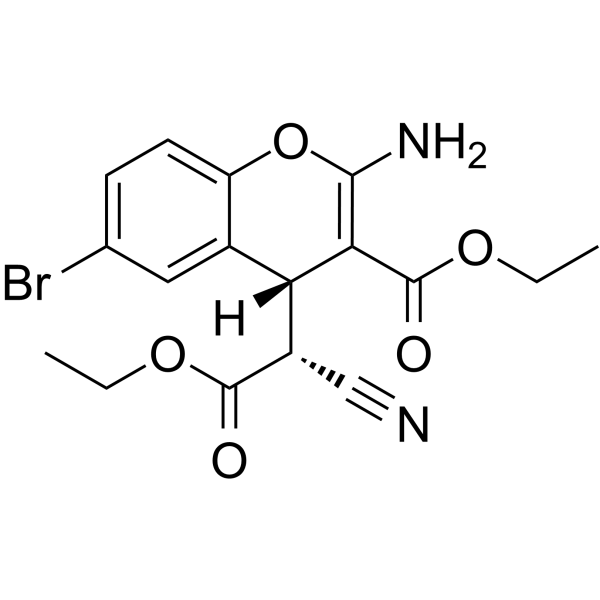
HA14-1
Based on 2 publication(s) in Google Scholar
HA14-1 is a Bcl-2/Bcl-XL antagonist. HA14-1 binds the designated pocket on Bcl-2 with the IC50 of ≈9 μM in competing with the Bcl-2 binding of Flu-BakBH3, and inhibits its function.
Nur für Forschungszwecke. Wir verkaufen nicht an Patienten.
- Reinheit : 98.0%
- CAS. Nr.: 65673-63-4
- Formel: C17H17BrN2O5
- Molecular Weight:409.23
-
Speicherung:Powder -20°C, 3 years , 4°C, 2 years ; In solvent -80°C, 2 years , -20°C, 1 year

To place orders, for customer services and technical support, please contact: MedChemExpress USA
Tel: 609-228-6898 E-mail: [email protected] [email protected]


-
 Biologische Aktivität
-
Chemical Information
-
Lösungsmittel & Löslichkeit
- Reinheit & Dokumentation
- Verweise
-
 Help & FAQs


-
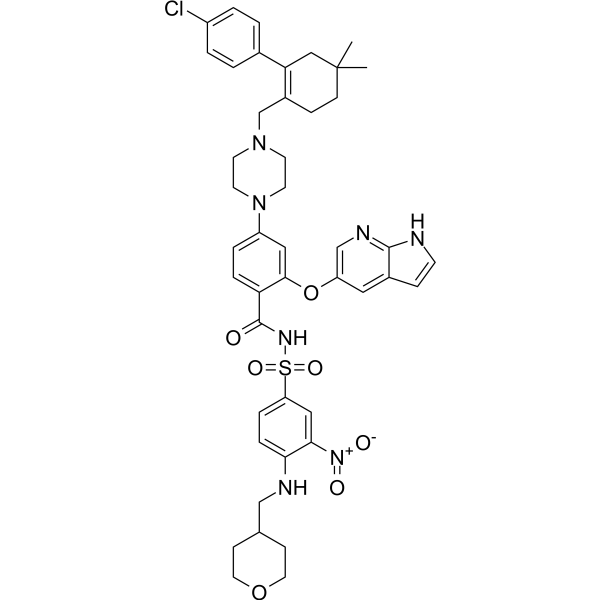
HY-15531
VenetoclaxBCL-2 Inhibitor -
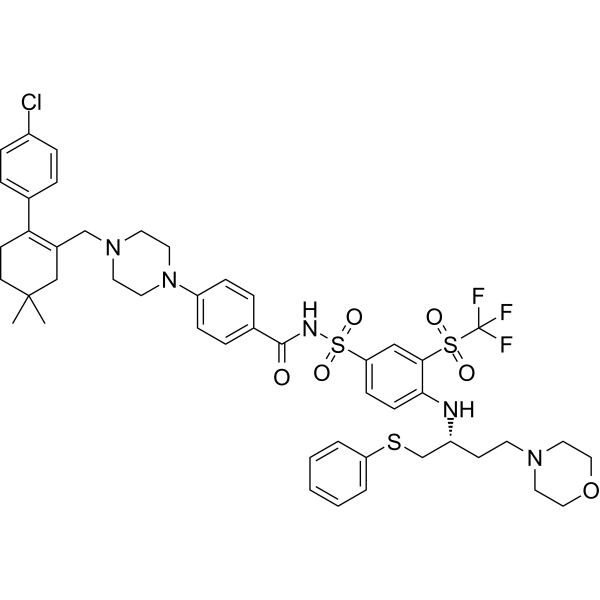
HY-10087
NavitoclaxBcl-2/Bcl-xL/Bcl-w Inhibitor -
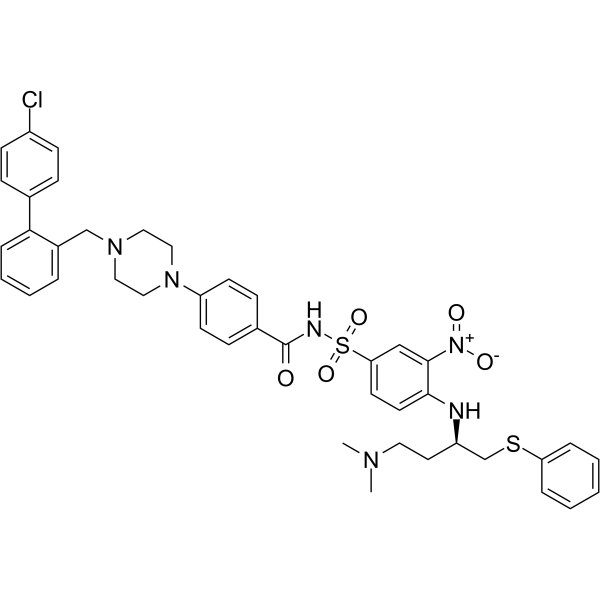
HY-50907
ABT-737Bcl-2 Family Inhibitor/BH3 Mimetic -
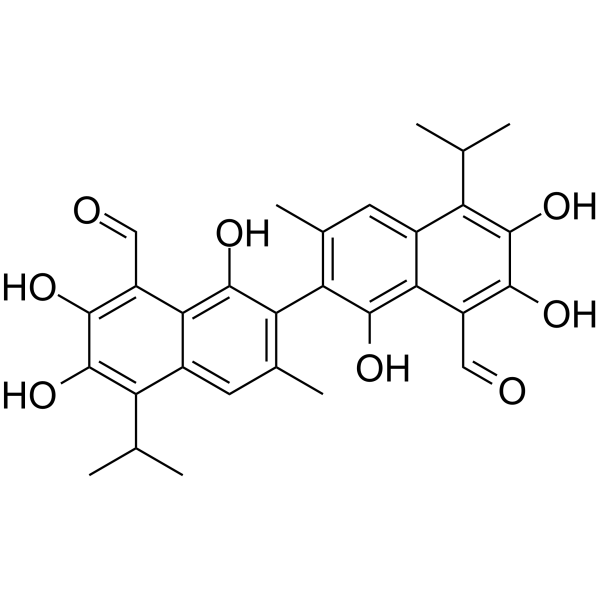
HY-13407
GossypolBcl-2 Family Antagonist -
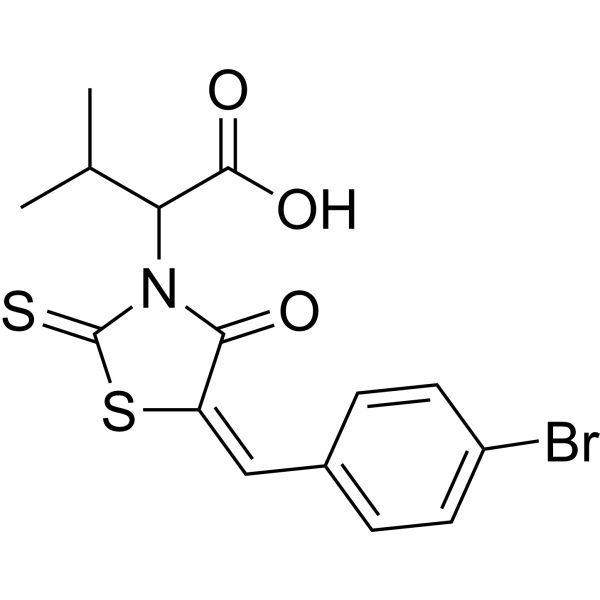
HY-100383
BH3I-1Bcl-2/Bcl-XL Inhibitor -
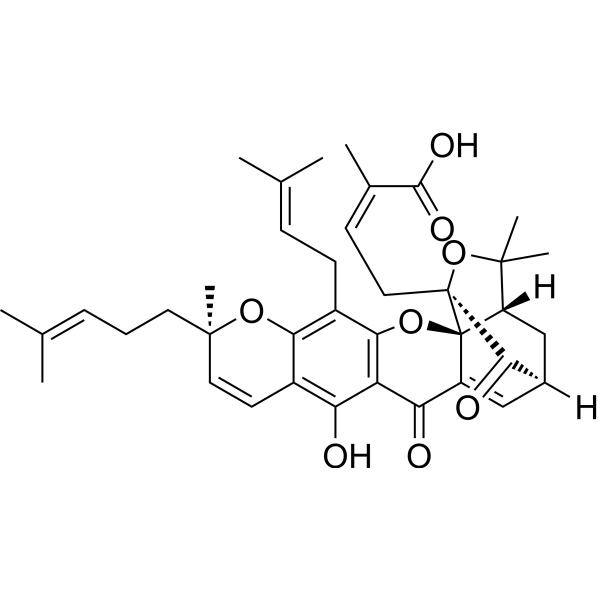
HY-N0087
Gambogic AcidBcl-2 Family Inhibitor -
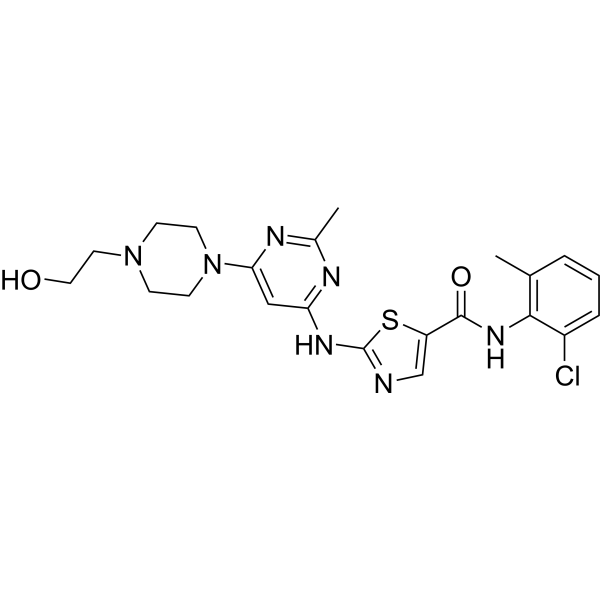
HY-10181
DasatinibSrc/Bcr-Abl Inhibitor -

HY-15531R
Venetoclax (Standard)BCL-2 Inhibitor -
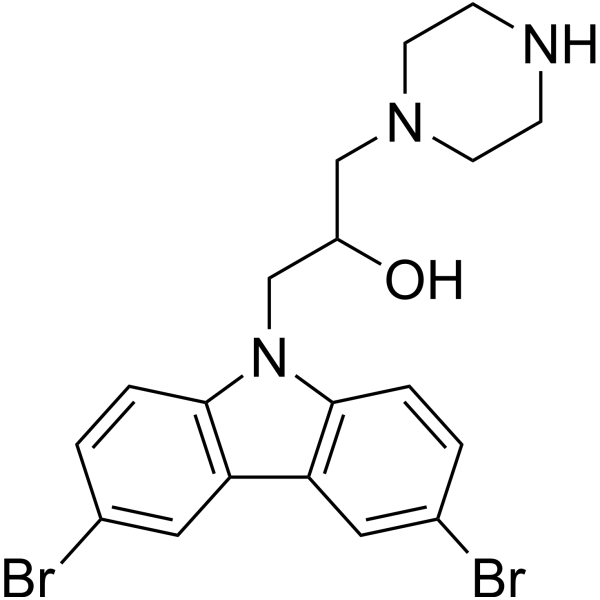
HY-103269
BAI1BAX Inhibitor -
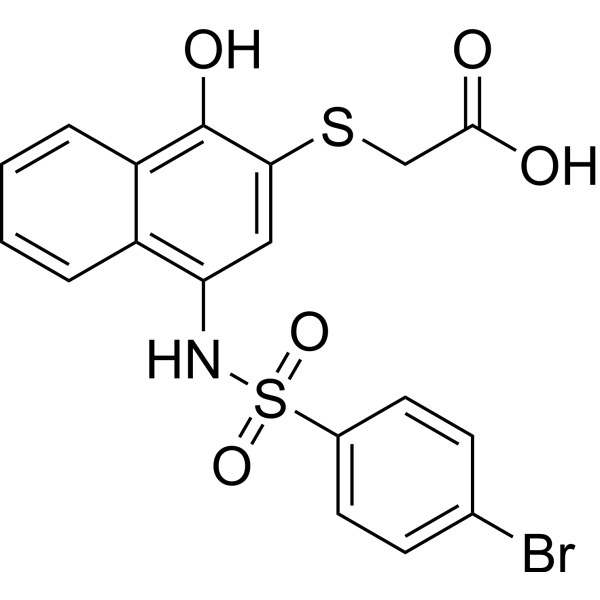
HY-18628
UMI-77Bcl-2 Family Inhibitor -
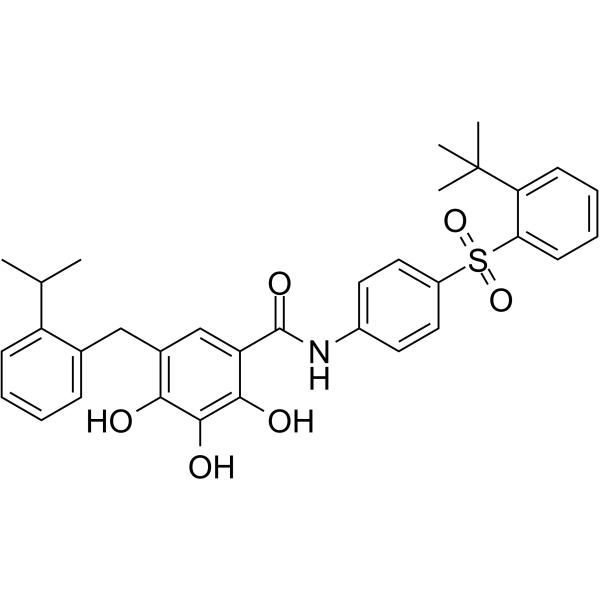
HY-12020
TW-37Bcl-2 Family Inhibitor -

HY-10087R
Navitoclax (Standard)Reference Standard
Publications Citing Use of MedChemExpress (MCE) HA14-1
More

Biologische Aktivität
Beschreibung
|
Bcl-2 9 μM (IC50) |
Bcl-xL |
In Vitro
HA14-1 is a nonpeptidic ligand of a Bcl-2 surface pocket. HA14-1 induces the activation of Apaf-1 and caspases, possibly by binding to Bcl-2 protein and inhibiting its function. The interaction of HA14-1 with the Bcl-2 surface pocket appeared to be specific for the chemical structure of HA14-1 as a series of synthetic analogs derived from HA14-1 containing various modifications are found to have widely different Bcl-2 binding activities. To examine the effect of HA14-1 on cell viability, HL-60 cells are treated with various concentrations of HA14-1 for 4 h. HA14-1 induces the death of HL-60 cells in a dose-dependent manner. At 50 μM, HA14-1 causes the lost of viability in more than 90% of the cells[1]. HA14-1 is a Bcl-2/Bcl-xL antagonist[2].
MedChemExpress (MCE) has not independently confirmed the accuracy of these methods. They are for reference only.
In Vivo
MedChemExpress (MCE) has not independently confirmed the accuracy of these methods. They are for reference only.


Chemical Information
-
CAS. Nr. 65673-63-4
-
Appearance Solid
-
Molecular Weight 409.23
-
Formel C17H17BrN2O5
-
Color White to light yellow
-
SMILES
CCOC(C1=C(N)OC2=CC=C(Br)C=C2[C@@]1([H])[C@H](C#N)C(OCC)=O)=O
-
Versand
Room temperature in continental US; may vary elsewhere.
-
Speicherung
Powder -20°C 3 years 4°C 2 years In solvent -80°C 2 years -20°C 1 year


Publications (2)
-
Journal Impact Factor
-
Most Recent
-
Acta Pharm Sin B
Discovery of the radio-protecting effect of Ecliptae Herba, its constituents and targeting p53-mediated apoptosis in vitro and in vivo. [Abstract]2023 Mar;13(3):1216-1230. PMID: 36970216 -
Mol Ther
Interaction between stromal cells and tumor cells promotes GCB-DLBCL cell survival via the CD40/RANK-KDM6B-NF-κB axis. [Abstract]2025 Mar 20:S1525-0016(25)00199-6. PMID: 40119515


Lösungsmittel & Löslichkeit
In Vitro:
DMSO : ≥ 50 mg/mL (122.18 mM; Hygroscopic DMSO has a significant impact on the solubility of product, please use newly opened DMSO)
* "≥" means soluble, but saturation unknown.
Please refer to the solubility information to select the appropriate solvent. Once prepared, please aliquot and store the solution to prevent product inactivation from repeated freeze-thaw cycles.
Storage method and period of stock solution: -80°C, 2 years; -20°C, 1 year. When stored at -80°C, please use it within 2 years. When stored at -20°C, please use it within 1 year.
Please refer to the solubility information to select the appropriate solvent. Once prepared, please aliquot and store the solution to prevent product inactivation from repeated freeze-thaw cycles.
Storage method and period of stock solution: -80°C, 2 years; -20°C, 1 year. When stored at -80°C, please use it within 2 years. When stored at -20°C, please use it within 1 year.
Konzentration (Stammlösung) × Volumen (Stammlösung) = Konzentration (Ziellösung) × Volumen (Ziellösung)
In Vivo:
Select the appropriate dissolution method based on your experimental animal and administration route.
- For the following dissolution methods, please ensure to first prepare a clear stock solution using an In Vitro approach and then sequentially add co-solvents:
- To ensure reliable experimental results, the clarified stock solution can be appropriately stored based on storage conditions. As for the working solution for In Vivo experiments, it is recommended to prepare freshly and use it on the same day.
- The percentages shown for the solvents indicate their volumetric ratio in the final prepared solution. If precipitation or phase separation occurs during preparation, heat and/or sonication can be used to aid dissolution.
Add each solvent one by one: 10% DMSO 40% PEG300 5% Tween-80 45% Saline
Solubility: ≥ 2.5 mg/mL (6.11 mM); Clear solution
This protocol yields a clear solution of ≥ 2.5 mg/mL (saturation unknown).
Taking 1 mL working solution as an example, add 100 μL DMSO stock solution (25.0 mg/mL) to 400 μL PEG300, and mix evenly; then add 50 μL Tween-80 and mix evenly; then add 450 μL Saline to adjust the volume to 1 mL.
Preparation of Saline: Dissolve 0.9 g sodium chloride in ddH₂O and dilute to 100 mL to obtain a clear Saline solution.
In Vivo Dissolution Calculator
Please enter the basic information of animal experiments:
-
-
-
-
Recommended: Prepare an additional quantity of animals to account for potential losses during experiments.
Please enter your animal formula composition:
-
%DMSO +
Recommended: Keep the proportion of DMSO in working solution below 2% if your animal is weak.
-
%+
-
+%Tween-80 + +
-
%Saline +
The co-solvents required include: DMSO, . All of co-solvents are available by MedChemExpress (MCE). , Tween 80. All of co-solvents are available by MedChemExpress (MCE).
Working solution concentration: 0.22 mg/mL
Method for preparing stock solution: mg drug dissolved in μL DMSO. Stock solution concentration: mg/mL.
1. Take μL DMSO stock solution;
2. Add μL .
μL , mix evenly;
3. Then add μL Tween 80, mix evenly;
4. Then add μL
Please ensure that the stock solution in the first step is dissolved to a clear state, and add co-solvents in sequence. You can use ultrasonic heating (ultrasonic cleaner, recommended frequency 20-40 kHz), vortexing, etc. to assist dissolution.


Reinheit & Dokumentation
-
Data Sheet (284 KB)
-
SDS (393 KB)
- English - EN (393 KB)
- Français - FR (393 KB)
- Deutsch - DE (393 KB)
- Norwegian - NO (393 KB)
- Español - ES (393 KB)
- Swedish - SV (393 KB)
- Italian - IT (393 KB)
- Korean - KR (393 KB)
- Portuguese - PT (393 KB)
-
Handling Instructions (2659 KB)
Verweise
[1]. Wang JL, et al. Structure-based discovery of an organic compound that binds Bcl-2 protein and induces apoptosis of tumor cells. Proc Natl Acad Sci U S A. 2000 Jun 20;97(13):7124-9. [Content Brief]
[2]. Kessel D, et al. Initiation of apoptosis and autophagy by the Bcl-2 antagonist HA14-1. Cancer Lett. 2007 May 8;249(2):294-9. [Content Brief]
[3]. Manero F, et al. The small organic compound HA14-1 prevents Bcl-2 interaction with Bax to sensitize malignant glioma cells to induction of cell death. Cancer Res. 2006 Mar 1;66(5):2757-64. [Content Brief]


Complete Stock Solution Preparation Table
Please refer to the solubility information to select the appropriate solvent. Once prepared, please aliquot and store the solution to prevent product inactivation from repeated freeze-thaw cycles.
Storage method and period of stock solution: -80°C, 2 years; -20°C, 1 year. When stored at -80°C, please use it within 2 years. When stored at -20°C, please use it within 1 year.
| Optional Solvent | Concentration Solvent Mass | 1 mg | 5 mg | 10 mg | 25 mg |
|---|---|---|---|---|---|
| DMSO | 1 mM | 2.4436 mL | 12.2181 mL | 24.4361 mL | 61.0903 mL |
| 5 mM | 0.4887 mL | 2.4436 mL | 4.8872 mL | 12.2181 mL | |
| 10 mM | 0.2444 mL | 1.2218 mL | 2.4436 mL | 6.1090 mL | |
| 15 mM | 0.1629 mL | 0.8145 mL | 1.6291 mL | 4.0727 mL | |
| 20 mM | 0.1222 mL | 0.6109 mL | 1.2218 mL | 3.0545 mL | |
| 25 mM | 0.0977 mL | 0.4887 mL | 0.9774 mL | 2.4436 mL | |
| 30 mM | 0.0815 mL | 0.4073 mL | 0.8145 mL | 2.0363 mL | |
| 40 mM | 0.0611 mL | 0.3055 mL | 0.6109 mL | 1.5273 mL | |
| 50 mM | 0.0489 mL | 0.2444 mL | 0.4887 mL | 1.2218 mL | |
| 60 mM | 0.0407 mL | 0.2036 mL | 0.4073 mL | 1.0182 mL | |
| 80 mM | 0.0305 mL | 0.1527 mL | 0.3055 mL | 0.7636 mL | |
| 100 mM | 0.0244 mL | 0.1222 mL | 0.2444 mL | 0.6109 mL |


HA14-1 Related Classifications
HY-12011 Related Classifications
 Powered by Bioz