



Potassium sorbate

Based on 1 Customer Validation
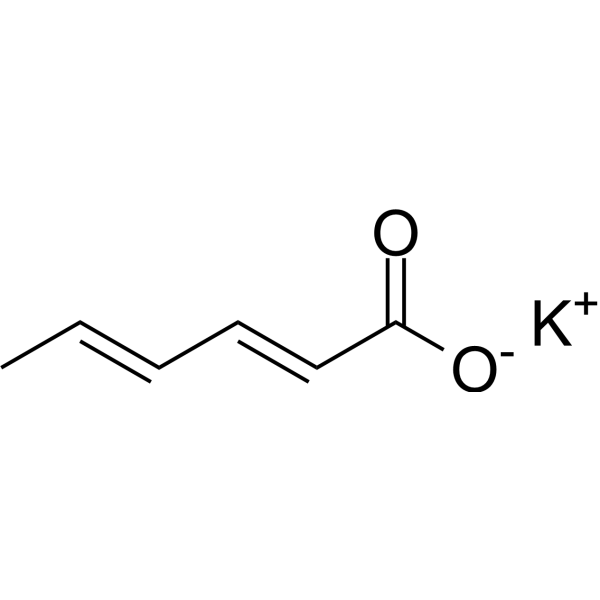
Potassium sorbate (Sorbic acid potassium) is an antibacterial preservative effective against most molds, yeasts, and some bacterial species. Potassium sorbate inhibits microbial growth. Potassium sorbate suppresses the activity of intestinal microorganisms in zebrafish, alters the composition of intestinal flora, and reduces the levels of intestinal immune biomarkers, including IgG, IL-1β, and TNF-α. Potassium sorbate can be used in research on the prevention and treatment of mold, yeast, and bacterial infections.
Nur für Forschungszwecke. Wir verkaufen nicht an Patienten.
- Reinheit : 98.0%
- CAS. Nr.: 24634-61-5
- Formel: C6H7KO2
- Molecular Weight:150.22
-
Speicherung:
Store at room temperature, keep dry and cool.
In solvent -80°C, 1 year , -20°C, 6 months

To place orders, for customer services and technical support, please contact: MedChemExpress USA
Tel: 609-228-6898 E-mail: [email protected] [email protected]


-
 Biologische Aktivität
-
Chemical Information
-
Lösungsmittel & Löslichkeit
- Protokoll
- Reinheit & Dokumentation
- Verweise
-
 Help & FAQs


-
HY-Y1316
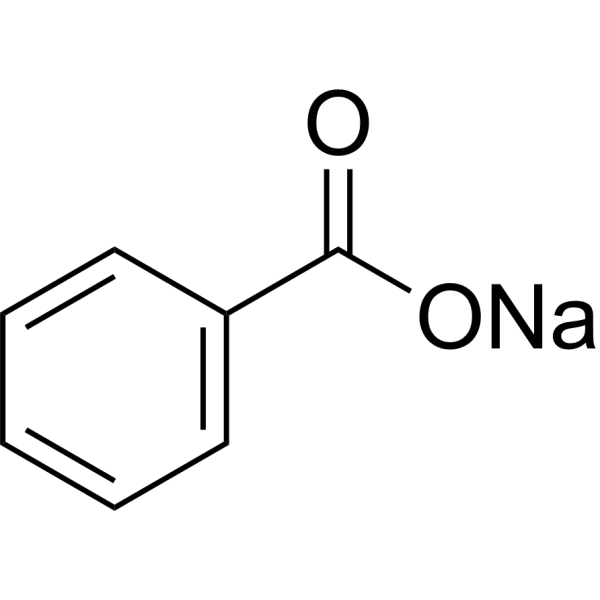
Sodium benzoatePharmaceutical Excipient -
HY-B2227
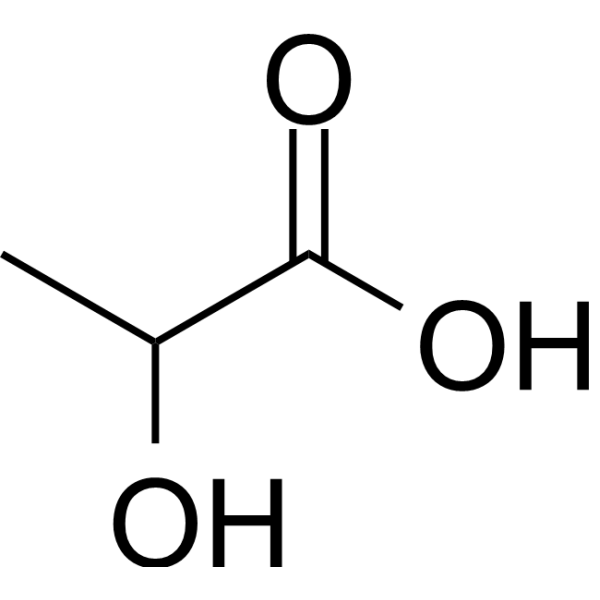
Lactic acidGlycolysis Production -

HY-B1773A
Sodium propionateShort-chain Fatty Acid -
HY-N0728
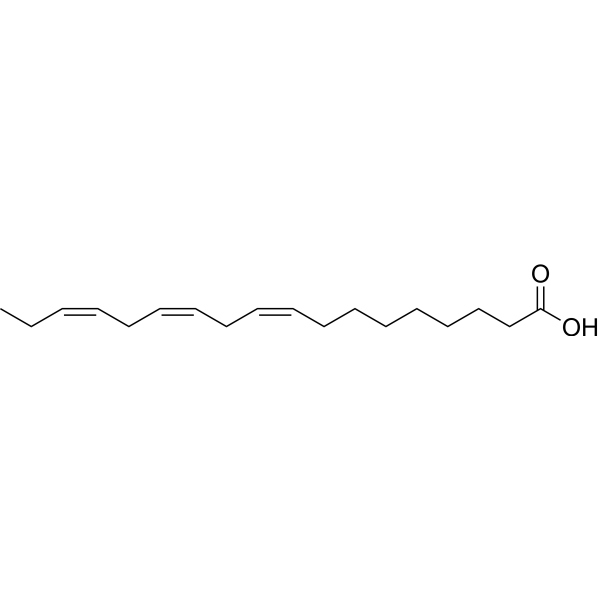
α-Linolenic acidEssential Fatty Acid -

HY-N0626AR
Potassium sorbate (Standard)Food Preservative -
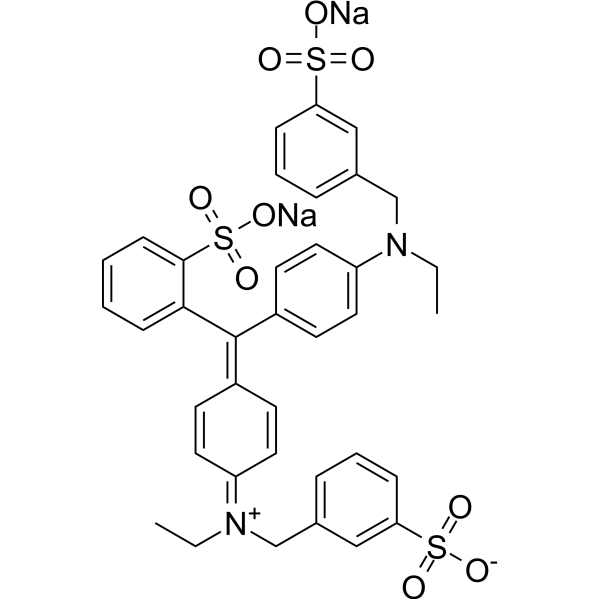
HY-D0915
Brilliant Blue FCFColorant -
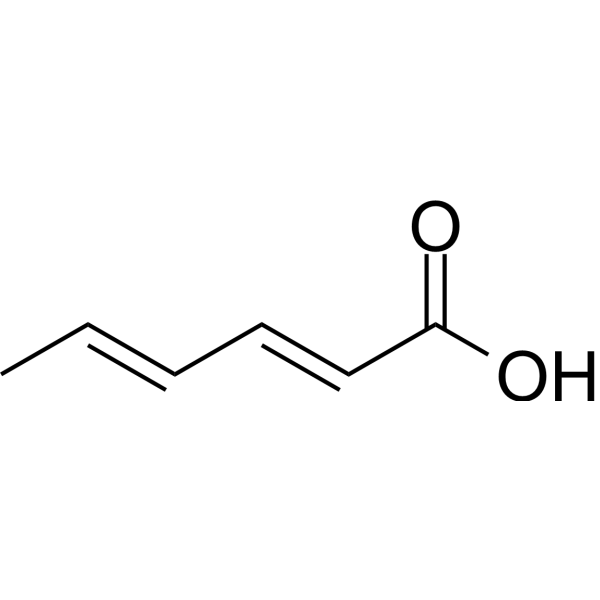
HY-N0626
Sorbic acidAntibacterial Preservative -
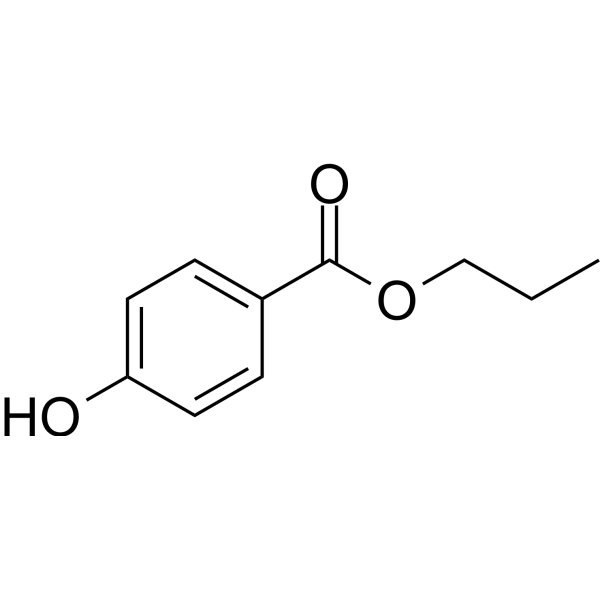
HY-N2026
PropylparabenBacterial Inhibitor -
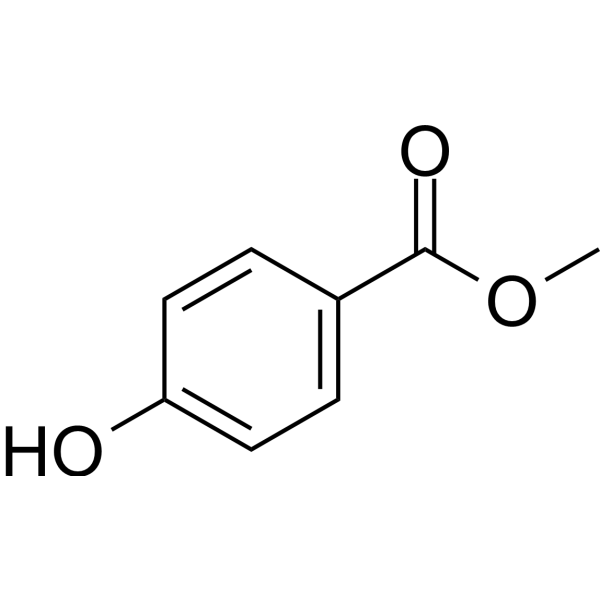
HY-N0349
Methyl parabenBacterial Inhibitor -

HY-N2026R
Propylparaben (Standard)Bacterial Inhibitor -

HY-N0626R
Sorbic acid (Standard)Food Preservative -

HY-N0349R
Methyl paraben (Standard)Bacterial Inhibitor
Alle Endogenous Metabolite Isoform-spezifische Produkte anzeigen
MoreAlle Antibiotic Isoform-spezifische Produkte anzeigen
More

Biologische Aktivität
Beschreibung
In Vitro
Potassium sorbate (0.05%-0.1%) extends the shelf life of cottage cheese, inhibits the growth of Penicillium frequentans and other spoilage microorganisms, suppresses spoilage bacteria in cottage cheese as well as molds in unsalted butter and grains, and prolongs the safe storage period of grains[1].
Potassium sorbate (0.02%-0.04%) inhibits the growth of molds in ham and sausage, as well as the growth of Aspergillus versicolor, inhibits the growth of Alternaria solani, Penicillium citrinum and Aspergillus niger, with minimum inhibitory concentrations of 0.02%, 0.08% and 0.08%, respectively[1].
Potassium sorbate (0.05-0.15%) delays or prevents spore germination and growth initiation of Aspergillus parasiticus and Aspergillus flavus strains, slows their hyphal growth, inhibits the growth of Aspergillus sulphureus and Penicillium viridicatum as well as their ability to produce ochratoxin A, and reduces or even blocks the production of aflatoxin B1 by Aspergillus parasiticus and Aspergillus flavus[1].
Potassium sorbate (0.05%) inhibits the growth of Zygosaccharomyces rouxii, Saccharomyces bisporus, Saccharomyces acidifaciens and Saccharomyces pastorianus, and is used in combination with acids[1].
Incorporation of potassium sorbate (≥15%) into sweet potato starch films significantly inhibits the growth of E. coli, but exerts no inhibitory effect on S. aureus[3].
MedChemExpress (MCE) has not independently confirmed the accuracy of these methods. They are for reference only.
In Vivo
MedChemExpress (MCE) has not independently confirmed the accuracy of these methods. They are for reference only.
-
Animal Model:Danio rerio (4-month-old adults)[2]
-
Dosage:0.1 g/L; 1 g/L
-
Administration:aqueous exposure; daily water replacement; 14 days
-
Result:Decreased levels of intestinal IgG, IL-1β, and TNF-α. Altered core gut microbiota development, with Pelomonas becoming the most abundant genus (accounting for 32.77% of gut microbiota), while Reyranella and Sphingomonas decreased, and Rhizobacter increased. Decreased relative abundance of transcription, energy metabolism, and cancer pathways. Significantly reduced the gut microbiota activity index (AIM).


Chemical Information
-
CAS. Nr. 24634-61-5
-
Appearance Solid
-
Molecular Weight 150.22
-
Formel C6H7KO2
-
Color White to off-white
-
SMILES
C/C=C/C=C/C([O-])=O.[K+]
-
Synonyms
Sorbic acid potassium
-
Structure Classification
-
Initial Source
-
Versand
Room temperature in continental US; may vary elsewhere.
-
Speicherung
Store at room temperature, keep dry and cool
In solvent -80°C 1 year -20°C 6 months


Lösungsmittel & Löslichkeit
In Vitro:
H2O : 50 mg/mL (332.85 mM; Need ultrasonic)
DMSO : < 1 mg/mL (insoluble or slightly soluble)
Please refer to the solubility information to select the appropriate solvent. Once prepared, please aliquot and store the solution to prevent product inactivation from repeated freeze-thaw cycles.
Storage method and period of stock solution: -80°C, 1 year; -20°C, 6 months. When stored at -80°C, please use it within 1 year. When stored at -20°C, please use it within 6 months.
* Note: If you choose water as the stock solution, please dilute it to the working solution, then filter and sterilize it with a 0.22 μm filter before use.
Please refer to the solubility information to select the appropriate solvent. Once prepared, please aliquot and store the solution to prevent product inactivation from repeated freeze-thaw cycles.
Storage method and period of stock solution: -80°C, 1 year; -20°C, 6 months. When stored at -80°C, please use it within 1 year. When stored at -20°C, please use it within 6 months.
* Note: If you choose water as the stock solution, please dilute it to the working solution, then filter and sterilize it with a 0.22 μm filter before use.
Konzentration (Stammlösung) × Volumen (Stammlösung) = Konzentration (Ziellösung) × Volumen (Ziellösung)


Reinheit & Dokumentation
-
Data Sheet (277 KB)
-
SDS (393 KB)
- English - EN (393 KB)
- Français - FR (393 KB)
- Deutsch - DE (393 KB)
- Norwegian - NO (393 KB)
- Español - ES (393 KB)
- Swedish - SV (393 KB)
- Italian - IT (393 KB)
- Korean - KR (393 KB)
- Portuguese - PT (393 KB)
-
Handling Instructions (2659 KB)
Verweise
[1]. Liewen MB, et al. Growth and Inhibition of Microorganisms in the Presence of Sorbic Acid: A Review. J Food Prot. 1985;48(4):364-375. [Content Brief]
[2]. Peng Q, et al. Potassium sorbate suppresses intestinal microbial activity and triggers immune regulation in zebrafish (Danio rerio). Food Funct. 2019;10(11):7164-7173. [Content Brief]


Complete Stock Solution Preparation Table
Please refer to the solubility information to select the appropriate solvent. Once prepared, please aliquot and store the solution to prevent product inactivation from repeated freeze-thaw cycles.
Storage method and period of stock solution: -80°C, 1 year; -20°C, 6 months. When stored at -80°C, please use it within 1 year. When stored at -20°C, please use it within 6 months.
| Optional Solvent | Concentration Solvent Mass | 1 mg | 5 mg | 10 mg | 25 mg |
|---|---|---|---|---|---|
| H2O | 1 mM | 6.6569 mL | 33.2845 mL | 66.5690 mL | 166.4226 mL |
| 5 mM | 1.3314 mL | 6.6569 mL | 13.3138 mL | 33.2845 mL | |
| 10 mM | 0.6657 mL | 3.3285 mL | 6.6569 mL | 16.6423 mL | |
| 15 mM | 0.4438 mL | 2.2190 mL | 4.4379 mL | 11.0948 mL | |
| 20 mM | 0.3328 mL | 1.6642 mL | 3.3285 mL | 8.3211 mL | |
| 25 mM | 0.2663 mL | 1.3314 mL | 2.6628 mL | 6.6569 mL | |
| 30 mM | 0.2219 mL | 1.1095 mL | 2.2190 mL | 5.5474 mL | |
| 40 mM | 0.1664 mL | 0.8321 mL | 1.6642 mL | 4.1606 mL | |
| 50 mM | 0.1331 mL | 0.6657 mL | 1.3314 mL | 3.3285 mL | |
| 60 mM | 0.1109 mL | 0.5547 mL | 1.1095 mL | 2.7737 mL | |
| 80 mM | 0.0832 mL | 0.4161 mL | 0.8321 mL | 2.0803 mL | |
| 100 mM | 0.0666 mL | 0.3328 mL | 0.6657 mL | 1.6642 mL |
* Note: If you choose water as the stock solution, please dilute it to the working solution, then filter and sterilize it with a 0.22 μm filter before use.


Potassium sorbate Related Classifications
HY-N0626A Related Classifications
 Powered by Bioz